
By Susan Finder and Zeng Yuhang (曾宇航) , 4L student, Peking University School of Transnational Law
As mentioned in two recent blogposts, and as readers may be aware, the Supreme People’s Court (SPC) launched a new internal platform, the Court Answers Database (法答网, “Answers Database”) in July 2023 (last year’s announcement), to provide authoritative answers on legal questions to overworked lower court judges. It is one of President Zhang Jun’s case law initiatives, reflecting his work at the Supreme People’s Procuratorate (SPP). Although not widely known, the SPP launched an analogous database for procurators in 2018 entitled 检答网 (Procurator Answers Database), which appears to be operating.
As of early September 2024, the SPC has published nine groups of Answers Database questions and responses in the People’s Court Daily (about which more is said below): first; second; third; fourth; fifth; sixth; seventh; eighth; ninth. One question and answer is translated below.
The Answers Database, together with the new SPC case database 人民法院案例库 (People’s Courts Case Database, “Case Database”), has become a key focus for the SPC under President Zhang Jun to unify how judges apply the law (known in Chinese as unified legal application 统一法律适用).
What’s new?
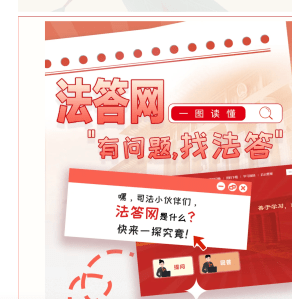
The Answers Database is a platform for judges in lower courts to seek guidance on legal issues by asking questions and obtaining answers from other judges. Seen another way, it is an online platform to strengthen guidance by the SPC (its firm guiding hand) in particular, but also by provincial courts, and to a lesser extent by intermediate courts.
The question-and-answer process is described in the next section. The Research Office of the SPC is responsible for overseeing the overall operation of the Answers Database. As of August 29, 2024, the Answers Database has received over 650,000 inquiries and provided more than 550,000 responses. During this year’s report to the National People’s Congress, President Zhang Jun revealed the Answers Database had received 280,000 inquiries, answering 230,000. That means the number of inquiries has more than doubled since the early spring.
As to the nature of the answers and how they are used, from the beginning, the SPC has emphasized that the answers provided are non-binding and intended for reference only. We comment more on this below.
From the publicity materials so far and the experience of one of the authors, it appears that the stress on using the Answers Database varies from judge to judge, court leader to leader, and by substantive area. At the late August 2024 Supreme People’s Court Judges’ Forum (最高人民法院法官讲坛), the head of the SPC’s Research Office describes it as a “rich or treasure mine” (宝矿,福矿) to be mined. The senior judge from the SPC’s #2 Civil Division mentioned at the Forum that they are using queries posted on the Answers Database as sources of information in drafting a new version of the judicial interpretation of the Company Law, and other reports stress the usefulness of the Answers Database in drafting or amending other judicial interpretations and other SPC documents. A vice president of the Judicial College said that they would integrate queries and responses into judicial training materials.
Another use for the Answers Database is when judges hear cases on related topics that are discussed by specialized judges committee meetings. We understand that judges may choose to include Answers Database responses to similar issues as an attachment to their trial or review report (审理报告 or 审查报告 (for retrial cases), analogous to a bench memorandum (see the linked blogpost for an explanation of these reports) at their discretion, but again, for internal discussion and reference purposes only.
At the forum mentioned above, the judges mentioned they have implemented a requirement for cases submitted for review by senior court leaders (阅核) or the specialized judges meeting (专业法官会) to include a report summarizing preliminary research conducted in both the Case Database and the Answers Database. This aligns with a related SPC policy described below. (For a review of the case discussion process, see this description by Yuan Ye, one of my former students now a PhD student at Peking University.
According to a handbook on the Answers Database published by a provincial court, some responses are designated as “premium answers” and “high-frequency answers”. As mentioned above, the SPC has published nine batches of these selected premium answers in the People’s Court Daily (although it is understood that the number of premium answers in the database is significantly higher than those published). It is understood that the Research Office is responsible for designating responses as “premium.” After initial selection, the relevant substantive SPC divisions will be asked to conduct a secondary review. They could advise the Research Office if the question has been answered improperly and suggest adjustments. Additionally, SPC divisions and departments could recommend questions and answers.
Some Answers Are More Important Than Others
The published answers carry significant weight among legal professionals, who assume that a high level of review has been conducted within the SPC of those cases. Practitioners view the published responses as likely to significantly influence court decisions in similar cases. For example, after the ninth batch of answers related to company buyback rights was published (see the translation below), many top law firms issued legal alerts outlining the potential major impacts. In an SPC publicity video, the dean of Tsinghua Law School suggested that the publicized questions and answers will be useful for legal education. Based on our observations of the Answers Database over the past year plus, the impact of the published responses is considerable. Some judges queried mentioned that responding to queries takes a significant amount of time.
How does the Answers Database operate?
As for how the Answers Database operates, based on the handbook mentioned above and the authors’ understanding, inquirers—both judges and judge assistants (responses could only be written by the judges)—to submit questions when encountering complex legal issues during a case. They should fill out the form which covers the subject matter, relevant laws, personal statements (optional–meaning how the judge thinks the question should be approached) etc.
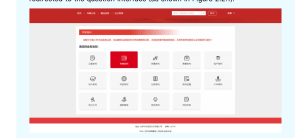
Based on our inquiries, questions can only be submitted to the next higher court. judges are also permitted to ask questions across different departments. For instance, a judge handling civil cases can ask a question related to enforcement to a judge in the Enforcement Department.
After finishing the form, inquiring judges should obtain approval from their leadership to submit their inquiries. At this point court leaders may resolve these questions through meeting with relevant judges or their superiors. Once received by the relevant court, questions will be routed to relevant departments based on the subject matter. Division heads then assign specific judges to formulate responses, which may be discussed at a professional judges’ meeting. The response, especially at the SPC level undergoes review by senior leadership —first by the deputy division chief and finally by the division chief. SPC sources mention that such review sometimes can be quite robust – the answers should be rewritten and some complicated questions will be presented to the specialized judges committee of that division for further discussion before final approval by the division head. It is understood that courts have been given targets of a quota of questions that must be answered. That means that senior judges in higher courts are required to respond to these questions in addition to their usual work.
It appears that the SPC leadership intends the Answers Database to make an impact on the Case Database. An SPC publicity video and related article mention the concept of “database integration (库网融合),” meaning the Answers Database needs to be deeply integrated with the Case Database. For example, if the specific legal issues are covered by the frequently asked and premium questions, the Research Office spokesperson said that efforts should be made to find the relevant real cases and add them to the Case Database. As discussed in a previous blogpost, cases in the People’s Courts Case Database are highly persuasive.
Comments
The Answers Database illustrates multiple aspects of the unique operation of the SPC and Chinese court system in its current evolution.
One aspect is dynamic policies. The new importance of the Answers Database means that the forms of SPC guidance of the lower courts have further evolved in the last year. As a result, an updated version of the rules on similar case search issued in 2020 is likely to incorporate the Answers Database as well as the People’s Courts Case Database.
A second aspect is better enabling the SPC (or higher courts) to identify legal issues about which lower court judges are unclear and clarify them through responses, judicial interpretations, or other judicial documents, rather than through judgments or rulings on appeal.
Although one aspect of the Fourth Five-Year Court Reform Plan Outline stressed reducing the administrative-type operation of the courts (去行政化), times have changed. The Answers Database appears to be a “lite” version of the request for instructions system, described here, also as flagged by a senior Beijing judge in the recent SPC video mentioned earlier and related article. He commented that the Answers Database is similar to the request for instructions(请示) system but offers a more streamlined approach – unlike traditional inquiries, which may demand more time to respond, the Answers Database allows judges to quickly pose questions to higher courts and receive feedback quickly. Speed may not necessarily be positive. On requests for instructions, as I wrote previously, fifteen or more years ago, there had been proposals even within the SPC for the system to be “proceduralized” or “judicialized,” but the Answers Database illustrates the bureaucratic aspects of the Chinese court system. This development reflects the greater importance of Chinese characteristics in judicial reform, as Dean Jiang Huiling mentioned in 2022.
Although the Answers Database focuses on answering abstract legal questions rather than particular disputes, the boundary between questions related to a specific case and abstract legal questions is fuzzy. People using this database comment that many questions are presented in a way tailored to the specific facts of a case. Moreover, the research and drafting of responses are done without arguments submitted by opposing counsel and likely under great time pressure. The litigation process is likely to generate arguments or sub-issues that the judges may not have considered. From the description above, it appears that reponses (that litigants are not necessarily aware of) will have an impact on how courts decide cases. Again, it throws into question the appeal system. However, we acknowledge a viewpoint likely to be held by many Chinese judges, that, unlike requests for instruction, the Answers Database will promote the unification of the application of law because these responses are public (within the court system).
Finally, the expanding number of queries may reflect front-line judges’ anxiety about the evolving judicial responsibility/accountability system, which the most recent Party Plenum has mentioned will be further strengthened. Obtaining an authoritative response from a higher-level court reduces the possibility that a judge may make an error, as well as the possibility of reversal on appeal.
_______________________
Batch #9, Question #2
How should the nature of the equity repurchase right and its exercise period in the “value adjustment mechanism (‘betting agreement’)” be determined?
Answer to question: Equity repurchase clauses are often stipulated in “value adjustment mechanism agreements”. For example, if the target company is not listed before X month X day of X year or the annual net profit does not reach XX million yuan, the investor has the right to require shareholders or actual controllers to repurchase the equity held by the investor at X price. In judicial practice, there is a great deal of controversy over the nature and exercise period of the above equity repurchase right. Some people believe that the investor’s request for equity repurchase is a creditor’s right and is subject to the statute of limitations. Others believe that the investor’s request for equity repurchase is a formative right and is subject to reasonable period restrictions.
We believe that the essence of this issue is how to understand the nature of the investor’s right to request the major shareholder or actual controller to repurchase the equity. Regarding the agreement in the equity valuation adjustment agreement that the investor has the right to request the major shareholder or actual controller to repurchase the equity, according to the contract interpretation rules established in Article 142, paragraph 1 of the Civil Code, in addition to understanding the words used in the agreement, the agreement should also be understood in combination with relevant clauses, the nature and purpose of the behavior, customs and the principle of good faith. From the purpose of the agreement between the two parties, in fact, when the conditions (not listed or profit not meeting the target) are met, the investor can either request the other party to repurchase and then “get rid of” the equity itself, or continue to hold the equity without requesting the other party to repurchase. Because the investor has the space to choose independently when exercising this right, it is more in line with the commercial expectations of the parties to limit it to a reasonable period. Specifically: 1. If the parties agree on the period for the investor to request the other party to repurchase, for example, the investor can decide whether to repurchase within 3 months from the date of determining that it is not listed, from the perspective of respecting the free will of the parties, the agreement should be recognized. If an investor requests the other party to repurchase beyond the three-month period, it can be regarded as giving up the right to repurchase or choosing to continue to hold the equity, and the People’s Court will not support its repurchase request. If the investor requests the other party to repurchase within the three months, the limitation period should be calculated from the day after the request. 2. If the parties have not agreed on the period within which the investor requests the other party to repurchase, then the right should be exercised within a reasonable period. In order to stabilize the business expectations of the company’s operations, it is appropriate to determine the reasonable period in the trial work not to exceed 6 months. The limitation period starts from the day after the request is made within 6 months.
Consultant : Meng Gaofei, Commercial Tribunal (Bankruptcy Tribunal) of the Shanghai High People’s Court
Q&A expert : Du Jun from the First Civil Court of the Supreme People’s Court
_______________________________________
The authors express their appreciation to an anonymous peer reviewer for his careful review of an earlier draft of this post and several other knowledgeable anonymous persons for sharing their insights.
 Supreme People's Court Monitor