
Category Archives: Answers Database

2025 Year-End Supreme People’s Court Typical Cases

Press conference announcing the joint SPC & SPP administrative public interest litigation typical cases

The Supreme People’s Court (SPC) issued or participated in issuing close to two dozen groups of typical cases from the beginning of November to the end of December, 2025.

These typical cases reflect the latest policies promoted by the SPC and  President Zhang Jun (张军)’s preference for conveying judicial policy through typical cases.   Conveying policy through typical cases is also consistent with the guidance of General Secretary Xi Jinping, who has stressed that “one case is better than a dozen documents (习近平总书记强调, “一个案例胜过一打文件”).  Each group represents an accomplishment for the division, bureau, or office that reviewed and edited (compiled) the cases and, in some cases, negotiated with other institutions to select cases that meet the needs of multiple institutions.   This post highlights some of the trends visible in these latest typical cases, but first provides a Chinese case law system refresher.
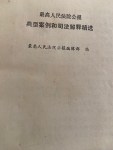
1993 collection of SPC Gazette typical cases & judicial interpretations

Quick Chinese case law system refresher

Typical cases are part of the SPC’s dynamic case guidance system. I am including a brief overview of the dynamic Chinese case law system to clarify the role of typical cases, as these two recent articles suggest confusion among journalists, and some of my own students have difficulty understanding the system.   I use the term “dynamic” because the elements of the case guidance system have changed under SPC President Zhang Jun 张军. My sense is that SPC judges in different substantive areas place different emphasis on case guidance as tools in their guidance toolbox, but that is a discussion for a different day and forum.

  1. The most persuasive type of cases in the case guidance system are guiding cases (指导性案例),  which have been approved by the SPC judicial (adjudication) committee.  Former Judge Guo Feng  described guiding cases here as “of  [an] authoritative, normative, exemplary, and uniformly applicable nature. They are de facto binding. The compilation of GCs has specific standards and standardized procedures and needs to meet requirements for high quality….Where a case being adjudicated is, in terms of the basic facts and application of law, similar to a Guiding Case released by the Supreme People’s Court, the court should refer to the “Main Points of the Adjudication” of the relevant Guiding Case in its ruling or judgment.” Judge Guo provides an authoritative explanation of the meaning of “refers to” and related issues in the same article linked above.  This earlier blogpost summarizes the 2020 SPC guidance on similar case search.
  2. The second most authoritative type of case is the reference case (参考案例).   As I wrote here, “reference cases” are a new type of edited case published in the People’s Court Case Database(人民法院案例库), which launched in early 2024.  The principal drafters of the People’s Court Case Database Work Procedures clarified in an authoritative article that “reference cases”  are “a new type of edited case created by the Case Database system. Their effectiveness is higher than other cases except for guiding cases.”  As of 23 December 2025, the  People’s Court Case Database contains 5216 reference cases.  My earlier post explains the selection process.
  3. Another type of guidance, which some SPC media describe as part of the case database system, is the Court Answers Platform, also translated as the “Judicial Q & A Platform,” which I analyzed in the earlier post.  The official intent, as evidenced in this article in SPC media, is for the People’s Court Database and the Court Answers Platform to be an integrated guidance product. This goal was mentioned in the SPC’s report to the NPC, as well as the latest court reform plan (about which I have a short article on its way to publication).
  4. The type of case guidance with the longest history is the typical (典型 model/exemplary/example) case. Typical cases too, are edited cases and are therefore “compiled.” The SPC Gazette started publishing typical cases in 1985, but I have earlier typical cases in other SPC publications in my research archives.
    As I wrote here, the SPC’s Gazette cases are generally considered to be the most authoritative of the typical cases, but there is no authoritative guidance on the definition or hierarchy of typical cases.  I have more details on typical cases in that article. Typical cases are considered to guide the lower courts as a form of case guidance and policy signaling.  Therefore, Chinese lawyers and in-house counsel also pay attention to typical cases. Typical cases are also used as a form of public legal education (普法, see here and here).
  5.  I am not further discussing the authoritativeness of judgments or rulings, but see my earlier discussion.

The rules derived from these cases are not static.  Provisions from typical cases may be incorporated into meeting minutes (conference summaries 会议纪要), for example,  while on 30 December 2025, the SPC issued a judicial interpretation that drew on questions raised on the Court Answers Platform. It is not unusual for provisions from guiding cases or judicial interpretations to be incorporated into legislation.

Overview of Recent Typical Cases

What the SPC has issued in the last two months of 2025 are typical cases (典型案例). The SPC issued several groups of typical cases with the Supreme People’s Procuratorate (SPP), which serve to harmonize views on specific issues between the two institutions and sometimes with multiple institutions.  The SPC issued several with regulatory/administrative institutions, reflecting a policy trend of recent years. President Zhang Jun highlighted this policy in his 2024 specialized report to the NPC Standing Committee on administrative litigation (I have a draft article that touches on this policy trend).  This year’s year-end typical cases include several groups with the Women’s Federation and one group with the All-China Federation of Trade Unions.

Some groups of cases promote mediation (phrased as promoting the Fengqiao Experience 枫桥经验). (For those with the time to read academic articles, a recent article by Professor Benjamin Liebman and Liu Zeming has an extended discussion of this.

Some typical cases of note:

  1. A group of domestic violence cases 最高法发布2025年中国反家暴典型案例.  Jeremy Daum’s (Yale Law School’s Paul Tsai China Center/Chinalawtranslate.com) analysis of those cases is found here. He said “the release shows a generally positive direction, and was interesting in that the cases were presented as showing compliance with international legal norms.”

2.  Fourth Group of  Civil Cases That Embody Socialist Core Values 最高人民法院发布5起第四批人民法院大力弘扬社会主义核心价值观典型民事案例  These cases appear to be aimed at educating the general public and providing some guidance for less experienced judges on how socialist core values can be applied. Among the cases are: two cases involving employers: a workplace sexual harassment case and an employer that withdrew a job offer after the candidate accepted it and had provided evidence of terminating his previous job; a slip and fall case brought by someone who focused on his phone rather than his step.  The SPC issuing a typical case conveying that workplace sexual harassment is a violation of socialist core values is particularly significant.

For those with a greater interest in socialist core values and court judgments, I wrote a quick summary of the related SPC guiding opinion here and commented that “it can be seen as a part of the ‘socialist core valueization’ of Chinese law and the legal system, and in particular, the judiciary. It is one important piece of how the judiciary is being further transformed in the Xi Jinping era.” A 2024 student note by Liu Zeming in the Columbia Journal of Transnational Law argues that through the project of integrating socialist core values into judgments,  the Party-state is effectively imposing a new conception of what Chinese law is.

3. Typical cases of application of model texts (third batch) (最高法发布示范文本应用典型案例(第三批)). These cases provide examples to the lower courts and public of how courts are using model texts (court forms), a project involving cooperation between the SPC,  Ministry of Justice, and All China Lawyers Association.  Bilingual versions of those forms are behind lawinfoChina.com’s paywall and Chinese versions are available in many places, such as here.    That link leads to a downloadable 900+ page document with the accompanying multi-institutional document and the court forms. The typical cases promote the use of those court forms. An experienced senior judge whom I contacted commented that “these forms are useful for some types of cases, such as traffic accident cases.”

4.  The SPC issued several groups of typical cases with the SPP. The two institutions issued a third group of administrative public interest cases 两高”联合发布第三批行政公益诉讼典型案例 .  The SPC contributed to the drafting of the procuratorate-led public interest litigation law.  Many of the cases involved a local procuracy providing a procuratorial suggestion to an administrative agency to enforce a provision of the law and filing suit when the suggestion was not taken seriously. One of the cases involved a county human resources bureau that did not properly supervise listings on a bureau-sponsored job platform, several of which restricted jobs to men only.  Another group of SPC and SPP typical cases involves corruption cases related to ordinary people (最高人民法院 最高人民检察院联合发布依法惩治群众身边腐败犯罪典型案例).  The cases involve embezzlement, fraud, and misappropriation of funds related to school meals, elderly and disabled person services, medical insurance, etc.  Another group focuses on job-related crimes in the financial sector (最高人民法院、最高人民检察院联合发布依法惩治金融领域职务犯罪典型案例), with cases of corrupt financial regulators and bankers.  The case descriptions provide insights into the many ways corruption can be performed. The fourth group relates to the courts and procuratorate joining forces to substantively resolve administrative disputes, also a policy promoted in recent years.   法检合力法治化实质性化解行政争议典型案例.

4. Typical cases with regulators include: cases with the National Financial Regulatory Administration promoting diversified dispute resolution (particularly mediation) 国家金融监督管理总局; typical cases with the National 最高人民法院联合发布金融领域纠纷多元化解典型案例 and the State Administration of Cultural Heritage 最高人民法院、国家文物局联合发布依法推进文物保护典型案例

5. The SPC issued typical cases with the Women’s Federation as well as with the Women’s Association plus other institutions.  All of these cases relate to women, children, and families. One group of typical cases with the Women’s Federation involving judicial assistance to minors (最高法、全国妇联联合发布保护未成年人权益司法救助典型案例).  The two institutions have jointly issued typical cases several years in a row, previously in time to coincide with Children’s Day. This year, two of the cases involved providing psychological services to the affected minors,  and all involved courts providing financial and other arrangements for minors who lost one or both parents.  It provides a glimpse into the difficulties faced by orphans, particularly in rural areas. The SPC, SPP, Women’s Federation, and Ministry of Justice issued the top 10 cases protecting women’s and children’s rights   Another group of typical cases with the Women’s Federation and Ministry of Justice promotes mediation in family disputes (最高人民法院与全国妇联、司法部联合发布婚姻家庭纠纷调解工作典型案例

6. The SPC issued two groups of typical cases promoting the protection of private enterprise, including one group on private enterprise property rights and retrial cases involving the protection of the rights of private entrepreneurs 最高法发布涉民营企业产权和民营企业家权益保护再审典型案例. Almost 10 years ago, I wrote about a document conveying many of the same points as these typical cases.  Unfortunately, it appears that protecting the rights of private entrepreneurs is an “evergreen” issue for the Chinese courts.

7.  Several groups of typical cases involve labor issues: one involving the evergreen issue of wage arrears of migrant workers (最高人民法院发布人民法院治理欠薪典型执行案例); another issued with the SPP and the All-China Federation of Trade Unions  on using “one letter and two documents”  to protect workers rights (最高法会同全国总工会、最高检联合发布 2025年劳动法律监督“一函两书”典型案例).

  Concluding comment

The primary purpose of these typical cases appears to vary, but all signal “people-centered.”  For the person with patience to wade through the initial political framing, they provide slivers of insight into current judicial policy,  and persistent issues in society, the operation of the judicial system.

The SPC also intends these typical cases to evidence that the SPC is implementing the Opinions of the Central Committee of the Communist Party of China on Strengthening Trial Work in the New Era  中共中央关于加强新时代审判工作的意见, the 2025 Party document guiding the work of the courts, which President Zhang Jun has described as “the major political task for the courts at present and the foreseeable future.”

______________________________________

Many thanks to Yuan Ye, PKU doctoral student, for his comments on this post.  This year, I will continue to focus on writing longer articles and trust that some of the articles stuck in the pipeline will see the light of day.  One hope I have for my own work is that I am able to spend some time inside the SPC, although I am doubtful that it will ever be possible in my lifetime.
Supreme People’s Court’s New Court Answers Platform

By  Susan Finder and Zeng Yuhang (曾宇航) , 4L student, Peking University School of Transnational Law 

As mentioned in two recent blogposts, and as readers may be aware, the Supreme People’s Court (SPC) launched a new internal platform, the Court Answers Database (法答网, “Answers Database”) in July 2023 (last year’s announcement), to provide authoritative answers on legal questions to overworked lower court judges. It is one of President Zhang Jun’s case law initiatives, reflecting his work at the Supreme People’s Procuratorate (SPP). Although not widely known,  the SPP launched an analogous database for procurators in 2018 entitled 检答网 (Procurator Answers Database), which appears to be operating.

As of early September 2024, the SPC has published nine groups of Answers Database questions and responses in the People’s Court Daily (about which more is said below): first; second; third; fourth; fifth; sixth; seventh; eighth; ninth. One question and answer is translated below.

The Answers Database, together with the new SPC case database 人民法院案例库 (People’s Courts Case Database, “Case Database”), has become a key focus for the SPC under President Zhang Jun to unify how judges apply the law (known in Chinese as unified legal application 统一法律适用).

What’s new?

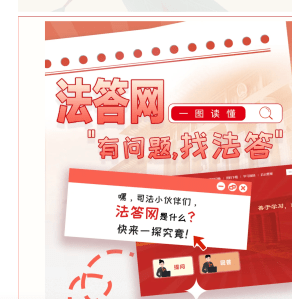
Slogan of the Answers Database: “If you have questions, find the Answers Database”

The Answers Database is a platform for judges in lower courts to seek guidance on legal issues by asking questions and obtaining answers from other judges. Seen another way, it is an online platform to strengthen guidance by the SPC (its firm guiding hand)  in particular, but also by provincial courts, and to a lesser extent by intermediate courts.

The question-and-answer process is described in the next section. The Research Office of the SPC is responsible for overseeing the overall operation of the Answers Database. As of August 29, 2024, the Answers Database has received over 650,000 inquiries and provided more than 550,000 responses.  During this year’s report to the National People’s Congress, President Zhang Jun revealed the Answers Database had received 280,000 inquiries, answering 230,000.  That means the number of inquiries has more than doubled since the early spring. 

 As to the nature of the answers and how they are used, from the beginning, the SPC has emphasized that the answers provided are non-binding and intended for reference only. We comment more on this below.

From the publicity materials so far and the experience of one of the authors, it appears that the stress on using the Answers Database varies from judge to judge, court leader to leader, and by substantive area. At the late August 2024  Supreme People’s Court Judges’ Forum (最高人民法院法官讲坛), the head of the SPC’s Research Office describes it as a “rich or treasure mine” (宝矿,福矿) to be mined.  The senior judge from the SPC’s #2 Civil Division mentioned at the Forum that they are using queries posted on the Answers Database as sources of information in drafting a new version of the judicial interpretation of the Company Law, and other reports stress the usefulness of the Answers Database in drafting or amending other judicial interpretations and other SPC documents. A vice president of the Judicial College said that they would integrate queries and responses into judicial training materials.

Another use for the Answers Database is when judges hear cases on related topics that are discussed by specialized judges committee meetings. We understand that judges may choose to include Answers Database responses to similar issues as an attachment to their trial or review report  (审理报告 or 审查报告 (for retrial cases), analogous to a bench memorandum (see the linked blogpost for an explanation of these reports) at their discretion, but again, for internal discussion and reference purposes only.

At the forum mentioned above, the judges mentioned they have implemented a requirement for cases submitted for review by senior court leaders (阅核) or the specialized judges meeting (专业法官会) to include a report summarizing preliminary research conducted in both the Case Database and the Answers Database. This aligns with a related SPC policy described below. (For a review of the case discussion process, see this description by Yuan Ye, one of my former students now a PhD student at Peking University.

According to a handbook on the Answers Database published by a provincial court, some responses are designated as “premium answers” and “high-frequency answers”. As mentioned above, the SPC has published nine batches of these selected premium answers in the People’s Court Daily (although it is understood that the number of premium answers in the database is significantly higher than those published). It is understood that the Research Office is responsible for designating responses as “premium.” After initial selection, the relevant substantive SPC divisions will be asked to conduct a secondary review. They could advise the Research Office if the question has been answered improperly and suggest adjustments. Additionally, SPC divisions and departments could recommend questions and answers. 

Some Answers Are More Important Than Others

The published answers carry significant weight among legal professionals, who assume that a high level of review has been conducted within the SPC of those cases. Practitioners view the published responses as likely to significantly influence court decisions in similar cases. For example, after the ninth batch of answers related to company buyback rights was published (see the translation below), many top law firms issued legal alerts outlining the potential major impacts. In an SPC publicity video, the dean of Tsinghua Law School suggested that the publicized questions and answers will be useful for legal education.  Based on our observations of the Answers Database over the past year plus, the impact of the published responses is considerable.  Some judges queried mentioned that responding to queries takes a significant amount of time.

How does the Answers Database operate?

As for how the Answers Database operates, based on the handbook mentioned above and the authors’ understanding,  inquirers—both judges and judge assistants (responses could only be written by the judges)—to submit questions when encountering complex legal issues during a case. They should fill out the form which covers the subject matter, relevant laws, personal statements (optional–meaning how the judge thinks the question should be approached) etc. 

Based on our inquiries, questions can only be submitted to the next higher court. judges are also permitted to ask questions across different departments. For instance, a judge handling civil cases can ask a question related to enforcement to a judge in the Enforcement Department.

After finishing the form,  inquiring judges should obtain approval from their leadership to submit their inquiries. At this point court leaders may resolve these questions through meeting with relevant judges or their superiors. Once received by the relevant court, questions will be routed to relevant departments based on the subject matter. Division heads then assign specific judges to formulate responses, which may be discussed at a professional judges’ meeting. The response, especially at the SPC level undergoes review by senior leadership —first by the deputy division chief and finally by the division chief. SPC sources mention that such review sometimes can be quite robust – the answers should be rewritten and some complicated questions will be presented to the specialized judges committee of that division for further discussion before final approval by the division head.  It is understood that courts have been given targets of a quota of questions that must be answered. That means that senior judges in higher courts are required to respond to these questions in addition to their usual work.

It appears that the SPC leadership intends the Answers Database to make an impact on the Case Database. An SPC publicity video and related article mention the concept of “database integration (库网融合),” meaning the Answers Database needs to be deeply integrated with the Case Database. For example, if the specific legal issues are covered by the frequently asked and premium questions,  the Research Office spokesperson said that efforts should be made to find the relevant real cases and add them to the Case Database. As discussed in a previous blogpost, cases in the People’s Courts Case Database are highly persuasive.

Comments 

The Answers Database illustrates multiple aspects of the unique operation of the SPC and Chinese court system in its current evolution. 

One aspect is dynamic policies.  The new importance of the Answers Database means that the forms of SPC guidance of the lower courts have further evolved in the last year. As a result, an updated version of the rules on similar case search issued in 2020 is likely to incorporate the Answers Database as well as the People’s Courts Case Database.

A second aspect is better enabling the SPC (or higher courts) to identify legal issues about which lower court judges are unclear and clarify them through responses, judicial interpretations, or other judicial documents, rather than through judgments or rulings on appeal.

Although one aspect of the Fourth Five-Year Court Reform Plan Outline stressed reducing the administrative-type operation of the courts (去行政化), times have changed.  The Answers Database appears to be a “lite” version of the request for instructions system, described here,  also as flagged by a senior Beijing judge in the recent SPC video mentioned earlier and related article. He commented that the Answers Database is similar to the request for instructions(请示) system but offers a more streamlined approach – unlike traditional inquiries, which may demand more time to respond, the Answers Database allows judges to quickly pose questions to higher courts and receive feedback quickly. Speed may not necessarily be positive.  On requests for instructions, as  I wrote previously,  fifteen or more years ago, there had been proposals even within  the SPC for the system to be “proceduralized” or “judicialized,” but the Answers Database illustrates the bureaucratic aspects of the Chinese court system. This development reflects the greater importance of Chinese characteristics in judicial reform, as Dean Jiang Huiling mentioned in 2022.

Although the Answers Database focuses on answering abstract legal questions rather than particular disputes, the boundary between questions related to a specific case and abstract legal questions is fuzzy. People using this database comment that many questions are presented in a way tailored to the specific facts of a case.  Moreover, the research and drafting of responses are done without arguments submitted by opposing counsel and likely under great time pressure. The litigation process is likely to generate arguments or sub-issues that the judges may not have considered.  From the description above, it appears that reponses (that litigants are not necessarily aware of) will have an impact on how courts decide cases.  Again, it throws into question the appeal system.  However, we acknowledge a viewpoint likely to be held by many Chinese judges, that, unlike requests for instruction, the Answers Database will promote the unification of the application of law because these responses are public (within the court system).

Finally, the expanding number of queries may reflect front-line judges’ anxiety about the evolving judicial responsibility/accountability system, which the most recent Party Plenum has mentioned will be further strengthened.  Obtaining an authoritative response from a higher-level court reduces the possibility that a judge may make an error, as well as the possibility of reversal on appeal.

_______________________

 Batch #9, Question #2

How should the nature of the equity repurchase right and its exercise period in the “value adjustment mechanism (‘betting agreement’)” be determined?

Answer to question: Equity repurchase clauses are often stipulated in “value adjustment mechanism agreements”. For example, if the target company is not listed before X month X day of X year or the annual net profit does not reach XX million yuan, the investor has the right to require shareholders or actual controllers to repurchase the equity held by the investor at X price. In judicial practice, there is a great deal of controversy over the nature and exercise period of the above equity repurchase right. Some people believe that the investor’s request for equity repurchase is a creditor’s right and is subject to the statute of limitations. Others believe that the investor’s request for equity repurchase is a formative right and is subject to reasonable period restrictions.

We believe that the essence of this issue is how to understand the nature of the investor’s right to request the major shareholder or actual controller to repurchase the equity. Regarding the agreement in the equity valuation adjustment agreement that the investor has the right to request the major shareholder or actual controller to repurchase the equity, according to the contract interpretation rules established in Article 142, paragraph 1 of the Civil Code, in addition to understanding the words used in the agreement, the agreement should also be understood in combination with relevant clauses, the nature and purpose of the behavior, customs and the principle of good faith. From the purpose of the agreement between the two parties, in fact, when the conditions (not listed or profit not meeting the target) are met, the investor can either request the other party to repurchase and then “get rid of” the equity itself, or continue to hold the equity without requesting the other party to repurchase. Because the investor has the space to choose independently when exercising this right, it is more in line with the commercial expectations of the parties to limit it to a reasonable period. Specifically: 1. If the parties agree on the period for the investor to request the other party to repurchase, for example, the investor can decide whether to repurchase within 3 months from the date of determining that it is not listed, from the perspective of respecting the free will of the parties, the agreement should be recognized. If an investor requests the other party to repurchase beyond the three-month period, it can be regarded as giving up the right to repurchase or choosing to continue to hold the equity, and the People’s Court will not support its repurchase request. If the investor requests the other party to repurchase within the three months, the limitation period should be calculated from the day after the request. 2. If the parties have not agreed on the period within which the investor requests the other party to repurchase, then the right should be exercised within a reasonable period. In order to stabilize the business expectations of the company’s operations, it is appropriate to determine the reasonable period in the trial work not to exceed 6 months. The limitation period starts from the day after the request is made within 6 months.

Consultant : Meng Gaofei, Commercial Tribunal (Bankruptcy Tribunal) of the Shanghai High People’s Court

Q&A expert : Du Jun from the First Civil Court of the Supreme People’s Court

_______________________________________

The authors express their appreciation to an anonymous peer reviewer for his careful review of an earlier draft of this post and several other knowledgeable anonymous persons for sharing their insights.