
Those involved in Chinese dispute resolution in any way know that the role of the Supreme People’s Court (SPC) in advancing arbitration in China is crucial and irreplaceable. The question on many people’s minds is –what will the SPC do to support the recently amended Arbitration Law?
So I will summarize what is known about the SPC’s next steps in ensuring a smooth transition from the old to the new Arbitration Law and supplement that with some of my own predictions.
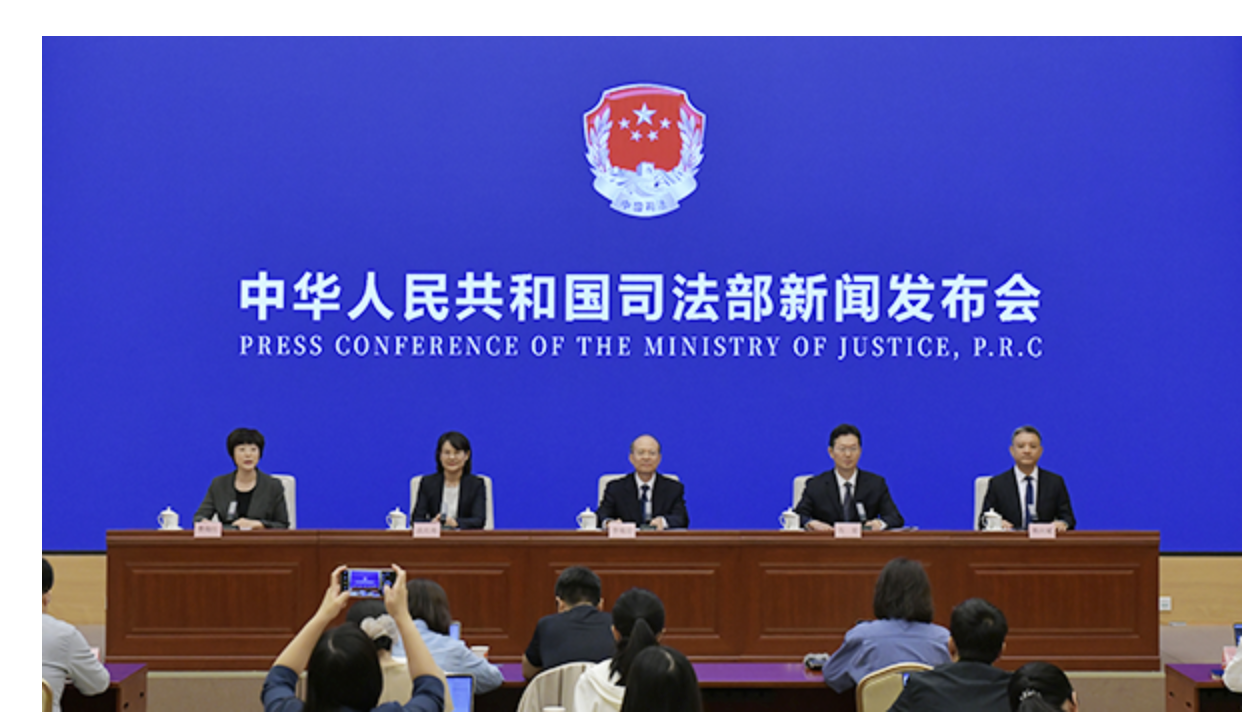
What do we know? There have been substantial changes to the Arbitration Law, some of which will have an impact on the courts. Chief Judge of the SPC’s #4 Civil Division Shen Hongyu (沈红雨) told a Ministry of Justice press conference that:
The Supreme People’s Court will conduct thorough research, widely solicit opinions from all sectors, and with the strong support of the Legislative Affairs Commission of the Standing Committee of the National People’s Congress and the Ministry of Justice, comprehensively review existing judicial interpretations and normative documents related to the Arbitration Law to ensure the drafting and formulation of supporting judicial interpretations for the newly revised Arbitration Law, guaranteeing that the revised content of the Arbitration Law is effectively implemented in judicial practice. (最高人民法院将认真调研、广泛听取各界意见,在全面梳理既有仲裁法相关司法解释和规范性文件的基础上,在全国人大法工委、司法部的大力支持下,做好新修订仲裁法配套司法解释的起草制定工作,确保仲裁法修订内容在司法实践中落地落细。)
Judge Shen said a great deal in this one very long sentence. The “thorough research” will involve combing through hundreds of pages of judicial interpretations and other judicial documents linked to the Arbitration Law, relevant sections of the Civil Procedure Law, and its judicial interpretation, plus the current draft interpretation of the foreign-related part.
The work involved, which will be invisible to those of us outside the SPC, will be to determine which interpretations or documents remain valid in whole or in part. If interpretations or documents are partially valid, do they need to be amended to conform to the amended Arbitration Law? Will a transitional document be necessary so that lower court judges (and SPC judges) will be ready to apply the amended law? I expect so, because the changes are significant and lower court judges need to have a reference document to hand so that they can efficiently handle arbitration-related matters, whether they are requests from arbitral tribunals to assist in collecting evidence, or judicial review of arbitration.
My best guess is that the SPC will issue a transitional document or documents in the run-up to March 1, 2026, when the Arbitration Law becomes effective, likely amending previous judicial interpretations or documents to be consistent with the new law and deleting inconsistent provisions, plus a document that clearly sets out the new arrangements, so that lower courts will be well prepared. I further surmise that the SPC will use much of 2026 to design a new comprehensive judicial interpretation to incorporate many of the provisions in the old ones. This is more complicated than it seems.
A new judicial interpretation will touch upon substantive and procedural issues. Some of those procedural issues need to draw on the specialized competence of other specialized institutions within the SPC, such as the case-filing division (tribunal) and the enforcement bureau. In the press conference mentioned above, Judge Shen flagged some of the important issues, such as:
- The concept of “the seat” in arbitration
- Judicial review of special arbitration (ad hoc arbitration);
- Arbitration service of process
- Arbitration preservative measures;
- Arbitration preservation system
Those other specialized institutions will need to consider whether any of the new measures in the Arbitration Law require measures related to their work, such as case filing or enforcement procedures. Once their input is received, the institutions that Judge Shen mentioned earlier— the Legislative Affairs Commission of the Standing Committee of the National People’s Congress (Legislative Affairs Commission 法工委) and the Ministry of Justice will review that comprehensive draft carefully. The Ministry of Justice and the Legislative Affairs Commission are sure to give detailed comments for the SPC to consider. The SPC will want to make sure that each provision is operable in practice before it is released. The procedure for drafting such an interpretation is time-consuming and as is said in the law firm world, “requires attention to detail.”
_________________________________________________________________
This post is a slightly revised version of a speech I gave on November 12, 2025, at the opening of the Beijing Arbitration Commission’s Hong Kong Center. My apologies for the long gap between posts.
 Supreme People's Court Monitor
You must be logged in to post a comment.