Remarks on the Amended Arbitration Law at the Hong Kong International Arbitration Centre

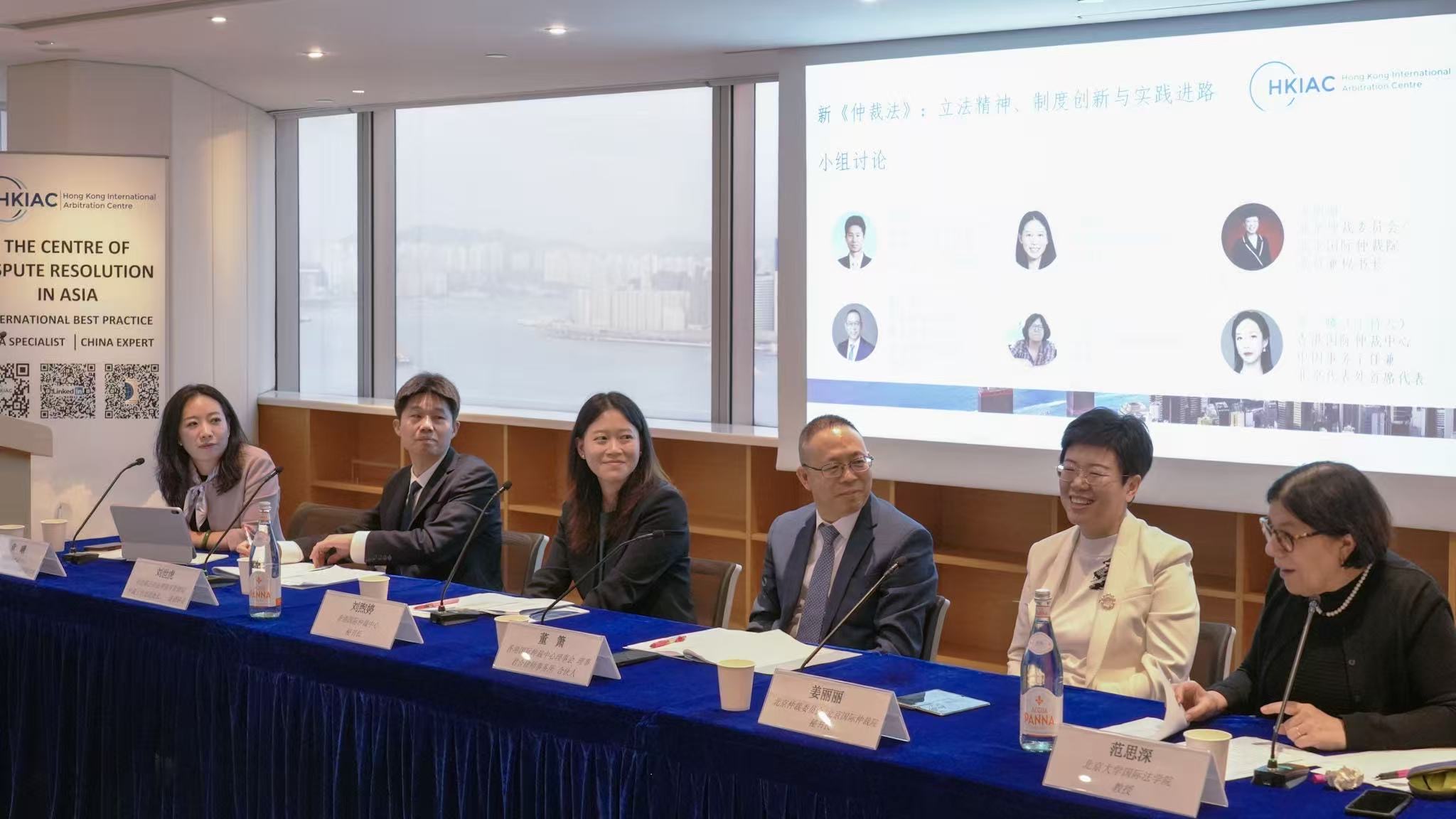
At a 25 March 2026 Hong Kong International Arbitration Centre (HKIAC) event on the amended Arbitration Law, featuring a keynote speech by Director Shi Hong (石宏), Director of the Civil Law Department of the Legislative Affairs Commission, Standing Committee of the National People’s Congress (not pictured). My fellow panelists were: Zhang Xi (章曦) , head of the HKIAC Beijing representative office, Mr. Liu Shihu (刘世虎), of the Ministry of Justice, Joanne Lau, Secretary-General, HKIAC, Arthur Dong (董箫), partner with Jun He Law Offices, and Secretary General Jiang Lili (姜丽丽) , Beijing Arbitration Commission. I gave an abbreviated version of the Chinese speech below, which I originally drafted in English.

Many thanks for the kind invitation to make some remarks about the amended Arbitration Law. Because the Supreme People’s Court did not send an official representative to speak, I will focus my comments on what the amended Arbitration Law means for the work of the Supreme People’s Court and lower courts.

Why am I talking about this? For those who do not know me, I have been a member of the Supreme People’s Court’s China International Commercial Court’s International Commercial Expert Committee since 2018 and a long-term observer of the work of the Supreme People’s Court. So how I discuss this will be different from an official spokesperson, but based on their official statements and my own work.
The focus of my presentation will be on the implications of the amended Arbitration Law for the Supreme People’s Court and lower courts. I’ll use a minute or two to give a bit of background.


On the drafting of the Arbitration Law, as was stated in a recent press report, “The Supreme People’s Court has been deeply involved in the legislation and amendment work of major foreign-related laws such as the Foreign Relations Law, the Anti-Foreign Sanctions Law, the Foreign State Immunities Law, the Civil Procedure Law, the Arbitration Law, and the Maritime Law.” Additionally, the Supreme People’s Court issues judicial interpretations and guidance in other forms for the lower courts, to enable them to apply the law more consistently. Judicial interpretations, as I previously wrote, are not linked with a specific case but draw on many previous cases. They are a critically important way that the SPC unifies the application of law by the courts, although the extent to which they are binding outside the court system is unclear. The Legislative Affairs Commission of the National People’s Congress Standing Committee reviews them and may require amendments.

At a joint press conference with the Legislative Affairs Commission, hosted by the Ministry of Justice, the Chief Judge of the Supreme People’s Court #4 Civil Division said that the “Supreme People’s Court will conduct thorough research, widely solicit opinions from all sectors, and, with the strong support of the Legislative Affairs Commission of the National People’s Congress and the Ministry of Justice, comprehensively review existing judicial interpretations and normative documents related to the Arbitration Law to ensure the drafting and formulation of supporting judicial interpretations for the newly revised Arbitration Law, guaranteeing that the revised content of the Arbitration Law is effectively implemented in judicial practice.” So the future judicial interpretation will reflect the views of multiple institutions.

The “thorough research” (认真调研) will involve combing through hundreds of pages of judicial interpretations and other judicial documents linked to the Arbitration Law, the Foreign-Related Part of the Civil Procedure Law, plus the current draft interpretation of the foreign-related part of the Civil Procedure Law. The work involved, which will be invisible to those of us outside the Supreme People’s Court, will be to determine which interpretations or documents remain valid in whole or part, and what amendments are necessary. It was reported that the Supreme People’s Court as a next step, would conduct research on the Arbitration Law and other legislation (下一步开展仲裁法、外国国家豁免法司法解释调研工作). The Legislative Affairs Commission of the Standing Committee of the National People’s Congress and the Ministry of Justice will review that comprehensive draft carefully and give detailed comments for the Supreme People’s Court to consider.

So, my understanding is that the judicial interpretation will be issued sometime in 2027. That is normal timing. The judicial interpretation drafting process is lengthy. The Supreme People’s Court needs time to review the old interpretations , and intends the interpretation to address issues that are unclear in practice and be effective for a considerable period.
In the meantime, the Supreme People’s Court is/will be monitoring issues that confuse the lower courts. Those lower courts are more knowledgeable than they were ten years ago. That is linked to measures that the Supreme People’s Court has taken in recent years to encourage local courts to establish international commercial tribunals 国际商事法庭, to handle foreign-related matters, including judicial review of arbitration more competently.

How does the Supreme People’s Court monitor what issues confuse the lower courts? It has several ways to do that. One way is to convene a judicial review of arbitration internal conference (会商会), as was done last year for maritime matters. Second, questions that confuse lower courts will also come through the 法答网 system to the Supreme People’s Court’s #4 Civil Division, or possibly through a request for instructions (请示).
How might the Supreme People’s Court provide guidance, pending the issuance of the judicial interpretation, and how could you follow it? Those guidance methods mirror the ways that it monitors the lower courts. One would be for the Supreme People’s Court to issue meeting minutes (会议纪要), as it has done after other internal conferences 会商会. These cannot be cited as the basis for a judgment, but lower court judges generally follow its provisions, as it expresses the position of the Supreme People’s Court. I am not sure whether those meeting minutes will be made public, as it does not always do so, but I expect a related press report. Because the current judicial reform plan outline(六五纲要 ) provides that the People’s Court Database (人民法院案例库) and the Court Answers Platform (法答网) will create an integrated guidance product, I recommend monitoring whether amended Arbitration Law-related questions will be answered through the 法答网 system. Recently, the Supreme People’s Court published two sets of questions and answers on judicial review of arbitration raised on the Answers Platform (法答网 ) in People’s Court Daily (人民法院报). The People’s Court Case Database (人民法院案例库) contains reference cases related to arbitration, including judicial review of arbitration. That database should be monitored too, as well as typical cases issued by the Supreme People’s Court or lower courts. I note that recently, the Xinjiang Higher People’s Court issued typical arbitration cases.
As to the reaction of the lower courts to the amended law, my understanding is that the most knowledgeable and experienced judges are not fazed by the amendments to the Arbitration Law, because the amendments do not change the standard of judicial review. As to what I expect could be some of those hot issues,–the first one to mention is the new provision permitting preservative measures for assets or evidence in an emergency situation before an arbitration case is filed, as was mentioned in a recent article in People’s Court Daily (人民法院报). However, in 2024, the Supreme People’s Court issued detailed guidance on pre-litigation preservative measures, entitled Opinions on Standardizing and Strengthening the Handling of Pre-litigation Preservation Cases (关于规范和加强办理诉前保全案件工作的意见), which mentions arbitration, so I surmise local courts will apply the provisions in this document pending specific guidance. Will the adoption of the concept of “seat” create major issues? I believe not, as it will not make a difference for the vast majority of cases.
Although the People’s Court Daily article mentioned some uncertainties connected with ad hoc arbitration , I believe, as a practical matter it will not be a major issue.
I hope my remarks are helpful. I look forward to your comments.

_____________________________________________

Chinese version

鉴于最高人民法院未安排代表出席本次研讨会,我想从法院的视角,重点剖析新《仲裁法》对最高人民法院及全国各级地方法院工作的意义,这也是我今天发言的核心。
有人可能会感到好奇:我为什么选择谈这个问题?事实上,从2018年起,我和在座的几位同仁一样担任最高人民法院国际商事法庭专家委员会委员。我长期研究最高人民法院的司法实践与涉外司法工作,对最高人民法院有所了解。需要说明的是,我今天并不是替官方发声。我只是基于最高人民法院已公开的权威信息并结合我自己的研究谈几点个人看法。我引用的材料与最高人民法院正式公开的官方信息保持一致。
我的发言围绕新《仲裁法》对最高人民法院及下级法院的影响展开。在进入核心议题前,我先简单谈一下相关背景。
关于《仲裁法》修订,最近有一家媒体报道称:“最高人民法院深度参与《对外关系法》《反外国制裁法》《外国国家豁免法》《民事诉讼法》《仲裁法》《海商法》等重大涉外法律的立法修法工作。”此外,最高人民法院还通过制定司法解释、发布规范性文件等多种形式为下级法院提供指导,确保法律适用的统一。正如我此前在相关研究中提到的,最高人民法院制定的司法解释并非依托单一个案,而是基于对大量司法案例的研究与总结,是最高人民法院统一法律适用的关键途径。不过,对于司法解释在法院系统之外有多大约束力,仍没有定论。全国人大常委会法工委依法审查最高人民法院的司法解释,并有权依法提出修改意见。
此前在司法部主办、全国人大常委会法工委共同参与的新闻发布会上,最高人民法院民四庭庭长表示:“最高人民法院将认真调研、广泛听取各界意见,在全面梳理既有仲裁法相关司法解释和规范性文件的基础上,在全国人大法工委、司法部的大力支持下,做好新修订仲裁法配套司法解释的起草制定工作,确保《仲裁法》修订内容在司法实践中落地落细。”“最高人民法院将进一步完善仲裁司法审查机制,尤其是细化司法审查的规范和工作流程,优化仲裁保全机制,以及审执衔接机制,也就是撤裁的审查机制和裁决执行机制相衔接,加大仲裁法培训力度,确保法律适用统一,不断提升仲裁司法审查工作质效和专业化水平。”可以预见,后续出台的仲裁法司法解释,将反映多家机构的意见。
这里提到的“认真调研”涉及对现行与仲裁法相关的大量司法解释、司法规范性文件、和民事诉讼法涉外编及其在起草当中的司法解释的梳理。最高人民法院系统外的人不清楚这项工作。这项工作的目的在于,辨别现行司法解释或规范性文件中的哪些是有效的,是全部有效,还是部分有效,哪些地方需要修订。据公开报道,最高人民法院下一步将推进《仲裁法》司法解释调研工作,全国人大常委会法工委和司法部也将细致审查《仲裁法》司法解释草案,并提出详细修改意见供最高人民法院参考。我预计,相关配套司法解释将2027年某个时间点出台。这很正常,因为司法解释起草工作非常耗时。第一,最高人民法院需要时间来审查旧的司法解释,第二,想法是司法解释比较稳定,在较长时期内持续有效,又能够应对司法实践中的疑难复杂问题。
与此同时,最高人民法院正在或未来将持续关注困扰下级法院的法律适用难题。相较于十年前,现在全国各地方法院涉外业务水平总体上提高了。这与最高人民法院近年来大力推动地方法院设立国际商事法庭、高标准办理仲裁司法审查等各类涉外案件密不可分(我曾就此写过一篇短文)。最高人民法院是如何掌握下级法院的实务困惑的呢?
这里有几种方法,我建议对此感兴趣的人关注一下:一是召开全国仲裁司法审查会商会,去年海事审判领域曾运用这一机制;二是下级法院面临的疑难问题可以通过“法答网”反映给最高人民法院民四庭,或者在某些情况下也可以按程序请示最高人民法院。
在配套司法解释正式出台前,最高人民法院如何为下级法院提供实务指引?我们又如何对其进行跟踪?相关路径与最高人民法院掌握下级法院实务困惑的渠道基本对应。
一是会议纪要。比如,最高人民法院在会商会结束后会发布会议纪要。此类会议纪要虽不能直接作为裁判依据,但下级法院的法官通常会参照适用,因为它表达了最高人民法院的立场。我不确定这些会议纪要是否会公开,因为这不是最高人民法院的一贯做法,但我预计相关媒体会报道。
二是法答网上面与仲裁相关的问答。现行的《人民法院第六个五年改革纲要》(六五纲要)明确提出,要“加强“库网”融合发展。“。我建议各位关注法答网上面有关仲裁疑难问题的答复。最近,最高人民法院在《人民法院报》上刊登了涉及仲裁司法审查的法答网问答。
三是人民法院案例库。人民法院案例库收录了涉及仲裁的参考案例,包括仲裁司法审查案例,也值得关注。
四是典型案例。 最高人民法院和地方法院会出典型案例。最近, 新疆高院发了仲裁典型案例。
至于地方法院对修订《仲裁法》的反应,根据我了解到的情况,见识最广、资历最深的那些法官并不为本次《仲裁法》修订感到忧虑,因为新《仲裁法》并未改变中国仲裁司法审查标准。
至于新《仲裁法》可能带来的热点,我认为,首先是新增的仲裁前保全制度,其明确当事人在紧急情况下,可在申请仲裁前依法向人民法院申请财产保全或证据保全。《人民法院报》刊登的一篇文章提到了这点。不过,最高人民法院在2024年发布的《关于规范和加强办理诉前保全案件工作的意见》已经提到仲裁,因此,我推测,在详细配套指引出台前,地方法院将参照该文件处理仲裁前保全申请。至于“仲裁地”概念引入新《新仲裁法》是否会引发重大问题?我认为不会,因为这对绝大多数案件不会产生实质影响。至于临时仲裁,尽管《人民法院报》相关文章提到了一些有待厘清的问题,包括临时仲裁的性质、程序管理(送达、仲裁记录、费用支付等)等人民法院仍需谨慎处理的实践难题,但我相信,这在实践中并不是什么大问题。
最后,希望我的发言没浪费大家的时间,也期待听到大家的评论。

——————————————————————————————————————

Many thanks to Peking University School of Transnational Law 2L student Duan Kun ( 段昆, Daniel) and China Academy of Social Sciences Assistant Researcher Fu Panfeng (傅攀峰) for their work in translating and transposing the spirit of the English version of this presentation into Chinese under time pressure. Without their work, the presentation would not have been possible. A special thanks to Duan Kun for traveling from Shenzhen to Hong Kong to attend the HKIAC event.
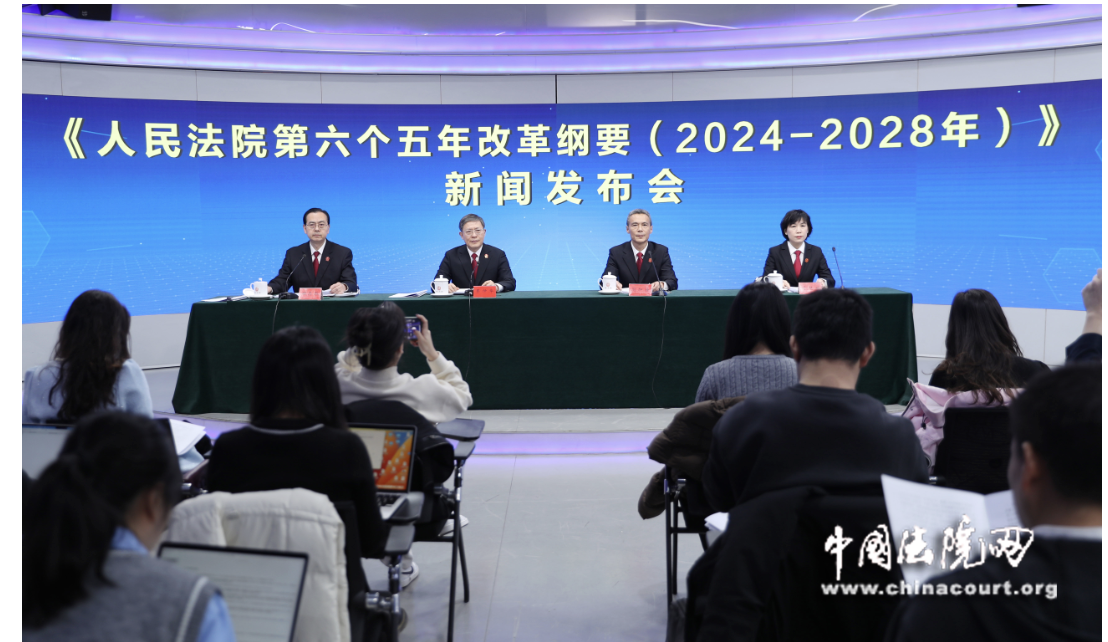
Decoding China’s Sixth Five-Year Judicial Reform Plan

photo of 6th Five-Year Judicial Reform Plan Press Conference

I recently (18 January 2026) published an article in the Zeitschrift für Chinesisches Recht/German Journal of Chinese Law entitled “Decoding China’s Sixth Five-Year Judicial Reform Plan.” The article can be downloaded from the journal website here and directly downloaded here or from the SSRN website.

 Many thanks to Benjamin Pissler and Holger Hanisch of the journal for their efficient and thoughtful editing. Special thanks to Maximus Sandler for his help with the references and Hu Changming (胡昌明) for his perceptive comments on earlier drafts of the article.

Wishing all followers and readers a very good year of the Horse! 马年吉祥!


China’s International Commercial Court Network: A Work in Progress

I was honored to be invited by the New York University School of Law’s U.S. Asia Law Institute to contribute a short essay to the Institute’s Perspectives blog, entitled China’s International Commercial Court Network: A Work in Progress

 Many thanks to Katherine Wilhelm for her skillful editing!  The essay would not have been possible without the hard work of Sun Jinping (孙金苹) (Elsa), one of my Peking University School of Transnational Law students, who reviewed information related to all 16 international commercial tribunals and assembled this chart. On 4 February, the Guangzhou Intermediate People’s Court announced that the Guangzhou international commercial tribunal had been established, so the total number of international commercial tribunals now stands at 17. Thanks also to several highly knowledgeable people who contributed their insights.


Mediation and Other Policy Signaling in the China International Commercial Court

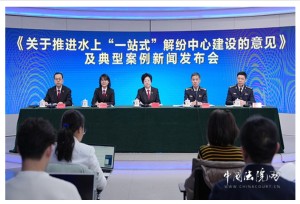
Joint press conference announcing the 2026 joint SPC/Ministry of Transportation document & typical cases

In June 2025  the China International Commercial Court (CICC)  mediated a case brought by a Swiss company against several Chinese companies. Two months later, the Supreme People’s Court (SPC) published it as a typical case. This case itself merits more attention than it has received thus far because of the facts of the case and the differing signals it sends to the domestic and foreign audience.  It also implicitly draws attention to two newly prominent priorities of the CICC and the SPC in foreign-related commercial cases–mediation and resolving the substance of disputes (实质性化解矛盾纠纷). It also shows how the SPC (including the CICC)  implements its “judicial responsibility to foster a first-class business environment characterized by market orientation, rule of law and internationalization.”

Facts of the case

According to information released by the SPC in June, 2025, the CICC has mediated approximately 20% of its cases, so resolving this case through mediation is typical.  As a mediation settlement, the original documents are not available on the CICC website, but some of the facts are set out in the “basic facts “(基本案情) section of the August, 2025 typical case.

The case involves liability for liquidation,  in this case related to a foreign arbitral award.  This press report states that liquidation liability cases have been increasing in recent years. A Swiss company was successful in London Metal Exchange arbitrations against a Shenzhen trading company and apparently sought to enforce the awards totaling over US $10 million in the Shenzhen courts.  However, a shareholder of Shenzhen trading company, a Henan Trading Company and the general manager of the Shenzhen trading company (one assumes related to the Henan company) deregistered the Shenzhen trading company without informing the Swiss company (which appears to be some type of fraud), following which the Swiss company filed suit in the CICC against the the  Henan Trading Company, that company’s parent, a Henan Coal-Fired Power Company, and others, demanding the Henan Trading Company pay the debts owing under the arbitration awards and the parent company be jointly and severally liable.

The five judge panel, headed by  Shen Hongyu, Chief Judge of the #4 Civil Division, used the pre-trial meeting procedure to identify the core issues through evidence exchange and came up with a settlement plan after multiple discussions with the parties.  It appears that for the Chinese parties, a major stumbling block was foreign exchange risks. The court organized a hearing of the case in court to engage in final mediation arrangements and sign the settlement agreement, with the Chinese parties performing the settlement agreement within a week.

Differing signals

This case sends two different signals to the domestic and foreign audience. On the one hand, it sends a signal to other Chinese parties about their legal obligations under the law and legally valid arbitration agreements, and on the other hand, illustrates to the foreign legal and business community the pro-arbitration stance of the SPC by upholding the ability of the foreign award creditor to recover against the shareholder (and shareholder’s parent) of the liquidated award debtor, with mediation an option that best enables voluntary and prompt recovery.  The case also demonstrates the strategic use foreign parties can make of the CICC. It shows that the CICC is fulfilling its judicial responsibility to “foster a first-class business environment characterized by market orientation, rule of law and internationalization” in its cases.

  Mediation

As to mediation in this case, the Chinese media and typical case reports have stated that the CICC “has consistently integrated mediation, an “Eastern experience,” into its case handling and has introduced measures to support mediation” (一直坚持将调解这项“东方经验”融于办案,并推出支持调解的举措).  This understates the subtle role of the CICC in mediating the case and accelerating internal (state-owned) company approvals for paying significant amounts of foreign currency abroad. This outcome was advantageous to the foreign award creditor because it better assured it would received what was owing under the arbitral awards.  With CICC holding the settlement signing at the court hearing and issuing documents to the parties immediately, it assured the foreign party of prompt payment.

More broadly, it signals that the SPC mediation policy extends to foreign-related commercial cases.  Documents and typical cases issued in 2025 and January, 2026 include:

  1. Opinions of the General Office of the Supreme People’s Court and the General Office of the Ministry of Transport on Promoting the Construction of “One-Stop” Dispute Resolution Centers on Waterways最高人民法院办公厅、交通运输部办公厅关于推进水上“一站式”解纷中心建设的意见 and the related typical Cases of one-stop dispute resolution on the water (水上“一站式”解纷典型案例) (see the photo above of the press conference);
  2. Opinions of the Supreme People’s Court on Advancing the High-Quality Development of International Commercial Courts to Serve and Safeguard a High Level of Opening Up (最高人民法院关于推进国际商事法庭高质量发展 服务保障高水平对外开放的意见), which contains a provision promoting mediation (as will be highlighted in one of my forthcoming articles;
  3. First Group of  Typical Cases Involving Foreign Commercial and Maritime Mediation Issued by the Supreme People’s Court  (最高法发布首批涉外商事海事调解典型案例;
  4. Second Group of Typical Cases Involving Foreign Commercial and Maritime Mediation (最高法发布第二批涉外商事海事调解典型案例), one of which is the CICC case.

Resolving the substance of disputes

Resolving the substance of disputes has been an SPC policy for some time, as illustrated in recent typical cases and many SPC documents and reports, such as:

  1. the SPC’s report on administrative litigation work;
  2. Guiding Opinions on Improving the Quality and Efficiency of Trial Work and Promoting the Substantial Resolution of Contradictions and Disputes关于在审判工作中促进提质增效 推动实质性化解矛盾纠纷的指导意见;
  3. the 3+N Mechanism for resolving administrative disputes, mentioned in the SPC’s report.

The typical case stresses the importance of actually resolving disputes by using the phrase (定分止争) (one of the SPC’s top keywords of 2024) several times.  That phrase is derived from Xi Jinping guidance,  and according to this, from originally from Legalist thought.

Concluding Comment

For those monitoring the evolution of the CICC, this case also illustrates the way that the CICC implements SPC current policy in an understated way.

2025 Year-End Supreme People’s Court Typical Cases

Press conference announcing the joint SPC & SPP administrative public interest litigation typical cases

The Supreme People’s Court (SPC) issued or participated in issuing close to two dozen groups of typical cases from the beginning of November to the end of December, 2025.

These typical cases reflect the latest policies promoted by the SPC and  President Zhang Jun (张军)’s preference for conveying judicial policy through typical cases.

Shortly after taking office, President Zhang Jun made his new policy explicit:

compared with [edited] cases , judicial interpretations and normative documents take a relatively long time to formulate. For new situations and problems that arise in the economy and society, if typical cases can be issued in a timely manner, and after soliciting opinions from relevant departments, judgments can be made and published in accordance with the law, the content will be more accessible and easier to understand, and the normative and guiding effects will be better.  与案例相比,司法解释、规范性文件的制定时间相对较长;对于经济社会中出现的新情况新问题,如果能及时发现典型案例,征求相关部门意见后依法作出裁判、发布出去,内容更通俗易懂,规范和引领效果也会更好。

Conveying policy through typical cases is also consistent with the guidance of General Secretary Xi Jinping, who has stressed that “one case is better than a dozen documents (习近平总书记强调, “一个案例胜过一打文件”).  Each group represents an accomplishment for the division, bureau, or office that reviewed and edited (compiled) the cases and, in some cases, negotiated with other institutions to select cases that meet the needs of multiple institutions.   This post highlights some of the trends visible in these latest typical cases, but first provides a Chinese case law system refresher.

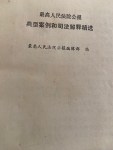
1993 collection of SPC Gazette typical cases & judicial interpretations

Quick Chinese case law system refresher

Typical cases are part of the SPC’s dynamic case guidance system. I am including a brief overview of the dynamic Chinese case law system to clarify the role of typical cases, as these two recent articles suggest confusion among journalists, and some of my own students have difficulty understanding the system.   I use the term “dynamic” because the elements of the case guidance system have changed under SPC President Zhang Jun 张军. My sense is that SPC judges in different substantive areas place different emphasis on case guidance as tools in their guidance toolbox, but that is a discussion for a different day and forum.

  1. The most persuasive type of cases in the case guidance system are guiding cases (指导性案例),  which have been approved by the SPC judicial (adjudication) committee.  Former Judge Guo Feng  described guiding cases here as “of  [an] authoritative, normative, exemplary, and uniformly applicable nature. They are de facto binding. The compilation of GCs has specific standards and standardized procedures and needs to meet requirements for high quality….Where a case being adjudicated is, in terms of the basic facts and application of law, similar to a Guiding Case released by the Supreme People’s Court, the court should refer to the “Main Points of the Adjudication” of the relevant Guiding Case in its ruling or judgment.” Judge Guo provides an authoritative explanation of the meaning of “refers to” and related issues in the same article linked above.  This earlier blogpost summarizes the 2020 SPC guidance on similar case search.
  2. The second most authoritative type of case is the reference case (参考案例).   As I wrote here, “reference cases” are a new type of edited case published in the People’s Court Case Database(人民法院案例库), which launched in early 2024.  The principal drafters of the People’s Court Case Database Work Procedures clarified in an authoritative article that “reference cases”  are “a new type of edited case created by the Case Database system. Their effectiveness is higher than other cases except for guiding cases.”  As of 23 December 2025, the  People’s Court Case Database contains 5216 reference cases.  My earlier post explains the selection process.
  3. Another type of guidance, which some SPC media describe as part of the case database system, is the Court Answers Platform, also translated as the “Judicial Q & A Platform,” which I analyzed in the earlier post.  The official intent, as evidenced in this article in SPC media, is for the People’s Court Database and the Court Answers Platform to be an integrated guidance product. This goal was mentioned in the SPC’s report to the NPC, as well as the latest court reform plan (about which I have a short article on its way to publication).
  4. The type of case guidance with the longest history is the typical (典型 model/exemplary/example) case. Typical cases too, are edited cases and are therefore “compiled.” The SPC Gazette started publishing typical cases in 1985, but I have earlier typical cases in other SPC publications in my research archives.
    As I wrote here, the SPC’s Gazette cases are generally considered to be the most authoritative of the typical cases, but there is no authoritative guidance on the definition or hierarchy of typical cases.  I have more details on typical cases in that article. Typical cases are considered to guide the lower courts as a form of case guidance and policy signaling.  Therefore, Chinese lawyers and in-house counsel also pay attention to typical cases. Typical cases are also used as a form of public legal education (普法, see here and here).
  5.  I am not further discussing the authoritativeness of judgments or rulings, but see my earlier discussion.

The rules derived from these cases are not static.  Provisions from typical cases may be incorporated into meeting minutes (conference summaries 会议纪要), for example,  while on 30 December 2025, the SPC issued a judicial interpretation that drew on questions raised on the Court Answers Platform. It is not unusual for provisions from guiding cases or judicial interpretations to be incorporated into legislation.

Overview of Recent Typical Cases

What the SPC has issued in the last two months of 2025 are typical cases (典型案例). The SPC issued several groups of typical cases with the Supreme People’s Procuratorate (SPP), which serve to harmonize views on specific issues between the two institutions and sometimes with multiple institutions.  The SPC issued several with regulatory/administrative institutions, reflecting a policy trend of recent years. President Zhang Jun highlighted this policy in his 2024 specialized report to the NPC Standing Committee on administrative litigation (I have a draft article that touches on this policy trend).  This year’s year-end typical cases include several groups with the Women’s Federation and one group with the All-China Federation of Trade Unions.

Some groups of cases promote mediation (phrased as promoting the Fengqiao Experience 枫桥经验). (For those with the time to read academic articles, a recent article by Professor Benjamin Liebman and Liu Zeming has an extended discussion of this.

Some typical cases of note:

  1. A group of domestic violence cases 最高法发布2025年中国反家暴典型案例.  Jeremy Daum’s (Yale Law School’s Paul Tsai China Center/Chinalawtranslate.com) analysis of those cases is found here. He said “the release shows a generally positive direction, and was interesting in that the cases were presented as showing compliance with international legal norms.”

2.  Fourth Group of  Civil Cases That Embody Socialist Core Values 最高人民法院发布5起第四批人民法院大力弘扬社会主义核心价值观典型民事案例  These cases appear to be aimed at educating the general public and providing some guidance for less experienced judges on how socialist core values can be applied. Among the cases are: two cases involving employers: a workplace sexual harassment case and an employer that withdrew a job offer after the candidate accepted it and had provided evidence of terminating his previous job; a slip and fall case brought by someone who focused on his phone rather than his step.  The SPC issuing a typical case conveying that workplace sexual harassment is a violation of socialist core values is particularly significant.

For those with a greater interest in socialist core values and court judgments, I wrote a quick summary of the related SPC guiding opinion here and commented that “it can be seen as a part of the ‘socialist core valueization’ of Chinese law and the legal system, and in particular, the judiciary. It is one important piece of how the judiciary is being further transformed in the Xi Jinping era.” A 2024 student note by Liu Zeming in the Columbia Journal of Transnational Law argues that through the project of integrating socialist core values into judgments,  the Party-state is effectively imposing a new conception of what Chinese law is.

3. Typical cases of application of model texts (third batch) (最高法发布示范文本应用典型案例(第三批)). These cases provide examples to the lower courts and public of how courts are using model texts (court forms), a project involving cooperation between the SPC,  Ministry of Justice, and All China Lawyers Association.  Bilingual versions of those forms are behind lawinfoChina.com’s paywall and Chinese versions are available in many places, such as here.    That link leads to a downloadable 900+ page document with the accompanying multi-institutional document and the court forms. The typical cases promote the use of those court forms. An experienced senior judge whom I contacted commented that “these forms are useful for some types of cases, such as traffic accident cases.”

4.  The SPC issued several groups of typical cases with the SPP. The two institutions issued a third group of administrative public interest cases 两高”联合发布第三批行政公益诉讼典型案例 .  The SPC contributed to the drafting of the procuratorate-led public interest litigation law.  Many of the cases involved a local procuracy providing a procuratorial suggestion to an administrative agency to enforce a provision of the law and filing suit when the suggestion was not taken seriously. One of the cases involved a county human resources bureau that did not properly supervise listings on a bureau-sponsored job platform, several of which restricted jobs to men only.  Another group of SPC and SPP typical cases involves corruption cases related to ordinary people (最高人民法院 最高人民检察院联合发布依法惩治群众身边腐败犯罪典型案例).  The cases involve embezzlement, fraud, and misappropriation of funds related to school meals, elderly and disabled person services, medical insurance, etc.  Another group focuses on job-related crimes in the financial sector (最高人民法院、最高人民检察院联合发布依法惩治金融领域职务犯罪典型案例), with cases of corrupt financial regulators and bankers.  The case descriptions provide insights into the many ways corruption can be performed. The fourth group relates to the courts and procuratorate joining forces to substantively resolve administrative disputes, also a policy promoted in recent years.   法检合力法治化实质性化解行政争议典型案例.

4. Typical cases with regulators include: cases with the National Financial Regulatory Administration promoting diversified dispute resolution (particularly mediation) 国家金融监督管理总局; typical cases with the National 最高人民法院联合发布金融领域纠纷多元化解典型案例 and the State Administration of Cultural Heritage 最高人民法院、国家文物局联合发布依法推进文物保护典型案例

5. The SPC issued typical cases with the Women’s Federation as well as with the Women’s Association plus other institutions.  All of these cases relate to women, children, and families. One group of typical cases with the Women’s Federation involving judicial assistance to minors (最高法、全国妇联联合发布保护未成年人权益司法救助典型案例).  The two institutions have jointly issued typical cases several years in a row, previously in time to coincide with Children’s Day. This year, two of the cases involved providing psychological services to the affected minors,  and all involved courts providing financial and other arrangements for minors who lost one or both parents.  It provides a glimpse into the difficulties faced by orphans, particularly in rural areas. The SPC, SPP, Women’s Federation, and Ministry of Justice issued the top 10 cases protecting women’s and children’s rights   Another group of typical cases with the Women’s Federation and Ministry of Justice promotes mediation in family disputes (最高人民法院与全国妇联、司法部联合发布婚姻家庭纠纷调解工作典型案例

6. The SPC issued two groups of typical cases promoting the protection of private enterprise, including one group on private enterprise property rights and retrial cases involving the protection of the rights of private entrepreneurs 最高法发布涉民营企业产权和民营企业家权益保护再审典型案例. Almost 10 years ago, I wrote about a document conveying many of the same points as these typical cases.  Unfortunately, it appears that protecting the rights of private entrepreneurs is an “evergreen” issue for the Chinese courts.

7.  Several groups of typical cases involve labor issues: one involving the evergreen issue of wage arrears of migrant workers (最高人民法院发布人民法院治理欠薪典型执行案例); another issued with the SPP and the All-China Federation of Trade Unions  on using “one letter and two documents”  to protect workers rights (最高法会同全国总工会、最高检联合发布 2025年劳动法律监督“一函两书”典型案例).

  Concluding comment

The primary purpose of these typical cases appears to vary, but all signal “people-centered.”  For the person with patience to wade through the initial political framing, they provide slivers of insight into current judicial policy,  and persistent issues in society, the operation of the judicial system.

The SPC also intends these typical cases to evidence that the SPC is implementing the Opinions of the Central Committee of the Communist Party of China on Strengthening Trial Work in the New Era  中共中央关于加强新时代审判工作的意见, the 2025 Party document guiding the work of the courts, which President Zhang Jun has described as “the major political task for the courts at present and the foreseeable future.”

______________________________________

Many thanks to Yuan Ye, PKU doctoral student, for his comments on this post.  This year, I will continue to focus on writing longer articles and trust that some of the articles stuck in the pipeline will see the light of day.  One hope I have for my own work is that I am able to spend some time inside the SPC, although I am doubtful that it will ever be possible in my lifetime.