Category Archives: socialist core values

2025 Year-End Supreme People’s Court Typical Cases

Press conference announcing the joint SPC & SPP administrative public interest litigation typical cases

The Supreme People’s Court (SPC) issued or participated in issuing close to two dozen groups of typical cases from the beginning of November to the end of December, 2025.

These typical cases reflect the latest policies promoted by the SPC and  President Zhang Jun (张军)’s preference for conveying judicial policy through typical cases.   Conveying policy through typical cases is also consistent with the guidance of General Secretary Xi Jinping, who has stressed that “one case is better than a dozen documents (习近平总书记强调, “一个案例胜过一打文件”).  Each group represents an accomplishment for the division, bureau, or office that reviewed and edited (compiled) the cases and, in some cases, negotiated with other institutions to select cases that meet the needs of multiple institutions.   This post highlights some of the trends visible in these latest typical cases, but first provides a Chinese case law system refresher.
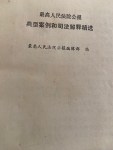
1993 collection of SPC Gazette typical cases & judicial interpretations

Quick Chinese case law system refresher

Typical cases are part of the SPC’s dynamic case guidance system. I am including a brief overview of the dynamic Chinese case law system to clarify the role of typical cases, as these two recent articles suggest confusion among journalists, and some of my own students have difficulty understanding the system.   I use the term “dynamic” because the elements of the case guidance system have changed under SPC President Zhang Jun 张军. My sense is that SPC judges in different substantive areas place different emphasis on case guidance as tools in their guidance toolbox, but that is a discussion for a different day and forum.

  1. The most persuasive type of cases in the case guidance system are guiding cases (指导性案例),  which have been approved by the SPC judicial (adjudication) committee.  Former Judge Guo Feng  described guiding cases here as “of  [an] authoritative, normative, exemplary, and uniformly applicable nature. They are de facto binding. The compilation of GCs has specific standards and standardized procedures and needs to meet requirements for high quality….Where a case being adjudicated is, in terms of the basic facts and application of law, similar to a Guiding Case released by the Supreme People’s Court, the court should refer to the “Main Points of the Adjudication” of the relevant Guiding Case in its ruling or judgment.” Judge Guo provides an authoritative explanation of the meaning of “refers to” and related issues in the same article linked above.  This earlier blogpost summarizes the 2020 SPC guidance on similar case search.
  2. The second most authoritative type of case is the reference case (参考案例).   As I wrote here, “reference cases” are a new type of edited case published in the People’s Court Case Database(人民法院案例库), which launched in early 2024.  The principal drafters of the People’s Court Case Database Work Procedures clarified in an authoritative article that “reference cases”  are “a new type of edited case created by the Case Database system. Their effectiveness is higher than other cases except for guiding cases.”  As of 23 December 2025, the  People’s Court Case Database contains 5216 reference cases.  My earlier post explains the selection process.
  3. Another type of guidance, which some SPC media describe as part of the case database system, is the Court Answers Platform, also translated as the “Judicial Q & A Platform,” which I analyzed in the earlier post.  The official intent, as evidenced in this article in SPC media, is for the People’s Court Database and the Court Answers Platform to be an integrated guidance product. This goal was mentioned in the SPC’s report to the NPC, as well as the latest court reform plan (about which I have a short article on its way to publication).
  4. The type of case guidance with the longest history is the typical (典型 model/exemplary/example) case. Typical cases too, are edited cases and are therefore “compiled.” The SPC Gazette started publishing typical cases in 1985, but I have earlier typical cases in other SPC publications in my research archives.
    As I wrote here, the SPC’s Gazette cases are generally considered to be the most authoritative of the typical cases, but there is no authoritative guidance on the definition or hierarchy of typical cases.  I have more details on typical cases in that article. Typical cases are considered to guide the lower courts as a form of case guidance and policy signaling.  Therefore, Chinese lawyers and in-house counsel also pay attention to typical cases. Typical cases are also used as a form of public legal education (普法, see here and here).
  5.  I am not further discussing the authoritativeness of judgments or rulings, but see my earlier discussion.

The rules derived from these cases are not static.  Provisions from typical cases may be incorporated into meeting minutes (conference summaries 会议纪要), for example,  while on 30 December 2025, the SPC issued a judicial interpretation that drew on questions raised on the Court Answers Platform. It is not unusual for provisions from guiding cases or judicial interpretations to be incorporated into legislation.

Overview of Recent Typical Cases

What the SPC has issued in the last two months of 2025 are typical cases (典型案例). The SPC issued several groups of typical cases with the Supreme People’s Procuratorate (SPP), which serve to harmonize views on specific issues between the two institutions and sometimes with multiple institutions.  The SPC issued several with regulatory/administrative institutions, reflecting a policy trend of recent years. President Zhang Jun highlighted this policy in his 2024 specialized report to the NPC Standing Committee on administrative litigation (I have a draft article that touches on this policy trend).  This year’s year-end typical cases include several groups with the Women’s Federation and one group with the All-China Federation of Trade Unions.

Some groups of cases promote mediation (phrased as promoting the Fengqiao Experience 枫桥经验). (For those with the time to read academic articles, a recent article by Professor Benjamin Liebman and Liu Zeming has an extended discussion of this.

Some typical cases of note:

  1. A group of domestic violence cases 最高法发布2025年中国反家暴典型案例.  Jeremy Daum’s (Yale Law School’s Paul Tsai China Center/Chinalawtranslate.com) analysis of those cases is found here. He said “the release shows a generally positive direction, and was interesting in that the cases were presented as showing compliance with international legal norms.”

2.  Fourth Group of  Civil Cases That Embody Socialist Core Values 最高人民法院发布5起第四批人民法院大力弘扬社会主义核心价值观典型民事案例  These cases appear to be aimed at educating the general public and providing some guidance for less experienced judges on how socialist core values can be applied. Among the cases are: two cases involving employers: a workplace sexual harassment case and an employer that withdrew a job offer after the candidate accepted it and had provided evidence of terminating his previous job; a slip and fall case brought by someone who focused on his phone rather than his step.  The SPC issuing a typical case conveying that workplace sexual harassment is a violation of socialist core values is particularly significant.

For those with a greater interest in socialist core values and court judgments, I wrote a quick summary of the related SPC guiding opinion here and commented that “it can be seen as a part of the ‘socialist core valueization’ of Chinese law and the legal system, and in particular, the judiciary. It is one important piece of how the judiciary is being further transformed in the Xi Jinping era.” A 2024 student note by Liu Zeming in the Columbia Journal of Transnational Law argues that through the project of integrating socialist core values into judgments,  the Party-state is effectively imposing a new conception of what Chinese law is.

3. Typical cases of application of model texts (third batch) (最高法发布示范文本应用典型案例(第三批)). These cases provide examples to the lower courts and public of how courts are using model texts (court forms), a project involving cooperation between the SPC,  Ministry of Justice, and All China Lawyers Association.  Bilingual versions of those forms are behind lawinfoChina.com’s paywall and Chinese versions are available in many places, such as here.    That link leads to a downloadable 900+ page document with the accompanying multi-institutional document and the court forms. The typical cases promote the use of those court forms. An experienced senior judge whom I contacted commented that “these forms are useful for some types of cases, such as traffic accident cases.”

4.  The SPC issued several groups of typical cases with the SPP. The two institutions issued a third group of administrative public interest cases 两高”联合发布第三批行政公益诉讼典型案例 .  The SPC contributed to the drafting of the procuratorate-led public interest litigation law.  Many of the cases involved a local procuracy providing a procuratorial suggestion to an administrative agency to enforce a provision of the law and filing suit when the suggestion was not taken seriously. One of the cases involved a county human resources bureau that did not properly supervise listings on a bureau-sponsored job platform, several of which restricted jobs to men only.  Another group of SPC and SPP typical cases involves corruption cases related to ordinary people (最高人民法院 最高人民检察院联合发布依法惩治群众身边腐败犯罪典型案例).  The cases involve embezzlement, fraud, and misappropriation of funds related to school meals, elderly and disabled person services, medical insurance, etc.  Another group focuses on job-related crimes in the financial sector (最高人民法院、最高人民检察院联合发布依法惩治金融领域职务犯罪典型案例), with cases of corrupt financial regulators and bankers.  The case descriptions provide insights into the many ways corruption can be performed. The fourth group relates to the courts and procuratorate joining forces to substantively resolve administrative disputes, also a policy promoted in recent years.   法检合力法治化实质性化解行政争议典型案例.

4. Typical cases with regulators include: cases with the National Financial Regulatory Administration promoting diversified dispute resolution (particularly mediation) 国家金融监督管理总局; typical cases with the National 最高人民法院联合发布金融领域纠纷多元化解典型案例 and the State Administration of Cultural Heritage 最高人民法院、国家文物局联合发布依法推进文物保护典型案例

5. The SPC issued typical cases with the Women’s Federation as well as with the Women’s Association plus other institutions.  All of these cases relate to women, children, and families. One group of typical cases with the Women’s Federation involving judicial assistance to minors (最高法、全国妇联联合发布保护未成年人权益司法救助典型案例).  The two institutions have jointly issued typical cases several years in a row, previously in time to coincide with Children’s Day. This year, two of the cases involved providing psychological services to the affected minors,  and all involved courts providing financial and other arrangements for minors who lost one or both parents.  It provides a glimpse into the difficulties faced by orphans, particularly in rural areas. The SPC, SPP, Women’s Federation, and Ministry of Justice issued the top 10 cases protecting women’s and children’s rights   Another group of typical cases with the Women’s Federation and Ministry of Justice promotes mediation in family disputes (最高人民法院与全国妇联、司法部联合发布婚姻家庭纠纷调解工作典型案例

6. The SPC issued two groups of typical cases promoting the protection of private enterprise, including one group on private enterprise property rights and retrial cases involving the protection of the rights of private entrepreneurs 最高法发布涉民营企业产权和民营企业家权益保护再审典型案例. Almost 10 years ago, I wrote about a document conveying many of the same points as these typical cases.  Unfortunately, it appears that protecting the rights of private entrepreneurs is an “evergreen” issue for the Chinese courts.

7.  Several groups of typical cases involve labor issues: one involving the evergreen issue of wage arrears of migrant workers (最高人民法院发布人民法院治理欠薪典型执行案例); another issued with the SPP and the All-China Federation of Trade Unions  on using “one letter and two documents”  to protect workers rights (最高法会同全国总工会、最高检联合发布 2025年劳动法律监督“一函两书”典型案例).

  Concluding comment

The primary purpose of these typical cases appears to vary, but all signal “people-centered.”  For the person with patience to wade through the initial political framing, they provide slivers of insight into current judicial policy,  and persistent issues in society, the operation of the judicial system.

The SPC also intends these typical cases to evidence that the SPC is implementing the Opinions of the Central Committee of the Communist Party of China on Strengthening Trial Work in the New Era  中共中央关于加强新时代审判工作的意见, the 2025 Party document guiding the work of the courts, which President Zhang Jun has described as “the major political task for the courts at present and the foreseeable future.”

______________________________________

Many thanks to Yuan Ye, PKU doctoral student, for his comments on this post.  This year, I will continue to focus on writing longer articles and trust that some of the articles stuck in the pipeline will see the light of day.  One hope I have for my own work is that I am able to spend some time inside the SPC, although I am doubtful that it will ever be possible in my lifetime.
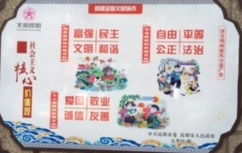
Integrating socialist core values into court judgments

On 18 February 2021,  the Supreme People’s Court (SPC) issued the Guiding Opinions on Deeply Promoting the Integration of  Socialist Core Values into the Analysis and Reasoning of Adjudicative Instruments (关于深入推进社会主义核心价值观融入裁判文书释法说理的指导意见 the SCV Guiding Opinion).  This Guiding Opinion is intended to guide the way SPC  and lower court judges write their court judgments and rulings (and any other judicial document issued to the public) to better incorporate the use of socialist core values and for those judgments to be better understood by the general public. 

For close observers of the SPC and the Chinese court system, the SCV Guiding Opinion came as no surprise.  That this Opinion would be issued was clear from phrases in several Party and SPC documents issued in recent years.  The SCV Guiding Opinion is important not only for what it says about the use of socialist core values in judgments and also for its guidance to judges on the analysis and reasoning in court judgments, rulings, and other documents.  

This blogpost is not intended as an extended academic analysis of socialist core values and the law, of which there are several excellent ones by Sue Trevaskes and Delia Lin.  It will address some more modest questions, such as:

  • what it says, including what it requires of SPC and lower court judges;
  • the documents linked to the SCV Guiding Opinion
  • how the SCV Guiding Opinion should be classified & whether it is binding or persuasive;
  • what a quick sampling of judgments containing socialist core values uncovers,
  • the vision of the court system portrayed by the SCV Guiding Opinion.

I have italicized my comments.

Summary of the SCV Guiding Opinion

The background for the SCV Guiding Opinion is that it is part of what is required by the Party Center to integrate socialist core values into the legal system and to promote their use in national governance.  This has been a theme in writings of Xi Jinping about the law, the Party  Plan on Building the Rule of Law in China (2020–2025), previous Party documents, and related SPC documents.  Some of those background documents are listed in a later section of this blogpost.

Article 1 provides that the underlying principles of the SCV Guiding Opinion are:

  1. a fusion of law and morality, which is linked to their fusion in traditional legal thought ( 法治与德治相结合); 
  2. people-oriented (以人民为中心), meaning that judgments should be clear to ordinary people and serve the purpose of educating them; and
  3. the organic unity of political, legal, and social effectiveness (政治效果、法律效果和社会效果有机统一 ), because by strengthening the guiding role of socialist core values it will enhance the legal, social, and rational recognition of judicial judgment.

The summary below highlights some of the principal points for Chinese judges.

Article 4 specified the types of judgments in which the use of socialist core values should be increased:

  1.  Cases involving national interests, major public interest, and widespread public concern;
  2. Cases involving epidemic prevention and control, emergency rescue and disaster relief, protection of heroes, brave actions for righteousness, legitimate defense,  and other such cases may trigger social moral evaluation;
  3. Cases involving the protection of vulnerable groups such as the elderly, women, children, and the disabled, as well as groups that have major disputes and may cause widespread concern in the society;
  4.  Cases involving public order and good customs, customs, equality of rights, ethnic religions, etc., where the parties to the litigation have major disputes and may cause widespread concern in the society;
  5. Cases involving new situations and new issues that require in-depth interpretation of legal provisions, judicial policies, etc., to guide social trends and establish value orientation;
  6. Other analogous cases.

What this means is that in cases where there is a great deal of public concern, judges should seek to use socialist core values.  Some of these, especially with national interest, major public interest, types of cases that attract Party leadership attention, or wide public concern are likely to be those in which the higher levels of the courts, or local political-legal commissions provide their views.

A significant part of the SCV Guiding Opinion contains guidance to lower court judges. I surmise that the guidance is directed towards less experienced and educated judges. My understanding is that more sophisticated judges, who are highly knowledgeable about political matters in addition to being technically highly competent, would consider the guidance unnecessary.

Articles 5-6 address judgment drafting.  These provisions relate to the  2018 SPC Guiding Opinions on Strengthening and Standardizing the Analysis and Reasoning in Adjudicative Instruments. Article 5 gives Chinese judges rules of interpretation generally in cases involving socialist core values., directing them to first look to a normative legal document (law or judicial interpretation) as the basis for judgment, the legislative intent, and supplement it with socialist core values.  Article 6 gives directions to judges in civil and commercial cases where there is no normative legal document as the direct basis for the judgment. Judges should use socialist core values ​​as the guide and custom and the most similar legal provisions as the basis for the judgment; if there is no most similar legal provision, judges should make judicial decisions in accordance with the spirit of the legislation, legislative purposes, and legal principles, and make full use of the core socialist values ​​in the judgment documents to explain the basis and reasons for the judgment.  It is this principle that has attracted dry comments from some of the legal professionals with whom I am acquainted.

Article 7 gives guidance to judges in cases involving multiple socialist core values, directing them to consider the spirit of the legislation, legal principles, provisions, and law and legal provisions to balance and select the relevant principles and values.   Article 8 directs judges to respond, if possible, orally in court, to the use of socialist core values by parties in court.

Article 13 directs judges handling cases that fall into one of the Article 4 categories, to emphasize socialist core values, in situations in which cases are discussed in professional judges committees or judicial (adjudication) committees.

Article 14 encourages socialist core values to be included in judicial training, particularly that related to the Civil Code, and Article 16 encourages competitions to find the best judgments that cite socialist core values.

Flagging the SCV Guiding Opinion

Several recent Party and SPC documents flagged the SCV Guiding Opinion.  Among them are:

  • the April 2020 Opinions of the Supreme People’s Court on Thoroughly Implementing the Spirit of the Fourth Plenum of the 19th Party Congress to Advance the Modernization of the Judicial System and Judicial Capacity– (最高人民法院关于人民法院贯彻落实党的十九届四中全会精神推进审判体系和审判能力现代化的意见)–improve and promote the in-depth integration of socialist core values ​​into the supporting mechanisms for trial and enforcement (完善推动社会主义核心价值观深度融入审判执行工作配套机制). My blogpost on that document briefly mentioned socialist core values;
  • the 2020 Plan on Building the Rule of Law in China (2020–2025), mentioned above
  • the 2019 5th Five Year Judicial Reform Plan Outline; and
  • the 4th Plenum of the 19th Party Congress.

This Guiding Opinion can be considered the progeny of the SPC’s 2015 Opinions on Cultivating and Practising Socialist Core Values at People’s Courts. 最高人民法院关于在人民法院工作中培育和践行社会主义核心价值观的若干意见, after which the SPC issued typical cases, both discussed in Sue Trevaskes’ and Delia Lin’s academic articles linked above. Their articles also discuss other related documents. As I wrote in 2018, the SPC issued a five-year plan, never made public, to incorporate socialist core values into judicial interpretations.

How to Classify the SCV Guiding Opinion

As to which basket of SPC documents the SCV Guiding Opinion should be placed, that relates to the catalog that I set out in a November 2020 blogpost on the SPC’s soft law. I classified a number of the SPC’s documents into different categories.  According to my classification, the SCV Guiding Opinion should be classified as Opinion Type 1, although the criteria I mentioned don’t fit perfectly.

As I defined it, that type of Opinion is one issued solely by the SPC, which create and transmit to the lower courts new judicial policy, update previous judicial policy, and establish new legal guidance that may be eventually crystallized in judicial interpretations and direct the lower courts, but cannot be cited in judicial judgments or rulings. They are generally linked to an important Party or state strategy or initiative. 

The SCV Guiding  Opinion is linked to an important Party and state strategy or initiative, that of promoting socialist core values. As a “guiding opinion,” it is intended to push policy forward. Article 17 of this document directs the SPC itself and lower courts to issue occasionally socialist core value-related model cases. From a quick search of recent lower court model cases, local courts have taken account of this.

Socialist Core Values in Chinese court judgments 

Chen Liang, one of my current students, sampled cases from basic level courts in various parts of China as set out in this spreadsheet. He originally found over 6000 cases that used “socialist core values.”In his research, he found three ways that courts invoke socialist core values:

  1.  elaborating a legal standard (such as Case No. 1), a trend that I had found in my own research);

In this case, the defendant (a government branch) rejected the plaintiff’s application to recognize his father, a KMT military officer, as a martyr who died in the Anti-Japanese War, and the plaintiff sued to correct this decision. The Court invoked the SCV to emphasize the importance of the recognition of someone as a martyr, and then affirmed the defendant’s strict scrutiny of the application.

2.invoking socialist core values as a way to allocate liability (such as Case No. 9); 

The plaintiff was hit by the defendant, and was in hospital. After 15 days in hospital, the doctor recommended him to leave, but he refused by claiming he had headache. Then, the plaintiff stayed in hospital for 110 days, and sued the defendant for compensation of medical fees of 110 days. When considering the exact duration to be compensated, the Court noted that the plaintiff’s action was wasting public medical resources, which was a violation of the SCV, and then confirmed that the defendant only had to compensate for the medical fees of 15 days in hospital.

3. invoking socialist core values as a way to educate people (or to promote total social welfare) (such as Case 10).

The plaintiff and defendant agreed to jointly operate a restaurant, and they had disputes during the operation. The plaintiff sued for damage. During the trial, the parties insulted with dirty words against each other. Given that, the Court asked the parties to contemplate on their behaviors considering the whole society was promoting SCV.

This use of cases to educate the public, noted in the academic articles mentioned above, also links to a more recent line of documents about which I wrote in July 2020, relating to using cases to explain the law and the popularization of law responsibility system (普法责任制). As mentioned in that blogpost, Sue Trevaskes has also written about the history of the popularization of law (pufa).

In my view, following this document, we are likely to see many more cases mentioning socialist core values, likely falling in all three categories mentioned above.

Vision of the Chinese Court System

This Guiding Opinion can be seen as a part of the “socialist core valueization” of Chinese law and the legal system, and in particular, the judiciary. It is one important piece of how the judiciary is being further transformed in the Xi Jinping era.

Article 1 is part of official legal ideology so that the drafters of this Guiding Opinion (the  SPC’s Judicial Reform Office) must incorporate those principles. The Party Center requires this to be done.   As  Sue Trevaskes and Delia Lin mentioned in their writings, as in the traditional legal state, “morality here is treated in a particular normative sense whereby claims are made about the unified nature of socialist values held by China’s rulers and the ruled.”  This long-time observer of Chinese society would question whether the moral values across Chinese society are as unified as this ideal has it. 

An aspect the drafters of this document may not have considered is  whether this approach to law and court judgments is consistent with China’s desire to promote the use of Chinese law overseas, which the SPC has promoted in its Opinion on Further Providing Judicial Services and Guarantees by the People’s Courts for the Belt and Road Initiative (BRI Opinion #2, discussed in this blogpost).  The fusion of law and morality in cases involving multinational commercial parties seems problematic. 

These principles see the public as a body to be educated, and that judgments need to further incorporate socialist core values to be better accepted by the public.  Writing judgments in language the public can understand–plain language judgments–is a worldwide concern of domestic courts, but incorporating socialist core values may or not be the way to achieve that.

As I mentioned above, a significant part of the SCV Guiding Opinion contains guidance to lower court judges. I surmise that the Judicial Reform Office decided that this guidance was needed for less experienced and educated judges in less developed parts of China. The more experienced judges, with many years of experience and training, both substantive and ideological, are unlikely to need such guidance set out in an SPC document.

The reality of Chinese society that Chinese judges face, particularly at the local level, is not the one that matches the socialist core values ideal. That can be seen from cases discussed in the Chinese professional media (and some cases that have caught Chinese media attention) about some of the difficult issues that they face when needing to incorporate socialist core values. A few of those cases could include:

cases involving the status of children whose parents are not married under the Chinese legal definition of marriage to one another. That may be gay or lesbian couples or one in which a married man fathers a child with a woman with whom he is not married;

Cases involving disputes between a gay or lesbian couple that has split over mutually-owned property; 

Cases involving the rights of single women who wish to have children without being married.

The SCV Guiding Opinion can be seen a signal of the direction towards which the Chinese courts are being guided.  The more sophisticated judges will know how to balance the above requirements with the need to issue a judgment that parties in cases that involve fundamental personal rights find acceptable.


Happy Niu 🐂Year!


Happy Niu 🐂Year to all blog followers and readers! Best wishes to all for good health, success in work and study, and all else!

In recent weeks I have been focusing on several longer pieces of writing and am still in “focus mode.”

While most of the Supreme People’s Court  (SPC) has been taking a break, based on previous year’s reports, it is likely that the team of people working on drafting President Zhou Qiang’s speech to the National People’s Congress (NPC) are hard at work.  I surmise that they will draw on January’s Central Political-Legal annual work conference, where responsibilities for implementing this year’s major tasks were allocated, and guidance from President Xi was transmitted. At that time, the Party leadership heard work reports from the SPC’s (and Supreme People’s Procuratorate’s) Party Group, so it seems likely that the report to the NPC will draw on that report as well.

Among the content that I expect to be included in the report is:

  • successful transition to the Civil Code, including review  of old judicial interpretations (and other judicial normative documents), canceling and amending old ones;
  • successes in meeting the challenges that Covid-19 meant for the courts, including the increased use of online proceedings;
  • smart courts and informatization;
  • accomplishments of the Supreme People’s Court’s Intellectual Property Court, including its first anti-suit injunction;
  • the issuance, for the first time, of reports on the judicial review of arbitration in 2019 and judicial assistance in civil and commercial matters between the Mainland and Hong Kong.  The full text of the two reports has not yet been released to the public, so I surmise that they will be released during the NPC meeting;
  • In the area of criminal law, likely the effective use of criminal proceedings in the battle against Covid-19;
  • successes in the saohei (organized crime) campaign;
  • successes in the area of environmental law, such as the recent signing of a framework agreement between the SPC and the leading small group on the protection of the Yellow River and the June, 2020 policy document on providing judicial services and guarantees to the protection and high quality development of the Yellow River;
  • furthering of socialist core values, such as the guiding opinion issued on 18 February on integrating those values into judgments (最高人民法院印发《关于深入推进社会主义核心价值观融入裁判文书释法说理的指导意见) and
  • judicial reforms such as the recently approved establishment of the Beijing Financial Court (the Shanghai Financial Court has been very busy since it was established) and the piloting of reforms to separate simple and complicated cases (the SPC recently submitted a midterm report to the NPC Standing Committee on the pilots).

We’ll see next month how accurate the above guesses are. In the meantime, additions or corrections are welcome.

______________________________________

The SPC New Year’s greetings are ©the SPC, found in this short video