Tag Archives: Arbitration Law amendment

The Amended Arbitration Law and the Supreme People’s Court

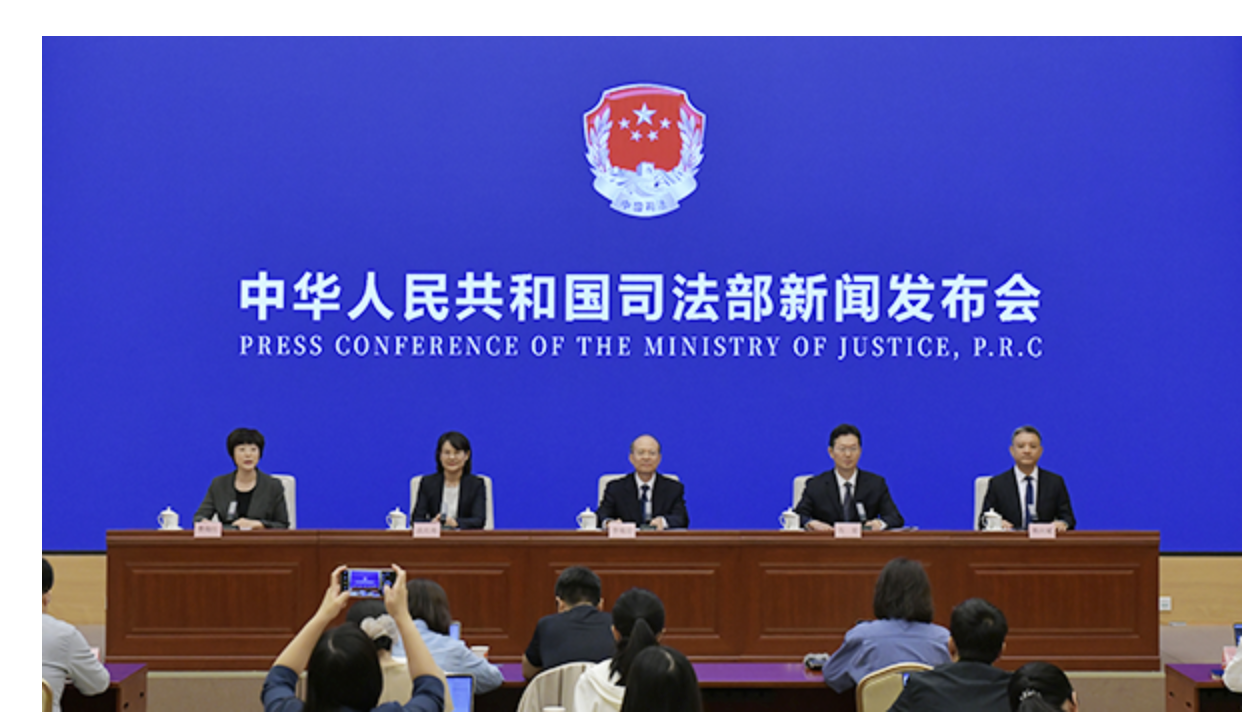
Press conference on the amended Arbitration Law, Judge Shen, second from left

Those involved in Chinese dispute resolution in any way know that the role of the Supreme People’s Court (SPC) in advancing arbitration in China is crucial and irreplaceable. The question on many people’s minds is –what will the SPC do to support the recently amended Arbitration Law?

So I will summarize what is known about the SPC’s next steps in ensuring a smooth transition from the old to the new Arbitration Law and supplement that with some of my own predictions.

What do we know? There have been substantial changes to the Arbitration Law, some of which will have an impact on the courts. Chief Judge of the SPC’s #4 Civil Division Shen Hongyu (沈红雨) told a Ministry of Justice press conference that:

The Supreme People’s Court will conduct thorough research, widely solicit opinions from all sectors, and with the strong support of the Legislative Affairs Commission of the Standing Committee of the National People’s Congress and the Ministry of Justice, comprehensively review existing judicial interpretations and normative documents related to the Arbitration Law to ensure the drafting and formulation of supporting judicial interpretations for the newly revised Arbitration Law, guaranteeing that the revised content of the Arbitration Law is effectively implemented in judicial practice. (最高人民法院将认真调研、广泛听取各界意见,在全面梳理既有仲裁法相关司法解释和规范性文件的基础上,在全国人大法工委、司法部的大力支持下,做好新修订仲裁法配套司法解释的起草制定工作,确保仲裁法修订内容在司法实践中落地落细。)

Judge Shen said a great deal in this one very long sentence. The “thorough research” will involve combing through hundreds of pages of judicial interpretations and other judicial documents linked to the Arbitration Law, relevant sections of the Civil Procedure Law, and its judicial interpretation, plus the current draft interpretation of the foreign-related part.

The work involved, which will be invisible to those of us outside the SPC, will be to determine which interpretations or documents remain valid in whole or in part. If interpretations or documents are partially valid, do they need to be amended to conform to the amended Arbitration Law? Will a transitional document be necessary so that lower court judges (and SPC judges) will be ready to apply the amended law? I expect so, because the changes are significant and lower court judges need to have a reference document to hand so that they can efficiently handle arbitration-related matters, whether they are requests from arbitral tribunals to assist in collecting evidence, or judicial review of arbitration.

My best guess is that the SPC will issue a transitional document or documents in the run-up to March 1, 2026, when the Arbitration Law becomes effective, likely amending previous judicial interpretations or documents to be consistent with the new law and deleting inconsistent provisions, plus a document that clearly sets out the new arrangements, so that lower courts will be well prepared. I further surmise that the SPC will use much of 2026 to design a new comprehensive judicial interpretation to incorporate many of the provisions in the old ones. This is more complicated than it seems.

A new judicial interpretation will touch upon substantive and procedural issues. Some of those procedural issues need to draw on the specialized competence of other specialized institutions within the SPC, such as the case-filing division (tribunal) and the enforcement bureau. In the press conference mentioned above, Judge Shen flagged some of the important issues, such as:

  1. The concept of “the seat” in arbitration
  2. Judicial review of special arbitration (ad hoc arbitration);
  3. Arbitration service of process
  4. Arbitration preservative measures;
  5. Arbitration preservation system
    Those other specialized institutions will need to consider whether any of the new measures in the Arbitration Law require measures related to their work, such as case filing or enforcement procedures. Once their input is received, the institutions that Judge Shen mentioned earlier— the Legislative Affairs Commission of the Standing Committee of the National People’s Congress (Legislative Affairs Commission 法工委) and the Ministry of Justice will review that comprehensive draft carefully. The Ministry of Justice and the Legislative Affairs Commission are sure to give detailed comments for the SPC to consider. The SPC will want to make sure that each provision is operable in practice before it is released. The procedure for drafting such an interpretation is time-consuming and as is said in the law firm world, “requires attention to detail.”

_________________________________________________________________

This post is a slightly revised version of a speech I gave on November 12, 2025, at the opening of the Beijing Arbitration Commission’s Hong Kong Center. My apologies for the long gap between posts.

Supreme People’s Court’s 2023 Judicial Review of Arbitration Annual Report

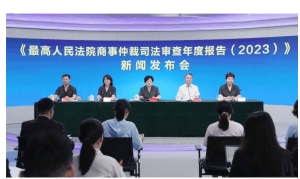
Photo of press conference

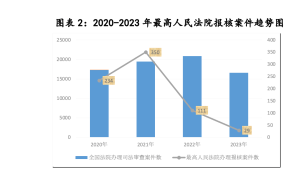
The Supreme People’s Court (SPC), along with the Ministry of Justice, held a press conference on 9 September, reported here, to announce the publication of the 2023 annual report of judicial review of commercial arbitration. It was written by the SPC’s #4 Civil Division in collaboration with the Capital University of Economics and Business.  I have attached the report as a PDF to enable readers in the United States and any other jurisdictions where the SPC’s official website is unavailable to download the report. This report is Chinese only, and an English version is understood to be forthcoming. There is a great deal of interesting information for practitioners and academics, but competing obligations do not permit me to analyze the report in detail. The number of cases reported to the SPC under its prior reporting system was reduced enormously (29 in 2023, compared to 350 in 2021, related to an amendment of the 2017 judicial interpretation on reporting procedures ). See the statistics from the report:

Trends in SPC Prior Review of Arbitration, 2020-2023 (yellow), blue columns are the total number of judicial review of arbitration cases


An infographic summarizing the results is in this report.

For anyone interested in the role of the SPC in legislation (as I wrote about in my article on how the SPC supports the development of foreign-related rule of law (long/short version), the report has a section describing in detail the SPC’s contribution to the drafting of amendments to the Civil Procedure Law, amendments to Arbitration Law, the drafting of Foreign State Immunity Law, etc.)

Justice Tao Kaiyuan on the State of Chinese International Commercial Dispute Resolution

In March of this year, Supreme People’s Court (SPC) Vice President Justice Tao Kaiyuan released, by the standards applicable to senior SPC leaders, forthright public comments about the state of Chinese international commercial dispute resolution and her proposed solutions in an article in the SPC’s glossy journal China Trial (中国审判 ).  Based on the article, she appears to continue to have responsibility for the #4 Civil Division, the one focusing on cross-border commercial matters and arbitration.  I summarize her comments below. My comments on her assessment are in italics.

Her overall assessment is that there is much to be done to make China a preferred destination for international commercial dispute resolution, as the political leadership would like.  I agree and would add that Chinese institutions could improve their soft power in specific, discrete ways by “making reference to the beneficial experience of foreign institutions” (对世界上的优秀法治文明成果要积极吸收借鉴) or considering some new ideas.  Why it is so difficult merits extended discussion (elsewhere). It appears to require some legal and institutional flexibility, openness to outsiders and outside practices, and practical thinking about how those ideas or practices could adapted to the Chinese environment. It seems these qualities are in short supply these days when the emphasis is on  self-reliance and in judicial reform, “Chinese style and self-owned brand.” Justice Tao draws on the beneficial international experience of several SPC judges to make a suggestion that implies greater institutional flexibility. She does not address the possible legal obstacles, but what is important is the signal that she is considering ideas other than the tried and true.

  1.  China’s legal infrastructure lags behind the trend of international developments

Justice Tao points to what the international community has done in harmonizing international commercial legal rules through the New York Convention [Convention on the Recognition and Enforcement of Foreign Arbitral Awards], Singapore Convention on Mediation,  Hague Judgments Convention, and the Mauritius Convention, as well as the related Model Laws.  She notes that China has only ratified and implemented the  New York Convention, while the other conventions have not been ratified or lack supporting measures.  The Civil Procedure Law and Arbitration Law are being revised, and commercial mediation and investment arbitration legislation are absent.

While I will leave the analysis of the current amendments to the Civil Procedure Law to those who have greater expertise than I, I believe neither the amendments nor the latest socialist education campaign will sway litigants who have selected the  New York, English, Hong Kong, or Singapore courts for dispute resolution. It is difficult to know whether issues lie in the original draft proposed by the SPC or have resulted from comments from the NPC’s Legislative Affairs Commission or other institutions involved in commenting on the draft before it was made public.

She recommends “promoting” the revision of the Arbitration Law to incorporate more elements from the Model Law, specify the seat of arbitration, and accelerate the efficiency of the enforcement of arbitral awards.  It is not clear what she means by the latter and she may be just expressing a general concern with efficiency.

On the Arbitration Law, it is not apparent whether there has been any progress since I last wrote about the SPC’s contribution to the complicated amendment process in December of last year.  From press reports of discussions of the draft and related training sessions, it appears that work is continuing behind  the scenes until major points of disagreement are resolved.  Other than the summary of the statement that Justice Tao made to the Chinese People’s Political Consultative Conference (CPPCC)’s Committee on Social and Legal Affairs last year, we do not know what views the SPC expressed and the bases for those views. That being said, this is not usual when it relates to the SPC contributing to the drafting or amendment of legislation.  As I wrote then, it appears from her summary that views from several different divisions and offices of the SPC are reflected in what she said, including the #4 civil division (responsible for international arbitration matters), #3 civil division (intellectual property and anti-monopoly), and the enforcement bureau.

On the Singapore Mediation Convention and Chinese commercial mediation legislation, this is the second official signal I have seen from the SPC that such a law is needed–the one seen earlier was in the SPC’s Specialized Report on Foreign-Related adjudication work.  Drafting such legislation would be within the bureaucratic authority of the Ministry of Justice.  It is understood that the Ministry of Justice is communicating with the Ministry of Commerce, to draw on the technical expertise that resides with the Chinese negotiator of the Singapore  Mediation Convention and the UNCITRAL Model Law on International Commercial Mediation and International Settlement Agreements Resulting from Mediation and those who worked to support the Chinese negotiator.   This 2021 article by Professor Jiang Lili of the China University of Political Science and Law on mediation legislation challenges does not give positive signals about an internationalized commercial mediation law, but that may predate the ongoing communications.  Justice Tao flags researching the feasibility of ratifying the Hague Judgments Convention and the “Singapore Mediation Convention”. A team at the Chinese Academy of Social Sciences has already undertaken detailed research on what would be required for China to ratify the Singapore Mediation Convention.  I am not aware of serious research related to the possible ratification of the Hague Judgments Convention. Mr. Wen Xiantao of the Ministry of Commerce has recently published a comparison of the New York, Singapore Mediation Convention, and Hague Judgments Convention.

On investment arbitration legislation, Justice Tao suggests that a mechanism should be put in place to enable the recognition and enforcement of Washington Convention (ICSID) awards.  She does not detail the mechanics.  That means that she has recognized the issue and it may mean others are considering how it could be most easily done.

2. Chinese international commercial dispute resolution institutions lack sufficient voice and are not competitive enough

She points to international commercial courts elsewhere in the world and to international long-term contracts and high-value transactions still mainly being based on the application of Anglo-American law, the dominance of dispute resolution  (China-related, presumably) still being in the hands of the United States and the West, and the competitiveness of Chinese institutions being insufficient.  Involvement in litigation or arbitration she finds not conducive to the protection of China’s relevant sovereignty, security, development interests and overseas interests.  I  have heard and read this often and would not expect Justice Tao to state otherwise.

I do not take Justice Tao’s comments as a scientific assessment of where arbitration cases involving Chinese parties are being heard.  My own unscientific sample based on inquiries with senior lawyers at major Chinese and international law firms indicates a preference for Hong Kong International Arbitration Centre (HKIAC), Singapore International Arbitration Centre, and ICC International Court of Arbitration clauses, depending on the location of the project.  I see a preference in major transactions for English law rather than New York law, reflected in the involvement of the “magic circle” [English] law firms and some of the “red circle” firms representing major SOEs in major arbitration or litigation.   She does not specify what she means by “international long-term contracts”–possibly the FIDIC set of construction contracts.  On the competitiveness of Chinese institutions, prior to Covid, Chinese institutions were actively marketing themselves, and this practice is starting to come back this year.  Chinese dispute resolution institutions might want to do a better job of listening to issues raised by users.  This practice seems to be usual among the leading international arbitration institutions, but in my experience, Chinese arbitration institutions have not sufficiently borrowed this practice.  

3. Improvements needed with the China International Commercial Court (CICC)

Justice Tao says that the CICC cannot play its intended role because it lacks full-time judges, full-time staff, and its own budget.   (I had flagged this in 2018), but such matters are not usually made public. The fact that she mentions this signals deep frustration.  The significant number of staff that the SPC borrows from the lower courts also suggests that other central institutions are benefiting from greater headcount in preference to the SPC.  Justice Tao also proposes that Hong Kong and Macau part-time judges be permitted to join the CICC. 

Whether such judges would meet the requirements set by the Organic Law of the People’s Courts and the Judges Law does not seem to be clear.  What is important is the signal that she is considering new ideas. It appears that Justice Tao is looking to the beneficial experience of SPC judges as part-time judges with United Nations institutions. 

____________________________________________

Many thanks to the highly knowledgeable peer reviewers, who commented on several earlier drafts of this article.

Supreme People’s Court’s Ongoing Contribution to the Revision of the Arbitration Law

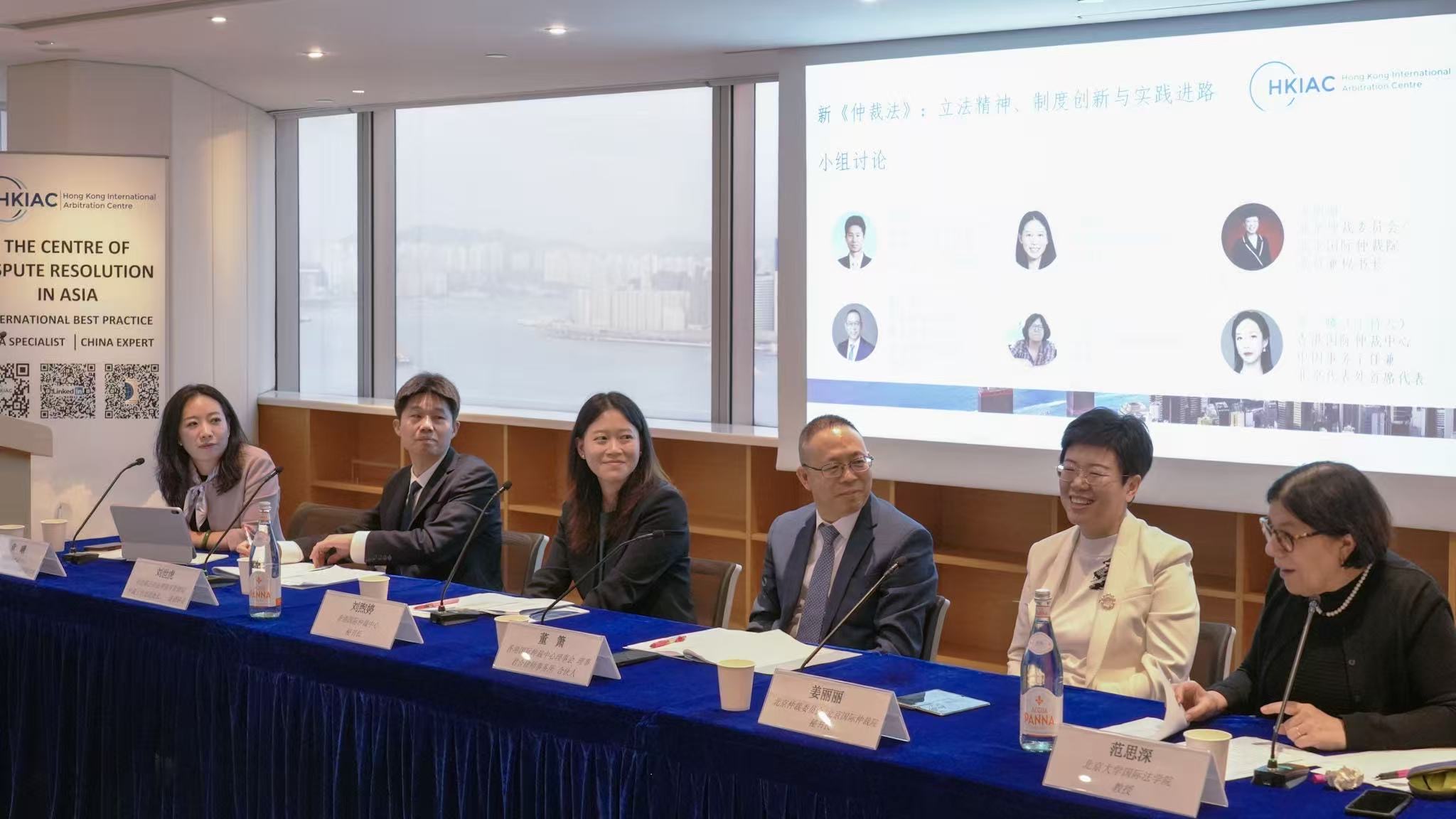
Justice Tao Kaiyuan, speaking at the Beijing Arbitration Commission

Among the many issues that I am discussing in my “neverending article” is the role of the Supreme People’s Court (SPC) in the complicated process of drafting new legislation and amending existing legislation, as is sometimes revealed in the “Services and Safeguards Opinions” about which I write often.  The role of the SPC is for the most part unseen and unnoticed.   Because the Arbitration Law is so critically important to dispute resolution between Chinese and non-Chinese parties,  this blogpost highlights the SPC’s role in the unfinished process of revising the Arbitration Law and includes some of my own comments on the positions taken by the SPC. I flag one particular issue that in my view would benefit from discussion and analysis by those with international arbitration law expertise. 

Justice Tao Kaiyuan participated in a meeting of the Chinese People’s Political Consultative Conference (CPPCC)’s Committee on Social and Legal Affairs on 30 May on the Arbitration Law draft revision (link is to the Chinese original) and provided a summary of some of the work of the SPC and lower courts in “pushing forward the progress of amending the Arbitration Law. ”  (Mao Xiaofei of the Chinese Academy of Social Sciences, International Law Institute has kindly shared her translation into English of the Arbitration Law revision, which includes a comparison with the current text.)

The 2020 document Guiding Opinions of the Supreme People’s Court on the People’s Courts Serving and Guaranteeing the Further Opening Up to the Outside World (最高人民法院关于人民法院服务保障进一步扩大对外开放的指导意见) about which I previously wrote, contains the phrase “push forward the progress of amending the Arbitration Law (and several other laws) (推动仲裁法、海商法、海事诉讼特别程序法等国内商事海事法律的修法进程).  Additionally, the Annual Report on Judicial Review of Commercial Arbitration (2019), edited by the SPC’s #4 Civil Division (I had a cameo role in improving the English version) also mentions the SPC will support the amendment of the Arbitration Law. Persons whose eyes glaze over when reading official documents would miss this curious phrase. Few persons outside of China have access to the Annual Report.   

Xu Liquan, one of the deputy heads of the CPPCC,  also spoke at the 30 May meeting discussing the Arbitration Law draft and revealed arbitration statistics I had not previously seen–that Chinese foreign-related enterprises have a dispute rate of up to 10% ( 涉外企业纠纷发生率高达10%) in cross-border transactions, over 90% select arbitration as the dispute resolution method, but a large majority select arbitration outside of China.   Mr. Xu did not mention the source of these statistics, but I understand them to be derived from a report by the China Arbitration Institute of the China University of Political Science and Law (CUPL).   The report summarizes the China Arbitration Institute’s survey of more than 100 foreign-related enterprises recommended by the State-Owned Assets Supervision and Administration Commission (SASAC).  The full report has not yet been made public.

From these statistics, it can be seen that if China wants to be considered a more attractive destination for commercial dispute resolution, improving the Arbitration Law is crucial.

A translation  (amended machine translation) of Justice Tao’s remarks (I surmise they are a summary) follows below, along with some of my own comments in italics

Some background on her remarks, for those who need it: The Ministry of Justice, as the regulator of arbitration institutions, is the institution charged with providing draft amendments to the Arbitration Law to be forwarded to the National People’s Congress Standing Committee.  (I myself had the good fortune to be involved in a cameo role in this process as a consultant to the Great Britain China Centre (GBCC) before and during the pandemic. )

The Supreme People’s Court has been actively participating in this work, and supports the revision of an arbitration law that is based on China’s national conditions, draws on international practices, and takes into account the development stage of our country’s arbitration industry.

Justice Tao signals the SPC’s very active involvement in providing input to the Ministry of Justice. It appears from her summary that views from several different divisions and offices of the SPC are reflected in what she said, including the #4 civil division (responsible for international arbitration matters), #3 civil division (intellectual property and anti-monopoly), and the enforcement bureau. I surmise that it will actively involve itself in commenting on the draft of the Arbitration Law when it is considered by the National People’s Congress Standing Committee. 

“Drawing on international practices” is a broad term, including the UNCITRAL Model Law and “international practices” of leading courts on arbitration-related issues.  On China’s national conditions, although most foreign practitioners are aware of the top 3-5 Chinese arbitration institutions, the vast majority are funded by local governments. The local arbitration institutions have appointed arbitrators sometimes more for their official position than their knowledge of arbitration, and have management and staff with varying levels of competency. Local lawyers prefer the courts, where an appeal is possible if the initial decision is unfavorable.

Regarding further opening up of the domestic arbitration market and allowing overseas arbitration institutions to conduct business in the Mainland. In recent years, the Supreme People’s Court has successively issued a number of judicial documents to support the introduction of foreign arbitration institutions to set up branches to carry out arbitration business in the construction of Lingang New Area of ​​China (Shanghai) Pilot Free Trade Zone, Hainan Free Trade Port and Beijing “two zones” [pilot free trade zone and  service trade zone]. In the next step, we will support the opening of the arbitration market in other pilot free trade zones.

I wrote a report on this almost two years ago. There are many practical issues to be ironed out, and Zero Covid plus the unamended Arbitration Law makes it even less likely that a major foreign arbitration institution will agree to commit to opening an office in China that handles cases.  

Regarding the reasonable expansion of the scope of arbitration cases. We agree with the suggestion that intellectual property, sports, and anti-monopoly disputes be included in the scope of arbitration, but it depends on the type [of dispute], and only civil and commercial disputes should be submitted to arbitration.

There has been a great deal of discussion in China about the arbitrability of intellectual property, sports, and anti-monopoly disputes, with cases having been heard in the courts.   See this detailed discussion of the sports law issues here in an earlier volume of the Beijing Arbitration Commission’s annual volume Commercial Dispute Resolution In China: An Annual Review And Preview by Guo Cai and Jeffrey Benz. On intellectual property issues, a search in Chinese or English will turn up many articles–this one by Baker & McKenzie and this one by the intellectual property firm SIPS are two of many.  The arbitrability of antimonopoly disputes in China has been discussed by both practitioners and academics.  Another highly disputed issue is the scope of the disputes that are arbitrable, linked to the definition of “civil and commercial” disputes in the areas of intellectual property and anti-monopoly law.

However, we suggest further research on whether the international investment arbitration between the host country and the investor should be regulated by the Arbitration Law. First, international investment arbitration is different from commercial arbitration, and it is suggested to retain the provision that commercial arbitration applies to civil and commercial disputes between equal parties. Second, the investment protection agreement signed by my country provides different solutions to international investment disputes. According to the commercial reservation statement made when our country joined the “Convention on the Recognition and Enforcement of Foreign Arbitral Awards”, the recognition and enforcement of arbitration awards disputed between the host country and investors, the Convention does not apply.

Some of the Belt & Road “Services and Safeguards Opinions” have flagged investment arbitration as an issue of concern. Enabling investment arbitration in China involves a number of interlinked issues. I recommend Professor Chi Manjiao’s recent article on the many complicated issues related to improving Chinese law on investment arbitration. 

Regarding the boundary between confidentiality and disclosure of information in the process of judicial review of arbitration. We agree with the suggestion that the advantage of arbitration confidentiality should be maintained in arbitration judicial review cases.  It is difficult to make specific provisions in the Arbitration Law drawing the line between confidentiality and transparency, and it is suggested that it can be resolved through judicial interpretation. In judicial practice, judges do not involve facts irrelevant to arbitration judicial review when writing documents. The parties may also request the people’s court not to disclose the judgment documents on the grounds that the case involves personal privacy and commercial secrets. In the future, it may be considered to establish clearer rules to further balance the relationship between arbitration confidentiality and judicial openness.

Drawing the line between confidentiality and transparency is an issue worldwide, so it makes sense to leave this matter to the SPC to provide more detailed rules through a judicial interpretation.

On the protection of the rights and interests of third parties (案外人). The Arbitration Law should protect the legitimate rights and interests of third parties, but the current draft amendment to the Arbitration Law [Article 84] stipulates that the prerequisite for a third party to challenge the subject matter of enforcement is that the enforcement has not yet been completed, and even if the grounds are valid and the People’s Court decides to terminate the enforcement, it still cannot negate the validity of the arbitral award that has harmed his or her legitimate rights and interests, and this situation is particularly prominent when the parties to an arbitration case apply for arbitration in bad faith or sham arbitration. Therefore, it is necessary to introduce a system of application for setting aside an arbitral award by a third party, so as to fundamentally solve the problem that the current system of remedies for third parties in the draft amendment is insufficient to adequately protect their lawful rights and interests.  

This is the section that I hope will attract discussion by those highly knowledgeable about arbitration law.  Article 84 of the consultation draft of the Arbitration Law gives third parties in [domestic] arbitration enforcement proceedings the right to challenge the subject matter of the enforcement. Justice Tao is taking the view that the remedies for third parties in the draft are insufficient, and third parties should have the right to apply to a court to set aside the arbitral award at the enforcement stage.  It appears that Justice Tao was persuaded by the views of the SPC’s Enforcement Bureau, as set forth in an article published a year ago by Judge Shao Changmao, head of one of its offices. Silence by other divisions does not necessarily signal agreement.

In my view, incorporating such a provision in the Arbitration Law could lead to even more challenges to arbitral awards and appears to signal a return to earlier law, in which courts could set aside domestic arbitral awards.  It likely reflects the SPC’s concern with stopping sham dispute resolution, whether it is sham litigation (subject to criminal penalties) sham mediation (about which I have written earlier), or sham arbitration. However, it could lead to the “cure being worse than the disease.”  The Chinese arbitration community is likely to take the view that this will not be helpful in making China become a more attractive destination for cross-border arbitration. 

I surmise that incorporating this provision would make major international arbitration institutions more reluctant to establish case management offices in China. It would mean that Chinese courts could set aside their awards, which they could not do if the award was considered to have been made outside the mainland.  I look forward to further discussion by the international arbitration community on the appropriateness of incorporating such a  provision in the Arbitration Law.

Finally, amending the Arbitration Law, from my own brief involvement in the process and discussions with persons involved, is more complex that it appears but is a crucially important matter for the future of Chinese and China-related dispute resolution. Once the law is finalized, the process deserves a study of its own.  The final version of the amended Arbitration Law will be an indication of the balance between internationalization (harmonization with international practice) and Chinese characteristics.

_________________________

Many thanks to three anonymous peer reviewers for their comments on earlier drafts of this blogpost.

My apologies to the patient followers of this blog for the long gap between blogposts.