Tag Archives: financial disputes

Guide to Finding Supreme People’s Court Materials: Selected Journals of SPC Divisions (Consolidated Version)

Late last year, some followers asked me to describe some of the principal sources for Supreme People’s Court’s (SPC) research. I’m doing this in several posts, as few (particularly outside of China) seem to be aware of the range of publicly available publications of the SPC and its many affiliated entities–see here and here for earlier posts. This post summarizes the journals (actually periodic publications–each has an ISBN number) edited and written (at least in part) by the trial divisions and other offices of the SPC.   As far as I know, they are only in printed form, although sometimes some parts of the content can be found on WeChat. That means that those outside of China are rarely aware of their existence.  I assume that they are available through Taobao or Jingdong.  

The readers of these publications are judges and practitioners. The publications are specialized, in contrast to the Supreme People’s Court Gazette, and each one contains normative provisions and guidance related to the specific area of law.

A quick guide to the content listed: the judicial interpretations are normative, of course, and the “understanding and application” articles provide further explanation and background about judicial interpretations and sometimes policy documents. “Leaders’ speeches” are a statement of policy, substantive & political; relevant policy documents (such as the SPC/National Intellectual Property Administration policy document of February, 2023 contain policy and related political signals; the research & local documents are all related to current issues in the relevant area of law; and the typical cases/outstanding judgments provide guidance to judges & are useful reference materials for lawyers/in-house counsel because the results in the cases reflect the views of the Supreme People’s Court. The publications flag new issues facing the judiciary in the specialized area involved and sometimes include analysis of foreign laws or regulations or an account of a foreign court visit or symposium.  Each journal has a slightly different format.  It may be possible to find electronic compilations of these journals on WeChat.
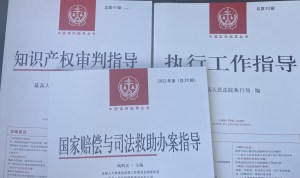
These journals are mostly published by the People’s Court Press (人民法院出版社).   Some journals have local correspondents reporting on local developments.  It can be surmised from how frequently a journal is updated how useful the relevant SPC division sees it as a platform for guidance and publicity of their views.  Cases from these journals can often be seen reposted on WeChat. 

TitleSponsoring InstitutionContentPhoto/Other Comments
行政执法与行政审判 Administrative Law Enforcement and Administrative AdjudicationSPC’s Administrative DivisionA section entitled: Authoritative viewpoint” (#96 contained Administrative Division Deputy Head Liang Fengyun on how to implement XJP Legal Thought in the courts’ administrative trial work); Research on Specialized topics; Theory & practice; Case analysis; One of the six-in-one guidance mechanisms mentioned by the head of the SPC Administrative Division, Geng Baojian
执行工作指导 Guidance on Enforcement Work/ Guide to EnforcementSPC’s Enforcement Bureau 最高人民法院执行居The most recent edition is #84, published in July, 2024.  Some issues contain discussion by enforcement bureau chiefs; hot topics; empirical study; report on pilot reform; analysis of SPC case; analysis of local court cases; resolving enforcement cases at source. 
最高人民法院知识产权法庭审判指导与参考 Supreme People’s Court Intellectual Property Tribunal Trial Guidance and ReferenceSPC’s Intellectual Property Tribunal

Volume #3 contains: SPC IP Court Annual Report 2021; judgment digests summary; typical cases; law & judicial interpretations; judicial scholarship; research report; window on the world; SPC IP Court 2021 Major Events

民事审判指导与参考 Reference and Guide to Civil TrialSPC’s #1 Civil Division (w’ local correspondents)Latest volume is from 2023: special section on people’s tribunal work; special section on resolving disputes at source (诉源治理); special section on family disputes trials; frontier theoretical issues; special section on dowry issues; typical cases on food safety punitive damages; special section on wage arrears; typical cases on agriculture; local case analysis; research report; #1 civil division judicial conferences 
涉外商事海事审判指导 Guide on Foreign-Related Commercial and Maritime Trial


SPC’s #4 Civil Division

Last volume apparently published in 2020, but dated 2018; sections included leaders’ speeches; judicial documents; requests & responses (per Prior Approval system); case analysis; research report; new informationPreviously mentioned on this blog here
司法研究与指导 Judicial Research and GuidanceSPC’s Research Office, but appears not to have been updated for some time.  Zhang Jun was listed as the editor in one of the early volumesincludes leaders’ speeches (policy & guidance); judicial exchanges/cooperation; theory & practice; cases; investigation & researchperhaps the office is focusing on other matters and this journal is therefore not a priority
环保资源审判指导 Guide on Environment and Resource TrialSPC’s Environmental & Natural Resources DivisionSeems to have been rarely updated, perhaps using reports or white papers to show their accomplishmentsfirst volume published in 2015
商事审判指导 Guide on Commercial TrialSPC’s #2 Civil Divisionlatest volume is #57, this has the index for #53 (2021)perhaps the division is focusing on other methods to provide guidance
审判监督指导 Guide on Adjudication SupervisionSPC’s Adjudication Supervision Division#71 published in April, 2024; special section on property-related issues (i.e. private business); outstanding judgments; case analysis; judges’ conference related issues; outstanding judgments; outstanding research reports 
知识产权审判指导 Guide on Intellectual Property TrialSPC’s #3 Civil Division (Intellectual Property)

Content of #41, 2023,  published at the end of 2023: Trial Policy and Spirit: three speeches by SPC leaders (Tao Kaiyuan and Lin Guanghai): Judicial policy document: a joint document issued by the SPC and State Intellectual Property Administration, on strengthening coordination in intellectual property protection; Intellectual Property Week Specialized Issues; Local experience, with two local court guidelines on the application of punitive damages, and one on the hearing of intellectual property small claims; Research reports, all by local courts, one on the protection of new plant varieties, and the other two on competition law issues in the digital and network economy; Typical cases: republishing the third batch of intellectual property protection for new plant variety, and 2021-22 typical cases of mediation of intellectual property disputes;


中国少年司法 Chinese Juvenile JusticeSPC’s Office of Juvenile Tribunal Work 最高人民法院少年法庭工作办公室 (under the Research Office)quarterly; #54, labelled #4 2022 published end 2023;leader’s speeches;   judicial normative documents; local documents & work; selection of prize-winning essays from the 7th National Juvenile Justice Work Conference; typical cases; foreign experience 
立案工作指导 Guide on Case FilingSPC’s Case Filing Division (has local correspondents)2014 volume includes leaders’ speeches; work situation; theory & practice (w’ local court experience); investigation & research (local court experience); experience exchange (also w’local court experience); jurisdiction; model case analysis; understanding and application of judicial interpretation; SPC judicial interpretations & normative documents 
刑事审判参考 Reference to Criminal Trialthe SPC’s five criminal divisions, established in 1999guidance cases (指导案例), not to be confused with guiding cases 指导性案例 that have been approved by the SPC’s judicial committee; legislation & judicial norms, including judicial interpretations;multi-institutional policy documents; difficult issues; frontier theoretical issues; experience exchange (local courts); outstanding judgmentssome compilations of typical cases published can be found on Wechat; this journal mentioned on this blog here, here, and here
金融法治前沿 Frontier(s) of Financial LawCollaboration between the courts and the regulators. The principal members of this collaboration are the SPC’s #2 Civil Division (which focuses on domestic commercial law issues), the legal department of the People’s Bank of China (人民银行条法司), the National Financial Regulatory Administration, related departments of the China Securities Regulatory Commission (CSRC), and the Shanghai, Beijing, and Chengdu-Chongqing Financial Courts. One of the related courts takes responsibility for editing each issue.See detailed description here 
TitleSponsoring InstitutionContentPhoto or Comments
Guide on State Compensation & Judicial Assistance国家赔偿与司法求助办案指导collaboration between the following institutions: NPC Legislative Affairs Commission State Law Office, SPC’s Compensation Committee Office; Supreme People’s Procuratorate #10 Procuratorial Office; Ministry of Justice Administrative Enforcement Coordination and Oversight Bureau; Ministry of Justice Legal Division (司法部条法司#26 dated 2022, but published at the end of 2023, contains: judicial interpretations, “understanding and application” of two of the interpretations; a section on theoretical research, with  some outstanding scholars contributing, including  Yang Lixin and Shen Kui; case analysis; outstanding judgmentsProfessor Shen’s article also appeared in the National Judges College journal Application of Law, linked here

Guide to Finding Supreme People’s Court Materials: Selected Journals of SPC Divisions (1)

Late last year, some followers asked me to describe some of the principal sources for Supreme People’s Court’s (SPC) research. I’ll do this in several posts,  as few (particularly outside of China) seem to be aware of the range of publicly available publications of the SPC and its many affiliated entities.

People’s Court Press Bookshop, Beijing, Zhengyi Lu 正义路#10


The first set of publications I’ll introduce are the journals edited and written (at least in part) by the trial divisions and other offices of the SPC.   As far as I know, they are only in printed form. That means that those outside of China are not aware of their existence. The readers of these journals are specialists in the particular field.  Many, but not all of them are published by the People’s Court Press (人民法院出版社), which has a retail bookshop near the SPC (see the photo above). I have a special fondness for that bookshop because I purchased judicial handbooks in its predecessor over thirty years ago, triggering my interest in the SPC.  Editing these publications is one of the (unrecognized) responsibilities of SPC judges and for that reason, the publication schedule seems to vary widely,

Considering the functions of the SPC, these journals should be best classified as a form of lower court guidance. For local judges, participating in editing or having an article included in one of these journals is considered an accomplishment for performance indicator purposes.

The publications flag new issues facing the judiciary in the specialized area involved, typical cases, and sometimes analysis of foreign laws or regulations.  Each journal has a slightly different format.

  1. 金融法治前沿(Frontier(s) of Financial Law)

This publication should be of interest to those who read Professor Mark Jia’s Special Courts, Global China, and are interested in researching the latest developments concerning China’s financial courts and related financial regulatory issues. The domestic readers of this journal are likely to be judges in the three financial courts or in the financial division of other courts,  legal personnel in the financial regulators, interested academics, lawyers focusing on financial law and regulations, as well as in-house counsel in banks and other financial institutions.

Unlike most other journals in this group,  this one is a collaboration between the courts and the regulators. The principal members of this collaboration are the SPC’s #2 Civil Division (which focuses on domestic commercial law issues), the legal department of the People’s Bank of China (人民银行条法司), the National Financial Regulatory Administration, related departments of the China Securities Regulatory Commission (CSRC),  and the Shanghai, Beijing, and Chengdu-Chongqing Financial Courts.  One of the related courts takes responsibility for editing each issue.  When I was last in Beijing, I purchased issue #2, dated April, 2024. The court that took responsibility for editing was the Shanghai Financial Court, The content  includes:

  1. “frontier issues,” with contributions from all the regulators, on such topics as the application of Chinese financial regulations abroad: coordination between the Insurance Law and Civil Code; and internet finance disputes;
  2. Typical cases;
  3.  Discussion of Specialized Questions
  4.  Foreign and Hong Kong [and Macau ] finance law issues.  Issue #2 includes an article comparing EU and Chinese insurance company recovery and resolution issues, the author of which is an official of a provincial-level bureau of the National Financial Regulatory Administration.  The author notes that “the operations of some small and medium-sized insurance are possibly facing difficulties” and the EU and British frameworks provide useful regulatory models for China to consider in designing a recovery and resolution system for insurance companies.

Guidance on the Trial of Duty-Related Crime (职务犯罪审判指导)

This publication should be of interest to those who are interested in legal issues (and the broad range of factual situations) related to bribery and corruption in China. Judging from announcements on WeChat, the readers of this journal appear to include procurators (prosecutors), criminal division judges, criminal defense lawyers, and public security officials.

Although none of the introductory essays have mentioned this, I surmise that this journal was founded because the distinctive issues relating to duty crimes “outgrew” the journal of the five SPC criminal divisions,  Reference to Criminal Trial (刑事审判参考). So far, only two issues have been published, #1, published in 2022, and #2, published in the last month or two.  The SPC’s #2 Criminal Division edits the journal.  The content  of issue #1 includes:

  1. Analysis of the application of law (法律适用分析), providing analysis of typical issues in the determination of facts, acceptance of evidence, application of law and the determination of sentencing, providing insights into the thinking and reasoning of judges.  This WeChat article provides a quick summary of many of the cases in this section in issues #1 and #2, but without the colorful detail, such as the case involving the lovers Mr. and Ms. Wang, one a deputy department head in a Central state-owned enterprise, the other the assistant to the head of a state-controlled bank in city T (presumably Tianjin).
  2. [Professional ] judges meeting summaries. Many SPC divisions  (civil or administrative) have published collections of meeting summaries, but this is the first time I have noticed them being made public on criminal law issues.  The first summary involves a 2021 case in which the local Party discipline/supervision authorities investigated the personnel in the courts,  prison, and procuracy for issues relating to the crime of bending the law for selfish ends or twisting the law for a favor. That involved a case in which a criminal was sentenced in 1992 to 15 years for intentional homicide, but was released in 1996,  after several sentence reductions and but who committed the crime of false accusation in 2019 (no details).  The disputed issue was whether the statute of limitations had lapsed.
  3. Difficult issues in practice–two articles, including one by Judge Wang Xiaodong, the now-retired head of the #2 criminal division on issues related to anti-corruption legislation in the New Era (pointing out problems with the substantive and procedural law);
  4. Exchange of experience–this provides a proposed outline (and explanation) for the courts to hear duty crimes in the first instance (人民法院审理职务犯罪案件刑事第一审普通程序庭审提纲(建议稿)(the link has the text of the outline). The explanation mentions it was issued to provide more consistency in the trial of these cases;
  5. Legal regulation (the Supervision Law and Supervision Law Implementing Regulations);
  6. Criminal policy–summary of a policy document (not full text) and press release issued by the Central Commission for Disciplinary Inspection (CCDI)/Supervision Commission, Central Organization Department, Central United Front Department, the Central Political-Legal Commission, the SPC and the Supreme People’s Procuratorate on Opinions on Further Promoting the Investigation of the Giving and Acceptance of Bribes” (the linked article provides the same content).  The summary mentions the possible establishment of a joint punishment mechanism and the implementation of a “blacklist” system for bribers.
  7. Theoretical disputes
  8. Practical Research
  9. Selected Typical Judgments (the last three sections had no content in issue #1.)

______________________________________

Many thanks to a knowledgeable person for his perceptive comments on an earlier draft of this blogpost.

Financial disputes in the Chinese courts

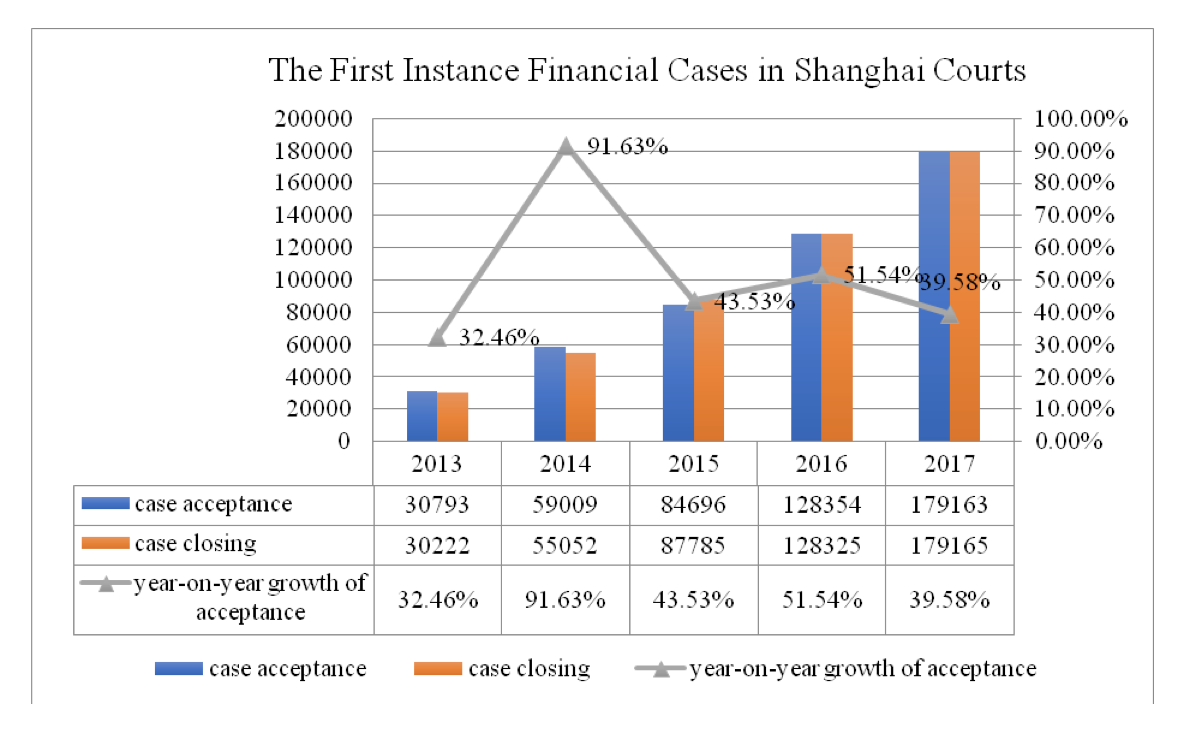
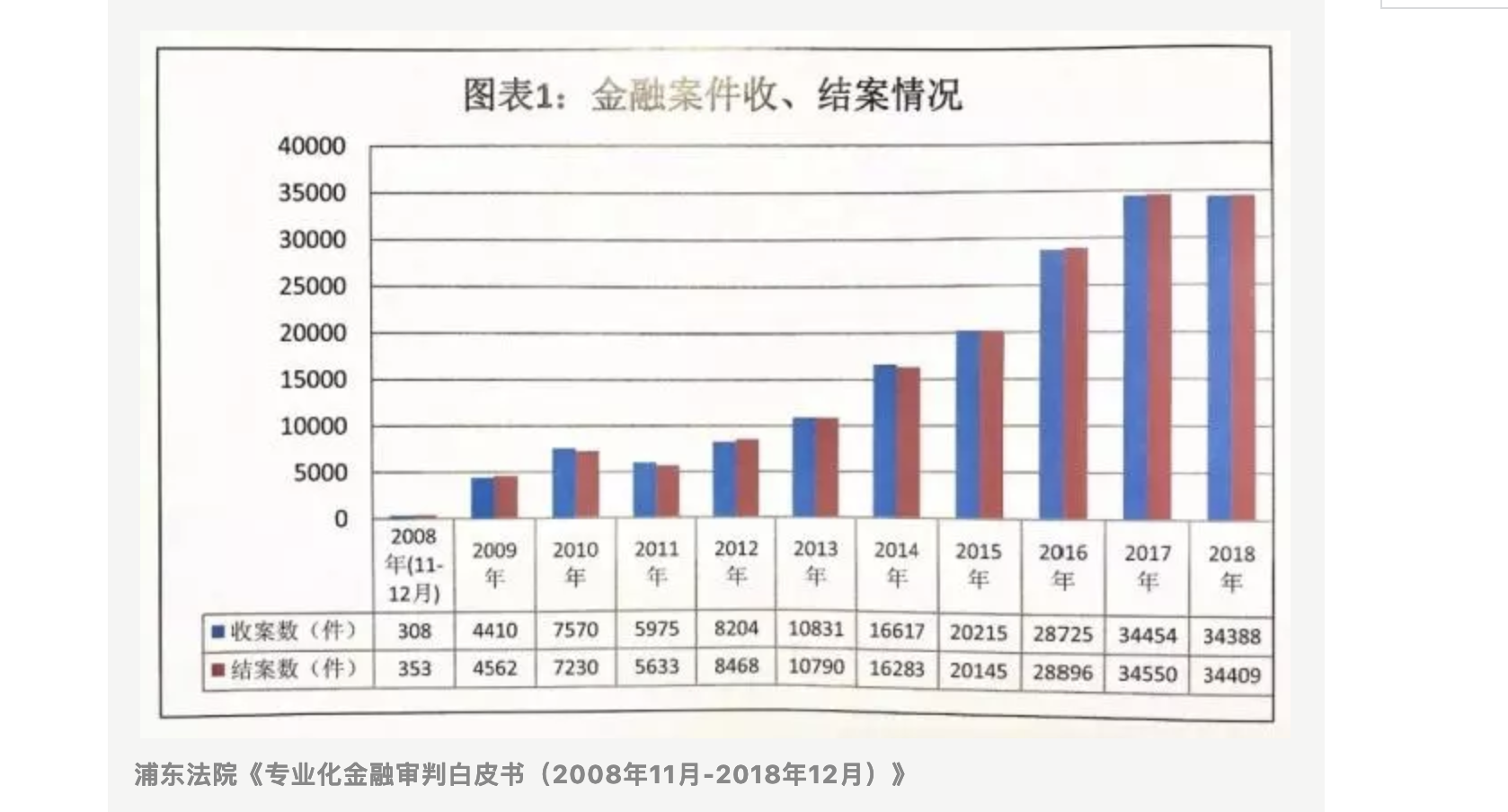
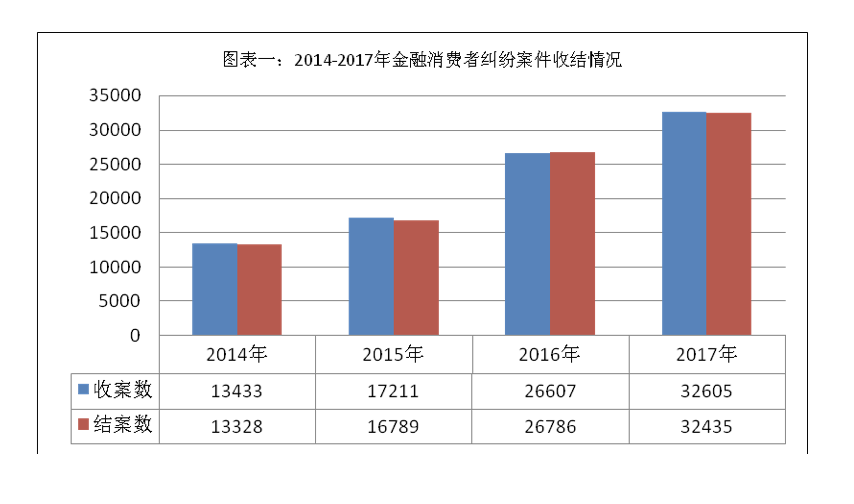
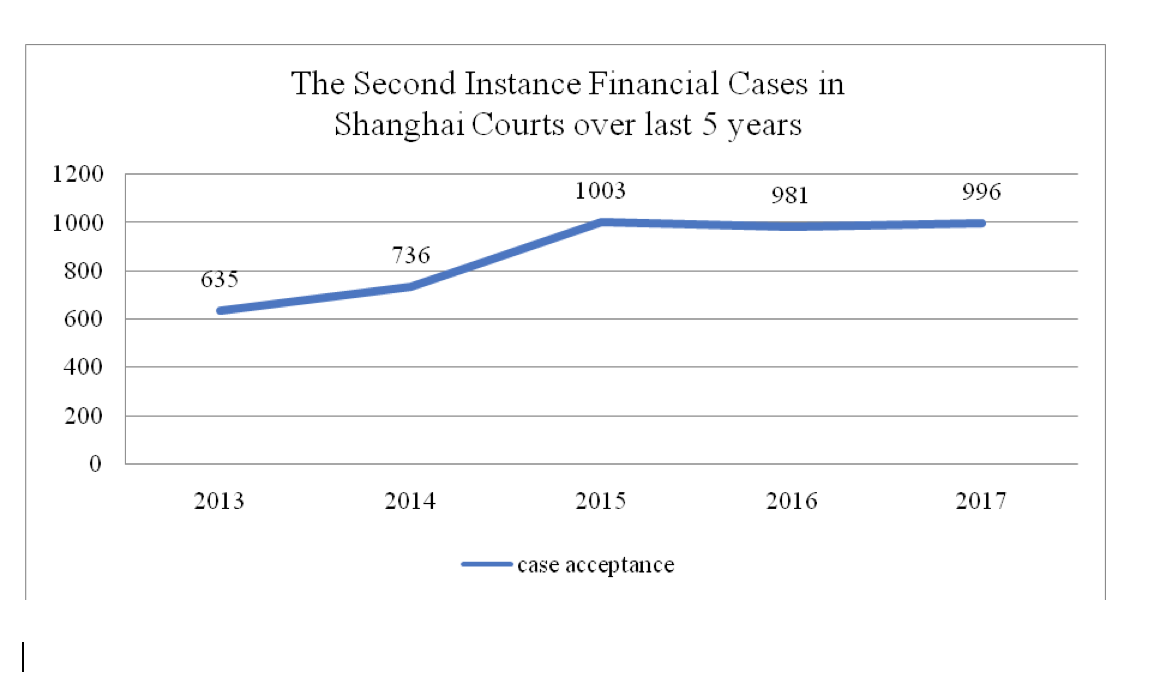
The details on the total number of financial disputes in the Chinese courts in 2018 are unknown (perhaps to be revealed in Supreme People’s Court President Zhou Qiang’s upcoming report to the National People’s Congress), but several recent white papers by Shanghai courts provide a glimpse into some of the issues in 2017 and 2018 (and in Pudong, with further historical data).  Local Shanghai judges comment that the caseload is likely to increase in in 2019.  Those white papers are a bilingual white paper on financial dispute resolution, published by the Shanghai Higher People’s Court late in 2018, and two white papers by the Pudong District Court, one on consumer financial cases and the other surveying the past 10 years of financial cases (full text of this report has escaped me, per my earlier blogpost).

Some of the facts and figures from Shanghai are:

Screenshot 2019-02-15 at 7.24.28 PM

Screenshot 2019-03-03 at 6.11.26 PM
Financial cases accepted & closed, Pudong New Area Court, 20008-2018

Screenshot 2019-02-17 at 9.22.24 AM.png
financial consumer protection cases in Pudong, 2014-2017 (accepted & closed)

There were many fewer second instance (appeal) cases. One of the many reasons is that court performance indicators discourage appeals.

Screenshot 2019-02-16 at 7.01.12 PM

According to the Shanghai Higher People’s Court, the largest proportion of cases were credit card disputes (149,609) year-on-year growth of 52% (83% of financial disputes); 16,528 financial loan contract disputes, (9.2%) up 14.5% year-on-year;4,319 financial lease  disputes (1.6%), with the year-on-year growth of 45.17%; 2,927 insurance disputes, up by 30.6%;and 1,246 securities and futures disputes.  Credit card cases are not under the jurisdiction of the new financial court and the judges attributed the increase in disputes in the large increase in the number of credit cards issued.

On P2P cases, those rose from 315 in 2015 to 663 in 2016 and 1508 in 2017.  I surmise that those numbers are likely to have gone up in 2018.

The Shanghai Financial Court reported that they accepted 1897 cases during calendar year 2018.

In their report, the higher people’s court judges noted that in 2017, a total of 49 bond defaults occurred, of which 29 were public bonds and 20 were private bonds, of which 11 ended up in litigation, all of which were actions brought by institutional investors against bond issuers. Some bondholders sued the issuers for anticipatory repudiation and required the issuers to pay principal and interest, raising new issues for the courts. The judges noted that with the economic “deleveraging” policy, market liquidity will tighten further,  which they predicted will further trigger bond default disputes.

Tao Xiuming, a law firm partner and member of ICC China, who contributed to a 2016 study that the ICC issued on financial institutions and international arbitration. wrote (with several colleagues) a chapter on financial dispute resolution in the Beijing Arbitration Commission’s Commercial Dispute Resolution in China: An Annual Review and Preview (2018) (2018)  (for some reason the book does not seem to be on the publisher’s website).  He commented that not only was 2017 the starting year for tighter financial risk control, it also coincided with a marked increase in the number of defaults and bankruptcies, leading to many disputes and that the government’s change in national macroeconomic policy has an impact on the adjudication of financial disputes.
Tao noted that to facilitate the Central Government’s macro policy on tighter control on financial risks, the Supreme People’s Court issued Several Opinions on Further Strengthening Financial Trials and that “the Chinese courts can and will adapt to the ever-changing macroeconomic policies to align to the activities of modern commerce.” He does not mention the reason is that the courts must serve the greater situation (服务大局), as emphasized by the latest judicial reform plan.