
Tag Archives: Interministerial Joint Conference

 The Supreme People’s Court and the 2025 plan for Promoting the Building of a Powerful Intellectual Property Nation

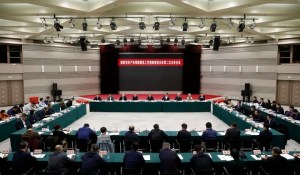
Meeting of the Inter-Ministerial Joint Committee at which the Plan was approved

On 7 May 2025, the  Office of the Inter-Ministerial Joint Conference for the Building of a Powerful Intellectual Property Nation ( Inter-Ministerial IP Office) issued this year’s plan (Chinese /English) for promoting the building of a powerful intellectual property nation. (Many thanks to Adam Wininger and his colleagues affiliated with the China IP Law blog for the English translation of the plan itself.) The Inter-Ministerial IP Office circulated the plan with the following notice:

Notice of the Office of the Inter-Ministerial Joint Conference for the Building of a Powerful Intellectual Property Nationon the Issuance of the 2025 Plan for Promoting the Building of a Powerful Intellectual Property Nation
(National Intellectual Property Joint Office [2025] No. 5)

To all member units of the Inter-Ministerial Joint Conference for the Building of a Powerful Intellectual Property Nation, the Central Political and Legal Affairs Commission, the Cyberspace Administration of China, the State Administration of Taxation, the Financial Regulatory Administration, the China Securities Regulatory Commission, the National International Development Cooperation Agency, the State Administration of State Administration of State Administration of Traditional Chinese Medicine, the National Medical Products Administration, the China Association for Science and Technology, and the National Natural Science Foundation of China:
With the approval of the Inter-Ministerial Joint Conference on Building a Powerful Intellectual Property Nation, the ” 2025 Intellectual Property Rights Promotion Plan ” is now issued. Please organize its implementation conscientiously.

Office of the Inter-Ministerial Joint Conference on Building an a Powerful Intellectual Property Nation
April 29, 2025

The issuance of this plan gives me an opportunity to revisit one aspect of formal interactions between the Supreme People’s Court (SPC) and other institutions that I discussed in this blog post in 2021–inter-ministerial joint conferences.  As I mentioned in the post, the intellectual property inter-ministerial joint conference system is quite transparent.  In contrast to other inter-ministerial joint conferences, it has its own website.  This brief post will highlight a few recent developments before analyzing what the plan means for the SPC.

Development #1–Since 2021, the membership of the joint conference has expanded and its name has changed, linked with the issuance of the Outline for Building a Powerful Intellectual Property Nation (2021-2035).  The Party Center and State Council approved the expansion of the joint conference to 29 members.  Previously, the State Council had approved the expansion of joint conference members.  Perhaps the Party Center (党中央) and State Council approved the notice together because several Party institutions are involved.  This notice on the establishment of the expanded joint conference is likely derived from the official approval, specifying that the joint conference’s responsibilities are to :

coordinate the national efforts to build a strong country in intellectual property rights, and organize the implementation of the strategy of building a strong country in intellectual property rights. Strengthen macro-guidance on the work of building a strong country in intellectual property rights; study major policies and guidelines for strengthening the building of a strong country in intellectual property rights, and formulate an annual promotion plan for the building of a strong country in intellectual property rights; guide, supervise, and inspect the implementation of relevant policies and measures, monitor and evaluate the effectiveness of work; coordinate and resolve major issues in the building of a strong country in intellectual property rights; and complete other matters assigned by the CPC Central Committee and the State Council.

The SPC is a member of the joint conference, which is convened by the head of the National Intellectual Property Administration and the person in charge of copyright work at the Central Propaganda (Publicity) Department. The approval provides that the joint conference has an office located in the National Intellectual Property Administration to administer the work of the Joint Conference.  The head of the National Intellectual Property Administration directs the office, with two deputies, one from that administration and the other from the Central Publicity Department.   Justice Tao Kaiyuan is the designated liaison person from the SPC.   My understanding is that normal liaison work occurs at the staff level, with some staff members of the SPC’s #3 Civil Division meeting with their counterparts at other member institutions to coordinate and promote policies as well as to establish related mechanisms, subject to relevant leadership approval. The plan provides insights into near-term developments in intellectual property law.

Implications for the SPC

The plan allocates 13 specific tasks to the SPC, among which are:

9. Promote the revision of relevant judicial interpretations of the Trademark Law and Copyright Law. (Supreme People’s Court is responsible);…

23. Explore and improve the intellectual property protection rules for new fields and new formats such as big data, artificial intelligence, and blockchain. Improve the intellectual property protection rules in the Internet field. (The Central Propaganda Department, the Central Cyberspace Affairs Commission, the Supreme People’s Court, the Ministry of Industry and Information Technology, the State Administration for Market Regulation, and the National Intellectual Property Administration are responsible for their respective duties)
24. Accelerate the improvement of judicial judgment rules for intellectual property rights in new technologies, new fields, and new formats, and judgment rules for e-commerce platform competition cases, and explore judicial rules for big data competition protection. (Supreme People’s Court is responsible)…

II. Strengthen intellectual property protection
(I) Strengthen judicial protection of intellectual property
30. Issue the “Opinions of the Supreme People’s Court on Serving and Safeguarding Scientific and Technological Innovation with High-quality Trials” and publish typical cases. (The Supreme People’s Court is responsible) [mentioned in this post]
31. Improve the national level intellectual property case appeal mechanism and strengthen the construction of a professional trial system. (The Supreme People’s Court is responsible)
32. Adhere to strict protection, improve and fully implement the punitive compensation system for infringement. Strengthen the overall coordination of batch litigation and increase the crackdown on manufacturers and other sources of infringement. (The Supreme People’s Court is responsible)
33. Formulate the “Interpretation on Several Issues Concerning the Application of Laws in Handling Criminal Cases of Intellectual Property Rights Infringement”. (The Supreme People’s Court and the Supreme People’s Procuratorate are responsible)….

I understand this document to have multiple implications for the SPC.  First, the matters for which the SPC listed are targets that the SPC has agreed with the other constituent institutions, after inter-institutional discussions and coordination at a staff level and related approval within the SPC.  Second, I surmise that the targets are binding on the SPC through inter-institutional agreement, as reported here.  Therefore, the ones that are listed in this document are on the work plan of the SPC for this year and will involve multiple institutions within the SPC.   Third, it can be seen that for some matters, the SPC is solely responsible, while for others, the SPC works with the SPP or multiple institutions.  Third, it is likely that the SPC will be involved in other matters in which the SPC is not listed as a responsible institution. One of many examples is item 45, “continue to strengthen the protection of seed industry intellectual property rights,” for which the Ministry of Agriculture and Rural Affairs is responsible. As I wrote in a recent post, the SPC has a memorandum of understanding with that ministry to improve the protection of seed intellectual property rights.  Finally, this document provides insights into the complex and poorly understood topic of inter-institutional arrangements in China, their operation, and the role of the SPC in them.  As the introductory notice flags, multiple non-members of the inter-ministerial joint committee are notified so that their work can be harmonized with this plan.

_______________________________________________

Many thanks to a knowledgeable person for his comments on an earlier draft of this post.


How the Supreme People’s Court Coordinates With Other Party & State Organs

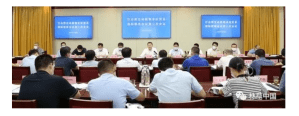
3rd meeting of the Inter-Ministerial Conference Combatting Illegal Trade in Wild Plants and Animals

A little-discussed aspect of the work of the Supreme People’s Court (SPC) is coordinating with other Party and state organs to better serve the greater situation and resolve specific policy issues.   At some point, I will set out a fuller description of this distinctive function of the SPC and its background history, but that will need to wait until I have plumbed the SPC’s past regulatory documents and conducted a more complete survey of practices in SPC divisions.   I examined one aspect of the way that the SPC coordinates with other departments in a book chapter to be published in the fall of 2021. That chapter focuses on the drafting of criminal procedure judicial interpretations. The  “never-ending” academic article that I am writing touches upon one aspect, briefly. This blogpost highlights some formal frameworks for coordination and at least some of what is involved. 

 Coordination with other central Party and state organs regarding specific legal issues is one of the unrecognized functions of the SPC. It  is hard to assess how much coordination work is done in comparison to other functions of the SPC, such as hearing cases or drafting judicial interpretations.  Because the Collection of the Supreme People’s Court’s Judicial Rules, a handbook for judges, places the principle “establish coordination mechanisms, properly resolve administrative disputes” in the section of general principles of administrative law, I surmise that coordination is a very important function of the administrative division. From my research below and discussions with knowledgeable persons,  some judges in the civil and commercial divisions are involved in work under these frameworks, and likely also the Research Office. Some issues involve multiple divisions of the SPC.

My understanding is that coordination with other central Party and state organs is a customary function of the SPC that is being repurposed, in part, in the New Era. For that reason, I surmise that more of this will take place in SPC headquarters in the future. This is based on two factors. The first is that SPC hears most commercial and administrative cases in the circuit courts. Second, coordination with other central organs appears to be an increasingly important part of New Era governance.  That was flagged in several statements of Liu Zheng, deputy head of the SPC’s Judicial Reform Office, in a February, 2021 press conference, where the SPC released its report on online mediation. Liu Zheng stated:

promote the improvement of the social governance pattern of joint construction, co-governance and sharing…(促进完善共建共治共享的社会治理格局)

In describing the accomplishments of the SPC in promoting diversified dispute resolution, he stated:

We strengthened our communication and coordination with Central departments (ministries) and commissions, we held three coordination meetings at the ministry level, and established a joint action mechanism (加强与中央部委的沟通协调,3次召开部委层面协调交流会,建立联动机制 ).

  At the central Party level, clearly coordination occurs at the level of broad policy through the Central Political Legal Commission and the Building Ping’an (peace and safe)-China Coordination Small-Group about which Li Ling wrote last year.  Other coordination occurs through leading small group offices (工作领导小组办公室).  I describe one below.  This blogpost will focus on State Council Inter-Ministerial Joint Conferences because it is through those that much of the more specific coordination occurs.  Thankfully for the researcher, State Council transparency is quite good and I found many approval documents for Inter-Ministerial Joint Conferences. From my research thus far, the SPC participates in many Inter-Ministerial Joint Conferences established by the State Council. I note that some other jurisdictions have Inter-Ministerial Council Conferences as well, not involving the judiciary. In some instances, ministries or commissions of the State Council create coordination mechanisms with the SPC, while the SPC initiates some.  Some coordination is done more formally on an as-needed basis, as Liu Zheng mentioned and that requires separate research. It is understood that within the framework of the formal structures, interaction and coordination occur at the staff level.

Leading Small Group Coordination Offices

As mentioned above, the Party Center has established some leading small group coordination offices to coordinate specific central Party and state organs policies and measures. Because of the nature of the matter, the SPC is a member. One example is the following office.

The Pursuit of Fugitive [Officials] Pursuit of Stolen Assets Working Office of the Central Anti-Corruption Coordination Leading Small Group (中央反腐败协调小组国际追逃追赃工作办公室), established in 2015, of which the SPC is a member.  The 2017 judicial interpretation on asset recovery is likely related to the SPC’s work in this group.  The SPC is involved in the yearly Skynet operation. Through this office,  the SPC  participates in related campaigns under this mechanism, such as a 2015 one against offshore companies and underground banks.

Inter-Ministerial Joint Conferences

The State Council has established many Inter-Ministerial Joint Conferences (部际联席会议), in which other Central-level ministries take the lead (牵头) and the SPC is one of many other Party and state organs involved. For those unfamiliar with Inter-Ministerial Conferences in China, the Office of the Central Staffing Commission has an authoritative explanation (amended Google translate):

The inter-ministerial joint conference  is established to negotiate and handle matters involving the responsibilities of multiple departments of the State Council. It is established with the approval of the State Council. The member units communicate in a timely manner and coordinate differing opinions. It is a work mechanism for enabling the smooth implementation of a task (responsibility). It is the highest-level joint meeting system of administrative agencies. The establishment of inter-ministerial joint conferences should be strictly controlled. For matters that can be resolved through coordination between the sponsoring department and other departments, inter-ministerial joint conferences are generally not established. The establishment of inter-ministerial joint conferences must be submitted to the State Council for approval. The lead department shall ask for instructions, clarify the name, convener, lead unit, member unit, work tasks and rules, etc., and submit it to the State Council for approval after approval by relevant departments. After the task of the inter-ministerial joint conference is completed, the lead department shall submit an application for cancellation, stating the establishment time of the inter-ministerial joint conference and the reasons for its cancellation, etc., and submit it to the State Council for approval after the approval of the member units. The newly established inter-ministerial joint conference which is led by the leading comrades of the State Council, may be entitled ” State Council… ” , and the other joint conferences are collectively referred to as ” inter-ministerial joint conferences . ” The inter-ministerial joint conference does not engrave a seal or formally issue documents. If documents must be formally issued, the name of the leading department and the seal of the leading department may be used, or the relevant member units may jointly issue a document.

SPC and Inter-Ministerial Joint Conferences

Sometimes the SPC is a founding member of an Inter-Ministerial Joint Conference. In other situations, it is recognized that the expertise of the SPC is needed and the SPC is invited to join after the Inter-Ministerial Joint Conference has been in operation for several years. Some examples are:

  1. The Inter-Ministerial Joint Conference on the Implementation of the Intellectual Property Strategy of the State Council,  headquartered at the China National Intellectual Property Administration, of which the SPC is one of many members. It is directed towards achieving the National Intellectual Property Strategy and unusually, has its own website.  A previous version was established in 2008, but that was superseded in 2016 when the State Council revamped the Inter-Ministerial Joint Conference, likely to better achieve China’s Intellectual Property Strategy.  Justice Tao Kaiyuan is designated as a member of the Joint Conference on behalf of the SPC.  The Joint Conference meets from time to time and issues an annual plan, allocating responsibilities to members according to their authority.  Among the matters allocated to the SPC in the 2020 plan is promoting three-in-one hearing of intellectual property cases and drafting a Guiding Opinion for Three-in-one Work ( 深入推进知识产权审判“三合一”工作,制定“三合一”工作指导意见。(最高人民法院). ” (For those unfamiliar with Three-in-one hearings,” they refer to integrating jurisdiction over civil, administrative and criminal intellectual property cases. It is understood that discussions occur at staff level to coordinate and promote policies. 
  2.  The Inter-Ministerial Joint Conference on Combating Illegal Plant and Wildlife Trade (打击野生动植物非法贸易部际联席会议), established in 2016. The SPC (and the Supreme People’s Procuratorate (SPP)) was invited to join the conference in  2020., which likely means that the organizer, the State Forestry Administration, did not realize that the expertise of the SPC and SPP were necessary. The SPC is one of 27 Central-level organs. It is likely that the 2020 Guiding Opinions on Punishing the Illegal Trade of Wild Animals issued by the Supreme People’s Court, the Supreme People’s Procuratorate, the Ministry of Public Security, and the Ministry of Justice is a product of this Inter-Ministerial Mechanism.
  3. The Inter-Ministerial Conference on Money Laundering (反洗钱工作部际联席会议制度).  The State Council established it in 2004.  The People’s Bank of China takes the lead. National Money Laundering Strategies are drafted under its auspices. The role of the SPC is to supervise and guide the trial of money laundering crimes and formulate judicial interpretations in a timely manner in response to relevant legal issues encountered (督办、指导洗钱犯罪案件的审判,针对审理中遇到的有关适用法律问题,适时制定司法解释)It is understood that at a staff level, discussions take place regularly, and the SPC has issued several judicial interpretations as a result.
  4. As mentioned in a blogpost in 2020, in 2017 the State Council approved an Inter Ministerial Joint Conference on the Popularization of Law, with Zhang Jun, then head of the Ministry of Justice, as head and the SPC as one of the parties.

SPC established coordination mechanisms

The SPC establishes coordination mechanisms with other government and Party departments such as:

  1. The family trial method and work joint conference mechanism (家事审判方式和工作机制改革联席会议), established in 2017 with Central Political-Legal Commission consent; and
  2. Under the framework of Inter-Ministerial Joint Conferences, specific coordination mechanisms may be established. One likely product of ongoing policy discussions under the framework of the Intellectual Property Inter-Ministerial Joint Conference discussed above was the January 2021 establishment of a mediation coordination mechanism between the SPC  and the China National Intellectual Property Administration.

Legal basis

The legal basis of coordination appears to be Article 2 of the Organic Law of the People’s Courts in which the courts are called upon to “guarantee the smooth progress of the building of socialism with Chinese characteristics.”

Comments

In the New Era, we can expect to see more and more coordination by the SPC, much of it invisible to those of us outside the system.  It appears to be a recognition of the technical competence of the SPC in resolving a broad range of technical issues required to be resolved in furtherance of the governance of the country.  The State Council and its ministries and commission need the SPC’s expertise to deal with a large variety of legal issues–criminal, civil, administrative, enforcement.  The SPC coordinates with other central Party and state organs because it needs them to resolve specific issues. Given China’s state-run governance model, establishing mechanisms to better coordinate and promote national strategies and targets, and better draft policies and measures are considered an efficient way to accomplish governance targets and serve the needs of the Party and country.