The Supreme People’s Court (SPC) database, China Judgments Online, receives good marks from most commentators inside and outside of China and it is one of the successes of the judicial reforms that President Zhou Qiang often discusses with visiting foreign guests as well as domestic officials. Only now has a team of researchers from Tsinghua University drilled down on the case database (but only through 2014, because the data was not complete for 2015) (short version found here and full version here). They found that there is room for improvement.
The researchers found that only about 50% of number of cases resolved in the Chinese courts (about 30.5 million during 2014-2015) have been uploaded to the case database (14.5 million).
Level and type of case
Almost 80% of the cases uploaded are from the basic level courts, with intermediate level courts accounting from almost 19%, and fewer than 1% from the SPC.
Approximately 63% of the cases are civil, with 20% criminal, enforcement 15%, and administrative cases less than 4%.
Are courts uploading cases to the database consistently?
Geographic distribution of uploaded judgments
The map above is based on an analysis of 2014 data. Shaanxi, Zhejiang, Shandong, Anhui, and Hebei provinces were the best performers, particularly Shaanxi; Henan, Fujian, Hunan, Hubei, Guangxi, and Ningxia were in the second tier, uploading at least half. The less transparent courts include Tibet, Xinjiang, and Guizhou.
[I personally expected that Shanghai, Jiangsu, and Guangdong would be more transparent.]
Are cases uploaded consistently throughout the year?
At least in 2014, there was a half year and year end rush to upload cases. It appears that the uploading of cases is one of the items for judges performance appraisal.
Issues cited
More than half of judicial documents have not been uploaded to the database, including judgments in some of the more controversial cases.
Technical issues complicate the uploading process. Because the courts are administered locally, the IT systems are local as well.
The regulations set out vague standards for taking down a judgment/ruling. When objections are made, the cases are taken down with little review. [As I have commented in relation to streaming of court cases, the absence of privacy legislation is an issue, because judges lack specific guidance on what information is regarded as private.]
Large gaps exist between the coastal and inland provinces in uploading judgments, with long delays an issue as well, although the regulations require judgments to be uploaded 7 business days after they take effect (this provision is unchanged from the 2013 version).
Monitoring of the database is an issue. The SPC has been stressing the quantity of judgments uploaded, while insufficient attention is paid to quality. [This may have something to do with tendency of some Chinese academics to focus on theory or comparisons among jurisdictions, rather than engage in a more focused study on what their own court system is actually doing.]
Comment
The Chinese government has allocated USD $40 billion to the Silk Road Fund associated with the One Belt One Road strategic initiative, to improve infrastructure overseas. China’s judiciary, an important part of the nation’s legal infrastructure, requires better funding as well. Even a tiny percentage of that $40 billion would go far to contribute to improve courts’ IT infrastructure, not to mention improved salaries, and the retention of the research departments of local courts.
Investment in the courts is needed to bolster the Chinese (not to mention foreign) public’s confidence in the Chinese courts’ ability to provide a better quality of justice.
As my law school classmate, Justice John Roberts, said several years ago, when confronted by budget cuts to the US federal judiciary:
At the top of my list is a year-end report that must once again dwell on the need to
provide adequate funding for the Judiciary.I would like to choose a fresher topic, but duty calls. The budget remains the single most important issue facing the courts….
The Judiciary continues to depend on the vision and statesmanship of our colleagues in the Executive and Legislative Departments. It takes no imagination to see that
failing to meet the Judiciary’s essential requirements undermines the
public’s confidence in all three branches of government. Both A Christmas
Carol and It’s a Wonderful Life have happy endings. We are encouraged
that the story of funding for the Federal Judiciary—though perhaps not as
gripping a tale—will too.
The Supreme People’s Court (SPC) recently published a policy document on protecting private (民间) enterprise, although the document itself was approved almost two months previously. It is linked to State Council and Central Leading Group for Deepening Overall Reform policy documents of earlier this year. The State Council policy document admitted that private companies have trouble receiving “national treatment (“难以享受同等“国民待遇”). The SPC policy document further relates to a 2014 SPC policy document on private (non-public (非公有制) enterprise. It conveys the following messages:
Too many lower courts are invalidating contracts because contracts have not received government approval, instead of applying the Contract Law on this point properly;
Too many lower courts are causing private investors to lose ownership of their companies, particularly those that are affiliated (挂靠) with government (the affiliation system was a way for entrepreneurs to avoid restrictions on private business by affiliating their operations with government).
Courts are preventing private investors from transferring their shareholding;
Courts are not sufficiently protecting the rights of private investors who take a minority stake with other investors (especially state-owned ones). As this blogpost pointed out, it is not unusual for majority/controlling investors to engage in illegal, unfair, and abusive acts, such as abusive related company translations, creating fraudulent or defective board resolutions, failing to distribute profits, failing to keep other shareholders informed (the SPC’s judicial interpretation on this issue has not yet been issued);
Courts are failing to distinguish between corporate and personal/family assets, requiring private investors to repay corporate debts with their personal assets;
Courts are failing to uphold lending contracts between companies, although a 2015 SPC judicial interpretation confirmed their validity (under certain conditions);
Courts are failing to protect the ownership rights, intellectual property rights, and operational rights of private companies, and prevent the “illegal seizure” of private property.
Courts are failing to uphold the rights of private enterprises to invest abroad.
On labor issues, courts should seek to balance the interests of the workers with the continued survival of companies, and seek to reduce labor costs. Especially for small and medium enterprises (this earlier blogpost highlighted how often private companies are sued in Guangdong in labor cases), courts should seek to resolve disputes through conciliation. For companies in trouble, courts should use measures such as taking security to prevent employers from maliciously harming worker’s interests.
Private entrepreneurs face hidden obstacles and difficulties, both from the legal system and in practice. There are hidden inequalities in their legal status, particularly when they are facing monopoly [duopoly] state owned enterprises (SOEs), given huge power of the SOEs. Second, the investment environment for private companies is unstable. Government policies and measures often change, such as when government signs basic infrastructure contracts with private companies, but then government changes the related urban plan. Third, private entrepreneurs in the past have failed to receive equal legal protection, because of judicial local protectionism and inconsistencies in judicial decision-making.
A prominent legal blogger suggested that local courts frequently abuse their authority to seal up or freeze business assets of private companies, causing significant losses.
Comments
The Chinese government is promoting public private partnerships (PPP) but has not been able to attract substantial interest in the projects for a number of reasons, including regulatory risk. Private investors are also concerned that the local courts will not protect their rights in the event of a dispute.
Statistics released by the Chinese government earlier this fall reveal that overseas investment by Chinese private enterprise in 2015 surpassed investment by state-owned enterprises, accounting for 65% of outbound investment, with observers disagreeing on the extent to which it represents capital flight. The failure of private investors “to feel justice in every case” (linked to the lack of autonomy of Chinese courts hearing cases involving the rights of private entrepreneurs) will lead them to invest less in the Chinese economy, and diversify even more assets to jurisdictions more protective of private property interests. Those other jurisdictions will benefit from an inflow of capital and entrepreneurial spirit.
On labor issues, the SPC has indicated what current government policy is and what the courts need to do to implement it. It is unclear whether these policies will be effective in reducing labor unrest.
Chinese courts are paying more attention to the use of precedent in considering how to decide cases. (Two of my fellow bloggers, Mark Cohen and Jeremy Daum, have recently published on this issue, as have I.) One of the many issues remaining to be settled as China constructs its own case law system is a hierarchy of precedent, so that the Chinese legal community, in particular its overworked judges, have clear rules on this issue. (This is one of the questions subsumed under #23 of the Fourth Five Year Court Reform Plan).
We know that the hierarchy of precedent is not settled because two recent authoritative Chinese publications take a similar but not identical approach:
The first, as cited in an article by Judges Jiang Huiling and Yang Yi of the Supreme People’s Court Center for Applied Jurisprudence, highlight the list set out in “The Beijing IP Court Guiding Case Work Implementation Methods (Draft)” (summarized in Jeremy Daum’s article); and
The second, an article by Judge Wang Jing, a senior Nanjing Intermediate People’s Court judge, published (and re-published) in a number of prestigious Wechat public accounts, including the account of the Shandong Higher People’s Court. (Wang Jing has frequently published in SPC publications and she published her views on the judicial quota system (on Judge He Fan’s public account).
(As helpfully translated in Jeremy Daum’s article, the Beijing IP court draft regulations list, from most to least persuasive:
SPC guiding cases
SPC annual cases
other SPC cases
High People’s Court model cases
High People’s Court reference cases
Other prior cases from High People’s Courts
Intermediate People’s Court precedent,
Basic-level Court precedent,
Foreign (non-mainland) case precedent.
I’ll focus on Judge Wang Jing’s analysis.
Judge Wang Jing
1.SPC guiding cases
2.Cases published in the monthly SPC Gazette. Those are of two types: selected judgments (裁判文书选登) and cases (案例), generally totalling 20-30. The first type are cases decided by various trial divisions of the SPC and reflect their views on certain issues, while the second model cases submitted by the local courts (through the provincial high courts), which have been reviewed by the various trial divisions of the SPC.
3.Other cases published by journals of the SPC such as Selection of People’s Court Cases(人民法院案例选), (a quarterly publication of the SPC Center for Applied Jurisprudence), China Case Trial Highlights (中国审判案例要览) (an annual publication of the National Judicial College and the Law School of People’s University)、and People’s Justice–Cases (People’s Justice is a biweekly publication,but the Cases section is published monthly). She notes that these cases reflect issues considered difficult and disputed in practice.
4. Trial Guides edited and written by the trial divisions of the SPC (最高法院各审判业务庭编写的审判指导丛书). The People’s Court Press publishes a series entitled China Trial Guide (审判指导丛书), with separate publications by various trial divisions of the SPC, including the case filing, civil, administrative, #2 civil and #4 civil divisions. These publications often contain cases from the lower courts, or in the case of the #4 civil division, cases that have been reported to that division for review under the Prior Reporting system.
5. Case publications by various higher people’s courts (各地高级法院等编辑的案例刊物).
She notes that many provincial higher people’s courts (and some intermediate courts) publish cases, with cases published by the ones that have been in operation the longest and are more influential considered the more persuasive. She mentions the Jiangsu Higher People’s Court Gazette as an example, which has cases decided by that court and model/typical cases from the lower courts. (These are similar to categories 4-6 above).
Although her list does not specifically mention non-guiding (and non-model or typical cases) in her list of authoritative sources, she addresses them in her advice for lawyers providing precedent cases in litigation, with three common sense items of advice: when you provide a case, it should be according to the court hierarchy, and date issued, provide the source, and use cases to provide a mind map for the judge to follow. (A prestigious intermediate people’s court (the Shenzhen Intermediate People’s Court) recently also mentioned litigants (positively) using cases from the SPC’s case database, China Judgements Online, as a reference to judges.)
Some comments
This is another area in which Chinese law appears to lack firm guidelines about order and terminology (as I wrote about this theme in a series of articles for Practical Law China, ( note that they are behind the company paywall).The SPC and its divisions (and even one of its Circuit Courts) issue collections of model/typical cases (and summaries of such cases) under a variety of titles. Terminology (aside from the guiding cases) is not entirely consistent. The SPC issues notices and replies (generally of divisions of the SPC), acknowledged by Vice President Shen Deyong as a source of law, in an introduction to the book Collection of the Supreme People’s Court’s Judicial Rules (2nd edition)–how do these relate as sources of law vis a vis various types of cases or case summaries? The legal community (domestic and foreign) awaits greater guidance.
On 1 August, President Zhou Qiang of the Supreme People’s Court (SPC) inaugurated the SPC’s new enterprise bankruptcy and reorganization electronic information platform, linked here and accessible through the Supreme People’s Court’s website (www.court.gov.cn). The English title and slogans could have benefited from a 5-minute consultation with a native speaker, but more importantly, some of the functions still appear to be in Beta mode. The platform has three parts.
It provides information for the public on:
Debtors (债务人信息). :
This function seems to be in Beta mode because when you click further for more details,no further information is available. This section is intended to provide the most recent annual report, related litigation, and information on assets of the company from the industrial and commercial authorities’ database and enable “one-stop shopping” for distressed assets.
Bankruptcy notices, such as this one with a plan on the distribution of the assets of a Xinjiang tomato processing company;
Bankruptcy rulings made by the local courts, such as this one by the Qidong (Jiangsu) court on accepting the bankruptcy case of a Nantong marine engineering company;
Laws and regulations (primarily SPC regulations related to bankruptcy);
Bankruptcy related news, primarily reports on new regulations issued and bankruptcy-related initiatives or conferences, such as this one in Zhejiang, on the crisis in Zhejiang’s ship-building industry);
Typical (model) bankruptcy and liquidation cases (see an explanation of typical/mode cases here), so far just a re-publication of the typical cases that the SPC issued in June.
Second, bankruptcy administrators are required by these regulations to upload information to issue to parties to the bankruptcy.
Third, judges are required to upload their bankruptcy/liquidation rulings to this platform.
For parties, the platform enables them to have current information on the status of their cases and upload documents to submit to the court or bankruptcy administrator.
The SPC issued regulations on the operation of the platform in late July, available here. It seems likely that the SPC considered the bankruptcy platform of other major jurisdictions in the process. This platform is part of the SPC’s Internet Plus/smart courts policy to provide greater transparency, easier access to information, and “greater informatization,” for some of the reasons described in this short article–particularly having tangible results and promoting the use of information technology.
For anyone seeking to drill down into the details of how bankruptcy and liquidation law is being implemented in China’s political and economic environment, and particularly for lawyers and others doing due diligence and distressed asset investors (domestic or foreign), the platform is unquestionably very useful.
Opening of court-annexed mediation center of Qianhai court
On 29 June 2016, the Supreme People’s Court (SPC) issued a policy document on diversified dispute resolution (Opinion on the people’s courts more deeply reforming the diversified dispute resolution mechanism) (Diversified Dispute Resolution Opinion)(关于人民法院进一步深化多元化纠纷解决机制改革的意见). The document uses the term “diversified dispute resolution” (consistent with Chinese practice) rather than “alternative dispute resolution” (more often used outside of China) to reflect the central place of mediation, arbitration, and conciliation in Chinese dispute resolution. (This updated version reflects comments by an authoritative person (and a very careful reader).
It was accompanied by regulations on court-appointed mediators. For those interested in the way the SPC works, it is another example of an SPC policy document in the form of an “opinion” (discussed here) accompanied by regulations (a type of judicial interpretation, discussed here).
The policy document sets out in a consolidated form the SPC’s latest policies on mediation, arbitration, and its relationship with litigation. It provides a framework for further reforms. It is intended to inform the lower courts as well as related Party/government agencies of forthcoming reforms. It signals to the central leadership that the SPC is on course to achieve one of the reform targets set out in the 4th Court Reform Plan. The current head of the SPC’s judicial reform office, Judge Hu Shihao, spoke at the press conference announcing the Diversified Dispute Resolution Opinion, indicating that the office took the lead in drafting it.
A summary follows below, highlighting, based on a quick reading, focusing on its:
objectives and origin;
signals and practical implications.
A very useful academic article on diversified dispute resolution, with survey data and more on the political background, can be found (behind a paywall) here. (To the many academics and practitioners who have written on this topic, please feel free to use the comment function or email to expand/contradict, or correct this).
Objectives & origin
The SPC issued the Diversified Dispute Resolution Opinion as a way to implement one of the targets in the 4th Judicial Reform Plan:
46. Complete diversified dispute resolutions mechanisms.Continue to promote mediation, arbitration, administrative rulings, administrative reconsideration or other dispute settlement mechanisms with an organic link to litigation, mutually coordinate and guide parties to choose an appropriate dispute resolution. Promote the establishment of dispute mechanisms that are industry-specific and specialized in the areas of land requisition and property condemnation, environmental protection, labor protection, health care, traffic accidents, property management, insurance and other areas of dispute, dispute resolution professional organizations, promote the improvement of the arbitration systems and administrative ruling systems. Establish an operating system that links people’s mediation, administrative mediation, industry mediation, commercial mediation, and judicial mediation. Promote the legislative process of a diversified dispute settlement mechanism, establish a system for a systematic and scientific diversified dispute settlement system.
The Diversified Dispute Resolution Opinion is a product of the 4th Plenum decision. Its underlying approach was approved by Xi Jinping and other top leaders. Judge Hu, who mentioned at the press conference that at a 2015 meeting, the Leading Small Group on Comprehensive Reform approved a framework policy document (not publicly available) on improving the diversified resolution of disputes (关于完善矛盾纠纷多元化解机制的意见) and the General Offices of the State Council and Central Committee followed with an implementing document. The principal reason that this topic merited top leadership time and involvement is because of its direct links to maintaining social stability and reducing social disputes.
Similar to other SPC policy documents discussed on this blog, comments on the draft were sought from the central authorities, lower courts, relevant State Council ministries and commissions, industry association, arbitration organizations, scholars, and the Legislative Affairs Commission of the National People’s Congress Standing Committee. The Diversified Dispute Resolution Opinion was approved by the SPC judicial committee.
Signals
The objective of the document is to promote a more sophisticated, efficient, and effective approach to dispute resolution that will reduce social tensions. Part of the objective is to reduce the number of cases filed, heard, and tried by courts. For commercial disputes, it is intended to push disputes to institutions that can more competently, efficiently and timely mediate cases. These institutions include those affiliated with industry associations, arbitration commissions, or specialized mediation associations. The Diversified Dispute Resolution Opinion also calls for better mediation of cases within the courts by involving court-annexed mediators, before or after the person or entity files suit. The implications of this document for the reform of labor and rural land contract dispute resolution remain to be seen.
The Diversified Dispute Resolution Opinion requires better linkages between other diversified dispute resolution institutions and the courts and particularly stresses the role of mediation. Depending on the type of mediation, it may be done by mediation commissions affiliated with government, people’s mediation committees, arbitration commissions, or other institutions (further information here). One particular issue that is addressed is easing procedures for enforcing mediation agreements by courts. (Because a mediation agreement is a type of contract, it cannot be enforced directly without further procedures, such as being notarized, issued as an arbitration award, or recognized by the courts (through a special procedure under civil procedure law). It emphasizes that the courts can leverage forces outside the judiciary to resolve disputes. The document calls for reasonable borrowing of dispute resolution concepts from abroad.
Practical implications to expect in the medium to long term
For the foreign investment community (and their lawyers), a signal that the SPC is working on a judicial interpretation concerning the judicial review of foreign and foreign-related arbitral awards (“standardize judicial review procedures for foreign-related and foreign commercial arbitration awards”) (规范涉外和外国商事仲裁裁决司法审查程序). As this blog has reported earlier, this was signaled at the November 2014 National Conference on Foreign-related Commercial and Maritime Adjudication and last year’s One Belt One Road Opinion. It is unclear whether the future interpretation will change the prior reporting procedure, for example, to give parties a chance to submit arguments orally or in writing, or whether it is intended to consolidate the principles the SPC sets out in its responses to lower courts (released to the public in one of the SPC’s publications), summarized in comprehensive overviews of Chinese arbitration law, such as this one.
Changes to labor dispute resolution, as highlighted by the 2015 Central Committee/State Council document mentioned earlier. This is important in light of the uncertain economy and increasing number of workers being made redundant. in recent years, judges in different areasof China have published devastating criticism of the current labor arbitration system and labor dispute resolution generally. The judges pointed out the current labor arbitration system is not independent of the government, fails to protect labor interests equally, and . The judges also criticize the brief statute of limitations in labor disputes and lack of a specialized labor tribunal. It appears from reports that Zhejiang Province is taking the lead in providing greater choices and professionalism in labor dispute resolution, but it unclear how far those reforms go.
Further attention to rural land arbitration.The Diversified Dispute Resolution Opinion mentions better linkages between the courts and rural land arbitration. This area is important, as the government seeks to encourage farmers to expand their landholdings and mortgage their land, but the merits of the system are not the SPC’s issue. A 2014 report highlights the lack of independence of these arbitration commissions, lack of arbitrators, and absence of qualified arbitrators. A 2016 paper by several China Banking Regulatory Commission staff on the mortgage of rural land notes that those arbitration commissions need improving.
Local courts to establish “court-annexed mediation centers” to encourage and give parties “one stop shopping” for choices in mediating some of the cases most often seen in the courts–family, conflicts between neighbors, consumer, small claims, consumer, traffic accident, medical disputes;
“Improving” criminal conciliation and mediation procedures. Reforms in this area bear close monitoring because, as discussed in earlier blogposts, criminal conciliation and mediation procedures are often used to avoid embarrassing more powerful institutions (such as schools) and people especially in cases involving claims of rape, sexual assault, and child molestation;
Recognizing the results of and encouraging litigants to use neutral valuation organizations, for civil and commercial disputes such as medical, real estate, construction, intellectual property, and environmental protection, the results of which could be used as the basis of mediation;
More small claims and expedited procedures for minor civil disputes;
more lawyers to be appointed as court-appointed mediators;
Improvements to administrative dispute resolution procedures.
From 1 July 2016, the Supreme People’s Court (SPC) is (in principle) broadcasting live all its public trials (public hearings) (better understood by those from a common law jurisdiction as an appellate court hearings) on its own Court TV website.
SPC broadcasts also include hearings by the #2 Circuit Court (in Shenyang) and #1 Circuit Court in Shenzhen. The technical platform is provided through Sina.com and a private company. The SPC describes its online broadcasts as its fourth transparency platform.
As of 14 July, there almost 30 cases for which the videos are available, many of which involve lending, either bank or private lending and real estate-related disputes, and are primarily civil cases. Some of the cases include:
Loan dispute heard in the #2 Circuit Court involving a Nanning private company, Bank of China, Liaoning, and the Vansun Group (in this case, counsel for the Nanning company alleges the CEO of the company was incapacitated by alcohol (over 1 jin-500 grams) when he signed the loan contract)
A Fujian investment co. v. Guizhou real estate development company (private lending dispute).
It provides a window into the world of Chinese commercial disputes.
Rationale
SPC Vice President Jing Hanchao, who was apparently tasked with implementing this development, is quoted by the official press as saying:
the live webcasts will be significant progress for judicial openness. With full transparency of trials online, the public can better play their supervisory role.
Live broadcasts will also drive judges to strengthen their capabilities, thus improving the judicial system…
..live webcasts will create a large amount of data that will help jurists study China’s legal system.
Having their advocacy broadcast on line may also drive lawyers to strengthen their advocacy skills as well.
For persons interested in the Chinese judiciary, it provides easy access to SPC court hearings, without the hassle of special permission, letters of introduction, and trips to Beijing.
Lawyers in Beijing do not seem to be aware of this development, at least judging by the lawyer acting for TRAB, who arrived in the courtroom after the hearing began.
Some outstanding questions
This decision by the SPC raises a number of questions.
Were the parties asked whether they consented to having their case broadcast on line? It is not apparent from the recordings that I have seen.
Individual parties read out their personal identification numbers on the recordings. Could this be an invasion of their privacy?
The recently promulgated People’s Court Courtroom Rules (translation here (thank you Chinalawtranslate.com) and original here) lacks any type of balancing test:
Article 11: In any of the following situations, for trial activities that are conducted openly in accordance with law, the people’s courts may use television, the internet or other public media to broadcast or record images, audio or videos.
The 2010 regulations on the broadcast of cases (关于人民法院直播录播庭审活动的规定) lack specific procedures enabling individuals to protect their rights. Do judicial reforms contemplate more specific procedures enabling litigants (or defendants) to refuse to have their case broadcast online?
Note:
Mac users may find that the platform works better through the Safari browser than Google Chrome.
The Supreme People’s Court (SPC) recently issued a notice (notice concerning the plan for establishing liquidation and bankruptcy trial divisions in intermediate courts)(bankruptcy division notice) (关于在中级人民法院设立清算与破产审判庭的工作方案) aimed at establishing liquidation and bankruptcy trial divisions in China’s intermediate courts and increasing the number of judges and support staff focusing on liquidation (winding up companies not in bankruptcy) and bankruptcy-related issues, to implement the central leadership decision to use bankruptcy law to reduce the number of zombie enterprises.
SPC Judge Du Wanhua had foreshadowed this development in many previous statements. The SPC required the concurrence of the Central Staffing Commission, a Party-State organization that regulates staffing in Party and state entities. A summary of the bankruptcy division notice follows below:
Establish bankruptcy divisions in intermediate courts, with some courts taking the lead;
In the directly administered cities, at least one intermediate court should establish a bankruptcy division, intermediate courts in provincial capitals and cities of deputy provincial level also. At lower levels, it will depend on economic development, local need, and professional infrastructure, with provincial courts to make arrangements with staffing authorities.
The following locations will take the lead in establishing bankruptcy divisions: Beijing, Shanghai, Tianjin, Chongqing; and the provincial capitals (and cities of deputy provincial level) of Jilin, Jiangsu, Zhejiang, Anhui, Shandong, Henan, Hubei, Hunan, Guangdong, and Sichuan. These arrangements are to be put in place by the end of July, with the other areas to follow by year end. This blog has reported on previous bankruptcy developments in Jiangsu, Zhejiang, Anhui, Shandong, and Guangdong.
Sets out the work of bankruptcy divisions;
Try compulsory liquidation and bankruptcy cases, guide lower courts trying these types of cases; coordinate with other courts on these issues; manage and train bankruptcy administrators.
Describes the jurisdiction of the bankruptcy divisions;
Intermediate courts should be responsible for the compulsory liquidation and bankruptcy of companies registered at the business registration authorities (administration of industry and commerce) of its own level and below, with variations possible if the provincial high court approves.
Staffing principles
Staffing should be according to judicial reform principles and linked to the caseload–the judges should be those familiar with liquidation and bankruptcy from the same or lower courts and they should have a clerk and judicial assistance on a 1:1:1 principle.
Measures needed
Improved measures are needed to supervise and evaluate liquidation and bankruptcy work; expedited liquidation and bankruptcy procedures need to be explored; promote reforms in trying liquidation and bankruptcy cases; put in place judicial responsibility (this relates to the judicial lifetime responsibility system announced in September, 2015) to ensure an honest judiciary.
Coordinate better with local Party/state authorities
Liquidation and bankruptcy divisions should report regularly to the local Party committee/government to seek their support and major issues should be reported to the SPC.
Some thoughts
This is a positive step although it cannot deal with the underlying political issues related to implementing bankruptcy law in China, particularly local government interference in bankruptcy cases. Putting in place more qualified judges and support staff is a critical part of making bankruptcy law work. The political support of the local authorities remains critical and the local judiciary provides a training and liaison function. The bureaucratic level of a troubled company (state owned enterprise) affects the ability of a court to deal its issues.
Academics reaching out beyond the universities and social media is playing a positive role in creating a corp of more competent bankruptcy specialists in the judiciary. The Bankruptcy Law and Restructuring Research Center of the China University of Political Science and Law, directed by Professor Li Shuguang has established a Wechat public account, which provides bankruptcy and liquidated news to the profession, including judges, as well chat groups in which Chinese bankruptcy professionals can share their experiences and tap into the experience and knowledge of others.
In the past year, the Supreme People’s Court (SPC) has issued several policy documents that contain the same phrase: serve the nation’s major strategy (服务国家重大战略). When SPC President Zhou Qiang gave his report to the National People’s Congress (NPC) in March, 2016, one section addressed this topic.
Provided service for the country’s major strategies. Issued opinions on the people’s courts providing judicial service and protection for the construction of One Belt, One Road, the development of coordinated development of Beijing-Tianjin, and Hebei, and the development of the Yangtze River Economic Belt, appropriately tried related cases, promoted the coordinated development of geographic areas.
What, if anything, does serving the country’s major strategies mean for the Chinese courts? This blogpost briefly looks at one of the policy documents cited by President Zhou Qiang to find out.
What are the documents?
The titles of these three are similar:
Opinion of the SPC on Providing Judicial Services and Guarantees for One Belt One Road (OBOR Opinion)最高人民法院关于人民法院为“一带一路”建设提供司法服务和保障的若干意见;
Opinion of the SPC on Providing Judicial Services and Guarantees for the Development of the Yangtze River Economic Belt (最高人民法院关于为长江经济带发展提供司法服务和保障的意见)(8 March 2016 )(Yangtze River Opinion); and
Opinion of the SPC on Providing Judicial Services and Guarantees for the Coordinated Development of the Beijing-Tianjin-Hebei Region 最高人民法院关于为京津冀协同发展提供司法服务和保障的意见 (18 February 2016)(Beijing/Tianjin/Hebei Opinion) .
What are the country’s major strategies?
A Rand Corporation report set out a definition of the fundamental purposes of China’s national strategy:
the fundamental purposes of China’s national strategy (guojia zhanlue) (1) to safeguard China’s national territory and sovereignty, (2) to guide national construction and social development, (3) to strengthen national power, and (4) to ensure continued national prosperity….China’s national strategic objectives (guojia zhanlue mubiao) constitute those fundamental strategic principles, concepts, and priorities guiding not only foreign and defense policy but also critical domestic realms concerned with national construction and internal order. These objectives include the attainment of great power status in the economic, technological, social, and military realms…, and the development or maintenance of capabilities to defend against any internal or external threats to China’s political stability, social order, national sovereignty, and territorial integrity.
Beijing/Tianjin/Hebei Opinion
It was drafted to support the Beijing/Tianjin/Hebei regional integration plan because the economic integration plan will “inevitably produce a large number of legal disputes, particularly trans-regional legal disputes.” The SPC research office seems to have taken the lead on drafting it, because its head appeared at the press conference to explain it.
The Opinion stresses the following types of cases, in the following order:
Criminal law: punish crimes that may effect social stability and regional integration: intellectual property rights infringement; embezzling corporate funds, illegal fund raising; market manipulation etc. (the priority crimes);
Commercial law: priority cases include those involving company relocation; regional logistics centers; relocation of regional markets, including leases, labor disputes; reorganization or bankruptcy of companies with outdated technology; construction of industrial parks and promotion of companies with high quality technology;
Cases involving people’s livelihood, particularly those involving public services, education, medical and health; social protections; promoting entrepreneurship, equal education, etc.
Cases involving financial innovation and safety: those include private lending, internet financing, protecting the rights and interests of creditors and financial consumers;
Expanding the protection of intellectual property:
Environmental cases: focus on environmental civil/commercial and administrative cases;
Focus on administrative cases related to regional development; and
Focus on major projects and construction projects related to regional integration.
The Beijing/Tianjin/Hebei Opinion also establishes greater coordination among the three courts, including a mechanism chaired by the SPC, exchange of judges, and calls for work on centralization of certain types of cases in certain court.
The Opinion calls for the lower courts to focus on the overall regional integration plan and promote the use of “diversified dispute resolution,” and pre-filing mediation, especially in policy-oriented, sensitive cases, where the local Party Committee, government, and other departments must be relied upon to resolve issues. ( 特别是对于政策性、敏感性强的案件,要紧紧依靠当地党委、政府及有关部门依法解决).
(The phrase “policy-oriented, sensitive case” was helpfully described by another judge as it is a concept used often within the Chinese judiciary. Although it is a not a formal legal term, it refers to the following categories of cases: those that affect a larger group of people than the parties involved; involve issues of widespread concern; require the adjustment of certain long-term government policies; and have political implications. Those include cases involving a large number of people, special groups (such as migrant workers, well-known enterprises, offshore entities), ones that can cause social conflict, including bankruptcy, labor disputes caused by restructuring, employee relocation compensation cases, land acquisition and resettlement compensation. Cases involving political, ethnic and religious issues are also included.)
Policy documents serving major government strategies
As a central government institution, the Court must do its part to support national major strategies. To inform the lower courts of the priority issues, projects, and matters, the SPC issues policy documents, which are the court system’s version of policy documents issued by other Party and state organs. Each of the three national major strategies raises a set of legal issues. Some of those legal issues are relevant to the function of the courts in hearing cases, while others relate to the function of the SPC as a “quasi-legislator,” as when it issues judicial interpretations. They often relate to forthcoming initiatives or sometimes long-term issues for the SPC, as in the case of the OBOR Opinion. However, these documents also signal that some issues, projects, and matters are more important than others, and ultimately does not contribute to public trust in the judiciary.
Some thanks in order
My thanks to a Hong Kong solicitor for criticizing the Hong Kong courts for lacking the “spirit of service” during a recent symposium on the mainland (bringing this issue to my attention) and a (mainland) academic for expressing to me his doubts that the SPC’s OBOR Document had any significance whatsoever.
On 29 April 2016, Supreme People’s Court (SPC) President Zhou Qiang, Vice President He Rong, and Xu Jiaxin, head of the SPC’s political department attended a nameplate unveiling ceremony at the Supreme People’s Court (SPC)’s branch of the Communist Party’s Central Party School at the National Judges College.
For those unfamiliar with the Party school system in China, the Central Party School (with local counterparts) is both think tank and indoctrination center for Party officials, “a furnace for tempering the Party spirit” (according to the Central Party school’s website) (for more, see thesearticles). According to press reports, the SPC has had a Party school since 1993 and has trained nearly 1000 officials. Under the Chinese political system, officials slated for promotion are generally required to attend Party school. Judge Xu pointed out that “the Party school must firmly uphold the basic principle of ‘the surname of Party schools is the Party,’ and ensure the political attributes of the political-legal institutions (机关党校要坚持“党校姓党”的根本原则,把握政法机关的政治属性). This is linked to a December, 2015 Politburo documentcalling for the strengthening of ideological and political education, and it is likely that the SPC issued a document implementing the Central Committee document (a report of the Supreme People’s Procuratorate one can be found here).
Does this take away from the SPC’s judicial education plans, announced last year, and analyzed here? Not really, as those plans prioritize ideological training. As one of China’s central political legal institutions, the SPC must implement the latest Party policies. Given the increased substantive demands on judges of the court reforms, the focus in judicial training still has to be on improved skills and substantive law training, as described in the five year judicial education plan. It seems fromreports, also, that the SPC’s Party school has its practical side, with study groups sent down to the basic level to research (and eventually report) on issues in the basic level courts, the judicial counterpart of some of what occurs in the Central Party School.
For many years, one of major issues for the Chinese court system has been that enforcing a judgment is difficult (there is scholarship on whether that is in fact the case). Supreme People’s Court (SPC) Justice Liu Guixiang, however, interviewed in January, 2016, noted that the number of cases involving unsatisfied judgments rose from 3.4 million in 2013 to 4.8 million in 2015 and said “The problem of some litigants escaping enforcement by transferring or hiding properties is still serious.”
For this reason, resolving difficulties in enforcement (执行难), one of the Chinese courts’ “three difficulties,” is one of the performance targets for the SPC’s judicial reforms. The 4th Five Year Court Reform Plan calls for “establishing a legal system for credit supervision, deterrence and punishment of those not fulfilling judgments against them.” The document analyzed in this blogpost fulfils that performance target and is an important building block in the construction of China’s social credit credit system.
The document analyzed is a long memorandum of understanding (MOU) concluded by the SPC and 43 other central institutions and issued in late January, 2016. It is not the first time that Chinese government institutions have used MOUs, but it appears to be the largest one of its type. The document builds on previous work by the SPC in linking its judgment debtor database with other regulators, described in an earlier blogpost. It appears that the SPC’s Enforcement Bureau, headed by Justice Liu Guixiang, head of the #1 Circuit Court, took the lead in negotiating it. He provides more background on the SPC’s enforcement efforts in this interview.
This (much longer than usual) blogpost looks at what entities are a party to the MOU, what type of document it is, what it does, and one report on how it is being implemented and issues that it raises.
44 Institutions
The 44 cooperating institutions include government, Communist Party institutions, a public institution, and a government controlled non-profit organization, listed below in the same order as the document itself:
This document was issued in the form of a two page notice by 44 institutions to provincial governments and authorities, giving the policy basis, including a 2005 Central Political Legal Committee document linked here as well as the recent Plenums and other documents. It has four pages of chops (seals) of those institutions, attaching a ten page MOU and almost 40 page appendix (where the bulk of the content is).
It appears to be the first time (or at least one of the first times) that a large group of central Party-state institutions has concluded an MOU. It shows that despite ongoing criticism of Western rule of law concepts, the Chinese Communist Party and Chinese government finds it useful to borrow some of them for its own uses.
Like the commercial version with which many of us are more familiar, this MOU is an agreement between the SPC, SPP, and regulatory bodies–in this case government, Party, dual purpose (entities that are both Party and state) organizations, an important SOE, and several public institutions. Some questions about this practice will be discussed below.
Using MOUs to do so seems to be borrowed from the United States (other jurisdictions use them, too, but among regulators or between courts), and is being used for the same reasons that US federal government agencies do (and apparently without an explicit statutory basis). as described in excerpts from this 2012 report by the US Administrative Conference by two professors, one from Harvard Law School and Vanderbilt University Law School (follow-up recommendations found here):
A typical MOU assigns responsibility for specific tasks, establishes procedures,
and binds the agencies to fulfill mutual commitments. These
agreements resemble contracts, yet they are generally unenforceable
and unreviewable by courts…Nevertheless, there appears to be no generally applicable
statutory or executive branch policy regarding the use of MOUs, leaving
their content largely to the discretion of the agencies.
Agencies sign MOUs for a variety of purposes, including (1) delineating jurisdictional lines, (2) establishing procedures for information sharing or information production, (3) agreeing to collaborate in a common mission, (4) coordinating reviews or approvals where more than one agency has authority to act in a particular substantive area, and (5) in rarer cases (and potentially subject to additional procedures under the Administrative Procedure Act (APA)) agreeing on substantive policy. Their content varies widely. Some MOUs are quite detailed, although they tend to be short documents, often less than ten pages. MOUs may specify goals, assign responsibilities, establish metrics, commit personnel and funding, and establish responsibility for oversight. Some include deadlines for revisiting and updating the agreement. Others are more like framework documents that outline principles and leave more detailed elaboration to subsequent agreements or “implementing arrangements.”
This Chinese MOU is for reasons (1), (2), and (3). There is no dispute resolution clause (unlike most commercial MOUs) and in this case the SPC is one of the parties. Chinese public policy and legalacademic literature, with the occasional article in the official press has promoted the use of MOUs as a useful tool for coordination by government agencies (i.e., getting them on the same page). In fact, a number of them can be seen on the regional level, such as a recent one coordinating the tax authorities of Beijing, Tianjin, and Hebei.
It provides for information sharing and joint implementation of penalty measures. Regarding privacy issues, it requires record keeping of users, operators, and visitors, and the establishment of necessary technical measures to protect the data security of sensitive crucial information and prevent unauthorized operations.
Information sharing and joint implementation of penalty measures
The MOU commits all those other institutions to use their authority to implement sanctions against judgment debtors, both individuals and entities, as set out on the SPC’s lists of judgment debtors, which the SPC will update regularly. These institutions are obligated to issue provisions to implement the agreed upon measures to their bureaucratic subordinates. The measures that the institutions are implementing are not new ones, as the appendix makes clear. The NDRC commits to operating the social credit platform, Credit China, linked here. All the other government departments and entities commit to enforcing or coordinating the enforcement of the penalty measures through their regulatory systems to reporting to the NDRC and SPC quarterly through the social credit platform.
Measures
Most of the MOU sets out an outline of the measures and the entities responsible for implementing them.
It requires each entity and provincial level government to issue implementing regulations. This spring has seen some regulations issued at the provincial level to implement the MOU, but few regulations seem to have been issued on the regulatory level.
Legal analysis and reality check
A Hubei judge set out his analysis of the legality of restricting high consumption by judgment debtors and a reality check on how the system is working in an article published in late April in People’s Court Daily. He said it raises jurisprudential questions, because the Constitution protects a citizen’s personal and property rights, and those constitutional rights include consumption rights. The Legislation Law provides that limits on a citizen’s personal freedom, which restrictions on high consumption can be considered to be, can only be set out in national law and interpretations of national law by the SPC.
On the topic of the operation of the system, the judge mentions that the system is only in place for a number of economically advanced areas, but is not in place nationally, and in some areas, although the system is on place at the top-level, it is not implemented at the district level. It is in place for the banks and transportation, but not yet for other authorities such as the industrial and commercial, educational, and travel authorities. How to link local systems with the national system is a problem not yet resolved.
Some comments and questions
A few comments and questions come to mind. It seems likely that the issuance of this document was approved by the political leadership at a high level, such as the Central Leading Group for Deepening Overall Reform. This document does not appear to have sparked much public discourse in China, but that may be because many members of the legal community, many of whom are Communist Party members, may be concerned about improperly discussing Central policy ((妄议中央), as discussed in this earlier blogpost.
What is the status of this document under Chinese law? An MOU is not one of the types documents mentioned by the SPC’s regulations on documents or on judicial interpretations, unless it can be said to be covered by Article 9 of the former regulations (setting out the principal types of documents, which may imply that other ones may also be issued (人民法院公文的种类主要有). That being said, the SPC has been signing MOUs with courtsoutside of mainland China for many years, and a report of the SPC entering into an MOU can be found from 2013, also relating to enforcement of judgments, so it seems clear the SPC takes the view that it has the inherent authority to conclude them. Is it binding on the lower courts? It appears to be the case, from the reports on the document in lower court websites. Can lower courts conclude MOUs with their counterparts at the local level? It is also unclear.
What are the domestic and international implications of the SPC and 43 other government/Party institutions concluding this MOU? How is this to be understood by Chinese and foreign legal professionals, and the Chinese and foreign public? Does it have any implications for China’s obligations under the WTO, of China establishing, or designating, and maintaining tribunals, contact points and procedures for the prompt review of all administrative actions relating to the implementation of laws, regulations, judicial decisions and administrative rulings of general application…which shall be impartial and independent of the agency entrusted with administrative enforcement (emphasis added) and shall not have any substantial interest in the outcome of the matter? What implications does this document have for China’s bilateral investment treaty (BIT) negotiations with the United States and the European Union? The US model BIT (as is usual) includes an obligation of fair and equitable treatment of covered investments and EU BITs contain similar language.
Other issues that this raises include–what procedural rights will individuals or entities have to challenge their designation as judgment debtors, and the penalty measures imposed upon them? What assurance would those individuals or entities have that their challenge would be heard fairly by the courts, if the SPC is a party to these arrangements?
Quick guide to the penalty measures
What follows is a rough summary of the MOU in table form. In the MOU, in a few instances, relevant institutions undertake to forbid judgment debtors (either individuals or entities) from the activities listed below, but generally it uses other words–“restrict” (限制) (which usually means forbid), “consider seriously” (审慎性参考), and review strictly (从严审核). How are front-line staff to implement “consider seriously” and “review seriously”?
Measures
Responsible entity
1. Approval for establishing securities co., investment management co., futures co.; & registration of private investment fund—consider as factor/evidence
Restrict issuing bonds, acquiring listed co.
CSRC to implement restriction on acquiring listed co., NDRC re issuing bonds
2. Issuing securities on the interbank—review strictly
PBOC
3. Establishing a financing guarantee co.; restrict the appointment the appointment as a director, supervisor, or senior management of a financial institution
CBRC, CSRC, NDRC, CIRC, MIIT, MOF, MOC, PBOC, SAIC & other authorities with authority to approve appointments of financial institutions
4.Assist in reviewing information concerning govt. procurement & restricting participation in govt procurement
MOF
5. Restrict the establishment of insurance companies, purchase of high premium insurance products with cash value; restrict natural person & senior personnel, controller of a corporate judgment debtor from purchasing high premium insurance products
CIRC
6.Consider seriously when considering the approval of the establishment of commercial banks or branches, offices and the acquisition of partial or full shareholding of commercial banks
CBRC
7. Assist in suspending share option plans or terminate the ability of persons to exercise share options of domestic state controlled listed companies
SASAC, MOF
8. Consider seriously judgment debtor status in the approval or management of quotas for QDIIs and QFIIs
SAFE
9. When financial institutions consider financing/extending credit to a entity, consider whether it, or its legal representative, actual controller, director, supervisor, or senior management are judgment debtors, if so, approve strictly
CBRC, PBOC
10. Cooperate in restricting judgment debtors from applying for subsidy-type funds & social security funding support
NDRC, MOF, MHRSS, SASAC etc.
11. In implementing policies for favorable treatment in investment, tax, import/export, etc., review whether the institution, its legal representative, actual controller, director, supervisor, or senior management are judgment debtors; seriously consider in implementing these policies
NDRC, MOFCOM, Customs, SAT, AQSIQ
12. Focus & increase regulatory attention on judgment debtors & the legal representatives, actual controllers, directors, supervisors, senior management of judgment debtors; increase random checks; impose administrative measures according to law/administrative regulations
Market and industrial regulators
13.For individual judgment debtors, restrict them from appointment to be a wholly state owned company director, supervisor, as well as a director or supervisor, or senior manager of a state-controlled company; for those already so serving, submit an opinion that the person should not continue to serve
SASAC, MOF etc
14. For individual judgment debtors, restrict them from being registered as the legal representative of a public institution
SCOPSR
15.Through Credit China website, make company credit information accessible to the public
NDRC & SAIC
16.Publicize to the public through the principal news websites information about judgment debtors
State Information Internet Office
17.Restrict the recruitment/hiring as civil servants or public institutions staff
Central Organizational Department, MHRSS, State Civil Service Administration
18.For those state organs, companies, public institutions, social organizations or their leaders, or members that are judgment debtors, forbid designation as a civilized unit or moral model or cancel such designation
Central Propaganda Department, Central Guidance Commission on Building Spiritual Civilization
19.Restrict from taking flights, soft sleeper and certain other specified non-necessary forms of transportation
Ministry of Transportation, China Railway Corporation
20. Restrict judgment debtors & their legal representatives, principal responsible persons, those directly connected with fulfilling obligations, actual controllers from staying in 4 star hotels & above; restrict consumption at nightclubs & golf courses
National Travel Administration, MOFCOM, MPS, Ministry of Culture
21. Restrict judgment debtors & their legal representatives, principal responsible persons, those directly linked to fulfilling obligations from purchasing real estate; assist in restricting judgment debtors from engaging in transactions involving state owned company assets, state assets, etc.
MLNR, MHRUC, SASAC, other relevant authorities
22. Cooperate in providing information about 4 star & above hotels; restrict judgment creditors and their legal representatives, principal responsible persons, those directly involved in fulfilling obligations, actual controls, from participating in tour groups; restrict them from enjoying travel related services; restrict judgment debtors from consuming services in resort areas
MOFCOM, Nation Travel Administration
23. Restrict the children of judgment debtors and the legal representative, principle responsible person, and those directly involved in fulfilling obligations, actual controllers from studying at expensive private schools
SPC, MOE
24. Assist in reviewing judgment debtor’s identity, passports, vehicle registration; assist in locating judgment debtors, restrict them from exiting the country; assist in seizing and sealing vehicles
MPS
25. Restrict the use of state-owned forestry land; restrict applications for focal forestry construction projects; restrict application for focal grasslands protection projects
NDRC, State Forestry Administration, MinAg
26.Review information about Customs certificates and qualifications of judgment debtors; restrict them from being companies confirmed by Customs; for import/export goods & other Customs operations, implement strict controls;
Customs
27. Review information concerning product safety approval & licensing; restrict engaging in food, drug & other industries; restrict persons from being the responsible person, director, supervisor, or senior manager
CFDA, AQSIQ, Work Safety Administration, SAIC
28. Cooperate in reviewing registration information concerning fishing ship by judgment creditors
MinAg
29.Cooperate in reviewing information concerning judgment debt passenger & freight vehicle registration
Ministry of Transportation
30.Cooperate in reviewing information concerning whether lawyers or law firms are judgment debtors; restrict judgment debtors for a certain time from being designated as advanced or outstanding
MOJ
31.Assist in reviewing the marriage registration of judgment debtors
MCA, MFA, NHFPC
32.Assist with establishing a file to investigate, prosecute, etc. of the crime of refusing to enforce a judgment or ruling
Followers of this blog are likely to have seen the New York Times (Chinese version) and Wall Street Journal stories on Justice Scalia and what he means to China. At least two additional articles are worth mentioning:
Judge He Fan published an article by a former Shanghai judge and current Fulbright Scholar on her experience paying her respects to Justice Scalia lying in state at the Supreme Court, with the following comments:
While we sigh with regret with every “model laborer” or “advanced” [worker], here [in the US] the President announced to the entire people that the late judge was one of the Supreme Court’s most important judges and thinkers, and will be remembered by history.
Judge Jiang Qiang of the Supreme People’s Court in his Wechat account (junnylaw) desribed how American legal controversies are relevant to Chinese judges. His Wechat post contains an excerpt from one of Justice Scalia’s lectures, included in the book Judges On Judging. (Judge He Fan translated the book, previously discussed this blogpost.)
Judge Jiang prefaces the excerpt with the following comment:
Although we here cannot use the Constitution as the basis of a judgment, American controversies concerning Constitutional interpretation can still provide a reference to us here in principles and techniques in interpreting areas of [Chinese] law.
The US Supreme Court holds a special fascination for many members of the Chinese legal community, including some members of the Supreme People’s Court. Judge He Fan of the judicial reform office of the Supreme People’s Court, who has translated eight or nine books on or relating to the US Supreme Court, published on the morning of 14 February a moving (and accurate) profile of Justice Scalia on his Wechat public account that (as of the evening of 14 February) had received over 60,000 page views.
Some phrases from He Fan’s profile for Chief Justice Roberts to consider when he writes his eulogy:
He (Justice Scalia) rode a crane to the West (他已驾鹤西去)(a phrase meaning he passed away–in traditional Chinese symbolism, a crane takes the souls of the departed to the (Western) heaven);
Whether you love him or hate him, everyone must admit that Antonin Scalia was the most influential contemporary American judge (无论爱他还是恨他,所有人必须承认,安东宁·斯卡利亚是对当代美国法律影响最大的大法官。
This very brief blogpost is reporting on bankruptcy law developments in Shenzhen. The Shenzhen courts are often used as a venue for piloting reforms, and bankruptcy law is no different. It is likely that the Supreme People’s Court (SPC) is aware of this.
The Shenzhen Intermediate Court held a press conference on 21 January to announce that they had established a bankruptcy information platform (linked here) with information case guidance, filing guidance, guidance on procedures, bankruptcy case announcements, bankruptcy judgements, etc. The Shenzhen court also released some recent statistics on their caseload. In 2015, the Shenzhen intermediate court accepted 131 cases, up 105% from the year before, tried 283 cases, and resolved 82 cases (up 26% from the year before). On the timing for cases to be resolved, as mentioned in a previous blogpost, bankruptcy cases tend to take a long time to be closed in the Chinese courts.
The bankruptcy platform is likely to be a model for other courts around China and fits nicely with the other “informatization” initiatives of the SPC. Having a single platform should make it easier for bankruptcy practitioners (as well as buyers of distressed assets). For those of outside of the Chinese court system seeking to understand what is happening, it will provide more information for us to consider.
The cases in Shenzhen accounted for 40% of the total bankruptcy caseload in Guangdong. Although national statistics for bankruptcy cases in 2015 have not yet been released, when compared with 2014 (and presuming China had more cases bankruptcy in 2015), Shenzhen accounts for a significant proportion of bankruptcy cases. That is likely not a sign of weaker companies in Shenzhen, but that the Shenzhen government is more willing to see companies go through bankruptcy procedure.
This short blogpost is just to bring to the attention to the world outside of China that the Supreme People’s Court (SPC) has substantially upgraded its case database, enabling users to search by keyword, cause of action, party, court, lawyer, law firm, full text (or facts, headnotes). The database can be accessed here. The SPC has required higher, intermediate courts and some basic level courts to upload their judgments on its database (with certain exceptions). The military courts are an exception, although senior military legal academics are advocating greater transparency for the military courts.
Basic level courts in the more developed coastal regions have gone first, with other areas following as they have the technical ability to do so. The higher people’s courts issue their own implementing regulations to guide their local courts (see regulations mentioned by an Inner Mongolian court). Local courts issue their own guidance in implementing the SPC system, such as this guidance from an Inner Mongolian county court, where the court leadership (court president/Party secretary and the other Party group members (the leaders of divisions of the court) is leading the implementation.
Although judgments in sensitive cases are often not uploaded, for the vast majority of cases (that do not fall into that category), the SPC database remains a rich source of understanding how the Chinese court system is operating, through (for example) a focused search of a specific type of case, from rape to breach of contract to challenge of public security penalties, to enforcement of arbitral awards.
As highlighted in the last blogpost, the Supreme People’s Court (SPC) is issuing all sorts of documents in the rush towards year end, far outpacing the time available to the Supreme People’s Court Monitor to analyze them. Some of the recent developments that merit closer scrutiny:
more model/typical family law cases (incorporating the ones highlighted in an earlier blogpost) and with many more involving domestic violence and cohabitation issues;
Updated sentencing guidelines for a broad range of criminal cases, including rape, picking quarrels, and fraud;
Guidance from the head of the #2 criminal division on principles for applying the sections of the recent amendment to the Criminal Law on bribery and corruption (in which is likely to be incorporated into a future judicial interpretation);
An authoritative article by the SPC’s research office on the new terrorism crimes set out in the recent amendment to the Criminal Law;
approval by the SPC judicial committee (in principle) of the first judicial interpretation of the Property Law, which means most provisions are finalized, but the final draft is not set. A recent draft discussed by the Civil Law Society was published recently. Several provisions address the issue of a “bonafide purchaser.”
The rush towards year end in the Supreme People’s Court (SPC), as in the business world, means a flurry of announcements of important developments, to ensure that the SPC meets its own performance targets. Among the recent announcements are:
reform of the maritime courts, to make them internationally influential (this has both political and legal implications, blogpost to come);
approval by central Party authorities of the third round of judicial reform pilots, and the holding of a large scale meeting of representatives from the Leading Group on Judicial Reform with the SPC and Supreme People’s Procuratorate (SPP), on the focus (personnel reforms) and roll out of these projects. Jiang Wei,deputy director of the Office of the Central Leading Group for Judicial Reform, spoke along with his SPC and SPP counterparts. Political legal committee secretaries from the pilot areas attended, along with court and procuratorate officials.
Reform of the family court system, announced at a conference held in Guangzhou, attended by Justice Du Wanhua, highlighting that the rush of judges to meet performance targets (closing cases) Iamong other factors) has had a negative effect on children, elderly, disabled, and women. The SPC likely published typical/model family law cases in November (discussed in this blogpost) because pulling together those cases was part of the preparations for the Guangzhou conference;
long pronouncement by Justice Shen Deyong on the “standardization” of the courts, citing the important status and important role of the judiciary in the governance of the country, but the growing contradiction between the needs of the people and judicial resources and judicial capacity, decrying the lack of “top level design,” and calling for the implementation of related reforms.
This list will be supplemented later this month, as further announcements are made.
In January, 2015, the Supreme People’s Court (the Court) established circuit courts (actually circuit tribunals) in Shenzhen and Shenyang. Are they doing anything more than serving as places to divert petitioners from Beijing? In September I visited the #1 Circuit Court in Shenzhen to have a look for myself.
The #1 Circuit Court It is located in the former Shenzhen Intermediate Court building, but an annex contains the reception area for petitioners and separate area with courtrooms. Visitors, including petitioners, enter through the entrance in the photo below. The burdensome security checks that Chinese lawyers have complained about for many years still operate, with security personnel (and the system under which they operate) who seem to be unable to distinguish between professional visitors and persons who may be a security threat.
The circuit courts are not separate level of courts, but a branch of the Court, but have a narrower jurisdiction, as set out in the regulations governing their operation, primarily civil, commercial, and administrative.
Part of the goal of the circuit court is to implement the personnel and structural reforms that the Court is promoting. There are 12 judges, plus 12 judge’s assistants, who come from areas outside the circuit. The twelve judges are profiled on the Court’s website. The judges do not serve in fixed collegiate panels, but each serves as presiding judge, with cases assigned randomly, and hearings in appeal cases focused on the issues in dispute on appeal, rather than a re-opening of the entire dispute.
The #1 Circuit Court occasionally “rides circuit”– hears cases outside of its headquarters.
Caseload
As of early September, the #1 Circuit Court had accepted close to 500 cases. The hearing that I attended was an appeal from the Hainan Higher People’s Court, a dispute over shareholding between a Hebei and Beijing companies. The presiding judge was Gao Xiaoli, formerly of the #4 civil division, who often writes and speaks on arbitration, private international law, and judicial review of arbitration. She, like her other colleagues is highly experienced.
Petitioners
As described in a blogpost by Ivy Chen, a former intern with the circuit court:
In the Court, the interns first review the petitioners’ materials. If these materials fulfill the procedural requirements, the petitioners then would talk to the judge’s clerks and the clerks would decide whether to recommend the case for a further review by the judges. The judges would make the final decision of whether to grant a retrial. The clerks in the Court were actually sitting judges from the High People’s Court and Intermediate People’s Court from provinces other than Guangdong, Guangxi and Hainan. My job there included: 1. to review the cases filed by petitioners and decide whether their cases have fulfilled the procedural requirements stipulated in the procedure laws, and whether the cases belong to the 11 categories of case stipulated to be handled by the Court; 2. to assist the clerks to document each petitioner’s case; and 3. to review the letters written to the Court, categorize the letters by their subject matter (criminal, civil, administrative or non-litigation), geographical associations and procedural status, and decide whether the letters should be resent to the High People’s Court of Guangdong, Guangxi or Hainan, or be resent to the SPC in Beijing or stay with the Court for the judges to review…..during the work, people realized that many petitioners have difficulty in finding good legal assistance and then the Court set up place for lawyers to offer free legal advice to the petitioners in late July.
Window to the world or window dressing?
The #1 Circuit Court isn’t window dressing, although it seems to receive foreign delegations regularly. What it does is provide the Court with more headcount to hear more cases, pilot structures promoted in the judicial reforms in a environment under the Court’s direct control, seek to improve the quality of its legal policy role by research into local legal issues and greater interaction with the local legal communities. Shenzhen is often on the leading edge in China in legal matters, particularly in commercial law.
One of the lesser known outcomes of Xi Jinping’s trip to the United States is the commitment by the United States government to work with China on judicial reform.
the United States and China commit to conduct high-level and expert discussions commencing in early 2016 to provide a forum to support and exchange views on judicial reform and identify and evaluate the challenges and strategies in implementing the rule of law. U.S. participants are to include leading members of the U.S. judiciary, U.S. government legal policy experts, and officials from the Departments of Commerce and Justice and the Office of the United States Trade Representative. Chinese participants are to include officials from the Central Leading Group on Judicial Reform, leading members of the Chinese judiciary, and Chinese government legal policy experts. This dialogue is to result in an improvement in the transparency and predictability of the business environment. This dialogue does not replace, duplicate or weaken existing regular bilateral legal and human rights dialogues between the United States and China.
This statement deserves more attention from the legal community than it has received so far. Some brief comments below:
It is good for China and the rest of the world for Chinese judicial reform to be the subject of inter-government dialogue aimed at positive results. Whatever improvements eventually result from this dialogue will eventually benefit both Chinese and foreign litigants.
The Communist Party’s Central Leading Group on Judicial Reform is explicitly named as one of the participants from the Chinese side. It approves major Chinese judicial reforms (the text of the 4th five year judicial reform plan evidences that), so it makes sense for it to have one or more representatives involved in future dialogue (although technically it is not a “judicial institution.”
It is likely to include leading members of the Supreme People’s Court, but is unclear what other institutions will be involved. Do the legal policy experts of the Chinese government also include the State Council’s Legislative Affairs Office?
The question is what issues the dialogue will focus on. It is clear that the intent is to focus on technical legal issues, but which ones? Perhaps the Law Committees of Amcham China and Amcham Hong Kong can draft a list of issues for the US government agencies involved in the dialogue to consider.
Among the issues I would nominate would be those related to better integrating the Chinese courts with its counterpart institutions in the rest of the world. The Supreme People’s Court One Belt One Road (OBOR) opinion (see my earlier blogpost) mentioned that China was looking to expand bilateral and multilateral mutual judicial assistance arrangements, for better delivery of judicial documents, obtaining evidence, and recognition and enforcement of foreign court judgments. My fellow blogger, Mark Cohen, recently wrote about the issues relating to the problems of litigants in the US courts seeking evidence relating to Chinese counterfeiters. The number of cases in foreign courts involving Chinese commercial activity is likely to increase and better judicial assistance structures should be put in place.
Related to the previous issue would be improving the international standing and influence of the Chinese courts (as the OBOR opinion states is a goal) in a positive way, by being a more neutral forum for cross-border disputes. Statements such as the one made by Chinese judges in the Huawei vs. InterDigital case (pointed out by Mark Cohen in a recent presentation) do not give foreign litigants confidence that their cases will be heard fairly in Chinese courts. The judges wrote: “Huawei is good at using antitrust laws as a counter-weapon, which other Chinese companies should study…. domestic enterprises [should] break through technical barriers in the development of space for their own gain, through bold use of antitrust litigation.”
If you have further issues to add to the list, please use the comment function!
I had the opportunity to visit the Supreme People’s Court #1 Circuit Court in Shenzhen recently (thank you to all involved for arranging the visit, about which I will discuss further in another post). The visit, recent events in China and a recent article in Hong Kong’s South China Morning Post (by my friend and former student, Simon Ng, of the University of Hong Kong) on the newly renovated Court of Final Appeal building in Hong Kong (over one hundred years old, and one of the first purpose-built British court buildings in Asia) got me to thinking about the language of architecture, in particular the steel gates around Chinese courts. The #1 Circuit Court, as all Chinese courts I have visited or seen, has steel gates surrounding it and police protection.
Among the reasons for the steel gates is incidents such as the one detailed in this article in the English language version of Caixin. A factory worker in the city of Shiyan, Hubei Province attacked four judges, angry about the outcome of his case against his employer. This case is not exceptional–in a 2010 case, reported here, three judges were killed and several others injured in Hunan province, by a man disgruntled by the property settlement in his divorce case. Professor Bi Yuqian of the Chinese University of Political Science and Law commented on the Shiyan case: “The public authority of judges has not yet been founded in China… It is not shocking that a judge is stabbed in China.”
For that reason, the Fourth Plenum Decision sets as a goal: raise judicial credibility…strive to have the people feel fairness and justice in every judicial case.”
The architecture of modern Chinese courts borrows some elements from the traditional architecture of a yamen, while the language of the architecture of the courts of Hong Kong is very different.
Court of Final Appeal building
Simon Ng recently published the following comments about the Hong Kong’s Court of Final Appeal Building, “It is an icon of Hong Kong’s judicial independence, which has been practised for over a century and is preserved under the solemn pledge of “one country, two systems”.
The blindfolded Themis standing right above the royal coat of arms is a visual reiteration of the centuries-old ideal of rule of law that even the sovereign must be subject to the law and reason. The administration of justice under the dome has to live up to that spirit.
Over the years, the architecture has helped to shape public understanding and expectations of the legal system. Fairness and impartiality, as symbolised by Themis, are the legal values that people treasure most.
With the reoccupation by the Court of Final Appeal, the building will continue to convey the meaning of rule of law across time through its language of architecture, the practice of judicial independence, and the upholding of justice and equality.”
The language of architecture conveys the status of the judiciary at this time and public expectations of the legal system. We can only hope that some day, the steel gates surrounding Chinese courts will be unneeded.
Judge Luo Dongchuan. chief judge,#4 civil division, at the OBOR Opinion press conference
On 7 July the Supreme People’s Court (the Court) issued an opinion (意见) policy document on how the courts should provide services and protection to “One Belt One Road” (OBOR Opinion) (关于人民法院为“一带一路”建设提供司法服务和保障的若干意见). This blogpost explains why the Supreme People’s Court issued it, what the policy document provides and what it means for legal professionals. The typical (model) cases issued at the same time include the Sino-Environment case, subject of an earlier blogpost (and deserve closer analysis).
Why was the One Belt One Road document issued?
One Belt One Road (OBOR) is a major government strategic initiative. As a central government institution, the Court must do its part to support OBOR. Major SOEs contemplating investing in OBOR projects or trading with companies on OBOR recognize that their interests are best protected through legal infrastructure and the Court has an important role in this. MOFCOM and other related regulatory agencies realize this as well. Local courts linked to the Belt or the Road, are dealing with new demands because of OBOR and are looking to the Court for guidance.
The OBOR Opinion was drafted with input from these regulatory agencies and certain legal experts, but was not issued for public comment.
What the OBOR Opinion covers
The OBOR Opinion covers cross-border criminal, civil and commercial, and maritime as well as free trade zone-related judicial issues. It also deals with the judicial review of arbitration.
Criminal law issues: the lower courts are requested to improve their work in cross-border criminal cases, and the courts are to do their part in increased mutual judicial assistance in criminal matters. The focus is on criminal punishment of those characterized as violent terrorists, ethnic separatists, religious extremists, and secondarily on pirates, drug traffickers, smugglers money launderers, telecommunication fraudsters, internet criminals, and human traffickers. It also calls on courts to deal with criminal cases arising in trade, investment, and other cross-border business, and deal with criminal policy and distinguishing whether an act is in fact a crime, so that each case will meet the test of law and history. The political concerns behind criminal law enforcement issues are evident in this.
Much of the focus in the OBOR Opinion is on civil and commercial issues, including the exercise of jurisdiction, mutual legal assistance, and parallel proceedings in different jurisdictions and in particular, improving the quality of the Chinese courts in dealing with cross-border legal issues. These issues are explained in more detail below
One of the underlying goals set out in the OBOR Opinion, is to improve the international standing and influence of the Chinese courts and other legal institutions.
What does it mean for legal professionals
The OBOR Opinion signals that the Court is working on a broad range of practically important cross-border legal issues. Some of these issues involve working out arrangements with other Chinese government agencies and are likely to require several years to implement. The OBOR Opinion mentions that the Court:
seeks to expand bilateral and multilateral mutual judicial assistance arrangements, for better delivery of judicial documents, obtaining evidence, recognition and enforcement of foreign court judgments.
supports and promotes the use of international commercial and maritime arbitration to resolve disputes arising along One Belt One Road. China will promote the use of the Convention on the Recognition and Enforcement of Foreign Arbitral Awards (New York Convention) between countries on One Belt One Road and encourage countries that have not yet acceded to the Convention to do so.
supports and promotes the use of various types of mediation to resolve OBOR related cross-border disputes.
it signals that the Court will become more involved in Chinese government initiatives such as the Asian Infrastructure Investment Bank, the conference of supreme courts under the Shanghai Cooperation Organization, and other international or regional multilateral judicial cooperation organizations.
is signalling the lower courts that they should limit the range of cross-border contracts being declared invalid or void.
sets out the new thinking on the issue of reciprocity in the enforcement of foreign judgments, in particular that Chinese courts can take the initiative in extending the reciprocity principle to parties from other jurisdictions. This is practically significant for foreign parties and their counsel, and has been discussed repeatedly by both practitioners and academics (suchas these);
will improve Chinese legal infrastructure on overseas evidence, overseas witnesses giving evidence, documenting the identity of overseas parties, “to better convenience Chinese and foreign parties. ” This would involve evolving from the current system embedded in Chinese legislation of requiring notarization and legalization of many documents (because mainland China is not yet a party to the Hague Convention on the Abolishing the Requirement of Legalization of Foreign Public Documents. This is a positive sign;
The Court has on its agenda further legal infrastructure on the judicial review of arbitration (as signalled at the end of last year), involving foreign/Hong Kong/Macau/Taiwan parties, aimed at supporting arbitration and having a unified standard of judicial review on the following issues:
refusing enforcement of arbitral awards; and
setting aside arbitral awards.
has on its agenda judicial legal infrastructure for supporting the resolution of bilateral trade, investment, free trade zone and related disputes.
Reflecting language in the 4th Plenum, it calls for China to be more greatly involved tin the drafting of relevant international rules, to strengthen China’s voice concerning issues of international trade, investment, and financial law.
mentions that an improved version of the Court’s English language website and website on foreign-related commercial and maritime issues is forthcoming. Specific suggestions can be emailed to supremepeoplescourtmonitor@gmail.com.

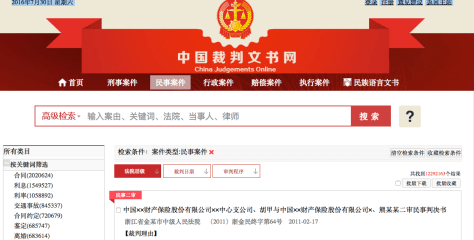 The Supreme People’s Court (SPC) database, China Judgments Online, receives good marks from most commentators inside and outside of China and it is one of the successes of the judicial reforms that President Zhou Qiang often discusses with visiting foreign guests as well as domestic officials. Only now has a team of researchers from Tsinghua University drilled down on the case database (but only through 2014, because the data was not complete for 2015) (short version found here and full version here). They found that there is room for improvement.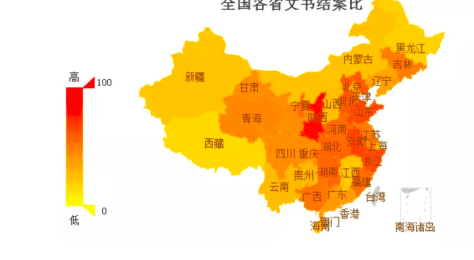
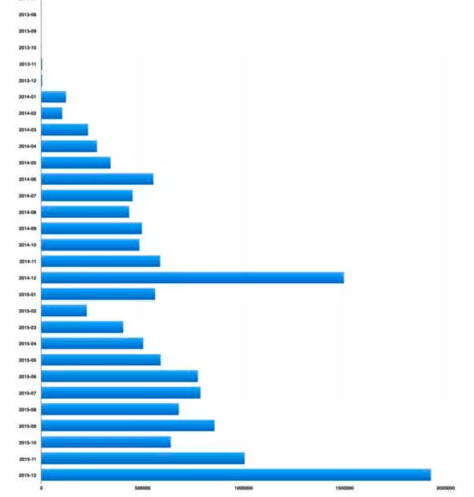

 Chinese courts are paying more attention to the use of precedent in considering how to decide cases. (Two of my fellow bloggers,

 On 1 August, President Zhou Qiang of the Supreme People’s Court (SPC) inaugurated the SPC’s new enterprise bankruptcy and reorganization electronic information platform, linked
  no further information is available. This section is intended to provide the most recent annual report, related litigation, and information on assets of the company from the industrial and commercial authorities’ database and enable “one-stop shopping” for distressed assets.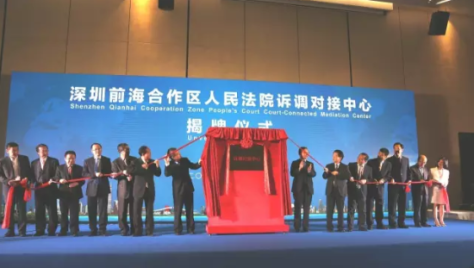
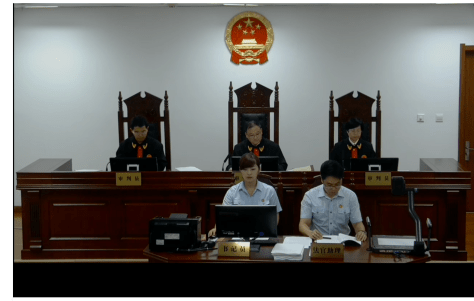


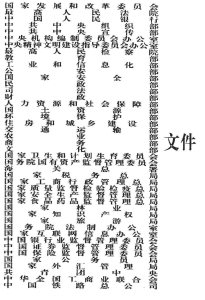


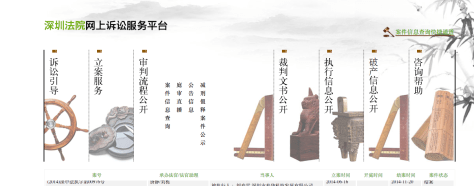
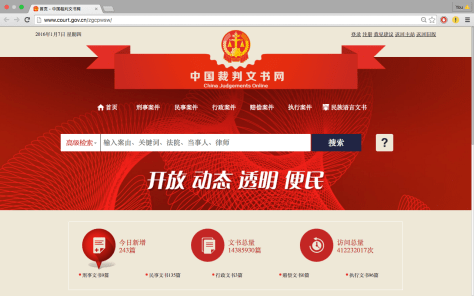

 The rush towards year end in the Supreme People’s Court (SPC), as in the business world, means a flurry of announcements of important developments, to ensure that the SPC meets its own performance targets. Among the recent announcements are: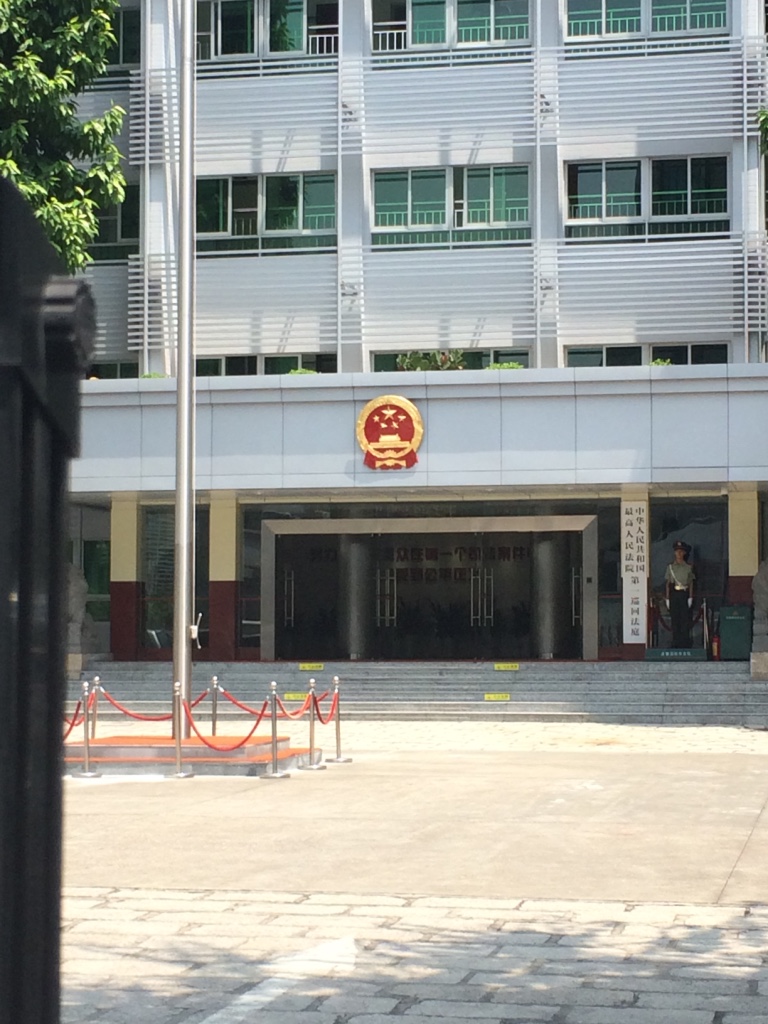
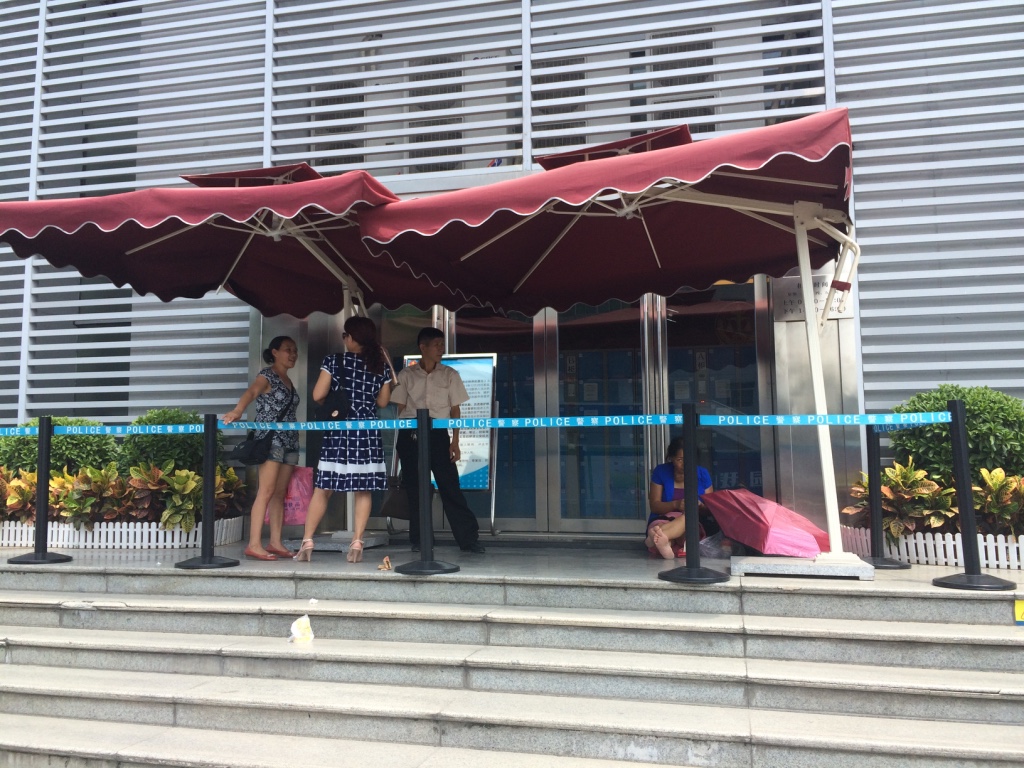
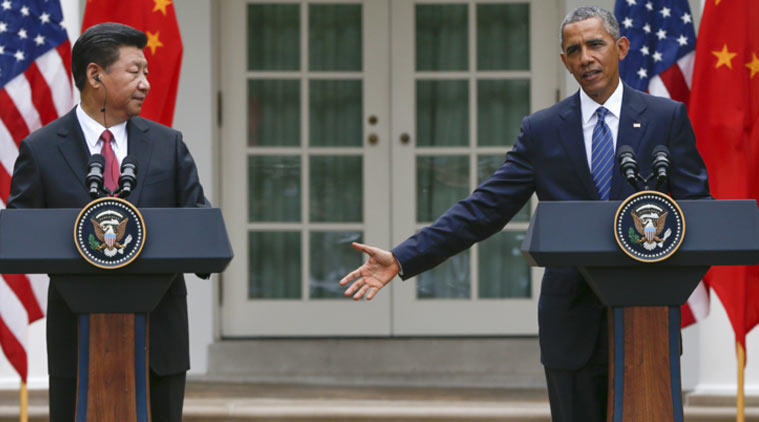
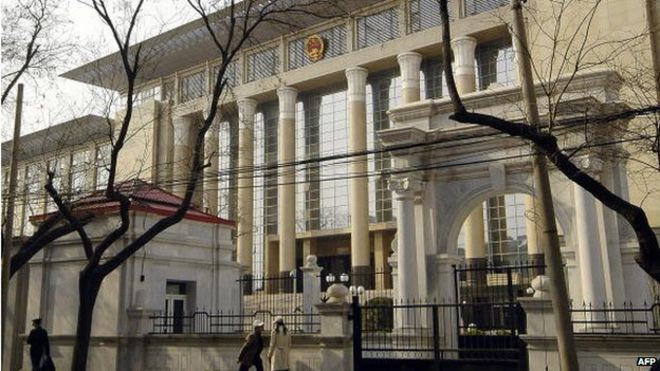

 Supreme People's Court Monitor
You must be logged in to post a comment.