As the days count down to the 19th Party Congress, all Party/government institutions are preparing for it, including the Supreme People’s Court (SPC). On 19 September, the SPC issued an emergency notice (pictured above), calling on the lower courts to strengthening law enforcement work to provide a good judicial environment for the holding of the 19th Party Congress. The SPC, as other Party/government institutions, issue emergency notices from time to time (here’s one from the Ministry of Education), generally linked to a politically significant event. The full text for the SPC notice hasn’t been released (or if it has, it has escaped me). It is meant to send signals to the SPC staff and to the lower courts.
Some of the signals:
improve performance indicator systems (indicating too many courts still have dysfunctional performance indicators);
handle more cases, handle them well, handle them quickly (多办案、办好案、快办案, language better suited to the factory floor);
ensure that the goal of having difficulties in enforcement basically resolved in three years is achieved (again….);
clear up those unresolved cases (要抓好长期未结案件清理,确保依法妥善清理案件)–this is being taken seriously by court leaders, again judges (and their clerks, assistants and interns). The PhDs (and Master’s degree holders) praised by the SPC may feel they are somewhere between a model production worker and a real judge (or clerk.). (Of the SPC quota judges, about 1/3 have PhDs, with over half holding a master’s degree), and PhDs are not unusual in the lower courts, at least in major cities.) An unscientific survey shows judges and their support staff doing more overtime during the pre-19th Party Congress and pre-Golden Week holiday to meet this target;
reminds the lower courts about the case registration reform and reminds judges that cases should be accepted, even towards year end, when courts are concerned about their case closing numbers, especially the number of cases that will be carried over to the next year, and warns them against reporting false closing statistics (坚决杜绝人为抬高立案门槛、拖延立案、年底前提前关门不收案等突出问题), (切实防止虚假报结、强迫撤诉);
reminds courts about another important but controversial judicial reform, implementing the judicial responsibility system (insightful analysis and research from within the courts on this is coming out, see this recent article in the National Judicial College’s journal);
it reminds judges of ways to deal with the increase and cases and reduction in headcount–use diversified dispute resolution, separate simple from complicated cases, and try similar cases together.
The SPC released some year to date (end August) statistics (I’m drilling down on the state of transparency in this area)–close to 16 million newly accepted cases (15.89 million), no breakdown on how cases are categorized, closed cases up to 12.67 million (up 15.7%). This indicates continued high pressure on first instance judges and their assistants. I’m awaiting data on what the vortex of reforms means for retaining high quality judges.
A draft of the first comprehensive overhaul of China’s court law since 1979 (the organic/organizational law of the people’s courts) is now open for public comment (until 4 October). A translation of the draft is available at Chinalawtranslate.com (many thanks to those who made it possible). A translation of the current law is here and an explanation of the amendments has also been published. The draft is significantly longer than the earlier version of the law (66 vs. 40 articles). It retains much of the framework of the old law, incorporates legislative changes as well many of the judicial reforms, particularly since the Third and Fourth Plenums, and leaves some flexibility for future reforms. As with the current law, Communist Party regulations address (and add another layer to) some of the broad issues addressed in the draft law. Some comments:
Drafting process
The drafting process (the explanation has the details) reflects the drafting of much Chinese legislation (further insights about the process from Jamie Horsley here)–several years of soft consultation by the drafters of relevant Party and government authorities, plus one month of public consultations. Among the central Party authorities consulted were: Central Commission for Discipline Inspection, Central Organizational Department (in charge of cadres); Central Staffing Commission (in charge of headcount); Central Political Legal Committee. On the government side: Supreme People’s Court and Procuratorate; State Council Legislative Affairs Office; Ministry of Finance, National People’s Congress Legal Work Committee. Investigations and consultations were also done at a local level.
General Provisions
Some of the dated language from the 1979 version has been deleted (references to the “system of the dictatorship of the proletariat,” “socialist property,” and the “smooth progress of the socialist revolution.” replaced by “lawful rights and interests of legal persons,” and protection of national security and social order. Although the draft court law deletes language that distinguishes among owners of different types of Chinese companies, Chinese criminal law still does (see this chart setting out sentencing guidelines, for example).
Article 10 of the draft incorporates judicial responsibility systems into the law (a prominent feature of the recent judicial reforms), but a topic regarding which dispassionate analysis is hard to find.
The draft contains clear statements about judicial openness and the right of the masses (i.e. ordinary people, that term is alive and well) to know about the work of the courts (according to law).
Organization of the courts
The draft mentions some of the specialized and special courts that have been established over the last thirty years:
Maritime courts, legislation found here; translation of SPC regulations on jurisdiction found here.
Intellectual property courts, legislation found here, a summary of SPC regulations on jurisdiction found here.
The military courts still lack their own legislation (an earlier discussion of this issue is found here).
Article 15 of the draft crystallizes the SPC’s circuit courts (tribunals) into law (SPC regulations on the jurisdiction of those courts found here).
Article 24 gives space for establishing cross-administrative region courts (the time has not yet been ripe for establishing them).
Articles 26 and 27 give courts some flexibility on their internal structure (courts in remote areas with few cases need not establish divisions, while large city courts can have multiple specialized ones. (Earlier blogposts have mentioned establishing bankruptcy divisions, for example.)
Trial Organization
This section of the draft law incorporates the current judicial reforms in several ways, including:
In Articles 30-31, on the operation of collegial panels and requiring the court president to be the presiding judge when s(he) participates in a collegial panel;
Mentioning in Article 32 that the members of the collegial panel are the ones to sign their judgments and dissenting opinions are to be recorded;
Article 34 gives space for eliminating the role of people’s assessors to determine issues of law;
Article 37 incorporates into law previous SPC regulations on judicial interpretations and guiding cases, specifying that they must be approved by the SPC judicial committee;
Article 40 contains provisions imposing liability on members of the adjudication/judicial committee for their comments and their votes. It also incorporates into the law SPC regulations on disclosing the views of the judicial committee in the final judgments, except where the law provides it would be inappropriate;
Article 41 also incorporates into the law the specialized committees mentioned in judicial reform documents (briefly discussed in priorblogposts).
Court Personnel
Article 42 requires court presidents to have legal knowledge and experience. It has long been an issue that court presidents have been appointed more for their political than legal expertise.
It appears that the reform of having judges below the provincial level appointed by the provincial level is not yet in place,
This section of the draft court law incorporates the personnel reforms set out in the judicial reform documents in several ways: quota judge system; selecting higher court judges from the lower courts; the roles of judicial assistants and clerks (changed from the old model); other support personnel in the courts; a new career track for judges, including judicial selection committees; preference to hiring judges with legal qualifications;
Safeguards for the courts’ exercise of authority
Article 56 gives courts the right to refuse to engage in activities that violate their legally prescribed duties (with this end the phenomenon of judges sweeping streets?);
Article 57 relates to reforms relating to enforcement of judgments (and the social credit system);
Article 59 relates to threats to judges’ physical safety and personal dignity, that occur several times a year in China, and have been the subject of SPC regulations;
Scope for further reforms for judicial personnel management (including salary reform!) are included in this section.
Article 60 reiterates the principle that judges may only be transferred, demoted, dismissed according to procedures specified by law (Party procedures to which most judges are subject,are governed by Party rules.)
Article 62 relates to judicial (and judicial personnel training)–some earlierblogposts have shed light on this topic.
Article 64 incorporates into the draft law President Zhou Qiang’s focus on the informatization (including use of the internet and big data) of the Chinese courts.
Etc.
My apologies to readers for the long gap between posts, but several long haul trips from Hong Kong plus teaching have left me no time to post.
I recently published an article in the Tsinghua China Law Review on Chinese case law in practice, building on severalblogposts I had previously written and articles by fellow bloggers Jeremy Daum and Mark Cohen. Many thanks are due to the persons who shared their experience and observations with me. A special thank you is due to the persons who provided detailed comments on earlier drafts.
US 7th Circuit Judge Posner speaking by videolink at National Judicial College (NJC) in 2016
Supreme People’s Court (SPC) President Zhou Qiang has been widely quoted for saying in January of this year that Chinese courts should strengthen ideological work and show the sword to mistaken Western ideas of “constitutional democracy”, “separation of powers” and “judicial independence.” What is not widely known outside China is that the relationship between the Chinese judiciary and some of the major international judiciaries (I’ll use the term “Western”) is more nuanced than it appears. Close observation reveals the following:
high-level summits between major foreign and Chinese judiciaries;
senior Western judges speaking to or providing training to senior Chinese judges;
pilot projects in the Chinese courts involving foreign judiciaries;
SPC journals and media outlets publishing the translation of cases from and reports of major Western judiciaries; and
SPC judges reviewing legislation, institutions, and concepts from other judiciaries in judicial reform.
The official position on borrowing/referring to foreign legal models is set out in the 4th Plenum Decision (as I wrote earlier):
Draw from the quintessence of Chinese legal culture, learn from beneficial experiences in rule of law abroad, but we can absolutely not indiscriminately copy foreign rule of law concepts and models.
President Xi Jinping further elaborated this view on his visit to China University of Political Science and Law on May 3:
China shall actively absorb and refer to successful legal practices worldwide, but they must be filtered, they must be selectively absorbed and transformed, they may not be swallowed whole and copied (对世界上的优秀法治文明成果,要积极吸收借鉴,也要加以甄别,有选择地吸收和转化,不能囫囵吞枣、照搬照抄).
[The Xinhua report on Xi’s visit in English–“China should take successful legal practices worldwide as reference, but not simply copy them” omits the detail found in the Chinese reports.
Some examples of the way the SPC considers the “beneficial legal experiences in the rule of law abroad”:
High level summits (some of which were agreed to on a presidential/head of state level) on commercial legal issues, such as the August, 2016 U.S.-China (or China-U.S.) Judicial Summit
August, 2016 US-China Judicial Dialogue, then Principal Deputy Associate Attorney General William Baer in foreground
“Our three talented and experienced U.S. judges discussed with senior Chinese judges and other experts topics relevant to commercial cases, ranging from case management to evidence, expert witnesses, amicus briefs, the use of precedents and China’s system of “guiding cases.” Speakers from both sides gave presentations that explored complex questions on technical areas of law. The conversations, during the formal meetings and tea breaks, were lively, candid, direct and constructive, highlighting both the similarities in and important differences between the U.S. and Chinese legal and judicial systems. I told our Chinese hosts that the views our judges expressed would be entirely their own, reflecting our separation of powers and the independence of our judiciary. Our judges displayed that independence as they weighed in on a range of issues, such as the role of precedents in interpreting statutes and the challenge of balancing public access to information while safeguarding privacy and protecting trade secrets.
Several of the Chinese participants discussed pending cases in U.S. courts involving Chinese defendants. I [William Baer] believe it was useful for us to air our differences and for our experts to exchange views on technical and sensitive areas of law. At the meeting, it was clear that although we come from different backgrounds and will not always agree, we all recognize the importance of legal reasoning and that increased transparency is a way of earning the public’s trust in the fairness and objectivity of the judicial system.”(from the DOJ website).
2. Training of Chinese judges by foreign judges
Dr. Matthias Keller, presiding judge, Aachen administrative court, teaching at NJC, March, 2017
A number of foreign judiciaries have in place long-term training programs with the Chinese judiciary, with the German judiciary among the pioneers. The National Judicial College (NJC) (affiliated with the SPC) has a long-term program in place with the Germany judiciary, involving the German Judicial Academy, the German Federal Ministry of Justice & Consumer Protection, GIZ (the German international cooperation organization) and other parties, which teaches subsumption and related techniques of applying laws to facts (further explained here). The NJC has published a setof textbooks that apply the subsumption method to Chinese law.
It is likely that close to 10,000 Chinese judges have been trained under the German program. Common sense indicates that the NJC has continued with the program because it is useful to Chinese judges.
A recent example of the German training program is illustrated by the photo above, showing Dr. Matthias Keller, presiding judge of the Aachen administrative court giving a training course on the methodology of the application of law in administrative law to 150 Chinese administrative judges, mostly from intermediate and higher people’s courts.
3. Pilot projects in the Chinese courts involving foreign judiciaries
Australian judges have worked with the Australian Human Rights Commission on a ‘Sino-Australia Anti-Domestic Violence Multi-Agency Putian Pilot Program’ in Putian, Fujian Province, involving judges from the SPC, Fujian Higher People’s Court, and Putian Intermediate Court.
4. Publishing the translation of cases and reports from foreign judiciaries.
Some examples in recent months include:
excerpts from Supreme Court decision Padilla v. Kentucky (published 7 February 2017), for those unfamiliar, it relates to plea bargaining and effective counsel);
U.S. Chief Justice Robert’s 2016 year end report on the federal judiciary;
U.S. federal judiciary’s strategic plan, for their takeaways for a Chinese audience;
Summary of a July, 2016 report on cameras in the federal courts;
Summary of the UK’s 2015 Civil Justice Council’s Online Dispute Resolution Advisory Group’s report on Online Dispute Resolution for Low Value Civil Claims.
5. Considering foreign legal concepts in judicial reform
Foreign legal concepts are considered by the SPC in a broad range of areas of legal reform, most of them unknown to foreign observers. Several of the more well known examples include: plea bargaining (see this article by an SPC judge (a comparison with the US “model” is included in Jeremy Daum’s analysis of China’s expedited criminal procedure reform). Last year’s policy document on diversified dispute resolution (previous blogpost here) specifically mentions considering concepts from abroad,On the ongoing amendments to the Judges’ Law (the draft has not yet been released), SPC Vice President Shen Deyong said in late April, “we need to learn from and refer to the successful practices of the management system of the judicial team by jurisdictions abroad, but they must be selectively filtered for Chinese use (要学习借鉴域外法官队伍管理的制度成果,甄别吸收,为我所用)。
Comment
A careful review of official statements, publications, and actions by the SPC and its affiliated institutions, as well as research by individual SPC judges shows an intense interest in how the rest of the world deals with some of the challenges facing the Chinese judiciary coupled with a recognition that any possible foreign model or provision will need to fit the political, cultural, economic, and institutional reality of China, and that certain poisonous ideas must not be transplanted. [Those particularly interested could pore through two publications of the SPC judicial reform office (Guide to the Opinions on Comprehensively Deepening Reforms of People’s Courts and the Guide to the Opinions on Judicial Accountability System of People’s Courts, in which the authors discuss relevant provisions in principal jurisdictions abroad.]
Those who either are most concerned about diluting the Chinese essence of the SPC (or jealous/emotionally bruised) seem to have saved their most poisonous criticism for off-line comments, as I am unable to locate a written version of the nasty comments that a senior Chinese academic shared with me about the over-Westernization of judicial reform or other nasty comments said to have been made about research by certain SPC judges into foreign legal systems. It is hard to know whether the persons involved are motivated by jealousy or a real belief that these measures described above will have a negative effect on the development of the Chinese judiciary. It seems safe to say that the concerns raised in the 19th century on the dilution of the essence of Chinese culture when borrowing from the West seem to be alive and well in the 21st century.
In August, 2016, I wrote about how non-guiding Chinese cases are guiding the development of Chinese law. I described what I saw as a prevalent practice in the Chinese judiciary that judges search a particular issue to see how other courts have decided a particular issue or the elements to which they have looked when deciding a particular issue. In that blogpost, I questioned whether the Supreme People’s Court (SPC) had noticed this practice. Under a recent SPC policy document that will become effective on 1 May, this prevalent practice will become a required practice. The SPC’s Opinions on Putting a Judicial Responsibility System in Place and Improving Mechanisms for Trial Oversight and Management (Provisional) contains the following phrase:
6. All levels of people’s courts shall give full play to the professional judges’ conferences and adjudication committee’s roles in summarizing trial experience unifying judgment standards; and on the foundation of improving working mechanisms such as consulting similar cases and judgment guidance; a mechanism is to be established requiring the search of similar cases and relevant cases, to ensure a uniform judgment standard for similar cases, and the uniform application of law.
This requires judges to do what many of them have been already doing –searching the case databases for prior cases that raise the same or similar issues and other issues related to the principal one(s). This principle will be applicable to judges hearing all sorts of cases–civil, criminal, administrative, enforcement, and intellectual property. It will not be evident to the reader of a Chinese judgment or ruling that searches have been done because non-guiding cases may not be cited.
Requiring a search of prior and related cases is an important step in the evolution of the Chinese case law system. That system (as I wrote recently), supplements and informs judicial interpretations. Judicial interpretations often take years to be finalized. National legislation (by the National People’s Congress and its Standing Committee) is hopelessly inadequate for the needs of the court system. Case law is needed to fill in the gaps. Judges, who are assuming greater individual responsibility for their decisions, need case law for more specific guidance.
In her remarks in November, 2016 focused on intellectual property, Justice Tao Kaiyuan revealed the thinking of the SPC leadership:
The construction of the case guidance system [Chinese case law] is not to create a new legal source, but to…uncover the broader consensus of the industry, to further refine legal rules and to provide better law for society. It is also expected to lay the foundation for the drafting of judicial interpretations…The function of the intellectual property case guidance system is to enhance the predictability of the judiciary by establishing an intellectual property case guidance system to promote the unity of judicial standards.
The nine presiding judges of the #2 Circuit Court are whom Chief Judge Hu Yunteng calls “The Nine.” It could be: 1) Judge Hu is a fan of the Jeffrey Toobin book on the (US) Supreme Court, which has a Chinese translation thanks to Judge He Fan; or 2)he wants others to know that he has some basic knowledge about the US Supreme Court. (For the avoidance of any doubt, this does not mean Judge Hu is looking to transport the US judicial system to China).
The role and utility of China’s circuit courts have moved into public focus with the establishment of four additional circuit courts (discussed earlier). Some have commented that they have been established just to divert petitioners from Beijing.An article published by a European think tank commented that the circuit courts weaken the power of local judges and courts in the provinces.
But when analyzing what Chinese courts do and how they operate, moving away from grand theory and into the specifics of what they do provides (to this foreign observer and I trust Chinese ones as well) more nuanced insights. It helps to understand better what the circuit courts are doing, how Chinese courts operate, how Chinese judges think, and what practical solutions Chinese judges evolve in the context of their political, legal and social environment. What exemplifies this is a report that the #2 Circuit Court did on petitioning appeals related to criminal cases (第二巡回法庭刑事申诉来访情况分析报告). The report concerns petitions for retrial made under the Criminal Procedure Law’s trial supervision procedure.
While the full report does not seem to be easily available, Chief Judge Hu Yunteng summarized some of what appear to be the main findings of the report in a June, 2016 interview with 中国审判 (China Trial), a SPC journal and Wechat account. The audience for China Trial is primarily his brother and sister judges, so his comments were relatively frank and the legal context about which he was speaking would be taken for granted. His comments, which I am summarizing below, reflect the insights of someone who lived through the Cultural Revolution, and has worked at the intersection of legal research and judicial practice for many years. (His Chinese profile is more complete than the English one).
He said that his remarks were drawn from his experience in hearing nearly 200 cases at the #2 Circuit Court, the majority of which were criminal petition cases (刑事申诉)(cases retried under trial supervision procedures). The cases, he said, reflect issues with criminal cases both at first instance or on appeal, as well issues all courts face coping with criminal petitions. Moreover, he said, the #2 Circuit Court (and SPC headquarters) have more and more petitioners seeking redress, plus an ever increasing backlog of cases. People have been petitioning for a little as 3-5 years, long as 10-18 years, or even 20-30 years, clocking over a hundred visits. Over 700 petitioners visited the #2 Circuit Court with grievances about the decisions of the Liaoning Higher People’s Court.
Judge Hu gave his views on why are there so many of these cases and what should be done.
Why so many cases?
(Graph tracking petitioner visits to the #2 Circuit Court (not from the interview):
A summary of Judge Hu’s analysis follows below, with some comments in brackets.
Reasons for these cases
“The reasons are complicated.” He believed that the number of mistaken/unjust cases were small in number, and 90% of the petitioning cases involved cases decided properly, with 9% with some errors, but only 1% with errors serious enough for the case to be re-tried. The reasons, he believed, lay deeper.
Defects in the criminal procedure system. It has a two instance system, with the second instance as final; time limits on hearing criminal cases; and criminal petitioning system. With societal change and ordinary people have greater legal consciousness and demands for justice. This criminal procedure system is incompatible with current societal demands (这些制度已经不能适应新时期的需要). In some areas of China, there are more petitions from second instance decisions than appeals.
Most jurisdictions, whether common law or continental (including Hong Kong and Macau) have a three-instance system, and if China does not change this and have a limited third instance system, the criminal case petitioning problem will not be solved. The strict time limits mean facts are not clarified, a good job is not done at trial, and case quality is not maintained, creating errors that causing petitioning. The lack of time limits on petitioning is a major reason that it exists. [Note: Judge Hu saying this does not mean the Chinese government will change its system immediately or in the near future. His voice is a powerful and persuasive voice identifying this as a core reason for so many petitions, but this must be understood within the context that he said it. This is his analysis, not a signal that the Chinese government will change its criminal justice system immediately.
Implementing a [limited] three-instance system is a major criminal justice policy change, with social stability, financial and personnel implications (as seen from the government’s perspective). Proposals to make such a fundamental change to criminal procedure law would come after a great deal of analysis and consultation with the authorities involved. Judge Hu does not elaborate on what he means by a limited third instance system, but research shows this concept is being explored by a variety of thinkers and scholarship on the topic dates back over 10 years. Those following Chinese criminal justice system reforms should be aware that the renown Professor Chen Guangzhong revealed (in an interview in June, 2016) that amendments to the Criminal Procedure Law are under consideration, although the details are not yet known. ]
2. Problems in judicial practice. There aren’t enough staff to hear the cases carefully, and cases are no longer limited to traditional crimes, with cases more complicated and evidence harder to assemble. More sophisticated defendants no longer passively accept the sloppy work being done by people handling these cases (办案人员)(referring to police/prosecutors/judges, as appropriate). It causes errors in: collection of evidence; forensics; determinations; incomplete compliance with legal procedures; inappropriate legal explanations; cases handled inappropriately. Moreover,the cases reflect problems in the way a significant proportion of those handling cases think about law: failure to correctly understand basic legal relationships such as fighting crime and protecting defendant’s rights; the relationship between public security, procuratorate, and courts; the relationship between handling criminal cases and resolving social conflicts, etc. All these things cause an increase in the number of petitioners. [Again, this his analysis reflecting his many years of experience and observation.]
3. Changes in the legal and social environment. These are another set of reasons for so many criminal petitioning cases.Judge Hu said, actually, the increase in criminal petitioning isn’t an entirely bad phenomenon. It is part of the process in improving the rule of law. The state respects human rights more and people are more aware of their rights and are increasingly daring to defend their rights.Moreover, societal public opinion has encouraged people after they have read in the media that mistaken/unjust cases have been corrected. Moreover, criminal punishment for the same offense has varied greatly, depending on whether it was during the “Strike Hard” or other campaigns, so when people look from today’s perspective at these cases, they feel it is unfair.
What to do about it?
Judges dealing with these cases need legal knowledge and political wisdom.
Respect petitioners. Petitioning is a basic human right. Judges should not think that petitioners are making trouble from nothing. In the #2 Circuit Court Judge Hu requires judges receiving petitioners to be patient in explaining the law. So treating petitioners’ litigation rights seriously is a way to deal with them
According to law, petitions should be submitted to the court that heard the case originally. The case filing or trial supervision departments of these courts should seriously review the cases, if there is an error, retry the case on the court’s own initiative. If the case lacks errors, the facts and law should be explained to the petitioning party. This is assuming responsibility to the facts, law, parties, and people.
The higher courts need to do a better job of supervising the lower courts. Courts need to balance respect for effective judgments with a party’s petitioning rights. Courts should determine whether the issue is procedural or substantive. Cases can’t be rushed–some can be dealt with quickly and others not. Higher courts should take on more difficult and complicated cases themselves.
Petitioning cases should be heard by three judge collegial panels, by reviewing the file and questioning persons if needed, questioning the party and if he (she) is in custody, summoning him for questioning, hearing the views of the party’s lawyer if one has been appointed and making contact with the party and his lawyer an important way to deal with these cases. Moreover, the lower courts should appoint more qualified and experienced people to handle criminal petitions, as it is often not currently the case.
As some of these cases relate to a specific time period, sometimes it is necessary to work with the higher or lower courts, or seek support from the government or Party to deal the matter. For example, some cases were correctly decided at the time, but the decision is no longer appropriate under current circumstances. Retrial is not possible but coordination is possible through the implementing authorities [presumably the jail] or procuratorate.
Connection with judicial reform
Presumably Judge Hu’s report and analysis are part of a project connected with larger judicial reform issues. See Article 36 of the 4th Five Year Court Reform Plan:
36. Reform the system for petitioning involving litigation.Improve mechanisms for the separation of petitioning and litigation work, clarifying the standards, scope and procedures for separating litigation and petitioning. Create finality mechanisms for petitioning involving litigation, standardizing the sequence for petitioning involving litigation in accordance with law. Establish mechanisms for steering and receiving petitioners at their source, and innovation networks for handling petitioning. Promote the establishment of a system for lawyer representation of in complaint appeals cases. Explore the establishment of mechanisms for lawyers to participate as third-parties, increasing the diversity of joined forces for resolving conflicts in petitioning related to litigation.
Effect of these comments
Presumably Judge Hu has sought to implement some of his own recommendations, such as requiring his own judges to do a better job receiving petitioners, and expecting the lower courts to do the same. It is likely that Judge Hu has made his views known in meetings with judges from Liaoning, Jilin, and Heilongjiang. So this appears to be one piece of evidence that the circuit courts are having an effect on the quality of justice delivered.
Since petitioners “vote with their feet,” it appears that one indicator would be a downturn in the number of petitioners with grievances about criminal cases in the Liaoning Courts. How his report and recommendations will be considered nationwide remains to be seen. As a member of the SPC’s judicial committee, his full report and more detailed recommendations are likely to have an impact on the thinking of SPC colleagues. As to the larger issues Judge Hu has raised, we are unlikely to see any immediate or short term impact because of the complex politics linked to those reforms.
Much has been written on why Chinese judges are resigning (but not enough about Chinese prosecutors–to be the subject of a later blogpost), but this blogpost (written on the road) adds some more detail and analysis. Comments (and criticism) are welcomed.
In May (2016), Chen Haiguang, the head of the judicial management department of the Supreme People’s Court (SPC) revealed that over 1000 judges had left, which he described as about 1% of the judiciary. The number appears to be an underestimate. The legal Wechatosphere often mentions that a Wechat chat group of former Beijing-based (including the SPC) judges has reached its maximum of 500 members.
More data and analysis comes from two sources: a survey conducted in the fall of 2015 and published by Wusong (a big thank you to another “authoritative person” for bringing this to my attention) and a recent article by one of the more popular Wechat public accounts, Empire Lawyers ( 法客帝国).
Respondees to survey
Six hundred former judges responded to the survey, conducted through social media, of which 72% had left within the past year, while almost 19% had left within the past 2-3 years.
Who is leaving
Judges resigning, by sex (82.2% men, 19.67% women
It is mostly men leaving the judiciary, out of proportion with the ratio of men:women in the judiciary (2:1). (This confirms what I have been saying when I have spoken on this issue). The survey gives the rationale that men are more interested in a challenging career than women, and are able to deal with a more pressured life.
Judges are resigning in their 30’s, for the most part (see below), and my own analysis is that the reason women are staying in the judiciary is that (married) women at that age also have responsibilities to children and elderly parents. Women are prepared to deal with the stresses of working in the judiciary because the work is more “stable,” and does not involve marketing work after business hours.
Age and education
Over half (55%) of the judges resigning are in their 30’s. Most (70%) have been in the judiciary for at least 6 years, with practically all (91%) with at least 4 years of experience, over 99% with an undergraduate degree and 37% with a master’s degree.
Type of court and area of work
Most judges who have resigned recently are from the basic level (78%) and intermediate level courts (18%).
Many (almost 80%) of the judges who had resigned were in the civil/commercial divisions, with division chiefs and deputy division chiefs accounting for 14% and 19% respectively.
Reasons for leaving:
benefits insufficient (66% selected this as primary reason);
too much pressure and too much work (60%);
not enough opportunity for promotion (34%);
professional risk and lack of professional respect (31%).
Those that have resigned are generally pessimistic about judicial reform (47%) or can’t say for certain whether it will be successful (32%). Their “judges’ dream” is to be able to try cases independently, without reporting their case up to the leadership, worrying about parties to the case petitioning because they are unhappy with the outcome, etc.
Another analyst (the editor of the Wechat account Empire Lawyers) gave three reasons for the wave of judges submitting their resignations.
Wechat;
Judicial reform;
Other factors (especially money).
Why Wechat? Because it has given them a new universe of social connections outside the judiciary. It also gives them easy access to information about the life of former judges similar to themselves. Moreover, through Wechat they can create a circle of friends and connections who can provide moral support when they have made the decision to resign. According to the editor, Wechat is often a vehicle for judges preparing to resign. Some judges establish their own Wechat public accounts while still in the judiciary, publishing articles that bring much more attention from legal professionals to their expertise than their judgments ever do.
The increased stresses of judicial reform are another set of factors–the lifetime responsibility system, case registration system, and particularly, the bright line quota on the number of judges (no more than 39%) means that promotions will come more slowly than previously and others will not even be eligible to participate in the examinations for qualifying as a judge.
Other factors? The editor cited money, particularly judges in major cities with high costs of living. The fact remains that middle-class life in China’s major cities, particularly for couples with a child, is expensive and judicial salaries, tied to civil service rank, are inadequate. As the editor mentioned, some judges supplement their wages with (legal) inome from writing or lecturing. (It seems likely in the current atmosphere, fewer judges are willing to risk soliciting illegal income.)
There is also the rigidity of the Party/state cadre management system. While law firm partner classmates are posting photos of themselves at Yosemite or in the Grand Tetons on Wechat, judges must obtain permission to leave the country
Finally, this couplet is popular on legal oriented Wechat:
From 1 July 2016, the Supreme People’s Court (SPC) is (in principle) broadcasting live all its public trials (public hearings) (better understood by those from a common law jurisdiction as an appellate court hearings) on its own Court TV website.
SPC broadcasts also include hearings by the #2 Circuit Court (in Shenyang) and #1 Circuit Court in Shenzhen. The technical platform is provided through Sina.com and a private company. The SPC describes its online broadcasts as its fourth transparency platform.
As of 14 July, there almost 30 cases for which the videos are available, many of which involve lending, either bank or private lending and real estate-related disputes, and are primarily civil cases. Some of the cases include:
Loan dispute heard in the #2 Circuit Court involving a Nanning private company, Bank of China, Liaoning, and the Vansun Group (in this case, counsel for the Nanning company alleges the CEO of the company was incapacitated by alcohol (over 1 jin-500 grams) when he signed the loan contract)
A Fujian investment co. v. Guizhou real estate development company (private lending dispute).
It provides a window into the world of Chinese commercial disputes.
Rationale
SPC Vice President Jing Hanchao, who was apparently tasked with implementing this development, is quoted by the official press as saying:
the live webcasts will be significant progress for judicial openness. With full transparency of trials online, the public can better play their supervisory role.
Live broadcasts will also drive judges to strengthen their capabilities, thus improving the judicial system…
..live webcasts will create a large amount of data that will help jurists study China’s legal system.
Having their advocacy broadcast on line may also drive lawyers to strengthen their advocacy skills as well.
For persons interested in the Chinese judiciary, it provides easy access to SPC court hearings, without the hassle of special permission, letters of introduction, and trips to Beijing.
Lawyers in Beijing do not seem to be aware of this development, at least judging by the lawyer acting for TRAB, who arrived in the courtroom after the hearing began.
Some outstanding questions
This decision by the SPC raises a number of questions.
Were the parties asked whether they consented to having their case broadcast on line? It is not apparent from the recordings that I have seen.
Individual parties read out their personal identification numbers on the recordings. Could this be an invasion of their privacy?
The recently promulgated People’s Court Courtroom Rules (translation here (thank you Chinalawtranslate.com) and original here) lacks any type of balancing test:
Article 11: In any of the following situations, for trial activities that are conducted openly in accordance with law, the people’s courts may use television, the internet or other public media to broadcast or record images, audio or videos.
The 2010 regulations on the broadcast of cases (关于人民法院直播录播庭审活动的规定) lack specific procedures enabling individuals to protect their rights. Do judicial reforms contemplate more specific procedures enabling litigants (or defendants) to refuse to have their case broadcast online?
Note:
Mac users may find that the platform works better through the Safari browser than Google Chrome.
Opening of court-annexed mediation center of Qianhai court
On 29 June 2016, the Supreme People’s Court (SPC) issued a policy document on diversified dispute resolution (Opinion on the people’s courts more deeply reforming the diversified dispute resolution mechanism) (Diversified Dispute Resolution Opinion)(关于人民法院进一步深化多元化纠纷解决机制改革的意见). The document uses the term “diversified dispute resolution” (consistent with Chinese practice) rather than “alternative dispute resolution” (more often used outside of China) to reflect the central place of mediation, arbitration, and conciliation in Chinese dispute resolution. (This post has been superseded by the 31 July version.)
It was accompanied by regulations on court-appointed mediators. For those interested in the way the SPC works, it is another example of an SPC policy document in the form of an “opinion” (discussed here) accompanied by regulations (a type of judicial interpretation, discussed here).
The policy document sets out in a consolidated form the SPC’s latest policies on mediation, arbitration, and its relationship with litigation. It provides a framework for further reforms. It is intended to inform the lower courts as well as related Party/government agencies of forthcoming reforms. It signals to the central leadership that the SPC is on course to achieve one of the reform targets set out in the 4th Court Reform Plan. The current head of the SPC’s judicial reform office, Judge Hu Shihao, spoke at the press conference announcing the Diversified Dispute Resolution Opinion, indicating that the office took the lead in drafting it.
A summary follows below, highlighting, based on a quick reading, focusing on its:
objectives and origin;
signals and practical implications.
A very useful academic article on diversified dispute resolution, with survey data and more on the political background, can be found (behind a paywall) here. (To the many academics and practitioners who have written on this topic, please feel free to use the comment function or email to expand/contradict, or correct this).
Objectives & origin
The SPC issued the Diversified Dispute Resolution Opinion as a way to implement one of the targets in the 4th Judicial Reform Plan:
46. Complete diversified dispute resolutions mechanisms.Continue to promote mediation, arbitration, administrative rulings, administrative reconsideration or other dispute settlement mechanisms with an organic link to litigation, mutually coordinate and guide parties to choose an appropriate dispute resolution. Promote the establishment of dispute mechanisms that are industry-specific and specialized in the areas of land requisition and property condemnation, environmental protection, labor protection, health care, traffic accidents, property management, insurance and other areas of dispute, dispute resolution professional organizations, promote the improvement of the arbitration systems and administrative ruling systems. Establish an operating system that links people’s mediation, administrative mediation, industry mediation, commercial mediation, and judicial mediation. Promote the legislative process of a diversified dispute settlement mechanism, establish a system for a systematic and scientific diversified dispute settlement system.
The Diversified Dispute Resolution Opinion is a product of the 4th Plenum decision. Its underlying approach was approved by Xi Jinping and other top leaders. Judge Hu, who mentioned at the press conference that at a 2015 meeting, the Leading Small Group on Comprehensive Reform approved a framework policy document (not publicly available) on improving the diversified resolution of disputes (关于完善矛盾纠纷多元化解机制的意见) and the General Offices of the State Council and Central Committee followed with an implementing document. The principal reason that this topic merited top leadership time and involvement is because of its direct links to maintaining social stability and reducing social disputes.
Similar to other SPC policy documents discussed on this blog, comments on the draft were sought from the central authorities, lower courts, relevant State Council ministries and commissions, industry association, arbitration organizations, scholars, and the Legislative Affairs Commission of the National People’s Congress Standing Committee. The Diversified Dispute Resolution Opinion was approved by the SPC judicial committee.
Signals
The objective of the document is to promote a more sophisticated, efficient, and effective approach to dispute resolution that will reduce social tensions. Part of the objective is to reduce the number of cases filed, heard, and tried by courts. For commercial disputes, it is intended to push disputes to institutions that can more competently, efficiently and timely mediate cases and better mediate cases within the courts by involving court-annexed mediators, before or after the person or entity files suit. The implications of this document for the reform of labor and rural land contract dispute resolution remain to be seen.
The Diversified Dispute Resolution Opinion requires better linkages between other institutions and the courts, so, for example, that mediation agreements can be enforced without a re-hearing in the courts. It stresses Party leadership while emphasizing that forces in society can do a better job of dispute resolution than official ones. The document also cautions against borrowing institutions wholesale from abroad.
Practical implications to expect in the medium to long term
For the foreign investment community (and their lawyers), a signal that the SPC is working on a judicial interpretation concerning the judicial review of foreign and foreign-related arbitral awards (“standardize judicial review procedures for foreign-related and foreign commercial arbitration awards”) (规范涉外和外国商事仲裁裁决司法审查程序). As this blog has reported earlier, this was signaled at the November 2014 National Conference on Foreign-related Commercial and Maritime Adjudication and last year’s One Belt One Road Opinion. It is unclear whether the future interpretation will change the prior reporting procedure, for example, to give parties a chance to submit arguments orally or in writing, or whether it is intended to consolidate the principles the SPC sets out in its responses to lower courts (released to the public in one of the SPC’s publications), summarized in comprehensive overviews of Chinese arbitration law, such as this one.
Changes to labor dispute resolution, as highlighted by the 2015 Central Committee/State Council document mentioned earlier. This is important in light of the uncertain economy and increasing number of workers being made redundant. in recent years, judges in differentareas of China have published devastating criticism of the current labor arbitration system and labor dispute resolution generally. The judges pointed out the current labor arbitration system is not independent of the government, fails to protect labor interests equally, and . The judges also criticize the brief statute of limitations in labor disputes and lack of a specialized labor tribunal. It appears from reports that Zhejiang Province is taking the lead in providing greater choices and professionalism in labor dispute resolution, but it unclear how far those reforms go.
Further attention to rural land arbitration.The Diversified Dispute Resolution Opinion mentions better linkages between the courts and rural land arbitration. This area is important, as the government seeks to encourage farmers to expand their landholdings and mortgage their land, but the merits of the system are not the SPC’s issue. A 2014 report highlights the lack of independence of these arbitration commissions, lack of arbitrators, and absence of qualified arbitrators. A 2016 paper by several China Banking Regulatory Commission staff on the mortgage of rural land notes that those arbitration commissions need improving.
Local courts to establish “court-annexed mediation centers” to encourage and give parties “one stop shopping” for choices in mediating some of the cases most often seen in the courts–family, conflicts between neighbors, consumer, small claims, consumer, traffic accident, medical disputes;
“Improving” criminal conciliation and mediation procedures. Reforms in this area bear close monitoring because, as discussed in earlier blogposts, criminal conciliation and mediation procedures are often used to avoid embarrassing more powerful institutions (such as schools) and people especially in cases involving claims of rape, sexual assault, and child molestation;
recognizing the results of and encouraging litigants to use neutral valuation organizations, for civil and commercial disputes such as medical, real estate, construction, intellectual property, and environmental protection, the results of which could be used as the basis of mediation;
More small claims and expedited procedures for minor civil disputes;
more lawyers to be appointed as court-appointed mediators;
Improvements to administrative dispute resolution procedures.
What does all this mean for making people “feel justice in every case” when some persons and institutions enjoy a better quality of dispute resolution than others?
As highlighted in a December,2015 post on this blog, and as Supreme People’s Court (SPC) Vice President Shen Deyong announced on 11 May, family courts are coming to China, or at least 100 pilot projects for them. Family law cases have been heard within civil divisions of local courts, but there has been dissatisfaction with the way there are being heard. In 2015, 1,733,000 marriage law cases were heard and about 84,000 inheritance cases.
Family law issues reflect the complexities of Chinese families today:
Divorce in major cities often touches on the rights to real estate whether debts are debts of one spouse or of the marriage;
Custody and maintenance are issues, particularly when maintaining an expensive life style is involved;
In rural areas, bride price and marriage by local customs rather than official registry is an issue.
Justice Shen stressed that family is the basis of society (echoing Confucius). The Women’s Federation, Ministry of Civil Affairs, Ministry of Justice, and Central Political Legal Committee were involved in this initiative. This reform has been piloted on a smaller scale in Guangdong province. District courts in Shenzhen and Zhuhai have been early stage pilots. The SPC issued a document to support the initiative which has not yet been publicly released (Notice of the SPC concerning some courts initiating pilot reform work in family court trial methods and work systems 最高人民法院关于在部分法院开展家事审判方式和工作机制改革试点工作的通知). [Update–the document was eventually released–available here.]
This is an area in which the Chinese courts, including Supreme People’s Court is looking to jurisdictions outside mainland China (i.e., including the United Kingdom, Australia, Taiwan, Japan, and South Korea) for concepts that may be used in China. Hong Kong law has not been mentioned as a model from which the mainland can transplant concepts, because, as this recent article published by a member of the University of Hong Kong Law Faculty details, Hong Kong family law and family law procedure is many years behind developments in Commonwealth countries, and it is an area in which Hong Kong’s executive led government has delayed introducing comprehensive legislation. Ironically, in March, 2016, the SPC had discussions with Hong Kong’s Secretary of Justice on the issue of the recognition of judgments in the area of marriage and related issues.
matrimonial cases and related cases, including divorce, annulment, revocation of marriage;
custody, child support fees, property division after divorce, etc; maintenance disputes; paternity cases, including parent-child relationship to confirm or deny paternity;
adoptive relationship disputes;
cohabitation disputes, including the division of property during cohabitation, children born out of wedlock, and other dependents;
inheritance disputes.
The pilots will promote:
mediation as a way of resolving disputes;
personal appearance of parties in court;
putting the interests of the child first.
Issues with family cases that the Shenzhen judges have highlighted:
family law is not taken seriously as an area of law;
investigators are needed to support the judges;
lack of coordination with other authorities involved in family law issues;
burden of proof needs to change in family law cases, because otherwise it is difficult for the weaker party (generally the woman/elderly) to prove her case;
court performance indicators make it difficult to handle family law cases properly;
the courtroom set up must be changed to better accommodate family law disputes;
questions on handling family law issues that impinge on public policy/morality, such as inheritance by mistresses.
If the Confucian value of family as the basis of society is to be taken seriously the Chinese court system needs to show it by its actions. And the Chinese legal system will need to face the issue that family includes people who are gay/lesbians/transgender.
Over one year has elapsed since the Supreme People’s Court (SPC) has implemented the judicial reforms set out in the February, 2015 4th five year plan for reforming the judiciary. While thousands of words have been written in Chinese and English, some praising, criticizing, mocking, and bemoaning the reforms, it was only in late February, 2016 that the SPC issued a comprehensive official assessment, focusing on its achievements. That official assessment takes the form of a bilingual white paper (White Paper) issued in early March (but full text released on-line only in English), plus a section of President Zhou Qiang’s work report devoted to the judicial reforms, a first for the SPC. I surmise that it was approved by the Judicial Reform Leading Group.
This blogpost looks at the vision for the Chinese judiciary that the White Paper conveys, by looking at several sections.
Chinese court system and the reform process
The description of the reform process in the first section of the White Paper tells us who/what is driving the reform process, the nature of the process, the core issues, and how the judicial reform process is being monitored.
Facts highlighted:
During 2014-2015,13 out of 19 plenary sessions held by the Central Leading Group for Deepening Overall Reform involved judicial reform, where 27 judicial reform documents were adopted.
A partial list of those 27 documents is found here.
The Social System Reform Specialized Group (the Central Leading Group for Judicial Reform) is in charge of judicial reform;
The SPC has a leading group in charge of judicial reform, replicated at the provincial level, and any judicial reform plans piloted by them need to be approved by the SPC or above (the 4th Judicial Reform Five Year Plan states this).
According to this section, the four core judicial reform measures are:
improving the classified management of judicial personnel [treating judges differently from clerks and other support personnel and civil servants0;
the judicial accountability system [the lifetime responsibility system set out in regulations issued in September, 2015, but only implemented in areas piloting judicial reform, controversial among judge and academics];
professional protection of judicial personnel ;
unified management of personnel, funds and properties of local courts below the provincial level.
These four measures will be piloted throughout the country in several rounds before they are implemented nationwide.
Comments
From the description of the reforms we can see that the specific reforms discussed in the remainder of the report have been cleared by the Party leadership. It seems reasonable to assume that each reform involved hundreds of hours of policy paper drafting by SPC staff and internal and cross-institutional discussions, and responses to comments during those discussions.
What the White Paper did not mention is that the Central Leading Group for Deepening Overall Reform and the Central Leading Group for Judicial Reform established their own inspectorate for monitoring the progress of reform,including judicial reform, (reviving a traditional institution). It is unclear which reforms will be targeted this year for inspection. The separate inspectorate seems to indicate that these Central Leading Groups want their own source of information on how reforms are being implemented.
Judicial independence (Ensuring Independent and Impartial Exercise of Judicial Power Pursuant to Law)
One of the messages conveyed in this section is that local courts do not belong to local governments but are established by the State at the local level to exercise judicial power on behalf of the State. The goal as stated in this section, is to “form an institutional environment and social atmosphere that respects [the] judiciary, supports [the] judiciary and trusts [the] judiciary.”
It lists about a dozen measures. What is new in this section:
a summary of the policy thinking on judicial appointments and funding of the local courts. On judicial appointments, judges will be selected by judicial selection committee at the provincial level in terms of professionalism, and will be appointed and removed according to common standards. This is a push in the direction of professionalism, and away from the phenomenon noted in the past few years of having chief judges who lacked a legal education. On the funding issue, the Central Government will fully guarantee the funding of the local courts. The provincial fiscal departments manage the funds of local courts below the provincial level, the local courts will submit their budgets to the provincial fiscal departments, and budget funds will be appropriated by the centralized payment system of the national treasury.
Fuller discussion of cross-administrative district courts to hear administrative cases–piloted in Beijing and Shanghai and other locations, under the umbrella of a policy document of the SPC that has not been made public. The concept is to have cases against local governments heard outside of the area in which they arose. The SPC recent policy document on the development of the greater Beijing area has further content in that area.
Improving the way the courts function ( Improving the Functional Mechanism of Adjudicative Powers)
The fourth section of the White Paper provides useful insights into how the judiciary is intended to operate post reform. It starts out with a statement that judicial power is a judging power in essence and emphasizes impartiality, neutrality and personal experience.”
The focus on this section is on reforms to the way Chinese courts operate. As I have written previously, they have operated in many of the same ways that other Party and government organs operate. This section describes pilot reforms, new policies, or regulations concerning the following (among others):
personnel reforms described above (but do not mention the pay rise that goes along with it in at least some courts);
senior judges within a court (court presidents, vice presidents, division chiefs) will no longer approve judgments, except for a small number going to the judicial committee);
senior judges will hear cases instead of concentrating solely on administrative matters;
courts will establish a specialized judges council made up of judges in specialized areas (criminal, civil, etc) to provide views to judges hearing cases on the interpretation of substantive issues, on an equal basis rather than seniority;
the SPC has abolished irrational performance indicators and forbidden senior judges from involving themselves in cases that they have not heard;
the SPC has issued policy guidance on the reform of judicial committees (not yet made public). The principles set out follow generally what was described by President Zhou Qiang earlier, but include judicial committee discussion of “major and complicated cases concerning national diplomacy, security and social stability and those required by law.” The guidance calls for more transparency (unclear whether to be within the court or greater), better record-keeping, and less involvement by judicial committees with specific cases. As discussed in an earlier blogpost, judicial committees have often been a route for transmitting the views of local officials and have been been implicated in some of the wrongful conviction cases);
regulations on the jurisdiction of different levels of courts in civil cases (described in this blogpost).
These reforms look to do a number of things that are significant within strictures of the Chinese system: distinguish judges from other Party cadres and give them better status and pay; break down or reconstitute some of the basic internal structures of the courts that have facilitated corruption, unjust cases, and discouraged talented judges; abolish performance indicators that have been poisonous for judges and litigants alike.
The vision
The vision that the SPC has for the Chinese judiciary and judges can be seen from the description of the reforms above. The SPC intends to create a more professional judiciary (with a lower headcount), that is better paid, more competent, has performance indicators that look more like other jurisdictions, with an identity and operating mechanisms separate from other Party/government organs, that will be more autonomous, no longer under the thumb of local authorities, but operates within the big tent of Party policy. To be incorporated in the judicial reforms, the implications of each measure must have been thoroughly discussed by the Party leadership and the Party leadership is using its own institutions to monitor results. Will the judicial reforms achieve their goal of making people feel justice in every case? For that, the jury (or is it the people’s assessors(also being reformed)?) is still out.
One of my favorite Wechat public accounts, the “Home of Judges” (法官之家) was closed down earlier this month. The public account had about 100,000 followers. (Wechat public accounts are explained here.) While some public accounts are used as corporate marketing platforms, “Home of Judges,” along with several other public accounts have become platforms for (primarily) young judges (and lawyers) to share their views, experiences, and analyses. The Home of Judges public account published articles by many local judges, many with their concerns and thoughts about different aspects of judicial reform, with other articles describing by current or former judges explaining why they left or were thinking of leaving the judiciary. The account holder for the public account, Li Liang, a former Guizhou Higher People’s Court judge wrote:
I had a feeling that Home of Judges would be closed down–first the News Bureau of the Supreme People’s Court contacted the news department of my court, demanding that the name of the public account be changed, but the editor did nothing, then I heard that the internal reference service of the Supreme People’s Court SPC) carried some Home of Judges articles, then recently the Beijing News Department deleted articles.
An anonymous article by the Sword of Heavenly Peace (长安剑) (according to some sources a pseudonym for the Central Political Legal Committee set out a seemingly more official explanation of why the account was closed down. The name of the public account was a problem, because the account holder had left the court. However the same name (Home of Judges) is used for the name of a hotel in Beijing, apparently the Supreme People’s Court’s guest house (see the comments to this hotel review).
Stepping into the shoes of the Supreme People’s Court leadership for a minute, it seems likely that a public account with a large number of judges criticizing the judicial reforms approved by the Party leadership would make the SPC leadership uncomfortable. Why? Because it would indicate that they were not doing a good job of “uniting thinking” (统一思想)–uniting the judges of the lower courts behind policies drafted by the SPC that had been approved by central Party authorities.
Comments by a fellow blogger
Following the closure of the “Home of Judges,” one of its fellow bloggers commented on the current environment. Zhao Jun, a judge of the Jiangsu Higher People’s Court, who has a popular (among the legal community) public account, under the pen name Gui Gongzi 桂公梓, explained why he hasn’t been writing legal articles:
Third and more importantly , with the fluttering banner of democracy and the rule of law more and more ambitious, the space for speech is obviously tightening.
Chinese social media is an invaluable way to understand what is going on in the Chinese court system and Chinese law generally, enabling you to keep up with developments wherever you are.
It is a shame if public accounts such as “Home of Judges” are seen as a threat to the government rather than a way to understand what the younger generation of judges, prosecutors and lawyers are thinking.
The older generation?
The older generation of judges and lawyers, particularly those who have lived through the Cultural Revolution, comment privately that at this time, the best approach is to say nothing.
The rush towards year end in the Supreme People’s Court (SPC), as in the business world, means a flurry of announcements of important developments, to ensure that the SPC meets its own performance targets. Among the recent announcements are:
reform of the maritime courts, to make them internationally influential (this has both political and legal implications, blogpost to come);
approval by central Party authorities of the third round of judicial reform pilots, and the holding of a large scale meeting of representatives from the Leading Group on Judicial Reform with the SPC and Supreme People’s Procuratorate (SPP), on the focus (personnel reforms) and roll out of these projects. Jiang Wei,deputy director of the Office of the Central Leading Group for Judicial Reform, spoke along with his SPC and SPP counterparts. Political legal committee secretaries from the pilot areas attended, along with court and procuratorate officials.
Reform of the family court system, announced at a conference held in Guangzhou, attended by Justice Du Wanhua, highlighting that the rush of judges to meet performance targets (closing cases) Iamong other factors) has had a negative effect on children, elderly, disabled, and women. The SPC likely published typical/model family law cases in November (discussed in this blogpost) because pulling together those cases was part of the preparations for the Guangzhou conference;
long pronouncement by Justice Shen Deyong on the “standardization” of the courts, citing the important status and important role of the judiciary in the governance of the country, but the growing contradiction between the needs of the people and judicial resources and judicial capacity, decrying the lack of “top level design,” and calling for the implementation of related reforms.
This list will be supplemented later this month, as further announcements are made.
In late November, the Supreme People’s Court (SPC) held a press conference on case filing (docketing) reforms to announce a 32% increase in civil and administrative case filings, year on year, putting a positive spin on what is a highly stressful situation for frontline judges, but a generally positive development for litigants and their lawyers. There are many stressful factors for Chinese judges and the Chinese courts, leading many judges to leave or contemplate suicide, and others to vote with their feet. This blogpost will look at some of the recent developments:
Large number of cases;
Increasing fraudulent litigation;
Dysfunctional performance indicators that refuse to die.
The three issues are interrelated.
Case filing (docketing) reforms
On the case filing reforms, through the end of September, civil cases are up almost 23%, and administrative cases up 76%, while private prosecutions of criminal cases are up 60%,The most litigious provinces are ones with highly developed economies: Jiangsu (608,000 cases), Zhejiang, Shandong, Guangdong (558,000 cases). The Supreme People’s Court caseload was up as well, with 6852 cases accepted through September, up 58%, estimated to reach 15,000 cases by year end.
Fraudulent litigation
Fraud of all sorts is a growth industry in China, especially with the worsening economy. Creative thinkers have come up with ways to use the court system to defeat or at least delay or avoid creditors. In recent years, the Chinese courts have been faced with an increasing amount of fraudulent litigation, now criminalized on one of the unnoticed provisions in the 9th Amendment to the Chinese Criminal Law (new Article 307-1). However, the law does not set out a definition, although some provincial court have issued guidance. Usual factors include litigation based on: fabricated facts, fabricated arbitration award, or notarized documents, or collusion between the parties or third party to use fabricated facts, false evidence, false documents, destruction of evidence, provide false documents, expert opinion and other means to avoid debt or improperly gain assets.
With the reform to the case filing system (described in this earlier blogpost), fraudulent litigation on the increase. For this reason, the SPC recently issued its first ruling on fraudulent litigation, imposing a penalty of 500,000 RMB on two Liaoning companies, to signal to lower court judges that they need to monitor case filings for indications of fraud. Fraudulent litigation can be found in various types of cases, and in the maritime as well as local courts.
On fraudulent litigation in the maritime courts, an experienced maritime judge provided the following typical scenario: because the Chinese shipping industry is in a downturn (see thesearticles, for example), a ship owner who is unable to repay their debts (and finds that the size of the mortgage is more than the value of the ship) will conspire with their employees to bring a claim for unpaid wages, because under the Special Maritime Procedure Law, those claims take priority over the mortgage. The employees and shipowner will split the proceeds from the claim, shortchanging the bank and other creditors.
According to Zhou Qiang’s report to the NPC, about 3400 cases of fraudulent litigation were discovered in 2014. According to studies done by provincial courts in recent years, 104 cases were found in 2011-2012 in Jiangsu, and 940 in selected courts in Guangdong during 2001-2009.
With the case filing reforms and soft economy, these numbers are likely to rise. Readers (of Chinese) interested in diving further into this topic should read this article.
Dysfunctional performance indicators
Writing in People’s Daily, Judge He Fan, head of one of the departments of the SPC’s Judicial Reform Office, highlighted that “some leading cadres” wanting to achieve year end “pretty data” are still imposing unrealistic year end performance targets, forcing front line judges to work unreasonable hours (and also diminishing case quality). These performance targets were abolished in 2014, as highlighted in this blog.
As for why Chinese judges are leaving in such numbers and why they are so unhappy, that will be the subject of another blogpost.
President Zhou Qiang, speaking at a national court conference
The retirement age of Chinese judges, is 55 for women and 60 for men, the age when judges in many other jurisdictions are in their prime. US Supreme Court judges have lifetime appointments, while compulsory retirement ages include: Germany–68, Australia, 70, Hong Kong, 65 (with provisos). The discrepancy between China and the rest of the world has not escaped NPC deputies as well some of the more senior members of the Chinese judiciary. Many of them have been working in the courts since the early 1980’s, and are now facing retirement.
As work begins on a re-draft of the Judges Law (as highlighted in an earlier blogpost), one of the issues that has been repeatedly mentioned in the Chinese legal press is raising the retirement age and/or permitting judges to go on “senior status.” Among those speaking out include President of the Supreme People’s Court, Zhou Qiang, presidents of provincial high court of Hubei, Zhejiang among others, as well as the president of the National Judicial College. The 4th Five Year Judicial Reform Plan mentions raising the age for becoming a judge,but is silent about retirement.
The issue of retirement for judges relates to larger issues, such has separating the treatment of judges from other civil servants, raising the general retirement age for judges, and the type of qualifications that judges should have, and of course compensation.
The president of the National Judicial College published a long article in the People’s Court Newspaper (affiliated with the Supreme People’s Court) in August of this year calling for a re-think of career paths for judges. He noted (among other issues) that many judges are “three gate cadres” (三门干部) who have gone from the gates of home, school, to the courts, and lack the necessary life experience. (The article seems to be the public version of a talk he gave to a closed door conference on judicial reform sponsored by the China Academy of Social Sciences, reported here).
It is a waste of know-how and experience, particularly for women, who are forced to retire five years before men. The Chinese courts need to try to retain the talent that they have, particularly when the courts will be faced with an increasing number of cases relating to an ageing population. With Zhou Qiang and other senior court leaders backing delayed retirement, it appears the reform will eventually be implemented, but it is likely to be too late for those now close to retirement age.
Implementing the judicial reforms in China requires an overhaul of China’s current basic legislation, the Judges Law (法官法)and the Organizational Law of the People’s Courts (人民法院组织法). The Supreme People’s Court (the Court) media outlets have recently reported that on 23 October the first meeting was held of the drafting group to amend the Judges Law, with Court Vice President Shen Deyong chairing the meeting, and senior Court judges in attendance. The report notes that the focus is on securing the independence of the courts (but having them remain firmly under Party control). Judge Shen mentioned that issues under consideration include: criteria for the selection of judges; protection for judges undertaking their duties; evaluation of judges, judicial assistants, salaries scales, retirement and insurance, and rewards and punishments.
Part of the preparatory work for amending the Judges Law is to include field research and surveys, particularly of front-line judges in the judicial reform pilot areas. The drafting group will designate some local courts and some universities/research institutes to assist with the drafting. The drafting of the Judges Law will need to be consistent with the principles of the amendment of the Organizational Law of the People’s Courts and the work of the Central Leading Group on Judicial Reform. This summer, the Court convened an initial meeting to discuss amending the Organizational Law of the People’s Courts. How to reorganize the Chinese judiciary and what professional status Chinese judges should have and work under will affect how judicial reforms are implemented and less directly, more fundamental issues concerning China’s economy and society.
In January, 2015, the Supreme People’s Court (the Court) established circuit courts (actually circuit tribunals) in Shenzhen and Shenyang. Are they doing anything more than serving as places to divert petitioners from Beijing? In September I visited the #1 Circuit Court in Shenzhen to have a look for myself.
The #1 Circuit Court It is located in the former Shenzhen Intermediate Court building, but an annex contains the reception area for petitioners and separate area with courtrooms. Visitors, including petitioners, enter through the entrance in the photo below. The burdensome security checks that Chinese lawyers have complained about for many years still operate, with security personnel (and the system under which they operate) who seem to be unable to distinguish between professional visitors and persons who may be a security threat.
The circuit courts are not separate level of courts, but a branch of the Court, but have a narrower jurisdiction, as set out in the regulations governing their operation, primarily civil, commercial, and administrative.
Part of the goal of the circuit court is to implement the personnel and structural reforms that the Court is promoting. There are 12 judges, plus 12 judge’s assistants, who come from areas outside the circuit. The twelve judges are profiled on the Court’s website. The judges do not serve in fixed collegiate panels, but each serves as presiding judge, with cases assigned randomly, and hearings in appeal cases focused on the issues in dispute on appeal, rather than a re-opening of the entire dispute.
The #1 Circuit Court occasionally “rides circuit”– hears cases outside of its headquarters.
Caseload
As of early September, the #1 Circuit Court had accepted close to 500 cases. The hearing that I attended was an appeal from the Hainan Higher People’s Court, a dispute over shareholding between a Hebei and Beijing companies. The presiding judge was Gao Xiaoli, formerly of the #4 civil division, who often writes and speaks on arbitration, private international law, and judicial review of arbitration. She, like her other colleagues is highly experienced.
Petitioners
As described in a blogpost by Ivy Chen, a former intern with the circuit court:
In the Court, the interns first review the petitioners’ materials. If these materials fulfill the procedural requirements, the petitioners then would talk to the judge’s clerks and the clerks would decide whether to recommend the case for a further review by the judges. The judges would make the final decision of whether to grant a retrial. The clerks in the Court were actually sitting judges from the High People’s Court and Intermediate People’s Court from provinces other than Guangdong, Guangxi and Hainan. My job there included: 1. to review the cases filed by petitioners and decide whether their cases have fulfilled the procedural requirements stipulated in the procedure laws, and whether the cases belong to the 11 categories of case stipulated to be handled by the Court; 2. to assist the clerks to document each petitioner’s case; and 3. to review the letters written to the Court, categorize the letters by their subject matter (criminal, civil, administrative or non-litigation), geographical associations and procedural status, and decide whether the letters should be resent to the High People’s Court of Guangdong, Guangxi or Hainan, or be resent to the SPC in Beijing or stay with the Court for the judges to review…..during the work, people realized that many petitioners have difficulty in finding good legal assistance and then the Court set up place for lawyers to offer free legal advice to the petitioners in late July.
Window to the world or window dressing?
The #1 Circuit Court isn’t window dressing, although it seems to receive foreign delegations regularly. What it does is provide the Court with more headcount to hear more cases, pilot structures promoted in the judicial reforms in a environment under the Court’s direct control, seek to improve the quality of its legal policy role by research into local legal issues and greater interaction with the local legal communities. Shenzhen is often on the leading edge in China in legal matters, particularly in commercial law.
Buried in the depths of documents issued in the course of this year are the outlines of the way the Supreme People’s Court (Court) intends to create a corps of judges in which litigants, domestic and foreign, have faith will provide justice. The many measures set out in the 4th Five Year Judicial Reform Plan raise the competency bar for judges. A more litigious and rights conscious public, the increasingly complex economy and greater number of cross-border transactions and interaction, as well as smaller number of judges to hear more cases means that judicial training is an important part of of preparing Chinese judges for the new normal.
The broad outlines of the Court’s plans for judicial training are set out in the following documents:
the Court’s latest 5 Year Training Plan, for 2015-2019, issued in June, the framework document;
the September 17, 2015 Communist Party Central Committee/State Council document on the open economy, calling for improving foreign-related competence in the judiciary; and
the September 25 White House press release, in which the United States and China commit to conduct high-level and expert discussions commencing in early 2016 to provide a forum to support and exchange views on judicial reform and identify and evaluate the challenges and strategies in implementing the rule of law.
The Training Plan stresses ideological, ethical, and professional training, for judges and other judicial personnel. Ideological education is required to be a part of the required training described below, so that judges will comply with Party discipline (a modern day counterpart to Confucian cultivation of virtue) and oppose the osmosis of mistaken Western values (抵制西方错误思想观点的渗透).
Who’s being trained
The focus of the training is:
Court leadership, particularly at the basic level. The training plan requires senior personnel of lower level courts to participate in training organized by the the Court and higher people’s courts, with newly appointed basic level and intermediate court management to participate in training session within their first year in office, and higher people’s courts to organize training for at least 20% of lower court senior management annually;
Front-line judges, particularly those in the basic level courts: continuing legal education, with a minimum of 10 days a year, and in the 2016-2018 period, a new training program is to be implemented, including the heads of people’s tribunals (branches of basic level courts dealing with minor disputes). Training materials are to be compiled by the Court. The second aspect of the training program is to pilot a judicial training program (apparently drawing from the practice in Taiwan and Japan) for new judges in designated areas for judicial reforms (as highlighted in point 50 of the judicial reform plan).
Professionally outstanding judges: the Court is to continue its program of cooperating with certain universities and research institutes to provide master’s and doctoral training (the Chinese University of Political Science and Law seems to be one of the Court’s partners); the National Judges College is to run training programs for outstanding young/middle aged judges for a minimum of one month. Additionally, a corps of outstanding judicial trainers at the provincial level is to be created. The September, 2015 measures to improve foreign-related competence in the judiciary are likely linked to this, as are some of the programmatic outcomes from the US-China initiative on judicial reforms.
Judges bilingual in Mongolian, Tibetan, Uygur, Kazakh, Korean, Yi and Zhuang. This target was mentioned in the Fourth Plenum and Fourth Five Year Judicial Reform Plan, and is linked to an arrangement by the State Ethnic Affairs Commission, Organizational Department of the Communist Party Central Committee, and the Supreme People’s Court to train 1500 bilingual judges by 2020. This will also involve more and higher quality translation of legal materials into local languages. Press reports from Uighur and Tibetan areas, for example, describe civil litigants who do not understand Mandarin and find the justice system inaccessible for resolving business disputes, as well as criminal defendants who are unable to understand criminal proceedings, such as a Tibetan who did not understand what a “suspended death sentence” was. In Xinjiang, for example, only 40% of judges described themselves as bilingual.
How training will be implemented
Judicial training is to focus on active and practical methods, including the case method (no less than 30%), moot courts, and other interactive methods. The intellectual influence of exchange and training programs with offshore counterparts is apparent from the more interactive methods required. Previous training programs (often funded by foreign NGOs) have enabled judges from the Supreme People’s Court and other Chinese courts to receive training in China with noted international experts while others have received training outside of (mainland) China. Will this continue under the new normal?
Although the Human Rights Watch report on the use of torture in the Chinese criminal justice system is capturing the attention of the media outside of China (and overshadowing a forthcoming report of an investigation done by the China University of Political Science and Law (CUPL) on the same subject), the report that may be more persuasive to the Supreme People’s Court (Court) in reducing injustices in China’s criminal justice system is one coming out of a symposium held recently in Henan Province.
The symposium on mistaken cases and “hearing centered criminal procedures”was sponsored by the Henan Higher People’s Court and CUPL, Participants at the symposium included the president of the Henan Higher People’s Court (Zhang Liyong), the head of the #5 criminal division of the Court (Gao Guijun), several leading academics, including one from the Communist Youth League’s training school, and two from the legal press (Legal Daily and the People’s Court Daily). The detailed report from which this blogpost is taken was published in the Court’s media outlets, and a more abbreviated version on the Central Political Legal Committee’s websites).
The criminal prosecution of senior management of GlaxoSmithKline (GSK)’s Chinese subsidiary and many other lower profile cases (such as this one about a Swedish teenager) serve as a reminder that criminal justice issues are relevant to the (foreign) business as well as the human rights community.
The comments from the participants were fairly consistent. Those from the judges who participated are particularly significant, because their remarks reflect reforms set out in the 4th Five Year Court Reform Plan that may be eventually implemented and they are the ones who can advocate directly these points in internal discussions with other participants in the criminal justice system.
Judge Zhang Liyong, President of the Henan Higher People’s CourtJudge Gao Guijun, head of the #5 Criminal Division of the Court
Comments from the judges
Put substance into trial procedure by requiring witnesses to appear in court and implement the exclusion of illegal evidence;
Improve judicial supervision of the investigation process, to ensure that the standard of the investigation process meets the standard at trial. This comment is liked to an unnoticed phrase in the 4th Five Year Court Reform Plan Outline, which calls for “Improving judicial supervision of judicial (i.e. justice system) measures and investigative methods which limit personal freedom.” Publications within the court system, such as this detailed study in Chongqing advocating better judicial controls over the investigatory stage) reveal that some judges are looking to Germany and Taiwan for examples in other civil law systems, in which detainees have the right to be brought before a court during the investigation process;
More effective curbs must be established on procuratorial authority;
Torture still exists to some extent, and measures must be taken to prevent it;
The procuratorate and defense must be on an equal footing;
The defendant is not a criminal until after sentencing, and he must be allowed to sit with defense counsel;
The presumption of innocence in doubtful cases must be implemented (疑罪从无原则).
Comments from the academics
The new [pre-trial] detention center law being drafted by the State Council’s Legislative Affairs Office should incorporate obligations on detention center staff to cooperate with courts in reviewing illegal evidence;
A system should be established to require criminal investigators to appear in court and for the investigation agencies (public security and procuracy) to provide full recordings of interrogations;
The hearing must become the center of proceedings, not the investigation file, and the trial (first instance hearing) is the foundation for preventing miscarriages of justice;
There are defects in the system of correcting miscarriages of justice–there should be a system under which a convict can apply for DNA testing, also the standard for exculpatory evidence in re-trials is too high;
Comments from the media:
To prevent mistaken cases, media monitoring is needed;
News must be made public, to satisfy the public’s right to know;
The justice system must be more transparent.
Comment
Implementing many of the recommendations of the participants of the symposium cannot be done solely by the Court. They will require approval by the political leadership, acting through the Central Committee’s Central Leading Group for Judicial Reform because they relate to other criminal justice institutions. Because many of the issues raised, such as Improving judicial supervision of the investigation process, instituting an effective system for excluding illegally obtained evidence are part of the 4th Five Year Court Reform Plan Outline, it is likely that progress will be made towards implementing these measures in the next few years, perhaps once the reforms mandated for the public security authorities have a had measurable impact. The leadership is unlikely to be willing to implement these reforms if it perceives a negative effect on “law and order” and social stability. The rights of a large number of people can potentially be improved if they are.
On 12 March 2015, Zhou Qiang, president of the Supreme People’s Court (Court) delivered his work report to the NPC, putting the best face on where the Chinese courts are and where they’re going. He described court reforms as being in a “deep water area” (深水区)(a high risk area). This blogpost will highlight issues that other commentators (outside of China) have so far missed:
the mismatch between the focus of the work report and the work of the courts;
what the work report (on other than criminal cases reveals); and
the challenges to the Court leadership in the year ahead.
The primary focus of the work report (as always) is law and order, as seen from the perspective of Communist Party leadership, particularly state security related offenses (including terrorism and “splittism”) as well as ordinary crimes. A big difference in this year’s report is that President Zhou Qiang apologized for previous miscarriages of justice and highlighted efforts to prevent future ones. Other commentatorshavealreadyfocused on these both of these important developments and and other issues related to the criminal justice system.
bar chart: 2010-2014 increase in cases resolved by courts (in 10K) Pie chart: civil/commercial/IP; admin; re-trial/govt compens/enforcement/; parole; other/criminal
What the work report reveals is that most cases heard in the Chinese courts are not criminal and that the number of cases heard by the courts is rising.
What are cases are the Chinese courts hearing?
The pie chart (distributed as an attachment to President Zhou Qiang’s report at the NPC), illustrates that over 63% of the cases heard in the Chinese courts are civil cases (including commercial, family law and intellectual property cases), not criminal. Criminal cases (including parole related cases) account for something over 10% of cases (as others have discussed, many minor offenses are handled as administrative, rather than criminal offenses).
A closer look at civil cases in the Chinese courts
A bit of arithmetic reveals (unfortunately the authors of the Report did not set out a corresponding chart), that 34% of civil cases (2,782,000) in 2014 were commercial cases (up 8.5% year on year), while 66% were what classified as civil cases (in the narrow sense, described below).
Commercial cases:
(These cases are illustrated in the chart to the left that has the ¥ sign.)
1. Finance cases (824,000)(a broad category including various types of loans, credit cards, securities, futures, insurance etc.).
2. Sales contracts disputes (664,000).
3.Intellectual property (110,000, up 10% year on year)(I the detailed analysis of this can be found here, by my fellow blogger, Mark Cohen, at the ChinaIPR blog);
Foreign-related cases (5804), )these, although a focus of foreign law firms alerts and the press, are a tiny drop in the sea of Chinese civil cases. Many cases involving foreign companies actually involve their China incorporated subsidiaries.
The number of finance cases suggests a large number of disputes relating to loans by financial institutions.
Civil cases
(These cases are illustrated in the chart that has two people standing next to one another and the pie chart below.)
2014 civil cases in the Chinese courts
In 2014, 5,228,000 civil cases were heard in the Chinese courts (up almost 6% year on year):
1. Family law cases (1,619,000),(this category includes contested divorces, inheritance, support cases), accounting for about 30% of civil cases. The chart above 13% year on year increase in inheritance cases (showing an increasing number of people have assets worth fighting in court over, and perhaps also inadequate estate planning).
2. Loan cases not involving financial institutions (between individuals, company and individual, or two companies) (1,045,600), accounting for almost 20% of civil cases. (The categorization has changed, making a year on year comparison not easily possible).
3. Labor cases (374, 324), accounting for 7.16% of all civil cases. These include appeals from labor arbitration as well as cases that can be directly brought in the courts).
4. Environmental tort cases (3331) (up 51% year on year).
5. Product liability cases are up 44%, but the base or total number for 2014 is not set out.
6. Cases involving rights of rural residents (219,00)(rights to rural residential land, transfer of contracted land) migrant laborers seeking unpaid wages).
7. Construction disputes are up almost 18% (base or total number for 2014 not set out).
These numbers speak to:
1. changes to the Chinese family;
2. a large number of loans that are under the radar of the financial authorities;
3. employees who are increasingly rights conscious;
4. continued litigation risk for foreign companies doing business in China (including through subsidiaries), because as perceived “deep pockets”, Chinese litigants often target them in product liability cases.
Administrative cases
First instance administrative cases (companies or individuals suing the government) (131,000) continue to be a tiny number, although up 8.3%, and it remains to be seen whether the amended Administrative Litigation Law (Administrative Procedure Law) will lead to an increase in cases.
Enforcement cases
Enforcement cases (compulsory enforcement of court judgments or orders, arbitral awards, etc) account for 3,430,000, a 14% increase year on year. This suggests that fewer people (companies) are complying with dispute resolution voluntarily.
10% increase in cases accepted (will be a challenge to the courts if this trend continues because the intent is to cut the number of judges), amount in dispute is up 15%.
Court reforms already in a “deep water area”
Zhou Qiang highlighted that court reforms are already in a “deep water area” (high risk area) and the courts:
need to penetrate interest group barriers;
have the courage to move their own “cheese”;
need to use “the knife” against itself (presumably to cut out corrupt, poorly or non-performing judges);
deal with many deep-seated problems;
make progress on a long list of reforms:
continue and expand pilot reforms on changing the financing and personnel appointments of the local courts to all provinces/directly administered cities;
implement hearing-centered litigation reforms;
make progress on case filing reforms (to resolve the long term problem of litigants facing obstacles when they file suit);
put in place a system with dealing with assets seized and confiscated by the courts (to avoid violation of property rights and further judicial corruption in this process);
implement the prohibition against defendants wearing prisoner’s garb in court;
further implement judicial reforms related to petitioning;
promote alternative dispute resolution, such as arbitration, people’s mediation, administrative mediation etc.
continue work on pilot projects on expedited criminal procedures (for minor matters);
improve the people’s assessors system.
All of these reforms create tremendous challenges for the courts. The number of cases accepted by the courts in 2014 (15,651,000) was up about 10%. The judicial reforms to petitioning and other reforms will channel more disputes into the court system. Planned personnel reforms are leading to an exodus of young judges. Many of the planned judicial reforms are intended to the way the courts operate internally and interact with other institutions. The 4th Five Year Court Reform Plan sets out target dates for accomplishing certain major judicial reforms. The salary gap between what an experienced lawyer in private practice in a major law firm and a counterpart in the judiciary is large, leading many talented people to prefer the greater financial benefits and professional flexibility that comes with being a lawyer.
The political leadership has approved the 4th Five Year Court Reform Plan. Issuing it raises expectations among ordinary people as well as those in legal profession. The pressure is on for the Court leadership to deliver on the promised judicial reforms.

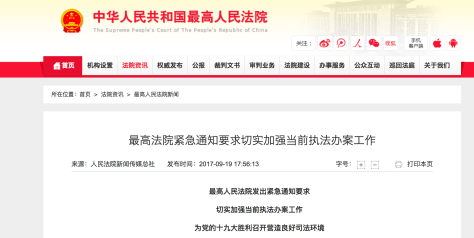
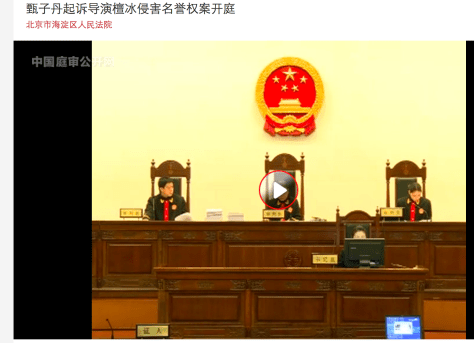
 I recently published an
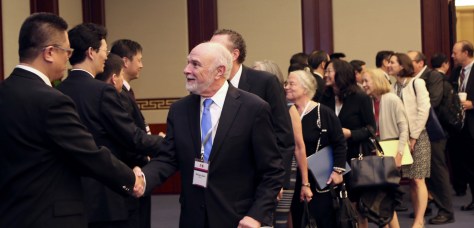
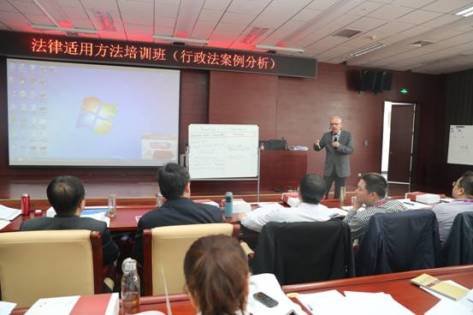
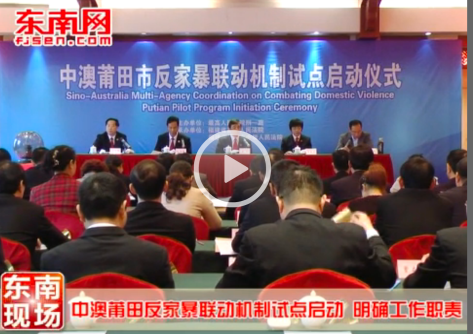
 In
In 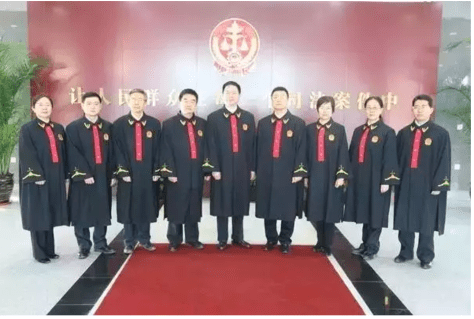
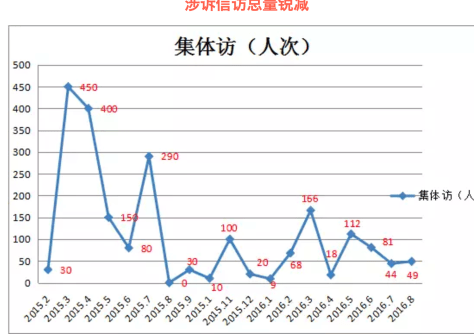
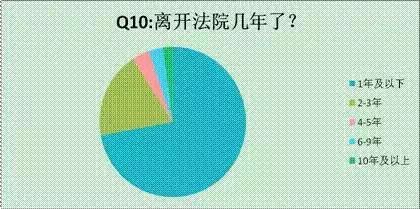
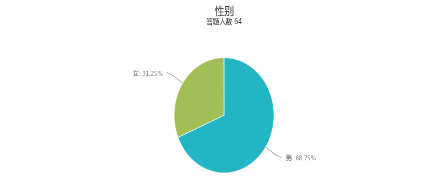
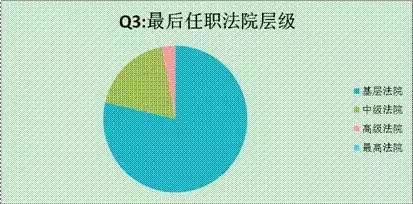
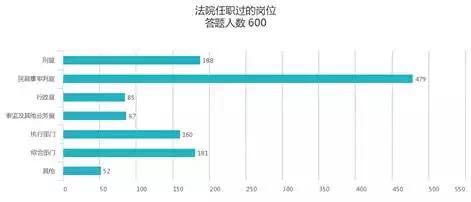
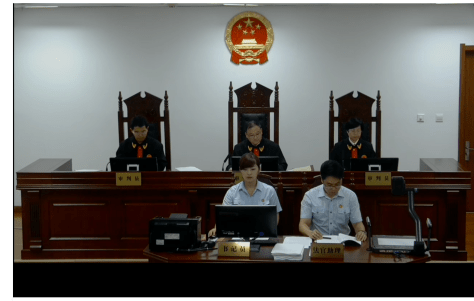
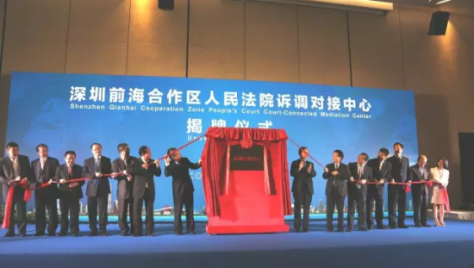
 As highlighted in a December,2015 post on


 The rush towards year end in the Supreme People’s Court (SPC), as in the business world, means a flurry of announcements of important developments, to ensure that the SPC meets its own performance targets. Among the recent announcements are:
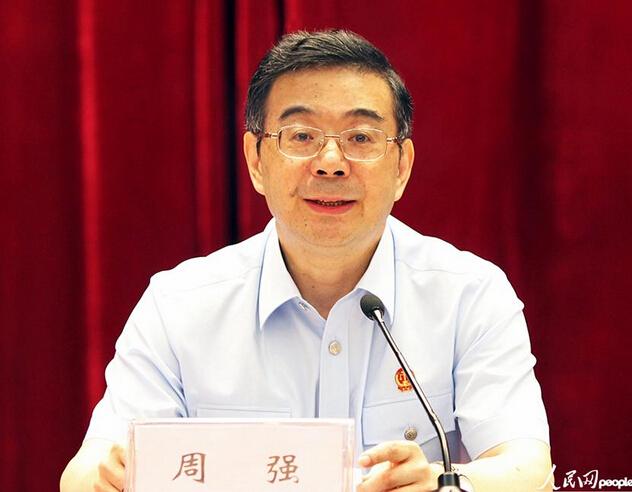
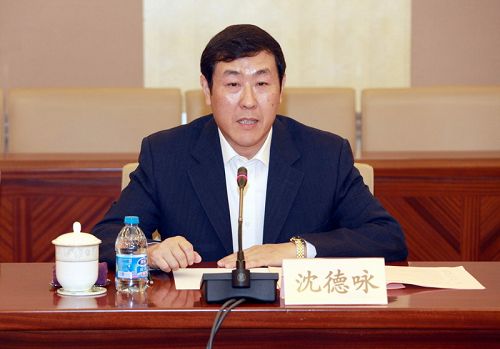
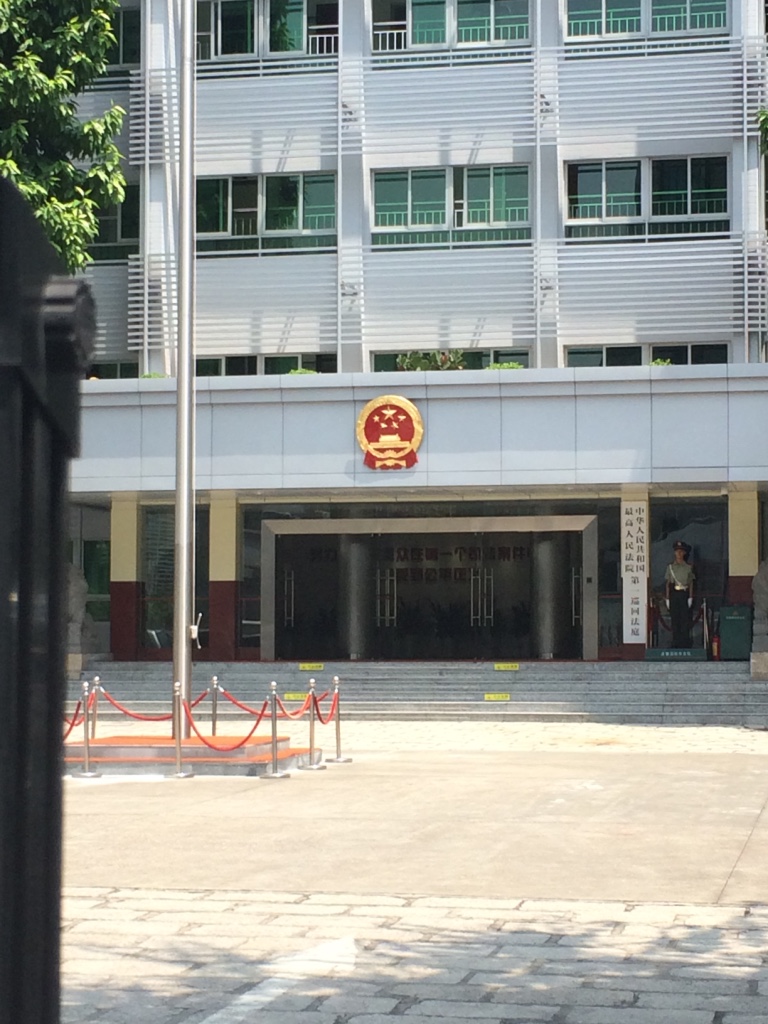

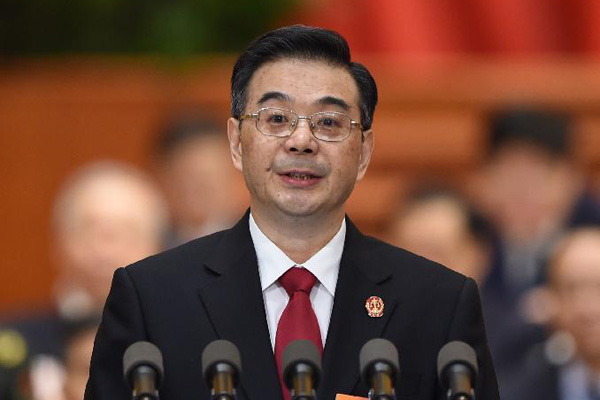

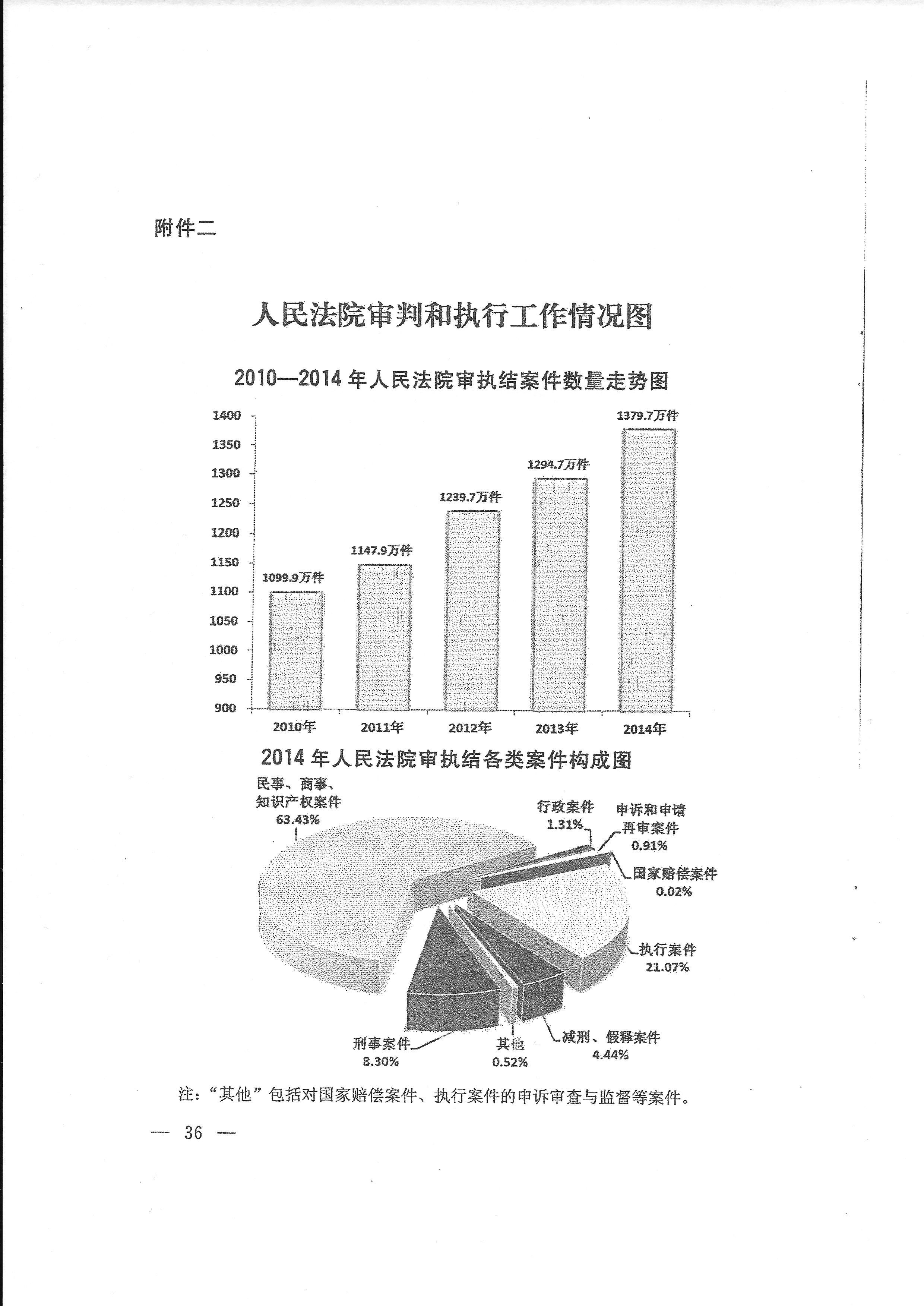
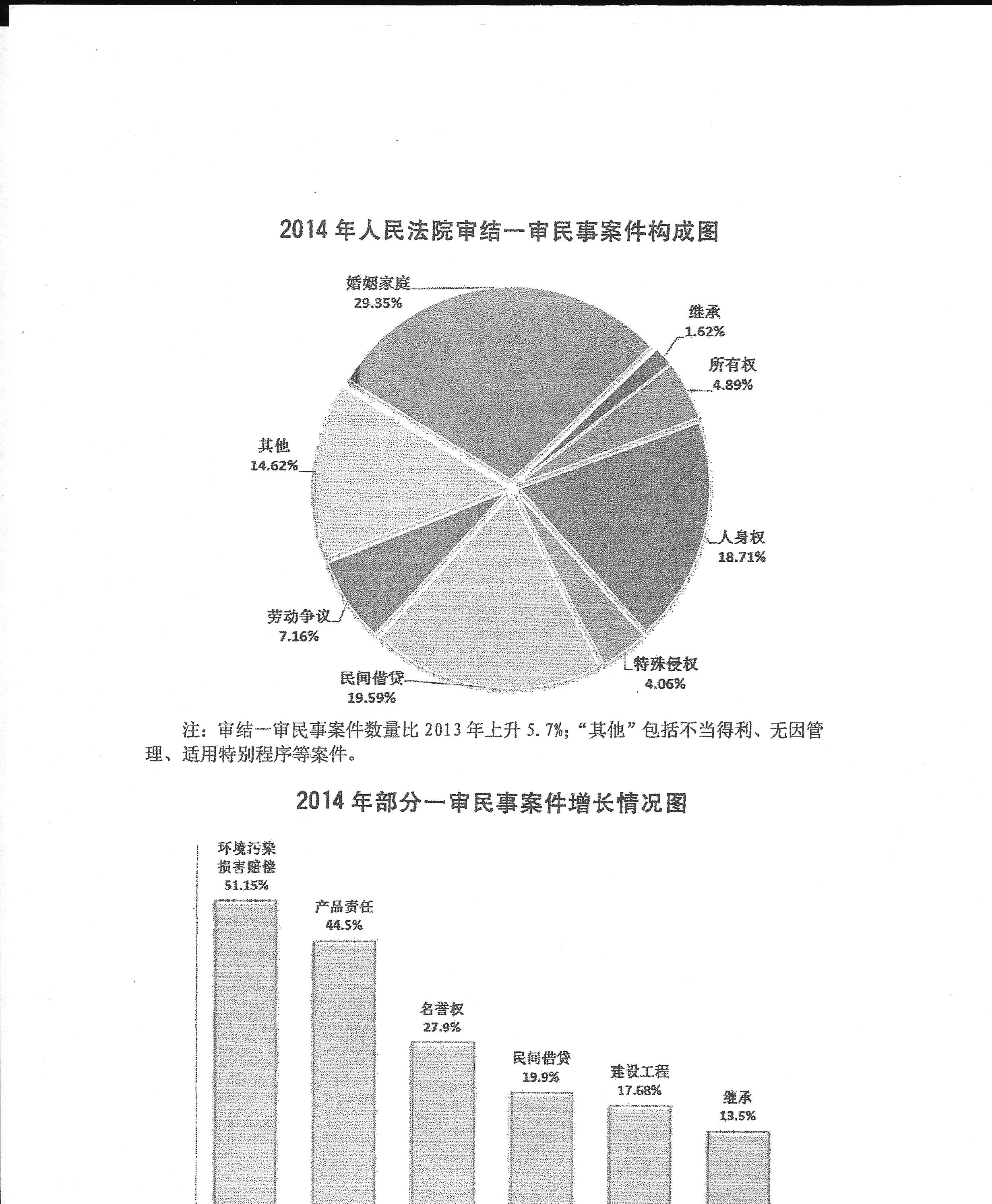
 Supreme People's Court Monitor
You must be logged in to post a comment.