All posts by Supreme People's Court Monitor

Susan Finder has been observing the PRC Supreme People's Court for over 20 years, and was the first person to engage in a close analysis of its operations. She taught Chinese law and other subjects in the Law Department of the City University of Hong Kong, before putting her knowledge to work in the China practice group of Freshfields Bruckhaus Deringer, one of the first international law firms to recognize the importance of the China market. She had the good fortune to study with three of the early pioneers of Chinese legal studies: Jerome Cohen, R. Randle Edwards, and Stanley Lubman and to have many leading practitioners and legal academics among her classmates at Harvard Law School (J.D.) and Columbia Law School (LL.M). Susan Finder speaks and reads (Mandarin) Chinese and Russian and some German.

China’s #2 circuit court investigates petitioning about administrative cases


https://www.hbogoasia.hk/

Annually thousands of petitioners visit China’s courts, particularly the Supreme People’s Court (SPC) and its two circuit courts, to seek relief from injustices in the lower courts (and sometimes other injustices).

The #2 Circuit Court, located in Shenyang, Liaoning Province, has as one of its goals improving the way the courts in China’s northeast deal with cases in which ordinary people challenge government action, under the Administrative Litigation Law.  (Additionally, it hears a range of civil cases, as well.) The court is doing that through issuing a set of documents (to be analyzed in a future blogpost) and a research report.  (For those not familiar with what the SPC does, when the SPC looks into an issue, it often designates a research team to visit lower courts and review some of their files.) The chief judge of the #2 Circuit Court, Judge Hu Yunteng, and two colleagues looked into the question of why so many petitioners in Shenyang have grievances about administrative litigation in the lower courts.

According to the study, one-quarter of the 5000 petitioners whose visit was registered by the court in the first 11 months of 2015 complained about injustice in administrative cases, while those cases constituted only 2% of the overall caseload of the three northeastern provinces. According the study, most of the petitioners who visited the court were not registered.  From other statistics, a total of 33.000 visitors petitioned the court. In 2015, the #2 Circuit Court heard almost 200 administrative cases (accepted 193, closed 189, while in 2016, it accepted 691 administrative cases and closed 687). Who are these petitioners in these cases, why are they petitioning, and what should be done about it?

Who are the petitioners?

  • The petitioners are mostly older, uneducated men from Liaoning Province. The demographics:
  • 47%  are over 60, with 33% between the ages of 50 and 60;
  • 64% are men, 80% from Liaoning, with the remaining 20% from Jilin and Heilongjiang;
  • Most are from the countryside or unemployed, with very few represented by lawyers.

They often come repeatedly and in groups. They come in groups because of a group grievance, often relating back years and sometimes several decades. Why Liaoning? The court’s location in Shenyang means that it is more accessible to them, the province is more populous and has historically had more administrative cases. The peak of petitioning was in March, 2015 and is now has stabilized at a lower number.

Their grievances

The grievances are what the SPC (and the Communist Party) entitle “people’s livelihood,”–cases challenging government land requisition and compensation demolition of real property; administrative inaction, and release government information. Of those, 66% are related to land requisition, generally when the government requisitions land in old city and shantytowns.  The core reason, according to the judges’ analysis, is local government failure to comply with the law in the process, causing all sorts of administrative litigation and large numbers of petitioners.

Another reason for petitioning is that the rationale in court decisions in these administrative cases is inadequate or totally unclear, with overly simple descriptions of the facts.  The decisions often do not make sense; the result is sometimes correct but the reasoning entirely  wrong.

If court decisions do not make sense, naturally it will lead to the  litigant reasonably  suspecting their legality. In some cases the courts failed to review the legality of the administrative action, failing to mention obvious illegalities, simply saying the defendant had not infringed the litigant’s rights. .

Why administrative cases?

Judge Hu and colleagues identified a number of factors causing the ongoing large number of petitioners aggrieved by administrative cases, both external and internal to the courts. The report often refers to “some courts” acting in a certain way, without quantifying the percentage–leading the careful reader to wonder whether it really means “most,” but the judges are reluctant to say so. Their analysis is summarized below.

  1.  Status of the courts

The basic reason is that the constitutional status of the court has not been implemented. “Big government, small court” (大政府,小法院) is an undeniable fact. A court has the status of a department at the same level of government, so under this structure, it cannot be a countervailing force vis a vis the same level of government. When a court is hearing a case, the defendant county head, as deputy Party secretary  calls the court president in “for a chat.” If the status of the court in the political system is not changed, it cannot decide cases independently and the rate of petitioning about administrative cases will not go down.

2.  Structure of administrative trial divisions

Local courts have jurisdiction over most local administrative cases, but they are under the control of local government, which interferes in every aspect of the case.  The local courts make decisions that violate the law, ordinary people’s faith in the justice system declines, so many petitioning cases.

3.  Court problems

The ideal of justice for the people not implemented, because some courts, in the name of  “serving the greater situation,” stress protecting local stability but fail to protect people’s rights, issuing illegal decisions, harming the prestige of the judiciary, causing disputes between officials and ordinary people that could have been resolved through legal means to be pushed into petitioning.

Cases are bounced back and forth between courts, with no court undertaking a serious review of the case. Courts are seeking to close cases without resolving the underlying issues. With the courts as the place for resolving social disputes and amendment of the Administrative Litigation Law (expanding its jurisdiction), aggrieved litigants, holding sheafs of court decisions are petitioning higher courts, particularly the #2 Circuit Court. If the reasoning is not clear or transparent, ordinary people will just think it is “officials all protecting one another” and petition.

Compounding the problem is weakness in the administrative divisions in the courts and the reception office of the courts. The administrative divisions do not have many cases, so outstanding judges are reassigned, and the team of judges in these divisions is unstable.   In the reception office of the lower courts, staff often fails to explain the law to litigants, and are high-handed.

Litigants

Litigants often not educated, do not understand the law, and insist on their view, thinking that if they make a fuss, the issue will be solved.(My former student wrote an account of her experience dealing with petitioners in the #1 Circuit Court, linked here, while the issue of litigation-related petitioners (涉诉信访) receives attention in this long academic article.)

What to do?

The issues with the status of the courts in the political structure a are beyond the authority of the #2 Circuit Court,  so what Judge Hu had within his authority to do included:

  • doing a better job dealing with petitioners at the court;
  •  training lower courts to better handle administrative cases;
  • better communicating with Party/government, including arranging training for the courts and Party/government, so that officials better understand their obligations under the law;
  • doing a better job of public education (宣传教育) through publicizing cases.

Comments

The authors do not venture comments on whether the situation that they describe is typical for other areas of the country, but a quick search reveals courts in other areas of the country raising many of the same issues.

Will the current judicial reforms be able to deal with some of the issues raised by the authors of this study?  Only partially, it seems.  The future change in appointment and funding, better training for and treatment of local judges should be helpful. The 2015 regulations forbidding leading official interference in court cases should, in theory, reduce local government official interference in the local courts, but more needs to happen to educate local officials to comply with the law.  Regulations issued earlier this year mandating legal counsel for Party and state organs may be helpful in the long term. It may be helpful for the #2 Circuit Court to reach out to local lawyers to advise petitioners, as the #1 Circuit Court has done, but whether local lawyers are willing to do so (on a pro-bono basis, as is true in Shenzhen), or possibly that they are concerned that they may be accused of trouble-making under new Ministry of Justice regulations remains to be seen. It is clear from the report that deep-seated attitudes towards law and ordinary people held by government officials are changing only very slowly.



Why are Chinese prosecutors resigning?

Chinese prosecutors (procurators, this blogpost will use the terms interchangeably, although the functions of the procuratorate are broader than public prosecution) do not receive the international attention that Chinese judges attract. There is no Supreme People’s Procuratorate Monitor to review its reforms, structural and legal issues.

Chinese prosecutors, like judges, are leaving the procuratorate in significant numbers, although recent statistics do not appear to be easily available,According to statistics for 2011-2013, over 6000 prosecutors were resigning annually. Li Bin, a former senior prosecutor who in 2016 worked for the legal media company Itslaw (无讼),(she has since changed companies), published the results of her survey of over 4000 members of her cohort this spring.  The study gives important insights.

Who is leaving?

4b273593-308c-4a1f-a27e-8d735f68f6fa
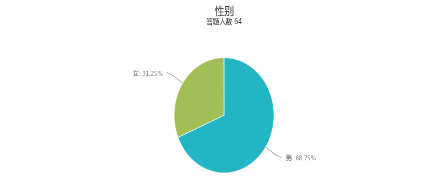
Prosecutors resigning, by sex

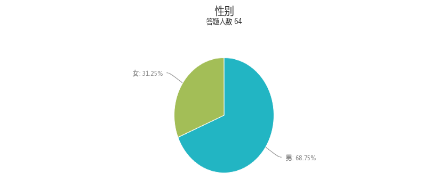
The two surveys that she did revealed that men were resigning in greater numbers than women, with 70%/30% ratio in the survey done this (2016) spring. This may explain why many of the criminal cases streamed by the courts have an all women team of prosecutors.

Age and education

29f5855b-c95f-4681-9dec-92f8ae6f2445
Age of resigning prosecutors

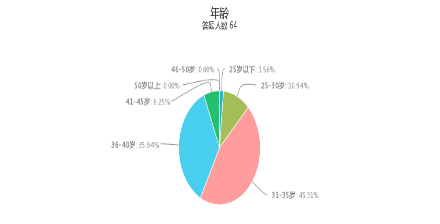
Like the judges who are resigning, most are in the 31-40 age bracket, with 45% between the ages of 31-35 and 36% between the ages of 36-40.  About 10% are under 30, 6% between 41-45, and no one over 46 responded to the survey. 59f43639-99a0-47ad-b1d9-a9961f257d37-1

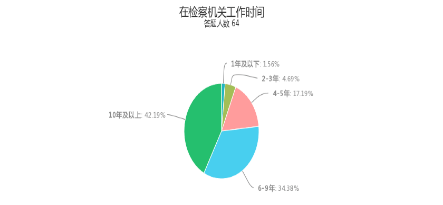
Most (80%) resigning prosecutors have at least 5 years experience, with about 40% with over 10 years experience, and 1/3 with 6-9 years experience.

3c2863cf-8c6e-4816-93d7-4dbffbdcec28-1
Educational background

Most prosecutors who resigned had at least a master’s degree.

055c60ef-b123-4106-a3b8-2dd595d4bd79-1

Almost half (45%) the resigning prosecutors had worked at the basic level, with another 20% leaving provincial level procuratorates, and another 20+% leaving municipal level procuratorates.

84bf5886-dd0e-4738-97a7-dd1539079a6b-1

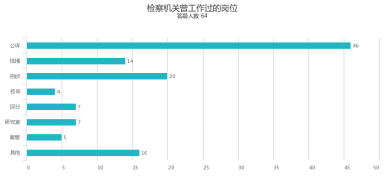
Most (70%) had done public prosecution, with about 20% having worked in investigation.

Most (67%) of those who responded had resigned within the past  year, with the remainder having resigned within the past three  years.

Destination

Over 40% of those prosecutors who reisgned became lawyers, while 44% became in-house counsel.  Very few went into teaching or other non-profit professions.

Reasons for leaving

Three-quarters of the resigning prosecutors identified poor benefits (and other treatment) as their reason for leaving. Other  reasons identified by over half the respondents included: insufficient opportunity for promotion, no feeling of accomplishment in their work; overly bureaucratic management, insufficient professional respect, inability to travel abroad.  [One local prosecutor has commented that  junior prosecutors (in his locality, at least) are to travel, although the high ranking ones are more restricted.] Other reasons such as too much work pressure or risk were identified by less than 30%.  Others mentioned chaotic management, lack of opportunity to learn anything.

Procuracy reforms

Prosecutors who had resigned were generally pessimistic about judicial (i.e. including the procuracy) reforms.About half said “it was hard to say anything about the future of the reforms,” while about 1/3 thought that there was no hope, with about 19% having some hope.

Almost 90% of resigning prosecutors thought that raising the salary was the most urgent need, with three-quarters believing that it needed to be doubled or tripled to retain prosecutors, with 70% agreeing that the administrative burden should be reduced, almost 60% agreeing that bureaucratic management should be reduced, and 47% agreeing that prosecutors should have more autonomy concerning their cases.

Social media

Finally, the reasons for resigning identified by the editor of Empire Lawyers (mentioned in my earlier blogpost on judges) likely apply to prosecutors. Social media, particularly Wechat,is likely important to prosecutors too, for the same reasons.  It has given them a new universe of social connections outside the procuratorate. It also gives them easy access to information about the life of former prosecutors similar to themselves. Moreover, through Wechat they can create a circle of friends and connections who can provide moral support when they have made the decision to resign.

Money is a big factor, particularly in major cities with high costs of living. The fact remains that middle-class life in China’s major cities, particularly for couples with a child, is expensive and salaries, tied to civil service rank, are inadequate.

At least judging from this survey, prosecutors are concerned that the judicial reforms will not result in a better quality of work for them personally.

As with judges, there is also the rigidity of the Party/state cadre management system. While law firm partner classmates are posting photos of themselves at Yosemite or in the Grand Tetons on Wechat, prosecutors must obtain permission to leave the country.

Further violence against Chinese judges

screen-shot-2016-09-18-at-1-09-54-pmDuring the Mid-Autumn festival, several of the major legal Wechat accounts carried articles deploring the latest report of violence against judges in a Shandong bank (which occurred on 8 September) (and making caustic comments about the local authorities), attracting hundreds of thousands of page views.  An official statement about the incident has now been issued by the central authorities decrying “no matter what the reason, violent resistance to law in any country is very serious legal event, it has touched the base line of the rule of law, respect of the dignity of the individual, it is about the authority of the law, if even in a judge’s personal safety can not be guaranteed in the society, what is the rule of law?”

A video of the incident (from which the above photo was taken) has been circulating of the incident, which originally had been deleted from Tencent video but now has been restored.The video shows two judges from the enforcement division of a county court at a local bank being attacked by personnel from the defendant company. The video states that the judges were taken to “headquarters,” with one kept as a captive and the other taken back to the bank.  A subsequent local government statement said that the investigations were continuing and the two judges were safely escorted from the county.

The official statement, made first by the Supreme People’s Court on its Weibo account , was subsequently reprinted in other official media, including on the front page of the People’s Court Daily and the website of the Central Political Legal Commission.

Presumably social media was flooded with thousands of messages from local judges on the lack of respect for the judiciary by the public and officials.

Comments on public accounts include:

 Wang Dong, prosecutor, author of CU检说法: Today enforcement division judges were beat up, maybe tomorrow it will be the criminal, civil court, and administrative division judges.

Today  Shandong judges were beaten, maybe tomorrow it will be Anhui, Henan, or Zhejiang judges.

Today those who were beaten were judges executing their public duties, maybe tomorrow it will be public prosecutors (procurators), police, or lawyers.

Everyone will not always be just a spectator.

If we say that the safety of judges, prosecutors, and police officers in the execution of public duties is not guaranteed, how can we expect them to protect the safety of social justice yet.

And a last sentence to say: If the judge can not feel justice when he encounters violent resistance to law, how can he make people feel justice in every case?

From a retired intermediate court judge, published on Legal Readings (法律读品):

If there is no limit on public power, judicial power loses its authority (公权无抑遏,司法失权威).

Which Chinese cases are most persuasive?

23885878-1_x_2Chinese courts are paying more attention to the use of precedent in considering how to decide cases.  (Two of my fellow bloggers, Mark Cohen and Jeremy Daum, have recently published on this issue, as have I.)  One of the many issues remaining to be settled as China constructs its own case law system is a hierarchy of precedent, so that the Chinese legal community, in particular its overworked judges, have clear rules on this issue.  (This is one of the questions subsumed under #23 of the Fourth Five Year Court Reform Plan).
We know that the hierarchy of precedent is not settled because two recent authoritative Chinese publications take a similar but not identical approach:

  •   The first, as cited in an article by Judges Jiang Huiling and Yang Yi of the Supreme People’s Court Center for Applied Jurisprudence, highlight the list set out in “The Beijing IP Court Guiding Case Work Implementation Methods (Draft)” (summarized in Jeremy Daum’s article); and
  • The second, an article by Judge Wang Jing, a senior Nanjing Intermediate People’s Court judge, published (and re-published) in a number of prestigious Wechat public accounts, including the account of the Shandong Higher People’s Court.  (Wang Jing has frequently published in SPC publications and she published her views on the judicial quota system (on Judge He Fan’s public account).

(As helpfully translated in Jeremy Daum’s article, the Beijing IP court draft regulations list, from most to least persuasive:

  1. SPC guiding cases
  2. SPC annual cases
  3. other SPC cases
  4. High People’s Court model cases
  5. High People’s Court reference cases
  6. Other prior cases from High People’s Courts
  7. Intermediate People’s Court precedent,
  8. Basic-level Court precedent,
  9. Foreign (non-mainland) case precedent.

I’ll focus on Judge Wang Jing’s analysis.

Judge Wang Jing

1.SPC guiding cases

imgres-6

2.Cases published in the monthly SPC Gazette.  Those are of two types: selected judgments (裁判文书选登) and cases  (案例), generally totalling 20-30.  The first type are cases decided by various trial divisions of the SPC and reflect their views on certain issues, while the second model cases submitted by the local courts (through the provincial high courts), which have been reviewed by the various trial divisions of the SPC.

e1fe9925bc315c60f6d58b2289b1cb13485477bf

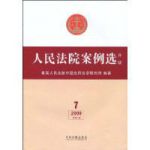
3.Other cases published by journals of the SPC such as Selection of People’s Court Cases(人民法院案例选),  (a quarterly publication of the SPC Center for Applied Jurisprudence), China Case Trial Highlights (中国审判案例要览) (an annual publication of the National Judicial College and the Law School of People’s University)、and People’s Justice–Cases (People’s Justice is a biweekly publication,but the Cases section is published monthly). She notes that these cases reflect issues considered difficult and disputed in practice.z4573143


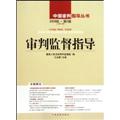
4. Trial Guides edited and written by the trial divisions of the SPC (最高法院各审判业务庭编写的审判指导丛书).  The People’s Court Press publishes a series entitled China Trial Guide (审判指导丛书), with separate publications by various trial divisions of the SPC, including the case filing, civil, administrative, #2 civil and #4 civil divisions. These publications often contain cases from the lower courts, or in the case of the #4 civil division, cases that have been reported to that division for review under the Prior Reporting system.

541_g_1388081534049

5. Case publications by various higher people’s courts (各地高级法院等编辑的案例刊物).

She notes that many provincial higher people’s courts (and some intermediate courts) publish cases, with cases published by the ones that have been in operation the longest and are more influential considered the more persuasive.  She mentions the Jiangsu Higher People’s Court Gazette as an example, which has cases decided by that court and model/typical cases from the lower courts.  (These are similar to categories 4-6 above).

Although her list does not specifically mention non-guiding (and non-model or typical cases) in her list of authoritative sources, she addresses them in her advice for lawyers providing precedent cases in litigation, with three common sense items of advice: when  you provide a case, it should be according to the court hierarchy, and date issued, provide the source, and use cases to provide a mind map for the judge to follow.  (A prestigious intermediate people’s court (the Shenzhen Intermediate People’s Court) recently also mentioned litigants (positively) using cases from the SPC’s case database, China Judgements Online, as a reference to judges.)

Some comments

This is another area in which Chinese law appears to lack firm guidelines about order and terminology (as I wrote about this theme in a series of articles for Practical Law China, ( note that they are behind the company paywall).The SPC and its divisions (and even one of its Circuit Courts) issue collections of model/typical cases (and summaries of such cases) under a variety of titles.  Terminology (aside from the guiding cases) is not entirely consistent.   The SPC issues notices and replies (generally of divisions of the SPC), acknowledged by Vice President Shen Deyong as a source of law, in an introduction to the book Collection of the Supreme People’s Court’s Judicial Rules (2nd edition)–how do these relate as sources of law vis a vis various types of cases or case summaries?  The legal community (domestic and foreign) awaits greater guidance.


SPC Judge Zhou Fan–another fallen tiger?

A report in Caixin on 8 September revealed that Judge Zhou Fan, vice president of the Supreme People’s Court (SPC)’s First Circuit Court in Shenzhen (and member of its Party committee) has been cooperating with Central Commission for Discipline Inspection (CCDI) investigators (i.e. taken into custody (according to Caixin’s English version)) for at least two mo10a1b5488422ac8b06c1c2cd0177d54cnths. [The original Caixin report has been taken down, but has been republished by Hong Kong’s Economic Journal.]  Judge Zhou has worked in the SPC for over 20 years, focusing on commercial matters, both domestic and cross-border, and would have been considered to be technically outstanding to be selected to be a senior judge for the First Circuit Court.
According to the Caixin report, he is one of the judges linked with former Vice President of the SPC, Xi Xiaoming (earlier posts on Xi found here and here).

The Caixin report mentions other allegations against Judge Zhou, such as cooperating with litigation brokers and interfering in major commercial disputes.The dates of the alleged conduct are not specified.

Over a year ago, this blog had the following comments on Xi Xiaoming’s case:

it is likely that the anti-corruption investigation into Judge Xi will touch on parties, including other judges, related to the case(s) in question.  It is also likely that the full extent of the investigation will not be made public.

So returning to the social context of 2011. A number of Chinese lawyers and academics have privately noted that at the time of the case in question, it would not be unusual for supplemental payments to be made to Court judges in connection with commercial disputes involving large amounts of money, and refusing payment could also have been awkward for those involved.

Although Judge Zhou’s photo remains on the First Circuit Court website, the publication of this report and allegations do not augur well for his tenure there.


Why are Chinese judges resigning?

Much has been written on why Chinese judges are resigning (but not enough about Chinese prosecutors–to be the subject of a later blogpost), but this blogpost (written on the road) adds some more detail and analysis. Comments (and criticism) are welcomed.

In May (2016), Chen Haiguang, the head of the judicial management department of the Supreme People’s Court (SPC) revealed that over 1000 judges had left, which he described as about 1% of the judiciary. The number appears to be an underestimate.  The legal Wechatosphere often mentions that a Wechat chat group of former Beijing-based (including the SPC) judges has reached its maximum of 500 members.

More data and analysis comes from two sources: a survey conducted in the fall of 2015 and published by Wusong (a big thank you to another “authoritative person” for bringing this to my attention) and a recent article by one of the more popular Wechat public accounts, Empire Lawyers ( 法客帝国).

Respondees to survey

0662a683-7b08-44ac-8da0-1e7b1c3fb915

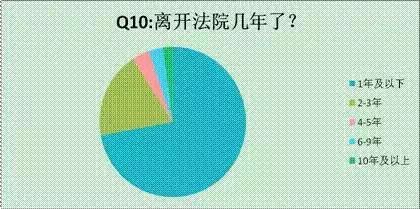
Six hundred former judges responded to the survey, conducted through social media, of which 72% had left within the past year, while almost 19% had left within the past 2-3 years.

Who is leaving

4b273593-308c-4a1f-a27e-8d735f68f6fa
Judges resigning, by sex (82.2% men, 19.67% women

It is mostly men leaving the judiciary, out of proportion  with the ratio of men:women in the judiciary (2:1). (This confirms what I have been saying when I have spoken on this issue). The survey gives the rationale that men are more interested in a challenging career than women, and are able to deal with a more pressured life.

Judges are resigning in their 30’s, for the most part (see below), and my own analysis is that the reason women are staying in the judiciary is that (married) women at that age also have responsibilities to children and elderly parents. Women are prepared to deal with the stresses of working in the judiciary because the work is more “stable,” and does not involve marketing work after business hours.

Age and education

Over half (55%) of the judges resigning are in their 30’s. Most (70%) have been in the judiciary for at least 6 years, with practically all (91%) with at least 4 years of experience, over 99% with an undergraduate degree and 37% with a master’s degree.

Type of court and area of work

dd6bb700-caac-45b4-9fdb-b41af327a469

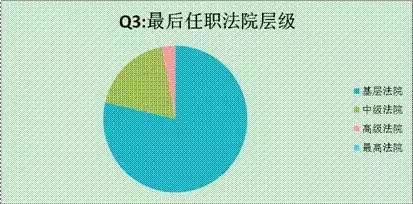
Most judges who have resigned recently  are from the basic level (78%) and intermediate level courts (18%).

4b768706-e200-46af-8d25-1d07bbce9765-1

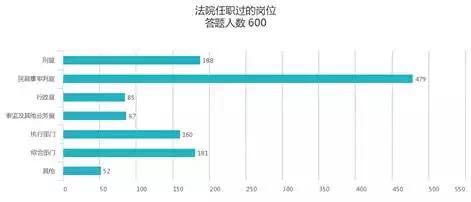
Many (almost 80%) of the judges who had resigned were in the civil/commercial divisions, with division chiefs and deputy division chiefs accounting for 14% and 19% respectively.

Reasons for leaving:

  • benefits insufficient (66% selected this as primary reason);
  • too much pressure and too much work (60%);
  • not enough opportunity for promotion (34%);
  • professional risk and lack of professional respect (31%).

Those that have resigned are generally pessimistic about judicial reform (47%) or can’t say for certain whether it will be successful (32%). Their “judges’ dream” is to be able to try cases independently, without reporting their case up to the leadership, worrying about parties to the case petitioning because they are unhappy with the outcome, etc.

Another analyst (the editor of the Wechat account Empire Lawyers) gave three reasons for the wave of judges submitting their resignations.

  • Wechat;
  • Judicial reform;
  • Other factors (especially money).

Why Wechat?  Because it has given them a new universe of social connections outside the judiciary. It also gives them easy access to information about the life of former judges similar to themselves. Moreover, through Wechat they can create a circle of friends and connections who can provide moral support when they have made the decision to resign. According to the editor, Wechat is often a vehicle for judges preparing to resign. Some judges establish their own Wechat public accounts while still in the judiciary, publishing articles that bring much more attention from legal professionals to their expertise than their judgments ever do.

The increased stresses of judicial reform are another set of factors–the lifetime responsibility system,  case registration system, and particularly, the bright line quota on the number of judges (no more than 39%) means that promotions will come more slowly than previously and others will not even be eligible to participate in the examinations for qualifying as a judge.

Other factors?  The editor cited money, particularly judges in major cities with high costs of living.  The fact remains that middle-class life in China’s major cities, particularly for couples with a child, is expensive and judicial salaries, tied to civil service rank, are inadequate.   As the editor mentioned, some judges supplement their wages with (legal) inome from writing or lecturing. (It seems likely in the current atmosphere, fewer judges are willing to risk soliciting illegal income.)

There is also the rigidity of the Party/state cadre management system. While law firm partner classmates are posting photos of themselves at Yosemite or in the Grand Tetons on Wechat, judges must obtain permission to leave the country

Finally, this couplet is popular on legal oriented Wechat:

网上流行一个段子:

Q: Do you regret resigning from the court?

问:从法院辞职,你后悔吗?

A: Regret.

答:后悔。

Q: Why do you regret it?

问:为什么后悔?

A: I regret that I left too late.

答:后悔出来晚了。

Supreme People’s Court’s new bankruptcy information platform

Screen Shot 2016-08-06 at 12.12.56 PMOn 1 August, President Zhou Qiang of the Supreme People’s Court (SPC) inaugurated the SPC’s new enterprise bankruptcy and reorganization electronic information platform, linked here and accessible through the Supreme People’s Court’s website (www.court.gov.cn).  The English title and slogans could have benefited from a 5-minute consultation with a native speaker, but more importantly, some of the functions still appear to be in Beta mode.  The platform has three parts.

It provides information for the public on:

  • Debtors (债务人信息). :

 This function seems to be in Beta mode because when you click further for more details,Screen Shot 2016-08-07 at 9.03.31 AMno further information is available.  This section is intended to provide the most recent annual report, related litigation, and information on assets of the company from the industrial and commercial authorities’ database and enable “one-stop shopping” for distressed assets.
Bankruptcy notices, such as this one with a plan on the distribution of the assets of a Xinjiang tomato processing company;

  • Bankruptcy rulings made by the local courts, such as this one by the Qidong (Jiangsu) court on accepting the bankruptcy case of a Nantong marine engineering company;
  • Laws and regulations (primarily SPC regulations related to bankruptcy);
  • Bankruptcy related news, primarily reports on new regulations issued and bankruptcy-related initiatives or conferences, such as this one in Zhejiang, on the crisis in Zhejiang’s ship-building industry);
  • Typical (model) bankruptcy and liquidation cases (see an explanation of typical/mode cases here), so far just a re-publication of the typical cases that the SPC issued in June.

Second, bankruptcy administrators are required by these regulations to upload information to issue to parties to the bankruptcy.

Third, judges are required to upload their bankruptcy/liquidation rulings to this platform.

For parties, the platform enables them to have current information on the status of their cases and upload documents to submit to the court or bankruptcy administrator.

The SPC issued regulations on the operation of the platform in late July, available here. It seems likely that the SPC considered the bankruptcy platform of other major jurisdictions in the process.  This platform is part of the SPC’s Internet Plus/smart courts policy to provide greater transparency, easier access to information, and “greater informatization,” for some of the reasons described in this short article–particularly having tangible results and promoting the use of information technology.

For anyone seeking to drill down into the details of how bankruptcy and liquidation law is being implemented in China’s political and economic environment, and particularly for lawyers and others doing due diligence and distressed asset investors (domestic or foreign), the platform is unquestionably very useful.


How China’s non-guiding cases guide

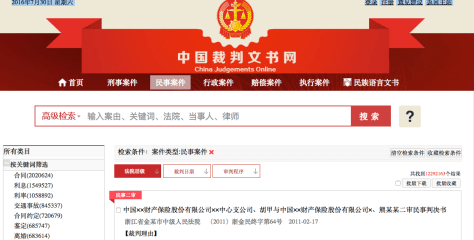
Screen Shot 2016-07-30 at 12.13.38 PM  What few recognize is that the millions of non-guiding cases on the Supreme People’s Court’s China Judgments Online website (and its commercial counterparts, such as 无讼(and any internal version that there may be)) are guiding the development of Chinese law, including what arguments lawyers make and how judges decide cases.  I note that this coming week’s U.S.-China Judicial Dialogue: In Support of Economic Growth and Reform includes the role of precedent as one of the topics of discussion, and I hope this brief blogpost (to be expanded later) can indirectly contribute to the discussion.
The conventional wisdom among both foreigners and Chinese writing about China and case law is that with the exception of a small number of guiding cases approved by the SPC, previous cases do not make law.

Those closer to the world of practice in China know that previous cases, or some portion of them, are indirectly shaping the development of Chinese law. From a Chinese perspective these cases are not directly guiding, or binding, but provide cases that lawyers and judges use as reference (参考), to persuade a judge or other decision-maker that a previous case has decided the same or similar issues. This phenomenon relates to cases in a broad range of issues and occurs in several ways:

  • A significant number of Chinese judges and lawyers follow Wechat legal public accounts. One type of article that frequently appears is one focusing on a specific legal issue and uses the case database to generate relevant cases.  A typical example is this article published on 29 July, analyzing six cases relating to changing the name of a child.  This type of article affects arguments lawyers make and the judges consider.
  • A second way is judges themselves will search a particular issue to see how other courts have decided a particular issue or the elements to which they have looked when deciding a particular issue. Lawyers perform similar analysis when preparing to argue a case.
  • Additionally, lawyers sometimes submit a relevant court decision when making a submission in an administrative proceeding, such as to the Trademark Review and Adjudication Board and more often, when making submissions to court.  Lawyers will evaluate, however, whether the judges hearing the case will take the submission positively or will consider it an indirect criticism of their professional competency. Lawyers will submit cases from courts higher than the court that they are litigating–so that a lawyer litigating in a Beijing district court may attach a relevant case decided by the Beijing Higher People’s Court, for example.
  • Among the many sources of information SPC judges use when drafting judicial interpretations is searches of previous judgments relevant to the issues under consideration, because those will indicate which questions are unclear for the lower courts.
  • Legal services companies, such as Itslaw, are training young lawyers in case searching and retrieval (guiding and non-guiding cases), using keywords analogous to Westlaw’s and LexisNexis’ products. They are doing this training because prior cases are being used in advocacy in China.

How are cases from China Judgments Online being used in China in practice? This is where we can see how case law, Chinese style, is developing. The SPC has been focusing its efforts on its guiding cases and it is unclear whether they have noticed this.


Supreme People’s Court diversified dispute resolution policy (updated)

U12968P1591DT20160602112052
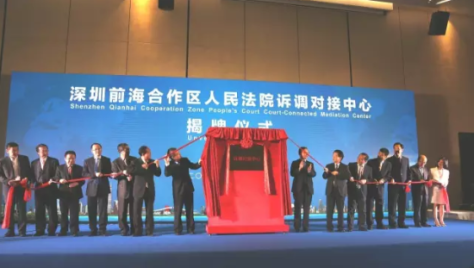
Opening of court-annexed mediation center of Qianhai court

On 29 June 2016, the Supreme People’s Court (SPC) issued a policy document on diversified dispute resolution (Opinion on the people’s courts more deeply reforming the diversified dispute resolution mechanism) (Diversified Dispute Resolution Opinion)(关于人民法院进一步深化多元化纠纷解决机制改革的意见). The document uses the term “diversified dispute resolution” (consistent with Chinese practice) rather than “alternative dispute resolution” (more often used outside of China) to reflect the central place of mediation, arbitration, and conciliation in Chinese dispute resolution. (This updated version reflects comments by an authoritative person (and a very careful reader).

It was accompanied by regulations on court-appointed mediators.  For those interested in the way the SPC works, it is another example of an SPC policy document in the form of an “opinion” (discussed here) accompanied by regulations  (a type of judicial interpretation, discussed here).

The policy document sets out in a consolidated form the SPC’s latest policies on mediation, arbitration, and its relationship with litigation.  It provides a framework for further reforms. It is intended to inform the lower courts as well as related Party/government agencies of forthcoming reforms.  It signals to the central leadership that the SPC is on course to achieve one of the reform targets set out in the 4th Court Reform Plan. The current head of the SPC’s judicial reform office, Judge Hu Shihao, spoke at the press conference announcing the Diversified Dispute Resolution Opinion, indicating that the office took the lead in drafting it.

A summary follows below, highlighting, based on a quick reading, focusing on its:

  • objectives and origin;
  • signals and practical implications.

A very useful academic article on diversified dispute resolution, with survey data and more on the political background, can be found (behind a paywall) here. (To the many academics and practitioners who have written on this topic, please feel free to use the comment function or email to expand/contradict, or correct this).

Objectives & origin

The SPC issued the Diversified Dispute Resolution Opinion as a way to implement one of the targets in the 4th Judicial Reform Plan:

46. Complete diversified dispute resolutions mechanisms.Continue to promote mediation, arbitration, administrative rulings, administrative reconsideration or other dispute settlement mechanisms with an organic link to litigation, mutually coordinate and guide parties to choose an appropriate dispute resolution. Promote the establishment of dispute mechanisms that are industry-specific and specialized in the areas of land requisition and property condemnation, environmental protection, labor protection, health care, traffic accidents, property management, insurance and other areas of dispute, dispute resolution professional organizations, promote the improvement of the arbitration systems and administrative ruling systems. Establish an operating system that links people’s mediation, administrative mediation, industry mediation, commercial mediation, and judicial mediation. Promote the legislative process of a diversified dispute settlement mechanism, establish a system for a systematic and scientific diversified dispute settlement system.

The Diversified Dispute Resolution Opinion is a product of the 4th Plenum decision. Its underlying approach was approved by Xi Jinping and other top leaders. Judge Hu, who mentioned at the press conference that at a 2015 meeting, the Leading Small Group on Comprehensive Reform approved a framework policy document (not publicly available) on improving the diversified resolution of disputes (关于完善矛盾纠纷多元化解机制的意见) and the General Offices of the State Council and Central Committee followed with an implementing document. The principal reason that this topic merited top leadership time and involvement is because of its direct links to maintaining social stability and reducing social disputes.

Similar to other SPC policy documents discussed on this blog, comments on the draft were sought from the central authorities, lower courts, relevant State Council ministries and commissions, industry association, arbitration organizations, scholars, and the Legislative Affairs Commission of the National People’s Congress Standing Committee. The Diversified Dispute Resolution Opinion was approved by the SPC judicial committee.

Signals

The objective of the document is to promote a more sophisticated, efficient, and effective approach to dispute resolution that will reduce social tensions. Part of the objective is to reduce the number of cases filed, heard, and tried by courts. For commercial disputes, it is intended to push disputes to institutions that can more competently, efficiently and timely mediate cases.  These institutions include those affiliated with industry associations, arbitration commissions, or specialized mediation associations.  The Diversified Dispute Resolution Opinion also calls for better mediation of cases within the courts by involving court-annexed mediators, before or after the person or entity files suit. The implications of this document for the reform of labor and rural land contract dispute resolution remain to be seen.

The Diversified Dispute Resolution Opinion requires better linkages between other diversified dispute resolution institutions and the courts and particularly stresses the role of mediation.  Depending on the type of mediation, it may be done by mediation commissions affiliated with government, people’s mediation committees, arbitration commissions, or other institutions (further information here).  One particular issue that is addressed is easing procedures for enforcing mediation agreements  by courts.  (Because a mediation agreement is a type of contract, it cannot be enforced directly without further procedures, such as being notarized, issued as an arbitration award, or recognized by the courts (through a special procedure under civil procedure law). It emphasizes that the courts can leverage forces outside the judiciary to resolve disputes. The document calls for reasonable borrowing of dispute resolution concepts from abroad.

Practical implications to expect in the medium to long term

  • For the foreign investment community (and their lawyers), a signal that the SPC is working on a judicial interpretation concerning the judicial review of foreign and foreign-related arbitral awards (“standardize judicial review procedures for foreign-related and foreign commercial arbitration awards”) (规范涉外和外国商事仲裁裁决司法审查程序). As this blog has reported earlier, this was signaled at the November 2014 National Conference on Foreign-related Commercial and Maritime Adjudication and last year’s One Belt One Road Opinion. It is unclear whether the future interpretation will change the prior reporting procedure, for example, to give parties a chance to submit arguments orally or in writing, or whether it is intended to consolidate the principles the SPC sets out in its responses to lower courts (released to the public in one of the SPC’s publications), summarized in comprehensive overviews of Chinese arbitration law, such as this one.
  • Changes to labor dispute resolution, as highlighted by the 2015 Central Committee/State Council document mentioned earlier. This is important in light of the uncertain economy and increasing number of workers being made redundant. in recent years, judges in different areas of China have published devastating criticism of the current labor arbitration system and labor dispute resolution generally. The judges pointed out the current labor arbitration system is not independent of the government, fails to protect labor interests equally, and . The judges also criticize the brief statute of limitations in labor disputes and lack of a specialized labor tribunal. It appears from reports that Zhejiang Province is taking the lead in providing greater choices and professionalism in labor dispute resolution, but it unclear how far those reforms go.
  • Further attention to rural land arbitration.The Diversified Dispute Resolution Opinion mentions better linkages between the courts and rural land arbitration. This area is important, as the government seeks to encourage farmers to expand their landholdings and mortgage their land, but the merits of the system are not the SPC’s issue. A 2014 report highlights the lack of independence of these arbitration commissions, lack of arbitrators, and absence of qualified arbitrators. A 2016 paper by several China Banking Regulatory Commission staff on the mortgage of rural land notes that those arbitration commissions need improving.
  • Local courts to establish “court-annexed mediation centers” to encourage and give parties “one stop shopping” for choices in mediating some of the cases most often seen in the courts–family, conflicts between neighbors, consumer, small claims, consumer, traffic accident, medical disputes;
  • “Improving” criminal conciliation and mediation procedures. Reforms in this area bear close monitoring because, as discussed in earlier blogposts, criminal conciliation and mediation procedures are often used to avoid embarrassing more powerful institutions (such as schools) and people especially in cases involving claims of rape, sexual assault, and child molestation;
  • Recognizing the results of and encouraging litigants to use neutral valuation organizations, for civil and commercial disputes such as medical, real estate, construction, intellectual property, and environmental protection, the results of which could be used as the basis of mediation;
  • More small claims and expedited procedures for minor civil disputes;
  • more lawyers to be appointed as court-appointed mediators;
  • Improvements to administrative dispute resolution procedures.


Cameras in the Chinese courts

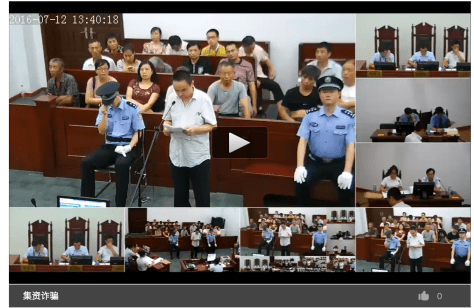
Screen Shot 2016-07-20 at 9.33.43 PM
Fraudulent fund-raising criminal trial

One of the less recognized aspects of China’s judicial reforms is the live streaming (and video archiving) of Chinese court hearings. other than the coverage of the Bo Xilai case.  (I put myself in the category of the persons who were formerly unaware of this development). This blogpost looks (briefly) at SPC policies, current developments, and some very thoughtful analysis of the issues by members of the Chinese judiciary. It follows from my previous blogpost  on online broadcasts of Supreme People’s Court (SPC) public hearings.

Several times this month (July, 2016), President Zhou Qiang has highlighted live streaming (and video libraries) of court hearings, most recently on 18 July, when he spoke about China’s “Smart Courts” and the SPC’s 3.0 Initiative, and reflects the information technology orientation of the Chinese courts (see this brief article on the topic).

In streaming court cases, the SPC and local judiciary are part of a worldwide trend. Even the US federal courts are experimenting with them, with the Court of Appeals for the 9th Circuit taking the lead.  The courts of Queensland (Australia) have recently issued a paper, looking at the issues from an Australian law perspective and very usefully providing a survey of the law worldwide on  major issues.

What are the Chinese courts doing?

The Chinese courts are implementing live broadcasting and video libraries of a selected, but increasing number of cases, with courts in more prosperous areas taking the lead. The Guangzhou courts were among the courts to broadcast court proceedings first. A minority of those cases are found on the SPC’s Court Tv website and most are found on local court websites, often on that of provincial high courts.  The cases tend to be primarily civil cases, with some criminal and a few administrative cases.

On the website of the Beijing courts for example, there are total of approximately 500 cases, of which 364 are civil cases, including an unfair dismissal case brought against Carrefour, 106 criminal cases, including one with an unrepresented defendant, and quite a few cases involving methamphetamine trafficking. The most popular one is a 2014 corruption case. There are 12 administrative cases, including a case against challenging a housing demolition decision by the Fangshan government.

The Zhejiang High Court seems to have video libraries of hearings in two places: this one has links to hearings for sentence commutation, such as this one, while another website has a broad range of cases, including this recent one from the Wenzhou courts, in which the defendant is being prosecuted for trafficking women into prostitution.

SPC’s 2015 report Judicial Transparency of Chinese Courts highlighted the broadcasting of Chinese court trials, noting that by the end of 2014, there were 519 live broadcasting of court trials through the SPC’s China Court’s Live Trial website (http://ts.chinacourt.org/). and that the local courts had streamed over 80,000 court trials. The numbers are much higher than that (close to 5000 on the SPC’s website) and certainly many more on local court websites.

Legal and Policy background

Streaming of Chinese court hearings is based on 2010 SPC regulations (Provisions on the Live Broadcasting and Rebroadcasting of Court Trials by the People’s Courts) and is linked to the 4th Five Year Court Reform Plan:

15. Establish mechanisms for audio and video recording the entire course of hearings.Strengthen the establishment of technical courtrooms, promoting the full audio-video recording of trial proceedings.

Streaming is also linked to the SPC’s five year plans related to information technology:including  a 2013-17 plan on the Informatization of the courts (人民法院信息化建设五年发展规划(2013-2017)) and two ongoing ones, the Five Year Plan on the Informatization of the People’s Courts, 2016-20(人民法院信息化建设五年发展规划(2016-2020)  and the SPC’s Five Year Informatization Plan (最高人民法院信息化建设五年发展规划(2016-2020)).

The 2010 Regulations do not provide specific protection for the rights of individuals, but focus on the type of cases to broadcast and approval procedures for broadcasts.

Article 2 The people’s court may choose the openly tried cases of higher public attention, greater social impact, and of legal publicity and education significance to make live broadcasts of and rebroadcast court trials. The live broadcasting and rebroadcasting of court trials are prohibited for the following cases:

(1) cases that are not openly tried in accordance with the law since any national secret, trade secret, individual privacy, or juvenile delinquency, among others, is involved;

(2) criminal cases on which procuratorial organs clearly require the non-live broadcasting and rebroadcasting of court trials for justifiable reasons;

(3) civil and administrative cases on which the parties clearly require the non-live broadcasting and rebroadcasting of court trials for justifiable reasons; and

(4) other cases of which the live broadcasting and rebroadcasting are inappropriate.[Translation from Chinalawinfo].

Comments from some local judges 

While the SPC leadership is highlighting the virtues of the streaming of trials, some local judges, likely writing from their personal experience, and comparing Chinese rules with counterparts worldwide, are more critical.

These judges from the  Guangzhou courts (judges with several years of experience with trial streaming) raised issues concerning privacy rights, the right to a fair trial, and the public’s right to know.

  • The privacy of litigants is not respected sufficiently; they are concerned that their private matters will be released online;
  • Open justice is necessary to consider the relationship between state power and individual private rights, but also the public’s right to know and the right to privacy of the parties must be balanced.
  • For criminal cases, for the defendant, the trial webcast is equivalent to a disguised form of a public rally– it could mean that the person has the label of  “criminal” for life .
  • In civil disputes, some statements in court may involve aspects of the private life that the parties or other related persons do not want publicized. Meanwhile, network videos and enormous destructive power of “human flesh searches” combined with public opinion on the parties and their families will have a significant impact, which are likely to lead to their privacy being violated.
  • Not all the information and all the facts of the case should be disclosed online. Some information  can be shielded, such as date of birth, place of work, home address, ID card number, bank account information, and the personal information of related parties, such as close relatives, witnesses and other participants.
  • Parties should have a veto over the trial webcast, and in criminal cases, the victim and his or her family should be consulted as well.  They also suggest shielding some information from broadcast.

As a staff member of theChengdu  courts noted, similar issues are raised by the database of court decisions, such as a case in which the plaintiff’s claim for damages from a traffic accident (including the loss of the ability to procreate) made him the laughingstock of his workplace.

Other local judges have commented that the cases selected for broadcast are not representative, too simple, and that they are sometimes selected for political reasons.

The underlying problem both for online streaming of cases and the court database is that there is not enough Chinese privacy law to protect individuals. Whether the SPC will issue more detailed regulations on privacy in internet broadcasts of court proceedings is unclear.

It does seem clear, that an important rationale for streaming cases is to educate the masses–杀鸡敬猴。Politically sensitive cases are not generally streamed.

For the observer of the Chinese courts, it is a fascinating resource in many ways, whether it is noting the number of cases with people’s assessors, women prosecutors, judges, demeanor of the legal professionals, parties, and bailiffs.


Supreme People’s Court starring on Court TV

Screen Shot 2016-07-14 at 2.13.22 PM
Nestle v. TRAB hearing in SPC

From 1 July 2016, the Supreme People’s Court (SPC) is (in principle) broadcasting live all its public trials (public hearings) (better understood by those from a common law jurisdiction as an appellate court hearings) on its own Court TV website.

SPC broadcasts also include hearings by the #2 Circuit Court (in Shenyang) and #1 Circuit Court in Shenzhen.   The technical platform is provided through Sina.com and a private company.  The SPC describes its online broadcasts as its fourth transparency platform.

Some of the cases that the SPC considers do not have public hearing procedures, such as its capital punishment review and judicial review of decisions concerning foreign and foreign-related arbitral awards.

As of 14 July, there almost 30 cases for which the videos are available, many of which involve lending, either bank or private lending and real estate-related disputes, and are primarily civil cases.  Some of the cases include:

It provides a window into the world of Chinese commercial disputes.

Rationale

SPC Vice President Jing Hanchao, who was apparently tasked with implementing this development, is quoted by the official press as saying:

the live webcasts will be significant progress for judicial openness. With full transparency of trials online, the public can better play their supervisory role.

Live broadcasts will also drive judges to strengthen their capabilities, thus improving the judicial system…

..live webcasts will create a large amount of data that will help jurists study China’s legal system.

Having their advocacy broadcast on line may also drive lawyers to strengthen their advocacy skills as well.

For persons interested in the Chinese judiciary, it provides easy access to SPC court hearings, without the hassle of special permission, letters of introduction, and trips to Beijing.

Lawyers in Beijing do not seem to be aware of this development, at least judging by the lawyer acting for TRAB, who arrived in the courtroom after the hearing began.

Some outstanding questions

This decision by the SPC raises a number of questions.

  • Were the parties asked whether they consented to having their case broadcast on line? It is not apparent from the recordings that I have seen.
  • Individual parties read out their personal identification numbers on the recordings.  Could this be an invasion of their privacy?
  • The recently promulgated People’s Court Courtroom Rules (translation here (thank you Chinalawtranslate.com) and original here) lacks any type of balancing test:
  • Article 11: In any of the following situations, for trial activities that are conducted openly in accordance with law, the people’s courts may use television, the internet or other public media to broadcast or record images, audio or videos.
  • The 2010 regulations on the broadcast of cases (关于人民法院直播录播庭审活动的规定)  lack specific procedures enabling individuals to protect their rights. Do judicial reforms contemplate more specific procedures enabling litigants (or defendants) to refuse to have their case broadcast online?


Note:

Mac users may find that the platform works better through the Safari browser than Google Chrome.

Supreme People’s Court judge convicted of taking bribes

45288972BA_14_fp
Bottega Veneta man bag (©BV)

In a blow to the Supreme People’s Court (SPC)’s efforts to bolster its prestige and that of the Chinese judiciary, a ruling recently published on the SPC’s court database reveals that Ms. Zuo Hong, formerly a judge (with division level rank) in the SPC’s Trial Supervision Tribunal was convicted of accepting bribes.    The published ruling omits her full name and that of others involved in the case.

The initial judgment by the Beijing Eastern District People’s Court (District Court), dated 10 March 2016, from which she appealed was upheld by the #2 Beijing Intermediate People’s Court on 31 May 2016.  Because the amounts involved were small (approximately RMB 70,000, particularly in comparison to many of the other corruption cases that have come to light in the last two years), her one and a half year sentence was suspended for two years.  Although she avoided a jail term, she will be unable to draw on her state pension and cannot be involved directly in the legal profession.

The facts, according to the ruling (which summarizes Zuo’s confession and witness statements of others involved in the case):

The then Judge Zuo received as gifts US dollars (USD) and a BV bag (men’s style) from Judge Hui of the Shanghai Higher People’s Court, Trial Supervision Tribunal (USD $6000) and Mr. Yang, Deputy General Manager of Zhongxia Construction Group (Zhongxia, a Shaoxing, Zhejiang-based private company) (bag and USD $2000). (It appears that the bag was originally intended for Judge Hui.)

Judge Hui and Mr. Yang were classmates.  Judge Zuo, who was contacted by Judge Hui, involved herself in a private lending case in the Shaanxi Higher People’s Court in which a Zhongxia subsidiary was a party (the related judgments are listed in this article). The SPC had ruled on the Zhongxia subsidiary’s re-trial petition and remanded to the Shaanxi Higher People’s Court for further proceedings. During 2014, Judge Zuo traveled to Xian four times on the matter, where she met with Judge Hui and Mr. Yang. Judges Zuo and Hui met with their contacts at that court to set out Zhongxia’s position and to have those views conveyed to the judges directly involved. According to the judgment, the Shaanxi judges met with Judges Zuo and Hui because she was from the SPC and given the hierarchical relationship, it was awkward to refuse to meet.   The case was further discussed by the collegiate panel and  judicial committee and eventually remanded to the Xian Intermediate Court for retrial on the basis that the facts were unclear.

According to this article, the case came to the attention of the Supervision Bureau of the SPC in January, 2015, when its personnel were investigating other cases and her iPhone and BV bag came to their attention.  In April, 2015, the Supervision Bureau opened an investigation file for her case. Judge Zuo  cooperated with the Supervision Bureau’s investigation and handed over the money and bag to investigators.  Her case was transferred to the procuratorate on 12 June 2015, when she was taken into custody. She was arrested at the end of that month.

On 1 February 2016, the Communist Party Central Political-Legal Committee designated her case as one of seven typical cases of leadership interference in the judicial process. By that time she had been expelled from the Communist Party under its disciplinary procedures.  At the end of August 2015, Ms. Zuo was formally removed from office.

Comments

It appears from Judge Zuo’s case that the Central Political-Legal Committee’s need to issue a set of  typical cases of leadership interference to scare judges and other members of the political-legal establishment into compliance trumped respect for the formalities of the operation of the criminal justice system. (It is unclear whether the Central Political-Legal Committee considered the impact of that lack of respect on retaining highly qualified judges (and on other legal professionals)).  (This blogpost highlighted the first set of these cases). It is likely that the Central Political-Legal Committee relied on the Party disciplinary decision in her case (see a description here) to make a determination that her case should be made public.

Senior court personnel involving themselves in cases, whether motivated by friendship or bribes, is an ongoing problem. What the two judges did is prohibited by SPC 2015 regulations and previous SPC rules. It is likely that Judge Hui has also been punished for his role in this. It seems unlikely that the Shaanxi judges were punished, as the case does not show that the internal advocacy did not affect the eventual outcome.

The case also illustrates that structural aspects of the court system have left space what is now considered “improper interference” by senior judges and were previously common practice. It also shows that internal court procedures in this case seem to have operated to blunt that interference.

The trial supervision procedure had been one of the soft spots for “improper interference,” although reforms of the trial supervision procedure under the 2015 judicial interpretation of the Civil Procedure Law (and further 2015 SPC trial supervision regulations) should diminish abuses.  Chinese law had given trial supervision judges relatively broad discretion in deciding whether to re-open a case, which is important because China has a two instance system.  (Current reforms require the application for re-trial to be sent to the opposing party and permit the reviewing judge to hear arguments from both sides). Judge Zuo is only one of many trial supervision judges who has been convicted of bribery.  (See recent cases in Liuzhou, Shanxi, and Putian.)

As Professor Li Yuwen of Erasmus University has previously written (and which I quoted in an earlier blogpost):

judicial corruption cannot be divorced from its social context…It is unrealistic to expect judges to operate completely outside the social environment, especially in the absence of a workable system to reduce the incidence of judicial corruption…certain shortcomings of the court system leave the door open for corruption. For instance, the flexible use of the re-trial system [trial supervision] leads to the easy re-opening of cases if influential people wish to interfere in a case.This not only diminishes the finality of a case but also creates opportunities for using personal networking to change a court’s judgment.

Furthermore, the relatively law judicial salary makes judges an easy target for corruption…In modern-day China, a profession’s income is too often linked to the profession’s social status. Judges’ low salaries are not conducive to building self-respect amongst the profession and, moreover, they constitute a major ground for fostering judicial corruption.

How low was Zuo Hong’s salary, that she thought it worth her while to risk her freedom and career for USD $8000?

Do you need the Supreme People’s Court Monitor?

imgres-4The Supreme People’s Court Monitor is a free resource that many institutions and individuals use, from many parts of the world.  Part-time teaching and full-time scholarship does not go even come close to paying for the tuition for one, let alone two undergraduate students.  If you value the Supreme People’s Court Monitor, please consider the following:

  • making funding available for the Monitor from your foundation or other institution;
  • donating to the School of Transnational Law of Peking University and designating the funding for the Supreme People’s Court Monitor;
  • hiring Susan Finder (the Supreme People’s Court Monitor) for consulting and drafting of research reports related to Chinese law and legal policy, and to the Chinese court system; and
  • engaging Susan for teaching, professional training, writing and editing related to the Chinese legal system.

She is well placed to provide focused analysis of Chinese legislation on the horizon, and spot regulatory trends as well  as trends in Chinese court policy and litigation that neither law firms nor risk consultancies can provide to organizations, chambers of commerce, corporations, trade associations, universities, and national or international institutions. For the Chinese legal community, she can provide skills training and training in certain areas of U.S. substantive law.

Please contact Susan at supremepeoplescourtmonitor.com with proposed projects or for further information (e.g. a copy of her cv/resume).


What’s new in the Supreme People’s Court’s diversified dispute resolution policy?

Opening of court-annexed mediation center of Qianhai court

On 29 June 2016, the Supreme People’s Court (SPC) issued a policy document on diversified dispute resolution (Opinion on the people’s courts more deeply reforming the diversified dispute resolution mechanism) (Diversified Dispute Resolution Opinion)(关于人民法院进一步深化多元化纠纷解决机制改革的意见). The document uses the term “diversified dispute resolution” (consistent with Chinese practice) rather than “alternative dispute resolution” (more often used outside of China) to reflect the central place of mediation, arbitration, and conciliation in Chinese dispute resolution. (This post has been superseded by the 31 July version.)

It was accompanied by regulations on court-appointed mediators.  For those interested in the way the SPC works, it is another example of an SPC policy document in the form of an “opinion” (discussed here) accompanied by regulations  (a type of judicial interpretation, discussed here).

The policy document sets out in a consolidated form the SPC’s latest policies on mediation, arbitration, and its relationship with litigation.  It provides a framework for further reforms. It is intended to inform the lower courts as well as related Party/government agencies of forthcoming reforms.  It signals to the central leadership that the SPC is on course to achieve one of the reform targets set out in the 4th Court Reform Plan. The current head of the SPC’s judicial reform office, Judge Hu Shihao, spoke at the press conference announcing the Diversified Dispute Resolution Opinion, indicating that the office took the lead in drafting it.

A summary follows below, highlighting, based on a quick reading, focusing on its:

  • objectives and origin;
  • signals and practical implications.

A very useful academic article on diversified dispute resolution, with survey data and more on the political background, can be found (behind a paywall) here. (To the many academics and practitioners who have written on this topic, please feel free to use the comment function or email to expand/contradict, or correct this).

Objectives & origin

The SPC issued the Diversified Dispute Resolution Opinion as a way to implement one of the targets in the 4th Judicial Reform Plan:

46. Complete diversified dispute resolutions mechanisms.Continue to promote mediation, arbitration, administrative rulings, administrative reconsideration or other dispute settlement mechanisms with an organic link to litigation, mutually coordinate and guide parties to choose an appropriate dispute resolution. Promote the establishment of dispute mechanisms that are industry-specific and specialized in the areas of land requisition and property condemnation, environmental protection, labor protection, health care, traffic accidents, property management, insurance and other areas of dispute, dispute resolution professional organizations, promote the improvement of the arbitration systems and administrative ruling systems. Establish an operating system that links people’s mediation, administrative mediation, industry mediation, commercial mediation, and judicial mediation. Promote the legislative process of a diversified dispute settlement mechanism, establish a system for a systematic and scientific diversified dispute settlement system.

The Diversified Dispute Resolution Opinion is a product of the 4th Plenum decision. Its underlying approach was approved by Xi Jinping and other top leaders.  Judge Hu, who mentioned  at the press conference that at a 2015 meeting, the Leading Small Group on Comprehensive Reform approved a framework policy document (not publicly available) on improving the diversified resolution of disputes (关于完善矛盾纠纷多元化解机制的意见) and the General Offices of the State Council and Central Committee followed with an implementing document.  The principal reason that this topic merited top leadership time and involvement is because of its direct links to maintaining social stability and reducing social disputes.

Similar to other SPC policy documents discussed on this blog, comments on the draft were sought from the central authorities, lower courts, relevant State Council ministries and commissions, industry association, arbitration organizations, scholars, and the Legislative Affairs Commission of the National People’s Congress Standing Committee. The Diversified Dispute Resolution Opinion was approved by the SPC judicial committee.

Signals

The objective of the document is to promote a more sophisticated, efficient, and effective approach to dispute resolution that will reduce social tensions.  Part of the objective is to reduce the number of cases filed, heard, and tried by courts. For commercial disputes, it is intended to push disputes to institutions that can more competently, efficiently and timely mediate cases and better mediate cases within the courts by involving court-annexed mediators, before or after the person or entity files suit.  The implications of this document for the reform of labor and rural land contract dispute resolution remain to be seen.

The Diversified Dispute Resolution Opinion requires better linkages between other institutions and the courts, so, for example, that mediation agreements can be enforced without a re-hearing in the courts.  It stresses Party leadership while emphasizing that forces in society can do a better job of dispute resolution than official ones.  The document also cautions against borrowing institutions wholesale from abroad.

Practical implications to expect in the medium to long term

  • For the foreign investment community (and their lawyers), a signal that the SPC is working on a judicial interpretation concerning the judicial review of foreign and foreign-related arbitral awards (“standardize judicial review procedures for foreign-related and foreign commercial arbitration awards”) (规范涉外和外国商事仲裁裁决司法审查程序).  As this blog has reported earlier, this was signaled at the November 2014 National Conference on Foreign-related Commercial and Maritime Adjudication and last year’s One Belt One Road Opinion.  It is unclear whether the future interpretation will change the prior reporting procedure, for example, to give parties a chance to submit arguments orally or in writing, or whether it is intended to consolidate the principles the SPC sets out in its responses to lower courts (released to the public in one of the SPC’s publications), summarized in comprehensive overviews of Chinese arbitration law, such as this one.
  • Changes to labor dispute resolution, as highlighted by the 2015 Central Committee/State Council document mentioned earlier. This is important in light of the uncertain economy and increasing number of workers being made redundant. in recent years, judges in different areas of China have published devastating criticism of the current labor arbitration system and labor dispute resolution generally.  The judges pointed out the current labor arbitration system is not independent of the government, fails to protect labor interests equally, and .  The judges also criticize the brief statute of limitations in labor disputes and lack of a specialized labor tribunal.  It appears from reports that Zhejiang Province is taking the lead in providing greater choices and professionalism in labor dispute resolution, but it unclear how far those reforms go.
  • Further attention to rural land arbitration.The Diversified Dispute Resolution Opinion mentions better linkages between the courts and rural land arbitration. This area is important, as the government seeks to encourage farmers to expand their landholdings and mortgage their land, but the merits of the system are not the SPC’s issue.  A 2014 report highlights the lack of independence of these arbitration commissions, lack of arbitrators, and absence of qualified arbitrators. A 2016 paper by several China Banking Regulatory Commission staff on the mortgage of rural land notes that those arbitration commissions need improving.
  • Local courts to establish “court-annexed mediation centers” to encourage and give parties “one stop shopping” for choices in mediating some of the cases most often seen in the courts–family, conflicts between neighbors, consumer, small claims, consumer, traffic accident, medical disputes;
  • “Improving” criminal conciliation and mediation procedures.  Reforms in this area bear close monitoring because, as discussed in earlier blogposts, criminal conciliation and mediation procedures are often used to avoid embarrassing more powerful institutions (such as schools) and people especially in cases involving claims of rape, sexual assault, and child molestation;
  • recognizing the results of and encouraging litigants to use neutral valuation organizations, for civil and commercial disputes such as medical, real estate, construction, intellectual property, and environmental protection, the results of which could be used as the basis of mediation;
  • More small claims and expedited procedures for minor civil disputes;
  • more lawyers to be appointed as court-appointed mediators;
  • Improvements to administrative dispute resolution procedures.

What does all this mean for making people “feel justice in every case”  when some persons and institutions enjoy a better quality of dispute resolution than others?


Chinese courts recruiting more bankruptcy forces

imgres-1The Supreme People’s Court (SPC) recently issued a notice  (notice concerning the plan for establishing liquidation and bankruptcy trial divisions in intermediate courts)(bankruptcy division notice) (关于在中级人民法院设立清算与破产审判庭的工作方案) aimed at establishing liquidation and bankruptcy trial divisions in China’s intermediate courts and increasing the number of judges and support staff focusing on liquidation (winding up companies not in bankruptcy) and bankruptcy-related issues, to implement the central leadership decision to use bankruptcy law to reduce the number of zombie enterprises.

SPC Judge Du Wanhua had foreshadowed this development in many previous statements. The SPC required the concurrence of the Central Staffing Commission, a Party-State organization that regulates staffing in Party and state entities. A summary of the bankruptcy division notice follows below:

  • Establish bankruptcy divisions in intermediate courts, with some courts taking the lead;

In the directly administered cities, at least one intermediate court should establish a bankruptcy division, intermediate courts in provincial capitals and cities of deputy provincial level also. At lower levels, it will depend on economic development, local need, and professional infrastructure, with provincial courts to make arrangements with staffing authorities.

The following locations will take the lead in establishing bankruptcy divisions: Beijing, Shanghai, Tianjin, Chongqing; and the provincial capitals (and cities of deputy provincial level) of Jilin, Jiangsu, Zhejiang, Anhui, Shandong, Henan, Hubei, Hunan, Guangdong, and Sichuan. These arrangements are to be put in place by the end of July, with the other areas to follow by year end. This blog has reported on previous bankruptcy developments in Jiangsu,  Zhejiang, Anhui, Shandong, and Guangdong.

  • Sets out the work of  bankruptcy divisions;

Try compulsory liquidation and bankruptcy cases, guide lower courts trying these types of cases; coordinate with other courts on these issues; manage and train bankruptcy administrators.

  • Describes the jurisdiction of the bankruptcy divisions;

Intermediate courts should be responsible for the compulsory liquidation and bankruptcy of companies registered at the business registration authorities (administration of industry and commerce) of its own level and below, with variations possible if the provincial high court approves.

  • Staffing principles

Staffing should be according to judicial reform principles and linked to the caseload–the judges should be those familiar with liquidation and bankruptcy from the same or lower courts and they should have a clerk and judicial assistance on a 1:1:1 principle.

  • Measures needed

Improved measures are needed to supervise and evaluate liquidation and bankruptcy work; expedited liquidation and bankruptcy procedures need to be explored; promote reforms in trying liquidation and bankruptcy cases; put in place judicial responsibility (this relates to the judicial lifetime responsibility system announced in September, 2015) to ensure an honest judiciary.

  • Coordinate better with local Party/state authorities

Liquidation and bankruptcy divisions should report regularly to the local Party committee/government to seek their support and major issues should be reported to the SPC.

Some thoughts

This is a positive step although it cannot deal with the underlying political issues related to implementing bankruptcy law in China, particularly local government interference in bankruptcy cases.  Putting in place more qualified judges and support staff is a critical part of making bankruptcy law work.  The political support of the local authorities remains critical and the local judiciary provides a training and liaison function. The bureaucratic level of a troubled company (state owned enterprise) affects the ability of a court to deal its issues.

Academics reaching out beyond the universities and social media is playing a positive role in creating a corp of more competent bankruptcy specialists in the judiciary.  The Bankruptcy Law and Restructuring Research Center of the China University of Political Science and Law, directed by Professor Li Shuguang  has established a Wechat public account, which provides bankruptcy and liquidated news to the profession, including judges, as well chat groups in which Chinese bankruptcy professionals can share their experiences and tap into the experience and knowledge of others.


Supreme People’s Court tweaks capital punishment review procedure

Screen Shot 2016-06-26 at 3.28.09 PMSeveral days ago, the Supreme People’s Court (SPC) issued the brief judicial interpretation, translated below:

Supreme People’s Court

Reply Concerning issues related to the Application of Article 225 (para 2) of the Criminal Procedure Law

Approved by the 1686th meeting of the Judicial Committee of the Supreme People’s Court, in effect from 24 June 2016

Fa Yi(2016) #13

To the Henan Higher People’s Court:

We have received your request for instructions concerning the application of Article 225(2) of the Criminal Procedure. After consideration, we respond as follows:

I.  For cases remanded to the second instance people’s court for retrial by the Supreme People’s Court, on the basis of “People’s Republic of China Criminal Procedure Law” Article 239 (2) [if the Supreme People’ s Court disapproves the capital punishment sentence, it may remand the case for retrial or revise the sentence] and Article 353 of the Interpretation of the “Supreme People’s Court on the application of the People’s Republic of China Criminal Procedure Law [where the Supreme People’s Court issues a ruling on non-approval of the death penalty sentenced under a case, it may remand the case to the people’s court of second instance or the people’s court of first instance for retrial, depending on the actual circumstances of the case…], having ruled not to approve the death penalty,and  regardless of whether the people’s court of second instance had previously sent the case back to the first instance court on the grounds that original judgment’s facts were unclear or evidence was insufficient; in principle, it must not be sent back to the original first instance court for retrial; if there are special circumstances requiring the case to be sent back to the first instance court for a retrial, it must be submitted to the Supreme Court for approval.

II. in cases where the Supreme People’s Court had ruled to disapprove the death penalty and remanded the case to the second instance people’s court for retrial, and the second instance people’s court had remanded the case to the first instance court according to special circumstance, after the first instance court has issued its judgment and the defendant has appealed or the people’s procuratorate has made a protest, the second instance people’s court should issue a judgment or ruling according to law, and must not send the case back for re-trial, according to the specifics of the case, which had sent the case to the first instance court for retrial.

So replied.

_________________________________________________________

What is this and what does this mean?

This is a judicial interpretation by the SPC in the form of a reply, as explained here.  It is a reply (批复) to a “request for instructions” from a lower court relating to an issue of general application in a specific case.  The Henan Higher People’s Court had submitted a request for instructions, likely with two or more views on the issue, but the lower court’s request is not publicly available.  It is likely that practice among provincial courts had been inconsistent, and therefore the SPC is harmonizing judicial practice through this reply.  As required by the SPC’s  regulations on judicial interpretations, it must be approved by the SPC’s judicial committee as a judicial interpretation.

This gives further details to the SPC’s capital review procedures, requiring second instance (generally provincial level courts) to hear retrials of cases remanded by the SPC and not instructing those courts not send cases back to the first instance court for retrial.  It also requires the second instance court to rule on a defendant’s appeal or procuratorate’s protest and not remand the case back to the first instance court, expediting the final consideration of these cases and limiting the number of remands of these cases.

Is this a positive development for the protection of the rights of the defendants (the defendants in the typical drugs cases announced by the SPC recently were mostly peasants), by requiring the second instance court to hear these cases, away from the public pressure where the crime occurred?  In a 2013 article, criminal defense lawyer Sun Zhongwei described the pressure on a local first and second instance court is under from the victim’s family and the local Party committee and government, and how the institutions use delay and remanding the case to the procuratorate and public security for additional investigation to avoid making difficult decisions that will alienate local authorities.What has the role of defense counsel been in these cases?  Have most defendants been advised by counsel? Was the delay in final resolution in these cases an issue discussed by the Central Political Legal Committee?

What was the rationale for issuing this interpretation at this time?  Is it a measure to promote the efficiency of the courts, by expediting finality in criminal punishment, so that the courts can announce in a timely manner their crime fighting accomplishments and typical cases?A headline on one of the SPC’s websites  reporting on 30% increase in drugs crime convictions in the provincial level courts may indicate which is valued more–“People’s courts across the country cracked down hard on drug crime.”

Or is it linked to planned reforms to the criminal justice system and improvements to the legal aid system for criminal defendants approved by Xi Jinping and other top leaders on 27 June?

How the Supreme People’s Court serves major government strategies

serve the people
serve the people

In the past year, the Supreme People’s Court (SPC) has issued several policy documents that contain the same phrase: serve the nation’s major strategy (服务国家重大战略).  When SPC President Zhou Qiang gave his report to the National People’s Congress (NPC) in March, 2016, one section addressed this topic.

Provided service for the country’s major strategies.  Issued opinions on the people’s courts providing judicial service and protection for the construction of One Belt, One Road, the development of coordinated development of Beijing-Tianjin, and Hebei, and the development of the Yangtze River Economic Belt, appropriately tried related cases, promoted the coordinated development of geographic areas.

(服务国家重大战略实施。制定人民法院为“一带一路”建设、为京津冀协同发展、为长江经济带发展提供司法服务和保障的意见,妥善审理相关案件,推动区域协调发展)

What, if anything, does serving the country’s major strategies mean for the Chinese courts?  This blogpost briefly looks at one of the policy documents cited by President Zhou Qiang to find out.

What are the documents?

The titles of these three are similar:

  1. Opinion of the SPC on Providing Judicial Services and Guarantees for One Belt One Road (OBOR Opinion)最高人民法院关于人民法院为“一带一路”建设提供司法服务和保障的若干意见;
  2. Opinion of the SPC on Providing Judicial Services and Guarantees for the Development of the Yangtze River Economic Belt (最高人民法院关于为长江经济带发展提供司法服务和保障的意见)(8 March 2016 )(Yangtze River Opinion); and
  3. Opinion of the SPC on Providing Judicial Services and Guarantees for the Coordinated Development of the Beijing-Tianjin-Hebei Region 最高人民法院关于为京津冀协同发展提供司法服务和保障的意见 (18 February 2016)(Beijing/Tianjin/Hebei Opinion) .

What are the country’s major strategies?

A Rand Corporation report set out a definition of the fundamental purposes of China’s national strategy:

the fundamental purposes of China’s national strategy (guojia zhanlue) (1) to safeguard China’s national territory and sovereignty, (2) to guide national construction and social development, (3) to strengthen national power, and (4) to ensure continued national prosperity….China’s national strategic objectives (guojia zhanlue mubiao) constitute those fundamental strategic principles, concepts, and priorities guiding not only foreign and defense policy but also critical domestic realms concerned with national construction and internal order. These objectives include the attainment of great power status in the economic, technological, social, and military realms…, and the development or maintenance of capabilities to defend against any internal or external threats to China’s political stability, social order, national sovereignty, and territorial integrity.

Beijing/Tianjin/Hebei Opinion

It was drafted to support the Beijing/Tianjin/Hebei regional integration plan because the economic integration plan will “inevitably produce a large number of legal disputes, particularly trans-regional legal disputes.” The SPC research office seems to have taken the lead on drafting it, because its head appeared at the press conference to explain it.

The Opinion stresses the following types of cases, in the following order:

  • Criminal law: punish crimes that may effect social stability and regional integration: intellectual property rights infringement; embezzling corporate funds, illegal fund raising;  market manipulation etc. (the priority crimes);
  • Commercial law: priority cases include those involving company relocation; regional logistics centers; relocation of regional markets, including leases, labor disputes; reorganization or bankruptcy of companies with outdated technology; construction of industrial parks and promotion of companies with high quality technology;
  •  Cases involving people’s livelihood, particularly those involving public services, education, medical and health; social protections; promoting entrepreneurship, equal education, etc.
  • Cases involving financial innovation and safety: those include private lending, internet financing, protecting the rights and interests of creditors and financial consumers;
  • Expanding the protection of intellectual property:
  • Environmental cases: focus on environmental civil/commercial and administrative cases;
  • Focus on administrative cases related to regional development; and
  • Focus on major projects and construction projects related to regional integration.

The Beijing/Tianjin/Hebei Opinion also establishes greater coordination among the three courts, including a mechanism chaired by the SPC, exchange of judges, and calls for work on centralization of certain types of cases in certain court.

The Opinion calls for the lower courts to focus on the overall regional integration plan and promote the use of “diversified dispute resolution,” and pre-filing mediation, especially in policy-oriented, sensitive cases, where the local Party Committee, government, and other departments must be relied upon to resolve issues.  ( 特别是对于政策性、敏感性强的案件,要紧紧依靠当地党委、政府及有关部门依法解决).

(The phrase “policy-oriented, sensitive case” was helpfully described by another judge as it is a concept used often within the Chinese judiciary.  Although it is a not a formal legal term, it refers to the following categories of cases: those that affect a larger group of people than the parties involved; involve issues of widespread concern; require the adjustment of certain long-term government policies; and have political implications. Those include cases involving a large number of people, special groups (such as migrant workers, well-known enterprises, offshore entities), ones that can cause social conflict, including bankruptcy, labor disputes caused by restructuring, employee relocation compensation cases, land acquisition and resettlement compensation. Cases involving political, ethnic and religious issues are also included.)

Policy documents serving major government strategies

As a central government institution, the Court must do its part to support national major strategies. To inform the lower courts of the priority issues, projects, and matters, the SPC issues policy documents, which are the court system’s version of policy documents issued by other Party and state organs. Each of the three national major strategies raises a set of legal issues.  Some of those legal issues are relevant to the function of the courts in hearing cases, while others relate to the function of the SPC as a “quasi-legislator,” as when it issues judicial interpretations.  They often relate to forthcoming initiatives or sometimes long-term issues for the SPC, as in the case of the OBOR Opinion.  However, these documents also signal that some issues, projects, and matters are more important than others, and ultimately does not contribute to public trust in the judiciary.

Some thanks in order

My thanks to a Hong Kong solicitor for criticizing the Hong Kong courts for lacking the “spirit of service” during a recent symposium on the mainland (bringing this issue to my attention) and a (mainland) academic for expressing to me his doubts that the SPC’s OBOR Document had any significance whatsoever.

Violence in Chinese schools–Supreme People’s Court investigates

u=3100241398,3468186084&fm=21&gp=0While most of the world is mesmerized by the high PISA scores of students in Shanghai schools, and the impressive achievements of Chinese students on standardized tests, a problem that has escaped the attention of most Chinese authorities (and the outside world) is violence in Chinese schools.  In time for Children’s Day (June 1), a team of researchers at the Supreme People’s Court (SPC) published a report on school violence disturbing to any student, parent, or person who was once a school child.

u=3830714959,1486503468&fm=21&gp=0

No comprehensive data

The research team themselves admitted that they do not have comprehensive data on the problem.  School violence often does not enter the formal criminal justice system and is dealt with through public security or other administrative measures, or is not dealt with at all.  The team reviewed 100 criminal cases that arose in the last two years and visited some local courts, including those in Qingdao, a court in which the SPC is piloting measures to improve juvenile justice.

Crimes committed

Screen Shot 2016-06-04 at 11.30.20 AM

Age of offenders

The age of criminal responsibility for juveniles is currently 14, so the statistics on the age of offenders reflects this.  65% were between the ages of 16 and 18, while 34% were between the ages of 14 and 16. These numbers are not a true reflection of the extent of school violence because criminal responsibility for juveniles in China between the ages of 14 and 16 is limited to eight crimes, as set out in Article 17 of the Criminal Law.

Educational level

33% of students were in junior high, 22% in senior high school, 26% were vocational school students, while 12% were unemployed, with 2% primary school students.

Weapons

In 49% of cases, the offender used a knife, including switchblades, fruit knives, and hunting knives, 67% of the time causing death (35%) or serious injury (32%). In about half of the cases the offender turned himself in and also about half the cases were resolved by settlement with the victim/victim’s family.

Criminal punishment

In 32 cases of serious bodily harm, the offender was exempted from criminal punishment, in 68% of cases, the offender received a suspended sentence, while in 14% of cases the offender was sentenced to under three years or three to five years incarceration.

In 35 homicide cases, the offender in 23% of cases received a suspended sentence; 29% of cases, over 10 years in prison; in 34% of cases, five to ten years in prison.

Major issues

The problem is not taken seriously–with a prevalent attitude that school violence is part of growing up, and there is a lack of consensus about what to do about it;

Juvenile justice legislation is lagging behind, with offenders becoming increasingly younger, with cases of intentional homicide committed by juveniles under 14, with no penalties against stalking, verbal bullying, etc. This study, along with others, may lead eventually to changes in the age of criminal responsibility in China。

Too many serious offenders are receiving suspended sentences or avoiding criminal punishment by settling with the victim.

The researchers suggest looking to useful models from outside of China, to improve Chinese legislation.

The Ministry of Education has only recently issued a notice on school bullying. requiring incidents to be reported and preventative measures to be taken. It is likely that schools are reluctant to report these incidents.

School bullying and violence is a global problem and one where international cooperative efforts could be useful. In China, it is related, in part, to adults migrating to cities or developed areas to earn money, leaving behind their children with grandparents to study in underfunded schools.

(photos from the internet)


Watch out for Mr. Yong when you read about law on Wechat

Screen Shot 2016-05-24 at 7.52.43 AM
This content cannot be read; Yong Hu (user) has complained, discovered this content violates law, regulations, and policy

Those reading about China’s social media in English have been mesmerized by articles summarizing the recently published and impressive study of the pro-government “fifty cent army” on Weibo by Professor Gary King of Harvard’s Institute for Quantitive Social Science and coauthors Professors Jennifer Pan and Margaret Roberts from Stanford and the University of California, San Diego.  However, according to the numbers, the focus of China’s social media has very much shifted to Wechat (Weixin).  According to statistics from April, 2016, the number of Wechat active users has grown to 650 million, while the number of Weibo active users at the same time was about 261 million.  Wang Dong, author of a popular (and prize-winning) legal Wechat public account CU检说法 (with a day job at the Suzhou Procuratorate), recently pointed out that a “Mr. Yong” poses a threat to Wechat readers.

Wang Dong posed the question “who is that guy Yong (用)?”  “Every time Yong Hu (用户) (user) complains about the content in an article, it disappears.” Wang Dong asked further:

Who is this guy “用户”? He certainly does not like to stand on a podium to debate with people, perhaps because of stuttering, but more likely because he really does not have that kind of scholarship, does not know what to say, and perhaps, after he says a few words and omits words and is ridiculed, the crowd of helpless laughter causes him to retreat back.

So, the easiest way is hiding in the shadows, lurking, lurking, lurking silently, silently recording  his hate in every move and every word of the people, to analyze these articles, from which to find  “segments of illegal content.”

Perhaps Professor King and coauthors can now turn their attention to Mr. Yong and his army of Wechat lurkers, to assist us in understanding what made Mr. Yong and his army of lurkers complain about 200,000 items on Wechat in 2015 and cause 120,000 Wechat public accounts to be penalized.


Family court comes to China

imgresAs highlighted in a December,2015 post on this blog, and as Supreme People’s Court (SPC) Vice President Shen Deyong announced on 11 May, family courts are coming to China, or at least 100 pilot projects for them.  Family law cases have been heard within civil divisions of local courts, but there has been dissatisfaction with the way there are being heard.  In 2015, 1,733,000 marriage law cases were heard and about 84,000 inheritance cases.

Family law issues reflect the complexities of Chinese families today:

  • Divorce in major cities often touches on the rights to real estate whether debts are debts of one spouse or of the marriage;
  • Custody and maintenance are issues, particularly when maintaining an expensive life style is involved;
  • In rural areas, bride price and marriage by local customs rather than official registry is an issue.

Justice Shen stressed that family is the basis of society (echoing Confucius). The Women’s Federation, Ministry of Civil Affairs, Ministry of Justice, and Central Political Legal Committee were involved in this initiative. This reform has been piloted on a smaller scale in Guangdong province.  District courts in Shenzhen and Zhuhai have been early stage pilots.   The SPC issued a document to support the initiative which has not yet been publicly released (Notice of the SPC concerning some courts initiating pilot reform work in family court trial methods and work systems 最高人民法院关于在部分法院开展家事审判方式和工作机制改革试点工作的通知). [Update–the document was eventually released–available here.]

This is an area in which the Chinese courts, including Supreme People’s Court is looking to jurisdictions outside mainland China (i.e., including the United Kingdom, Australia, Taiwan, Japan, and South Korea) for concepts that may be used in China.  Hong Kong law has not been mentioned as a model from which the mainland can transplant concepts, because, as this recent article published by a member of the University of Hong Kong Law Faculty details, Hong Kong family law and family law procedure is many years behind developments in Commonwealth countries, and it is an area in which Hong Kong’s executive led government has delayed introducing comprehensive legislation.  Ironically, in March, 2016, the SPC had discussions with Hong Kong’s Secretary of Justice on the issue of the recognition of judgments in the area of marriage and related issues.

Scope of the pilots:

  • matrimonial cases and related cases, including divorce, annulment, revocation of marriage;
  • custody, child support fees, property division after divorce, etc; maintenance disputes; paternity cases, including parent-child relationship to confirm or deny paternity;
  • adoptive relationship disputes;
  • cohabitation disputes, including the division of property during cohabitation, children born out of wedlock, and other dependents;
  • inheritance disputes.

The pilots will promote:

  • mediation as a way of resolving disputes;
  • personal appearance of parties in court;
  • putting the interests of the child first.

Issues with family cases that the Shenzhen judges have highlighted:

  • family law is not taken seriously as an area of law;
  • investigators are needed to support the judges;
  • lack of coordination with other authorities involved in family law issues;
  • burden of proof needs to change in family law cases, because otherwise it is difficult for the weaker party (generally the woman/elderly) to prove her case;
  • court performance indicators make it difficult to handle family law cases properly;
  • the courtroom set up must be changed to better accommodate family law disputes;
  • questions on handling family law issues that impinge on public policy/morality, such as inheritance by mistresses.

If the Confucian value of family as the basis of society is to be taken seriously the Chinese court system needs to show it by its actions. And the Chinese legal system will need to face the issue that family includes people who are gay/lesbians/transgender.