Susan Finder has been observing the PRC Supreme People's Court for over 20 years, and was the first person to engage in a close analysis of its operations. She taught Chinese law and other subjects in the Law Department of the City University of Hong Kong, before putting her knowledge to work in the China practice group of Freshfields Bruckhaus Deringer, one of the first international law firms to recognize the importance of the China market.
She had the good fortune to study with three of the early pioneers of Chinese legal studies: Jerome Cohen, R. Randle Edwards, and Stanley Lubman and to have many leading practitioners and legal academics among her classmates at Harvard Law School (J.D.) and Columbia Law School (LL.M).
Susan Finder speaks and reads (Mandarin) Chinese and Russian and some German.
Petitioners at SPC (used with permission of Natalie Behring)
In recent months, the Supreme People’s Court (SPC) has been issuing one policy document after another to put some substance into the vague language of a “trial-centered” criminal justice system. One of those documents, which the SPC issued recently along with the Supreme People’s Procuratorate and Ministry of Justice, is directed at involving lawyers in the criminal case petitioning system: Opinions on Gradually Implementing Systems For Lawyers’ Representation in Collateral Appeals (Collateral Appeals Opinion). (The document was copied to a surprising number of Party, state, and military institutions, according to this version).
The Collateral Appeals Opinion builds on a single line in item #36 of the SPC’s 4th Court Reform Plan outline: “Promote the establishment of a system for lawyer representation in complaint appeals [collateral appeals] cases.” As some readers may be aware, China has a collateral appeals or criminal case petitioning (刑事申诉) system, giving a convicted person and his or her family a right to petition a court to have the case re-opened and reconsidered under the Criminal Procedure Law’s trial supervision procedures. Criminal defense lawyers are hopeful that this will lead to more involvement by the criminal defense bar, but there are many procedural and financial arrangements still to be worked out.
It seems likely that Judge Hu Yunteng, as a member of the SPC’s judicial committee (as well as others) were involved in the drafting of this policy document. As I discussed in a February, 2017, blogpost, Judge Hu Yunteng and other colleagues on the #2 Circuit Court wrote a research report analyzing criminal collateral appeals petitioners visiting the #2 Circuit Court (第二巡回法庭刑事申诉来访情况分析报告), (which does not seem to have been made public) and in the article summarized in that blogpost, advocated hearing the views of the party’s lawyer if one has been appointed and noted that making contact with the party and his lawyer was an important way to deal with these cases.
But establishing an effective collateral appeal system system involves further issues, as highlighted by one of my students in his class paper (edited).
Criminal petitioning [collateral appeal] lawyers face a dilemma: they don’t have the right to investigate evidence, read case files, or even meet their clients if their clients are now prisoners and not defendants. [Comment–section 9 of the Collateral Appeals Opinion has broad language on improving this–this is a positive step, but will require more specific implementing procedures].
Article 306 of the Chinese Criminal Law, which provides that criminal defense lawyers who encourage defendants or witnesses to change their testimony should be punished criminally. This provision makes criminal defense lawyers extremely unwilling to investigate new evidence by themselves because of the high risk.
According to Chinese Criminal Procedure Law, the petitioning process should be conducted in the court which makes the original judgment. [Comment–the Supreme Peoples Procuratorate and Court media outlets recently have published proposals to have these cases should be considered by procuratorates and courts in other jurisdictions.] However, this court will have strong incentive to have these cases not successfully petitioned because their bonus and assessment are based on correctness rate of effective judgments. [My comment–this is one of the many ways the judicial performance assessment system creates obstacles to justice. So to make this reform effective, this indicator must be abolished.] Combined with the fact that there is no clear rule that needy petitioners should be assigned lawyers, they may either ignore the need for lawyers, or just assign lawyers who have little interest to really petition for their clients in these cases. So in most cases in which petitioners are in poverty, they could only seek the help of private lawyers for free service.
In China there is a saying that if you want to win in petitioning you have to make a big influence to make the government notice your case, and if you want the government to notice on you, you have to use some extreme rather than some “legal” ways to petition. If petitioners hire a lawyer, the lawyer has his/her own professional responsibility standard that he or she has to follow, which may sometimes conflict with the “best interest” of the client.
There a gap between the economic difficulty for ordinary daily life and economic difficulty in seeking legal service. For example, a person may not meet the criteria of economic difficulty because he or she’s earning is above the living standard. However, this person can still not able to afford legal service from a law firm because ordinarily the cost for seeking criminal defense service is above a person’s salary in a whole year. Such gap and seemingly objective standard actually causes a problem and means many people in need cannot receive the aid.
Chinese criminal justice reform–as President Trump says “it’s complicated!”
In August, 2016, I wrote about how non-guiding Chinese cases are guiding the development of Chinese law. I described what I saw as a prevalent practice in the Chinese judiciary that judges search a particular issue to see how other courts have decided a particular issue or the elements to which they have looked when deciding a particular issue. In that blogpost, I questioned whether the Supreme People’s Court (SPC) had noticed this practice. Under a recent SPC policy document that will become effective on 1 May, this prevalent practice will become a required practice. The SPC’s Opinions on Putting a Judicial Responsibility System in Place and Improving Mechanisms for Trial Oversight and Management (Provisional) contains the following phrase:
6. All levels of people’s courts shall give full play to the professional judges’ conferences and adjudication committee’s roles in summarizing trial experience unifying judgment standards; and on the foundation of improving working mechanisms such as consulting similar cases and judgment guidance; a mechanism is to be established requiring the search of similar cases and relevant cases, to ensure a uniform judgment standard for similar cases, and the uniform application of law.
This requires judges to do what many of them have been already doing –searching the case databases for prior cases that raise the same or similar issues and other issues related to the principal one(s). This principle will be applicable to judges hearing all sorts of cases–civil, criminal, administrative, enforcement, and intellectual property. It will not be evident to the reader of a Chinese judgment or ruling that searches have been done because non-guiding cases may not be cited.
Requiring a search of prior and related cases is an important step in the evolution of the Chinese case law system. That system (as I wrote recently), supplements and informs judicial interpretations. Judicial interpretations often take years to be finalized. National legislation (by the National People’s Congress and its Standing Committee) is hopelessly inadequate for the needs of the court system. Case law is needed to fill in the gaps. Judges, who are assuming greater individual responsibility for their decisions, need case law for more specific guidance.
In her remarks in November, 2016 focused on intellectual property, Justice Tao Kaiyuan revealed the thinking of the SPC leadership:
The construction of the case guidance system [Chinese case law] is not to create a new legal source, but to…uncover the broader consensus of the industry, to further refine legal rules and to provide better law for society. It is also expected to lay the foundation for the drafting of judicial interpretations…The function of the intellectual property case guidance system is to enhance the predictability of the judiciary by establishing an intellectual property case guidance system to promote the unity of judicial standards.
29 March meeting of Party leading group on judicial reform
Meng Jianzhu, Politburo member and head of the Communist Party Central Political Legal Committee, held a meeting in late March (photo above), to convey Xi Jinping’s message–those in leadership positions must do all possible to ensure that judicial system reform responsibility targets are basically achieved before the 19th Party congress (努力实现党的十九大召开前基本完成司法体制改革努力实现党的十九大召开前基本完成司法体制改革任务的目标). For those not familiar with Chinese political-legal jargon, “judicial system” (司法体制) means here the political-legal institutions–the courts, procuratorate, public/state security, and justice administration. “Responsibility and targets” are also Chinese political jargon. Xi Jinping’s message dates from early January, when he highlighted this goal in instructions transmitted to the Communist Party Central Committee’s national political legal work conference. He emphasized that the cornerstone of the judicial system reform is the judicial accountability system. Part of the message is that 2017 is a critical time, during which there is a “decisive battle” for deepening judicial reform, the battle intended to achieve those targets. “Decisive battle” is also a core part of Chinese political jargon.
Since late March, Supreme People’s Court (SPC) President Zhou Qiang and other senior SPC leaders have been publicizing the target of completing judicial system reform, particularly the judicial accountability system, before the 19th Party Congress. The SPC leadership has been doing that through meetings, both of the SPC itself (and the circuit courts) and the provincial-level courts and through SPC media outlets. President Zhou Qiang did so during a recent visit to Anhui, while on April 7, executive vice president Shen Deyong, vice-president Li Shaoping, and Political Department head Xu Jiaxin transmitted that message on a nationwide court video conference. This message is likely to be repeated in the months leading up to the 19th Party Congress.
In recent days, the SPC’s judicial reform office has been explaining these reforms to the public that reads SPC professional publications, such as the People’s Court Daily and China Trial, with some of the core content in the form of FAQs. The reforms outline the way a post-reform court should operate. Some of the points were previously set out in the SPC’s February, 2017 judicial reform white paper.
A brief summary of the responses follows below:
Why is the responsibility system the critical part of the judicial system reform (司法体制改革的“牛鼻子”)? Answer: because Xi Jinping said it, and judicial power and accountability/responsibility go together; accountability limits power.
What is the responsibility of a presiding judge? Answer: take the lead in a case, by outlining the hearing of the case, allocating responsibilities, taking the lead at trial and in post-trial discussions, and in cases of significant differences of opinion, submit the case to either a specialist judges’ committee or judicial committee.
How should the system of court president’s and division chief’s hearing cases be improved?Court leading cadres have multiple identities, including Party administrative responsibilities, and they must concurrently plan, announce and implement Party construction and adjudication [substantive] work, and for those who are quota judges, they should hear some cases too. Those cases should depend on a person’s background and strengths and should be major, difficult, complicated, or new cases which are representative.
What is the relationship between judicial teams and court divisions? Answer: A Judicial team is comprised of judges, judge assistants, clerks and other auxiliary personnel, formulated respective lists of responsibilities of judges, judge assistants, and clerks, established the new judicial work mechanism with judges at the core and the team members cooperating with each other closely,
When judges are randomly assigned to cases, how should the judge in charge of the case be determined? Answer: random selection should be primary, supplemented by assigned cases.
How should the reform of having judges sign judicial documents [judgments/rulings, etc.] be understood? Answer: Judges who hear cases should sign their judgments and senior court leaders should no longer review or sign the judgments on the cases when they had not been personally involved.
How should the reform of having a conference of professional judges be understood? Answer: judges in different substantive areas can organize committees to provide their views to other judges on problematic issues, reducing the number of cases referred to the judicial committee.
In courts where there are many judges, how large should the conference of professional judges be? Answer:basically, it depends on the profile of the cases and the number of judges.
What type of management and oversight responsibilities will a court president have besides hearing cases? He (she) will monitor judgments and rulings, sometimes recommending the matter go the judicial committee (see further details in the white paper).
What type of management and oversight responsibilities will a division chief have in addition to his responsibilities hearing cases? As delegated by the court president, a division chief can review matters such as extending a defendant’s period of arrest or detention, or other compulsory measures or extend the period for submitting evidence.
When judicial power is delegated down in judicial reform, how can it be monitored? The old system of having senior judges sign off on judicial documents, including ones that they had not heard, and they are also forbidden from approving cases in an indirect way, such as giving oral instructions. Senior judges should be working on a macro, not micro level.
How can the judicial committee reform move forward reliably? Answer: from now on, the focus of the work of judicial committees should change from discussing individual cases to summarizing experience, and discussing major cases, with exceptions (foreign affairs, social stability, etc. (see the analysis in the white paper).
Comments
These questions and answers reflect the challenges the SPC faces in moving the Chinese court system (including its own operations) away from the traditional model that fuses judicial authority with traditional Chinese [Communist Party] administration. The post-reform concept of the judiciary is a more professional judiciary that gives judges greater professional autonomy (and therefore can retain the sophisticated talent that is leaving for law firms) but retains control in specified areas. How successful will these reforms be in moving courts and judges away from old patterns of behavior remains to be seen. It seems to be happening in at least some of the pilot courts (from my discussions), but that does not mean these will be successful in other less sophisticated areas. Presumably, the SPC’s judicial reform office is monitoring the pilots in a more systematic way.
The reasons for stressing the importance of accomplishing these reforms by the 19th Party Congress are assumed, not explained. I understand it as intended to show that the judicial system reforms that have been undertaken in recent years are correct, have accomplished what they were intended to accomplish, and are effective in improving China’s judicial system. I expect that the system described above is reflected in the redrafts of the People’s Court Organizational Law and the Judges’ Law. To what extent will these reforms (apparently accompanied by increased political study) be able to retain the talent currently in or being recruited into the courts?
In honor of the Qingming Festival, one of the Supreme People’s Court’s (SPC) media outlets, Faxin, published a set of cases on veneration rights (祭奠权). The cases were previously published in Selection of People’s Court Cases (人民法院案例选, edited by the China Institute of Applied Jurisprudence (Applied Jurisprudence Institute) (one of the research institutes affiliated with the SPC). This publication is one of the authoritative case collections of the SPC. Litigation related to the honoring of deceased relatives has been on the increase in recent years, a sign of fundamental changes in Chinese society. Among the cases in this category are:
rights to be informed about the death of a relative or friend and the location of burial;
rights related to burial or storage of ashes; and
rights relating to tombstones, with a number of cases involving a sibling omitting the names of others on a parent’s tombstones.
This is one of the many areas where there is a blank space in Chinese law, but where litigation is on the rise. The principal case highlighted was a 2007 case tried in Beijing’s Fengtai District People’s Court, published in a 2009 collection:
Cui Yan v. Cui Shufang. Cui Yan was the granddaughter of a deceased couple, Cui Jinshu and Li Runhua. She sued her aunt, Cui Shufang, for failing to inform her about the death of her grandmother (the grandfather passed away many years before). The court ruled that the aunt did not have a legal obligation to inform the granddaughter, although informing her would be in accordance with good morality, but Cui Yan did not visit or care for her grandparents during their lifetime and that was more significant than saying farewell to the departed. The facts of the case are familiar to people around the world–the grandmother left her apartment to her daughter in her will, excluding her other children. The aunt, in defense of what she had done, alleged that Cui Yan’s parents had abused the couple.
Huang Bin, researcher of the Applied Jurisprudence Institute, who edited the case, noted that the case raised three questions: whether Chinese law protects the right to venerate ancestors; if it constitutes a right, then what constitutes a violation of that right; and conversely, what circumstances do not violate that right.
Huang noted that Chinese law does not protect that right, currently, but in his view, it should, looking to legal theory to support his argument and analogizing it to the right of privacy. A breach should be covered by the elements of tort law: infringement of rights protected by law; fault; damage to the infringed party; an causation. Although these cases occur frequently, the editor remarked that few people research this. It raises issues such as: who should enjoy this right, what type of notice should be required, how to calculate damages, and exemptions. The editor suggests looking at resources outside the court, such moral reasoning, administrative assistance, mediation and so on, in order to save court resources.
Although statistics on the number of cases are not available, a quick search of one of the judgment databases revealed about 100, arising primarily in Beijing, Shanghai, and Zhejiang. According to a recent press report, a Beijing court recognized veneration rights of a bereaved father. The father had sued his son in law for damages in the amount of 100,000 RMB for removing his daughter’s ashes without informing him and seeking the right to determine where the ashes should be stored. The court ordered the son in law to pay 20,000 RMB damages to his father in law for inflicting mental distress, compensate him for the cost of a portrait of his daughter, but said the widower had the right to determine where the ashes should be stored.
Brief Comment
The drafting of China’s Civil Code is underway and unbeknownst to the world outside of China, whether the Civil Code should recognize veneration rights is part of the discussion. The fact that these cases are on the increase is significant for what is means for changes in Chinese society, how ordinary Chinese people are using the courts, and the place of traditional customs and morality. These cases are one of many in which Chinese judges find themselves having to deal with claims to individual rights in the absence of clear law.
In August, 2016, the Supreme People’s Court (SPC) #2 Circuit Court issued a sset of 30 case summaries (literally important points, 案例要旨)on administrative cases, selected from the many administrative cases heard in the first year and a half of operation. The #2 Circuit Court hailed it as a new type of case guidance (审判新指南) in March, 2017. This type of case guidance is mentioned in my forthcoming article in the Tsinghua China Law Review. Although this document does not have any formal status (at least yet) in the universe of SPC case guidance, it has been approved at a conference of administrative judges in Liaoning, Heilongjiang, and Jilin, and the rules it sets out should be considered highly persuasive to courts in those three provinces.
It is likely that these cases will provide background material for a more comprehensive judicial interpretation of the Administrative Procedure (Litigation) Law than the one issued shortly after the amended law was promulgated. Some of these cases have also been incorporated into the SPC’s 10 model #2 Circuit Court cross-administrative region commercial and administrative cases. The document does not include a summary of the underlying facts, but some of the full case reports are found elsewhere. Each case (most relate to land disputes) provides a glimpse into the behavior of local government vis a vis ordinary Chinese citizens and companies, the (limited) scope for review of administrative action under Chinese law, and the unusual legal issues in the review of administrative action. Brief commentary follows each case summary restatement. on 1 April, Wang Cailiang, the deputy chair of the All China Lawyers Association, published Wechat commentary on administrative litigation and judicial reform. Highlights of some of his comments follows the case summaries.
#5. Fan Chunsheng v. Heping District, Shenyang Government: issue–compulsory administrative act and administrative compensation case:
If the administrative organ illegally demolishes the plaintiff ‘s house, the compensation standard must not be lower than the compensation standard that the plaintiff may obtain according to the administrative compensation scheme. The plaintiff’s request for compensation must be upheld by the people’s court in accordance with the amount that can be obtained through the compensation scheme.
[The full text of the case is found here. It involved a man whose home was demolished. The court determined that the parties had not come to an agreement about compensation and the District Government had not gone through proper procedures to expropriate Mr. Fan’s property. The facts are similar to some of the model demolition cases released by the SPC several years ago.]
#16 Siping Haifeng Garden Real Estate Development Co. v, Siping (Jilin) People’s Government: issue–are government meeting summaries actionable?
A government meeting summary that is considered to be an internal government document setting out possible approaches in dealing with certain problems, but without a real impact on the rights and obligations of the parties, will be considered an administrative act that is not actionable. However, if the government uses the form of a meeting summary to make an administrative decision with legal effect, it is considered an actionable administrative action. The “externalization” of the meeting summary is necessary for the meeting summary to be actionable. Even if the contents of a meeting summary has been notified or delivered to the relevant parties, but if it remains a description of possible approaches, rather than an effective administrative decision, it will be considered a non-actionable administrative act with no real effect on the parties’ rights.
[The rule here indicates that is how the document is being used, rather than the form of document that determines whether a court can review it.]
#19, Zhang Qinghai v. Benxi Municipal Government–issue: is a decision by a provincial level government to expropriate land actionable
According the provisions of Article 30 (2) of the Administrative Reconsideration Law and Reply of the SPC to a question concerning Article 30(2) of the Administrative Reconsideration Law, a decision by the State Council or provincial level governments concerning the expropriation of land and a related administrative reconsideration decision is considered acts of final decision and is not within the scope of cases than can be accepted under the Administrative Litigation Law.
[A brief search of some other jurisdictions reveals that this type of decision can be challenged under the law of some other jurisdictions: United States federal and state law and German law, for example].
#23, Han Yawen v. Zhaoyuan County, Heilongjiang People’s Government–issue: is an agreement not to petition (息诉罢访协议) actionable
An agreement not to petition between an administrative agency and a petitioner is an agreement with rights and duties under administrative law between an administrative agency with a petitioner to maintain social order and stability, in the public interest and in furtherance of administrative functions, according to the localism principle, the relevant government provides money or other benefits and should be considered a type of administrative agreement. When a people’s court accepts this type of case, it should review the legality of the content of the agreement according to law.
[Further background on the case found here. the SPC rejected Han’s application for retrial because the statute of limitations had lapsed). (A form of agreement found here. This 2011 book chapter mentions that these agreements could be challenged in theory, but the inclusion of this principle shows that petitioners often seek to challenge them, at least in the northeastern provinces.]
A summary of remarks by Wang Cailiang, on whether the amended Administrative Litigation Law, in effect for almost two years, will be able to make progress:
On government interference: “I can responsibly say that most grass-roots courts consciously or unconsciously play the role of a subordinate department of the local government…. in recent years when local governments promote the redevelopment of shantytowns, major projects, development zones, with which the local court also either actively or passively cooperates, there exists a conflict between the citizens right to administrative review (reconsideration) and litigation. Moreover, the Government on the one hand needs the court to give support in implementing the project; the other hand, the government wants to spend less money. It creates an enormous obstacle to hearing administrative cases fairly and equitably.
More hard work needed to resolving social conflicts (contradictions): in 2016, there were high numbers of administrative litigation and petitioning, with old and new issues, caused by housing condemnation, land expropriation, administrative enforcement…Affected parties sought to protect their rights through the courts, and 225,000 administrative cases were accepted by the courts, with a clear increase of cases against county governments accepted by intermediate courts, and even the SPC had accepted over 2000 by the end of September. This has to do with the amended Administrative Litigation Law and clarity that county governments are the parties to expropriate land [under the relevant legislation], which means that the rate at which government is losing cases is rising, although the SPC hasn’t released 2016 data. In July-August, 2016, documents issued by the State Council General Office and the SPC on administrative agencies responding to law suits has improved matters. Also, under the new law, the reconsideration organ is the joint defendant with the original authority, so this changes the venue for these law suits, giving affected parties more hope…In 2016 there were major issues with demolition disputes after courts determine that administrative action by the court is illegal, some local governments reject the decisions and refused to take the initiative to correct the error, failure to make timely compensation to the plaintiff is very common…Even in cases where people should be prosecuted for criminal violations, not one has…
There are too many wrongly decided cases–reasons–besides interference, professional competence of judges, traditional way of thinking of courts…
Few administrative cases are resolved on time (he can tell this although the SPC has not released statistics),
Some problems remain with the case registration system.
He suggests proceeding on the rule of law route–promoting judicial reform and cross-administrative region courts; open up public opinion, so administrative litigation proceeds in the sunshine; having the SPC curb its tendency to issue judicial interpretations [this is entirely impractical, in my view]; and send the judges out of the case registration division and back to the trial divisions.
He summarizes, but does not comment on remarks made by Meng Jianzhu (Meng), head of the Communist Party’s Central Political Legal Committee at a meeting on 29 March of the Leading Small Group on Judicial Reform with senior members of the political legal leadership (head of the Ministry of Public Security, presidents of the Supreme People’s Court and Procuratorate, Minister of Justice, etc.) that the targets of judicial reform (he means the political legal institutions, not just the judiciary) need to be achieved before the 19th Party Congress and admitting there have been difficulties in implementing some judicial reforms. Meng directed the authorities to research the problem and come up with practical solutions.
Wang concludes by saying that the specific goals in this round of judicial reforms have never been made public–how far it is to go, so the public does s not understand them, so it lacks societal supervision, understanding and support–the effectiveness of a reform that lacks public participation naturally will be reduced, and we must be concerned about this. (然而,这一轮司法改革的具体的目标在开始至今并没有公开,以致要走到哪一步社会不了解,从而缺少社会公众的监督与理解、支持。一个缺少公众参与的改革,效果必然大打折扣,这是我们不能不担心的.)
Judging from a limited sample (such as the report done by the #2 Circuit Court), at least some of the research and analysis that is being done within the political legal institutions is insightful and practical. But as President Trump has said about health care, “It’s an unbelievably complex subject, nobody knew that health care could be so complicated.” The same can be said about reforming the Chinese judiciary.
This blogpost continues the analysis in Part 1, which analyzed the first several sections of Zhou Qiang’s work report to the National People’s Congress, concerning court caseload, social stability and criminal punishment, and the courts serving to maintain the economy.
Most people who have commented (outside of China) on Supreme People’s Court (SPC) President Zhou Qiang’s March, 2017 report to the National People’s Congress (NPC) didn’t have the patience to read (or listen) much beyond the initial section, which mentions the conviction of Zhou Shifeng as indicating that the courts are doing their part to crack down on state subversion. It appears to be another in a series of colorless government reports. But for those with the ability (or at least the patience) to decode this report, it provides insights into the Chinese courts, economy, and society.
The report, which went through 34 drafts, is intended to send multiple signals to multiple institutions, particularly the political leadership, in the months before the 19th Party Congress.
According to a report on how the report was drafted, the drafting group (which communicated through a Wechat group to avoid time-consuming bureaucratic procedures) faced the issue of how to summarize the work of the People’s Court in 2016 correctly. The guidance from President Zhou on the report–it must:
fully embody the upholding of Party leadership, that court functions (审判职) must serve the Party and country’s overall situation;
embody the new spirit of reform, showing the (positive) impact of judicial reform on the courts and show the ordinary people what they have gained;
not avoid the mention of problems, but indicate that they can be resolved through reform.
Underneath these political principles, the operation of a court system with Chinese characteristics is visible.
Guaranteeing people’s livelihood rights & interests
The following section is entitled “conscientiously implement people-centered development thinking, practically guarantee people’s livelihood rights and interests.” It summarizes what the courts have been doing in civil and administrative cases, but it also signals their perceived importance in this national report.
Civil cases
President Zhou Qiang noted that the Chinese courts heard 6,738,000 civil (民事) cases, an increase of 8.2%. Although he did not define what he meant by civil cases, under Chinese court practice, it refers to the type of cases under the jurisdiction of the #1 civil division (see this earlier blogpost):
Real estate, property and construction;
Family;
Torts;
Labor;
Agriculture;
Consumer protection; and
Private lending.
On labor cases, the report mentioned that the courts heard 473,000 labor cases. This is a slight decrease from 2015 (483,311) (although the report did not do a year on year comparison). The report signalled that the SPC is working on policy with the labor authorities on transferring cases from labor mediation, labor arbitration, to the courts. This was signaled previously in the SPC’s policy document on diversified dispute resolution. Articles on both the SPC website and local court websites have signaled the increasing difficulty of labor disputes, and the increase in “mass disputes.”
As explained in this blogpost, labor service disputes, relate to an “independent contractor,” but more often a quasi-employment relationship, governed by the Contract Law and General Principles of Civil Law, under which the worker has minimal protections. This year’s report did not mention the number of labor service cases. In 2015, the Chinese courts heard 162,920 labor service cases, an increase of 38.69%.
There was no further breakdown on the number of other types of civil cases, such as private lending or real estate cases. For these statistics, we will need to await any further release of big data by the SPC. As blogposts in recent months indicate, private lending disputes are on the rise in economically advanced provinces and bankruptcy of real estate developers remains a concern.
This section also mentions criminal proceedings against illegal vaccine sellers, although the topic may be more appropriately be placed with the rest of the criminal matters, but likely because it is an issue that drew widespread public attention.
Family law
Echoing language in recent government pronouncements, the section heading mentions protecting marriage and family harmony and stability. The report mentions that the courts heard 1,752,000 family law cases in 2016, with no year on year comparison with 2015. The report mentions that the SPC has established pilot family courts (as previously flagged on this blog).
Administrative disputes
First instance administrative disputes totaled 225,000 cases, a 13.2% increase over 2015, but a tiny percentage of cases in the Chinese courts. The report highlights developments in Beijing and Shanghai (they are being implemented in Shenzhen, although not mentioned), to give one local court jurisdiction over administrative cases. According to the statistics (in Beijing, at least), this has led to a sizeable increase in administrative cases. The report also mentions the positive role that the courts can play in resolving condemnation disputes (this blogpost looked at problems in Liaoning).
Hong Kong/Macao/Overseas Chinese cases
As mentioned by Judge Zhang Yongjian, the report mentions that the courts heard 19,000 Hong Kong, Macau, Taiwan, Overseas Chinese related cases, and handled 11,000 judicial assistance matters with the three greater China jurisdictions. The report also mentions the recently signed arrangement between the SPC and Hong Kong judiciary on the mutual taking of evidence, a development that seems to have escaped the notice of the Hong Kong legal community.
Military related disputes
Unusually, the report mentioned that the local courts heard 1678 military-related cases and have developed systems for coordination between the civilian and military courts. These developments have been analyzed further in a blogpost on the Global Military Justice Reform blog.
Strictly governing the courts and institutional oversight
The following two sections of the report give a report on how the courts are upholding Party leadership, increasing Party construction within the courts, internal Party political life, and political study, all of which are in line with recent developments. Although these are stressed, this does not mean that professional competence is less valued. The increasing caseload, higher expectations of litigants, particularly in commercial cases, and increasing technical complexity of cases means that the SPC is in fact taking measures to improving professional capacity of the courts. This section also mentions courts and individual judges that have been praised by central authorities and 36 judges who have died of overwork.
On anti-corruption in the courts, the report mentions that 769 senior court officials have been held responsible for ineffective leadership, 220 have been punished for violations of the Party’s Eight Point Regulations. The SPC itself had 13 persons punished for violations of law and Party discipline (offenses unstated), 656 court officials were punished for abusing their authority, among whom 86 had their cases transferred to the procuratorate.
On institutional oversight, the report signals that the SPC actively accepts supervision by the NPC, provides them with reports, deals with their proposals, and invites them to trials and other court functions. On supervision by the procuratorate, the report revealed that the SPC and Supreme People’s Procuratorate are working on regulations on procuratorate supervision of civil and enforcement cases, a procedure sometimes abused by litigants.
2016 and 2017 judicial reforms
2016
On 2016 judicial reform accomplishments, the following were highlighted:
circuit courts;
case filing system;
diverse dispute resolution;
judicial responsibility;
trial-centered criminal procedure system;
separation of simple from complicated cases;
people’s assessors‘ reform;
greater judicial openness;
more convenient courts;
improving enforcement (enforcement cases were up 31.6% year on year), including using the social credit system to punish judgment debtors.
2017
The report mentions that among the targets for the courts is creating a good legal environment for the successful upcoming 19th Party Congress. That is to be done through the following broad principles:
using court functions to maintain stability and to promote development (for the most part mentioning the topics reviewed earlier in the report);
better satisfying ordinary people’s demands for justice;
implementing judicial reforms, especially those designated by the Party Center;
creating “Smart” courts; and
administering the courts strictly and improving judicial quality.
This last section mentions implementing recommendations required by the recent Central Inspection Group’s (CIG) inspection and Central policies applicable to all political-legal officials, before focusing on the importance of more professional courts, and improving the quality of courts in poor and national minority areas.
A few comments
It is clear from the above summary that the content of President Zhou Qiang’s report to the NPC is oriented to the upcoming 19th Party Congress and the latest Party policies. It appears that no new major judicial reform initiative will be announced this year.
It is likely too, that the selective release of 2016 judicial statistics in the NPC report also relates to messaging in line with the upcoming 19th Party Congress, although we know that the SPC intends to make better use of big data. We can see that overall, the caseload of the courts is increasing rapidly, including institutionally difficult cases (such as bankruptcy and land condemnation), which put judges and courts under pressure from local officials and affected litigants. In the busiest courts, such as in Shanghai’s Pudong District, judges will be working extremely long hours to keep up with their caseload, and the impact of new legal developments. It appears (from both the report and the results of the CIG inspection) that judges will need to allocate more time to political study. How this will play out remains to be seen. We may see a continuing brain drain from the courts, as we have seen in recent years.
Most people who have commented (outside of China) on Supreme People’s Court (SPC) President Zhou Qiang’s March, 2017 report (on 2016 work) to the National People’s Congress (NPC) didn’t have the patience to read (or listen) much beyond the initial section, which mentions the conviction of Zhou Shifeng as indicating that the courts are doing their part to crack down on state subversion. It appears to be another in a series of colorless government reports. But for those with the ability (or at least the patience) to decode this report, it provides insights into the Chinese courts, economy, and society.
The report, which went through 34 drafts, is intended to send multiple signals to multiple institutions, particularly the political leadership, in the months before the 19th Party Congress.
According to a report on how the report was drafted, the drafting group (which communicated through a Wechat group to avoid time-consuming bureaucratic procedures) faced the issue of how to summarize the work of the People’s Court in 2016 correctly. The guidance from President Zhou on the report–it must:
fully embody the upholding of Party leadership, that court functions (审判职) must serve the Party and country’s overall situation;
embody the new spirit of reform, showing the (positive)impact of judicial reform on the courts and show the ordinary people what they have gained;
not avoid the mention of problems, but indicate that they can be resolved through reform.
Underneath these political principles, the operation of a court system with Chinese characteristics is visible.
A partial decoding of the report reveals the points listed below (to be continued in Part 2).
1. Caseload on the rise
The caseload in the Chinese courts continues to rise significantly, at the same time that headcount in the courts is being reduced. Diversified dispute resolution (the jargon outside of China is alternative dispute resolution) is being stressed.
SPC itself is dealing with a massive increase in its cases, 42.6% higher than 2016, and that number was significantly higher than 2015.
2016, SPC cases accepted 22,742, up 42.3%, concluded 20151, 42.6%, Circuit Cts #1 & 2 accepted 4721 cases in last 2 yrs, resolved 4573 cases
The statistics on the SPC’s caseload are not broken down further, but are understood to be mostly civil, commercial, and administrative. It appears from a search of one of the case databases that not all of the SPC judgments or rulings have been published (a search of one of the judgment databases showed 6600+, and only some of the death penalty approvals). It seems also that the database does not include SPC cases such as the judicial review of certain foreign and foreign-related arbitration awards.
Although the report does not focus on the reasons for the massive increase in SPC cases, careful observation reveals the following reasons:
establishment of the circuit courts, hearing more cases and ruling on applications for retrials;
increase in the number of civil and commercial cases with large amounts in dispute;
SPC itself has implemented the case registration system; and
changes in law giving litigants rights where none previously existed.
The report also mentioned that 29 judicial interpretations were issued (some analyzed on this blog) and that 21 guiding cases were issued. Model cases and judicial policy documents were not separately set out, although some were listed in the appendix to the SPC report distributed to delegates.
Lower courts
23,030,000 cases accepted by lower courts, up 18%, cases resolved, 19,773,000; amounts in dispute up 23%
The pie chart below sets out the statistical distribution of cases heard by the Chinese courts:
The pie chart of cases heard, enforced and closed in 2016 shows:
about 60% of those cases were civil, commercial, or intellectual property cases;
6.41% criminal cases,
3.40% parole, sentence reduction cases;
almost 26% enforcement cases,
.03% state compensation cases,
petition or application for retrial, .91%;
and 1.66% administrative cases.
Although the stress in Zhou Qiang’s report is placed on law and order, in fact many more cases in the Chinese courts are civil and commercial rather than criminal.
2. Social stability, public order, law & order are major concerns
Criminal cases have a prominent place in the report, although the data reveals a slight increase in the number of cases (1.5%), involving the conviction of 1,220,000 people, down 1%. (Note that many minor offenses are punished by the police, with no court procedures).
Although the report mentioned the Zhou Shifeng case (state security) and criminal punishment of terrorist and cult crimes, it did not release statistics on the number of cases of any of these crimes heard. Corruption cases totaled 45,000 cases, involving 63,000 persons. Violent crimes (murder, robbery, theft) cases 226,000. Drug cases: 118,000, a significant decrease from 2015. 2016 cases of human trafficking and sexual assault on women and children totaled 5335, while telecommunications fraud cases in 2016 totaled 1726. Only 213 cases involving schoolyard bullying were heard and the SPC revealed that the drafting of a judicial interpretation on the subject is underway. The report highlighted some of the well-known criminal cases, including the insider trading case against Xu Xiang and the Kuai Bo obscenity cases to illustrate and criminal law-related judicial interpretations to signal that the courts are serving policy needs in punishing crime.
The same section described what has been done in 2016 to correct mistaken cases, highlighting the Nie Shubin case (reheard by Judge Hu Yuteng and colleagues) as an example. The report revealed that the local courts retried only 1376 criminal petition cases, likely a tiny fraction of the criminal petitions submitted.
3. Maintain economic development
As President Zhou Qiang indicated, the way that the Chinese courts operate is Party/government policy-driven (they must serve the greater situation). Serving the greater situation meant, in 2016, that the Chinese courts heard 4,026,000 first instance commercial cases, a 20.3% increase year on year. He also mentioned the 3373 bankruptcy cases analyzed in an earlier blogpost. Of those 4 million commercial cases, 1,248,000 involved securities, futures, insurance, and commercial paper and 255,000 real estate cases and 318,000 rural land disputes. Other implications are discussed below.
This section of the report devoted a paragraph to a topic discussed last year on this blog: the courts serving major government strategies, including One Belt One Road, the Yangtze River Belt, and Beijing-Tianjin-Hebei coordinated development.
Green development , intellectual property (IPR), property rights (of private entrepreneurs), serving maritime and major country strategy, socialist core values, judicial solutions to new problems and cross-border assistance also merited mention in this section.
The courts heard 133,000 environmental and natural resources cases, with Fujian, Jiangxi and Guizhou courts designated as experimental environmental courts. While public interest environmental and procuratorate brought (environmental) cases were mentioned, statistics were not set out.
First instance IPR cases totaled 147,000, with several cities (Nanjing, Suzhou, Wuhan, and Chengdu) establishing IPR divisions to take cases across administrative boundaries. This section mentioned the Jordan trademark case and the IPR courts.
On protection of property rights, the report mentioned some of the documents intended to protect private entrepreneurs discussed on this blog, as well as 10 model cases.
On maritime and cross-border cases, the report mentions the judicial interpretations on maritime jurisdiction (discussed in this blogpost), intended to support the government’s maritime policy, including in the South China Sea. The Chinese courts heard only 6899 commercial cases involving foreign parties (this means that of the 2016 19,200 civil and commercial cases mentioned by Judge Zhang Yongjian, most must have been civil) and 16,000 maritime cases. The report again mentions making China a maritime judicial center, further explained in my 2016 article.
On the relevance of socialist core values to the courts, that is meant to incorporate socialist core values into law (although they should be understood to have always to be there) and to give the Langya Heroes special protection under China’s evolving defamation law.
Judicial solutions to new issues included internet related issues, including e-commerce cases, internet finance cases, and theft of mobile data; the first surrogacy case, and judicial recommendations to Party and government organizations.
In the section on international cooperation, President Zhou Qiang revealed that fewer than 3000 cases involving mutual judicial assistance were handled. The bureaucratic and lengthy procedures for judicial assistance in commercial cases has long been an issue for lawyers and other legal professional outside of China. This is likely to change (in the long run, as Chinese courts increasingly seek to obtain evidence from abroad). US-China dialogue on bankruptcy issues and cooperation with One Belt One Road countries (cases involving these countries are increasing significantly), were also mentioned here.
Judge Zhang Yongjian, chief judge of the Supreme People’s Court (SPC)’s #4 Civil Division (responsible for foreign, Hong Kong, Macau, and Taiwan related commercial issues) previously featured on this blog, gave an interview to Legal Daily on the sidelines of the NPC meeting. This quick blogpost sets out some of the useful information from the interview:
He provided some data on the number of cross border cases:
Total number of foreign-related cases of all types (first, second instance, retrial, enforcement) heard and resolved: 25900, up 9.38%, among which 1061 were criminal,19200 civil and 3629 administrative, and about 2000 enforcement cases. The civil and commercial cases increased almost 11% compared to last year and accounted for about 75% of all foreign-related cases.
Total number of Hong Kong, Macau, Taiwan related civil and commercial cases closed: 27053 civil and commercial cases, Judge Zhang said that they accounted for 85% of all cases involving “greater China.”
The cases coming before the Chinese courts differ from the old trading and joint venture disputes, with many more cases involving demand guarantees, international factoring, private equity funds, stock options in companies listed overseas listed companies, cross-border telecommunications (fraud?), bonded trade disputes.
(As this observer has previously predicted), the number of cases related to One Belt One Road (OBOR) is increasing relatively quickly, while the number involving the United States, Britain, Germany, are decline. Cross-border project contracting and international logistics related cases are on the increase, as well as foreign-related intellectual property cases and maritime cases. Although Judge Zhang did not say so, it appears that many of these disputes are related to Chinese companies going out as well as OBOR, and may reflect inadequate documentation of the projects. The increase in maritime cases is linked to the ongoing decline in the shipping industry. Chinese maritime courts have heard cases related to the Hanjin bankruptcy as well as large numbers of cases involving ship crew.
Challenges for the Chinese courts in hearing cross border cases: encountering many “blank spaces” in Chinese legislation; conflict of laws with neighboring countries. Other ongoing bottlenecks for Chinese courts in hearing cross-border cases–service of process to overseas parties; obtaining evidence crossborder; determining facts that have occurred abroad; determining and applying foreign law.
Judge Zhang highlighted the solutions for the Chinese courts in dealing with the difficulties:
SPC issuing judicial interpretations and other judicial guidance;
establishing a case guidance and reference system for the lower courts, including model cases, guiding cases, and selected cases (i.e. as selected by the SPC), to guide and limit judges’ discretion.
The SPC selecting some commercial cases (relating to free trade zones, internet finance, cross border investment financing) with an international impact as a model.
To enable correct and just hearing of cases, the higher and lower courts should be in touch in a timely matter and establish a system for supervision before, during and after a case. [What this means for judicial autonomy in hearing cases and the appeal system is not said.]
On the goals for 2017, those include establishing an OBOR dispute resolution center (推进设立“一带一路”争端解决中心的建立,促进“一带一路”建设). This is likely linked to the May, 2017 OBOR Conference to be held in Beijing. Judge Zhang did not further specify, but it seems unlikely to mean establishing China’s own investment dispute resolution center. Perhaps this means increasing the role of Chinese courts in hearing cross-border cases involving OBOR jurisdictions.
Judge Zhang mentioned that he and his colleagues in 2017 have a variety of difficult issues that will be the subject of judicial interpretations or policy documents. This observer hopes that they will find it appropriate to consult the international legal community when drafting the following judicial interpretations that are on their agenda:
Enforcement of foreign civil and commercial judgments (possibly related the the Judgments Convention being negotiated under the auspices of the Hague Conference on Private International Law, and in the near term, to the enforcement of judgments through mutual judicial assistance treaties;
cross-border guarantees;
labor issues for ship crew;
damages in marine environmental cases;
jurisdiction in foreign-related cases, particularly civil and commercial cases;
judicial review of arbitration (this has been signalled for at least two years).
Judge Zhang signalled that they want to establish an English language website on foreign-related civil and commercial matters. It is hoped that this new website will post information in a more timely manner than the current SPC English language website. An (unsolicited) recommendation is to hire an expatriate editor (similar to Xinhua and other Chinese media outlets) to assist in delivering content that meets institutional requirements and interests the foreign user.
All these developments relate back to one sentence in the Fourth Plenum Decision:
Vigorously participate in the formulation of international norms, promote the handling of foreign-related economic and social affairs according to the law, strengthen our country’s discourse power and influence in international legal affairs, use legal methods to safeguard our country’s sovereignty, security, and development interests.
As my fellow blogger, Jeremy Daum and I have written, China’s guiding case system has captured the attention of the world outside of China, likely due to a combination of the special status accorded guiding cases by the Supreme People’s Court (SPC) and the impressive efforts of Stanford Law School’s China Guiding Cases Project. One of the ways that the SPC supervises and guides the lower courts is by publishing handbooks to aid the lower courts in quickly determining the applicable legal rules in a system in which a comprehensive legal code is the ideal but not the reality. One of those handbooks is the set of books pictured above, the Collection of the Supreme People’s Court’s Judicial Rules (Collection of Judicial Rules) (最高人民法院司法观点集成), published by the People’s Court Press, now in its 2nd edition. A closer look at the Collection of Judicial Rules provides insights into sources of law used by the SPC, and China’s evolving case law system, including the place of guiding cases
As described by Judge Liu Dequan, the general editor, the sources include;
Judicial interpretations;
the spirit of judicial policy (from the speeches of the SPC president and vice presidents responsible for the substantive area);
responses (答复) issued by the various divisions of the SPC;
opinions (意见), answers, (解答),trial case handling guidance (审判办案指南) research opinions of the research office (研究意见) and other guidance issued by the various divisions of the SPC and speeches given by the heads of those divisions at national court conferences (these blogpostssummarized the takeaways from some court conferences);
guiding cases, SPC cases, SPC bulletin cases.
Supplemented by the principal views of SPC judges and writings of SPC judges.
Below are samples from one of the volumes on administrative law:
A party that disputes compulsory measures imposed by the family planing authorities to freeze property, limit personal freedom etc. can file administrative litigation (#22)
The response cites a 1996 judicial interpretation, supplemented by a selection from a book by Judge Jiang Bixin and Liang Fengyun, that confirms that the courts may accept such cases.
The act of issuing a transcript and diploma by a higher education institution is within the scope of administrative litigation (#42)
The editors cite the 2014 administrative litigation trial case handling guidance and several SPC bulletin cases. The case guidance provides that when higher education institutions issue transcripts, diplomas, and expel students, they are acting under authority delegated by law, and so those are administrative acts which a party may challenge under administrative litigation law.
If there is a conflict between laws, the hearing of the case must be suspended while a response to request for instructions is received from the SPC (#351)
The editors set out a 1996 response of the SPC (made after consultation with the State Council Legislative Affairs Office) to the Fujian Higher People’s Court concerning the exploitation of geothermal water resources.
The editors then set out a SPC Bulletin case, Fujian Hydropower Design Institute disputes an administrative penalty decision by the Provincial Land & Mining Department, summarizing the bright line rule (as above). The editors then supplement the cases with an excerpt from the publication by Judges Jiang Bixin and Liang Fengyun mentioned above.
Comments
The sources used by the SPC judges in compiling the handbook may (or may not) be surprising to a foreign observer–such as the speeches by court leaders and various types of responses by SPC divisions that have no publication requirement. These sources appear to reflect SPC practice and do not seem to be consolidated into some type of legal rules. While the SPC’s transparency is far greater than before (especially for a person with historical perspective), there are still significant gaps that face lawyers, litigants, not to mention researchers.
The SPC sees its case law system (still evolving) as a supplement to judicial interpretations. The drafting process for judicial interpretations is a slow one (take the example of the demand guarantee judicial interpretation). It can easily take several years for an interpretation to be finalized, particularly in the area of civil and commercial law, because SPC judges working on these interpretations must take into account comments from a large variety of interested parties. The rules set out in judicial interpretations must be able to stand the test of time and adjustments to government policies. Case law is seen as filling in the gaps. But as can be seen from the excerpt from the handbook above, and recent comments by SPC Vice President Tao Kaiyuan, the 77 guiding cases, while having an anointed place in that case law system, are one part. Justice Tao Kaiyuan’s comments also reveal that case law, including guiding cases, is seen as being useful for the drafting of judicial interpretations:
The construction of the case guidance system [Chinese case law] is not to create a new legal source, but to…uncover the broader consensus of the industry, to further refine legal rules and to provide better law for society. It is also expected to lay the foundation for the drafting of judicial interpretations.
Tao Kaiyuan pointed out that the Supreme People’s Court Intellectual Property Case Guidance Research (Beijing) base is creating a guidance system for intellectual property cases with SPC Guiding Cases, cases published in the SPC Bulletin and cases published by the SPC’s Case Research Institute [under the auspices of the National Judicial College], and issued model (typical) cases, are an interactive mutually complimentary whole (是相辅相成、互为补充、互联互动的整体). The function of the intellectual property case guidance system is to enhance the predictability of the judiciary by establishing an intellectual property case guidance system to promote the unity of judicial standards.
Year end 2016 judicial statistics that will be issued in President Zhou Qiang’s report to the National People’s Congress will document that the number of cases, particularly civil and commercial cases, in the Chinese courts continues to rise at a rate that far exceeds China’s GDP. Case law, including guiding cases, is one source of legal rules that Chinese judges consider when dealing with those cases, whether deciding whether a case should be accepted, seeking to mediate a case, deciding a case, or enforcing a court judgment or ruling.
landing page for the SPC Gazette’s electronic platform
Recently the Supreme People’s Court (SPC) took another step in making its Gazette accessible to a mass audience, by establishing an electronic platform accessible from the Supreme People’s Court website: www.gongbao.court.gov.cn.
Screen shot of SPC landing page with link to the SPC Gazette
What benefits does the Gazette webpage have for the user? They include easy:
Access to the cases published in the Gazette. As this blog has highlighted earlier. cases published in the Gazette, both selected judgments (裁判文书选登), cases decided by various trial divisions of the SPC and reflect their views on certain issues, and cases (案例), model cases submitted by the local courts (through the provincial high courts), which have been reviewed by the various trial divisions of the SPC, are considered quite persuasive, although not as authoritative as guiding cases. Those can be accessed through a full text search of the term being researched.
Checking of which lawyers frequently practice at the SPC, through searching “selected judgments.”
Following the careers of SPC judges. Below is a search for Huang Songyou, the disgraced SPC vice president:
Searching prior SPC reports to the NPC for key words, such as ”judicial reform“ or “state security.”
Searching historical judicial statistics, for certain terms–second instances returned results, while “death penalty review” did not.
Searching of judicial interpretations and judicial documents (policy and other SPC documents not considered to be judicial interpreations.)
The Supreme People’s Court (SPC) issued 2016 data on bankruptcy cases on 24 February: 5665 cases were accepted by the Chinese courts while 3602 were closed. This is up substantially from 2015, when 3568 cases were accepted. This is an increase of 53.8% over 2015. Of these, 1041 were bankruptcy reorganization cases, up 85.2% over 2015. As this blog has previously reported, long delays in filing bankruptcy cases have meant that practically all bankruptcy cases have been liquidation rather than reorganization cases. This is contrast to the downward trend in bankruptcy cases 2005-2014, shown in the graph published on this earlier blogpost. These numbers represent only a tiny proportion of what the Chinese government terms “zombie enterprises,” but it does show that the SPC has been doing its part to serve the nation’s major economic strategies.
What has the SPC done to support this important government strategy highlighted in the 5th Plenum? In reverse chronological order, a quick list of some of the highlights:
In February, 2017, the SPC issued guidance to the lower courts on transferring cases that are in debt enforcement proceedings into bankruptcy, so that bankruptcy reorganization has a chance of working. Justice Du had flagged the importance of this a year ago. The Zhejiang Higher People’s Court piloted measures because the courts of that province are piloting bankruptcy reforms. As reported in a December, 2016 blogpost, close to half (40-50%) of the unsatisfied enforcement cases are ones that are wholly unsatisfied, with a goodly portion involving corporate judgment debtors. Judge Du pointed out that unsatisfied judgments because of local protectionism have led to conflicts between creditors and “fierce” conflicts between courts. He called for courts not to engage in “buck passing” on enforcement cases that are transferred to another court for bankruptcy procedures.
In December, 2016, the SPC and lower court judges (as well as Chinese bankruptcy practitioners and scholars) were involved in dialogue with American bankruptcy judges and practitioners on bankruptcy issues, under the framework of US Department of Commerce initiative
On 1 August 216, launched a bankruptcy electronic information platform (it harmonizes with President Zhou Qiang’s promotion of information technology in the Chinese courts). According to the SPC’s press release, close to 9000 cases are in the database. The platform has assembled relevant documents on some high profile cases, such as Dongbei Special Steel. This platform has received a good market response with 9,760,000 page views as of early February, 2017 (likely to be primarily bankruptcy professionals).
In June, 2016, as this blog has reported earlier, the SPC has required lower courts to establish specialized bankruptcy divisions (4 on the provincial level, 47 intermediate courts, and 22 basic level courts). One of the aims of the SPC is to create a corps of more competent judges to handle bankruptcy cases. Given the link between the bankruptcy of large state owned enterprises and social stability highlighted by judges writing on this topic previously, serving as a bankruptcy judge in China requires a set of skills unneeded in other jurisdictions.
As more and more companies go into bankruptcy, (as highlighted in this blogpost), more labor litigation can be expected. Senior SPC judges have highlighted that people are increasingly aware of their rights. Those with the means are going to court to try to protect them. The SPC is likely to work on technical issues highlighted in the report such as: how to characterize labor claims in bankruptcy, and whether they should be treated as labor disputes or claims against the bankruptcy estate; whether labor disputes needed to be submitted first to labor arbitration; how the courts can better obtain files from labor arbitration authorities and can ensure labor disputes are addressed and not avoided; and how to ensure that bankrupt enterprises pay social insurance payments for their employees.
Expect to see the SPC focus on bankruptcies (or reorganization) in important areas of the Chinese economy, such as real estate. This analysis published by a member of the Shanghai Bar Association highlighted some of the complex interests relating to the bankruptcy reorganization of real estate companies : is it practicable; the workers; the lender, who are often private (shadow) lenders; the individual purchasers. These cases generally involve a string of companies.
In November, 2016, this blog reported on Central Inspection Group (CIG) #2 inspecting the Supreme People’s Court (SPC) ’s Communist Party group. Recently, CIG #2 came back with feedback on its inspection. SPC leadership was in attendance and circuit court leadership participated by videoconference. A rough translation of the problems identified follows:
During the tour, the inspection team found…some problems, mainly: “four consciousnesses” need to be further strengthened; political discipline and political rules are not implemented strictly enough; the leadership role of the Party group is insufficiently developed; there are some gaps in the coordination of the advancement of the system of judicial system reform; the implementation of responsibility system for ideological attitude (意识形态责任制落实不够有力); there are weak links in Party construction; organizational construction is not systematic enough; internal Party political life is not strict enough; relevance of ideological political work is not strong; some Party leading cadres’ Party thinking is diluted (有的党员领导干部党的观念淡漠); the role of the basic level Party organization as a fighting fortress is insufficient; comprehensive strict governance of the Party is not strong, the implementation of the central eight point regulations is not strict enough; formalism and bureaucratic issues still exist; tourism using public funds, abuse of allowances and subsidies still occurs; personnel selection is not standardized; cadre management is not strict enough; there are some areas of clean government risk.
The report revealed that some cases have been referred to CCDI and the Party’s Organization Department for further handling.
President (and Party Secretary) Zhou Qiang accepted the criticism and promised to deal with it. A separate report revealed that a rectification strategy has been adopted and an office established to implement measures to respond to the criticism.
Comment
It is difficult, if not impossible for this observer to have independent sources of information on the implementation of political discipline, political rules, and ideological work in the SPC.
It does appear (to the outside observer) from the constant flow of judicial reform documents, judicial interpretations, judgments (and rulings), and the many other documents released by the SPC, that the large number of SPC judges and other support personnel have been professionally extremely productive.
One criticism that I had heard before was about coordination in the judicial reforms. As to why some reforms were rolled out before others, the reasons are likely complicated and relate to what was ready to go and generally accepted. As to the implications one reform has on other reforms or the existing system, that is much more difficult to analyze, particularly if (as I suspect), the SPC’s judicial reform office does not have enough people to cope with the complexities of implementing judicial reforms in a highly bureaucratic state.
On the cases of violation of Party discipline revealed, it would appear that they were limited in number and apparently limited (for the most part?) to minor infractions, such as fiddling with subsidies and using government cars for private purposes. In a large bureaucracy such as the SPC, it seems fair to assume that a few infractions are likely to occur. It seems reasonable to surmise that these cases will be wrapped up swiftly, before the upcoming National People’s Congress session, and we will learn more about the specific cases.
The nine presiding judges of the #2 Circuit Court are whom Chief Judge Hu Yunteng calls “The Nine.” It could be: 1) Judge Hu is a fan of the Jeffrey Toobin book on the (US) Supreme Court, which has a Chinese translation thanks to Judge He Fan; or 2)he wants others to know that he has some basic knowledge about the US Supreme Court. (For the avoidance of any doubt, this does not mean Judge Hu is looking to transport the US judicial system to China).
The role and utility of China’s circuit courts have moved into public focus with the establishment of four additional circuit courts (discussed earlier). Some have commented that they have been established just to divert petitioners from Beijing.An article published by a European think tank commented that the circuit courts weaken the power of local judges and courts in the provinces.
But when analyzing what Chinese courts do and how they operate, moving away from grand theory and into the specifics of what they do provides (to this foreign observer and I trust Chinese ones as well) more nuanced insights. It helps to understand better what the circuit courts are doing, how Chinese courts operate, how Chinese judges think, and what practical solutions Chinese judges evolve in the context of their political, legal and social environment. What exemplifies this is a report that the #2 Circuit Court did on petitioning appeals related to criminal cases (第二巡回法庭刑事申诉来访情况分析报告). The report concerns petitions for retrial made under the Criminal Procedure Law’s trial supervision procedure.
While the full report does not seem to be easily available, Chief Judge Hu Yunteng summarized some of what appear to be the main findings of the report in a June, 2016 interview with 中国审判 (China Trial), a SPC journal and Wechat account. The audience for China Trial is primarily his brother and sister judges, so his comments were relatively frank and the legal context about which he was speaking would be taken for granted. His comments, which I am summarizing below, reflect the insights of someone who lived through the Cultural Revolution, and has worked at the intersection of legal research and judicial practice for many years. (His Chinese profile is more complete than the English one).
He said that his remarks were drawn from his experience in hearing nearly 200 cases at the #2 Circuit Court, the majority of which were criminal petition cases (刑事申诉)(cases retried under trial supervision procedures). The cases, he said, reflect issues with criminal cases both at first instance or on appeal, as well issues all courts face coping with criminal petitions. Moreover, he said, the #2 Circuit Court (and SPC headquarters) have more and more petitioners seeking redress, plus an ever increasing backlog of cases. People have been petitioning for a little as 3-5 years, long as 10-18 years, or even 20-30 years, clocking over a hundred visits. Over 700 petitioners visited the #2 Circuit Court with grievances about the decisions of the Liaoning Higher People’s Court.
Judge Hu gave his views on why are there so many of these cases and what should be done.
Why so many cases?
(Graph tracking petitioner visits to the #2 Circuit Court (not from the interview):
A summary of Judge Hu’s analysis follows below, with some comments in brackets.
Reasons for these cases
“The reasons are complicated.” He believed that the number of mistaken/unjust cases were small in number, and 90% of the petitioning cases involved cases decided properly, with 9% with some errors, but only 1% with errors serious enough for the case to be re-tried. The reasons, he believed, lay deeper.
Defects in the criminal procedure system. It has a two instance system, with the second instance as final; time limits on hearing criminal cases; and criminal petitioning system. With societal change and ordinary people have greater legal consciousness and demands for justice. This criminal procedure system is incompatible with current societal demands (这些制度已经不能适应新时期的需要). In some areas of China, there are more petitions from second instance decisions than appeals.
Most jurisdictions, whether common law or continental (including Hong Kong and Macau) have a three-instance system, and if China does not change this and have a limited third instance system, the criminal case petitioning problem will not be solved. The strict time limits mean facts are not clarified, a good job is not done at trial, and case quality is not maintained, creating errors that causing petitioning. The lack of time limits on petitioning is a major reason that it exists. [Note: Judge Hu saying this does not mean the Chinese government will change its system immediately or in the near future. His voice is a powerful and persuasive voice identifying this as a core reason for so many petitions, but this must be understood within the context that he said it. This is his analysis, not a signal that the Chinese government will change its criminal justice system immediately.
Implementing a [limited] three-instance system is a major criminal justice policy change, with social stability, financial and personnel implications (as seen from the government’s perspective). Proposals to make such a fundamental change to criminal procedure law would come after a great deal of analysis and consultation with the authorities involved. Judge Hu does not elaborate on what he means by a limited third instance system, but research shows this concept is being explored by a variety of thinkers and scholarship on the topic dates back over 10 years. Those following Chinese criminal justice system reforms should be aware that the renown Professor Chen Guangzhong revealed (in an interview in June, 2016) that amendments to the Criminal Procedure Law are under consideration, although the details are not yet known. ]
2. Problems in judicial practice. There aren’t enough staff to hear the cases carefully, and cases are no longer limited to traditional crimes, with cases more complicated and evidence harder to assemble. More sophisticated defendants no longer passively accept the sloppy work being done by people handling these cases (办案人员)(referring to police/prosecutors/judges, as appropriate). It causes errors in: collection of evidence; forensics; determinations; incomplete compliance with legal procedures; inappropriate legal explanations; cases handled inappropriately. Moreover,the cases reflect problems in the way a significant proportion of those handling cases think about law: failure to correctly understand basic legal relationships such as fighting crime and protecting defendant’s rights; the relationship between public security, procuratorate, and courts; the relationship between handling criminal cases and resolving social conflicts, etc. All these things cause an increase in the number of petitioners. [Again, this his analysis reflecting his many years of experience and observation.]
3. Changes in the legal and social environment. These are another set of reasons for so many criminal petitioning cases.Judge Hu said, actually, the increase in criminal petitioning isn’t an entirely bad phenomenon. It is part of the process in improving the rule of law. The state respects human rights more and people are more aware of their rights and are increasingly daring to defend their rights.Moreover, societal public opinion has encouraged people after they have read in the media that mistaken/unjust cases have been corrected. Moreover, criminal punishment for the same offense has varied greatly, depending on whether it was during the “Strike Hard” or other campaigns, so when people look from today’s perspective at these cases, they feel it is unfair.
What to do about it?
Judges dealing with these cases need legal knowledge and political wisdom.
Respect petitioners. Petitioning is a basic human right. Judges should not think that petitioners are making trouble from nothing. In the #2 Circuit Court Judge Hu requires judges receiving petitioners to be patient in explaining the law. So treating petitioners’ litigation rights seriously is a way to deal with them
According to law, petitions should be submitted to the court that heard the case originally. The case filing or trial supervision departments of these courts should seriously review the cases, if there is an error, retry the case on the court’s own initiative. If the case lacks errors, the facts and law should be explained to the petitioning party. This is assuming responsibility to the facts, law, parties, and people.
The higher courts need to do a better job of supervising the lower courts. Courts need to balance respect for effective judgments with a party’s petitioning rights. Courts should determine whether the issue is procedural or substantive. Cases can’t be rushed–some can be dealt with quickly and others not. Higher courts should take on more difficult and complicated cases themselves.
Petitioning cases should be heard by three judge collegial panels, by reviewing the file and questioning persons if needed, questioning the party and if he (she) is in custody, summoning him for questioning, hearing the views of the party’s lawyer if one has been appointed and making contact with the party and his lawyer an important way to deal with these cases. Moreover, the lower courts should appoint more qualified and experienced people to handle criminal petitions, as it is often not currently the case.
As some of these cases relate to a specific time period, sometimes it is necessary to work with the higher or lower courts, or seek support from the government or Party to deal the matter. For example, some cases were correctly decided at the time, but the decision is no longer appropriate under current circumstances. Retrial is not possible but coordination is possible through the implementing authorities [presumably the jail] or procuratorate.
Connection with judicial reform
Presumably Judge Hu’s report and analysis are part of a project connected with larger judicial reform issues. See Article 36 of the 4th Five Year Court Reform Plan:
36. Reform the system for petitioning involving litigation.Improve mechanisms for the separation of petitioning and litigation work, clarifying the standards, scope and procedures for separating litigation and petitioning. Create finality mechanisms for petitioning involving litigation, standardizing the sequence for petitioning involving litigation in accordance with law. Establish mechanisms for steering and receiving petitioners at their source, and innovation networks for handling petitioning. Promote the establishment of a system for lawyer representation of in complaint appeals cases. Explore the establishment of mechanisms for lawyers to participate as third-parties, increasing the diversity of joined forces for resolving conflicts in petitioning related to litigation.
Effect of these comments
Presumably Judge Hu has sought to implement some of his own recommendations, such as requiring his own judges to do a better job receiving petitioners, and expecting the lower courts to do the same. It is likely that Judge Hu has made his views known in meetings with judges from Liaoning, Jilin, and Heilongjiang. So this appears to be one piece of evidence that the circuit courts are having an effect on the quality of justice delivered.
Since petitioners “vote with their feet,” it appears that one indicator would be a downturn in the number of petitioners with grievances about criminal cases in the Liaoning Courts. How his report and recommendations will be considered nationwide remains to be seen. As a member of the SPC’s judicial committee, his full report and more detailed recommendations are likely to have an impact on the thinking of SPC colleagues. As to the larger issues Judge Hu has raised, we are unlikely to see any immediate or short term impact because of the complex politics linked to those reforms.
While Zhou Qiang’s statements on judicial independence, mistaken “Western” thinking, and separation of powers continue to be discussed inside and outside of China, others in the Chinese legal community face more prosaic and difficult issues of how to protect workers when companies go into bankruptcy. This is a particular issue in the northeastern provinces, particularly in Liaoning.
According to statistics released in the past month (January, 2017), there were 345 other bankruptcy cases accepted by the Liaoning courts, aside from the bankruptcy of Dongbei Special Steel, which has received the lions share of attention outside of China. While strikes are regularly reported in the English language media , what is not known that in many of these bankruptcy cases, employees have gone to court.
A research report by the Liaoning Higher People’s Court (Liaoning High Court) recently released in the People’s Court Daily (the Supreme People’s Court’s )SPC) newspaper, giving the report the SPC’s semi-official imprimatur) drilled down on 79 labor cases related to enterprise bankruptcy that arose in 2015-16. The Liaoning High Court did not specify the overall number of bankruptcy-related labor cases the provincial courts accepted. A quick search reveals several hundred, the exact number depending on how the search is framed.
The research report provides a glimpse into the concerns of the judiciary, involvement of counsel in these disputes (a more general report on representing workers was recently published, available here), inadequacies of related legislation, and chaotic record keeping of these companies.
Research report reveals several major issues
The report identified the top issue to be the re-employment of workers, citing two large scale bankruptcies, the Hongmei Group (MSG manufacturer) and Badaohao Coal Mine. (A 2014 social media posting criticized the Hongmei Group’s violation of labor law).
A second issue was that bankruptcy caused group labor litigation, particularly by senior staff, who were more highly paid, and older, but faced difficulties being reemployed (and likely had the funds to hire a lawyer). The report noted that this group had overly high expectations from litigation and if their individual claims were not supported by the court, they would resort to group litigation or petitioning.The research report mentioned, with a positive spin, that labor lawyers were involved to resolve disputes.
The litigants raised more varied claims rather than simply wages, including: damages; determination of a labor relationship; social insurance; work-related injury; wages and status; etc., as shown by the chart below.
Unlike ordinary labor cases, most cases were decided by court judgment, not mediated. In 66% of the cases, the plaintiff’s claim was upheld in whole or part, with a dismissal of the plaintiff’s claims in 28% of cases.
The report also illustrates the importance of social stability related procedures. Although a Chinese law firm partner criticized as quite vague and incompatible with the existing labor law system the requirement in a 2016 State Council policy document that a worker resettlement plan (for certain industries) be approved by the workers’ congress or all workers, this is not new and is taken seriously by local judges. The requirement is contained in Liaoning provincial level legislation (and other legislation) and compliance was noted by the research team. (The team noted that after the resettlement plan was approved (for Hong Mei Group and Badaohao Coal) was approved by the workers congress, it was reported to the local labor and union authorities authorities.
Compliance with labor law related formalities, by both companies and employees created problems for judges hearing these claims, such as in work-related injury cases, where companies failed to pay legally required wages to employees and employees failed to submit needed documentation. Some of the companies continued to pay employees under old “planned-economy” systems rather than comply with current labor law, requiring employees to work overtime without overtime pay, a particular issue in the Badahao Coal Mine bankruptcy.
Inadequacies of legislation highlighted by the team included: how to characterize labor claims in bankruptcy, and whether they should be treated as labor disputes or claims against the bankruptcy estate; whether labor disputes needed to be submitted first to labor arbitration; how the courts can better obtain files from labor arbitration authorities and can ensure labor disputes are addressed and not avoided; and how to ensure that bankrupt enterprises pay social insurance payments for their employees.
Comments
The research team (at least on the version publicly available) did not further explore the reasons for the failure of these bankrupt companies (likely many SOEs) to comply with basic labor law requirements, why local labor arbitration authorities avoided hearing cases, or why the Liaoning High Court needed to issue the recommendation that “labor administrative departments should also strengthen the daily management and supervision of the enterprises before their bankruptcy.”
This report contains a disturbing signal about the disposal of assets of bankrupt companies. This is significant because the government is promoting the use of bankruptcy. The report recommended that the liquidation group effectively dispose of tangible and intangible assets of the bankrupt companies such as coal mines and well-known trademarks, and implement better supervision and management, to ensure that the realization of bankruptcy assets to maximize the protection of the employees.
Liaoning bankruptcies may be an illustration of what an bankruptcy lawyer recently commented in Caixin: “falsifying financial reports and asset transfers has often occurred in SOE bankruptcy cases to escape obligations. Meanwhile, local governments’ intervention has also often disrupted the fairness of such cases.”
It appears that employees of the bankrupt companies are the ones who suffer the most when these cases are not handled fairly.As the research team recognized, employees are the weaker party. The team recommended that local government provide a coordination mechanism and funding to secure the workers’ claims against the company, so that the company can withdraw from the market but overall societal interests are balanced. Whether local Liaoning governments do so remains to be seen.
My apologies to blog followers for my absence. I will address Zhou Qiang’s comments on judicial independence in a later blogpost, for which I want to do some more detailed research than is possible at this time.
This blogpost will look at a less contentious question–what does the profile of civil and commercial disputes in Zhejiang province mean for the Zhejiang/Chinese economy and the role of the courts (in civil/commercial disputes).
Judge Zhang Hengzhu, head of the #2 civil division of the Zhejiang Higher People’s Court (High Court), spoke in early January at a conference organized by Tiantong & Partners, the boutique litigation law firm on civil and commercial disputes in his province.
What is special about Zhejiang?
The Zhejiang economy is dominated by small and medium enterprises (SMEs), many integrated with the global economy. These companies are private, family-owned companies. Judge Zhang noted that these companies tend to have irregular corporate governance, with vague lines between property ownership by the company founder, the company, and affiliates.
Civil & commercial litigation in Zhejiang
Zhejiang (and Jiangsu) are the two most litigious provinces in China. The Zhejiang courts accepted over a million cases (1,112,900) in the first nine months of 2016, up 11% over 2015, of which over half (572,300) were civil and commercial cases, up 7% year on year. [Comment–year-end numbers will be even higher.]
A significant proportion of those cases during that period were bad debt-related. About 17% of those cases (136,500) were private (shadow) lending disputes, involving total amounts in disputes of RMB 78.366 billion (almost USD 11.4 billion). Private/shadow lending in Zhejiang is a supplement or replacement for bank financing. During the same period, about half as many financial disputes were accepted (85,400), up almost 20%, but the total amounts in dispute were RMB 232 billion, or USD 33.79 billion). [Comment–year-end numbers will be even higher.]
How Zhejiang courts support SME economy
Judge Zhang commented on what the Zhejiang courts have been doing to support the province’s SME-dependent economy. Those actions, which appear unusual those unused to the Chinese judicial system, include:
Taking the lead to generate judicial guidance on private (shadow) lending. In 2009, the High Court was the first to issue provincial level guidance. which it updated in 2013.
In 2013, it issued a concurrence (in the form of a meeting summary) with the provincial procuratorate and public security department on criminal law issues relating to collective fundraising.
The High Court is working with the provincial financial institutions on the disposal of non-performing assets.
It was one of the first provincial courts to take steps to generate judicial guidance on bankruptcy law and to take steps to deal with zombie enterprises (after raising it with the provincial Party secretary and government, who issued written instructions (批示)。
In late 2016, establishing a joint mechanism with fourteen departments of the provincial government to advance the use of bankruptcy and related issues, such as re-employment of workers, use of land formerly used by bankrupt enterprises, generating bankruptcy-favorable tax policies (document on the mechanism found here).
It is an important piece of quasi-legislation enabling the Chinese authorities to recover assets that are the proceeds of corruption and other crimes within China and internationally, where the criminal suspect or defendant has absconded, left the jurisdiction, or died. If your jurisdiction is one that already has in place treaty arrangements with China that will enable the Chinese authorities to seek recovery of assets, the interpretation bears close review. Canada, for example, has supplemented its criminal judicial assistance treaty with a specialized asset recovery agreement.
Background
The recovery and forfeiture of the proceeds of corruption and other crimes has become a priority issue because the anti-corruption campaign under Xi Jinping has made it so. Although the Criminal Procedure Law was amended in 2012 to enable the authorities to confiscate assets of persons who had or were suspected of committing certain major crimes (see Articles 280-283), in the view of the SPP and SPC, the Asset Recovery Interpretation was needed because the law itself was inadequate. The drafters identified four issues:
the range of crimes to which asset recovery could be applied was too narrow;
major disagreements existed concerning procedures and standards of evidence;
local authorities lacked experience with asset recovery;
procedures and relative responsibilities of different authorities were unclear, making it difficult when negotiating with foreign governments.
The actual drafting of the Asset Recovery Interpretation began shortly after the 4th Plenum and before the Skynet operation was launched.The drafting of this interpretation was a high-profile project for the two institutions. The SPP and SPC worked with the CCDI, the Central Political-Legal Committee, National People’s Congress Legislative Affairs Commission, Ministry of Foreign Affairs, Ministry of Public Security, Ministry of Justice, and other authorities to produce a draft a practicable system that could be used when negotiating with foreign countries, meet the policy targets of the Party, and contain legal standards specific enough for the procuratorate and courts.
The Asset Recovery Interpretation also draws on the interactions the SPP and SPC have had as part of multi-institutional dialogues on the recovery of the proceeds of corruption with a variety of multilateral institutions, such as the World Bank, Asian Development Bank, as well as bilateral interactions such as with the United States government, for example, through the US-China Joint Liaison Group on Law Enforcement Cooperation.
The drafting of the Asset Recovery Interpretation was flagged in the Fourth Plenum Decision:
Strengthen international cooperation on anti-corruption, expand strength to pursue stolen goods and fugitives overseas, as well as for repatriation and extradition.
Asset recovery through the courts was included in the SPC’s 4th Five Year Plan:
16. Standardize judicial procedures for disposing of assets involved in a case.Clarify the standards, scope, and procedures for people’s courts’ disposition of property involved in the case. Further standardize judicial procedures in criminal, civil and administrative cases for sealing, seizing, freezing and handling of assets involved in a case.
…expand the scope covered by regional and international judicial assistance. Promote the drafting of a Judicial Assistance Law in Criminal Matters.
The drafting of the interpretation was the responsibility of the #2 Criminal Division of the SPC and the Law and Policy Research Office of the SPP.
Some important provisions
This blogpost cannot provide a comprehensive description of the interpretation which expands/further details the procedures set out in Articles 280-283 of the Criminal Procedure Law and related law, but notes the following provisions.
1. The Asset Recovery Interpretation expands the scope of the crimes to which asset recovery applies. Article 280 of the Criminal Procedure Law authorizes a people’s procuratorate to apply to a court for confiscation of illegal gains and other property related to the case in serious crimes (重大犯罪案件) such as corruption, bribery or terrorist activities where the criminal suspects or defendants have absconded and have not been found one year after the public arrest warrants were issued, or where the criminal suspects or defendants have died.
Article 1 of the interpretation expands the term “such as” (等) by specifying that confiscation can be applied to the following crimes among others:
Corruption; embezzlement of public funds; possessing huge amounts of property from unknown sources; concealing overseas savings; privately dividing state-owned assets; privately dividing assets that had been confiscated;
Bribe-taking; exploiting influence to take bribes; bribery by an individual or entity; giving bribes to persons with influence; introducing bribery;
Organizing, leading, or participating in terrorist organizations; helping terrorist organizations, preparing to carry out terrorist activities; advocating terrorism or extremism, and incitement of carrying out of terrorist activities; using extremism to sabotage the enforcement of laws; forcing others to wear clothing and signs that advocate terrorism or extremism; illegally possessing articles that advocate terrorism or extremism;
Endangering state security; smuggling; money laundering, financial fraud; mafia-type organizations, and drugs.
Telecommunications and internet fraud.
As many others have written in other contexts, some of the crimes listed above have been over-broadly applied in China–some to persons who disagree with the government and others to private entrepreneurs.
Language in extradition treaties is flexible enough to enable foreign governments to refuse to extradite or assist in the recovery of assets from persons that the host government considers a political dissident rather than a criminal. However, those persons can anticipate that their domestic assets may be the subject of confiscation procedures.
2. The definition of assets of crime draws on relevant language in the UN Corruption Convention on proceeds of crime, and so include proceeds of crime that have been transformed or converted, in part or in full, into other property, as well of proceeds of crime have been intermingled with property acquired from legitimate sources.
3.The Asset Recovery Interpretation sets out needed details in the procedure by which assets can be confiscated, including detailing the evidence the procuratorate has to provide to a court in the application for confiscation, matters to be set out in the notice issued by a court that accepts the application; persons to whom the notice should be serviced and media outlets where the notice should be published. (Under Article 281 of the Criminal Procedure Law, the notice concerning the application needs to be in effect for six months.)
Under Article 281, close relatives and interested parties (and their representatives) can apply to attend the court hearing at which the confiscation of assets application is reviewed, but “interested parties” had not been defined, nor had the details of how the first instance and appeal procedures were to be conducted.
4. The Asset Recovery Interpretation details the procedures for seeking international cooperation in the recovery of assets, including the type of order the lower court should issue and documentation that the lower court must prepare. The bundle of documentation must be reported up to the SPC and after the SPC reviews it, the SPC prepares a request letter, the contents of which are specified in the interpretation. These request letters generally are transferred abroad via the Ministry of Justice, which is usually designated the competent national authority under treaty or convention arrangements.
Next steps
The SPC anticipates that the Asset Recovery Interpretation will lead to an increase in cases, but are aware these issues and procedures are new to the lower courts, so it is requiring lower courts to designate certain judges to hear these cases and for these judges to undergo training on the Asset Recovery Interpretation and related issues.
The SPC calls on cooperation with related departments on the recovery of proceeds of crime from abroad, saying that it cannot fight the battle alone. (不能依靠某一个部门单兵作战).
Foreign jurisdictions can anticipate an increase in requests from China and it is likely that the mainland will request that the Hong Kong authorities negotiate a related arrangement. It will raise further concerns for those former Chinese officials accused of the crimes described above living in jurisdictions with an extradition or mutual legal assistance in criminal matters treaty. For lawyers in China and abroad, it represents a new practice opportunity.
In 2016, the Supreme People’s Court Monitor published 67 posts and had close to 30,000 page views, from 150 countries (regions), primarily from:
United States;
Hong Kong;
(mainland) China; and
Australia.
with the United Kingdom, Germany, and Singapore trailing. Unfortunately too many “Belt & Road” countries are at the bottom part of the list of 150 jurisdictions.
Over half of the Monitor followers use Twitter to follow the Monitor.Although Twitter is not accessible in mainland China without a VPN, 26% of the Monitor’s Twitter followers are based there.
I am often asked about the profile of my blog followers. Like my sister blog, China IPR, my followers include academics, students, journalists, government officials, judges (current or retired), staff of international organizations as well as practicing attorneys (in private practice, in-house, government service and with NGOs). The Monitor has some email followers in (mainland) China but they generally keep a very low profile.
I am honored to have my blog listed as a Chinese law resource by law schools and other institutions around the world, including: Harvard and Yale Law Schools, and Oxford’s Bodleian Library. Many thanks to those professors who have recommended the Monitor to students. Thank you also to those journalists and scholars writing about the Chinese judiciary who have cited the Monitor.
Many thanks to those professors who have recommended the Monitor to students. Thank you also to those journalists and scholars writing about the Chinese judiciary who have cited the Monitor.
I am honored to be a Distinguished Scholar in Residence at the School of Transnational Law of Peking University (in Shenzhen). We have outstanding students and I have excellent colleagues.
I am honored to have been invited to speak at quite a few conferences in 2016:
one in Xiamen, organized by the Xiamen Maritime Court, sponsored by the Supreme People’s Court and Fujian Higher People’s Court, with support from the British Consulate General Guangzhou. It was not only international (with the London Maritime Arbitration Association) but included judges, in-house counsel, lawyers and academics.
several conferences sponsored by the University of Hong Kong; one by the City University of Hong Kong; and one by the Chinese University of Hong Kong;
University of Southern California’s US-China Institute’s China Card Institute (I recommend host Clay Dube’s presentation and Robert Schrum’s presentation in particular, available on the USC website and Youtube, both looking at the demonization of China and Chinese people in the US;
I was very happy to a be a guest lecturer in classes at:
University of Hong Kong;
Chinese University of Hong Kong;
NYU Shanghai;
Shanghai Jiaotong University and
Fordham Law School.
Also it was a special honor to engage in dialogue with Professor Jerome Cohen at NYU Law School’s US-Asia Law Institute.
Finally, a particular thank you to certain members of the Chinese legal community:
administrators of the Wechat public accounts that have published my articles;
those who have translated those articles into Chinese;
those Chinese judges and lawyers who shared their insights with my classes and with me; and
those judges who arranged for me to visit their courts.
Please use the comment function if you have special requests concerning content.
The latest National People’s Congress Standing Committee (NPCSC) gave formal approval to the Supreme People’s Court (SPC) to establish four more circuit courts, located in Nanjing, Zhengzhou, Chongqing and Xian. The Leading Small Group on Comprehensive Reform had given the nod to the SPC and its preparations at the beginning of November, so approval by the NPCSC was a foregone conclusion. The four new circuit courts held ceremonies on 28 and 29 December to inaugurate their operations. This means that circuit courts now cover the entire country. As discussed in my earlier blogpost, these are actually subdivisions of the SPC rather than being separate courts.
Map of new circuits (thanks to Chinalawtranslate)
This blogpost looks at:
What the official reports signal about the Chinese judiciary; and
What these circuit courts mean for the Chinese judiciary now and in the future.
Signalling in official reports
The official reports related to the circuit court celebrated the circuit court judges and the courts themselves as both “red and expert.”
In this report, on their meeting with Meng Jianzhu, secretary of the Central Political Legal Committee, a subheadline has him meeting with circuit court “cadres” (孟建柱在会见最高人民法院巡回法庭干部…), while the first line of the report uses the phrasing “judge and other staff” (全体法官和工作人员). Meng Jianzhu stressed that close [flesh and blood] ties between the Party and the people in the judicial field is the important mission of the Supreme People’s Court Circuit Courts the circuit courts are under the leadership of his committee], while at the same time saying that “we should adhere to the [policy] direction of the judicial system reform,..create a professionalized trial team…”
Other reports note that of the 54 judges, 41 have either master’s or doctorate degrees. An infographic with photos of the senior judges and a map of the jurisdictions of the circuit courts can be found here.
3rd circuit court judges receiving petitioners
Are the circuit courts just reception offices for petitioners?
This blogpost will draw on the insights of Zhou Yibin, one of my students at the School of Transnational Law of Peking University, located in Shenzhen, where I am privileged to teach some of China’s best and brightest.
Analyzing the documents related to the establishment of the circuit courts, she comments the circuit courts’ function of “trying important cross-administrative civil, commercial and administrative cases to ensure justice is repeatedly emphasized, while diverting petitioners’ visits away from Beijing [as reported in this blogpost], reducing the workload for SPC .
Although the SPC knows that the pressure of petitioners’ visits is the direct reason to establish circuit courts, the SPC still wishes that the circuit courts will function more as courts to deal with the judicial localization [local protectionism] problem rather than another petitioners’ reception office. She notes that the huge pressure of dealing with petitioners visits and complaints with small elite teams, means that they are working very efficiently.
Statistics are available for 2015 for the #1 and #2 Circuit Courts, and in 2016 for the #2 Circuit.In 2015, the #1 Circuit Court accepted 898 cases and closed 843, while the #2 Circuit Court accepted 876 and closed 810. For the #2 Circuit Court, about half were civil and commercial cases (of which about 20% were transprovincial), while the remaining half was split between criminal and administrative cases. The #2 Circuit Court dealt with 33,000 petitioners, while the #1 Circuit Court dealt with fewer than 11,000. Through end September, 2016, the #2 Circuit Court had accepted 907 cases, and the number of petitioners had dropped considerably in 2016 to an average of 70-80 persons per day, down from almost 180 per day, with fewer petitioners complaining about injustices in litigation. It is understood that the number of cases accepted by the #1 Circuit Court has also increased in 2016 in comparison to 2015, although statistics are not yet available.
Petitioners visiting the #2 circuit court, per month
opening of 3rd & 4th circuit courts
Zhou Yibin notes the following issues, among others:
First, limited by territorial jurisdiction and subject amount in controversy, there aren’t enough cross-jurisdictional cases for the circuit courts to try. She found that the head of the #1 Circuit Court had said the same.
Mid-career SPC judges may be reluctant to be assigned to the circuit courts, when they have family in Beijing.
Having circuit courts may lead to more inconsistencies among SPC judgments.
She wrote: the circuit courts are not likely to be an effective barrier to judicial local localization/protectionism. That local protectionism happens when the local courts abuse their adjudication power to protect local litigants’ interests. Judicial localization is the caused by the administration of judicial system and unconstrained exercise of administrative and political power.When it comes to judicial activities, local Party/government officials tend to unduly influence the judges by leaving notes or giving direct instructions when they want to protect local interests. That is exactly why in 2015, the general office of the Central Committee of the CCP and the general office of the State Council jointly issued a notice requiring judges and clerks keep a record if any officials interfere cases in any form [see this earlier blogpost].
From this aspect, when the real concern is abuse of power and lack of institutional design to rein power, judicial reform in any form, would only be a “back-end pain killer”, rather than real surgery that can directly solve the source.
Conclusion
She concludes: as to whether circuit courts should continue to exist, people who are pessimistic about circuit courts characterize it as window-dressing. They believe circuit courts would not be the real key to deal with judicial localization and there exist better alternatives to deal with petitioners’ visits than circuit courts; therefore, the circuit courts should be eliminated before it creates further inconsistency and chaos to judicial system.
Zhou Yibin thinks circuit courts should continue to exist for the following reasons.
First, in 2015, SPC altered the amount in controversy and lower the barrier for case acceptance. Therefore, we can expect circuit court to play a more important role in providing neutral venue so as to fight with judicial localization.
Second, there are other efforts to curb judicial localization collectively. At the same time with setting up circuit courts, SPC is also exploring to set up cross-administrative courts. Currently, this experiment is steadily progressing in Shenzhen, Shanghai and Beijing. This wave of judicial reform has just started, and we need to allow a little bit more time for the circuit courts and cross-administrative courts to grow, to engage in trial and error and to mature.
Third, aside from dealing with judicial localization, the circuit courts serve as pilot for SPC to improve the quality of its legal policy role by research into local legal issues and greater interaction with local legal communities. This is an important institutional function that is totally left out in the opponents’ objection. There are certainly institutional costs to maintain circuit courts, but we cannot ignore the institutional function of innovation that circuit courts serve.
I would also add to this that from the statistics provided above, the effect of the #2 Circuit Court’s work related to administrative cases can be seen in the reduction in the number of petitioners, particularly those complaining about injustices in the lower courts.
[For those who want to visit the circuit courts, detailed information about their location can be found here. As part of its efforts towards greater transparency and outreach to the foreign legal community, perhaps in the new year the SPC will publish clearer guidance on how foreigners can visit Chinese courts (although this is not likely to be a priority matter).]
On 22 December, the Supreme People’s Court (SPC) posted four big data reports drafted jointly by its Information Center and the Judicial Cases Research Center (affiliated with the National Judicial College).
The bar chart above, from the divorce report, shows the number of divorce cases heard in the courts in 2014-September, 2016, stating that the 2016 cases have increased almost 11% over the same time the year before. A subsequent chart shows that domestic violence as the cause for divorce in 27.8% of cases.
The reports appear to be products of the recently established SPC big data company. The analysis in the reports is restricted to bullet points, rather the more detailed analytical reports that are found on the websites/Wechat public accounts of courts and lawyers. (Suggestion to (any) readers from the SPC– translations of these reports would be a useful addition to the English version of the SPC’s website).
Anyone looking for more than current statistics and basic analysis is advised to search for more detailed analysis done by law firms, local courts, some of the legal media companies, and some of the other divisions of the SPC. On the topic of divorce, for example, an SPC judge published this analysis earlier this year, generally considered to be the most authoritative summary of the issues in Chinese divorce law.
The 4th Five Year Court Reform Plan (Court Reform Plan) flagged the SPC’s big data company and the stress that the SPC is placing on big data:
22. Deepen reforms of judicial statistics.Reform mechanisms for judicial statistics with the idea of “big data, big picture, and big service” as a guide; make a system of standards for judicial statistics that has scientific classifications and complete information, gradually building a model for analysis of empirical evidence that complies with the reality of judicial practice and judicial rules, and establish a national archive of court judgment opinions and a national center for big data on judicial information. (translation from @Chinalawtranslate)
The Court Reform Plan signals that the stress is on judicial statistics and using big data for internal use rather than for public access, as “complete information” is not provided to the public, with death penalty statistics the best-known example. Although judicial transparency is greater before (especially for those of us with a historical perspective), from time to time SPC media sources reiterate that judicial personnel are required to keep state secrets (as the Judges Law and other legislation require).
At the moment, transparency of judicial statistics and analysis varies greatly across provinces. Jiangsu Province’s high court, for example, has judicial statistics on its homepage:
Many law firms publish big data analysis of specific types of cases in their area of practice, such as this analysis of credit card fraud cases in Guangzhou (22% of the defendants were represented by counsel) and drug cases in Guangzhou (less than 15% represented by counsel). An analysis of drug cases in Guangdong (Jieyang, a center for the methamphetamine business) by the local court, has important insights into the routinization of criminal justice, the inadequacy of court judgments, and the way that the trial itself and the role of defense counsel (if hired) is marginalized.
Big data analyses can be found in a range of substantive areas, ranging from finance disputes to construction disputes, some by law firms and others by local courts. My fellow blogger, Mark Cohen, recently highlighted the data analysis provided by IPHouse, a firm started by a former SIPO Commissioner. They are useful to the lawyer/in-house counsel planning or considering litigation strategy, as well as for policy-makers and academics. Each provides a glimpse of how (and sometimes why) the Chinese legal system works as it does.
The day after the Communist Party Central Committee’s Central Economic Work Conference concluded, the Supreme People’s Court’s (SPC’s) Party Committee held a meeting to study the “spirit of the Central Economic Work Conference.” According to SPC President Zhou Qiang, the Central Economic Work Conference has the following takeaways for the courts:
First, adhere to strict and impartial justice, and create an open, transparent and predictable rule of law business environment
Among the points– “We must insist on protecting the lawful rights and interests of Chinese and foreign parties equally according to law and building a more competitive international investment environment.”
Note, of course, that the foreign chambers of commerce in China have other views of the current state of the business environment at the moment, but agree that rule of law, transparency, and predictability are critical for improving China’s economic performance. The following is from the European Union Chamber of Commerce in China’s Business Confidence Survey 2016
AmCham China: “Respondents now cite inconsistent regulatory interpretation and unclear laws as their No. 1 business challenge.”
Second, use the rule of law to actively promote the supply side structural reform
Zhou Qiang called on the lower courts to work better on bankruptcy cases, give full play to the role of the information network of bankruptcy and reorganization of enterprises, actively and safely deal with “zombie enterprises”, to optimize the allocation of resources to resolve the excess capacity.
But actually, bankruptcy cases remain fraught.
According to SPC Senior Judge Du Wanhua, charged with making bankruptcy law work better, in China bankruptcy requires a unified coordination mechanism with government and courts, under Party Committee leadership.
In recent high profile corporate bankruptcies, such as LDK Solar, the local governments say that they cannot afford to rescue the companies, and so the burden must fall on creditors. The LDK case has drawn complaints from bankruptcy practitioners that the local government-led restructuring was designed to force banks to swallow the losses. Another lawyer commented that local governments’ intervention in bankruptcy cases has often disrupted their fairness.
It is likely that we will see more developments in 2017 concerning bankruptcy.
The third is to further increase the protection of property rights
Among the points Zhou Qiang made:
We must strengthen the protection of property rights of various organizations and natural persons;
We should have the courage to correct a number of mistaken cases concerning infringement of property rights.
These statements relate to three documents issued in late November and early November on protecting property rights, linked to the Central Committee/State Council’s November 4 document on the same topic, following the document issued in late October (and describe in my recent blogpost). They include:
Opinion on Fully Using the Capacity of the Courts to Strengthen Judicial Protection of Property Rights 最高人民法院关于充分发挥审判职能作用切实加强产权司法保护的意见
Implementing Opinion on Properly Handling Property Rights Cases Formed by History (Historical Property Rights Cases Opinion)(最高人民法院关于依法妥善处理历史形成的产权案件工作实施意见)
Notice on Standardizing Enforcement Acts in Enforcement to Actually Protect the Property Rights and Interests of Parties 最高人民法院关于在执行工作中规范执行行为切实保护各方当事人财产权益的通知.
All three relate to (well-known) abuses of China’s justice system, including:
courts freezing assets far exceeding the amount in dispute (this is one example);
court confiscating the personal property of the entrepreneur and his (her) family, failing to distinguish between corporate and personal property;
courts failing to give parties opposing freezing or confiscation order a chance to be heard;
courts failing to hear disputes between government and entrepreneurs fairly.
The first document (apparently drafted by the SPC Research Department, because its head explained its implications at the press conference at which the first two documents were released) repeats existing principles that state-owned and private litigants, Chinese and foreign litigants should be treated equally. It repeats existing principles that public power must not be used to violate private property rights.
The Historical Property Rights Cases Opinion (apparently drafted by the SPC’s Trial Supervision Division, because its head explained its implications at that press conference) calls on provincial high courts to establish work groups to review mistaken cases and to avoid such tragedies in the first place, focusing on implementing the regulations restricting officials from involving themselves in court cases and the judicial responsibility system.
The third document seeks to impose better controls on the use of enforcement procedures by the lower courts.
Comments
It is hoped that these documents can play some part in improving the quality of justice in China, despite the difficulties posed while the local courts remain under local Party/government control, and may lead to the release of unfairly convicted entrepreneurs and the return of unfairly confiscated property. Perhaps these documents may provide some protection to local judges seeking to push back against local pressure. On the historical cases, the SPC Supervision Division should consider appealing to current or retired judges who may have been involved in these injustices to come forward (without fear of punishment), as they likely to be able to identify these cases. A defined role for lawyers would also be helpful.
On the equal protection of enterprises, it should be remembered that the SPC itself has issued documents that give special protection to some parties, such as “core military enterprises.”
It appears that these documents respond to the following:
years of criticism of differential legal treatment of and discrimination against private entrepreneurs;
academic studies by influential institutions on the criminal law risk faced by private entrepreneurs;
Downturn in private investment in the Chinese economy;
Lack of interest on the part of private enterprise in private-public partnerships;
Increase in investment by private enterprise abroad, most recently illustrated by the Fuyao Glass investment in Ohio;
articles such as this one describing Chinese entrepreneurs as either in jail or on the road to jail.
Fourth, proactive service for the construction of “one belt one road”
This section repeats many of the themes highlighted in the SPC’s earlier pronouncements on One Belt One Road (OBOR or Belt & Road), the maritime courts, and foreign-related commercial developments. The Chinese courts continue to grapple with the increased interaction and conflicts with courts in foreign jurisdictions. The OBOR jurisdictions are handicapped by a dearth of legal professionals with familiarity with the Chinese legal system.
We should expect to see more developments directly or indirectly linked to OBOR, including a more standardized approach to the judicial review of arbitration clauses.
Fifth, strengthen the judicial response to the risks and challenges of the economy
Among the issues that President Zhou Qiang mentioned
Internet finance;
Internet fraud;
illegal fund-raising and other crimes;
real estate disputes;
cases involving people’s livelihood, increasing the recourse of migrant workers and other cases of wage arrears.
These are all ongoing, difficult issues for the courts. Legislation does not demarcate clearly the line between legal and illegal forms of financing as discussed here. Migrant workers, particularly in the construction industry, are often not hired under labor contracts but labor service contracts, which reduces their entitlements under the law. As the Chinese economy continues to soften, it is likely that complex real estate disputes (of the type seen in 2015) will burden the lower courts.
We are likely to see further developments in these areas.
President Zhou Qiang told the courts to make good use of judicial “big data” to detect trends and issues so the courts can put forward targeted recommendations for reference of the Party committee and government decision-makers. He has made this point repeatedly recently.
For foreign observers of China, judicial big data is in fact a useful source of indicating trends across the Chinese economy, society, and government. This blog has flagged some analyses, but there is much more than can and should be done.

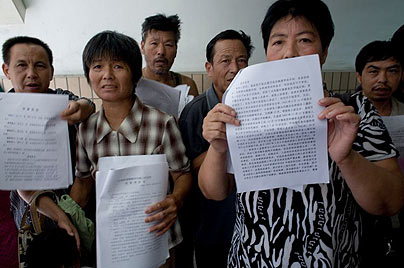
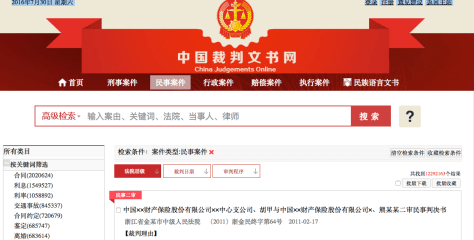 In
In 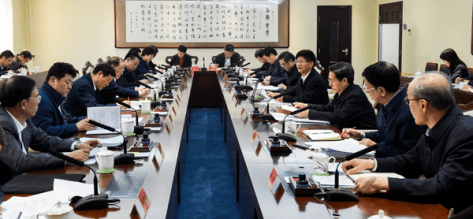

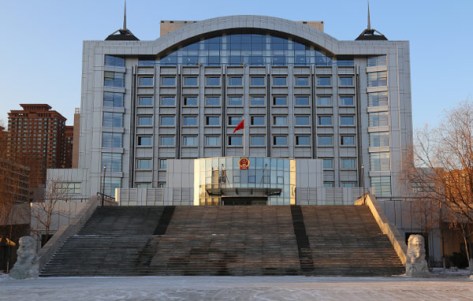

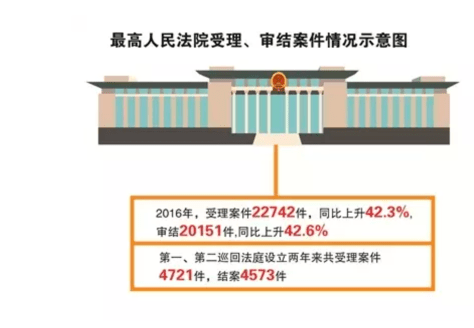
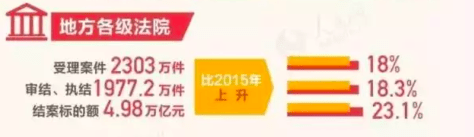
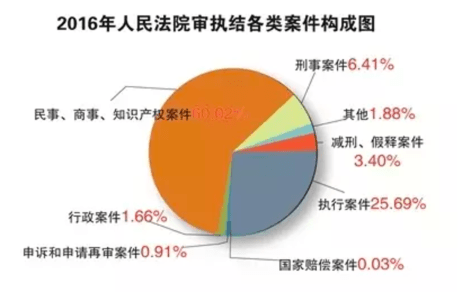 The pie chart of cases heard, enforced and closed in 2016 shows:
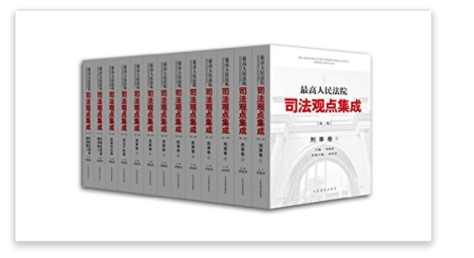
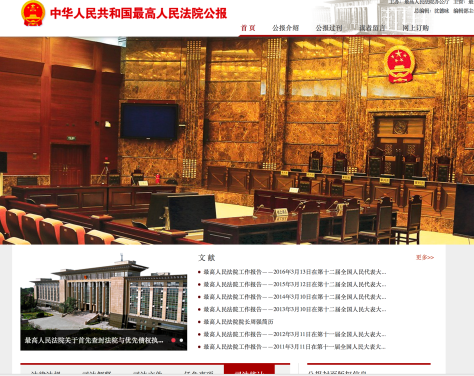

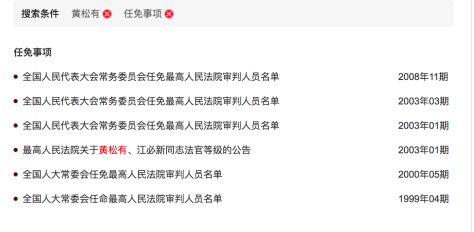
 The Supreme People’s Court (SPC) issued 2016 data on bankruptcy cases on 24 February: 5665 cases were accepted by the Chinese courts while 3602 were closed. This is up substantially from
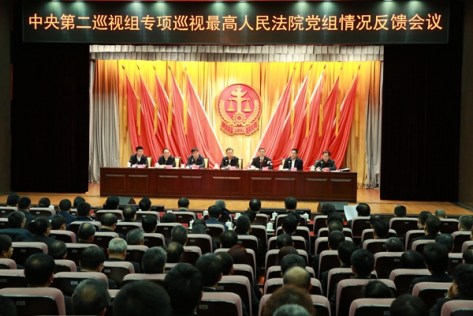
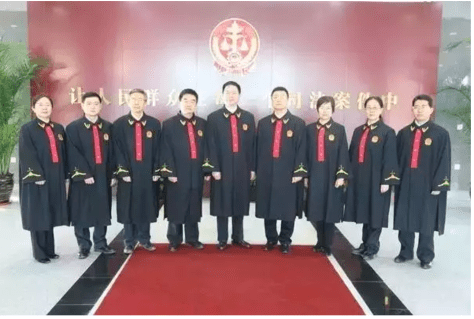
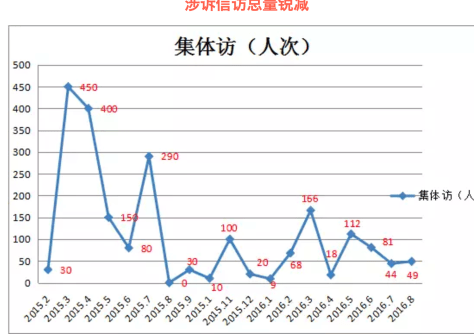
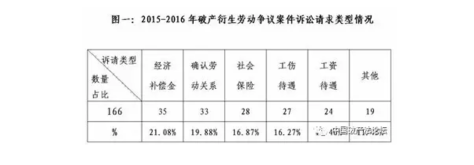 Unlike ordinary labor cases, most cases were decided by court judgment, not mediated. In 66% of the cases, the plaintiff’s claim was upheld in whole or part, with a dismissal of the plaintiff’s claims in 28% of cases.
 The Supreme People’s Court (SPC) and Procuratorate (SPP) issued their first judicial interpretation of 2017,
  In 2016, the Supreme People’s Court Monitor published 67 posts and had close to 30,000 page views, from 150 countries (regions), primarily from: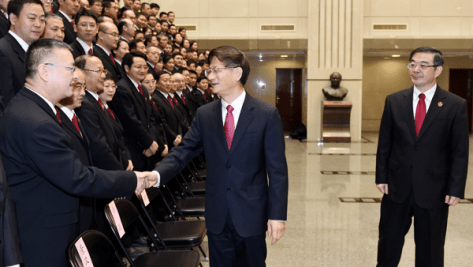
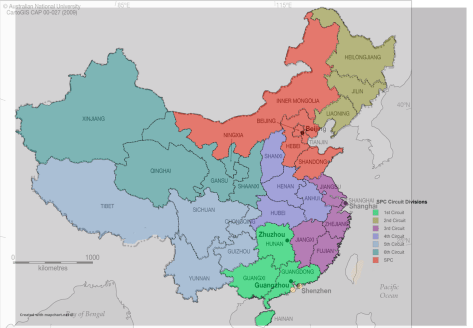
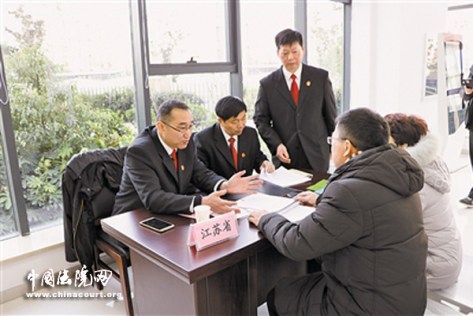
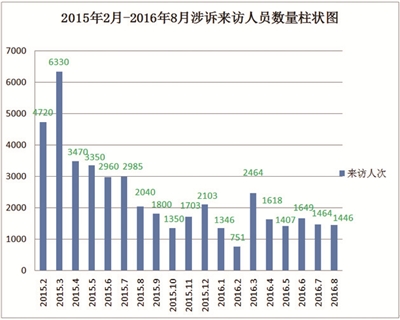
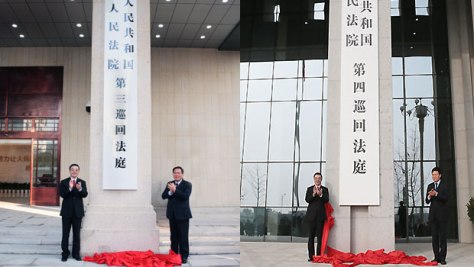
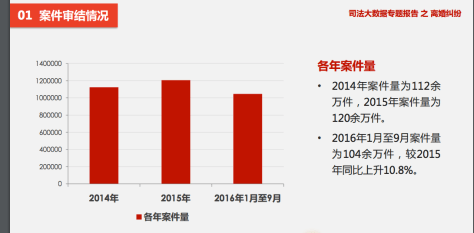

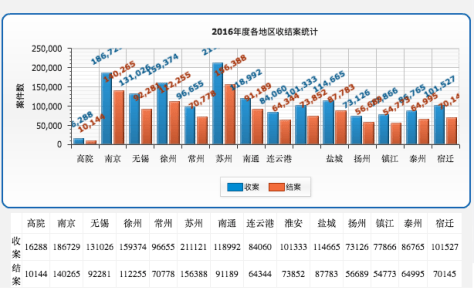

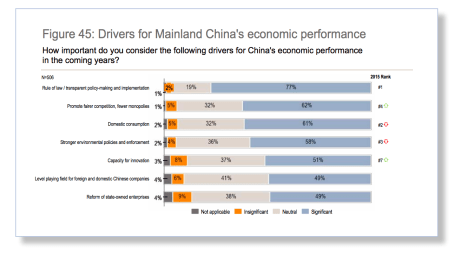


You must be logged in to post a comment.