Category Archives: court reforms

Some Observations on the Judicial Reform Process

This post is the written and English-language version of a speech I first delivered in Chinese at the annual meeting of the Shanghai Judicial Think Tank Society (Think Tank Society, 上海司法智库学会, sponsored by the Shanghai Higher People’s Court) on November 30, 2024, held at Shanghai Jiaotong University.  (The official report on the meeting is available here.) The views are my own and should not be attributed to the Shanghai Higher People’s Court or the Think Tank Society. I would like to express my appreciation to Dean Jiang Huiling(蒋惠岭)and Professor Luo Tianxuan (罗恬漩) of Tongji University for the kind invitation to participate in the meeting.  Further acknowledgments can be found at the end of this post.

the author giving the presentation on which this post is based

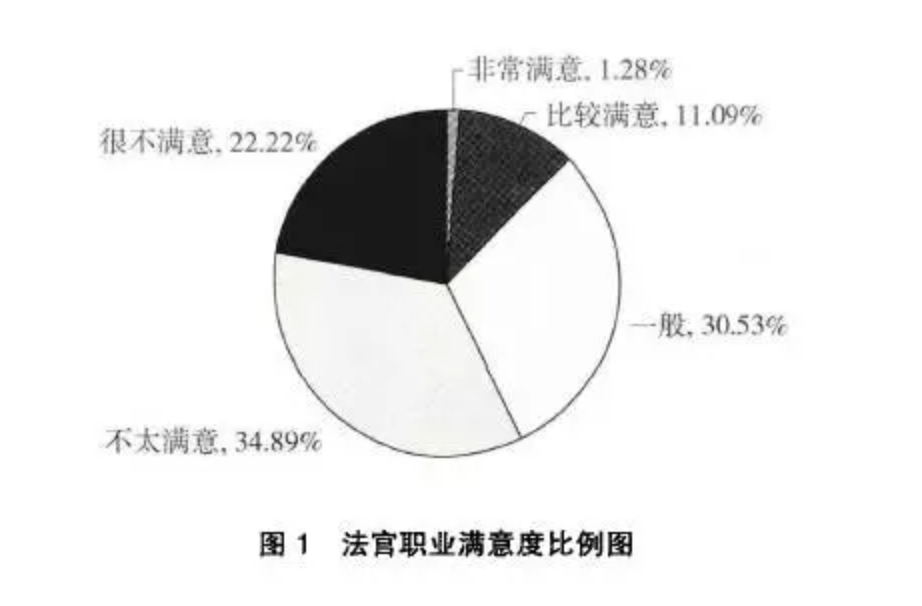
Front-line judges often tell the author that “judicial reform is a failure,” although the author does not take their words literally. It is their way of expressing dissatisfaction with aspects of the design and implementation of judicial reform. The official view is that judicial reform is a success, and the basic structure (四梁八柱) of judicial reforms has been constructed in the past 10 years, although work continues to be needed in specific areas. The author is not prepared to say simply that judicial reform is a success or failure, particularly when significant gaps in information prevent the author from making a comprehensive, objective, and informed assessment. Although the author has only been a minor player in the complicated drama of drafting, implementing, and internally evaluating judicial reform in the last ten years, she considers herself fortunate to have the opportunity to monitor it closely and know personally many involved.

Within the limits of this short essay, the author focuses on the “front-end” and “back-end” of the judicial reform process. Her focus is on the process of deriving reforms that fit courts with widely different resources, and internal and external environments. The author roots her comments in the highly complex reality of the Chinese courts and with an international perspective.

Front-end Issues

The author considers that the “front-end” of judicial reform is most important–the drafting of judicial reform plans. She considers four aspects particularly important for the overall success of judicial reforms: evaluating local innovations; pilot projects and foreign mechanisms or experience; improving centrally designed mechanisms; and enabling greater stakeholder input into the judicial reform process. Each has separate and common challenges.

The author turns first to local innovations, pilot projects and foreign mechanisms or experience.  Pilot projects are undertaken to “test drive” a possible reform while local innovations, draw on local wisdom and institutions to experiment with a new mechanism. She discusses these together because when reformers consider whether these specific experiences are suitable to be promoted nationally, the challenges are similar.

Family trial reforms (家事审判改革) provide a good example because they involve the above three aspects–evaluating foreign experience, domestic innovations, and pilot projects. In the case of family trial reforms, the relevant reform leaders were able to travel overseas to observe family courts and the ecosystem surrounding them and brought foreign experts to China to discuss specific issues and the related institutions needed to make family trial reforms successful.

Given the geopolitical changes of recent years, this type of onsite research is not as easy to accomplish. Foreign experience is particularly challenging to consider in the context of judicial reform. The first issue is understanding the foreign experience accurately, because written materials may not be comprehensive and fail to explain the institutional infrastructure on which the success of the mechanism is based. International travel to experience that mechanism may not be as feasible as previously, given constricted budgets. A third issue is the issue of “moving the foreign plant to Chinese soil,” to consider whether the mechanism will work as anticipated, given that related institutions operate in a different environment from those abroad.

Next to a pair of related mechanisms–pilot projects, which are undertaken to “test drive” a possible reform, and local innovations, which often draw on local wisdom and institutions to experiment with a new mechanism. The author discusses them together because they share a common challenge when reformers consider whether these two specific experiences are suitable to be promoted nationally. A pilot project approved by the Supreme People’s Court is likely to enjoy more resources, guidance from the Supreme People’s Court and possibly the Legislative Affairs Commission of the National People’s Congress (if delegation legislation is involved), support from local court leaders, as well as relevant institutions outside the courts.

The piloting of family trial reforms in recent years provides a good example.  A research team based at Xiamen University* assessing those reforms found large disparities in whether those reforms were successful or even implemented, depending on many factors, such as whether the court was in an urban or rural area, the commitment of supporting organizations, whether local court leaders were committed to the reform and the case burden of individual judges. Pilot courts in urban areas could liaise with psychological counselors and mediators trained to resolve family disputes to achieve better outcomes. Rural judges generally did not have such resources available. The research team found that when judges were overburdened with cases, they would revert to usual practice, following reform practice only when needed for court news releases.

Should judicial reformers have anticipated the gap between rural and urban courts, and the cultural differences in different geographies, particularly in rural areas? Now that these gaps are known, what should be done to improve outcomes for rural as well as urban families? Perhaps special arrangements can be considered to support court teams hearing family matters in rural courts, as is done in some other jurisdictions, such as Australia, but that requires further research and analysis. [Family trial reforms are listed in point 6 of the Sixth Five-Year Reform Outline, issued in December 2024].

Next, on the phenomenon of centrally designed measures implemented with apparently limited input from affected persons. One recent example of this is the recently revised trial quality management indicator system (审判质量管理指标体系). Although the official view is that the relevant departments had engaged sufficient research and input from experts (充分调研论证) and one-half year of piloting the new trial quality management indicator system, from the fact that after nine months of official implementation of the system, “in order to reduce the burden on the lower courts (续深化给基层减负工作)” the number of indicators was reduced from 26 to 18 strongly suggests that after the system was fully implemented, the negative reaction from lower court judges was very strong. Had the relevant departments done a more representative survey of the views of lower court judges on this, the embarrassment of reversing themselves within several months could have been avoided.

Reforms designed without involving the personnel directly affected, without stakeholder input, are not likely to meet their goals. It is unlikely that a small team of persons working in Beijing have sufficient evidence, data, and analysis to reflect the varied types of judicial work and the complex environment in which judges work. It is unclear which type of courts piloted the new indicators and whether the piloted courts considered it prudent to provide responses that the relevant departments sought. This author surmises that it could make sense to have different sets of indicators for urban and rural courts, instead of having a single standard for all, but making that recommendation would require more data and analysis than this author has available. The author has heard lower court judges describe this reform as another example of “building a cart behind closed doors (闭门造车).”

Back-end Issues

The crucial part of the “back-end” of judicial reform is analyzing the results of a reform, or more likely the multiple reforms that have been launched and considering whether further continuity is needed in the form of measures to sustain the reform or to compensate for problems that become apparent. The current judicial system contains many such unfinished judicial reforms. One example of an unfinished judicial reform is the role of the judges assistant (法官助理).* [The reform is now listed in point 41 of the Sixth Five-Year Reform Outline].  Law and Supreme People’s Court guidelines have not defined clearly the scope of a judicial assistant’s work. This lack of clarity has an impact on the operation of the entire judicial system. Reforms themselves need continuity.

Conclusion

It is a truism that Chinese judicial reform is a highly difficult and complex matter, as the brief discussion above has signaled. The development of a modernized judiciary depends on cultivating judicial reform specialists possessing the entire package of skills required to evolve and implement judicial reforms appropriate for all Chinese courts, whether they are urban or rural, large or small, specialized or general. These specialists need to combine deep local knowledge with that of international “best practices.” Reformers need to be able to focus on front-end and back-end matters, including accurately evaluating foreign experience, pilot projects, local innovations, and incomplete reforms. They also need to involve stakeholder input to the extent possible, so that judicial reform measures most closely fit the complex needs of the Chinese judicial system.

The author hopes that these views are useful as a whole or in part.

______________________________________

*The two examples of uncompleted judicial reforms mentioned above draw on the research and experience of Zeng Yuhang (曾宇航, STL 4L student, on family trial reform) and Xue Ye (薛偞, 2023 graduate of STL, on judicial assistant reform).

Many thanks also to Yuan Ye (袁野), PhD student at Peking University Law  School (and 2022 graduate of STL) for transforming PowerPoint slides written in 洋式中文 into standard Chinese.

Supreme People’s Court Developments, December 2024-January 2025

from the report on the 2025 Central Political-Legal Work Conference on one of the SPC’s websites

See below a brief summary of recent developments  (or at least the principal recent developments) at the Supreme People’s Court (SPC) in January 2025 (as of January 19, the date of publication of this post) and December 2024.

January 2025

  1. On January 8th, the Party leadership heard the SPC Party Group’s report on the SPC’s work, along with those of other institutions.  I mention the requirement for this report in my 2024 article;

certain phrases (such as “report to a superior on their work” [shuzhi 述职] imply a hierarchical relationship between the SPC and the Central Political-Legal Committee and the Party Center. The fact that the SPC reports to the Party leadership can be seen in public reports on the leadership of the political-legal institutions meeting with Xi Jinping and other senior leaders before the annual sessions of the National People’s Congress and Chinese People’s Political Consultative Congress, although the materials actually submitted to the Party leadership are not publicly accessible.)

2.  January is when many important conferences are held that have an impact on the work of the courts: the Central Political-Legal Work Conference (中央政法工作会议) and the National Conference of Higher Court Presidents (Higher Court Presidents Conference 全国高级法院院长会议),  at which the spirit of the Political-Legal Work Conference is transmitted and the goals for judicial work in 2025 are announced. The SPC has held this conference annually for many years. In the recent historical past (the early 1990’s, for example), the Higher Court Presidents Conference was called the National Court Work Conference.

3. Policy documents: 

a. In early January, the SPC and the All-China Federation of Overseas Chinese (Overseas Chinese Federation 中国侨联权益保障部) issued a joint policy document on the strengthening the judicial protection work of the interests of overseas Chinese and returned overseas Chinese and their families in the New Era (关于加强新时代侨益司法保护工作的意见), and related reference cases.  The document seeks to ease litigation formalities for these groups and promote resolving disputes through mediation, among other matters, such as improving research on Overseas Chinese-related issues, such as through establishing a research base, as has been done with other issues.  The title of this document differs from Zhou Qiang era policy documents, but the goal of providing judicial support for an important national policy goal is the same. 

The SPC’s Research Office led the drafting of this document, in cooperation with the Overseas Chinese Federation.  This responsibility is consistent with the role of the Research Office, which deals with many legal policy and cross-internal institutional matters, such as Hong Kong, Macau, and Taiwan-related issues and the transition to the Civil Code.  It does not hear cases.

This is the first joint policy document between the SPC and Overseas Chinese Federation. Closer cooperation between the two institutions began in 2018, with 30 courts piloting closer cooperation with local Overseas Chinese Federations, and with the 2020 establishment of a “general-to-general” online mediation mechanism (the SPC has established this type of mechanism with the China Securities Regulatory Commission and other institutions).    The policy document is linked to language in recent Party Plenums on protecting the rights of returned Overseas Chinese and Overseas Chinese and their families.

b. Opinions of the Supreme People’s Court on Serving Technological Innovation with High-quality Trial Services 最高人民法院关于以高质量审判服务保障科技创新的意见.  The press conference report is here.  China IP Law Update’s summary in English is here.  If time had permitted, I would discuss the links in this document with the recent Party Plenum and other Party initiatives.

4. Judicial interpretations:

a. The SPC issued its second interpretation of the Marriage and Family Part of the Civil Code, aimed at addressing common troublesome issues facing the courts, such as property division when a cohabiting couple split, many issues relating to divorcing couples, including property division and ownership of a company established by a couple.  To provide further guidance on applying the interpretation, the SPC issued typical cases. This interpretation provides important insights into family law issues in current Chinese society.  

b.  The SPC joined with the Supreme People’s Procuratorate to issue the Interpretation of Several Issues Concerning the Application of Law in Handling Criminal Cases of Attacks on Police Officers (关于办理袭警刑事案件适用法律若干问题的解释).  From the provisions of this interpretation,  the confusion lower-level procuratorates and courts had about the application of Article 277 of the Criminal Law is apparent.

5. Other typical cases issued in January included: one on protecting natural reserves and national parks; another on punishing rural saohei (underworld forces) crimes; protecting the rights and interests of foreign investors; and refusing to pay wages (6200+ cases in the past four years)

6. The SPC established its Judges’ Disciplinary Committee, with President Zhang Jun as the chair.  At the first meeting, he noted that the establishment of a judges’ disciplinary committee and the implementation of a judges’ disciplinary system are political requirements for implementing the decisions and arrangements of the CPC Central Committee.  In 2021, I published a book chapter on Chinese judicial disciplinary developments, available here.

December 2024

December is the end of the year, so the SPC always issues many documents–judicial interpretations, policy documents, guiding and typical cases etc. at year’s end.  2024 was no exception. Among the documents worth noting:

  1. Judicial interpretations and meeting minutes

a. The SPC and the China Securities Regulatory Commission (CSRC) issued meeting minutes (conference summary) on bankruptcy (insolvency)  and reorganization of listed companies.  From the document number, it appears that the SPC took the lead in drafting it and it provides an update to a 2012 conference summary that the SPC issued itself. A DeHeng law firm partner comments here on the meeting minutes. The CSRC is soliciting public comments on Regulatory Guidelines for Listed Companies No. 11 – Matters Related to Bankruptcy and Reorganization of Listed Companies (this link contains the text and an explanation).  

b. On December 25, the SPC issued a Decision on Amending the Supreme People’s Court’s Regulations on Acknowledgement and Execution of Civil Judgments from Taiwan Area Courts, Chinese original 最高人民法院关于修改《最高人民法院关于认可和执行台湾地区法院民事判决的规定》的决定.  An English language summary is available here.  From a quick look, most amendments are procedural or unsurprising. Some reflect amendments to the Civil Procedure Law or codifying court practice. The provision “the people’s court shall make a ruling not to acknowledge a civil judgment if acknowledging it would violate fundamental principles of state laws, such as the one-China principle, or undermine state sovereignty, security, or social public interests” is consistent with analogous provisions and codifies what has been court practice.

2.  Guiding cases: on December 25, the SPC issued six guiding cases on state compensation issues, some of which provide glimpses of problems with prison management; On December 24, the SPC issued the first group of guiding cases on labor issues.

3. Typical cases: The SPC issued many typical cases in December 2024. As I mentioned previously, President Zhang Jun favors using typical cases to guide the lower courts in correctly applying the law.

The SPC issued typical  cases on: the protection of the rights and interests of the elderly; administrative public interest litigation (second group), issued jointly by the SPC and SPP;  “one letter and two books”  labor law supervision, issued jointly by the SPC, the SPP and the All-China Federation of Trade Unions;  wage arrears, issued in cooperation with the All-China Federation of Trade Unions and the Ministry of Human Resources and Social Security;  two groups of financial loan dispute mediation cases, issued by the  State Financial Supervision and Administration Bureau and the SPC, with one case providing a model for dealing with non-performing microloan cases; rights and interests of Taiwan compatriots, linked to the Party’s policy on promoting cross-straits integration and development; crimes involving counterfeit safety production qualification certificates (linked to a policy document issued in July, 2024 that does not appear to be publicly available (关于进一步加强安全生产资格证书涉假案件刑事审判工作的通知)); petty corruption (each case provides insights into the world of official corruption); punishing illegal production, sales, and use of eavesdropping and stealing equipment, with several cases involving the hidden filming (and marketing of those films) of people having sex in hotel rooms; inheritance disputes (first  and second group); criminal punishment of illegal fishing; and traffic accident liability.

3. Policy documents: Guiding Opinions on Improving the Quality and Efficiency of Trial Work and Promoting the Substantial Resolution of Contradictions and Disputes (关于在审判工作中促进提质增效 推动实质性化解矛盾纠纷的指导意见).  This document focuses on civil and administrative disputes, promoting mediation (Fengqiao Experience) and the resolution of the substance of disputes (as discussed here).  I will draw on this document in a forthcoming article.

4. Plans: 

a. the SPC issued the Sixth Five-Year Judicial Reform Outline.  This article links to the text of the Outline and the related press release. I will publish an article later this year providing a summary and analysis of this document. 

b.  the SPC issued the National Court Education and Training Plan (2024-2028).  I analyzed the previous two plans here and here.  Training of judges handling foreign-related matters receives special attention (see my earlier analysis).

5.  National People’s Committee (NPC) Standing Committee’s Recording & Review:  SPC judicial interpretations and other judicial documents must be filed with the NPC Standing Committee. At the end of 2023, the NPC SC adopted a decision strengthening the recording and review mechanism (see the NPC Observer’s analysis). On 22 December 2024, the Legislative Affairs Commission of the NPC Standing Committee gave its view in its annual report on Recording and Review that a July 2024 Supreme People’s Court interpretation that directed lower courts to retroactively apply a new provision in the recently revised Company Law concerning equity transfers,  controversial in the business community,  was inconsistent with the Legislation Law. The Legislative Affairs Commission stated that the “[they] will urge the relevant judicial interpretation-making authorities to take appropriate measures to properly handle the matter.”  The SPC issued a follow-up interpretation two days after the annual report was made public, signaling that the SPC had been previously been informed.  Although the problematic July 2024 interpretation must have been reviewed by the Legislative Affairs Commission in draft form before it was approved by the SPC judicial committee, as required by Article 18 of the SPC’s Judicial Interpretation Work Provisions, it appears that that whichever office of the Legislative Affairs Commission initially reviewed the SPC’s draft and the office responsible for recording and review took different views. 

____________________________________________________

Thank you, subscribers, for your patience.  The blog will transition from being completely researched and written by me (including discussions with knowledgeable persons and experienced judges, for the avoidance of doubt) sometime after Chinese New Year. I plan to involve my research assistants more in analysis and writing, although I have at least one long analytical blogpost that I will complete soon.   I want to focus on consolidating and developing my research in longer pieces.


Guide to Finding Supreme People’s Court Materials: Selected Journals of SPC Divisions (Consolidated Version)

Late last year, some followers asked me to describe some of the principal sources for Supreme People’s Court’s (SPC) research. I’m doing this in several posts, as few (particularly outside of China) seem to be aware of the range of publicly available publications of the SPC and its many affiliated entities–see here and here for earlier posts. This post summarizes the journals (actually periodic publications–each has an ISBN number) edited and written (at least in part) by the trial divisions and other offices of the SPC.   As far as I know, they are only in printed form, although sometimes some parts of the content can be found on WeChat. That means that those outside of China are rarely aware of their existence.  I assume that they are available through Taobao or Jingdong.  

The readers of these publications are judges and practitioners. The publications are specialized, in contrast to the Supreme People’s Court Gazette, and each one contains normative provisions and guidance related to the specific area of law.

A quick guide to the content listed: the judicial interpretations are normative, of course, and the “understanding and application” articles provide further explanation and background about judicial interpretations and sometimes policy documents. “Leaders’ speeches” are a statement of policy, substantive & political; relevant policy documents (such as the SPC/National Intellectual Property Administration policy document of February, 2023 contain policy and related political signals; the research & local documents are all related to current issues in the relevant area of law; and the typical cases/outstanding judgments provide guidance to judges & are useful reference materials for lawyers/in-house counsel because the results in the cases reflect the views of the Supreme People’s Court. The publications flag new issues facing the judiciary in the specialized area involved and sometimes include analysis of foreign laws or regulations or an account of a foreign court visit or symposium.  Each journal has a slightly different format.  It may be possible to find electronic compilations of these journals on WeChat.

These journals are mostly published by the People’s Court Press (人民法院出版社).   Some journals have local correspondents reporting on local developments.  It can be surmised from how frequently a journal is updated how useful the relevant SPC division sees it as a platform for guidance and publicity of their views.  Cases from these journals can often be seen reposted on WeChat. 

TitleSponsoring InstitutionContentPhoto/Other Comments
行政执法与行政审判 Administrative Law Enforcement and Administrative AdjudicationSPC’s Administrative DivisionA section entitled: Authoritative viewpoint” (#96 contained Administrative Division Deputy Head Liang Fengyun on how to implement XJP Legal Thought in the courts’ administrative trial work); Research on Specialized topics; Theory & practice; Case analysis; One of the six-in-one guidance mechanisms mentioned by the head of the SPC Administrative Division, Geng Baojian
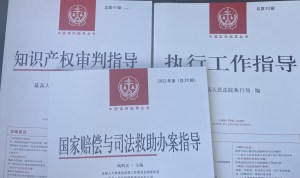
执行工作指导 Guidance on Enforcement Work/ Guide to EnforcementSPC’s Enforcement Bureau 最高人民法院执行居The most recent edition is #84, published in July, 2024.  Some issues contain discussion by enforcement bureau chiefs; hot topics; empirical study; report on pilot reform; analysis of SPC case; analysis of local court cases; resolving enforcement cases at source. 
最高人民法院知识产权法庭审判指导与参考 Supreme People’s Court Intellectual Property Tribunal Trial Guidance and ReferenceSPC’s Intellectual Property Tribunal

Volume #3 contains: SPC IP Court Annual Report 2021; judgment digests summary; typical cases; law & judicial interpretations; judicial scholarship; research report; window on the world; SPC IP Court 2021 Major Events

民事审判指导与参考 Reference and Guide to Civil TrialSPC’s #1 Civil Division (w’ local correspondents)Latest volume is from 2023: special section on people’s tribunal work; special section on resolving disputes at source (诉源治理); special section on family disputes trials; frontier theoretical issues; special section on dowry issues; typical cases on food safety punitive damages; special section on wage arrears; typical cases on agriculture; local case analysis; research report; #1 civil division judicial conferences 
涉外商事海事审判指导 Guide on Foreign-Related Commercial and Maritime Trial


SPC’s #4 Civil Division

Last volume apparently published in 2020, but dated 2018; sections included leaders’ speeches; judicial documents; requests & responses (per Prior Approval system); case analysis; research report; new informationPreviously mentioned on this blog here
司法研究与指导 Judicial Research and GuidanceSPC’s Research Office, but appears not to have been updated for some time.  Zhang Jun was listed as the editor in one of the early volumesincludes leaders’ speeches (policy & guidance); judicial exchanges/cooperation; theory & practice; cases; investigation & researchperhaps the office is focusing on other matters and this journal is therefore not a priority
环保资源审判指导 Guide on Environment and Resource TrialSPC’s Environmental & Natural Resources DivisionSeems to have been rarely updated, perhaps using reports or white papers to show their accomplishmentsfirst volume published in 2015
商事审判指导 Guide on Commercial TrialSPC’s #2 Civil Divisionlatest volume is #57, this has the index for #53 (2021)perhaps the division is focusing on other methods to provide guidance
审判监督指导 Guide on Adjudication SupervisionSPC’s Adjudication Supervision Division#71 published in April, 2024; special section on property-related issues (i.e. private business); outstanding judgments; case analysis; judges’ conference related issues; outstanding judgments; outstanding research reports 
知识产权审判指导 Guide on Intellectual Property TrialSPC’s #3 Civil Division (Intellectual Property)

Content of #41, 2023,  published at the end of 2023: Trial Policy and Spirit: three speeches by SPC leaders (Tao Kaiyuan and Lin Guanghai): Judicial policy document: a joint document issued by the SPC and State Intellectual Property Administration, on strengthening coordination in intellectual property protection; Intellectual Property Week Specialized Issues; Local experience, with two local court guidelines on the application of punitive damages, and one on the hearing of intellectual property small claims; Research reports, all by local courts, one on the protection of new plant varieties, and the other two on competition law issues in the digital and network economy; Typical cases: republishing the third batch of intellectual property protection for new plant variety, and 2021-22 typical cases of mediation of intellectual property disputes;


中国少年司法 Chinese Juvenile JusticeSPC’s Office of Juvenile Tribunal Work 最高人民法院少年法庭工作办公室 (under the Research Office)quarterly; #54, labelled #4 2022 published end 2023;leader’s speeches;   judicial normative documents; local documents & work; selection of prize-winning essays from the 7th National Juvenile Justice Work Conference; typical cases; foreign experience 
立案工作指导 Guide on Case FilingSPC’s Case Filing Division (has local correspondents)2014 volume includes leaders’ speeches; work situation; theory & practice (w’ local court experience); investigation & research (local court experience); experience exchange (also w’local court experience); jurisdiction; model case analysis; understanding and application of judicial interpretation; SPC judicial interpretations & normative documents 
刑事审判参考 Reference to Criminal Trialthe SPC’s five criminal divisions, established in 1999guidance cases (指导案例), not to be confused with guiding cases 指导性案例 that have been approved by the SPC’s judicial committee; legislation & judicial norms, including judicial interpretations;multi-institutional policy documents; difficult issues; frontier theoretical issues; experience exchange (local courts); outstanding judgmentssome compilations of typical cases published can be found on Wechat; this journal mentioned on this blog here, here, and here
金融法治前沿 Frontier(s) of Financial LawCollaboration between the courts and the regulators. The principal members of this collaboration are the SPC’s #2 Civil Division (which focuses on domestic commercial law issues), the legal department of the People’s Bank of China (人民银行条法司), the National Financial Regulatory Administration, related departments of the China Securities Regulatory Commission (CSRC), and the Shanghai, Beijing, and Chengdu-Chongqing Financial Courts. One of the related courts takes responsibility for editing each issue.See detailed description here 
TitleSponsoring InstitutionContentPhoto or Comments
Guide on State Compensation & Judicial Assistance国家赔偿与司法求助办案指导collaboration between the following institutions: NPC Legislative Affairs Commission State Law Office, SPC’s Compensation Committee Office; Supreme People’s Procuratorate #10 Procuratorial Office; Ministry of Justice Administrative Enforcement Coordination and Oversight Bureau; Ministry of Justice Legal Division (司法部条法司#26 dated 2022, but published at the end of 2023, contains: judicial interpretations, “understanding and application” of two of the interpretations; a section on theoretical research, with  some outstanding scholars contributing, including  Yang Lixin and Shen Kui; case analysis; outstanding judgmentsProfessor Shen’s article also appeared in the National Judges College journal Application of Law, linked here

Update on the Supreme People’s Court’s Judicial Reform Office

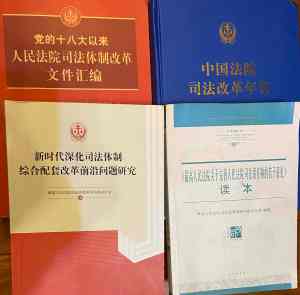
four judicial reform books edited by the Judicial Reform Office

Although no formal announcement has been made in the Chinese press (of which I am aware), it appears that sometime during the last six months, more likely before early June (2023), the Supreme People’s Court (SPC)’s Judicial Reform Office, or more formally the office of the SPC’s leading small group for judicial reform (最高人民法院司法改革领导小组办公室) ceased to exist as a separate entity.  Its work has been assumed by the Research Office.    The leading small group that the Judicial Reform Office supported appears to have been disbanded as well. This post provides some comments on the office, some fragments concerning its history, an explanation of the nature of the office and leading small groups, and evidence for reaching the conclusion that the office no longer exists.

Over the past 10 years, this blog has discussed or cited statements or documents issued, reports drafted, and books published by the Supreme People’s Court (SPC)’s Judicial Reform Office.  As is visible from the photo above, I have a collection of books edited by that office, many of which I have not yet cited in this blog or my other writings. Some books contain documents, others set out authorized commentary,  and others are collections of analytical essays for the most part written by lower court judges.  I had intended to draw on some of these materials when writing something more detailed about the drafting of judicial reform measures, setting out my understanding of the drafting process.  A number of our Peking University School of Transnational Law students have interned in the Judicial Reform Office.  I will now need to wait until I am able to gather enough information about how the new system operates before writing a current and historical description.  

The offices of leading small groups are not permanently established, although this one had been in existence for almost twenty years. It is not unusual for them to be abolished and their duties assumed by permanent institutions. The temporary nature of the office may explain why published structure charts of the SPC have never mentioned the Judicial Reform Office.  The SPC has other such offices, but this one appears to be the most well-known.   Leading small group offices exist in analogous form at the local level as well. 

For those who are not aware of the system of “leading small groups,” many exist throughout the Chinese Party and government system to deal with cross-institutional matters, often involving participants from multiple Party and/or state institutions.  There seems to be a growing English language scholarly literature on multi-institutional leading small groups, mostly behind publishers’ paywalls, but this detailed summary of leading small groups and affiliated offices by Alice Miller is helpful to those without university library access.  The summary explains that “leading small group general offices have dedicated office space, a roster of personnel, and an operating budget for administrative expenses. Although they cannot implement anything on their own, they can levy work on other offices.”   My forthcoming (“neverending”) article has a description of the SPC’s Judicial Reform Office levying work on (assigning work to) other SPC offices, divisions, and institutions. 

The Judicial Reform Leading Small Group and its supporting office were established in 2006.  Although I have not been able to find the document approving its establishment, I assume that it was established to draw together a team of people to focus on judicial reform matters and to coordinate matters across multiple SPC entities,  with the lower courts, and with the related Party bureaucracies. The Judicial Reform Leading Small Group had a predecessor entity entitled the SPC Judicial Reform Research Leading Small Group (最高人民法院司法改革研究领导小组). The China Institute of Applied Jurisprudence provided institutional support for the predecessor entity.  I assume that the establishment of the SPC’s Judicial Reform Leading Small Group and its predecessor are linked to the 2003 establishment of the Party’s Central Judicial System Reform Leading Small Group (中央司法体制改革领导小组), which has (had?) members from multiple Party and state institutions. That Leading Small Group also has (had) an affiliated office (中央司法体制改革领导小组办公室).  I have not seen public mention of the Party’s Central Judicial System Reform Leading Small Group in the past year or more, so I assume it has been disbanded and its functions subsumed by some part of the Central Political-Legal Committee/Commission.

Prior to 2003, judicial reform research at the SPC was conducted and coordinated by the Research Office.  That office often deals with SPC cross-institutional matters, such as the transition to the Civil Code. So this development appears to be an instance of the SPC either going back to the “good old days” or as a former SPC judge  recently wrote about the end of a piloted judicial reform, “restoring the original condition (恢复原状).” 

 During the March 2023 meeting of the National People’s Congress, He Fan, previously mentioned on this blog,  spoke to the press about judicial reform, as a responsible person of the Judicial Reform Office (最高人民法院司法改革领导小组办公室负责人). In September of this year, public statements concerning judicial reform (in this case, the termination of the piloted reform of the four levels of the courts) were issued by a responsible person of the Research Office.  A related document issued in June (2023) did not mention the Judicial Reform Office or the Judicial Reform Leading Small Group.  When He Fan spoke at Fudan University Law School in September, he was described as a vice director of the Research Office and the former responsible person of the Judicial Reform Office (最高人民法院研究室副主任、原司法改革办公室负责人何帆博士).  So I surmise from this that sometime between March and June, the Judicial Reform Office was abolished and its responsibilities and personnel were transferred to the Research Office. 

I will be monitoring this change (to the extent possible).   Questions that come to mind include the following.  What will being located in the Research Office mean for judicial reform matters?    Will the staff take on additional tasks in addition to judicial reform matters? What will this mean for the analysis of the impact of prior judicial reforms?   What will this mean for the drafting of the sixth judicial reform plan outline?  Will this mean more or fewer staff resources?  When the plan is issued, will we on the outside of the Chinese court system notice the impact of this bureaucratic change?  And as several highly knowledgeable persons have asked me in recent weeks, how should the judicial reforms of the last ten years be objectively assessed?

_________________________________________

Many thanks to the knowledgeable persons who contributed to this blogpost. Those with additional information or corrections should contact me. My apologies to my patient followers for the long gap between blogposts. but I have spent much of the last two months revising my “endless” long article for publication, as it needed to be updated to reflect recent changes.  This change requires an additional update. I plan to do several more analytical blogposts in the upcoming months, but use more of my time putting together my research, as highlighted earlier this year.  

The “Soft Law” of the Supreme People’s Court

Tiantong Litigation Logo

On 13 November, the TianTong Law Firm published a bilingual version of the article below in their TianTong Litigation Circle Wechat public account. (Follow the article link to read the Chinese version.) The Tian Tong Litigation’s public account has half a million subscribers. I am very appreciative of TianTong litigation partner David Gu’s (顾嘉) kind invitation and the careful editing of his colleagues.  The Chinese title of the article is: 最高人民法院对“软法”的适用:外国观察者的视角 | 跨境顾释 (with the English title of “A foreign observer comments on the ‘soft law’ of the Supreme People’s Court”).  The hard work of my research assistant Sun Dongyu, one of our Peking University School of Transnational Law graduates, and Fu Panfeng, assistant research fellow of the Institute of International Law of the Chinese Academy of Social Sciences transformed my English article into readable Chinese. 

Much of the substantive content of the article has previously appeared in this blog, but with a different perspective and conclusion. 

_____________________

I am very honored to have this opportunity to publish some of my observations about the developments of the Supreme People’s Court (SPC) with TianTong Litigation Circle. I have been observing developments of the SPC for almost 30 years, and am honored to have been included in the first batch of members of the international expert committee of the China International Commercial Court. The views expressed in this article are my own and should not be attributed to the committee, the China International Commercial Court, or the SPC.
One of the many special features of the SPC, as an important supreme court in the world, that it allocates a great deal of effort to different types of “soft law.” Soft law is a concept that the late Professor Luo Haocai, formerly vice president of the SPC, introduced and developed in China, so discussing the “soft law” of SPC is particularly appropriate. For those who are not aware of this academic concept, it means norms that affect the behavior of related stakeholders, even though the norms do not have the status of formal law.
This article gives my thoughts on two aspects of SPC soft law—its judicial policy documents and cases that it has specially selected.

I. Judicial documents

I have a special interest in judicial documents, because they drew me into researching the SPC in the early 1990s.
The seven categories of documents below are classified as judicial documents or “judicial normative documents” (“司法文件” or “司法规范性文件”) and sometimes judicial policy documents” (“司法政策性文件”). The SPC’s website lists some of them. An attentive reader can discover from reviewing the documents on the website that my description is not comprehensive. The SPC issues many other documents as well, covering personnel and administrative matters, but this article focuses on those with normative provisions.
SPC judicial documents are partially governed by 2012 regulations on the handling of SPC official documents (“人民法院公文处理办法”), which leave much unsaid and unexplained. It seems likely that additional guidance exists, whether in the form of bureaucratic custom or internal guidelines. Many, but not all, are the SPC’s special versions of Party/government documents.

1. Categories of judicial documents

1) Opinions (“意见”). According to my observations, the SPC issues several types of Opinions. I have not yet done detailed research into these different types of documents and have not seen detailed analysis in Chinese (or English). What I’m setting forth below is my tentative analysis.

i. Opinion Type 1

An Opinion issued solely by the SPC, that addresses a range of matters. The Services and Guarantees Opinions appear to fall into this category. These documents create and transmit to the lower courts new judicial policy, update previous judicial policy, establish new legal guidance that may be eventually crystallized in judicial interpretations and direct the lower courts, but cannot be cited in judicial judgments or rulings. They are generally linked to an important Party or state strategy or initiative. The ones labeled “Guiding Opinions” are intended to push policy forward, but others may do as well. Sometimes the SPC issues illustrative “model/exemplary/typical cases to clarify certain points to the lower courts (and the legal community), such as the Opinion providing Services and Guarantees [Safeguards] to the Yellow River Basin, for which the SPC issued illustrative cases.

ii. Opinion Type 2

An Opinion issued solely by the SPC, that consolidates rules or guidance found in disparate documents and adds some new rules, focuses on one particular topic, relating to litigants. The April, 2020 Opinions on Promoting Lawful and Efficient Trials of Bankruptcy Cases is a good example. It incorporates a provision from the Minutes of the National Court Work Conference on Bankruptcy Trials, for example, regarding consolidating bankruptcy cases of affiliated enterprises.

iii. Opinion Type 3

An Opinion also issued solely by the SPC, that sets out in normative form Party policy/judicial reforms, that may be the framework for further normative opinions, and eventually crystalized in law. An example is the 2015 Opinions on Improving the Judicial Responsibility System of the People’s Courts . The first line clearly links the document to Party decisions–“for the purpose of implementing the general deployment of the Party Center on deepening the reform of the judicial system….(“为贯彻中央关于深化司法体制改革的总体部署”). It is linked to several normative Opinions and the judicial responsibility system has been incorporated into the People’s Court Law.

iv. Opinion Type 4

An Opinion in which the SPC is one of several issuing institutions, that does not create new legal rules but harmonizes legal positions among institutions and for the courts, and clarifies how the law should be applied. This type of Opinion also cannot be cited as the basis for a judgment or ruling. This type of Opinion is particularly common in the area of criminal law, and is often related to the latest campaign or focus of the authorities. The 2019 Opinions on Several Issues Regarding the Handling of Criminal Cases of Illegal Lending , (“最高人民法院、最高人民检察院 公安部 司法部印发《关于办理非法放贷刑事案件若干问题的意见》的通知” ) part of the Special Campaign to Crack Down on Underworld Forces (“扫黑除恶专项斗争”) is a good example. One aspect of the ongoing campaign, which began in early 2018, is to use the criminal justice and regulatory authorities to crack down on “routing loans” (“套路贷”), an offense not defined by the Criminal Law. This 2019 Opinion harmonizes the understanding among the criminal justice authorities to punish those providing “routing loans.” Article 1 describes certain types of lending activity that can be punished under the crime of illegal business operations (Criminal Law article 225(4)).

2) Conference summary/meeting minutes (“会议纪要”). A conference summary arises from an SPC specialized court conference. A conference summary is used to transmit central legal policy, unify or harmonize court practices in accordance with that policy. Although conference summaries do not have the status of a judicial interpretation, the lower courts will generally decide cases according to its provisions. My understanding of the term “harmonizing court practice” means in Chinese judicial parlance that judges are applying the law similarly. A recent example is the 9th National Courts’ Civil and Commercial Trial Work Conference Summary. The document itself has a very useful explanation: “the Conference Minutes [Summary], which are not judicial interpretations, cannot be cited as a basis for adjudication. For first instance and second instance pending cases after the Conference Minutes have been issued, people’s courts may reason according to the relevant provisions of the Conference Minutes when specifically analyzing the reasons for the application of law in the “The court is of the view” section of adjudicative instruments.”

3) Professional judges meeting summary (“法官会议纪要”). I have not yet written in detail about these, but in my observation, they are a product of the judicial reforms. The SPC circuit courts appear to have led the way on publishing these as a way of “unifying judicial practice” but the #2 Civil Division (focusing on commercial issues) has published a collection as well.

4) Response or reply (“复函” or “答复”). These are responses or replies to requests for instructions or approvals. The SPC, like other Party and state organs, handles requests for instructions (“请示”). Although proposals have been published either to incorporate the practice into procedural law or abolish it, the practice lives on at all court levels, including the SPC. If the issue raised is considered important enough, the reply will be approved as a judicial interpretation. There are apparently fewer requests for instructions than ten or twenty years ago. I surmise more are submitted on the criminal issues than civil. One subcategory of these responses are the ones issued by the SPC’s #4 Civil Division, the division focusing on cross-border commercial and maritime issues. These are responses to request from instructions (“请示”) from provincial-level courts (including the higher courts of Beijing, Shanghai, Tianjin, and Chongqing), as required by the SPC’s Prior Reporting system for arbitration matters.

5) Notice (通知). Documents transmitting one of the above types of judicial documents are often called notices, but this is meant to call attention to a document entitled “notice” (“通知”), such as the Notice concerning some questions regarding the centralized handling of judicial review of arbitration cases (“关于仲裁司法审件归口办理有关问题的通知”) .

6) Rules (“规则” and “条例”). One recent example of the use of rules (“规则” is the CICC’s Procedural Rules for the China International Commercial Court of the Supreme People’s Court (“最高人民法院办公厅关于印发《最高人民法院国际商事法庭程序规则(试行)》的通知” ), issued by the SPC’s General Office. The rules were discussed by the SPC judicial committee but not issued as a judicial interpretation. I have observed that “规则” is used for court rules–as the same term is used for the Working Rules of the SPC’s Compensation Committee (最高人民法院赔偿委员会工作规则) . The term “条例” is used to regulate internal court system matters, such as rules (using the term “条例”) on judicial training(“法官教育培训工作条例” ) and 2012 rules on especially appointed inspectors (最高人民法院特约监督员工作条例).

7) Memorandum of Understanding (MOU). The most well-known example is the 2016 Memorandum of Understanding on Taking Joint Disciplinary Actions against Dishonest Persons Subject to Enforcement (“《对失信被执行人实施联合惩戒的合作备忘录》”). It appears to be the first time (or at least one of the first times) that a large group of central Party-state institutions has concluded an MOU. The SPC concludes many, only some of which have been made public. The lower courts do so as well. It shows that some “Western” legal concepts are useful in the Chinese context.

2. Comments

According to the SPC’s rules on judicial interpretation work , judicial interpretations must be published. The SPC Gazette and People’s Court Daily are required to publish the interpretations, but for the other documents published, it is hit or miss. As for the judicial documents listed above , not all are published, as there is no requirement to do so. As I have observed previously, the SPC is generally publishing more judicial documents than before. The contrast is clear, when compared to the early 1990’s, when I started to research the SPC. One positive and important example is the approved judicial interpretation agenda, issued in the form of a notice from the General Office of the SPC .
The SPC’s official website publishes some, but not all of the judicial documents that can be found in some other sources. A problem for those puzzling out these documents is that unfortunately the staff of the SPC’s website does not take the due care they should to ensure that documents are published in the correct classification, so the careful observer will find that misclassifications occur from time to time. Sources other than the SPC’s website may have more of these judicial documents. Some of these judicial documents, such as replies or responses by the #4 Civil Division under the Prior Reporting system for arbitration matters, are published in the division’s own publication, as discussed further below.
There are two additional comments on judicial documents worth mentioning, i.e. data (or lack thereof) and persuasiveness to the lower courts. It is difficult to determine how the number of judicial documents/judicial regulatory documents that the SPC issues compares to the number of judicial interpretations, as it is clear that it is inconvenient for some judicial documents to be made public (and some appear to be classified).
A second comment is on the persuasiveness of these judicial documents to the lower courts. I surmise that some of them are more important to local court leaders than to ordinary judges, but it depends on the nature of the judicial document. It is my understanding that judicial documents with normative provisions (conference summaries or Opinions with normative content) are cited in trial reports (“审理报告” or “审查报告”), but not in judgments or rulings.

II. SPC Selected cases and decisions

A second important area of SPC soft law is SPC selected cases and decisions, which are increasingly important as a form of guidance to lower court judges, especially with the formal implementation of the similar case guidance system . Since 2016, I have been writing about the development of case law with Chinese characteristics, because in my view, it is a very important development.

1. Guiding Opinions 

The 27 July 2020 Guiding Opinions Concerning Strengthening Search for Similar Cases to Unify the Application of Law (“Guiding Opinions”) (“《关于统一法律适用加强类案检索的指导意见(试行)》”) , is significant because it will make judicial decisions more consistent, an ongoing issue in the Chinese court system. The SPC is approving the practice of judges using principles derived from prior cases to fill in the gaps in legislation and judicial interpretations.
The Guiding Opinions codifies many of the practices of the Chinese courts and imposes some new requirements. I have written before that it does not mean that China has become a common law legal system. Although the Guiding Opinions do not address this question, comments by an SPC judge suggest that the special status of cases selected by the SPC by its operational divisions remains in place. It is cases with a special status that I will discuss further below, because it is something most readers in and out of China do not focus on.
The rules on case law in Article 4 of the Guiding Opinions are in line with what I have previously written:
1) SPC guiding cases;
2) SPC typical (model) cases (“典型案例”) and judgments or rulings of the SPC;
3) Reference cases issued by provincial-level higher people’s courts and decisions by those courts;
4) Higher-level courts in the jurisdiction in question and judgments of that court.

2. Specific types of SPC cases

My understanding is that these are general principles, but the specific scope of cases that need to be searched will depend on the specifics. Among the specific types of SPC cases not mentioned in the Guiding Opinions are the following:

1) The cases issued by the SPC Circuit Courts

The SPC Circuit Courts issue cases under different names that are intended to guide the lower courts within their circuits and also indirectly guide legal practitioners in that circuit. In 2016, for example, the #2 Circuit Court issued a set of 30 case summaries (literally important points, 案例要旨) on administrative cases, selected from the many administrative cases heard in the first year and a half of operation. It appears that all six Circuit courts issue reference or typical cases. Earlier this year, the #2 Circuit Court launched a “case a week” (每周一案) series. The Sixth Circuit issues cases entitled Sixth Circuit Case Guidance (“六巡案例参考”) , while the Third Circuit issues typical cases .

2) Cases selected by the operational divisions of the SPC

The SPC provides guidance to the lower courts in the form of cases published in “trial guides”(“审判指导丛书”) and other related specialized publications. The cases published in these trial guides, which have various titles, are for the most part not “guiding cases”(“指导性案例”) and therefore may not be cited in a court judgment. However, because they have been specially selected by the SPC, they are quite persuasive to the lower courts and therefore important to legal professionals. The SPC sees them as a supplement to legislation, judicial interpretations, various types of judicial normative documents/judicial documents/(“司法规范性文件”/ “司法文件”) and useful in providing a source for judicial interpretation drafting. I call these cases “stealth” guidance or “soft precedents”, as they are used without citation in judgments.
Examples of these trial guides include: Reference to Criminal Trial (“刑事审判参考”), edited by a team from the five SPC criminal divisions, the #4 Civil Division’s Guide to Foreign-related Commercial and Maritime Trial; and the Administrative Division’s Administrative Law Enforcement and Administrative Adjudication (“行政执法与行政审判”).
The editors of these publications select cases they consider significant. The editors describe them as “selected to provide specific guidance and reference for criminal justice officials in finding facts, admitting evidence, applying the law and determining sentences when handling similar cases.”(“选择在认定事实,采行证据,法律适用和裁量刑罚…为了刑事司法工作人员处理类似案件提供具体指导和参考”) The editors of the Guide to Foreign-related Commercial and Maritime Trial describe the cases as providing powerful guidance (“具有较强的指导意义”“为了…遇到类似问题提供了解决思路”). They describe their selected cases as being typical and of guiding significance (“具有典型和指导意义的审判案例”). Some of the cases in these trial guides are entitled replies (some called “答复” and others entitled “复函”), as discussed above. One very important type is required by the SPC’s Prior Reporting system for cross-border arbitration matters (for example, as when a lower court intends to refuse the enforcement of a foreign arbitral award). The #4 Civil Division publishes both the request for instructions as well as their response, while the SPC Administrative Division in their publication Administrative Law Enforcement and Administrative Adjudication (“行政执法与行政审判”) only publishes their responses to the lower courts.

These cases retain their special authority even after the Guiding Opinion was issued, as indicated by comments by Senior Judge Yu Tongzhi , an editor of Reference to Criminal Trial. He noted in an article published on 31 July that for criminal cases, the best source to search similar cases is the guidance cases published in Reference to Criminal Trial.”(“就刑事司法而言,可供检索的“类案”,首选无疑是最高人民法院五个刑事审判庭唯一、共同主办的《刑事审判参考》刊载的“指导案例”)。
In my view, this discrete, technical reform of the Guiding Opinion, including the SPC selected cases described above (a form of soft law), has implications greater than the drafters of the Guiding Opinions may have realized, including a possible impact on Chinese legal education. It has the potential to make litigation and assessment of a party’s legal position in non-contentious matters more predictable for parties.

III. Conclusion

Some final thoughts about why the SPC often uses “soft law” to guide the lower courts. In my understanding. SPC judicial interpretations (司法解释) are SPC “quasi-hard law”, as rules on judicial interpretation work state that they have the force of law. That means that they are intended to be in place for an extended period of time and as a consequence, the drafting process tends to be long and involved. Chinese courts, in my understanding, must serve the greater situation (服务大局). The greater situation is dynamic. Soft law enables the SPC to guide the lower courts timely in applying the law and judicial interpretations in specific cases, harmonized with current policy. In this way, the courts perform their important role in governance.

In sum, whether it is SPC policy documents or different types of case guidance or case decisions, SPC soft law is intended to strengthen the firm guiding hand of the SPC, as part of its authority to guide the lower courts.


I have replaced footnotes in the article with links.

Educating Chinese Judges for New Challenges in the New Era

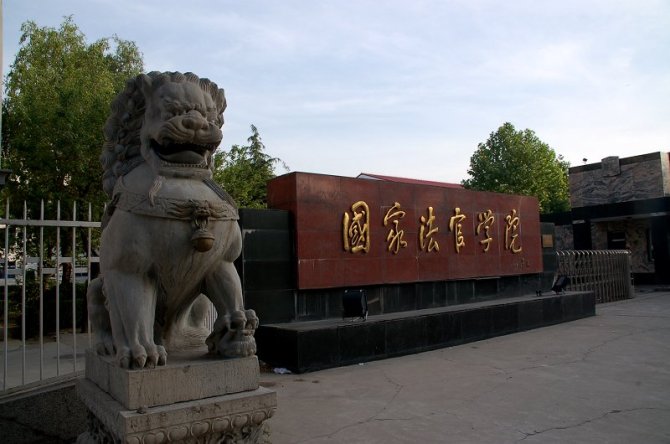
National Judges' College
National Judges’ College

One of the many documents issued late last year in the rush for year-end accomplishments (成就)is the Supreme People’s Court’s (SPC’s) latest Five Year Court Training Plan Outline for 2019-2023 (New Training Plan Outline) (2019—2023年全国法院教育培训规划).  The question this blogpost will explore is what is new and what has changed in the post-19th Party Congress New Era. As shown below, it is one small example of the impact of the 19th Party Congress on China’s legal and governance system. Competing obligations mean that this blogpost can only provide a few highlights and will focus on training for judges rather than support personnel, although the New Training Plan Outline covers all types of court personnel.

Other objective factors that have changed in the New Era are the number of cases in the courts (the majority of which are civil and commercial cases) and the average number of cases assigned to judges.  The numbers released to the public can only provide a general indication, as senior judges in a court (court presidents, vice presidents, and heads of divisions) are required to handle a small number of cases, which means in actual fact a greater burden on front-line judges, who constitute the majority of judges. The provinces and areas with the most developed economies tend to have the most number of cases.

This blog discussed the earlier plan almost five years ago.  The outside observer is handicapped by limited transparency about what the National Judicial College (NJC) actually does, although insights into the forthcoming curriculum can be found.  Previous versions of the NJC website had some course outlines, but those vanished in one of the website upgrades. In comparison, for example, the Australian National Judicial College publishes the National Judicial Curriculum and the German Judges Academy also has quite detailed information (to the extent this observer can understand it using a combination of high school German + Google translate).

The NJC, for those who aren’t familiar with it, is a separate institutional entity (事业法人) under the SPC, in charge of court training, primarily of judges, but also for other supporting staff. It is closely linked with the SPC’s Political Department (in charge of cadres). It has also hosted some training courses jointly (this was on administrative litigation) with the National Prosecutors College. Fortunately, the NJC website has posted screenshots of lectures (many by outstanding SPC judges) in its cloud classroom, although unfortunately, the lectures themselves are inaccessible.  I surmise that any teaching this spring will be at least initially online, as in other Chinese higher educational institutions. As of 30 March, this has provided to be correct, as the NJC website now features reports on training judicial trainers and provincial branches of the NJC providing training online.

What is new?

Consistent with what I wrote in this blog about Zhou Qiang’s report to the NPC in March of last year (2019) (and other 2019 blogposts), what is different about the New Court Training Plan Outline is the greater emphasis on political issues and Party leadership, although these were evident in the previous plan. The first sentence mentions Xi Jinping Thought on Socialism with Chinese Characteristics for a New Era (习近平新时代中国特色社会主义思想) and “forging a high-quality court team (队伍) that the Party Center can rely upon and the masses are satisfied with.”  It mentions creating a revolutionalized,  regularized, specialized and professionalized team (革命化、正规化、专业化、职业化). As explained in an earlier blogpost, “revolutionized” signals absolute Party leadership. The top two goals for training are deepening education in Xi Jinping thought (习近平新时代中国特色社会主义思想学习教育更加深入) and further solidifying education with a Party nature (党性教育更加扎实).

What do Chinese judges need in the New Era?

The economic and social changes in China raise the competency bar for judges.  A more litigious and rights conscious public, the increasingly complex economy and a greater number of cross-border transactions and interactions, (not to mention coronavirus related issues) as well as a smaller number of judges to hear more cases means that judicial training is an important part of preparing Chinese judges for the New Era. Post 19th Party Congress changes in Party policy mean that competency in Party matters is increasingly significant.

The training plan

The training plan is linked to the 5th Five Year Judicial Reform Plan Outline, the Communist Party Central Committee’s five year training plan for national cadres, a special document for outstanding young cadres (关于适应新时代要求大力发现培养选拔优秀年轻干部的意见), the Court’s regulations on judicial training (to be amended),  as well the Court’s 2013 policy document on creating a new judicial team (队伍) in the new situation. Team (队伍 (or work team) derives from “classical” Party terminology (as Stanley Lubman highlighted in a 2014 article)).

The plan does not incorporate training for foreign judges, which the NJC delivers to judges from Belt & Road Initiative jurisdictions and other countries.

Content

The Training Plan stresses ideological, ethical, and professional training, for judges and other judicial personnel. Ideological training is listed first. Judicial training is to focus on active and practical methods, including the case method (no less than 30%), moot courts, and other interactive methods.  Even in the New Era, the intellectual influence of exchange and training programs with offshore counterparts (many of those in the NJC leadership had studied abroad) is apparent from the more interactive methods required.

Who’s being trained

The training requirements depend on the seniority of the judicial personnel

  • Court leadership: the focus is on their political education, as well as administration. The SPC will run a special training session on  Xi Jinping New Era thought for a large group of court leaders, with newly appointed ones required to participate in training within a year of appointment. In the next five years, they must participate in a certain minimum number of hours of Party school, cadre education, or judicial training.
  • The plan also calls for providing different types of training depending on court needs–off-site vs. on-site training, web-based training, circuit teaching (some of the younger SPC judges are sent to courts in western provinces to deliver training).
  • Special training program for new judges: the judicial training program (apparently drawing from the practice in Taiwan and Japan) for new judges highlighted almost five years ago still has not been put in place. The new plan calls for research into implementing measures for training for newly appointed judges and organizing training for a group that qualifies to take part in unified pre-service training) (研究制定法官职前培训实施办法, 组织符合条件的人员参加统一职前培训).

How will the Plan be implemented?

As I wrote in December, one of the little-discussed aspects of being in a leadership role in the SPC in the New Era ensuring that policies, actions, initiatives, and other decisions hit the target of being politically correct (post 19th Party Congress and post 19th Party Congress 4th Plenum) while being “problem-oriented” (坚持问题导向) that is, addressing relevant practical issues facing the court system.  As mentioned then, it is true for the leadership of the NJC as well as other SPC divisions and institutions, as can be seen from one document.

The NJC very usefully (for the outside observer, at least) posted a notice soliciting proposals (from qualified individuals and institutions) for judicial training in 2020 under the new plan. The guide to the proposals sets out the desired content, which must not only be politically correct (a given), but also creative (new training methods or viewpoints), and relevant–focusing on the new and difficult issues facing the courts. The solicitation lists 66 topics in seven categories:

  1. Ideological related training is listed first, of course, with six subtopics which include: Xi Jinping new ideology and strategy for ruling the country by law (listed first); enhancing socialist core values in judgments (see my earlier blogpost on a related topic);  political discipline rules as derived from the Party charter, regulations, and discipline.
  2. Professionalism: (four subtopics)–professional ethics and judicial values; judicial work-style and the standardization of judicial acts; anti-corruption issues and countermeasures; outstanding Chinese traditional legal culture and socialist justice (unclear whether this is meant to solicit critical views of Chinese traditional legal culture);
  3. Judicial capacity: this one has twenty-three subtopics, with a good portion also to be found in other jurisdictions: civil, commercial, administrative and criminal justice values and judgment formation; judgment writing and courtroom control; difficult financial cases; while other reflect Chinese characteristics: what to consider when hearing difficult and complicated cases involving the public (涉众型) (these are either criminal or civil cases); protecting property rights and preventing mistaken cases; intellectual property trials and serving the innovative strategy; dealing with zombie enterprises.
  4.  General courses: (eight subtopics)again, a mixture of courses seen elsewhere, and ones with Chinese characteristics: guiding the media; mediation techniques; blockchain, AI and the courts.
  5.  Case study courses: (13 subtopics)-most of the topics are ones found elsewhere in judicial academies, such as financial crimes, juvenile justice, and corporate disputes, but others reflect the New Era, such Xi Jinping New Era thought cases and case pedagogy,  cases promoting and applying the “Fengqiao Experience“; and sweeping black and eliminating evil cases.
  6. Discussion courses: Criminal, civil, and administrative law courses.
  7. Judicial reform: only six topics here, including implementing the judicial responsibility system; establishing intelligent courts; separating simple from complicated cases; administrative litigation reform, and promoting a trial based criminal justice system.

China’s new judicial reforms on case law & other guidance

Gazette of the Jiangsu Higher People’s Court

As mentioned in my earlier blogpost, the Supreme People’s Court issued the fifth judicial reform plan outline in February, of this year (2019), harmonized with the current focus on Party leadership. For people with the fortitude to decode Chinese official documents, some real content can be found in the document. One of those provisions is #26 and relates to the ongoing efforts of the SPC to implement greater uniformity and consistency in the way that the law is applied in the courts (the translation below is from Chinalawtranslate.com):

#26 Improve mechanisms for the uniform application of law. Strengthen and regulate work on judicial interpretations, complete mechanisms for researching, initiating, drafting, debating, reviewing, publishing, cleaning up, and canceling judicial interpretations, to improve centralized management and report review mechanisms. Improve the guiding cases system, complete mechanisms for reporting, selecting, publishing, assessing, and applying cases. Establish mechanisms for high people’s courts filing for the record trial guidance documents and reference cases. Complete mechanisms for connecting the work of case discussion by presiding judges and collegial panel deliberations, the compensation commission, and the judicial committee. Improve working mechanisms for mandatory searches and reporting of analogous cases and new types of case. (完善统一法律适用机制。 加强和规范司法解释工作,健全司法解释的调研、立项、起草、论证、审核、发布、清理和废止机制,完善归口管理和报备审查机制。完善指导性案例制度,健全案例报送、筛选、发布、评估和应用机制。建立高级人民法院审判指导文件和参考性案例的备案机制。健全主审法官会议与合议庭评议、赔偿委员会、审判委员会讨论案件的工作衔接机制。完善类案和新类型案件强制检索报告工作机制)

As for why the uniform application of law is an issue, the quick explanation is the drafting of Chinese legislation often leaves important issues unresolved and outsources to the SPC (and SPP for some issues) the hard job of drafting more detailed provisions. (see Chinalawtranslate.com for many examples and NPC_observer.com for insights about the legislative drafting process).  Comments about the role of case law are found below.

#26 mentions the following:

  • improving judicial interpretations;
  • improving the guiding case system;
  • establishing a system for higher people’s courts to record with the SPC their guiding-type documents and reference cases;
  • improving China’s case law system.

Judicial interpretations

The SPC regulations on judicial interpretation work date from 2007. Some later guidance on that topic was issued several years ago, but that guidance has not been made broadly available. So it appears that one signal that this provision is sending is that the 2007 regulations need to be updated. It appears likely that the SPC will harmonize the language in its rules with the 2015 Legislation Law. Other provisions are unclear. One guess (based on the SPC document on incorporating socialist core values into judicial interpretations) is that language about socialist core values will be incorporated into any amended rules on judicial interpretation work. The Supreme People’s Procuratorate (SPP) revised its rules on judicial interpretation work earlier this year, and it is possible that the SPC will harmonize some of the language in its rules with those of the SPP.

Another guess is that those rules will codify existing practices on drafting, discussions, etc.. As my blogpost (and recently published article) on the SPC’s Pilot Free Trade Zone Opinion details, the drafting process for judicial interpretations (and similar types of guidance) operates on the basis of long-standing practices. (My forthcoming article stuck in the academic publishing process has many more details on the drafting process for criminal procedure law interpretations).

This provision appears to be aimed at the SPC’s Research Office, which takes the lead in managing the judicial interpretation process and deals with ongoing criticism that the SPC allows inconsistent judicial interpretations to be issued. It is unclear whether the improvements mentioned will involve more public consultation than previously.

Guiding cases

I will leave detailed comments on how the guiding case system will be improved to others, as research by others (see Jeremy Daum’s article) tends to show that guiding cases are rarely cited. I surmise that the intent of the provision is to speed up the selection and approval process for guiding cases, as well as the use rate.

Local High Court Guidance

This language codifies the long-standing practice of local high courts issuing guiding rules applicable within their jurisdictions. As discussed in my article on judicial transparency, published earlier this year, senior legal scholar Li Buyun raised questions about the validity of local court guidance in his letter to the Legislative Affairs Commission of the National People’s Congress last year (2018). Article 104 of the Legislation Law forbids adjudication and procuratorate organs other than the
Supreme People’s Court and the Supreme People’s Procuratorate from making specific interpretations on the application of law. 2010 SPC guidance had normalized the long-term practice of higher people’s courts (and their equivalent in the specialized courts) in issuing documents, characterized as ‘”trial work documents” (审判业务文件) and issuing reference-type cases (参考性案例).

Evidence of the importance of the practice can be seen by the fact that leading law firms publish client alerts about important local court guidance. This provision calls for a filing for the record system (with the SPC) of higher court guidance and reference cases to be established. It is not clear whether this system (apparently intended to enable the SPC to monitor local guidance and reference cases better) will result in a system that provides greater transparency to these rules. I had noted varying transparency requirements for local court guidance in my article. The Gazette of the Jiangsu Higher People’s Court (pictured above) publishes its court guidance under the section “judicial documents” (司法文件). That Gazette also includes local reference cases, entitled reference cases (参考案例)。 Terminology for local reference cases is not consistent, with the Shanghai Higher People’s Court issuing cases with a referential nature (参考性案例).

Improving China’s Case Law System

I wrote about in greater length in this short academic article published in the Tsinghua China Law Review two years ago (and in this blogpost three years ago) on how non-guiding cases guide. This part of the #26 consolidates some of the provisions of previous judicial reform documents and signals that the SPC’s judicial reform office is focusing on how to provide better guidance to the lower courts on using non-guiding cases and other forms of guidance documents that are not judicial interpretations. One issue not specifically mentioned is the relative authority of guidance documents and judgments/rulings by courts. It is assumed that SPC decisions are more authoritative than lower court ones.

The first sentence addresses the use of other forms of case guidance and transforming this case guidance into written documents. The titles, authority, etc. of these guidance documents are likely to be settled over time. One type that I have observed is the specialized judges conference (专业法官会议)(mentioned in at least two 2017 SPC documents: Opinions on Putting a Judicial Responsibility System in Place and Improving Mechanisms for Trial Oversight and Management ;(Provisional) and the SPC’s Judicial Responsibility implementing opinion (最高人民法院司法责任制实施意见(试行)(Implementing Opinion), In these conferences, difficult issues are discussed and provided to the collegial panel involved, but the panel members are not bound by the views of the conferences. This academic study notes that it is a uniquely Chinese institution and has arisen because of judicial caution about deciding cases independently (可以说,专业法官会议是中国特色的法院内部向办案法官提供咨询意见的专门机构,是在走向审判独立的特殊过程中,对法官自由办案能力担心而产生的一种特殊组织), likely in the face of extensive and long term accountability for decisions.

Some portion of SPC specialized judges conference discussions has been consolidated in the form of documents, such as in the form of a conference/meeting summary (会议纪要).  The SPC’s #2 Civil Division (focusing on commercial issues) seems to be leading the way in publishing these meeting summaries–some of the summaries have been published in book form, also with updates published on the internet/Wechat–see this example.

The last sentence of #26 addresses the case law system. The increasing importance of non-guiding cases shows the strength of the case law system that the authorities rejected about 10 years ago. It is clear from Justice Hu Yunteng(currently president of the National Judicial College)’s recollections of the history of the case system with Chinese characteristics, that Judge Jiang Huiling, then his colleague at the China Institute for Applied Jurisprudence (and currently vice president of the National Judges College) had looked to jurisdictions outside of China to advocate that China establish a case law system (Justice Hu doesn’t specify whether Judge Jiang was looking to case law systems in civil or common law jurisdictions in the “West.”). Mark Jia (of Harvard Law School), in his 2016 article, cites Li Shichun of the Chinese Academy of Social Sciences to the effect that it was the NPC that opposed those seeking to establish a Chinese case law precedential system.
My understanding that the last sentence is intended requires judges handling a case to engage in similar case searches and to report on the results of those searches in certain circumstances (for example, to report on their search before the case is discussed in the specialized judges conference). My earlier blogpost discusses the 2018 document requiring prior case search.–the specific rules for prior case search are not yet in place. What should be searched is not entirely clear.  One knowledgeable person described prior case search as a tool for “catching valuable cases in the sea of cases.” My own understanding is that it will depend on the area of law.  It can be seen from the last blogpost the type of cases considered authoritive in criminal law, but the types of persuasive cases will differ in other areas of law. Prior case search is meant as a tool for the courts to apply the law more consistently (and consistent with the views of the SPC) (an ongoing goal of the SPC). It is also likely that new legal rules evolved in cases will eventually be crystalized in other forms of documentary guidance, be it local court guidance, an SPC policy document, or an SPC judicial interpretation.

On the topic of precedent, as I noted in my 2017 blogpost on the SPC’s implementing opinion on its judicial responsibility system, special approval within the SPC is required if a ruling in a case will be inconsistent with prior SPC rulings on the issue. It means that the SPC is seeking to improve the consistency of its judgments internally.

So it appears that we will be seeing further evolution over the next few years in the tools used by the Chinese courts to provide legal rules: judicial interpretations, guiding cases, local high court guidance and reference cases, other guiding documents, and prior cases, with many of these intended to strengthen the firm guiding hand of the SPC.


Law-related Wechat public accounts, 2018 update (1)

Screen Shot 2018-02-03 at 10.13.48 AM Wechat, as most people with an interest in China know, has become the preferred form of social media in China.  The legal community in China has taken to it too.
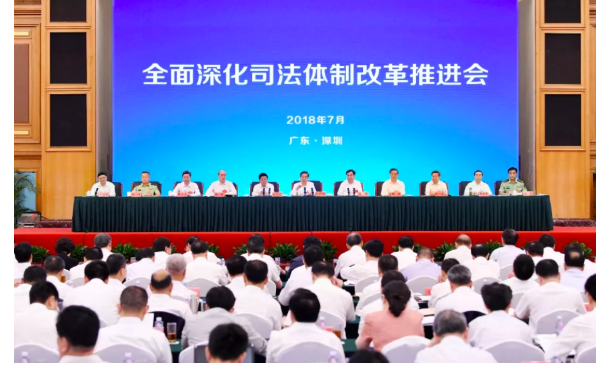
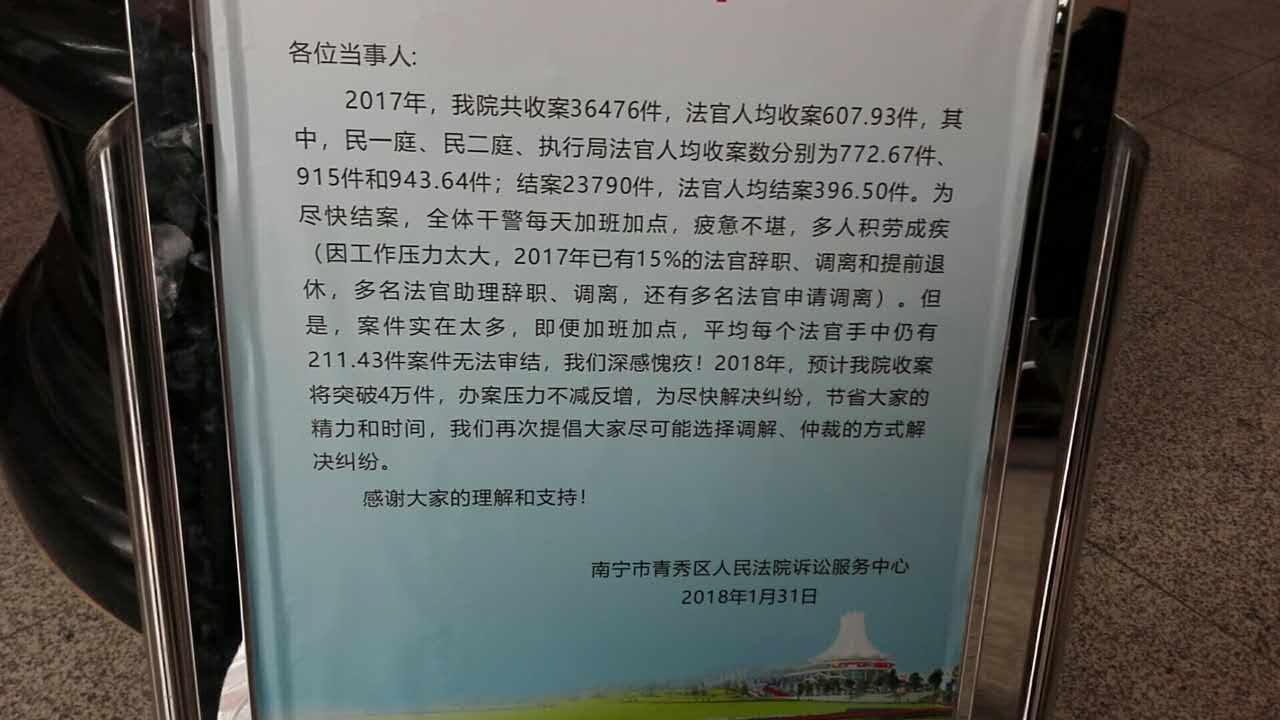
For the observer, it enables us to learn about new issues (or aspects of issues) that we didn’t know existed, and (depending on the topic), hear viewpoints other than the official one, or at least read hints of dissenting views. Those with the Wechat app on their smartphone can subscribe to these public accounts but it is also possible to find some these articles through an internet search. Note that the “Mr. Yong” about whom I wrote in 2016 lurks on Wechat, so articles published may disappear, although they often reappear elsewhere.

Some are official accounts of government entities, including the courts and others are public accounts (公众账号) established by companies, law firms, universities, societies, other organizations, or individuals. In November, 2018 the Cyberspace Administration of China said that tightened management of internet content producers would be a “new norm,: and Tencent reduced the number of permitted corporate public accounts from five to two and individual accounts from two to one.  More information on this development elsewhere.

Below is the first part of a guide to some useful law-related Wechat public accounts focusing on accounts related to the Supreme People’s Court (SPC) Please contact me through the comment function or email with additional suggestions.

The official Party and government accounts enable the user to keep current on the issues and latest Party and government position in that area of law–new policy, new legislation, and new reforms, or the official response to a current hot topic.  The Central Political-Legal Commission has one, the Central Supervision Commission, as do both the SPC and Supreme People’s Procuratorate, as well as their local counterparts. Academic journals have a different audience that requires more nuance.

As I’ve written before, Party/government authorities use Wechat public accounts to reach out to a public that is moving away from traditional media to smartphones. Party/government policy is encouraging courts to do so.  There is some but not complete overlap between articles that appear on an institution’s website and Wechat account. There is complete overlap when more political matters are involved, such as the latest important speech of a leader. Even some articles published in institutional public accounts may have a “netizen” tone and use netizen slang and images.

Institution Account name
National Supervision Commission 中央纪委监委网站
Central Political-Legal Commission 中央政法长安剑 (recently renamed, read here

Official accounts linked to the SPC

 linked to SPC and its affiliated institutions
Institution Account name Content
Supreme People’s Court 最高人民法院 Official view of SPC; also republishes Xinhua articles
People’s Court Daily 人民法院报 Official view of SPC; also republishes Xinhua articles
Institute for Applied Jurisprudence


(since July, 2018, under the new institute director, the account has published  fewer articles than previously)

中国应用法学研究所 Had previously carried accounts of conferences and academic talks, translations of foreign materials; other articles
China Applied Jurisprudence (academic journal)(from Sept., 2018) 中国应用法学 Publishes excerpts from journal articles (recent article included: article on people’s assessors pilot project; also republishes other articles of interest to editor; translations of foreign materials, including an excerpt from “Building a Diverse Bench” (NYU Brennan Center publication)
Journal of Law Application (academic journal affiliated with National Judges College 法律适用 Publishes excerpts from journal articles, some by judges, others by academics
Alternative Dispute Resolution Reform in China 多元化纠纷解决机制 Articles on alternative dispute resolution in China and foreign experience
Database Faxin (affiliated with the People’s Court Press) 法信 Case analysis, analysis of cases on specific issues
China Trial (journal) 中国审判 Excerpts from articles in the journal
People’s Judicature 人民司法 Excerpts from articles in the journal
Case Research Institute of National Judges College 司法案例研究院 Case analysis, excerpts from its academic journal (Journal of Law Application (Cases))
SPC Information Center 智慧法院进行时 Reports on informatization of courts
Administrative enforcement and administrative trial


行政执法与行政审判 Articles related to administrative litigation & enforcement


National Judges College 国家法官学院 Official account; articles reporting on the National Judges College &    its local branches
People’s Assessors 人民陪审 Articles related to the people’s assessor system & its reforms


Several SPC judges and SPC officials have Wechat public accounts.  They have obtained approval to have them.   Among them are:

Individual affiliated with SPC Account name Content
He Fan (何帆), head of the planning department of the SPC’s Judicial Reform Office 法影斑斓 Judicial reform
Yu Tongzhi (于同志), judge of SPC #2 Criminal Division, editor of 刑事审判参考 说刑品案 Excerpts from the journal, articles on criminal law and criminal procedure issues (some republished), including original articles by Judge Yu himself, generally on broader criminal law issues.
Wang Dongmin (王东敏), judge of the SPC #2 Civil Division 法律之树 Issues of civil and civil procedure law

As a general (but not directed comment), if judges on the SPC express views on issues that may come before them, it would appear to raise issues similar to those that arise in the rest of the world–the propriety of extrajudicial writing–a sample of writings on this issue from other jurisdictions found here. Persons who can provide relevant information concerning relevant SPC ethics provisions, and restrictions in civil law rather than common law jurisdictions, please contact me.

What to Expect in the Fifth Round of Judicial Reforms

Screen Shot 2018-07-29 at 8.10.14 AM

On July 24, the Chinese authorities held the first post-19th Party Congress national conference  on judicial reform in Shenzhen, entitled “Promoting Comprehensive Deepening of Judicial Reform.”  Holding the conference in Shenzhen is significant, because it is considered synonymous with reform and openness. The leaders on the podium in the photo above (members of the Leading Small Group on Judicial Reform) (all men), include:

  1. Secretary of the Central Political Legal Committee, Guo Shengkun (Guo);
  2. President of the Supreme People’s Court (SPC), Zhou Qiang;
  3. Chief Procurator General Zhang Jun;
  4. Central Military Commission Political Legal Committee Party Secretary;
  5. Minister of Public Security;
  6. Minister of State Security;
  7. Commander of the People’s Armed Police.

Attendees of the conference included the Party Secretaries of the Political Legal Committees of all provinces/autonomous regions/cities, and likely senior leaders from all of the systems.

Readers of this blog will not be surprised that comprehensive deepening of judicial reform was the subject of the conference as a December, 2017, blogpost flagged that the new phraseology is “deepen the reform of the judicial system with comprehensive integrated reforms” (深化司法体制改革综合配套改革) (and there is a significant overlap with some of the issues Judge Jiang mentioned). The language is found deep in Xi Jinping’s 19th Communist Party Congress Report.

The quick (and incomplete) summary below is of some of the court-related issues from the report of Guo’s speech at the conference that He Fan (head of the planning section of the SPC’s judicial reform office) posted on his Wechat public account.  He was one of the many attendees.   None of the analysis below (in italics) should be attributed to him.

It can be expected that the court-related issues will be incorporated into the next judicial reform plan outline. What is on the court-related reform list?  What issues remain unresolved?

  1. Strengthen and optimize Communist Party leadership, Scientifically position the responsibilities and boundaries of the Party Committee, Political and Legal Committee, strengthen functions such as overall coordination, planning and deployment, supervision and implementation.   This of course listed first.What does this mean in practice for judicial system and particularly the operation of the criminal justice system, such as the ongoing campaign against organized crime (see this earlier blogpost)? 
  2.  Clarify the functions of the four-level courts,–improve the SPC circuit courts’ working mechanism; establish the Shanghai Financial Court, steadily expand the Internet Court pilots; explore the deepening of the reform of cross-administrative district courts and procuratorates, and explore the establishment of a national-level intellectual property appeal hearing mechanism.

Developments have occurred on some of these. The Shanghai Circuit Court will start operations soon, with regulations on its jurisdiction just issued and well-regarded judges appointed to senior positions.  The mention of an intellectual property appeals court is significant, as that has been mentioned in earlier government documents and it is on the wish list of the intellectual property law community.  The cross-administrative district courts are mentioned in the previous court reform plan, with some pilot projects. On SPC’s circuit courts are taking on a greater percentage of the SPC’s cases, (as mentioned earlier on this blog) SPC judges work in the circuit courts while their families remain in Beijing, so at some personal cost to judges involved.

3.  Improve institutional management, promote a combination of flat management and professionalization, adhere to the simultaneous transformation of comprehensive and operational entities, and promote the return of judicial personnel to the front line.  As this blog has repeatedly mentioned (and He Xin/Kwai Hang Ng have detailed in their new book, Embedded Courts), Chinese courts (as courts and political/legal institutions) have large “comprehensive offices” (engaging in functions not directly related to judicial work).  A recent study of several courts in Zhejiang province published in an academic journal affiliated with the China Institute of Applied Jurisprudence detailed the percentages. With the reduction in the number of judges and the explosion in the number of cases, there is a great amount of pressure to allocate more judges to the “front line” of handling cases.  Judges with some measure of seniority inevitably have both administrative and judicial responsibilities.

4.  Improve the supervision management mechanism of the president and division chiefs, and standardize the functions of the judicial committee, the committee of court leaders, which has a number of functions, often serving to diffuse responsibility for difficult cases  (Embedded Courts has more insights on this, and this blog has an earlier post on proposed reforms and related problems). Improve the professional judges meeting (mentioned in last year’s SPC regulations, I hope to have something more to say on this in a later blogpost). Improve the disciplinary mechanism of judges. (It would be an improvement to have greater transparency on the results.) Accelerate the construction of an electronic file with the simultaneous generation of the case and the entire process online case handling system.  This has been an ongoing proposal.  Shenzhen is taking the lead with this. Also it would be an improvement to have greater transparency on cases filed.

6. On judicial “standardization” –improve reference to similar cases, case guidelines, the guiding case mechanisms, implement mandatory search system for similar cases and related cases. We will carry out an in-depth national judicial standardization inspections.  This is sending two signals–greater implementation of China’s case law system (as I have written about earlier), and the continued use of government/Party inspection campaigns (reflecting the administrative aspects of the Chinese courts).

7. Improve the  performance appraisal system. Scientifically set the performance appraisal indicator system for handling cases, and guide judicial personnel to handle more cases, handle cases quickly, and handle cases well. Use big data technology to accurately measure the quality of the case and strive for convincing results. The assessment results are used as an important basis for the level of salary, job promotion…This is an important and unresolved issue for the Chinese courts–how to appraise judges.  Outside of China, many scholars have written about this, including Carl Minzner, William Hurst & Jonathan Kinkel. A good deal of research has been done within the Chinese court system concerning this (see this summary of a report published earlier this year by a team of Guangdong Higher People’s Court judges–discussing how the “civil servant/administrative model” predominates and suggesting that China should be looking to other jurisdictions for models, as judicial evaluation is a worldwide issue.  Case closing percentages continues to be very important for Chinese judges.  Is big data technology the answer?  Is this consistent with encouraging judges to write more reasoned decisions?  This appears to signal  a continuation of the judge as factory worker system described in this blogpost

8. In the area of criminal law, and criminal procedure, there are mixed developments.  On the one hand, greater encouragement for using the plea bargaining with Chinese characteristics (please see Jeremy Daum’s deep dive into the pilots). The merging of the arrest and prosecution stages is also mentioned.  Guo also mentioned  measures to enable appointing defense counsel in death penalty cases, having full coverage of defense counsel in criminal cases (Jeremy Daum has comments also on the system of stationing lawyers in detention houses), requiring lawyers to represent petitioners in criminal collateral appeals cases, as well as greater use of live witnesses at trial。  The National Judges College academic journal Journal of Law Application just published an article by a Beijing Higher Court judge, reviewing the duty lawyer scheme, with analogous findings to Jeremy’s.

9.  For those interested in how the supervision commission is/will affect criminal cases, Guo mentions establishing a system for linking the supervision’s investigatory system with the criminal procedure system (said to improve the battle against corruption, the question is the extent to which individual rights are protected).

10.  On foreign related matters, Guo mentions innovating foreign-related work, and improving cooperation on international enforcement and judicial cooperation.  These continue to be difficult issues, with no likely resolution in sight, particularly criminal and also civil.  As I have mentioned before China is participating in the drafting of the Hague Convention on the Recognition and Enforcement of Foreign Judgment, but there are major inconsistencies between the provisions of the draft convention, and the Choice of Court Convention which China signed last September.

Guo highlights improving an initial appointment system for judges and procurators, expanding open recruitment so that talented people will be attracted to becoming and remain judges.  He calls for better coordination between the law schools and professional training, systems for provincial level appointment of judges (and procurators), with better policies on temporary appointment (挂职) (a system used for academics to work in the system for a period of one or two years, and judges/procurators from higher levels to work at the basic level or in a poorer area), exchanges, promotions, and resignation.

In his recommendations, Guo tips his hat to judicial (and procurator) dissatisfaction with status and pay with his statement “uphold resolving a combination of ideological and practical issues, motivate cadres and police to the greatest extent possible.” 坚持解决思想问题和解决实际问题相结合,最大限度调动政法干警积极性”-as this blog has reported, a combination of those issues, excessive work, and significant amounts of time allocated to “studying documents” has led younger experienced judges (and procurators) to decide to resign.


Why are Chinese judges so stressed?

6C8064E2-CD04-43B8-BEF2-94DB1FF8D632-12865-00000E1088FD9E56_tmp
“Dear litigants”

The photo above was viral in legal Wechat groups in early February–a notice in the lobby of a Guangxi district court advising litigants to use mediation or arbitration because the judges in the court are overworked, overstressed, and voting with their feet to leave the courts.  The notice gives the court’s 2017 caseload (36,476 cases) and prediction for 2018 (over 40,000) and says fifteen percent of the judges have quit, retired, or transferred out of the courts and judges’ assistants are leaving as well.

How many Chinese judges are there?

SPC President Zhou Qiang reported to the National People’s Congress Standing Committee in November 2017 that there were 120,128 quota judges/judicial post judges(员额制), a reduction from 211,990.   Some of those judges have become judicial assistants, while others have been transferred to administrative roles within the courts.

It appears that the authorities decided to reduce the headcount of Chinese judges by comparing the percentage of judges in China with those in major jurisdictions. The readers of this blog know (and Chinese judicial reformers know clearly), the structure of the Chinese courts is quite different from those in other jurisdictions, whether civil or common law systems. However, once the reduction had been approved by the highest political authorities,  those questioning the wisdom of this decision  run the risk of improperly discussing (or distorting (歪曲)) judicial reform (妄议司改), a variation of “improperly discussing Central policy (妄议中央).

Chinese courts are a cross between a court and a Party/government organ, with personnel in administrative offices such as the political department (政治部), general office (办公厅), supervision bureau (监察局). Senior personnel such as the court president, vice presidents, and division chiefs, have a significant portion of their time taken up by administrative matters.  The judicial reforms now require senior personnel to hear a small number of cases per year and according to President Zhou Qiang, that number is up 32% (the base number is unknown).  Of the 120,990 judges who have the status of judge, 85% of them hear some number of cases. Statistics on the number of judges actually hearing cases are hard to pin down.

We do not know how many judges have left the Chinese courts in 2017 or 2016 by quitting or transferring to a government department.  Presumably, the head of the Supreme People’s Court’s (SPC) Political Department (in charge of personnel) does, but those statistics seem to be confidential.  Based on partial information however, judges are continuing to leave the courts, from the SPC on down.

From a survey done by a post-doctoral student at the China Institute of Applied Jurisprudence of the SPC in 2015 (further detailed below), close monitoring of Wechat articles, and my own personal observations, those who remain in the judiciary have a high degree of stress.

Stresssed Chinese judges and their job dissatisfaction

In the spring of 2015, then Beijing Higher People’s Court Judge Hu Changming and a post doctoral student at the SPC’s China Institute of Applied Jurisprudence, but now a researcher at the Chinese Academy of Social Sciences Institute of Law, conducted a job satisfaction survey among Chinese judges, published in the prestigious China Law Review and summarized in SPC media. Hu previously won awards for his writings as a judge. He later published an article on Wechat (originally published in the defunct Wechat account “Home of Judges” that (according to this report) led to his punishment for distorting (歪曲) judicial reform.

Hu received 2660 responses from judges working in all four levels of the Chinese judiciary.  Although the ongoing trope about the Chinese judiciary outside of China is that most Chinese judges are former People’s Liberation Army officers, Judge Hu’s survey found that most judges had at least an LLB or master’s degree in law, with small numbers of judges with less than an LLB or a Ph.D.

The pie chart below (from Hu’s study) is of responses concerning job satisfaction (extremely satisfied 1.28%, relatively satisfied, 11.09%, neutral, 30.53%, not very satisfied 34.89, and very dissatisfied, 22.22%).Screen Shot 2018-02-21 at 3.58.34 PM

His survey further revealed that practically all (94.47%) of judges surveyed had considered quitting the judiciary, of whom 57.37% had considered it seriously, and only 5.53% had never considered it.  His survey had more male than female respondents, and more middle-aged than late career judges, likely affecting these results.

Why are Chinese judges dissatisfied?

According to Hu’s 2015 survey, Chinese judges are dissatisfied for both work-related and benefits-related reasons. This is consistent with my earlier research.   This post will look at some of the work-related reasons.

Work-related reasons

Both the survey and other observations show that Chinese judges, particularly those in basic level courts in China’s most developed areas, have too much work.  One major reason was the decision in 2015 to change the case filing system. Six weeks into the case filing reform I predicted “greater stress for fewer judges and other judicial staff” and at the end of 2015 noted the SPC was “putting a positive spin on what is a highly stressful situation for frontline judges.”

The caseload in the busiest courts is large and on the increase yearly(see the chart below for the caseload in first half of 2017 and percentage increases). The Wechatosphere frequently reports on the heavy caseload in the country’s major courts and the stress on frontline judges. In September, 2017, I reported on the situation for frontline judges pre-19th Party Congress.

Screen Shot 2018-02-23 at 9.18.47 PM
1. Pudong/Shanghai; 2.Chaoyang/Beijing;3. Yuexiu/Guangzhou; 4. Baoan/Shenzhen; 5. Futian/Shenzhen; 6. Haidian/Beijing; 7. #1/Dongguan; 8. Jingan/Shanghai; 9. Western District/Beijing; #1/Zhongshan

For domestic cases, judges are under tight deadlines and their work computers will flash a red signal when a case isn’t closed on time. Although unreasonable performance targets were to have been abolished, Wechat articles and judges who I was able to disturb at year’s end mentioned that they were under pressure to close cases by year end so that their court could achieve a high closing rate, documenting the closing rate pressure mentioned in September, 2017.

Another source of pressure for judges is the lifetime responsibility system, which two Chinese judges writing in an academic law journal called the “sword of Damocles hanging over judges” ( 法官办案责任追究是时刻悬挂在法官们头上的“达摩克利斯之剑”), analyzing the drawbacks with the standards and their implications for judges.  Hu’s survey found that almost half of them felt that the responsibility system for mistaken cases was unfair and this is also shown in Wechat and articles in court media as well as comments by individual judges.

According to Judge Hu’s survey, judges regularly work overtime, some for over six months a year, and most mention that they have inadequate administrative support. This may change over time as some law graduates are willing to take on positions as judge’s assistants, but as the sign above indicates, some of them are leaving too, but from the Wechatosphere, they feel stressed as well. As mentioned in this earlier blogpost, interns are a welcome source of additional brainpower, although in experience of my students, at least, interns need to depend on their parents or school scholarships to cover their expenses during their internships.

Then there is the matter of what work occupies their work day.  In addition to sitting in court, reading case files,  or drafting judgments, Chinese judges have to receive petitioners, deliver litigation documents, and enforce judgments, as well as publicize law to “the masses (including soldiers).”

Additionally, meetings of various types take up their time as well.  Since the Communist Party has been focusing on raising the ideological level of the judiciary, it seems likely that for frontline judges, meetings focused on the latest Party documents take time away from cases.

As this blog has mentioned previously, the judicial reforms for the most part have retained the pyramid structure of Chinese courts, where the court president, vice presidents, and division chiefs have administrative authority over judges.  And even for those reformed courts that have a flat administrative structure, the authority of the head of the court (or tribunal and the judicial committee still remains in place, although the judicial reforms call for new committees to be put in place relating to both appointments and judicial punishment.

Will the “deepened reform of the judicial system with comprehensive integrated reforms” (深化司法体制改革综合配套改革) (discussed in December’s blogpost) deal with the stress of China’s judges and retain (and attract) the elite corps that Chinese judicial reformers envision?  We will need to wait and see.


“Clerking” on the Supreme People’s Court

20170824220614_20886
SPC President Zhou Qiang & Political Dept head Xu Jiaxin with 3rd group of interns, including a Peking University School of Transnational Law student

One of the unexpected influences of the United States system on the Chinese courts is the Supreme People’s Court’s (SPC) elite internship program, instituted in 2015.  (The German system of requiring law students to intern in courts, too, is an apparent influence). The word of mouth is that the SPC leadership noted that the US Supreme Court clerkships attracted top law students and wanted to do something similar in China.

The program is a small example of “foreign beneficial experience,” about which I wrote about earlier this year. The official position on borrowing/referring to foreign legal models is set out in the 4th Plenum Decision (as I wrote earlier):

Draw from the quintessence of Chinese legal culture, learn from beneficial experiences in rule of law abroad, but we can absolutely not indiscriminately copy foreign rule of law concepts and models.

President Xi Jinping’s further gloss on this is:

Outstanding products of rule of law culture in the world shall be actively absorbed and used for reference, but they must be filtered, they must be selectively absorbed and transformed, they may not be swallowed whole and copied (对世界上的优秀法治文明成果,要积极吸收借鉴,也要加以甄别,有选择地吸收和转化,不能囫囵吞枣、照搬照抄).

Unlike Supreme Court clerkships, which are done by recent law graduates, SPC interns are generally required to be students, generally at the master’s or PhD level.  The SPC selects several dozen outstanding students (the number seems to vary) to participate in the sixth month program.  They must be recommended by their law schools (each runs its own selection process)–see this notice by China University of Political Science and Law.  Several of our School of Transnational Law Students are participated.  Applications are made to the Political Department of the SPC (it handles personnel matters) rather than to individual judges.  The program is part of the SPC’s outreach to educational institutions and efforts to create a more elite judiciary.

While most requirements are in line with internships in most parts of the world and the stress appears to be on outstanding academic qualifications, among the requirements for the program is having a firm political stand (政治立场坚定) (it seems to be standard for internships in Chinese government/or government affiliated institutions) and the application form asks about the political view of family members.

In 2017, preference was given to Beijing area law schools because no housing was provided, and from the lists of accepted interns, it is clear that more Beijing area interns are accepted.  As of 2019, however, the SPC provided accommodations.  For Beijing based students, it likely means a long commute from the law schools based in the suburbs to be at work in the early morning.

Each intern is assigned a mentor, generally a presiding judge (审判长), therefore judge with long years of experience.  Interns are primarily assigned to the substantive/trial divisions (业务部门)  of the SPC and also other SPC offices including:

environmental and natural resources division;

criminal divisions;

State Compensation Office;

Administrative Division;

Enforcement Bureau;

Trial Supervision Division

Civil divisions;

Judicial reform office.

It seems that many were confronted with being assigned to work in areas of law that they had never before encountered, or being involved in work they had never before done. Some worked on judicial interpretation drafting,  many sat in on collegiate panel discussions of cases, assisted in case review, and assisted the teams of judges working on death penalty review while many helped their mentors with related research and administrative matters, finding their work reviewed meticulously, and spending long hours along with their (overworked) mentors.  Given the highly theoretical orientation of Chinese legal education, particularly at the graduate level, the interns (and their mentors) likely encountered major challenges along the way.

The circuit courts, too are taking interns, although they each seem to have their own requirements. The #2 Circuit takes interns from the law schools in Northeast China, the#6 Circuit Court from the Northwest provinces, the #3 Circuit from law schools within its Circuit, while the #1 Circuit Court has taken interns from the Shenzhen-based law schools (School of Transnational Law and Shenzhen University) as well as law schools in other parts of the country.

As part of its outreach to the academic community, the SPC also has a smaller program for legal scholars, seeking to attract elite academics.  That program limited to Chinese nationals from Chinese law schools, who generally should not be over the age of 50! I look forward to the day when the SPC takes note of the “foreign beneficial experience” of the Federal Judicial Center, which has welcomed many Chinese judges over the years as Visiting Fellows.  The program has no age restriction. The late  Judge Zou Bihua, whom President Xi Jinping praised for guarding “equity and justice and was brave to face tough obstacles in judicial reform, [and] showed his loyalty to the Communist Party of China (CPC) and the people,” had been a Visiting Fellow in 2000. He is one of the foreign judges featured on the Federal Judicial Center’s Visiting Fellows webpage.


China’s 19th Party Congress & Judicial Reform

20170330202515_82905
29 March meeting of Party leading group on judicial reform

Meng Jianzhu, Politburo member and head of the Communist Party Central Political Legal Committee, held a meeting in late March (photo above), to convey Xi Jinping’s message–those in leadership positions must do all possible to ensure that judicial system reform responsibility targets are basically achieved before the 19th Party congress (努力实现党的十九大召开前基本完成司法体制改革努力实现党的十九大召开前基本完成司法体制改革任务的目标). For those not familiar with Chinese political-legal jargon, “judicial system” (司法体制) means here the political-legal institutions–the courts, procuratorate, public/state security, and justice administration.   “Responsibility and targets” are also Chinese political jargon. Xi Jinping’s message dates from early January, when he highlighted this goal in instructions transmitted to the Communist Party Central Committee’s national political legal work conference.  He emphasized that the cornerstone of the judicial system reform is the judicial accountability system.  Part of the message  is that 2017 is a critical time, during which there is a “decisive battle” for deepening judicial reform, the battle intended to achieve those targets.  “Decisive battle” is also a core part of Chinese political jargon.

Since late March, Supreme People’s Court (SPC) President Zhou Qiang and other senior SPC leaders have been publicizing the target of completing judicial system reform, particularly the judicial accountability system, before the 19th Party Congress.  The SPC leadership has been doing that through meetings, both of the SPC itself (and the circuit courts) and the provincial-level courts and through SPC media outlets. President Zhou Qiang did so during a recent visit to Anhui, while on April 7, executive vice president Shen Deyong, vice-president Li Shaoping, and Political Department head Xu Jiaxin transmitted that message on a nationwide court video conference. This message is likely to be repeated in the months leading up to the 19th Party Congress.

In recent days, the SPC’s judicial reform office has been explaining these reforms to the public that reads SPC professional publications, such as the People’s Court Daily and China Trial, with some of the core content in the form of FAQs.  The reforms outline the way a post-reform court should operate. Some of the points were previously set out in the SPC’s February, 2017 judicial reform white paper.

A brief summary of the responses follows below:

  1. Why is the responsibility system the critical part of the judicial system reform (司法体制改革的“牛鼻子”)? Answer: because Xi Jinping said it, and judicial power and accountability/responsibility go together; accountability limits power.
  2. What is the responsibility of a presiding judge? Answer: take the lead in a case, by outlining the hearing of the case, allocating responsibilities, taking the lead at trial and in post-trial discussions, and in cases of significant differences of opinion, submit the case to either a specialist judges’ committee or judicial committee.
  3. How should the system of court president’s and division chief’s hearing cases be improved?Court leading cadres have multiple identities, including Party administrative responsibilities, and they must concurrently plan, announce and implement Party construction and adjudication [substantive] work, and for those who are quota judges, they should hear some cases too. Those cases should depend on a person’s background and strengths and should be major, difficult, complicated, or new cases which are representative.
  4. What is the relationship between judicial teams and court divisions? Answer: A Judicial team is comprised of judges, judge assistants, clerks and other auxiliary personnel, formulated respective lists of responsibilities of judges, judge assistants, and clerks, established the new judicial work mechanism with judges at the core and the team members cooperating with each other closely,
  5. When judges are randomly assigned to cases, how should the judge in charge of the case be determined? Answer: random selection should be primary, supplemented by assigned cases.
  6. How should the reform of having judges sign judicial documents [judgments/rulings, etc.] be understood? Answer: Judges who hear cases should sign their judgments and senior court leaders should no longer review or sign the judgments on the cases when they had not been personally involved.
  7. How should the reform of having a conference of professional judges be understood? Answer: judges in different substantive areas can organize committees to provide their views to other judges on problematic issues, reducing the number of cases referred to the judicial committee.
  8. In courts where there are many judges, how large should the conference of professional judges be? Answer:basically, it depends on the profile of the cases and the number of judges.
  9. What type of management and oversight responsibilities will a court president have besides hearing cases? He (she) will monitor judgments and rulings, sometimes recommending the matter go the judicial committee (see further details in the white paper).
  10. What type of management and oversight responsibilities will a division chief have in addition to his responsibilities hearing cases? As delegated by the court president, a division chief can review matters such as extending a defendant’s period of arrest or detention, or other compulsory measures or extend the period for submitting evidence.
  11. When judicial power is delegated down in judicial reform, how can it be monitored? The old system of having senior judges sign off on judicial documents, including ones that they had not heard, and they are also forbidden from approving cases in an indirect way, such as giving oral instructions. Senior judges should be working on a macro, not micro level.
  12. How can the judicial committee reform move forward reliably? Answer: from now on, the focus of the work of judicial committees should change from discussing individual cases to summarizing experience, and discussing major cases, with exceptions (foreign affairs, social stability, etc. (see the analysis in the white paper).

Comments

These questions and answers reflect the challenges the SPC faces in moving the Chinese court system (including its own operations) away from the traditional model that fuses judicial authority with traditional Chinese [Communist Party] administration.  The post-reform concept of the judiciary is a more professional judiciary that gives judges greater professional autonomy (and therefore can retain the sophisticated talent that is leaving for law firms) but retains control in specified areas. How successful will these reforms be in moving courts and judges away from old patterns of behavior remains to be seen. It seems to be happening in at least some of the pilot courts (from my discussions), but that does not mean these will be successful in other less sophisticated areas.  Presumably, the SPC’s judicial reform office is monitoring the pilots in a more systematic way.

The reasons for stressing the importance of accomplishing these reforms by the 19th Party Congress are assumed, not explained. I understand it as intended to show that the judicial system reforms that have been undertaken in recent years are correct, have accomplished what they were intended to accomplish, and are effective in improving China’s judicial system.  I expect that the system described above is reflected in the redrafts of the People’s Court Organizational Law and the Judges’ Law.  To what extent will these reforms (apparently accompanied by increased political study) be able to retain the talent currently in or being recruited into the courts?


Takeaways from the Supreme People’s Court 2015 work report

20160313104344_51387The Supreme People’s Court (SPC)’s 2015 work report has many takeaways for different audiences.  The apparently formulaic report took five months to draft, involving comments and input by many within and outside of the SPC (this article  describes the process, as did my earlier blogpost), most likely involving clearance by the Central Leading Group on Judicial Reform.  It was drafted to show certain accomplishments, send certain signals–show that judicial reform is on the right path and is successful, particularly that the court leadership and the courts are doing their part to fulfil the tasks set for them by the Party/state leadership.  This year’s report has three sections, rather than the usual two, with one section summarizing judicial reform accomplishments. This post will focus on highlights of the overview of 2015, and leave judicial reforms and tasks for this year for another day.

In a sign that the diminished attention spans have come to China, the SPC has come up with graphic and even musical versions of the report.

Statistics to convey current message

url

This short book, explaining how statistics are used to convey certain messages, was originally published in the 1950’s and translated into Chinese about 10 years ago (and given to me when I was 11 by my parents). It is a useful reference when puzzling out what SPC court statistics are saying and mean, because as this  Wall Street Journal article noted, the categories used in the annual reports often shift from year to year, making comparisons difficult, and breakdowns of specific categories are generally missing. The reason for that is the report (including the statistics) are meant to harmonize with the latest government/Party policies and be on message. The SPC is reforming judicial statistics and seeking to make better use of big data, but the fine details are not in this report.

Takeaway #1–Caseload Up Significantly

e8fade90gw1f1v665qoeqj209i0g4tab


The caseload of all levels of courts were up significantly, primarily because of the docketing reforms implemented last year (mentioned here).  Civil (family, inheritance, private lending) and commercial cases account for most of the growth.

Cases heard at the Supreme People’s Court were up 42.6% compared with 2014 (accepted 15985, concluded 14,135). with most of those heard at headquarters in Beijing rather than the two circuit courts.    The local people’s courts heard 19,511,000, and concluded 16.714 million cases, with large increases  in the amounts in dispute, an increase of 24.7%, 21.1% and 54.5%, respectively. This seems to exclude cases heard in the military courts.

Performance target reforms mean that judges are no longer under enormous pressure to conclude cases by year end (although some local court officials may not been on message).

The bar chart below compares 2014 and 2015 numbers for criminal, civil, commercial, administrative, and enforcement cases respectively.Screen Shot 2016-03-15 at 7.16.13 pm

Criminal and Commercial cases up–Takeaway #2

Just briefly on the criminal cases, as the overview graphic of commercial cases is linked to criminal cases-criminal cases are up by 7.5%. Significantly, criminal cases involving refusal to pay wages were up 58%, with last year’s report revealing that 753 persons were convicted, which means that 2015 convictions were close to 1200. a\Analysis of  the statistic of 1419 persons convicted of state security and terrorist crimes can be found here.

e8fade90gw1f1v665sc3uj209i0ugq6mCommercial cases were up 20% (3,347,000, with 120,000 intellectual property cases (up from 110,000 in 2014).  This is likely linked to the new intellectual property courts, but I will cede further analysis on this to my fellow blogger Mark Cohen of Chinaipr.com.  Again, tiny numbers of foreign-related (6079), but up from last year (5804) and Hong Kong, Macau, and Taiwan-related cases.  Cases involving subsidiaries of foreign companies are not in this category–this is a commercial case with a foreign party. The maritime courts heard 16,000 cases, the large increase apparently also attributable to the case registration system.  The language in the speech (making headlines) about making China an international maritime judicial center reflects language in previous speeches Zhou Qiang gave in China (analyzed here), but unnoticed until the NPC report.
Private lending disputes up significantly

The courts heard 1,420,000 private lending disputes, up from 1,045,600 in 2014.  Further background on private lending disputes can be found in my previous articles for the Diplomat. Last year the private lending disputes were categorized with the civil cases, rather than commercial cases.

SPC doing its part for greater government policy

The SPC issued policy documents on One Belt One Road (see this analysis of its implications), the Beijing/Tianjin/Hebei area, and Yangtze River Economic Belt to implement government policies. Those strategic projects are priorities for government.

Takeaway #3 Commercial disputes

Screen Shot 2016-03-15 at 8.33.59 pm

In 2015, 1,053,000 financial disputes were heard and 100,000 insurance disputes, as well as 4238 securities fraud and insider trading cases, compared with 824,000 financial disputes in 2014, a number which included insurance cases.  This speaks to the weakness in the Chinese economy.

The bar chart to the left illustrates percentage increases in product liability (in 2014 there was also a large increase), reputation, real estate development (see this blogpost), loans, sales contracts, labor (up 21%!), and rural residential land disputes. The report flags 1400 bankruptcy cases and highlights pilot projects.

In another indication of problems with the real estate sector, Zhou Qiang mentioned “mass real estate disputes” and the expert handling by the Jinan court (in coordination with the government) of a large villa project in Jinan that encountered financial difficulties in 2008 (see this description) and led 2000 purchasers to petition in Beijing and even surround the Jinan Party Committee, Shandong Party Committee, and the Central Inspection Group that was on site. In 2014, the Shandong government decided to use “legal thinking” to involve the Jinan intermediate court.

An area for commercial lawyers to monitor is unfair competition and anti-monopoly, where the regulators are working on a stream of regulations. Last year the Chinese courts heard 1802 cases.

Takeaway #4– Big jump in civil disputes

Screen Shot 2016-03-15 at 5.38.32 pm


The pie chart on left shows the distribution of first instance civil cases–26% family (1,733,000), 1.5% inheritance, 5% ownership disputes, 17% personal rights (privacy, portrait, reputation), 22.8% private lending, 7.32% labor disputes, including 300,000 migrant worker wage arrears (and other cases related to rural residents rights (拖欠农民工工资等涉农案件 30 万件).  Consumer, education, housing and employment accounted for 720,000 cases.

For environmental cases, 78,000 civil cases were concluded, along with 19,000 criminal cases.


Takeaway #5 Big jump in administrative cases

The amendment of the Administrative Litigation Law last year, the docketing reforms, and the decision to push disputes off the streets and into the courtroom has been a large increase in administrative disputes, although the baseline was very low.  In 2015, 241,000 first instance administrative cases were accepted, up 59% from the year before, with 199,000 concluded.  Reforms have been undertaken to move administrative cases outside of the area in which they arise, which is another reason that some persons or entities have been willing to file.  The bar chart has the percentage increase in different types of administrative cases, with an 176% increase in education cases. The remaining categories (from the left are: public security, trademark, pharmaceutical, construction, transportation, energy, and the environment.

(Black & white charts from SPC work report, thanks to Josh Chin of the Wall Street Journal).

Screen Shot 2016-03-15 at 10.51.25 pme8fade90gw1f1v66664yyj209i0tstbr-1

Bulking up the Chinese maritime courts

December, 2015 Maritime courts conference

The South China Sea continues to be in the news. But one of the many unnoticed developments related to the Supreme People’s Court (SPC) and the Chinese seas is the recent “bulking up” of the Chinese maritime courts.

The Chinese maritime courts, established 30 years ago, are said to be the busiest in the Asia Pacific region, and hear cases arising in Chinese waters, coastal and inland. In 2015, the maritime courts heard about 31,000 cases, a 43% increase year on year, with cases involving foreign parties accounting for about 15%.

The “bulking up”  of the maritime courts has occurred through the following recent events:

  • establishment of a maritime court training campus and research base;
  • two conferences convened by the SPC in December, 2015  on reforms to the maritime courts; and
  • two February, 2016 judicial interpretations revamping the jurisdiction of the maritime courts.

These developments are responding to both international and domestic factors and link to earlier government/Party initiatives

This blogpost will highlight some of the international developments.

Party initiatives guiding the reform of the maritime courts

Reforming the maritime courts was foreshadowed in the 4th Plenum Decision, Supreme People’s Court 4th Five Year Plan for reforming the courts and more specifically in One Belt One Road Opinion:

From the 4th Plenum:

Adapt to the incessant deepening of opening up to the outside world, perfect foreign-oriented legal and regulatory systems, stimulate the construction of new structures for an open economy. Vigorously participate in the formulation of international norms, promote the handling of foreign-related economic and social affairs according to the law, strengthen our country’s discourse power and influence in international legal affairs, use legal methods to safeguard our country’s sovereignty, security and development interests.

From the court reform plan:

Reform the maritime case jurisdiction system. Further clean up the system for trial of maritime matters. Scientifically determine the scope of jurisdiction for maritime courts, establish working mechanisms better suited for maritime courts hearing of cases.

The One Belt One Road SPC Opinion highlighted some of the current reforms to the maritime courts, in some detail.

SPC new training center

December’s national maritime courts conference was held in Qingdao, where the maritime court training campus was established.  SPC President Zhou Qiang, who presided over the conference, described its purpose as:

to implement the decisions and arrangements of the CPC Central Committee, to accelerate the trial of maritime personnel training, promote maritime judicial theory and innovative practice.  It is an important measure for promoting the development of maritime trial work and advances international maritime justice.

A senior staff member of the Central Political Legal Committee and officials of Ministry of Foreign Affairs, State Ocean Administration, and other government agencies also attended the conference.

New regulations on jurisdiction of maritime courts

As mentioned above, in February, 2016, two regulations on the jurisdiction of the maritime courts were issued by the SPC.  Those regulations had been previously highlighted in several conferences and SPC documents, including the November, 2014 4th National Work Conference on Foreign-Related Commercial and Maritime Adjudication, OBOR Opinion, and December, 2015 Maritime Courts conference.  These regulations had been issued for less than two weeks in November for public comment, making it difficult if not impossible for interested foreign parties to comment.

One of the new regulations relates to the geographical jurisdiction of several maritime courts, principles for determining jurisdiction in administrative cases and objections to jurisdiction.  The other expands the scope of cases that can be heard by the maritime courts, setting out over 112 categories of cases that can be brought. In the section on ocean and sea navigable waters exploitation and environmental protection related disputes, ocean and sea navigable waters construction disputes are included, such as underwater dredging construction, land reclamation and ..artificial islands.

International maritime justice

Zhou Qiang had the following to say about the goals of reforming the maritime courts to improve their international  prestige.

  • Make the maritime courts  internationally influential.  We have already established ourselves as the Asia Pacific area maritime judicial center (确立了亚太地区海事司法中心的地位).  (A corollary to this (derived from conference presentations) appears to be a push to move the locus of maritime dispute resolution from London and other centers in Europe to China, where Chinese parties will encounter a more familiar dispute resolution system);
  • Increase China’s influence over the development of international maritime rules.  Improve China’s contribution to international maritime law, effectively safeguarding national sovereignty, security and development interests. (This is directly related to the 4th Plenum Decision.)
  • Strengthen the sense of national sovereignty (要强化国家主权意识), exercise jurisdiction over all types of maritime development and utilization of marine waters within the jurisdiction of the country.  This refers to all the marine waters China claims in the South China Sea and elsewhere, according to a Chinese maritime law expert.

Commercial issues

From comments by (foreign) maritime law practitioners, it appears that major European and American shipping companies have concerns about the Chinese maritime courts.  Concerns include:

  • Chinese courts, particularly the maritime courts, have repeatedly refused to enforce choice of court clauses when the chosen forum has no actual connection with the dispute.    Chinese maritime courts rely on the principle in Article 34 of the Civil Procedure Law that the choice of court selected by the parties must have a connection to the matter (although China’s choice of law legislation does not require a choice of law to have a connection) to disregard choice of courts clauses in bills of lading or other documentation, even if  proceedings have begun in other jurisdictions. This often occurs in cases involving bills of lading.
  • Related to this is that the Chinese maritime courts are sometimes the site of parallel proceedings, when there may be proceedings elsewhere in the world relating to the same dispute.  Some of these cases were described in a talk at the University of Hong Kong by Professor Vivienne Bath of the University of Sydney and will be incorporated into a forthcoming article.

The larger issue, of course, is that while the Chinese maritime courts now include some very highly trained and experienced judges, the emphasis on Chinese national interests and national sovereignty leads non-Chinese and private enterprise litigants to question whether their dispute will be considered fairly.


Why is assigning responsibility for wrongful convictions in China so difficult?

d397e647d9fea2da22ef78a1f4a2ecc6At least two recent articles in the Chinese media provide some answers to the question of why assigning responsibility (within the courts) in wrongful conviction cases (known in China as “mistaken cases”) is so difficult. ( A recent  New York Times article has previously discussed the question as well and provided commentary by several well known authorities.) This brief blogpost looks at these two recent articles, which provide additional insight.

  1.  “Russian doll” system of committee decisions

The first response can be found in an article in the official Chinese press, published 20-21 February,  entitled “China’s judicial reform stepping into a deep water area facing people, power, and money.” The article sets out a response to the dissatisfaction of the public (and experts), which captures, in officialese, the core of the reason–decisions in high profile court cases are made in through a “Russian doll” (Matryoshka, the Russian nested doll) set of committee decisions.

Russian nesting dolls (from Wkipedia)
Russian nesting dolls (from Wikipedia)

“For a long time, Chinese judicial organs [referring both to courts and procuracy] have internally formed an administrative work system.  For example internally, in the courts, cases are approved and checked on by division chiefs and heads of courts level by level, and it is the person with the highest administrative position who has the final say, which created the situation in which the persons hearing the case do not decide it, and those deciding the case do not hear it.  This not only affects judicial efficiency and justice, it also makes it difficult to pursue responsibility for mistaken cases.”

    长期以来,中国司法机关内部形成了一套行政化的工作机制,比如法院内部,案件由厅长、院长层层审批把关,由行政职位高的人说了算,造成审者不判、判者不审的局面,不仅影响司法效率和公正,也难以追究错案责任。

What this means in plain English is that Chinese courts exercise an administrative system in which all cases are approved by division chiefs or higher.  For major cases, as well as cases in which the death penalty is proposed to be imposed, the case is forwarded to the judicial committee of the court.  As I wrote over one year ago, although this has not been mentioned, judicial committees must have approved the original decisions in a number of cases recently revealed to have mistaken, such as:

the 1996 execution of Huugjilt, in Inner Mongolia;
The 1995 conviction of Tian Weidong, Chen Jianying and others in Hangzhou, Zhejiang.

One layer of the Russian doll is the judicial committee. In that December, 2014 blogpost, I described how judicial committees operate (and some proposals for judicial committee reform).  Court legislation states that these committees “practice democratic centralism” and that their task is to “sum up judicial experience and to discuss important or difficult cases or other issues relating to judicial work.”

The reason that the panel that hears the case must follow the decision of the judicial committee is that judicial committees are designated as the “highest judicial organ” within a court and implement the principle of democratic centralism.  Wang Bin, a Nanjing judge whom I quoted in that blogpost,  stated that judicial committee members [made up of the court leadership] have neither the opportunity nor the time and energy to learn more about the specific circumstances of each case.Members are not required to state their view and rationale before voting.  Decisions are made by a simple majority.   Additionally, as I implied, during judicial committee consideration, members are aware of their bureaucratic rank vis a vis the court president and vice presidents.  As Professor He Xin of City University noted in his study of judicial committees, since the decision is made collectively [by the judicial committee], no single committee member is held personally responsible.”

What is implied by the administrative system described by the statement in the official media is that the local political-legal committee or other Party authorities may liaise with the court leadership concerning high profile cases.  That is the next layer of the Russian doll, and may involve higher level Party authorities.

Professor He’s study found that judicial committees had in many cases succumbed to external influences, while my own (more limited sample) found that external pressure was sometimes resisted.  Pressure by local political-legal committees was likely involved in some of these mistaken cases, but liability is not pursued, for a similar rationale as Professor He’s–since the decision is made collectively, no one is held personally responsible.

What effect will the 2015 regulations aimed at reducing official interference in court cases have on this practice?  As noted in this earlier blogpost, one of those regulations does not require the recording of certain types of guidance–that of “Party and government organs, professional associations, social public interest organizations and public institutions with administrative functions in accordance with law retained or permitted by people’s courts to follow the working procedures to submit consultative opinions in cases of national interest or societal public interest, may be not entered into information archive on prying, but relevant materials shall stored in the case file for future reference.”  But will documents issued by Political Legal Committees at various levels really be placed in case files and made accessible to lawyers?

2.  Why does affixing responsibility in mistaken cases take so long?

The author of the second article,  published in a popular legal Wechat public account highlighted earlier, suggests reasons that it often takes 10 or more more years for mistaken cases to be redressed, and proposes that the SPC and SPP increase their staffs to review mistaken cases:

Ten years is the time it takes for two terms of the [local] Party Committee and the heads of the court and procuracy.  That means that the heads of the Party Committee and court/procuracy have changed at least once or twice… [Why won’t it take less time?] It is because when the leaders who have had the final say still have their positions,…if they reverse the mistaken case and one can well imagine that they will not want to overturn a case in which they had the final say…There is hope …only when the leaders have retired, have become old or passed away, and a new leader is in position and takes the matter seriously.


Educating Chinese judges for new challenges

National Judges' College
National Judges’ College

Buried in the depths of documents issued in the course of this year are the outlines of the way the Supreme People’s Court (Court) intends to create a corps of judges in which litigants, domestic and foreign, have faith will provide justice.  The many measures set out in the 4th Five Year Judicial Reform Plan raise the competency bar for judges.  A more litigious and rights conscious public, the increasingly complex economy and greater number of cross-border transactions and interaction, as well as smaller number of judges to hear more cases means that judicial training is an important part of of preparing Chinese judges for the new normal.

The broad outlines of the Court’s plans for judicial training are set out in the following documents:

  • the Court’s latest 5 Year Training Plan, for 2015-2019, issued in June, the framework document;
  • the September 17, 2015 Communist Party Central Committee/State Council document on the open economy, calling for improving foreign-related competence in the judiciary; and
  • the September 25 White House press release, in which the  United States and China commit to conduct high-level and expert discussions commencing in early 2016 to provide a forum to support and exchange views on judicial reform and identify and evaluate the challenges and strategies in implementing the rule of law.

The training plan

The training plan is linked to the 4th Plenum and 4th Five Year Judicial Reform Plan Outline, the Communist Party Central Committee’s five year training plan for Party cadres (as stated in the plan itself, which means that judges are treated as a type of Party cadre), the Court’s regulations on judicial training,  as well the Court’s 2013 policy document on creating a new judicial team (队伍) in the new situation. Team (or work team) derives from “classical” Party terminology (as Stanley Lubman highlighted in an article last year)).

The Training Plan stresses ideological, ethical, and professional training, for judges and other judicial personnel.  Ideological education is required to be a part of the required training described below, so that judges will comply with Party discipline (a modern day counterpart to Confucian cultivation of virtue) and oppose the osmosis of mistaken Western values (抵制西方错误思想观点的渗透).

Who’s being trained

The focus of the training is:

  • Court leadership, particularly at the basic level. The training plan requires senior personnel of lower level courts to participate in training organized by the the Court and higher people’s courts, with newly appointed basic level and intermediate court management to participate in training session within their first year in office, and higher people’s courts to organize training for at least 20% of lower court senior management annually;
  • Front-line judges, particularly those in the basic level courts:  continuing legal education, with a minimum of 10 days a year,  and in the 2016-2018 period, a new training program is to be implemented, including the heads of people’s tribunals (branches of basic level courts dealing with minor disputes). Training materials are to be compiled by the Court.  The second aspect of the training program is to pilot a  judicial training program (apparently drawing from the practice in Taiwan and Japan) for new judges in designated areas for judicial reforms (as highlighted in point 50 of the judicial reform plan).
  • Professionally outstanding judges: the Court is to continue its program of cooperating with certain universities and research institutes to provide master’s and doctoral training (the Chinese University of Political Science and Law seems to be one of the Court’s partners); the National Judges College is to run training programs for outstanding young/middle aged judges for a minimum of one month.  Additionally, a corps of outstanding judicial trainers at the provincial level is to be created.  The September, 2015 measures to improve foreign-related competence in the judiciary are likely linked to this, as are some of the programmatic outcomes from the US-China initiative on judicial reforms.
  • Judges bilingual in Mongolian, Tibetan, Uygur, Kazakh, Korean, Yi and Zhuang.  This target was mentioned  in the Fourth Plenum and Fourth Five Year Judicial Reform Plan, and is linked to an arrangement by the State Ethnic Affairs Commission, Organizational Department of the Communist Party Central Committee, and the Supreme People’s Court to train 1500 bilingual judges by 2020.  This will also involve more and higher quality translation of legal materials into local languages. Press reports from Uighur and Tibetan areas, for example, describe civil litigants who do not understand Mandarin and find the justice system inaccessible for resolving business disputes, as well as criminal defendants who are unable to understand criminal proceedings, such as a Tibetan who did not understand what a “suspended death sentence” was.  In Xinjiang, for example, only 40% of judges described themselves as bilingual.

How training will be implemented

Judicial training is to focus on active and practical methods, including the case method (no less than 30%), moot courts, and other interactive methods.  The intellectual influence of exchange and training programs with offshore counterparts is apparent from the more interactive methods required.  Previous training programs (often funded by foreign NGOs) have enabled judges from the Supreme People’s Court and other Chinese courts to receive training in China with noted international experts while others have received training outside of (mainland) China.  Will this continue under the new normal?

New docketing procedures come to the Chinese courts

local court case filing office

New docketing procedures (case filing) (立案) have come to the Chinese courts.  Chinese courts have a separate case filing divisions, which up until 1 May of this year acted as gatekeepers to courts.  They exercised their approval authority over cases in a non-transparent manner, which meant for litigants in Chinese courts that their cases could be and were rejected without having the opportunity to argue why they should be accepted.  Case filing divisions also were known to put troublesome filings aside, without issuing a rejection, or repeatedly asked for supplementary documents, seeking to drive away litigants by repeated formalistic demands.

More background is given in these blog posts and law review article.  It has been an ongoing problem for many years, provoking endless complaints and articles by ordinary people, lawyers, academics, and NGOs, and has been one of the issues driving petitioners to the streets.

The Supreme People’s Court (Court) leadership identified case filing as one of the needed reforms (and as one of the many contributing factors to the low prestige of the Chinese judiciary), even before the Third Plenum. Because of that, the Communist Party’s 4th Plenum Decision and the 4th Five Year Court Reform Plan flagged this as a priority.  (Unsurprisingly), the language in the two documents is almost identical:

  • Reform systems for courts’ acceptance of cases, change the case filing review system to a case filing registration system, and in cases that should be accepted by the people’s courts, ensure parties procedural rights by requiring filing when there is a case, and requiring acceptance where there is a lawsuit.
  • Change the case filing review system into a case filing registration system, making it so that for cases that should be accepted by the people’s courts, where there is a case it must be filed, and where there is a suit it must be accepted; safeguarding the parties’ procedural rights.

Litigants in line at the #1 Circuit Tribunal

In late April, the Court issued case filing regulations which address many of the longstanding problems that litigants and their lawyers faced:

Case filing divisions

  • refusing to accept complaints;
  • refusing to issue notices rejecting complaints;
  • repeatedly asking for supplementary materials.

The new rules require case filing divisions to accept filings of civil and criminal private prosecution cases (brought by the victim of a crime if the state refuses to prosecute, generally relating to minor crimes) on the spot if possible, provide templates for frequently used types of cases, and to respond within statutory deadlines.  Case filing divisions are directed to make requests for supplementary materials once. (The new administrative litigation law judicial interpretation, described in this earlier blogpost, contains similar provisions.) Litigants who encounter noncompliant behavior can file a complaint with the relevant court or the court above it.

Cases that the courts must refuse:

  1. Matters that endanger national security;

Rights activists have likely noticed that these carveouts are broad and flexible enough to keep out some cases that they might want to bring.

The take-up on the reform: some “Big Data”

According to Court statistics, in the first month since the regulations went into effect, there was a 30% jump in the number of cases accepted,(1.13 million), with most of them accepted immediately. The Jiangsu, Zhejiang, and Shandong courts accepted over 80,000 cases, with Beijing, Hebei, and other areas accepting over 40,000.

In particular:

  • the number of civil cases was up about 28%.
  • the number of administrative cases accepted was up 221% in comparison to last year (starting from a low base), with Tianjin cases up 752.40%,Shanxi, 480.85%,and Shanghai 475.86%, reflecting both the new case registration and new Administrative Litigation Law going into force.
  • Courts in Zhejiang found that fewer litigants were mediating their cases before filing suit (down 17%), and the success rate of mediation was down by 14%.  Does this mean a better outcome for litigants?  Closer analysis is needed.

Much of the press coverage has been about litigants filing cases themselves, rather than with the assistance of a lawyer or other legal personnel, but I haven’t seen statistics that address this.

Some more detailed data from Jiangsu province:

download 1
Case filings in Jiangsu Province, by city

1115572603_14339164175221n
Civil 60791, enforcement 25438, administrative 1980, private prosecution 256, state compensation 56

1115572603_14339164566661n
May, 2015 cases accepted, by location

An evaluation after six weeks

Some thoughts about the case filing reform

  • It will mean more cases in the courts and greater stress for fewer judges and other judicial staff, to assist the many pro se litigants.
  • It should reduce the dissatisfaction level of some proportion of litigants with the court system, such as the anonymous staff from a Guangzhou car finance company quoted in a press report.
  • Violence against court personnel (like medical personnel), is another factor driving qualified and experienced people away, as described in these recent articles.  Will the reforms reduce the level of frustration of ordinary people with the court system, and reduce physical and verbal attacks on judicial personnel?  It is early days to say.
  • It does not resolve underlying issues such as local courts not wanting to offend local government or locally state-owned enterprises.  The 4th 5 Year Court Reform Plan identifies cross-jurisdictional courts as a solution, and pilot projects have started on this in various locations, including Beijing, but a comprehensive framework is not yet in place.
  • For the numerically small number of foreign litigants in the system, it does not change all the documentary requirements needed, such as notarization and legalization of documents and powers of attorney. It should make it easier for foreign invested companies to litigate.
  • As a Court spokesman suggested,  the rejection of many cases could come later, leading to greater pressure on the courts later on, from appeals, more requests for cases to be re-tried, and not ultimately reduce the number of petitioners.
  • It will inevitably lead to abuse of process and frivolous cases, such as the over-publicized case of a Shanghai man suing because of the stare of a TV star caused him spiritual damage. The Court is working on rules to address this.