Tag Archives: typical cases

Supreme People’s Court Biweekly Developments: September 2025

This post highlights judicial interpretations, policy documents, and guiding or typical cases issued since the middle of September (2025).

  1. Judicial interpretations and policy or other judicial documents

For an explanation of judicial interpretations, see this post; for an explanation of policy documents, see these posts or my 2024 article.


Title Type Analysis
Supreme People’s Court Interpretation on Some Issues Related to the Application of the PRC Company Law《最高人民法院关于适用〈中华人民共和国公司法〉若干问题的解释(征求意见稿)》, issued evening of 30 September, open for comment until 20 October Judicial interpretation (draft) Draft interpretation has 90 articles, not yet aware of translation or analysis in English.  SPC has “already engaged in extensive preliminary research and preliminary consultation with experts, scholars, and relevant departments.”  Provisions include ones related to liquidation and dissolution of companies; disregarding legal personality of related companies; 10 draft provisions related to listed companies, including VAM agreements.  This article comments on the General Provisions, more to come.
Opinions On Promoting the High-Quality Development of the International Commercial Court
and Serving and Ensuring High-Level Opening Up, Issued 25 September (关于推进国际商事法庭高质量发展
服务保障高水平对外开放的意见
) link is to text & press release
Policy document

Also known as a “judicial document” ( 司法文件) or “judicial normative

document” (司法规范性文件), “judicial

policy document” or “judicial regulatory documents” 司法政策性文件).

Not yet aware of analysis in English, see quasi-official analysis on the WeChat public account of the SPC’s #4 Civil Division. My own analysis is forthcoming. Provisions include promoting the use of international commercial courts; standardizing translations; further provisions on parallel proceedings; etc.  China Daily report here
Notice on Issuing Matters Concerning the Jurisdiction of First-Instance Civil and Administrative Intellectual Property Cases by Basic-Level People’s Courts 最高人民法院
关于印发基层人民法院管辖第一审知识产权民事、行政案件有关事项的通知
In effect from 1 October
Judicial normative document Not yet aware of analysis in English; the notice designates courts to hear civil and administrative intellectual property cases in the first instance. Note that many courts have limited jurisdiction in civil cases, depending on the amount in dispute. This could be seen as an assessment of the quality of that court. Shanghai and Beijing courts do not have amount in dispute limitations
 

Title Type Analysis
Supreme People’s Court Interpretation on Some Issues Related to the Application of the PRC Company Law《最高人民法院关于适用〈中华人民共和国公司法〉若干问题的解释(征求意见稿)》, issued evening of 30 September, open for comment until 20 October Judicial interpretation (draft) Draft interpretation has 90 articles, not yet aware of translation or analysis in English.  SPC has “already engaged in extensive preliminary research and preliminary consultation with experts, scholars, and relevant departments.”  Provisions include ones related to liquidation and dissolution of companies; disregarding legal personality of related companies; 10 draft provisions related to listed companies, including VAM agreements
On Promoting the High-Quality Development of the International Commercial Court
Opinions on Serving and Ensuring High-Level Opening UpIssued 25 September (关于推进国际商事法庭高质量发展
服务保障高水平对外开放的意见
) link is to text & press release
Policy document

Also known as a “judicial document” ( 司法文件) or “judicial normative

document” (司法规范性文件), “judicial

policy document” or “judicial regulatory documents” 司法政策性文件).

Not yet aware of analysis in English, see quasi-official analysis on the WeChat public account of the SPC’s #4 Civil Division. My own analysis is forthcoming. Provisions include promoting the use of international commercial courts; standardizing translations; further provisions on parallel proceedings; etc.  China Daily report here
Notice on Issuing Matters Concerning the Jurisdiction of First-Instance Civil and Administrative Intellectual Property Cases by Basic-Level People’s Courts 最高人民法院
关于印发基层人民法院管辖第一审知识产权民事、行政案件有关事项的通知
In effect from 1 October
Judicial normative document Not yet aware of analysis in English; the notice designates courts to hear civil and administrative intellectual property cases in the first instance

2.  Typical (典型 example, exemplary, model) cases

For an explanation of typical (model, exemplary, example) cases, see these posts.

Title Type Analysis
Ninth Batch of Cases on the Construction of People’s Tribunals in the New Era (2)新时代人民法庭建设案例(九) Typical cases Subtitle is “Building Fengqiao-style People’s Courts and Strengthening the Guidance of Professional and Industry-Specific Mediation Functions”—related to resolving enterprise-related and labor-related disputes [providing insights into SPC policies on the role of the local courts]
The Supreme People’s Court and the Ministry of Justice jointly issued typical cases on standardizing enterprise-related law enforcement, judicial administrative reconsideration, and administrative litigation最高人民法院、司法部联合发布规范涉企执法司法行政复议、行政诉讼典型案例 Typical cases Cases have multiple targets: promoting the  “Private Economy Promotion Law”, special actions to standardize administrative law enforcement and judicial work involving enterprises, administrative reconsideration and administrative litigation in serving high quality economic and social development
Fifth batch of typical cases involving the construction of the “Belt and Road”第五批涉“一带一路”建设典型案例 Typical cases See my earlier comments on Belt & Road typical cases; SPC states its hope that the cases not only provide exemplary guidance for the Chinese courts, but also provide regulatory guidance for the joint construction of the Belt and Road Initiative with the wisdom of Chinese judicial practice, injecting new legal momentum into promoting a fairer, more open, and more inclusive new international economic order; my own commentary forthcoming

________________________________

I’m focusing on preparing a long article for publication and several other long writing projects, therefore this abbreviated post.

Supreme People’s Court Developments, December 2024-January 2025

from the report on the 2025 Central Political-Legal Work Conference on one of the SPC’s websites

See below a brief summary of recent developments  (or at least the principal recent developments) at the Supreme People’s Court (SPC) in January 2025 (as of January 19, the date of publication of this post) and December 2024.

January 2025

  1. On January 8th, the Party leadership heard the SPC Party Group’s report on the SPC’s work, along with those of other institutions.  I mention the requirement for this report in my 2024 article;

certain phrases (such as “report to a superior on their work” [shuzhi 述职] imply a hierarchical relationship between the SPC and the Central Political-Legal Committee and the Party Center. The fact that the SPC reports to the Party leadership can be seen in public reports on the leadership of the political-legal institutions meeting with Xi Jinping and other senior leaders before the annual sessions of the National People’s Congress and Chinese People’s Political Consultative Congress, although the materials actually submitted to the Party leadership are not publicly accessible.)

2.  January is when many important conferences are held that have an impact on the work of the courts: the Central Political-Legal Work Conference (中央政法工作会议) and the National Conference of Higher Court Presidents (Higher Court Presidents Conference 全国高级法院院长会议),  at which the spirit of the Political-Legal Work Conference is transmitted and the goals for judicial work in 2025 are announced. The SPC has held this conference annually for many years. In the recent historical past (the early 1990’s, for example), the Higher Court Presidents Conference was called the National Court Work Conference.

3. Policy documents: 

a. In early January, the SPC and the All-China Federation of Overseas Chinese (Overseas Chinese Federation 中国侨联权益保障部) issued a joint policy document on the strengthening the judicial protection work of the interests of overseas Chinese and returned overseas Chinese and their families in the New Era (关于加强新时代侨益司法保护工作的意见), and related reference cases.  The document seeks to ease litigation formalities for these groups and promote resolving disputes through mediation, among other matters, such as improving research on Overseas Chinese-related issues, such as through establishing a research base, as has been done with other issues.  The title of this document differs from Zhou Qiang era policy documents, but the goal of providing judicial support for an important national policy goal is the same. 

The SPC’s Research Office led the drafting of this document, in cooperation with the Overseas Chinese Federation.  This responsibility is consistent with the role of the Research Office, which deals with many legal policy and cross-internal institutional matters, such as Hong Kong, Macau, and Taiwan-related issues and the transition to the Civil Code.  It does not hear cases.

This is the first joint policy document between the SPC and Overseas Chinese Federation. Closer cooperation between the two institutions began in 2018, with 30 courts piloting closer cooperation with local Overseas Chinese Federations, and with the 2020 establishment of a “general-to-general” online mediation mechanism (the SPC has established this type of mechanism with the China Securities Regulatory Commission and other institutions).    The policy document is linked to language in recent Party Plenums on protecting the rights of returned Overseas Chinese and Overseas Chinese and their families.

b. Opinions of the Supreme People’s Court on Serving Technological Innovation with High-quality Trial Services 最高人民法院关于以高质量审判服务保障科技创新的意见.  The press conference report is here.  China IP Law Update’s summary in English is here.  If time had permitted, I would discuss the links in this document with the recent Party Plenum and other Party initiatives.

4. Judicial interpretations:

a. The SPC issued its second interpretation of the Marriage and Family Part of the Civil Code, aimed at addressing common troublesome issues facing the courts, such as property division when a cohabiting couple split, many issues relating to divorcing couples, including property division and ownership of a company established by a couple.  To provide further guidance on applying the interpretation, the SPC issued typical cases. This interpretation provides important insights into family law issues in current Chinese society.  

b.  The SPC joined with the Supreme People’s Procuratorate to issue the Interpretation of Several Issues Concerning the Application of Law in Handling Criminal Cases of Attacks on Police Officers (关于办理袭警刑事案件适用法律若干问题的解释).  From the provisions of this interpretation,  the confusion lower-level procuratorates and courts had about the application of Article 277 of the Criminal Law is apparent.

5. Other typical cases issued in January included: one on protecting natural reserves and national parks; another on punishing rural saohei (underworld forces) crimes; protecting the rights and interests of foreign investors; and refusing to pay wages (6200+ cases in the past four years)

6. The SPC established its Judges’ Disciplinary Committee, with President Zhang Jun as the chair.  At the first meeting, he noted that the establishment of a judges’ disciplinary committee and the implementation of a judges’ disciplinary system are political requirements for implementing the decisions and arrangements of the CPC Central Committee.  In 2021, I published a book chapter on Chinese judicial disciplinary developments, available here.

December 2024

December is the end of the year, so the SPC always issues many documents–judicial interpretations, policy documents, guiding and typical cases etc. at year’s end.  2024 was no exception. Among the documents worth noting:

  1. Judicial interpretations and meeting minutes

a. The SPC and the China Securities Regulatory Commission (CSRC) issued meeting minutes (conference summary) on bankruptcy (insolvency)  and reorganization of listed companies.  From the document number, it appears that the SPC took the lead in drafting it and it provides an update to a 2012 conference summary that the SPC issued itself. A DeHeng law firm partner comments here on the meeting minutes. The CSRC is soliciting public comments on Regulatory Guidelines for Listed Companies No. 11 – Matters Related to Bankruptcy and Reorganization of Listed Companies (this link contains the text and an explanation).  

b. On December 25, the SPC issued a Decision on Amending the Supreme People’s Court’s Regulations on Acknowledgement and Execution of Civil Judgments from Taiwan Area Courts, Chinese original 最高人民法院关于修改《最高人民法院关于认可和执行台湾地区法院民事判决的规定》的决定.  An English language summary is available here.  From a quick look, most amendments are procedural or unsurprising. Some reflect amendments to the Civil Procedure Law or codifying court practice. The provision “the people’s court shall make a ruling not to acknowledge a civil judgment if acknowledging it would violate fundamental principles of state laws, such as the one-China principle, or undermine state sovereignty, security, or social public interests” is consistent with analogous provisions and codifies what has been court practice.

2.  Guiding cases: on December 25, the SPC issued six guiding cases on state compensation issues, some of which provide glimpses of problems with prison management; On December 24, the SPC issued the first group of guiding cases on labor issues.

3. Typical cases: The SPC issued many typical cases in December 2024. As I mentioned previously, President Zhang Jun favors using typical cases to guide the lower courts in correctly applying the law.

The SPC issued typical  cases on: the protection of the rights and interests of the elderly; administrative public interest litigation (second group), issued jointly by the SPC and SPP;  “one letter and two books”  labor law supervision, issued jointly by the SPC, the SPP and the All-China Federation of Trade Unions;  wage arrears, issued in cooperation with the All-China Federation of Trade Unions and the Ministry of Human Resources and Social Security;  two groups of financial loan dispute mediation cases, issued by the  State Financial Supervision and Administration Bureau and the SPC, with one case providing a model for dealing with non-performing microloan cases; rights and interests of Taiwan compatriots, linked to the Party’s policy on promoting cross-straits integration and development; crimes involving counterfeit safety production qualification certificates (linked to a policy document issued in July, 2024 that does not appear to be publicly available (关于进一步加强安全生产资格证书涉假案件刑事审判工作的通知)); petty corruption (each case provides insights into the world of official corruption); punishing illegal production, sales, and use of eavesdropping and stealing equipment, with several cases involving the hidden filming (and marketing of those films) of people having sex in hotel rooms; inheritance disputes (first  and second group); criminal punishment of illegal fishing; and traffic accident liability.

3. Policy documents: Guiding Opinions on Improving the Quality and Efficiency of Trial Work and Promoting the Substantial Resolution of Contradictions and Disputes (关于在审判工作中促进提质增效 推动实质性化解矛盾纠纷的指导意见).  This document focuses on civil and administrative disputes, promoting mediation (Fengqiao Experience) and the resolution of the substance of disputes (as discussed here).  I will draw on this document in a forthcoming article.

4. Plans: 

a. the SPC issued the Sixth Five-Year Judicial Reform Outline.  This article links to the text of the Outline and the related press release. I will publish an article later this year providing a summary and analysis of this document. 

b.  the SPC issued the National Court Education and Training Plan (2024-2028).  I analyzed the previous two plans here and here.  Training of judges handling foreign-related matters receives special attention (see my earlier analysis).

5.  National People’s Committee (NPC) Standing Committee’s Recording & Review:  SPC judicial interpretations and other judicial documents must be filed with the NPC Standing Committee. At the end of 2023, the NPC SC adopted a decision strengthening the recording and review mechanism (see the NPC Observer’s analysis). On 22 December 2024, the Legislative Affairs Commission of the NPC Standing Committee gave its view in its annual report on Recording and Review that a July 2024 Supreme People’s Court interpretation that directed lower courts to retroactively apply a new provision in the recently revised Company Law concerning equity transfers,  controversial in the business community,  was inconsistent with the Legislation Law. The Legislative Affairs Commission stated that the “[they] will urge the relevant judicial interpretation-making authorities to take appropriate measures to properly handle the matter.”  The SPC issued a follow-up interpretation two days after the annual report was made public, signaling that the SPC had been previously been informed.  Although the problematic July 2024 interpretation must have been reviewed by the Legislative Affairs Commission in draft form before it was approved by the SPC judicial committee, as required by Article 18 of the SPC’s Judicial Interpretation Work Provisions, it appears that that whichever office of the Legislative Affairs Commission initially reviewed the SPC’s draft and the office responsible for recording and review took different views. 

____________________________________________________

Thank you, subscribers, for your patience.  The blog will transition from being completely researched and written by me (including discussions with knowledgeable persons and experienced judges, for the avoidance of doubt) sometime after Chinese New Year. I plan to involve my research assistants more in analysis and writing, although I have at least one long analytical blogpost that I will complete soon.   I want to focus on consolidating and developing my research in longer pieces.


Update on the People’s Court Case Database

By Susan Finder, with research assistance by Sun Jinping (孙金萍)

What do we know now about the People’s Court Case Database (Case Database, 人民法院案例库) that we did not know when in launched in late February 2024?  What insights do 10 months of operation of this case database provide?  This blogpost provides a consolidated analysis of the Case Database,  incorporating the work procedures for the Case Database (Case Database Work Procedures, 人民法院案例库建设运行工作规程), issued in May 2024, the analysis previously published on this blog in March 2024, and observations of practice, summarizing what the Case Database is, why it was established, some historical background, how cases are incorporated into the database,  comments from local judges on its usability, and my own comments on its significance.

What is the Case Database?

The Case Database (人民法院案例库)  provides a collection of 4338 edited cases (案例) rather than original judgments, rulings, or other judicial documents as collected in China Judgements Online (裁判文书网). According to the Case Database Work Procedures, the Case Database incorporates guiding cases and certain “reference cases” (参考案例) which have been reviewed and approved by the SPC.  The judgments in the reference cases must have come into force and have referential and exemplary value for the trial of similar cases. However, the Case Database Work Procedures do not define “reference cases,” or clearly situate them compared to guiding or typical (exemplary, model) cases.  The “Understanding and Application” article written by the principal drafters of the Case Database Work Procedures clarifies that “reference cases” “are a new type of edited case created by the Case Database system. Their effectiveness is higher than other cases except for guiding cases.” This is consistent with my earlier analysis that the selection process appeared to involve more reviews than typical cases, but fewer approvals than guiding cases. 

To provide an example for this article, I undertook a full-text search of the term “性骚扰“ (sexual harassment). It returned three cases, one guiding case, and two reference cases: Guiding Case No. 181: Zheng v. Honeywell Automation Control (China) Co., Ltd. (dispute over an employment contract);  黄某诉重庆某公司劳动争议案 (Labor Dispute, Huang v. A Chongqing Company); and a dispute over a right to reputation, Gong v. a Beijing Internet Technology Company 龚某某诉北京某网络技术有限公司名誉权纠纷案. (I have posted the full text of the reference cases, for those interested).

The Case Database is accessible from the SPC’s homepage, which is, the last time I checked, not accessible for those with a US IP address. I trust it can be accessed directly through the link provided above. It is intended to be accessible outside of China and appears to be hosted by the same platform as China Judgements Online.  Similar to the China Judgements Online Platform, it requires the user to register and provide personal information.  Even after such information is provided, the login process is not smooth for those without a mainland China identification card. 

Why this New Case Database?

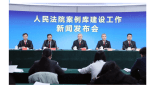
Press conference announcing launch of the case database, including SPC VP Yang, head & deputy head of Research Office, & head of the All China Lawyers Association

The large number of model/typical/exemplary cases that the SPC has issued in the past year makes it clear that President Zhang Jun favors those to guide the lower courts, rather than large numbers of policy documents.  So the decision for the Chinese Courts Case Database to serve as a database for various types of edited and specially selected cases for their persuasive or exemplary value is consistent with the views of President Zhang Jun on the use of cases.  It is also consistent with the views of General Secretary Xi Jinping, who has stressed that “one case is better than a dozen documents (习近平总书记强调, “一个案例胜过一打文件”), 

The SPC has described it as a new public legal service product (公共法律服务产品).  It was launched before the Two Meetings ( National People’s Congress and Chinese People’s Political Consultative Conference meetings) in March (2024) and therefore it was featured in the SPC’s NPC Report.  The principal drafters of the Case Database Work Procedures describe it as useful for promoting the unified application of law and a tool for enhancing resolving disputes at source, that is oriented to both judges and the general public. It is the latest in a series of SPC platforms designed to promote the unified application of law.

The Case Database Work Procedures require a judge to undertake search  when undertaking a similar case search (see my former student’s description of the process). However, the reference case may not be used as the basis of a judgment, but a judge may use it in considering a case and the reasoning of a judgment or ruling, apparently without citation.

Background

The Case Database is yet another product of last year’s thematic education campaign (主题教育).  As described in my article published in US Asia Law Institute’s Perspectives, during the campaign, President Zhang required SPC divisions, offices, circuit courts, and affiliated institutions to undertake research focusing on current significant problems or issues in their area of law or responsibility and write reports proposing practical solutions. One of the problems brought to the surface during that campaign was that [edited] cases issued for guidance (案例指导) were not standardized, timely, comprehensive, or consistent.  Followers of this blog would have known that.

The Case Database Work Procedures provide that the database is the primary responsibility of the Research Office,  also involving other divisions and offices.

  Case Selection Process

The Case Database Work Procedures contains a lengthy section setting out the procedure by which reference cases are incorporated into the Case Database. They can be recommended by lower courts, universities, other institutions, or the general public.  The details of the process for selecting typical [foreign-related] cases contained in my article are consistent with the process described in the Case Database Work Procedures.  It is a bureaucratic process involving multiple levels of review. 

Depending upon the entity that has submitted the case, the proposed edited cases are reviewed by members of the relevant operational division of the SPC.  The Case Database Work Procedures provides that an SPC division (sitting as the professional judges meeting) reviews and discusses a group of cases for proper application of law, reasoning, and ethical orientation (value orientation 价值导向).  If the judges in the relevant operational division consider that certain cases are suitable for inclusion in the database, the division will report the case selectionto the relevant SPC leader for approval.  I surmise that an explanatory report accompanies the selected cases.  The cases are thereafter sent to the Research Office for review. During the review process, the Research Office reviews the format and substance of the selected cases, involving experts in the review.  As part of the formatting process, each case is labeled with a special number (see the attached cases). I surmise the initial approval by the SPC leader is subject to final clearance by the Research Office. Otherwise, the Research Office could be in the awkward position of negating a decision by a leader.  This procedure highlights the unique role of the Research Office at the SPC.

The Case Database Work Procedures also contain a procedure for updating or deleting reference cases that are no longer appropriate.

Case from Beijing Financial Court incorporated into database

The Case Database Work Procedures specify that the application of Case Database cases in the hearing of cases should be incorporated into a judge’s performance evaluation. From the number of WeChat articles on local court websites announcing the good news that one or more of their cases had been incorporated into the database,  it must be useful for court key performance indicators (KPIs).

Comments from judges

I surveyed an unscientific sample of judges on the Case Database, all highly experienced(资深) and located in major cities.  All said that they will refer to the Case Database, as it is required and found helpful when dealing with similar cases. One judge found that access to the database was not convenient. Several judges commented that the number of cases in the database is still small and the cases do not form a whole case group (that is, there are not a sufficient number of cases in a particular area of law), making it difficult for judges to undertake a case comparison.  One judge remarked that the case descriptions are overly abstract, with too many facts about the case omitted. That same judge noted that the names of the parties and case numbers are omitted, making it difficult to track down the original case.  

Comments

As  I wrote earlier, although the SPC describes the Case Database as providing more authoritative, standardized, and comprehensive guidance, with such a small number of cases in the database and such a large number of specialized issues that face Chinese courts daily, as a practical matter it is not a “one-stop platform” for Chinese judges or lawyers.  The insufficient number of details may reflect the designers’ desire to reach ordinary citizens as well as judges.   Although the drafters mentioned that they sought comments on their product, none of the judges I surveyed (from among the busier courts) had commented on the draft version of the product.  So it appears another example of a reform that could have benefited from more input from users, as I discussed in a recent presentation.  In my view, it would also make sense to incorporate SPC-approved typical cases into the database, to make searching easier for judges, lawyers, and others interested in Chinese cases.

I surmise from the procedures in the Case Database Work Procedures that discussing the selection of Case Database cases now occupies a good portion of the work-week of SPC judges. This would be consistent with earlier reforms seeking to focus the work of the SPC on guiding the lower courts.  

The Case Database appears to be reshaping case law with Chinese characteristics.  However, as I wrote earlier,  this also signals the dynamic nature of Chinese judicial policy, as the forms of SPC guidance of the lower courts have further evolved during 2024.  If an updated version of the 2020 rules on similar case search are issued, those would incorporate the Case Database and the Court Answers  Database.

Finally, although one aspect of the Fourth Five-Year Court Reform Plan Outline stressed reducing the administrative-type operation of the courts (去行政化), the establishment and operation of the Case Database evidences that times have changed.


_______________________________________________

Many thanks to an anonymous peer reviewer for reviewing this blogpost.

The Supreme People’s Court’s New Case Database

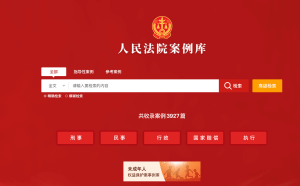
Screenshot of the home page of the case database

On February 27, 2024, the Supreme People’s Court (SPC) held a press conference to announce the new SPC case database 人民法院案例库 (People’s Courts Case Database).  As of this writing, fewer than 4000 cases have been incorporated. This new case database provides a collection of edited cases (案例) rather than original judgments, rulings, or other judicial documents as collected in China Judgements Online (裁判文书网).  I summarize below the process by which edited cases are selected for inclusion in the People’s Courts Case Database.

 The new People’s Courts Case Database is accessible from the SPC’s homepage, which is, the last time I checked, not accessible for those with a US IP address. I trust it can be accessed directly through the above link. It is intended to be accessible outside of China and appears to be hosted by the same platform as China Judgements Online.  Similar to the China Judgements Online Platform, it requires the user to register and provide personal information.  Even after such information is provided, the login process is not smooth, for those without a mainland China identification card.  

This blogpost will address the selection process, the apparent rationale for establishing this case database, and whether it imposes new requirements on Chinese judges. It will flag matters that this case database does not yet address.   

Why this New Case Database?

Press conference announcing launch of the case database, including SPC VP Yang, head & deputy head of Research Office, & head of the All China Lawyers Association

The large number of model/typical/exemplary cases that the SPC has issued in the past year makes it clear that President Zhang Jun favors those to guide the lower courts, rather than large numbers of policy documents.  So the decision for the Chinese Courts Case Database to serve as a database for various types of edited and especially selected cases, such as guiding cases, typical cases, and other types of cases selected for their persuasive or exemplary value is consistent with the views of President Zhang Jun on the use of cases.  It appears from the press conference announcing the Chinese Courts Case Database that launching the database timely was the primary responsibility of the Research Office, also involving other divisions and offices.

The SPC has described it as a new public legal service product (公共法律服务产品), launched before the Two Sessions. It is yet another product of last year’s thematic education campaign (主题教育).  As described in my article published in US Asia Law Institute’s Perspectives, during the campaign, President Zhang required SPC divisions, offices, circuit courts, and affiliated institutions to undertake research focusing on current significant problems or issues in their area of law or responsibility and write reports proposing practical solutions. One of the problems brought to the surface during that campaign was that [edited] cases issued for guidance (案例指导) were not standardized, timely, comprehensive, or consistent.  Followers of this blog would have known that. 

Although the SPC describes the new database as providing more authoritative, standardized, and comprehensive guidance, with such a small number of cases in the database and such a large number of issues that face Chinese courts daily, as a practical matter it will not be a “one-stop platform” for Chinese judges or lawyers.  The SPC requires judges to check it when undertaking a similar case search (see my former student’s description of the process).

  Case Selection Process

The procedure by which cases are incorporated into the Chinese Courts Case Database is analogous, but not identical, to the process by which guiding cases and typical cases are selected.  The details of the process for selecting typical [foreign-related] cases contained in my forthcoming article are consistent with the process described in one of the press releases accompanying the launch of the Chinese Courts Case Database. It is a bureaucratic process involving multiple levels of review. 

Depending upon the entity that has submitted the case, the proposed edited cases are reviewed by members of the relevant operational division of the SPC.  The entire division (sitting as the professional judges meeting) reviews and discusses a group of cases for proper application of law, reasoning, and ethical orientation (value orientation 价值导向).  If the judges in the operational division consider that certain cases are suitable for inclusion in the database, they will be reported to the relevant SPC leader for approval.  I surmise that an explanatory report accompanies the selected cases.  The press release states that the cases are thereafter sent to the Research Office for review. During the review process, the Research Office reviews the format and substance of the selected cases, involving experts in the review.  As part of the formatting process, each case is labeled with a special number (see below). I surmise the initial approval by the SPC leader is subject to final clearance by the Research Office. Otherwise, the Research Office could be in the awkward position of negating a decision by a leader.  This procedure highlights the unique role of the Research Office at the SPC.

Case from Beijing Financial Court incorporated into database

This process appears to involve more reviews than typical cases, but fewer approvals than guiding cases. Therefore cases incorporated in the database should be considered highly authoritative and therefore highly persuasive.  From the number of WeChat articles on local court websites announcing the good news that one or more of their cases had been incorporated into the database,  it must  useful for court key performance indicators (KPIs).

Unresolved Issues for the Case Database

Annually, the SPC issues many reference (typical) cases, as selected by various divisions of the SPC and in connection with a variety of events.   My 2022 blogpost lists about ten different types of regularly issued typical cases. It is clear that guiding cases are the most persuasive and these People’s Court Case Database cases are highly persuasive, but that still leaves many SPC typical cases that need sorting.  One friend knowledgeable about the selection process for typical (model) and guiding cases, particularly in the intellectual property (IP) field, classified SPC Gazette cases as ranking second in prestige, behind guiding cases. The friend described the top ten  and the fifty typical IP cases issued annually as  “the Oscars.” The friend viewed the ten top cases as “best actors and actresses,” and the fifty typical ones as the “best supporting roles.” The friend noted that the digests (要旨) issued by the SPC IP Court are not as influential as guiding cases. My understanding is that lower court IP judges would consider them when deciding cases because they are statements of the view of the SPC IP Court on that particular issue.  

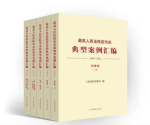
A second issue for all these typical cases is that there does not seem to be a mechanism for reviewing previously issued typical cases to determine whether the case is still valid.  The SPC published a four-part five-volume set of typical cases(最高人民法院发布的典型案例汇编 2009-2021), pictured below. These volumes only include cases published in the SPC Gazette and the SPC’s official website, therefore not including the cases in the journals published by the operational divisions or the National Judges College.  It is unclear whether the SPC plans to incorporate the journal cases into the People’s Courts Case Database.  That would require a significant amount of personnel time to review those prior typical cases for timeliness and consistency. 

Third, the approval process described above will take some time, which means that cutting-edge cases will be found in China Judgments Online rather than this database.

So the database has not yet resolved the problems identified last year but has provided an authoritative database to check.


_______________________________________________

Many thanks to an anonymous peer reviewer for reviewing several drafts of this blogpost.

The Supreme People’s Court’s ongoing contribution to developing foreign-related rule of law (涉外法治)

Press conference announcing the judicial interpretation on the application of international treaties & international practices

What is the Supreme People’s Court’s (SPC’s) contribution to developing the national strategy of “foreign-related rule of law (涉外法治)”?  My forthcoming article in China Law & Society Review sets out a broad framework for understanding what it is, but inevitably, like all academic works, the specific details will be out of date as soon as it is published. It can only be current as of the last time I was able to make substantial amendments, that is, in November 2023.  The slow process of finalizing the article (particularly the references) meant that I could incorporate references to the Tenth Politburo Study Session on Foreign-Related Rule of Law.  Since then, the SPC has continued to contribute to the national strategy of developing foreign-related rule of law. This blogpost flags those recent developments without duplicating what others have already written.  The recent developments include the SPC issuing the following since October, 2023:

  • judicial interpretations;
  • typical cases; and 
  • other judicial normative documents.
  1.  Judicial Interpretations

A September 2023 press release issued along with the fourth group of Belt & Road typical cases (为高质量共建“一带一路”提供有力司法服务和保障——最高人民法院民四庭负责人就发布第四批涉“一带一路”建设典型案例相关问题答记者问) flagged all of these judicial interpretations,. They were described in this October 2023 blogpost as “forthcoming attractions.”

  • December 2023, Decision of the Supreme People’s Court to Amend the Provisions of the Supreme People’s Court on Several Issues Concerning the Establishment of International Commercial Courts(2023).  This LinkedIn post explains the significance of the amendments–primarily to update China International Commercial Court rules to reflect the amended Civil Procedure Law and new provisions on the finding of foreign law in the second interpretation on the application of law to foreign-related civil relations.
  • December 2023, Interpretation by the Supreme People’s Court of Several Issues Concerning the Application of International
    Treaties and International Practices in the Trial of Foreign-Related Civil and Commercial Cases.  The SPC held a press conference (see the photo above) and also issued a related press release (translation here) as well as typical cases (see below).  Justice Wang Shumei (previously the head of the #4 Civil Division) highlighted that this interpretation was needed because the previous provisions on the application of international treaties in the General Principles of Civil Law were abolished when the Civil Code was promulgated, leaving the rules for the application of international treaties unclear.  This LinkedIn post summarizes its content.
  • November 2023 Interpretation of the Supreme People’s Court on Several Issues Concerning the Application of the Law of the
    People’s Republic of China on the Application of Laws to Foreign-Related Civil Relations (II).  As this LinkedIn post details, the focus of the interpretation is on the ascertainment of foreign law.  How to ascertain foreign law has been an outstanding issue, as reflected in articles by SPC judges and several judicial policy documents over the past 10 years.  A paper (Chinese original here) written by CICC expert Xiao Yongping for the 2022 China International Commercial Court appointment ceremony, reviewing cases involving the ascertainment of foreign law flags some of the problems:  “a lack of rules over proof by professional institutions in China has spawned a range of drawbacks, including the vague criteria for determining the admissibility of the opinions of professional institutions, the omission of analysis and reasoning of proof opinions in judgments, and the unclear rules over which party should bear the fees for proof.”

    The interpretation specifies that the burden is on the parties to provide the content of the chosen law if they have a choice-of-law agreement, but it falls to the court to ascertain foreign law if the parties lack a choice-of-law agreement. Other provisions are intended to change the practice of Chinese courts deciding that they cannot ascertain foreign law and it is preferable to apply Chinese law instead. Please see this Library of Congress article for further details.

typical cases

Typical cases are a type of SPC soft law.  They are a tool by which the SPC seeks to unify the judgment (adjudication) standards of the Chinese courts.  They are a means by which the SPC seeks to harmonize the decisions of the Chinese courts to be consistent with SPC policy (or said another way, strengthen the firm guiding hand of the SPC). That guidance can relate to substantive or procedural issues, because the issues that come before the Chinese courts far outpace the infrastructure of existing law, including judicial interpretations.  The number of typical cases relating to arbitration matters therefore also signals that China’s Arbitration Law is insufficient for the current needs of the Chinese courts. Additionally, given the role of the SPC in social governance, typical cases also enable the SPC to do its part to further the latest Party policy, in this instance, the development (construction) of foreign-related rule of law. As highlighted several times on this blog, SPC President Zhang Jun appears to favor using typical cases to guide the lower courts and I expect this website (currently down) is the one that will be repurposed to make various types of typical cases more easily available.

Other judicial normative documents

The document that can be so classified is the  December, 2023  Work Guidelines of the Supreme People’s Court for the One-Stop Diversified International Commercial Dispute Resolution Platform (for Trial Implementation) (One-Stop Platform Guidelines).  Since the China International Commercial Court was established, the SPC has stressed (and the academic world far more!) the innovation of the “One-Stop Platform.”  This new document draws together SPC and lower court experience and thinking on how a “One-Stop Platform” should operate in the Chinese context.  Among other innovations, it has detailed provisions concerning neutral evaluation.  The incorporation of neutral evaluation into the One-Stop Platform Guidelines shows that the SPC (and the Chinese judicial system more generally) continues to make reference to “beneficial foreign/international experience.” 

Concluding Comments

As flagged in several press conferences or press releases issued in recent months, the issuance of these judicial interpretations, typical cases, and other judicial normative documents is linked to the importance the Party leadership places on developing foreign-related rule of law, as illustrated by the November 2023 Politburo study session. As shown by my 1993 article on the SPC, foreign-related matters were historically at the margins of its work.  One old-timer described the #4 Civil Division (the division handling foreign-related civil and commercial matters) to me as “小众“–niche–with a relatively small number of judges and responsible for a more limited range of issues, in comparison to the other SPC civil divisions.

These recent SPC documents taken together, provide insights into the important role of the SPC in developing Chinese law, in this case, foreign-related law–because many important provisions are missing from National People’s Congress (+ its Standing Committee) legislation, it falls to the SPC, through judicial interpretations, typical cases, and documents such as Meeting Minutes/Conference Summaries to fill in the gaps that enable the courts and the Chinese legal system to operate. It should be clear that the SPC is providing some of the basic building blocks for the construction (development) of foreign-related rule of law.
Happy Year of the Dragon to all readers and followers!


More on Supreme People’s Court Typical and Major Cases, or How Typical Cases are “Tempered”

Because the Supreme People’s Court (SPC) is now issuing more and more typical cases, likely because General Secretary Xi Jinping has said “one case is better than a dozen documents (习近平总书记强调, “一个案例胜过一打文件”), this blogpost will provide more background on the Supreme People’s Court’s (SPC) typical (典型案例) and major cases (十大案件). It includes a general description of how typical cases are “tempered.”  For those who miss the reference, it’s to the old Russian book “How Steel is Tempered, pictured above. My understanding is that “major cases” are considered a type of “typical case” for the purposes of the SPC’s required search of cases under its 2020 guidance and so I’ll use the term “typical case” to cover both major and typical cases. I have not seen official definitions of either term.

I’ll first summarize how the SPC views the role of  “typical cases” and the legal basis for issuing them, drawing on what I have previously written and a draft article on the long road to publication,  and then explore a topic little explored in English–how the SPC compiles or edits (the Chinese term is 编写) typical cases.  I have not seen a Chinese article that sorts out the various types of typical cases systematically. As readers of this blog know, I have long had an interest in Supreme People’s Court (SPC) typical /model/exemplary cases( 典型案例) and related types of cases such as major cases (大案件).

The Role of Typical Cases

The SPC issues typical cases as part of its function to supervise and guide the lower courts, deriving from Article 10 of the Organic Law of the People’s Courts. The SPC has done so for many years. However typical cases have taken on a greater role in the Xi Jinping New Era, symbolized by the quote above.

Guiding the lower courts

Typical cases are a type of SPC soft law.  They are a tool by which the SPC seeks to unify the judgment (adjudication) standards of the Chinese courts.  As mentioned before, they are a means by which the SPC seeks to harmonize the decisions of the Chinese courts to be consistent with SPC policy (or said another way, strengthen the firm guiding hand of the SPC).

That guidance can relate to substantive or procedural issues, because the issues that come before the Chinese courts far outpace the infrastructure of existing law, including judicial interpretations. Additionally, given the role of the SPC in social governance, typical cases also enable the SPC to do its part to further the latest Party policy. This is more complex than appears. One aspect relates to issues at the intersection between law and morality, such as the second batch of cases in which the people’s courts promote socialist core values.

Guiding the General Public

The SPC issues typical cases to guide the general public to fulfill its obligations under the popularization of law responsibility system established through a 2017 Central Committee State Council document and implemented through an inter-ministerial joint conference on the popularization of law,   Section 6 of that 2017 documents calls for judge, procurators, administrative enforcement personnel, and lawyers to establish a “using cases to explain the law” system.  The document calls on judges, etc. to collect, sort, research, and issue cases and establish a database, using typical cases for the purposes of guidance, standardization,  prevention,  and education. At the end of 2017, the SPC issued its own document to implement the Party-State Council document, 人民法院贯彻落实〈中共中央办公厅 国务院办公厅关于实行国家机关“谁执法谁普法”普法责任制的意见〉的实施意见》(SPC Explaining the Law Opinions), with several articles promoting the use of typical cases to educate the public.  In January of this year, President Zhou Qiang publicized ten cases illustrating the rule of law in the New Era, praising each case as illustrating the vivid practice of Xi Jinping’s rule of law thought in the people’s courts, and the concentrated embodiment of socialist core values ​​and the spirit of the rule of law.

The cases selected and the extent of detail in typical cases intended to guide the general public are different from those intended to guide the lower courts.

How SPC typical cases are “tempered”

I draw on some writings on how to write  (the Chinese term is 编写, closer to compile) a model case, instructions to the lower courts on how to submit a case,  and the “revolutionary experience” (革命经验) of several friends who have been on the editorial side of typical case publishing to explain how SPC typical cases are “tempered.”    Several have been on the drafting side as well as the editorial side.  Judge Guo Feng’s description of compiling guiding cases also provides insights.

Which SPC institutions issue major and typical cases?

Major cases

The SPC and its constituent divisions and institutions (this is meant to include the China Institute of Applied Jurisprudence and the National Judges College) issue typical cases and major cases.  I am not aware of a document that distinguishes major cases from typical cases. I’ve noticed “10 major cases” in the areas of intellectual property, commercial, and drugs crime law ), but those announcements do not distinguish major from typical.  I surmise the notice that the SPC sent to the lower courts soliciting submissions for major and typical cases sheds some light on the difference, but I have not come across such notices.

Annual major intellectual property cases (and annual typical intellectual property cases are issued by the SPC General Office.  It is my understanding that judges from the SPC Intellectual Property Court (SPCIPC) and #3 Civil Division (in charge of intellectual property) recommended the selected cases.

The #2 Civil Division selects the 10 major commercial cases announced annually.  The 10 major typical drugs cases have been selected by relevant departments of the SPC, perhaps meaning the Research Office together with one of the Criminal Divisions.

I surmise that the vice president in charge of the relevant division or matter has approved their release.

Which SPC institutions issue typical cases?

This expanded, but likely incomplete list supplements an earlier blogpost in which I listed SPC institutions that issue typical cases.  I am not aware of rules governing the approval of SPC typical cases and so the process is understood to be flexible.  It is my understanding from discussions with knowledgeable persons (and as I have written before), that customary practice governs the approval process.  It appears to often be the vice president responsible for the division or institution, possibly involving the SPC President himself.

  1. The SPC General Office (办公厅), edits the Supreme People’s Court Gazette (最高人民法院公报). Readers of this blog should note that the web version does not include all content of the Gazette, unlike the Gazette of the State Council. As an aside, it is unclear how publicity to the reading public is promoted if the full version is not available online.  It appears to be generally inconsistent with the practice of other supreme courts.    The cases in the Gazette include selected court documents (裁判文书选登) and cases  (案例), generally totaling 20-30.  The first type is cases decided by various trial divisions of the SPC and reflects their views on certain issues, while the second type is model cases submitted by the local courts (through the provincial high courts), which have been reviewed by the editor of the Gazette, conferring with the various trial divisions of the SPC if needed.  These cases are considered to be more technical within the court system and are widely considered when judges undertake the required similar case search.
  2.   The SPC  General Office issues monthly SPC typical cases (available here).  These are selected by the division or office in charge of the topic involved, so that typical cases involving family law matters would be selected by the #1 Civil Division, while the Belt & Road typical cases would be selected by the #4 Civil Division.  Sometimes typical cases are issued jointly with a relevant ministry, such as those issued in 2021 concerning 996 labor cases, and would reflect the substantive and political concerns of that ministry.  Some of the cases selected may not have legal significance but are selected to harmonize with the leadership’s current policies.
  3. The Judicial Reform Office issues typical judicial reform “cases” after approval by the SPC’s judicial reform leading small group.  These typical cases are not “cases” in the sense of the substantive divisions of the SPC, but rather are focused on various types of judicial reform projects that the Judicial Reform Office considers are useful experiences replicable by lower courts around the country.
  4.  Selection of People’s Court Cases(人民法院案例选),  a quarterly publication of the China Institute of Applied Jurisprudence (discussed previously on this blog). These cases are published in paper version only, but lower courts subscribe to them widely.  These cases are considered more technical.
  5.  The National Judges College and the SPC’s Judicial Case Academy (located at the National Judges College) edit and issue 中国法院【】年度案例, divided into subject matter, edited by the Judicial Case Academy. These cases are considered more technical.
  6. The publications of each substantive division, all of which contain a selection of cases, are also considered typical, as discussed here, and considered by judges in when hearing cases.
  7. Additionally, as mentioned earlier,  typical cases can be found in the People’s Court Daily and People’s Justice (人民司法).  Presumably, the editors of those publications make the final selection, but likely work with the substantive divisions of the SPC when doing so.
  8. Several of the circuit courts issue a “case a week” and the SPCIPC does so as well.
  9. The SPCIPC issues case gists, also considered analogously to “typical cases” to intellectual property judges. Some SPC circuit courts do as well.

Although, as will be further discussed below,  “political correctness” is considered when selecting typical cases, some of the typical or major cases listed above are selected more for policy reasons, while others are considered by those in the inside as more technical.

How does a case in the local courts become an SPC typical case?

The roadmap from a case in the local courts to an SPC typical case can be gleaned from a detailed notice that the China Institute of Applied Jurisprudence (CIAJ) issued in the spring of 2021. The CIAJ issued the notice to courts at the provincial level (including the Xinjiang Construction & Production Corps  Higher People’s Court and the People’s Liberation Army Military Court), seeking contributions to its Selection of People’s Court Cases (人民法院案例选).  These principles apply similarly to SPC Gazette, typical or major cases that the SPC itself issues, although the format of the published case varies.

The higher people’s courts are in charge of reporting them to the SPC–principle three in the notice (the organization reports them 组织报送)—-although authors theoretically can submit directly. That means that local court judges must obtain internal approval to submit their cases level by level.

I surmise that the gatekeepers at the provincial level vary, depending on the area of law. It is likely that the Research Offices of the Higher People’s Courts are responsible for reviewing draft submissions and recommending ones to be submitted to the CIAJ, while the divisions in charge of cross-border commercial matters would compile cross-border commercial cases for submission to the #4 Civil Division.  It is likely to be a collective exercise at the provincial level, with a final sign-off from a person in a leadership position.

The notice also provides details on what the lower courts should report–the case, which should be published on the SPC case database. However, this does not appear always to be the case, as noted by Professor He Haibo of Tsinghua University (and coauthors) in their article on the transparency of court decisions. The case that the lower court submits is to be reported in a specific edited format (the website of the CIAJ has detailed guidance), with the original judgment or rulings attached. Most SPC  typical cases I have seen do not provide the case numbers for the related cases and in certain cases, the cases themselves are not public.  The recent third batch of Belt & Road typical cases is among the exceptions to the general practice.

As for the type of case analysis that is required:

  1. The case analysis provides guidance to judges and others in the legal profession because it supplements legislation, judicial interpretations or judicial policy documents.  To do so the case must be typical, novel, difficult,  and correct.  As to what that means:
      • Typical refers to the legal relationship, law applied, and the usefulness of the case as a reference for others.
      • Novel relates to legal issues arising after the promulgation of new laws and regulations, judicial interpretations or new policies, or although the issues or although the legal relationships are not new,  new circumstances or technology etc. have emerged, which means the case is novel.
      • Difficult often refers to the law being unclear or the case being controversial.
      • Correct means both legal and politically–the case and the analysis adhere to the concept of socialist rule of law with Chinese characteristics, embody socialist core values, and are consistent with Xi Jinping’s legal thought.   The political correctness requirement is not new–it is consistent with what I wrote about SPC Gazette cases in 1993.  Therefore the typical cases involving the Belt and Road will need to be consistent if not further intended to further China’s Belt and Road policies and other policies relating to cross-border dispute resolution.

2. Analytical style

As Hu Changming (previously mentioned on this blog) wrote earlier:

Case evaluation consists of the comment and analysis of the opinions, reasons, and results in the judgment document by the editor. It is not only a simple repetition of the reasons for the judgment, but more whys…. The evaluation and analysis should be discussed in depth in combination with relevant laws and regulations, and even the legal theory and legal spirit behind the law. A case analysis with a profound commentary is often a small paper with a clear and a strong argument.

3. Selection

A small group of judges or other staff at the SPC reviews the typical case submitted from the provincial high courts.  In smaller divisions, a judge and judge’s assistant are responsible for an initial review, while in larger divisions, a small group of judges and judge’s assistants do so.  But the persons who will be involved in the selection will depend on the SPC institution responsible for the selection.  According to the notice, the CIAJ involves prominent academics in the process, but the initial filtering is likely done by a team involving CIAJ post-docs (I surmise).  Those doing the initial review will select more cases than the targeted number. Generally, the professional judges meeting of the division involved will review the selection, with the deputy and head of the division reviewing the selected cases and determining the final selection to be made to SPC leadership. It is likely that a report accompanies the selection of the typical cases so that those in leadership understand the significance of each case.  Having a case selected by the SPC as a typical case is considered prestigious to the individual and the court involved. (For one of many examples, see this notice about a series published by the Shanghai Financial Court, noting that many of their cases had been selected as Gazette or other types of typical cases).

Concluding comments

Typical cases are one of many tools in the SPC guidance toolbox.  Its major use is to guide the lower courts, given dynamic Party policy and statutory law (and possibly judicial interpretations) that leave courts a great deal of discretion. The SPC uses typical cases to guide the lower courts timely to apply the law and judicial interpretations correctly in specific cases, harmonized with current policy, to better unify judgment (adjudication) standards.

Second, the SPC does so to fulfill its obligations under the popularization of law responsibility system to guide and educate the general public.  This, too, is not new, just repurposed for the New Era.

Third, the fact that some typical cases are selected to harmonize more closely with current policy rather than for their legal significance reflects the fact that the Chinese judiciary operates within a system in which political quality  (政治素质) takes the leading role in the assessment of judges, as exemplified in November 2021 SPC guidance.

___________________________________________

Many thanks to several knowledgeable persons for their comments related to typical cases, which will be further incorporated into a later blogpost. Special thanks to an anonymous peer reviewer for insightful and helpful comments on an earlier draft of this blogpost.

Supreme People’s Court judge convicted of taking bribes

45288972BA_14_fp
Bottega Veneta man bag (©BV)

In a blow to the Supreme People’s Court (SPC)’s efforts to bolster its prestige and that of the Chinese judiciary, a ruling recently published on the SPC’s court database reveals that Ms. Zuo Hong, formerly a judge (with division level rank) in the SPC’s Trial Supervision Tribunal was convicted of accepting bribes.    The published ruling omits her full name and that of others involved in the case.

The initial judgment by the Beijing Eastern District People’s Court (District Court), dated 10 March 2016, from which she appealed was upheld by the #2 Beijing Intermediate People’s Court on 31 May 2016.  Because the amounts involved were small (approximately RMB 70,000, particularly in comparison to many of the other corruption cases that have come to light in the last two years), her one and a half year sentence was suspended for two years.  Although she avoided a jail term, she will be unable to draw on her state pension and cannot be involved directly in the legal profession.

The facts, according to the ruling (which summarizes Zuo’s confession and witness statements of others involved in the case):

The then Judge Zuo received as gifts US dollars (USD) and a BV bag (men’s style) from Judge Hui of the Shanghai Higher People’s Court, Trial Supervision Tribunal (USD $6000) and Mr. Yang, Deputy General Manager of Zhongxia Construction Group (Zhongxia, a Shaoxing, Zhejiang-based private company) (bag and USD $2000). (It appears that the bag was originally intended for Judge Hui.)

Judge Hui and Mr. Yang were classmates.  Judge Zuo, who was contacted by Judge Hui, involved herself in a private lending case in the Shaanxi Higher People’s Court in which a Zhongxia subsidiary was a party (the related judgments are listed in this article). The SPC had ruled on the Zhongxia subsidiary’s re-trial petition and remanded to the Shaanxi Higher People’s Court for further proceedings. During 2014, Judge Zuo traveled to Xian four times on the matter, where she met with Judge Hui and Mr. Yang. Judges Zuo and Hui met with their contacts at that court to set out Zhongxia’s position and to have those views conveyed to the judges directly involved. According to the judgment, the Shaanxi judges met with Judges Zuo and Hui because she was from the SPC and given the hierarchical relationship, it was awkward to refuse to meet.   The case was further discussed by the collegiate panel and  judicial committee and eventually remanded to the Xian Intermediate Court for retrial on the basis that the facts were unclear.

According to this article, the case came to the attention of the Supervision Bureau of the SPC in January, 2015, when its personnel were investigating other cases and her iPhone and BV bag came to their attention.  In April, 2015, the Supervision Bureau opened an investigation file for her case. Judge Zuo  cooperated with the Supervision Bureau’s investigation and handed over the money and bag to investigators.  Her case was transferred to the procuratorate on 12 June 2015, when she was taken into custody. She was arrested at the end of that month.

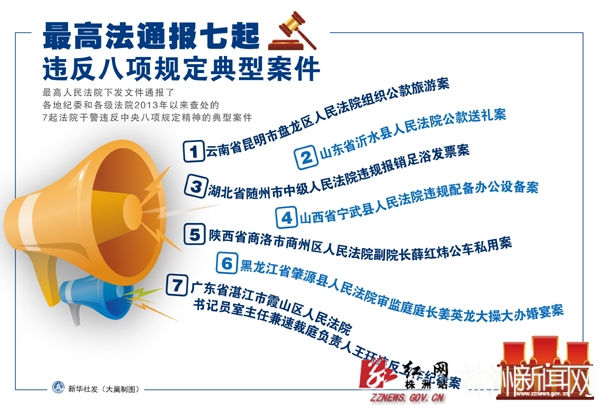
On 1 February 2016, the Communist Party Central Political-Legal Committee designated her case as one of seven typical cases of leadership interference in the judicial process. By that time she had been expelled from the Communist Party under its disciplinary procedures.  At the end of August 2015, Ms. Zuo was formally removed from office.

Comments

It appears from Judge Zuo’s case that the Central Political-Legal Committee’s need to issue a set of  typical cases of leadership interference to scare judges and other members of the political-legal establishment into compliance trumped respect for the formalities of the operation of the criminal justice system. (It is unclear whether the Central Political-Legal Committee considered the impact of that lack of respect on retaining highly qualified judges (and on other legal professionals)).  (This blogpost highlighted the first set of these cases). It is likely that the Central Political-Legal Committee relied on the Party disciplinary decision in her case (see a description here) to make a determination that her case should be made public.

Senior court personnel involving themselves in cases, whether motivated by friendship or bribes, is an ongoing problem. What the two judges did is prohibited by SPC 2015 regulations and previous SPC rules. It is likely that Judge Hui has also been punished for his role in this. It seems unlikely that the Shaanxi judges were punished, as the case does not show that the internal advocacy did not affect the eventual outcome.

The case also illustrates that structural aspects of the court system have left space what is now considered “improper interference” by senior judges and were previously common practice. It also shows that internal court procedures in this case seem to have operated to blunt that interference.

The trial supervision procedure had been one of the soft spots for “improper interference,” although reforms of the trial supervision procedure under the 2015 judicial interpretation of the Civil Procedure Law (and further 2015 SPC trial supervision regulations) should diminish abuses.  Chinese law had given trial supervision judges relatively broad discretion in deciding whether to re-open a case, which is important because China has a two instance system.  (Current reforms require the application for re-trial to be sent to the opposing party and permit the reviewing judge to hear arguments from both sides). Judge Zuo is only one of many trial supervision judges who has been convicted of bribery.  (See recent cases in Liuzhou, Shanxi, and Putian.)

As Professor Li Yuwen of Erasmus University has previously written (and which I quoted in an earlier blogpost):

judicial corruption cannot be divorced from its social context…It is unrealistic to expect judges to operate completely outside the social environment, especially in the absence of a workable system to reduce the incidence of judicial corruption…certain shortcomings of the court system leave the door open for corruption. For instance, the flexible use of the re-trial system [trial supervision] leads to the easy re-opening of cases if influential people wish to interfere in a case.This not only diminishes the finality of a case but also creates opportunities for using personal networking to change a court’s judgment.

Furthermore, the relatively law judicial salary makes judges an easy target for corruption…In modern-day China, a profession’s income is too often linked to the profession’s social status. Judges’ low salaries are not conducive to building self-respect amongst the profession and, moreover, they constitute a major ground for fostering judicial corruption.

How low was Zuo Hong’s salary, that she thought it worth her while to risk her freedom and career for USD $8000?

Case law Chinese style–where is it going?

1343124282_12_dqgeOn 6 January 2015, case law Chinese style (案例指导制度) made the headlines of the People’s Court Daily and the Supreme People’s Court’s (the Court’s) websites, because the Supreme People’s Court president, Zhou Qiang provided an introduction to a book that the Court is publishing on guiding cases. Universities such as Yale, Stanford, and the City University of Hong Kong as well as institutions such as the European Union have held training programs with Court staff on the case method. Numerous academic conferences have been held on the topic in China.  The Communist Party leadership expressed its approval for case law in the 4th Plenum Decision in the following phrase:

  • Strengthen and standardize judicial interpretation and case guidance, and unify standards of applicable law (加强和规范司法解释和案例指导,统一法律适用标准).

As discussed in this blogpost, the Court’s October, 2013 judicial reform plan flagged the importance of case law in this phrase:

  •  “Expand fully the important role of guiding cases and cases for reference”.

This blogpost will look at how the Court leadership understands Chinese “case law” and how it sees case law to be useful to the judiciary.

Waving the flag for case law

President Zhou Qiang’s introduction incorporated both guiding cases, as designated by the Supreme People’s Court under its 2010 regulations, and model/typical cases.

He highlighted the following benefits of case law as:

  • summarizing trial experience;
  • strengthening supervision and guidance [of lower courts by higher courts]
  • unifying the application of law;
  • improving the quality of adjudication,
  • helping establish a judicial system with Chinese characteristics
  • assisting  in resolving the problem of similar cases decided differently;
  • controlling judges’ discretion.

Zhou Qiang did not go into the specifics of the case law system, which Hu Yunteng, the head of the Court’s Research Office,  set out in a January, 2014 article, addressing:

  • distinction between guiding cases and other cases issued by the Court or lower courts;
  • how judges should refer to guiding cases;
  • issues facing the guiding case system.

Judge Hu Yunteng clarifies the point that many other commentators and I have made, that cases selected as guiding or model cases are not the entire judgements, but have been curated and edited.

The distinction between guiding cases and other cases

Judge Hu distinguishes guiding cases (Stanford Law School’s Guiding Case Project translates and comments on them) from model cases published in the Supreme People’s Court Gazette, by the Court itself, and individual tribunals of the Court. (Examples of model cases can be found here and here.)

Judge Hu points out that the title, document number, method of selection and approval, and most importantly, the authority of guiding cases is different.  Guiding cases, unlike model or typical cases issued by the Court or lower courts, must be referred to by all courts in similar cases, and lower courts may refer to guiding cases in the reasoning section of their judgments.

How judges should refer to guiding cases

Chinese judges must focus on the important points of guiding cases, which have been approved by the judicial committee of the Supreme People’s Court, and secures their unifying role in the Chinese court system.They must only be used in similar cases.  Judge Hu distinguishes Chinese guiding cases from Anglo-American precedent, because guiding cases can only be issued by the Supreme People’s Court.  He says that judges may refer to guiding cases in their judgments and distinguish the case before them from a relevant guiding case.

Issues facing the guiding case system

Judge Hu identifies the following issues:

  • The relationship between judicial interpretations and guiding cases, and in which cases guiding cases rather than judicial interpretation should be relied upon is unresolved.
  • Second, the issues in the guiding cases generally are not breakthrough cases and are more “damp squibs.” Judge Hu suggests that the guiding case system address more controversial cases.
  • Third, it is unclear to the lower courts when guiding cases must be used, and the consequences if a lower court fails to use a guiding case on point.
  • Fourth, he admits that too few guiding cases have been issued and suggests that the Court issue a number of guiding cases equal to judicial interpretations.

Comments from the market

An opinion piece in Caixin, reporting on a late December conference at Renmin University on case law, set out comments from some Chinese legal professionals on the case system:

Renmin University Professor Huang Jingping–“very few judges refer to guiding cases”

Peking University Professor Liang Genlin–“the position of guiding cases in the legal system and how they can be distinguished from other cases is chaotic”–clearer rules are needed.

Li Guifang, partner, Deheng Law Office–guiding cases are needed.

Closing comments

It is likely that guiding cases and model/typical cases issued by the Supreme People’s Court will continue to be used to accomplish several goals:

  • Publicize the accomplishments of the lower courts.
  • Distributed as political education or have political purposes.
  •  Convey to the lower courts, lawyers, and the general public the correct position on a substantive issue but also have a political purpose;
  • Provide guidance for judges and lawyers on substantive legal issues;
  • Provide models of correctly decided cases.

Finally, it appears likely that the issue of the authority of guiding cases vs. other types of cases will be set out in regulations at some point.

Open government information litigation in China–an oxymoron?

Individual suing government to release information

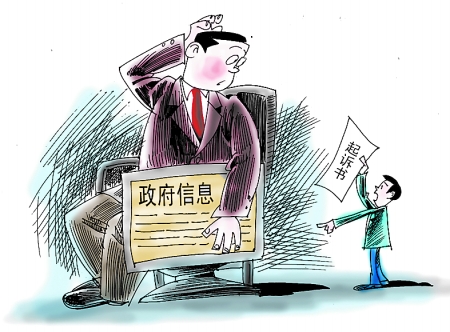
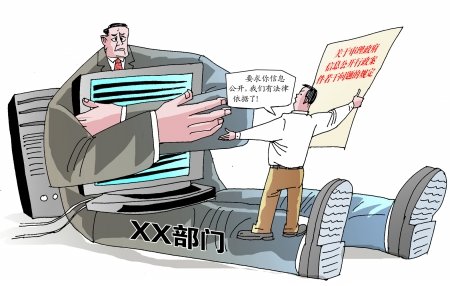
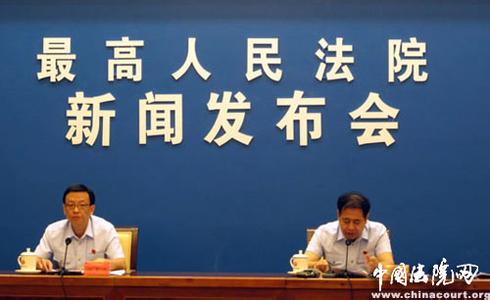
To show that open government information litigation in China is not an oxymoron, and send messages to the lower courts, government, and public,  the Supreme People’s Court (Court)  in a  press conference on 12 September, released statistics and typical open government information cases brought under China’s version of the US’s Freedom of Information Act (and its counterparts elsewhere in world). For the first time, the Court issued 10 typical (model) open government information cases, although it had issued a guiding case earlier.  (The cartoons hint at the difficulties). The underlying issues are relevant to many, including foreign investors and their lawyers.

As others have described, China’s 2007  Open Government Information Regulations give individuals and groups the right to request government information and to challenge the failure to provide it in court. In comparison to the prevalent refusal of government departments to release government information, a small but increasing number of people have dared to take government to court.  In particular (as highlighted by a variety of publications, NGOs, scholars and foundations), China’s environmentalists and environmental groups have been very active in using the regulations and litigating the failure of local government to release environmental impact statements.

(artist Wang Weibin, published here)
Individual suing xxx department for information


What are the  “take-aways” from the press conference?

  • Statistics on open government information cases;
  • The rationale for issuing typical/model cases;
  • 10 typical/model cases;
  • Possible rationale for releasing the cases now.

Statistics on open government information cases

The Court revealed that the number of open government information cases are increasing, although the numbers are small in comparison to commercial cases. In 2013, the Chinese courts dealt with almost 5000 open information cases (despite the difficulties of suing government to release information highlighted by the cartoons). These cases account for the greatest proportion of administrative cases. Li Guangyu, deputy head of the Court’s administrative division said that the courts have helped protect the individual’s “right to know.”  In understanding the demands of the Chinese public for more government information (and the frequent refusal of government to provide it and comply with legal requirements when doing), these cases represent the tip of the iceberg. Most people will accept, rather than challenge a government refusal.

Why did the Court issue these cases?

The Court issued these ten government information cases for several reasons:

  • In May, 2014, the Court formally announced it would issue model cases monthly (see the earlier blogpost on the subject).  It has decided that issuing typical/model cases helps to guide the lower courts before judicial practice has settled enough and Court manpower permits issuing a judicial interpretation.
  • The single Guiding Case that the Court issued early addressed a narrow set of issues, and issuing these cases provides guidance on a wider range of issues.
  • The Court is sending a message to government departments, including central government ministries to comply with obligations under the Open Government Information Regulations to set out the legal basis for the decisions and their rationale, or risk having leading officials sitting in the defendant’s  seat in a courtroom.
  • The Court is signaling government to increase government transparency (within the many limitations imposed) and improve their open government information procedures or risk losing court cases. The behavior of government departments, including on the central level, in dealing with open government information requests seen in the cases indicates that educating government officials on compliance with the legislation is needed.
  • The cases are needed guidance to the lower courts.  Because the Open Government Information Regulations are not specific enough, they create difficulties for the lower courts trying to apply them to a large range of cases raising many different legal issues.  The 2011 judicial interpretation does not deal with the principal recurring issues. These cases help unify judicial standards on a range of issues.
  • The cases send a message to the general public that the courts are protecting the interests of the individual against government action (or inaction) and that these disputes can be resolved through litigation rather than petitioning.
  • The cases provide a heads up to companies and their lawyers that members of the public (or competitors) may attempt to access their information submitted to or relating to their transactions with government.

What are the 10 cases?

Li Guangyu, the deputy head of the administrative division of the Court, who was involved in drafting the 2011 judicial interpretation on open government information, highlighted the cases and the issues raised.  As discussed in earlier blogposts,the typical/model cases are not full decisions by the lower courts, but brief summaries.  The important part is the section labeled “significance of the case.” Brief highlights include:

  1. Case one (relates to the release of an environmental impact statement. According to earlier reports, many open government information cases have involved citizen demands for the release of this information.
  2. Case two, Xi Mingqiang v. the Ministry of Public Security. As could be expected, the information requested was classified, and the court refused release.  It is unclear whether the court considered whether the information had been properly classified.
  3. Case three, Wang Zongli v. the Tianjin Heping District Real Estate Administration Bureau (Tianjin Bureau), relating to a major social issue, the expropriation of real property and compensation of owners. The plaintiff demanded the release of the contract signed by the developer with a center under the Bureau for payment of government fees for expropriation (which would reveal the gap between the compensation to owners and the amount paid to government (issues discussed here).  The court determined that the Tianjin Bureau had failed to address whether the information requested by the plaintiff was considered a commercial secret.
  4. Case four,  Wang Zhengquan v. Hecheng [Shandong] Real Estate Administration Bureau, (relates to another major social issue, the allocation of low cost rental housing), involving the conflict between personal privacy (of the persons allocated housing) and the individual’s right to know;
  5. Case five, relates to issues in case three, the expropriation of rural land and the compensation of farmers, and the refusal of local government to release documents related to expropriation of land.  These issues already account for many  “mass incidents” and are likely to becoming even more important with the government’s planned urbanization of the countryside.
  6. Case six: Zhang Hongjun v. Rugao Municipal Price Bureau, in which the plaintiff challenged fees imposed by a township government, raising issues of access to government internal information.
  7. Case eight, a case against a Zhejiang Township government, in which the plaintiff sought details about land use and expropriation of property, raising issues of access to information created before the Government Open Information Regulations became effective.
  8. Case nine, Zhang Liang v. the Shanghai Urban Planning and Land and Natural Resources Bureaus, in which the plaintiff sought access to payment concerning 116 parcels of land granted by the government. It is yet another case relating to access to information about urban land use, and the government refusal to understand and reply flexibly to a request for information by an ordinary citizen.
  9. Case ten: If You Like Marriage Company Ltd. v. the Ministry of Civil Affairs, requesting information concerning the registration of the China Society for the Research of Marriage and Family (under the All Women’s Federation).  It is yet another case in which a government department (this time a central government department), failed to set out the legal basis and rationale for refusing to release government information.

Why now?

The Court may have several reasons for publicizing these cases now.

  • They are related to the ongoing drafting of the overhaul of the Administrative Litigation Law.
  • They are related to greater transparency requirements (affecting business) being rolled out under the Company Law Reforms and set as goals in the Third Plenum Decision
  • Government control of information, the individual’s right to know in the Internet age, and the role of the courts vis a vis government are major issues that may be addressed in the upcoming Fourth Plenum of the 18th Central Committee of the Chinese Communist Party.  That these issues are on the Party agenda is indicated by the fact that a Central Party School official published on these issues earlier this year.

If others would like to contribute further analysis of these cases or further information about any of them, please use the comment function.

More on the Supreme People’s Court and Typical Cases

SPC announces model cases

In a press conference on 30 April, the Supreme People’s Court (the Court) announced that it will more systematically use model (typical) cases (典型案例) to guide the lower courts. The Court is increasingly using model/typical cases.  My recent blogpost  explains what model cases are, which courts issue them and the authority of model cases.

One of the initiatives the Court highlighted in its October 2013 judicial reform plan is “expanding fully the important role of leading cases and cases for reference.” because its leadership considers model cases an important supplement to legislation, judicial interpretations, and “guiding cases” (a special category of cases so designated by the Court).  Mark Cohen, of chinaipr.com, has blogged on the Court’s use of model cases in the area of intellectual property law.

The Court will issue at least five model/typical cases on a monthly basis, selected from cases submitted by the lower courts.  The cases can be accessed through the Court’s Cases in Chinese Courts portal. The ones on the website are currently limited to those issued in 2013 and 2014.  Unfortunately, a search functions appears lacking.  Despite the limitations, it is a further development in the use of case law “with Chinese characteristics.”


The Supreme People’s Court Releases 7 Typical Cases of Judicial Misbehavior


SPC Releases 7 Typical Cases of Judiicla Misbehavior
SPC Releases 7 Typical Cases of Judicial Misbehavior

On 15 April, the Supreme People’s Court (Court) issued its latest model (or in this case, (all too typical cases): 7 typical cases of judicial misbehavior.

It is part of the name and shame campaign of the Communist Party’s Central Disciplinary Inspection Commission (CDIC), that appears to have started in September of last year, in which the CDIC releases typical cases of official corruption or other abuses, in violation of the Communist Party’s Eight Point Regulations (aimed at curbing official abuses). As reported  in a recent Wall Street Journal article, the CDIC has accelerated the release of cases on its website  from weekly to monthly.

Although cases previously released on the CDIC website have included some cases from the judiciary, this is the first time that the Court has released such cases.

The Court issued a document summarizing the cases to the lower courts and to the CDIC (which often takes the lead in investigating judicial misbehavior, because most judicial officials are Communist Party members).

The Seven Cases

Touring at public expense

  1. Touring at public expense (a group from Kunming (Yunnan Province)’s Panlong District Court used RMB 88,000 in public funds to visit the beach resort of Sanya after participating in a training course in Haikou);
  2. Using public funds for gifts (a Shandong district court court president arranged for the purchase of RMB 23,000 in gift cards at a local supermarket and obtained reimbursement as “offiice supplies.”)
  3. Obtaining reimbursement for foot massages (two Hubei Province Intermediate Court Division heads submitted RMB 2500 in foot massage receipts; they and the Deputy Court President who approved the reimbursement were punished).
  4. Wasteful procurement of office equipment (a Shanxi District Court spent over RMB 200,000 on office equipment ).
  5. Using government vehicles for private use (a Shaanxi Province local Deputy Court President and two judicial policemen toured a scenic spot on the way back from an enforcement action);
  6. Large scale wedding banquets (a Heilongjiang county judge held large wedding banquets for his daughter and accepted RMB 27500 in monetary gifts);
  7. Office misbehavior (a Zhanjiang (Guangdong Province) )District Court division head held a meeting with a litigant wearing slippers and was found to be playing a game on his office computer).

using government vehicles for private purposes

These cases are typical

According to an analysis done by the People’s Daily Overseas Edition, these cases are typical of the cases released by the CDIC.  Some of the highlights:

  • Almost 40% of the CDIC cases released involved improper use of public funds or government vehicles;
  • Of those, almost 25% involved touring at public expense;
  • A significant number involved improper reimbursement;
  • Some other “typical cases” involved officials playing computer games in the office (although there were local variations in this category);
  • About 12% involved “over-the-top” purchases of office equipment or building construction;
  • the infractions were relatively minor; and
  • The cases involved local court judges rather than those in provincial level higher people’s courts or the Court itself.

Why were these cases released?

It appears likely that the Court released these cases because the CDIC issued a document requiring all government departments and SOEs to provide typical cases (although the document does not appear to have been released publicly) and the Court need to show that it was complying with this document.

Other likely reasons would be similar to those for other government officials: scare judicial personnel, especially those in leadership positions, into complying with Party restrictions.  As the above graphic shows, it is meant as a bullhorn to those in leadership position in lower courts.  The Court leadership realizes that the widespread public impression that judicial officials fiddle the system and do not take their work seriously is a threat to the court system.  The typical cases are intended to provide evidence to ordinary people that the government is serious about corruption in the judiciary, and also to encourage people to report abuses.  Why these particular seven cases were selected for release is not known.

The cases were released for the political reasons, not the substantive reasons discussed in my recent blogpost.