Category Archives: administrative cases

Benchbooks (Judicial Handbooks) for the New Era

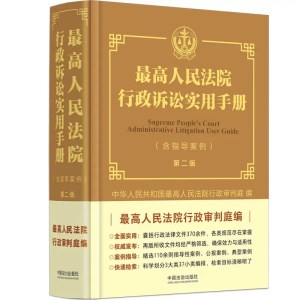
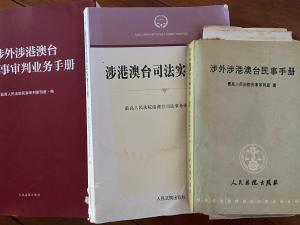
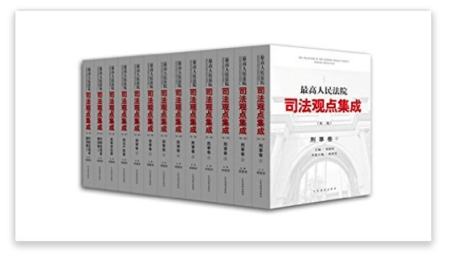
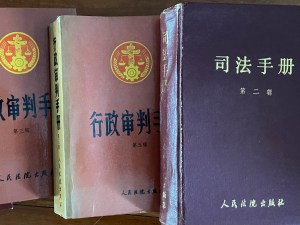
A recent message in the WeChat public account of the Supreme People’s Court (SPC)’s Administrative Division was devoted to promoting its new book,  Supreme People’s Court Administrative Litigation User’s Guide (Administrative Litigation User’s Guide (2nd edition), 最高人民法院行政诉讼实用手册), shown in the photo above.   Had the SPC’s #4 Civil Division had a WeChat public account last year when they published 涉外涉港澳台民商事审判业务手册( Foreign-Related, Hong Kong, Macao and Taiwan Related Commercial Trial Work Guide — “Foreign-Related Judicial Handbook”), I am sure that I would have received a similar message.  I had previously thought that judicial handbooks were a historical artifact of the days before electronic databases.   In my 1993 article, I discussed the phenomenon of judicial handbooks:
..A …problem is presented when the lack of consistency in issuance and authority makes it difficult for the lower courts to know when an interpretation is no longer valid…The [SPC] tries to cure these problems by issuing handbooks for adjudication in various subject areas….The Research Office and other divisions of the Court compile adjudication handbooks such as Sifa Shouce [司法手册] (Judicial Handbook), many of which are internal publications.

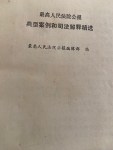
Some of those historical handbooks can be found in my research library of Supreme People’s Court publications–see here and below:

Two Administrative Litigation Judicial Handbooks and the second volume of the Judicial Handbook

Why would specific divisions of the SPC return to the practice of issuing judicial handbooks in printed form?  How does it link with the role of the SPC? What sources have the editors included, and what could students, scholars, and practitioners learn from that?

Official reasons for publishing these print books

The authors of the  Administrative Litigation User’s Guide describe the reasons for publishing the book as follows:

the Supreme People’s Court, on the one hand, provides professional guidance (业务指导) by formulating judicial policies 司法政策), issuing guiding cases, and making judicial replies (司法答复); on the other hand, it strengthens research and collects problems, and formulates judicial interpretations based on the accumulation and maturity of judicial practice. At present, the comprehensive judicial interpretation of the Administrative Litigation Law, the judicial interpretation of administrative agreements, and the judicial interpretation of the appearance of administrative agency heads in court to respond to lawsuits have been formulated and issued…, and there are more and more normative documents and guiding cases related to administrative litigation. In addition, with the increase in the number of administrative cases, more judges have joined the administrative trial team. In the process of gradually becoming familiar with administrative litigation, they urgently need to master the  relevant provisions that have been issued and learn the relevant guiding cases. However, judicial replies are internal in nature, with a large volume and lack of a unified release mechanism. The channels for obtaining them from the outside world are limited, which is time-consuming and laborious.

According to the announcement, the audience for the Administrative Litigation User’s Guide is staff in administrative agencies, judicial practitioners, and researchers of administrative law [students and academics].  The editors note that to provide readers with reference materials and to make the book more practical, they have included guiding cases, SPC Gazette Cases, and typical cases from the last 10 years.

The #4 Civil Division authors/editors say their handbook is urgently needed by front-line judges and as a reference book for judges, arbitrators, lawyers, and other practitioners, and, I would add, to students and scholars seeking to decode the foreign-related and Hong Kong, Macau, and Taiwan-related operations of China’s judiciary.

Legal basis for publishing these books

Publishing these books is linked to Article 10 of the Organic Law of the People’s Courts and related documents, which authorize the SPC to supervise and guide(监督指导) the lower courts.

Comments on the content

Both books contain judicial interpretations and a range of SPC guidance documents such as meeting minutes/conference summaries (会议纪要), notices, and replies to requests for instructions, signaling to the reader that they are important sources of reference for judges and that “soft law” may understate the way that meeting minutes are understood within the Chinese court system.

The authors/editors of the Foreign-Related Handbook included many other types of legal provisions they considered relevant for hearing cross-border cases, such as relevant national legislation, administrative regulations, such as foreign exchange regulations, Chinese versions of international commercial rules (Incoterms, ICC Uniform Rules for Demand Guarantees (URDG 758), ISP 98) ), Hague Conventions to which China has acceeded,  and civil judicial assistance treaties, as well as some of the National People’s Congress Standing Committee decisions related to some of the international conventions.  The #4 Civil Division did not include guiding, typical cases, and other types of cases it issues for reference.  In my view, it was a practical decision that does not imply that those types of cases are irrelevant to judges hearing cross-border commercial cases, but rather that including cases would make the book too long to be published as a single volume.

Comment

The underlying rationale for publishing these judicial handbooks has not changed much in the past 30 years.  Judges responsible for processing cases efficiently and correctly face similar challenges:  sorting out the current legal position on an issue quickly despite the piecemeal way that the SPC develops the law, locating and assessing the validity of historical documents, easily identifying special arrangements, and for cross-border cases, understanding how to correctly implement international conventions, treaties and practices and correspondingly arrangements or related provisions concerning cases involving Hong Kong, Macau and Taiwan parties.

One experienced senior judge in a local court noted that judges are often asked to rotate among divisions (tribunals) periodically.  Senior judges recommend that new joiners read these handbooks to familiarize themselves quickly with a different (and complicated) area of law.

From the left, the 2024 Foreign-Related Handbook, a 2013 Hong Kong, Macau, Taiwan Related Judicial Handbook, and the 1992 Foreign, Hong Kong, Taiwan-Related Civil Matters predecessor volume


What the 2024 SPC specialized report on administrative litigation work reveals

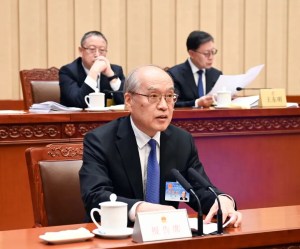
Zhang Jun delivering the specialized report
In November 2024, Supreme People’s Court (SPC) President Zhang Jun delivered a specialized report on the court system’s administrative litigation work (关于人民法院行政审判工作情况的报告) to the National People’s Congress Standing Committee (NPC Standing Committee).  The report showcases the accomplishments of the courts in administrative litigation and related administrative dispute resolution over the past 10 years.  This blog post provides a  detailed summary of the most significant points of the specialized report.  My comments are italicized for the most part.

Why this report?

As I wrote last year, I surmise that the NPC Standing Committee requested the SPC submit a specialized report on administrative litigation to promote (the Chinese phrase is “倒逼 “) significant changes to resolving administrative disputes, that is, disputes between individuals or enterprises and government agencies, by agreeing to report on administrative litigation.   Administrative cases are more sensitive because as  President Zhang Jun reported: “administrative cases are connected to administrative organs on one end and the people on the other, and are directly related to the people’s trust in the Party and the government and their confidence in the socialist rule of law.” The introduction to the report captures the themes of  administrative litigation work of the court system in this excerpt from one anodyne sentence:
New era administrative adjudication work…tried administrative cases impartially and promptly, resolved administrative disputes, supported administration according to law, protected the legitimate rights and interests of citizens, legal persons and other organizations, and supervised administrative organs in performing their duties in accordance with the law, making positive contributions to the integrated construction of a country ruled by law, a government ruled by law, and a society ruled by law.
This group of slogans (提法)signals themes seen in the rest of the report: courts do only part of their work through hearing cases;  they are encouraged to resolve the substance of an administrative dispute; the judiciary supports and supervises administrative agencies; they protect the rights of individuals, legal persons and others; and these all actively contribute to the Party and state’s goal of a country governed by law, a government governed by law, and a society governed by law  (为一体建设法治国家、法治政府、法治社会作出积极贡献).

Overview and drafting

The report covers all types of administrative cases the Chinese courts hear. Underlying this report are hundreds of hours of drafting, soliciting data and comments from related offices and institutions. The Administrative Division of the SPC took the lead in drafting the report and must have solicited contributions from the Intellectual Property Court (Tribunal), #3 Civil Division (intellectual property), and the Natural Resources and Environmental Division.  Administrative divisions of Chinese courts, including the SPC, hear or consider a substantial portion of, but not all, administrative cases and matters.   For intellectual property (including anti-monopoly) and environmental and natural resources cases or matters, the relevant specialized divisions of the SPC (and local counterparts) are responsible.  The report incorporates the SPC’s response to a research report on administrative adjudication work prepared by the NPC Standing Committee’s Supervisory and Judicial Affairs Committee (as it would follow the requirements discussed in this earlier blog post).  In a forthcoming article, I will have more to say about specialized reports as a form of NPC Standing Committee oversight.

 Summary of the Report

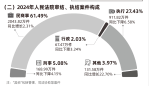
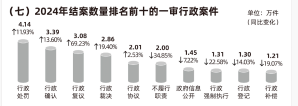
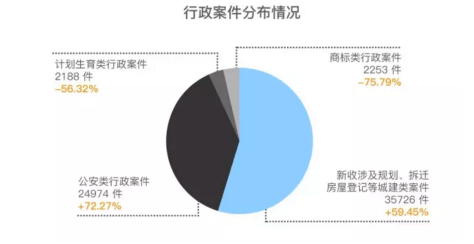
The report’s structure is the usual one for specialized reports: highlights of the accomplishments of the Chinese courts in administrative cases since 2015,  when the SPC last reported to the NPC Standing Committee on the hearing of administrative cases, followed by a summary of outstanding challenges and suggestions to the NPC Standing Committee for future work. A single sentence in the introduction reveals information about the relationship between the Party leadership and the SPC in reporting to the NPC Standing Committee.  “In April 2024, the Party Leadership Group of the Supreme People’s Court submitted a special written report to the Party Center for the first time on the administrative trial work of the people’s courts.”  What this signals is that submitting a written report to the Party Center is now part of the SPC’s procedure in preparing such specialized reports but was not required in 2015, when the SPC last reported to the NPC Standing Committee on administrative litigation. It would have been part of the drafting process of the 2022 specialized report on foreign-related litigation work as well as the 2023 one on environmental and natural resources litigation work. Similar to the foreign-related adjudication report,  the introduction takes an inclusive view of accomplishments: judicial interpretations, policy documents, typical and guiding cases, as well as correctly deciding important cases.  My summary has omitted most case summaries included in the report. The first part of the report provides overall statistics. From 2016 to September 2024, people’s courts at all levels heard a total of 2.421 million first-instance administrative cases and handled 1.841 million administrative non-litigation enforcement cases  (see below for an explanation of these cases) (so many more than foreign-related cases  (384,000 from 2013-2022)).  Administrative cases account for a small proportion of the cases in the Chinese courts. See this excerpt from this year’s SPC report to the NPC, showing that only 2% of the cases in the Chinese courts were administrative. The causes of action that accounted for a relatively high proportion of the concluded first-instance cases were administrative penalties such as fines and administrative detention, administrative confirmation such as social security qualifications or work-related injury recognition, administrative rulings such as confirmation of natural resource ownership, and “non-performance of duties” such as requests for administrative agencies to perform their statutory duties. See this excerpt from the NPC report providing this information as a graph. distribution of 1st instance administrative cases

SPC Accomplishments

 1. Serving the overall situation and promoting high-quality development with fair justice

This section first highlights improving the business environment.  It reiterates one of the themes of the report: “we supervise and correct illegal administrative behaviors that infringe on the legitimate rights and interests of various business entities, and strongly support administrative agencies in performing their regulatory duties and maintaining market order according to law.”  Accomplishments include:
  • issuing typical cases on unified market administrative litigation; hearing 316,000 first-instance administrative cases related to business, such as administrative licenses, administrative agreements, administrative promises, and administrative penalties with an average annual growth of 23.3%.  The report does not explain the high growth rate.
  • serving the innovation-driven development strategy according to law (intellectual property and related issues). This section flags that the courts heard 138,000 first instance intellectual property administrative cases involving intellectual property rights with an average annual growth of 20.3%, also with no explanation. The remainder of this part flags the work of the SPC outside the courtroom (about which I am writing more):
On administrative cases in specialized areas, such as environmental and natural resource protection and real estate expropriation cases: 118,000 first-instance environmental and natural resource administrative cases, with an average annual increase of 14.9%, also without explanation; 425,000 first-instance administrative cases involving house and land expropriation and demolition, with an average annual growth of 8.8%, also with no explanation as to reasons.

2. Justice for the people and safeguarding the well-being of the people with fair justice

This section focuses on cases related to people’s livelihood (“民生”). Again, it reiterates the themes of support vs. supervision and substantive resolution of administrative disputes to maintain social stability.  Useful information in this section:
  1. The number of first-instance administrative cases has increased by an average of 5.3% annually since 2016.
  2. The SPC will improve its mechanisms for dealing with applications for the retrial of administrative cases, including pre-retrial resolution.  It can be surmised that the number of applications for the retrial of administrative cases at the SPC is close to pre-Covid numbers, but statistics are not available. Jiangsu will pilot legal aid in administrative litigation.  This signals the importance of legal advice for both efficient case resolution and better communication with litigants.
  3.  The SPC emphasizes that it supports administrative agencies in punishing illegal acts such as endangering food and drug safety, damaging the ecological environment, and withholding wages for migrant workers.  It also signals that the courts will supervise those  with the occasional [common?]  problem of “heavy penalties for minor offenses” [likely linked to profit-making administration].  The SPC signals that those issues should be handled outside the courtroom, through outreach to law enforcement, to promote fairness and openness, commensurate penalties, and combining penalties with education.
  4.  On the substantive resolution of disputes, the report uses as an example a case handled by the SPC and later provides an example of an analogous case handled by the military courts. For the outside observer, the SPC case provides an example of the SPC’s unique role. The cases involved three brothers surnamed Sun who filed 137 administrative lawsuits and applications for retrials related to social insurance and were long-term petitioners. The original trial court dismissed the cases because the statute of limitations had expired. After review [it is not explained how their case came before the SPC], the SPC took the view that the brothers’ demands were basically reasonable and could be resolved according to the current social security system, although the ruling by the trial court was not wrong.  The SPC notes that the dispute was unresolved and might even intensify. Therefore, mediation was organized together with the administrative authorities, and a package solution was reached. The case demonstrates the importance of substantive resolution of administrative disputes and for litigants, making a fuss to resolve a dispute.
  5. As an example of developing the “Fengqiao Experience” in the new era,  1,966 administrative dispute resolution centers were established.  (At least two have been established in Shenzhen, and I hope that they welcome foreign visitors.)
3. Organic Link Between Law Enforcement and the Judiciary
This section emphasizes that the courts have a statutory duty to supervise government action and that “supervision means support and support means supervision.”  Examples of supervision include:
  1. A limited number of cases (2664) in which courts engaged in an incidental review of normative documents.   That is consistent with academic research.
2.  Court supervision of administrative action by refusing to enforce certain non-litigation enforcement cases.  As explained in this academic article, when administrative agencies apply to courts to enforce an agency decision when the persons involved do not voluntarily fulfil the obligations required, a court will review the legality of the administrative decision.  The report states that 368,000 administrative non-litigation enforcement cases were handled by courts ruling either not to enforce or not to accept the enforcement case, accounting for 20% of the total number of administrative agencies’ applications for enforcement. This number is larger than what I have seen elsewhere. 3.  The SPC, the Supreme People’s Procuratorate, and the Ministry of Justice established a “3+N” working mechanism with the National Development and Reform Commission, the Ministry of Finance, and the Ministry of Natural Resources.  The goal of the mechanism to analyze and evolve measures to deal with frequently arising administrative disputes.  [These disputes are presumably related to housing demolition]. 4.  Eight courts in Beijing have established an administrative law training base for officials using case-based law teaching. Courts in several provinces have established a regular consultation mechanism with administrative agencies. 5. The rate of administrative agency heads appearing in court to respond to lawsuits in the first instance has steadily increased year by year.  For more on this system with Chinese characteristics, see these academic articles for more details. 6. As I wrote last year, the SPC works with the Ministry of Justice (and correspondingly, lower courts do the same with justice authorities) to encourage litigants to seek administrative reconsideration before going to court. 102,000 first-instance cases that have been reviewed after administrative reconsideration were heard. Last year the number of administrative reconsideration cases exceeded administrative litigation cases for the first time.

Administrative Litigation-Related Judicial Reform

This section, among other content, summarizes the administrative litigation reform measures the SPC has undertaken and the expansion of its “guidance toolbox” (监督指导的“工具箱”).  I will have more to say about the SPC’s guidance toolbox in an article to be published later this spring.
  1. The SPC has implemented the arrangements of the Party Center on jurisdiction in administrative cases and has established courts with cross-administrative jurisdiction, such as the Beijing No. 4 Intermediate People’s Court and the Shanghai No. 3 Intermediate People’s Court. See related academic research (but behind the paywall).   The SPC issued procedures on simplified procedures, used in 149,000 first instance cases.  The military courts have implemented administrative litigation–see this summary of the authorizing  notice issued by the Central Military Commmission’s Political-Legal Commission.  However, related information is scarce.
  2. On trial supervision, 1.209 million administrative cases of second instance were heard in accordance with the law, with a retrial rate of 7.2%; 327,000 cases of various types of retrial applications were handled (unclear how many at the SPC), and 1,604 cases of protest by the procuratorate were heard.
  3. I’m personally glad to see the SPC use the phrase “guidance toolbox,” as that is how I have visualized it. That toolbox includes the platforms Court Answers Platform and the People’s Court Case Library, as well as the more traditional guiding and typical cases.
  4. President Zhang Jun thanked the NPC Standing Committee for supporting the administrative litigation work of the courts through promulgating legislation and authorizing pilot projects.

Challenges

  1. Law-based governance needs to be improved. The large number of cases in some areas (unspecified) is not only linked to the interests of ordinary people but also reflects that the link between administrative enforcement and the judiciary needs to be improved. Some judges deal with cases mechanically and are not easily able to resolve administrative disputes from the source by communicating with administrative agencies on solutions to avoid future cases.
  2. The courts need to improve joint efforts to resolve administrative disputes in substance. This is reflected in the high appeal rate and the high rate of application for retrial.  However, some [unnamed] administrative agencies are unwilling to resolve administrative disputes on their own initiative or correct illegal administrative behavior and do not implement court decisions adequately or in a timely manner.  Problems still remain with agency leaders appearing in court.
  3. The smooth connection between pre-litigation mediation, administrative reconsideration, and the administrative litigation of administrative disputes is lacking.
  4. Some disputes involve multiple regulators, and therefore, a plaintiff needs to sue each regulator separately rather than bringing a consolidated procedure.

Improvements Needed

  1. Uphold Party leadership of the judiciary.  This implies local people’s courts regularly reporting to local party committees, informing the government about administrative judicial work in their jurisdictions, closely relying on the leadership of the Party, and actively seeking government support to promote the resolution of complex contradictions and problems involved in administrative cases.  Zhang Jun stated: we must look at these cases from a political perspective and handle them according to  the rule of law, and act “if I were suing.” 
  2. Better serve the high-quality development of the economy and society. This means correcting agencies using administrative power to exclude and restrict market competition and to serve the strategy of constructing a unified national market. On the topic of profit-seeking administration,  it calls for local courts to supervise the illegal use of administrative means to intervene in economic disputes and protect property rights and strengthen judicial supervision of administrative measures such as sealing, seizure, freezing, and administrative compulsory execution. This was mentioned just as “deep-sea fishing”  by administrative agencies came to national attention. Finance, land, and employment administrative cases were highlighted.
  3.  The report reiterates the organic connection between administrative cases and other related procedures such as administrative reconsideration, procuratorate oversight of administrative matters, pre-litigation mediation of administrative disputes, and legalization of petition work.  This includes: improving legal aid for administrative litigation (as mentioned above),  requiring judges to clarify and guide litigants in administrative cases; implementing a pre-trial meeting system and other measures.  This section stresses the role of mediation and emphasizes improving the reasoning of decisions. On the trial quality management indicator system,  the SPC calls for implementing related trial management measures suitable for administrative cases and shifting the focus of trial work from “whether the case is closed” to “whether the dispute is resolved”.  Any reader who has made it thus far in this summary would not be surprised.
  4. On supervision and support,  the SPC has several suggestions:
    1.  regarding areas where analogous cases frequently arise, create an analysis and notification system to report to the local Party Committee cases that administrative agencies lose and their implementation of effective judgments [presumably those that they lose]; report typical cases to administrative agencies, and strengthen coordination.
    2. further promote the increase in the rate of administrative agency leaders appearing in court to respond to lawsuits, encourage administrative agency leaders to “appear in court and speak out.”
    3. On future SPC administrative litigation judicial interpretations and policies, the report mentions the drafting of judicial interpretations and judicial policies such on housing expropriation and compensation on state-owned land; regulatory documents for the review of administrative documents in the course of administrative litigation, and joint trial of civil disputes, and other measures for unifying legal standards in similar cases. Another issue that the SPC is considering is identifying and regulating abusive administrative litigation, similar to other areas of the law.

Concluding Remarks

President Zhang Jun concludes by suggesting the reform of the jurisdiction system of administrative cases, in which intermediate courts hear major and complex cases; basic level courts hear simple cases through centralized jurisdiction (concentrating them in one basic level court); and the role of the mediation system in resolving administrative disputes is improved.  He also suggests amending the Administrative Litigation Law to improve the linkage between administrative reconsideration and administrative litigation and improve alternative methods to resolve administrative disputes.

A Few Comments

This specialized report provides a useful glimpse into Chinese administrative dispute resolution in the New Era.  For the outside observer, many elements of administrative justice/administrative dispute resolution with Chinese characteristics are visible.  Among those, as stressed in the summary above, are the multiple mechanisms for supervising administrative agencies outside the courtroom and the growing importance of mediating administrative disputes.   _______________________________ Many thanks to Professor Chen Tianhao of the Tsinghua University School of Public Policy and Management for his comments on an earlier draft of this blogpost!

Promoting Legal Change Through Reports to the NPC Standing Committee–Reducing the Number of Administrative Disputes

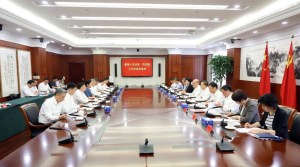
Meeting between SPC and MOJ at the SPC

Although few (except the NPC Observer) outside the Supreme People’s Court (SPC) likely have noticed, earlier this year it was agreed between the National People’s Congress (NPC) Standing Committee and the SPC that this year’s SPC specialized report to the NPC Standing Committee will focus on administrative litigation.  (For those who need a refresher on SPC specialized reports to the NPC Standing Committee, see this blogpost). This blogpost argues that the SPC is promoting ( the Chinese phrase is “倒逼 “) significant changes to resolving administrative disputes, that is disputes between individuals or enterprises and government agencies,  by agreeing to report on administrative litigation.  Related official press reports ground this conclusion.  

As explained below, the SPC is working with the Ministry of Justice (MOJ) and coordinating with provincial-level high courts. The MOJ houses both the former State Council Legislative Affairs Office and the Office of the Party’s Commission for Comprehensive Law-based Governance (依法治国办). The goals are to improve how administrative agencies consider and deal with administrative disputes so that they  “resolve disputes at their source,”  slowing the flood of administrative cases that enter the court system. More specific goals are for government agencies to resolve disputes at the reconsideration stage (administrative appeal/administrative adjudication),  respond to litigation when they are sued, and comply with mediation agreements and unfavorable judgments.  It also means changing how local courts hear administrative cases and the SPC providing better rules on which local courts can rely.

These changes implement current SPC policies promoted by President Zhang Jun, the goals of the recently amended Administrative Reconsideration Law, and policies promoted by the Party leadership.  This post provides a discrete example of judicial monitoring of government action, the unique operation of the SPC, and the skills required of its judges.  

Background: The Thematic Education Campaign

As briefly mentioned in my 2023 article published in New York University’s US-Asia Law Institute’s Perspectives series, during last year’s thematic education campaign the SPC’s Administrative Division identified a large percentage of appeals and retrial applications as a long-standing issue in administrative disputes, as well as an upward trend in five types of administrative cases.  The press release published in People’s Court Daily in 2023 summarizing the Administrative Division’s report diagnosed the reasons and proposed solutions.  While some other jurisdictions might publish the full text of such reports, understanding SPC developments requires unpacking the report’s terse summary.

The Administrative Division pointed to a long list of problems with administrative divisions in the lower courts, such as a mechanical approach to hearing cases, badly reasoned judgments, disbanding of administrative divisions in some courts, departure of experienced administrative judges,  case filing divisions that did not filter out cases that did not meet filing standards, unhelpful judicial suggestions, and higher courts that did not supervise lower courts.

The Administrative Division identified other problems with parties to administrative litigation, particularly local government.  It described some administrative organs as unenthusiastic about coordinating and resolving administrative disputes, noting that administrative reconsideration was generally a failure [at the time of the report]. The report described administrative organs waiting for courts to decide cases, presumably rather than compromise with the plaintiff or change problematic procedures.  Some local authorities (in a minority of cases) interfere with court review. Losing administrative organs often choose to appeal or file a retrial application rather than comply with a court judgment. Because courts can only review the legality of the administrative behavior, and cannot replace the administrative organs in exercising their powers, courts cannot resolve the substantive disputes.  

Implementing the SPC’s Proposed Solutions

This year, the SPC is implementing the solutions proposed by the Administrative Division, with the cooperation of the MOJ.  Those solutions involve both inter-institutional efforts and measures specific to the courts.  The State Council and the Party’s Office of the Commission for Comprehensive Law-based Governance are also involved in inter-institutional efforts to promote the newly amended Administrative Reconsideration Law,  for which the MOJ has issued more specific regulations and policy documents. The underlying goal is to achieve progress in resolving administrative disputes by October. 

  1. Inter-institutional measures

More specific measures involving inter-institutional cooperation involving the courts appear to have been finalized in two official meetings between SPC President Zhang Jun and Minister of Justice He Rong.  It can only be imagined the hundreds of hours of staff-level meetings that must have preceded the meeting between the two senior officials, that eventuated in agreements on joint measures (not made public). 

One of those measures involves joint training sessions at the national and provincial level, the first of which was held by the SPC and MOJ in November, 2023. These sessions have been replicated at the provincial level. These national and provincial sessions have multiple goals.  Provincial high courts are working with the provincial departments of justice to improve administrative agency handling of administrative reconsideration cases under the amended Administrative Reconsideration Law and for those departments to better understand the standards by which courts review administrative action.  

These joint training sessions and smoother cooperation between the courts, departments of justice, and Party authorities, also have other goals related to resolving administrative disputes. One of those is encouraging mediation of administrative disputes, as the amended Administrative Reconsideration Law provides.  The SPC and provincial courts are involved with related measures to promote mediation, such as what is entitled  “fault-tolerant ”  and self-correcting” mechanisms.  One example of the self-correcting mechanism is one promoted by a Guangdong court, sending a “pre-judgment mediation suggestion letter”(判前调解建议) to the defendant agency,  suggesting an administrative agency self-correct, for cases where administrative agencies are likely to lose.  Additionally, the courts seek to change cadre and institutional performance indicators related to administrative disputes, so that an institution and officials involved are not assessed negatively for agreeing to a mediated solution or change problematic measures.  Additionally, the SPC and provincial courts want to incorporate administrative litigation-related performance indicators in governmental and cadre assessments. Those include administrative agencies’ execution of judgments, the frequency of agencies losing cases, the appearance of responsible persons in court to respond to lawsuits, feedback on judicial suggestions, a reduction in the litigation rate of administrative cases per 10,000 people, and the mediation or conciliation of administrative disputes into the government assessment systems, such as safe (Pingan) China and law-based government (法治政府).

2. Improving the administrative litigation system

 The SPC’s Administrative Division is promoting several measures to promote better administrative dispute resolution. One aspect is better involving specialist administrative judges at the case filing phase to ensure that only cases that meet statutory standards are accepted.  This type of measure is not unusual, as other SPC specialist divisions require the same.

Second, the SPC leadership has agreed to more guidance on administrative cases of the lower courts. They have agreed to the drafting or the amendment of current judicial interpretations on some of the most important administrative  issues–the incidental review of normative documents (when a court is reviewing the legality of a specific administrative act), compensation for the expropriation of buildings on state-owned land, compensation for expropriation of collective land, and government information disclosure.  Additionally, the SPC is issuing more administrative-related typical cases and appears to have encouraged local high courts to do the same, some with provincial departments of justice.

Concluding Comments

This post provides another discrete example of the unique operation of the SPC and indirectly highlights the skills required of its judges.  It has illustrated another aspect of the SPC’s judicial activism, in addition to those about which I wrote in my China Law and Society Review article.  Through unpacking official press reports, the careful reader can glimpse some of the understated ways that the Administrative Division of the SPC uses its specialist knowledge in administrative cases to engage in legal oversight of administrative authority outside of the courtroom.  Underlying last year’s proposals and this year’s implementation are the skills of designing policies, actions, initiatives, and other decisions that hit the target of being politically correct (post-19th and 20th Party Congresses) while being “problem-oriented” (坚持问题导向) that is, addressing relevant practical issues. 


Supreme People’s Court’s Bench Memoranda?

Screenshot 2020-07-17 at 2.05.58 PM
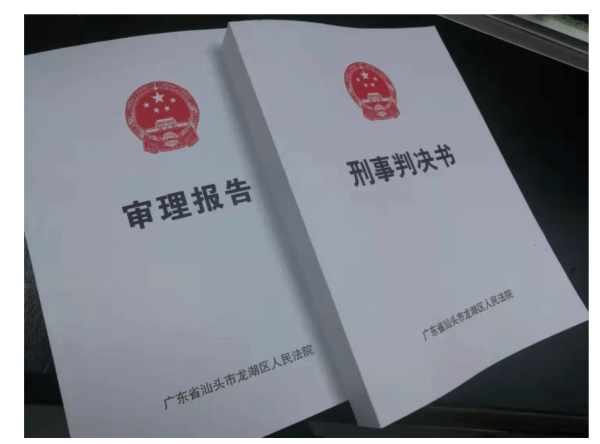
Trial report and criminal judgment, from a Shantou district court

Justice Ginsburg’s article “Workways of the United States Supreme Court” and recent correspondence with brother blogger Mark Cohen has led me to reflect on what is known (and what I know) about how cases progress through the Supreme People’s Court (SPC). It is from the small details that it is possible to obtain greater insights about a judicial system.

In discussing the sources of law (meant broadly) to which SPC judges look when considering cases,  some knowledgeable persons reminded me of the existence of something called a “trial report (审理报告 or 审查报告 (for retrial cases)).  I analogize these to bench memoranda (as used in United States appellate courts),  although the analogy is imperfect. It seems also somewhat analogous to the Votum of the German Constitutional Court, although the analogy is imperfect. Perhaps a search through Soviet (or Russian) civil procedure legislation will reveal a better counterpart.

As to what a trial report is, it is a memorandum prepared by the judge in charge of the case ( 承办人), prepared for internal discussion within the court. That internal discussion is in the first instance by the collegial panel that heard the case.  If the collegial panel feels they need greater guidance (or other related factors are relevant, such as the case being “difficult” or “important”), the trial report may be used in discussion by the specialized judges meeting or if necessary, among the documents included in the package of documents submitted to the judicial (adjudication) committee (or specialized judicial (adjudication) committee).

A search of the Chinalawinfo (北大法宝) database revealed that the same term is used for internal memoranda prepared in the course of administrative penalty proceedings and Party disciplinary and other analogous proceedings.

The outside observer is handicapped in analyzing trial reports in great detail because few examples are available to those outside the system, as explained further, with a few found in specific databases. As for the reason for the handicap, that relates to a number of regulations that keep trial memoranda confidential, some mentioned in my article on judicial transparency.  Those include:

  • 2013 joint regulations by the SPC and the National Archives Administration (State Secrecy Bureau) requiring such memoranda to be placed in the supplemental file (副卷). Items in the supplemental file are confidential, as discussed in that article.  The article also discusses proposals within the Chinese court system for public access to the supplemental file;
  • regulations on work secrets, also discussed in my article.

Trial reports are mentioned in a number of SPC regulations and in documents issued by the SPC’s Judicial Reform Office. It is clearly one of the many discrete matters about which reform is being considered.

The trial report is a memorandum in which the judge in charge of the case sets out the facts of the case, evidence provided and facts determined; prior rulings or decisions in the case; issues in dispute; background information; proposed resolution of the case and rationale. The judge is not bound by the restrictions in the sources of law that may be cited, with some judges stating that the results of discussions with experts or foreign principles of law or cases are sometimes included.

Some reports I have seen have a section on “issues to explain” (需要说明的问题)–that raises non-legal factors, such as the impact of enforcement of an international arbitral award on the local economy. The rationale in the report may be more detailed than that in the judgment or ruling that is issued to the parties. As has been mentioned in earlier blogposts, only certain sources of law may be cited as the basis of a judicial ruling or judgment. The trial report apparently can take a broader approach to legal sources, which would be in keeping with the holistic approach that Chinese judges take to deciding cases. The trial report, unlike the judgment or ruling, is confidential. The SPC has issued forms of trial reports, such as this one for administrative retrials; others for first-instance administrative cases; second instance administrative cases; state compensation cases.

SPC rules of operation call for a judge‘s assistant to be responsible for preparing a draft of a trial report, with the judge in charge of the case responsible for it.  Interns may be involved in preparing a preliminary draft for the judge’s assistant to whom they are attached (as I know from my own students who have interned at the SPC). The judge’s assistant will review the intern’s draft thoroughly. There are proposals to require search of relevant prior cases, but this is something that likely is general practice at the SPC (see my article on case law).

A recent article by an experienced Chinese judge (at the local level) points out problems with the trial report system (at the local level). In his experience, since the last round of judicial reforms, most judges do not care much about drafting a trial report, in their rush to process cases on time. They, therefore, fail to provide a holistic report on the case. That complicates matters for the second instance judge reviewing the case file. Because the trial report does not describe fully the scope of factors that entered into judicial thinking, the second instance judge lacks a full understanding of the case. He says that for a Chinese judge, in addition to the facts and law, among the other factors to consider include:  judicial policy; petitioning and stability maintenance; the impact of media; the impact of the decision; interference and inquiries from either inside or outside the court; value judgments of individual judges.  In his experience, at least, the responsible second instance judge will meet face to face with the lower court judge to seek to understand the whole picture, rather than solely relying on the case file.  He points out that this practice has its drawbacks.   The author suggests using a system that he entitles “explanation of the situation regarding the decision” (裁判情况说明) rather than a trial report.

Concluding comments

The fact that little is known about trial reports speaks to how little scholars (in China or elsewhere) focus on the details of how the Chinese legal system operates.

As to whether judges would favor making trial reports public–an unscientific sample says no. One suggestion that I have heard was that a broader approach should be taken to sources that could be cited in a judgment, so that a judge could cite to persuasive scholarly works. But what if it is revealed that judicial thinking on a particular issue has been influenced by foreign theories?  The thoughtful Chinese judge wants to be both politically and legally correct.

What Is the Impact of the SPC’s Circuit Courts?

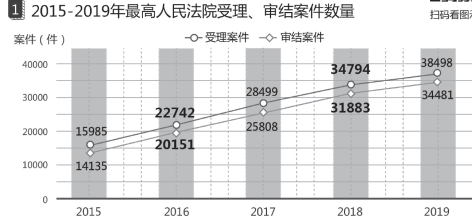
President Zhou Qiang’s May, 2020  report to the National People’s Congress (which I will analyze when time permits) revealed that the number of cases that the Supreme People’s Court (SPC) has increased about 10% over last year to 38,498 cases accepted. This year’s report usefully set out a bar graph with the number of cases that the SPC accepted and concluded.


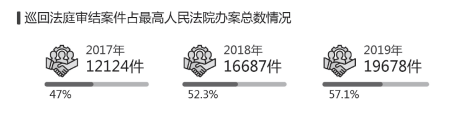
These (also from the report) show that in 2019, almost 60% of the SPC’s cases were heard in the six circuit courts.

This is not accidental, but the result of intentional SPC policy. Judge He Xiaorong, current head of the #2 Circuit Court (and former head of the SPC’s judicial reform office) stated five years ago–” after the circuit courts (literally tribunals) are established, the center of the work of SPC headquarters will shift to supervision and guidance, primarily trying cases that have a major guiding function in unifying the application of law, that can become guiding cases  (巡回法庭普遍设立后,最高人民法院本部应当将工作重心转移到监督指导上,主要审理一些对统一法律适用有重大指导意义、具有重大示范价值、能够作为指导性案例的案件).

There has been one academic article in English (that I am aware of) (by Professors Chen and Wang) that focuses on the circuit courts, but looking at large scale policy rather than more granular analysis of circuit court decisions, whether in the form of judgments or rulings, or how circuit courts guide the lower courts, the impact on law practice in circuit court cities, and what it means for law students.  I’ll set out some quick thoughts on each topic.

Circuit Court Judgments & Rulings

According to the research of Tsinghua Professor He Haibo and colleagues, most of the SPC documents are rulings rather than judgments.  According to their data relating to 2017, 91% of the documents were rulings (relating to applications for retrial or trial supervision), with judgments accounting for about 4%, which in the authors’ view, makes it difficult for the SPC to fully fulfill its function of supervising and guiding the lower courts. This statement has made me think more about what the circuit courts are doing, particularly behind the scenes, as “supervising and guiding” the lower courts has multiple meanings.

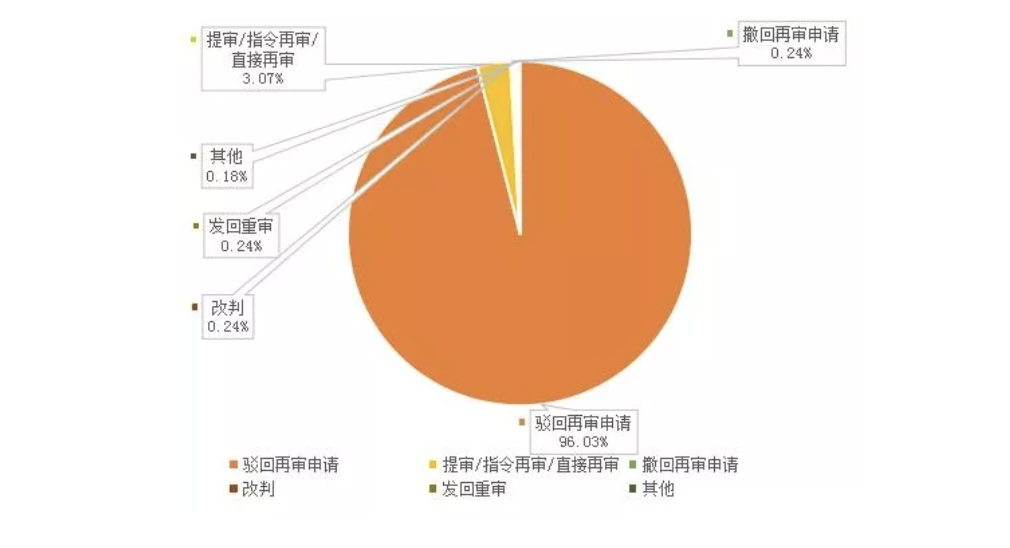
What appears not to be generally known is that a substantial proportion of the cases heard in the circuit courts are administrative cases, although Chinese law firms have done many big data reports of commercial cases heard in the circuit courts. I am not aware of a comprehensive study on the number and type of administrative cases in the circuit courts.  This report on the #3 Circuit notes that approximately 70% of the cases were administrative, without breaking out annual statistics. I understand that similar statistics are true for the #1, #2, and #6 Circuit Courts. This report from a Shaanxi law firm on #6 Circuit cases (based on 2017-first half of 2019) found that practically all administrative rulings (96%) rejected the applicant’s request to retry or remand the cases (see the pie chart below).
Screenshot 2020-06-09 at 2.19.33 PM

The law firm commented that of the administrative cases that were accepted, most of them involved the taking of collective land and the condemnation of housing on state-owned land, indicating government enforcement issues (among others). The comments of the lawyers on the judgments indicated that “administration according to law” is still a long term goal, particularly in western China, as the cases revealed instances of local governments:

  1. condemning or taking land and housing without obtaining approval;
  2. taking land or housing in excess of administrative authority;
  3. taking land or housing first, then obtaining approval;
  4. failing to compensate real estate owners or land use rights holders;
  5. failing to follow required procedures;
  6. demonstrating poor awareness of law, including procedural and evidentiary requirements;
  7. failing to protect the rights of related persons;
  8. failing to comply with open government regulations.

This data is consistent with what I had understood from other sources. One informed commentator mentioned that circuit courts are reluctant to order the retrial of administrative cases. He attributed it to “holistic” thinking on the part of judges (my term–considering factors other than those relating to the case), particularly social stability, the need to uphold the prestige of government, etc.

However, in addition to judgments and rulings, circuit courts use other ways of guiding local courts, and indirectly, local governments.

 How the circuit courts guide the lower courts

Doing some further digging, I found that circuit courts use their judgments and rulings in other more traditional ways to guide the lower courts.  Among those are:

Circuit Courts and Elite Law Firms

Another impact of the circuit courts is to attract some of the elite Beijing or Shanghai law firms to establish branches in circuit court cities.  Tian Tong Law Firm appears to be one of the first, but I’ve also noticed that some of the other big Chinese law firms have followed Tian Tong’s lead. The impact on lawyer career paths remains to be seen, but it is likely to improve the level of litigation practice in some locations.

Circuit Courts and Chinese law students

Finally, having a circuit court nearby has an unrecognized benefit for Chinese law students, many of whom are educated in a very traditional way, with little experience in thinking through legal problems in a comprehensive way or are unused to using their research skills analytically.  It also enables the circuit courts to have greater intellectual support, without expanding their headcount.  From my conversations with law students who have interned in circuit courts, the experience has given them the opportunity to undertake thorough analysis on new issues and to have their work reviewed carefully by highly qualified and experienced mentor judges or judge’s assistants.  It has also given some law students an appreciation of the demands of working “in the system” rather than the more relaxed environment of a university, as several of my students found when they didn’t realize that they needed to inform their supervisors ahead of time about taking leave from their internships to return to school!


Socialist core values & Chinese judicial interpretations

20180307_082132
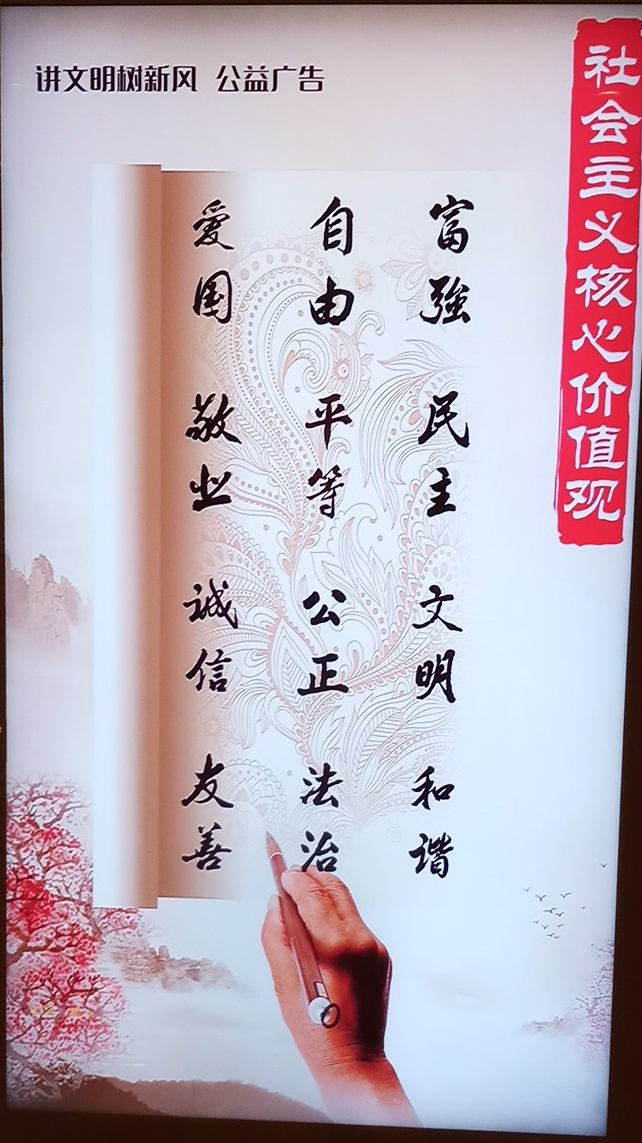
socialist core values poster in a Shanghai hotel

I write on socialist core values and Chinese judicial interpretations with some trepidation.  Not because I have trouble deciphering socialist core values, but because the two documents core to the analysis are available in summary form only, as at least one source has mentioned that the SPC document is classified. This blogpost is based on those summaries, primarily on the summary provided by Supreme People’s Court (SPC) Research Office (研究室) head Jiang Qibo of its five-year work plan (2018-2023) to incorporate fully socialist core values into judicial interpretations (关于在司法解释中全面贯彻社会主义核心价值观的工作规划(2018-2023).)  in 2015 the SPC had issued a general document on socialist core values.

As explained below, it appears that the SPC is both “serving the greater situation” by implementing in the courts the Party’s plan to integrate socialist core values in plans to legislate and amend legislation(社会主义核心价值观融入法治建设立法修法规划) while at the same time seeking to deal with many of the difficult legal issues that face it.

For those unfamiliar with the SPC’s Research Office, (as I am writing in yet another academic article stuck in the production pipeline),  2007 SPC regulations place it as the gatekeeper for reviewing proposals, examining and coordinating the drafting of judicial interpretations.  It also acts as the liaison when other central institutions forward their draft legislation and judicial interpretations to the SPC for comments, coordinating the SPC’s response with other divisions and offices, with a knowledgeable person noting that “the view of the Research Office prevails.”

The critical language in the Party’s plan for the SPC and its judicial interpretations appears to be: “judicial interpretations should be amended and improved in a timely manner according to the demands of socialist core values” (司法解释,要按照社会主义核心价值观的要求,及时进行修订完善).  This language appears only in the SPC’s summary of its own plan and not in the earlier reports on the original plan.

The SPC’s approach to implementing the Party’s plan was to pull together all the demands on and recommendations to it to draft judicial interpretations–some in Party documents, others in recommendations from the National People’s Congress (NPC) Standing Committee (presumably its Legislative Affairs Commission), proposals from NPC and CPPCC delegates, a collation of proposals concerning judicial interpretations from the lower courts, plus  the needs of the courts (as seen from the SPC), and the SPC’s other drafting commitments.

The areas of law that Jiang Qibo are relevant to a broad range of persons, from commercial lawyers to environmentalists, to those interested in the rights of women and the elderly. Some involve new areas for judicial interpretations while others require expanding old ones.

Jiang Qibo classified the interpretations into five broad categories:

  1. The category of patriotism, dedication, and harmony includes the following (important) judicial interpretations. It appears the #1 Civil Division will take the lead on these, and I trust will engage in public consultation:
  • Amending those on the right to reputation and the right to honor to include better protection for heroes and martyrs (as to be expected and was flagged in a recent blogpost); See some earlier translations here on the SPC’s statements on the earlier heroes and martyrs litigation;
  • amending and improving judicial interpretations related to the Marriage Law and family law, etc.  I recommend this article by Professor Yang Lixin of Renmin University (formerly an SPC judge) for his forthright analysis of the state of Chinese family law and current important issues (children born out of wedlock, same-sex marriage, wills, surrogacy, etc);
  • improving the systems for trying family-related cases (Judge Du Wanhua is overseeing the pilot projects in this area); improve the legal protection of juveniles; prevent and punish school bullying, etc. (the SPC has been doing research on improving juvenile law and preventing school bullying for several years).
  • amending/improving labor dispute judicial interpretations (these fill in the holes in labor legislation)  As has been discussed earlier on this blog, the number of labor cases in the courts has increased.

2. The category of equality, justice, democracy, and rule by law:

  • Improve protection of property, especially non-public property, in criminal law. (See last year’s blogpost on this). Recent developments in China have seen greater use of confiscation procedures, and as this blog highlighted earlier this year, property protections are inadequate.
  • Improve the rules for trying property condemnation cases, to better protect the rights of those whose property is being acquired.
  • A judicial interpretation on hearing disputes over the use of personal information is needed (project approval for this has been given). Also work will start on a judicial interpretation on the protection of wild animals and protected species (see NPC Observer’s article on a related case), and the enforcement judicial interpretation is also to be amended (because of the SPC’s campaign to improve enforcement).

3. In the category of justice, friendship, and cooperation are the following:

  • an interpretation on self-defense (recently in the news in China in several cases, such as the Yu Huan case and a case in Kunshan);
  • also improving the SPC’s2016  policy document on judicial legal assistance (legal aid as arranged by the courts).

4. On setting out further details to the broad principles in the General Part of the Civil Code (also Judge Du Wanhua continues to be involved with this):

  • amending the contract law judicial interpretations;
  • amending the judicial interpretations on the criminal punishment production and sale of fake and shoddy goods;
  • amending the judicial interpretation on food and drug safety crimes;
  • criminal punishment of fraudulent litigation (just released);
  • rules on hearing cases in which the government is a contracting party, and issuing a judicial interpretation at an appropriate time.

5. On prosperity, creativity, and greenness:

  • amending the judicial interpretation relating to villages, to provide services for rural revival;
  • amending real estate related judicial interpretations;
  • amending finance related judicial interpretations, to ensure national financial safety and prevent a financial crisis (the criminal law in this area is quite unclear);
  • amending the judicial interpretations on bankruptcy law;
  • improving judicial interpretations related to intellectual property law (IP law), see more below;
  • amend the judicial interpretations related to environmental protection;
  • amend the judicial interpretations on maritime trade and other maritime matters.

On the intellectual property front:

  • The SPC will look into punitive damages for patent, copyright, and other IP infringement so that in serious cases punitive damages can be imposed and having the infringer responsible for the costs to the rights holder of stopping the infringement;
  • in the next five years, if the legislation is not amended it will work on using market value as a basis for damages;
  • it will work to better coordinate between administrative and judicial enforcement of IP rights;
  • it will work on guidance on civil cases that arise because of monopolistic conduct;
  • protection of plant species;
  • it will look into new issues related to unfair competition cases, also in trade secret  cases, and new issues related to civil trademark disputes;
  • research evidence issues in IP cases, look into having IP technical investigators involved in litigation;
  • research jurisdiction in IP and unfair competition cases;
  • look into preliminary preservative measures in IP cases (mentioned in an earlier blogpost).

The ones listed in the plan will be prioritized in the project approval process for judicial interpretations (see two earlier blogposts on what that is and the topics on that list)


What’s on the Supreme People’s Court’s judicial interpretation agenda (II)?

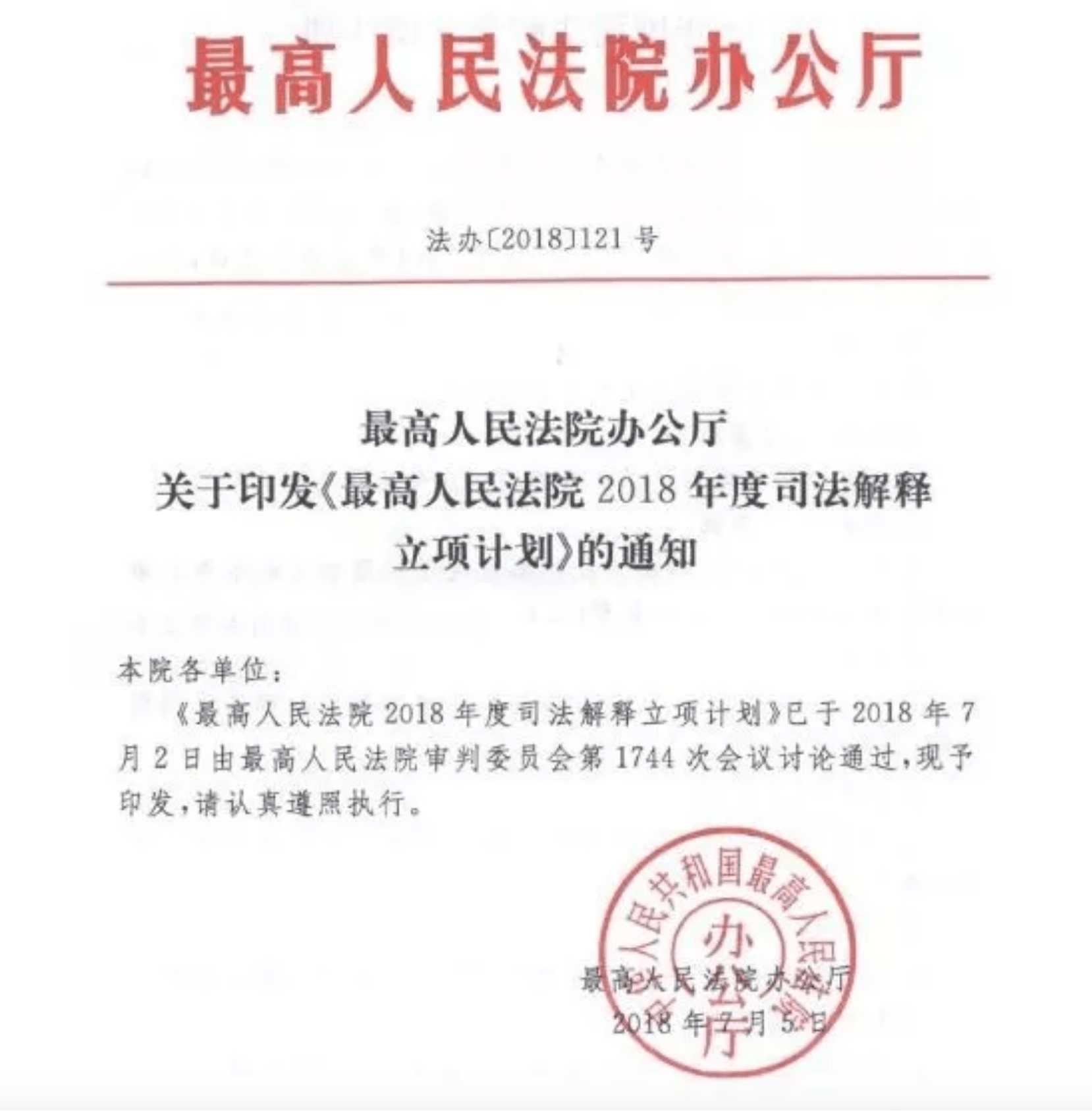
Screen Shot 2018-07-18 at 8.34.32 AM
SPC General office document issuing the 2018 judicial interpretation plan

The Supreme People’s Court (SPC) has a yearly plan for drafting judicial interpretations, as set out in its 2007 regulations on judicial interpretation work , analogous to the National People’s Congress (NPC) and its legislative plans. Judicial interpretations, for those new to this blog, are binding on the SPC itself and the lower courts, and fill in some of the interstices of Chinese law (further explained here).

On 10 July, the SPC’s General Office issued the document above. It sets out a list of 48 judicial interpretation projects for 2018 (with several for 2019) for which the SPC judicial committee’s had given project initiation/approval (立项) designating one or more SPC divisions/offices with primary drafting responsibility (this process to be detailed in a forthcoming article).  It appears to be the first time this type of document was publicly released (please contact me with corrections).  If so, it is a concrete step in increasing the SPC’s transparency (addressed in part in one of my forthcoming academic articles). The projects, deadlines, and some brief comments (some longer than others) follow below.

(“Project initiation”/”project approval” is a procedure well-known to those of us who have been involved in foreign investment projects in China, where it involves approval from the planning authorities, primarily for infrastructure projects, but is an initial procedure used by regulatory authorities of all types, Party and state. For the SPC, it reflects one of the planned economy aspects of the way it operates.

The document classifies the 48 projects into three categories:

  1. 2018 year-end deadline;
  2. 2019 half-year deadline;
  3. 2019 deadline.

This post will discuss the projects in the second and third categories, the ones with deadlines in 2019.

From these we can see which projects are the highest priority and where the SPC sees gaping regulatory holes need to be filled, reflecting its political-legal priorities. Often specific issues have already been on the agenda of the relevant division of the SPC for some time before they have been officially been approved by the SPC’s judicial committee.

As discussed in my previous blogpost, several of the interpretations listed for 2018 have already been issued. It is unclear which other drafts will be made public for comment, as the 2007 regulations do not require it to do so. Making this list known may put some pressure on the SPC to undertake more public consultation.  Few if any interpretations in the area of criminal or criminal procedure law have been issued for public comment.

First half of 2019 deadline

  1. Standardizing the implementation of the death penalty (规范死刑执行).  Apparently this will focus on more setting out more detailed guidelines concerning how the death penalty is implemented, linked to the Criminal Procedure Law and the SPC’s interpretations of the Criminal Procedure Law.

This article on a legal website sets out the steps in implementation and notes that parading of the persons to be executed is prohibited (although this rule seems to be ignored in too many localities).  A recent scholarly article provides some detail (in Chinese). It is possible that 2008 regulations on suspension of the death penalty will be updated. Responsibility of the #1 Criminal Division.  Given the sensitivity of issues related to the death penalty, it is significant that the SPC leadership decided to make this list public, given that this interpretation is on the list.

2. Judicial interpretation on harboring and assisting a criminal.  These provisions occur in various parts of the Criminal Law and are also mentioned in the organized crime opinion discussed in this earlier blogpost.  Drafting responsibility of the #4 Criminal Division.

3.  Interpretation relating to the protection of heroes and martyrs.  With the incorporation of the protection of heroes and martyrs in the Civil Code and the passage of the Heroes and Martyrs Protection Law earlier this year, drafting of a related judicial interpretation was expected.  Responsibility of the #1 Civil Division.

4.Interpretation on technical investigators in litigation.  Responsibility of the #3 Civil Division) (IP Division).  I look forward to Mark Cohen’s further comments on this.

5. Interpretation on the recognition and enforcement of foreign court judgments.  This blog flagged this development last year.  Judge Shen Hongyu of the # 4 Civil Division, who wrote this article on issues related to the recognition and enforcement of foreign court judgments, is likely involved in the drafting.  Drafting responsibility of the #4 Civil Division.

6. Disputes over forestry rights, apparently an area with many disputes.  The Environmental and Natural Resources Division is responsible for drafting.

7.Regulations on responsible persons of administrative authorities responding to law suits, relating to new requirements in the amended Administrative Litigation Law. and the 2018 judicial interpretation of the Administrative Litigation Law. The Administrative Division is in charge of drafting.

8.Regulations on the consolidated review of normative documents in administrative cases.  The Administrative Division is in charge of drafting this.

9. Regulations on the consolidated hearing of administrative and civil disputes, apparently related to item #22 in the previous blogpost. Responsibility of the Administrative Division.

10.  Application of the criminal law to cases involving the organization of cheating on state examinations (linked to Amendment #9 to the Criminal Law). The Research Office is responsible for drafting.

11. Application of the criminal law to crimes involving network use and aiding persons in such crimes (cyber crimes).  This article discusses some of the issues. The Research Office is responsible for drafting this.

End 2019 deadline

  1. Jointly with the Supreme People’s Procuratorate, Interpretation on Certain Issues Related to the Application of Law in Criminal Cases of Dereliction of Duty (II), likely updating interpretation (I) in light of the anti-corruption campaign and the establishment of the National Supervision Commission.
  2. Interpretation on limiting commutation during the period of the suspension of death sentences.  See related research in English and Chinese. The #5 Criminal Division is responsible for this.
  3. Interpretation on the trial of labor disputes (V), likely dealing with some of the most pressing labor law issues facing the courts that are not covered by the preceding four interpretations or relevant legislation.   The #1 Civil Division is in charge of drafting.
  4. Regulations on maritime labor service contracts, likely connected with China’s accession to the 2006 Maritime Labor Convention and a large number of disputes in the maritime courts involving maritime labor service contracts.  The #4 Civil Division is in charge of drafting.
  5. Regulations on the hearing of administrative cases, likely filling in the procedural gaps in the Administrative Litigation Law and its judicial interpretation.  The Administrative Division is responsible for drafting this.
  6.  Personal information rights disputes judicial interpretation, linked to the Civil Code being drafted.  Implications for individuals and entities, domestic and foreign. Responsibility of the Research Office.
  7.  Amending (i.e. updating) the 2001 Provisions of the Supreme People’s Court on Certain Issues Concerning Application of Urging and Supervision Procedure, relating to the enforcement of payment orders by creditors.  Responsibility of the Research Office.


What’s on the Supreme People’s Court’s judicial interpretation agenda (I)?

Screen Shot 2018-07-18 at 8.34.32 AM
SPC General office document issuing the 2018 judicial interpretation plan

The Supreme People’s Court (SPC) has a yearly plan for drafting judicial interpretations, as set out in its 2007 regulations on judicial interpretation work  (I have not been able to locate a free translation, unfortunately), analogous to the National People’s Congress (NPC) and its legislative plans.  Judicial interpretations, for those new to this blog, are binding on the SPC itself and the lower courts, and fill in some of the interstices of Chinese law (further explained here).  On 10 July, the SPC’s General Office issued the document above. It sets out a list of 48 judicial interpretation projects for 2018 (with several for 2019).  The document details the projects for which the SPC judicial committee had given project initiation/approval (立项), designating one or more SPC divisions/offices with primary drafting responsibility (this process to be detailed in a forthcoming article).  It appears to be the first time this type of document was publicly released (please contact me with corrections).  If so, it is a concrete step in increasing the SPC’s transparency (addressed in part in one of my forthcoming academic articles). The projects, deadlines, and some brief comments (some longer than others) follow below.

(“Project initiation”/”project approval” is a procedure well-known to those of us who have been involved in foreign investment projects in China, where it involves approval from the planning authorities, primarily for infrastructure projects, but is an initial procedure used by regulatory authorities of all types, Party and state. For the SPC, it reflects one of the “planned economy” aspects of the way it operates.

The document classifies the 48 projects into three categories:

  1. 2018 year-end deadline;
  2. 2019 half-year deadline;
  3. 2019 deadline.

From these we can see which projects are the highest priority and where the SPC sees gaping regulatory holes that need to be filled, reflecting its political-legal priorities. Often specific issues have already been on the agenda of the relevant division of the SPC for some time before they have been officially been approved by the SPC’s judicial committee.

Several of the listed interpretations have already been issued.  The SPC has solicited public opinion at least one of these draft interpretations, and it is unclear which other drafts will be made public for comment, as the 2007 regulations do not require it to do so. Making this list known may put some pressure on the SPC to undertake more public consultation.

This post will discuss the projects in the first category only, with a follow-up post discussing the projects in the second and third categories.

30 projects with a 2018 year-end deadline

  1. Regulations on the jurisdiction of the Shanghai Financial Court.  The NPC Standing Committee decision required the SPC to do so and included some broad brush principles on the new court’s jurisdiction.  As the SPC has announced that the court will be inaugurated at the end of August,  this is likely to be the highest priority project.  The Case Filing Division is in charge.
  2. Regulations on pre-filing property protection provisional measures (关于办理诉前财产保全案件适用法律若干问题的解释 ), a type of pre-filing injunction.  These regulations are for non-intellectual property (IP) cases, as item 18 below addresses provisional measures in IP cases (in which a great deal of interest exists in the intellectual property rights community, as these order can affect a company’s business). The Case Filing Division is in charge.  These regulations could benefit from some market input.
  3. Interpretation with the Supreme People’s Procuratorate on the Handling of Cases of Corruption and Bribery (II), likely updating the 2016 interpretation to reflect the establishment and operation of the National Supervisory Commission and addressing issues that have arisen in practice.  Issues to be covered likely include ones discussed in issued #106 of Reference to Criminal Trial (the journal of the SPC’s five criminal divisions, mentioned here) .  The #3 Criminal Division is in charge of drafting, but it is likely that the supervision commission will be/is one of the institutions providing input.  As I have mentioned earlier, the SPC generally does not solicit public opinion when drafting criminal law judicial interpretations.
  4. Judicial interpretation on the handling of criminal cases of securities and futures market manipulation.  This is linked to the government’s crackdown on abuses in the financial sector (see this report on the increase in regulatory actions) and is linked to last summer’s Financial Work Conference. The #3 Criminal Division is responsible.  It is likely the China Securities Regulatory Commission will provide input during the drafting process.
  5. Judicial interpretation on the handling of cases involving the use of non-public information for trading (Article 180 of the Criminal Law). Guiding case #61 involved  this crime.  It is likely that the principle from the guiding case will be incorporated into this judicial interpretation, as frequently occurs.  Again linked to the crackdown on the financial sector and again, it is a task for the #3 Criminal Division.
  6. Judicial interpretation on the handling of underground banking (地下钱庄) cases.  Large amounts of money are being whisked out of China unofficially.  Linked again to the crackdown on the financial sector as well efforts to slow the outflow of funds from China, and likely the People’s Bank of Chin.  Again, a task for the #3 Criminal Division.
  7. Interpretation on challenges to enforcement procedures in civil cases, related to the campaign to basically resolve enforcement difficulties within two to three years.  Drafting this is a task for the #1 Civil Division.
  8. Interpretation on evidence in civil procedure.  Important for lawyers and litigants, domestic and foreign.  Drafting this is a task for the #1 Civil Division.
  9. Interpretation on civil cases involving food safety. Food safety is an area in which public interest cases are contemplated.  These cases have been politically sensitive.  Drafting this is a task for the #1 Civil Division.
  10. Interpretation on construction contracts (II). The initial interpretation dates back to 2004. These type of disputes generally involve a chain of interlocking contracts and often regulatory and labor issues. Some of the larger cases have been heard by the SPC. Drafting this is a task for the #1 Civil Division.
  11. Interpretation on the designation of bankruptcy administrators.  Issues surrounding bankruptcy administrators have been ongoing in the bankruptcy courts, as has been discussed in earlier blogposts. Drafting this is a task for the #2 Civil Division.
  12. Regulations on the consolidating the bankruptcy of company affiliates, again an area where regulation is insufficient, posing issues for bankruptcy judges (as has been discussed in earlier blogposts). Drafting this is a task for the #2 Civil Division.
  13. Regulations on the civil and commercial cases relating to bank cards.  The drafting of this interpretation has been underway for several years, with a draft issued for public comment in June.  There have been a large number of disputes in the courts involving bank cards.  Drafting this is a task for the #2 Civil Division.
  14. Interpretation on legal provisions relating to financial asset management companies acquiring, managing, and disposing of non-performing assets.  The legal infrastructure related to non-performing assets is inadequate, as has been pointed out by all participants, including judges. The Shenzhen Intermediate Court has run several symposia bringing together leading experts from the market.  Drafting this is a task for the #2 Civil Division.
  15. Interpretation on the trial of internet finance cases (civil aspects), as existing judicial interpretations inadequately address the issues facing the lower courts. Drafting this is a task for the #2 Civil Division.
  16. Judicial interpretation on the statute of limitations in the General Provisions of the Civil Code (just issued), which was the responsibility of the #1 and #2 Civil Divisions as well as the Research Office. The General Provisions changed the length of the statute of limitations.
  17. Judicial interpretation on administrative cases involving patent authorization and confirmation. It appears to be the counterpart in the patent area of a 2017 judicial interpretation relating to trademarks.  I look forward to “brother blogger” Mark Cohen’s further comments on this. Drafting this is a task for the #3 Civil Division.
  18. As mentioned above, pre-filing injunctions in intellectual property cases (知识产权纠纷诉前行为保全案件适用法律若干问题的解释 ), a type of pre-filing injunction.  There is great deal of interest in the intellectual property rights community concerning these injunctions, as these orders can affect a company’s business. I look forward to Mark Cohen’s further comments on this. Drafting this is a task for the #3 Civil Division.
  19. Regulations on issues relating to the International Commercial Court.  Those were the responsibility of the #4 Civil Division and the interpretation was issued at the end of June.  See the previous blogpost for further comments.
  20.  Regulations on the scope of environmental and natural resources cases, with drafting responsibility placed on the Environmental and Natural Resources Division. These relate to current government efforts to improve the environment.  I would anticipate that these would include provisions on cross-regional centralized jurisdiction, so that pressure from local government will be reduced. Several provinces have already introduced such guidelines.
  21. Interpretation on compensation for harm to the environment, also with drafting responsibility placed on the Environmental and Natural Resources Division.  This is related to an end 2017 Central Committee/State Council General Office document on reforming compensation for harm to the environment. Again, Drafting responsibility with the Environmental and Natural Resources Division.
  22. Regulations on the trial of administrative agreements.  There is a tension between the administrative and civil/commercial specialists, as reflected in the area of Public Private Partnerships  (PPPs)(see this earlier blogpost).  This has practical implications for both the domestic and foreign business community, as the government is seeking to expand the use of PPPs and avoid local government abuse of them.  Drafting responsibility with the Administrative Division and the Ministry of Finance is likely to be providing input.
  23. Regulations on administrative compensation cases, drafting responsibility with the Administrative Division.
  24. Interpretation related to agency issues in retrial (再审) cases.  With the many governance problems of Chinese companies, these issues frequently arise.  Drafting responsibility with the Judicial Supervision Division.
  25. Interpretation on the enforcement of notarized debt instruments.  Lenders often use this provision to seek more efficient enforcement.  This is related to the campaign to improve enforcement as well as government policy relating to the financial sector.  This research report by one of Beijing’s intermediate court shows that asset management companies are often the creditors and the large amounts of money are involved. Drafting responsibility with the Enforcement Bureau.
  26. Interpretation relating to the enforcement of cases involving company shareholding.  Given the complexities of shareholding in China, including the frequent use of nominee arrangements, these are difficult issues for judges to deal with.  See a recent presentation by one of the circuit court judges on this issue.  Drafting responsibility with the Enforcement Bureau.
  27.  Regulations on reference pricing when disposing of property.  This too is related to the enforcement campaign as well as efforts to clean up the enforcement divisions of the local courts by requiring more transparent procedures.
  28. Interpretation on the Handling of Cases of Crimes Disturbing the Administration of Credit Cards (II), updating the SPC’s 2009 interpretation, found here. Responsibility of the Research Office, which can coordinate with criminal divisions involved as well as interested authorities such as the China Banking Regulatory Commission.
  29. Interpretation on cases involving both civil and criminal issues.  This is a longstanding issue, and with the crackdown on the private lending sector, this has come to the fore.  Among the many issues include: if the defendant is criminally prosecuted first and assets are confiscated, how can affected borrowers or other parties  be compensated.  Drafting responsibility with the research office, likely involving several civil and criminal divisions.
  30. Regulations on the implementation of the People’s Assessors Law. As the law and the follow up SPC notice are too general for courts to implement, more detailed rules are needed.  The Political Department (it handles personnel related issues) and Research Office are involved in drafting.

See the next blogpost for a discussion of interpretation in the second and third categories.


Welaw Monitor (微律观察) #2

I am traveling at the moment, so my time to review articles published on Wechat is limited.  But below are some links of interest.

Screen Shot 2017-06-17 at 10.04.02 AM
Huazhen (Flower Town) emotional counseling

Oldies but goodies

Several prominent media sources, the South China Morning Post among them, are running articles on China’s clean-up of the financial sector, this one pointing to the government’s focus on privately owned insurance companies.

But those reading Wechat would have known that several years ago, China’s legal analysts had been writing  articles such as “China’s private entrepreneurs are all on their way to jail  or China’s businesspeople are either in jail or on their way to jail. 

China’s Good Samaritan case Peng Yu back in the news-  a backgrounder plus-retired SPC judge Cai Xiaoxue criticizes as does former judge & Peking U Professor Fu Yulin.

Detention Center Law draft

The Ministry of Public Security (MPS) has recently issued its draft Detention Center Law for public comments (link to Chinalawtranslate.com’s translation.  The draft has caused a great deal of comment within China and those concerned about the treatment of fellow human beings in criminal detention in China should read these articles:

The MPS is drafting the Detention Center Law, but the entire legal world is opposed

10 years of calls for separating detention from criminal investigation

Professor Chen Ruihua, defects of the detention system and how it should be reformed

Professor Chen Ruihua–the detention centers should be transferred to the justice authorities

Commercial law

China’s distraught buy online counseling packages, but does China’s consumer protection legislation protect them if there are no standards for counseling?

Party discipline

A Cangzhou court president is under investigation. Is it connected to the strip search of a woman lawyer?

In CCDI hearing procedures, will evidence provided by the accused be considered?  The answer is, the scope is limited

Criminal law

Three SPC judges (likely to have been on the drafting team) unpack the asset recovery regulations (discussed in this January blogpost). It shows they looked to foreign legislation when doing so;

 20 years of bribery prosecutions, with 9 acquittals

SPC on anti-drug day, with white paper and 10 typical cases

Is it rape if the sexual contact comes after the coercion?

Supervision Commission

The first father’s day after being transferred to the Supervision Commission

Labor law

Does “remote working” in China mean the place of employment has changed?

Don’t make these 10 mistakes when terminating employees

Family law issues & property

Leta Hong Fincher’s book Leftover Women discusses the Marriage Law interpretation & home purchases.  This Wechat post sets out a chart with various scenarios related to marriage & home purchase--a very handy reference.

Bankruptcy

10 typical bankruptcy cases from Suqian, Jiangsu Province, including some real estate companies

Chongqing courts borrow concepts of personal bankruptcy from abroad when dealing with private (shadow) borrowing cases

The many inadequacies in China’s non-performing asset legislation

Judiciary

A review of the Party’s work at the SPC since the 18th Party Congress


Welaw Monitor (微律观察) #1

I am tweaking the type of content on the blog, cutting down on the long analytical blogposts.   I will provide links to reports and analysis on court and other legal matters on Wechat. I am concentrating on writing a book and some other related writing and editing projects.

It remains my hope that some followers with the financial wherewithal to do so will consider supporting (in some fashion) the blogs that are enabling the English speaking and reading public to perceive (through translation or bite-sized analysis) the “elephant” that is the Chinese legal system, among them Chinalawtranslate.com and this blog.

Commercial law

14 situations where the corporate veil can be pierced

Criminal law

Public security v. SPC & SPP on what is prostitution–does that include other types of sexual services?

SPC vice president Li Shaoping on drug crimes–relevant sections of Criminal Law should be amended, better evidentiary rules needed for drug crimes, & death penalty standards need to be improved

Hebei lawyer’s collateral appeal statement, alleges torture during residential surveillance, procedural errors (part of China’s innocence project

China’s financial crime trading rules are unclear

Defendant changed his story on appeal but the appeal court ruled he was the killer

25 criminal law case summaries from People’s Justice magazine 

Criminal procedure law

public security does not want the procuratorate supervisors in police stations

A corrupt official’s polygraph problems

Supervision Commission

Its power should be caged

Beijing supervision authorities take someone into custody, will shuanggui be abolished?

Party discipline

On confession writing

10 No nos for Party members using Wechat

Administrative litigation law

SPC issues 10 typical administrative cases, including one involving the Children’s Investment Fund

Those disputing compensation for expropriation of rural land must first apply for a ruling–land is now part of the Harbin Economic and Technical Zone (unpacking of  case #46 of #2 Circuit Court’s case summaries)

Labor law

Important study by the Guangzhou Intermediate Court on labor disputes 2014-16, with many insights & a section devoted to sex discrimination issues

Don’t make these 10 mistakes when terminating employees

Family law

Status report on family court reforms (& difficult issues for judges)

 Why it’s so hard to deal with school bullying in China

How juvenile justice should be improved (the semi-official view)

Judiciary

300 cases in 100 days–a team of young judges & expedited criminal cases

Environmental Law

Procuratorate has brought 79 public interest law suits in Yunnan (press report)

Bankruptcy

Why bankruptcy is so difficult and what needs to improve

Lawyers

 legal qualification system needs changing, the profession needs those with non-law undergraduate training


#2 Circuit Court’s case guidance on administrative cases

tour2_pic1

In August, 2016, the Supreme People’s Court (SPC) #2 Circuit Court issued a sset of 30 case summaries (literally important points, 案例要旨)on administrative cases, selected from the many administrative cases heard in the first year and a half of operation.  The #2 Circuit Court hailed it as a new type of case guidance (审判新指南) in March, 2017. This type of case guidance is mentioned in my forthcoming article in the Tsinghua China Law Review.  Although this document does not have any formal status (at least yet) in the universe of SPC case guidance, it has been approved at a conference of administrative judges in Liaoning, Heilongjiang, and Jilin, and the rules it sets out should be considered highly persuasive to courts in those three provinces.

It is likely that these cases will provide background material for a more comprehensive judicial interpretation of the Administrative Procedure (Litigation) Law than the one issued shortly after the amended law was promulgated.  Some of these cases have also been incorporated into the SPC’s 10 model #2 Circuit Court cross-administrative region commercial and administrative cases. The document does not include a summary of the underlying facts, but some of the full case reports are found elsewhere.  Each case (most relate to land disputes) provides a glimpse into the behavior of local government vis a vis ordinary Chinese citizens and companies, the (limited) scope for review of administrative action under Chinese law, and the unusual legal issues in the review of administrative action. Brief commentary follows each case summary restatement.  on 1 April, Wang Cailiang, the deputy chair of the All China Lawyers Association, published Wechat commentary on administrative litigation and judicial reform.  Highlights of some of his comments follows the case summaries.

#5. Fan Chunsheng v. Heping District, Shenyang Government: issue–compulsory administrative act and administrative compensation case:

If the administrative organ illegally demolishes the plaintiff ‘s house, the compensation standard must not be lower than the compensation standard that the plaintiff may obtain according to the administrative compensation scheme. The plaintiff’s request for compensation must be upheld by the people’s court in accordance with the amount that can be obtained through the compensation scheme.

[The full text of the case is found here. It involved a man whose home was demolished. The court determined that the parties had not come to an agreement about compensation and the District Government had not gone through proper procedures to expropriate Mr. Fan’s property. The facts are similar to some of the model demolition cases released by the SPC several years ago.]

#16 Siping Haifeng Garden Real Estate Development Co. v, Siping (Jilin) People’s Government: issue–are government meeting summaries actionable?

A government meeting summary that is considered to be an internal government document setting out possible approaches in dealing with certain problems, but without a real impact on the rights and obligations of the parties, will be considered an administrative act that is not actionable. However, if the government uses the form of a meeting summary to make an administrative decision with legal effect, it is considered an actionable administrative action. The “externalization” of the meeting summary is necessary for the meeting summary to be actionable. Even if the contents of a meeting summary has been notified or delivered to the relevant parties, but if it remains a description of possible approaches, rather than an effective administrative decision, it will be considered a non-actionable administrative act with no real effect on the parties’ rights.

[The rule here indicates that is how the document is being used, rather than the form of document that determines whether a court can review it.]

#19, Zhang Qinghai v. Benxi Municipal Government–issue: is a decision by a provincial level government to expropriate land actionable

According the provisions of Article 30 (2) of the Administrative Reconsideration Law and Reply of the SPC to a question concerning  Article 30(2) of the Administrative Reconsideration Law, a decision by the State Council or provincial level governments concerning the expropriation of land and a related administrative reconsideration decision is considered acts of final decision and is not within the scope of cases than can be accepted under the Administrative Litigation Law.

[A brief search of some other jurisdictions reveals that this type of decision can be challenged under the law of some other jurisdictions: United States federal and state law and German law, for example].

#23, Han Yawen v. Zhaoyuan County, Heilongjiang People’s Government–issue: is an agreement not to petition (息诉罢访协议) actionable

An agreement not to petition between an administrative agency and a petitioner is an agreement with rights and duties under administrative law between an administrative agency with a petitioner to maintain social order and stability, in the public interest and in furtherance of administrative functions, according to the localism principle, the relevant government provides money or other benefits and should be considered a type of administrative agreement. When a people’s court accepts this type of case, it should review the legality of the content of the agreement according to law.

[Further background on the case found here. the SPC rejected Han’s application for retrial because the statute of limitations had lapsed).  (A form of agreement found here.  This 2011 book chapter mentions that these agreements could be challenged in theory, but the inclusion of this principle shows that petitioners often seek to challenge them, at least in the northeastern provinces.]

A summary of remarks by Wang Cailiang, on whether the amended Administrative Litigation Law, in effect for almost two years, will be able to make progress:

  1. On government interference:  “I can responsibly say that most grass-roots courts consciously or unconsciously play the role of a subordinate department of the local government…. in recent years when local governments promote the redevelopment of shantytowns, major projects, development zones, with which the local court also either actively or passively cooperates, there exists a conflict between the citizens right to administrative review (reconsideration) and litigation. Moreover, the Government on the one hand needs the court to give support in implementing the project; the other hand, the government wants to spend less money.  It creates an enormous obstacle to hearing administrative cases fairly and equitably.
  2. More hard work needed to resolving social conflicts (contradictions): in 2016, there were high numbers of administrative litigation and petitioning, with old and new issues, caused by housing condemnation, land expropriation, administrative enforcement…Affected parties sought to protect their rights through the courts,  and 225,000 administrative cases were accepted by the courts, with a clear increase of cases against county governments accepted by intermediate courts, and even the SPC had accepted over 2000 by the end of September. This has to do with the amended Administrative Litigation Law and clarity that county governments are the parties to expropriate land [under the relevant legislation], which means that the rate at which government is losing cases is rising, although the SPC hasn’t released 2016 data.  In July-August, 2016, documents issued by the State Council General Office and the SPC on administrative agencies responding to law suits has improved matters.  Also, under the new law, the reconsideration organ is the joint defendant with the original authority, so this changes the venue for these law suits, giving affected parties more hope…In 2016 there were major issues with demolition disputes after courts determine that administrative action by the court is illegal, some local governments reject the decisions and refused to take the initiative to correct the error, failure to make timely compensation to the plaintiff is very common…Even in cases where people should be prosecuted for criminal violations, not one has…
  3. There are too many wrongly decided cases–reasons–besides interference, professional competence of judges, traditional way of thinking of courts…
  4. Few administrative cases are resolved on time (he can tell this although the SPC has not released statistics),
  5. Some problems remain with the case registration system.
  6. He suggests proceeding on the rule of law route–promoting judicial reform and cross-administrative region courts; open up public opinion, so administrative litigation proceeds in the sunshine; having the SPC curb its tendency to issue judicial interpretations [this is entirely impractical, in my view]; and send the judges out of the case registration division and back to the trial divisions.
  7. He summarizes, but does not comment on remarks made by Meng Jianzhu (Meng), head of the Communist Party’s Central Political Legal Committee at a meeting on 29 March of the Leading Small Group on Judicial Reform with senior members of the political legal leadership (head of the Ministry of Public Security, presidents of the Supreme People’s Court and Procuratorate, Minister of Justice, etc.) that the targets of judicial reform (he means the political legal institutions, not just the judiciary) need to be achieved before the 19th Party Congress and admitting there have been difficulties in implementing some judicial reforms. Meng directed the authorities to research the problem and come up with practical solutions.
  8.  Wang concludes by saying that the specific goals in this round of judicial reforms have never been made public–how far it is to go, so the public does s not understand them, so it lacks societal supervision, understanding and support–the effectiveness of a reform that lacks public participation naturally will be reduced, and we must be concerned about this. (然而,这一轮司法改革的具体的目标在开始至今并没有公开,以致要走到哪一步社会不了解,从而缺少社会公众的监督与理解、支持。一个缺少公众参与的改革,效果必然大打折扣,这是我们不能不担心的.)

Judging from a limited sample (such as the report done by the #2 Circuit Court), at least some of the research and analysis that is being done within the political legal institutions is insightful and practical. But as President Trump has said about health care,  “It’s an unbelievably complex subject, nobody knew that health care could be so complicated.” The same can be said about reforming the Chinese judiciary.


Signals in Zhou Qiang’s 2017 report (Part 2)

This blogpost continues the analysis in Part 1, which analyzed the first several sections of Zhou Qiang’s work report to the National People’s Congress, concerning court caseload, social stability and criminal punishment, and the courts serving to maintain the economy.

Most people who have commented (outside of China) on Supreme People’s Court (SPC) President Zhou Qiang’s March, 2017 report to the National People’s Congress (NPC) didn’t have the patience to read (or listen) much beyond the initial section, which mentions the conviction of Zhou Shifeng as indicating that the courts are doing their part to crack down on state subversion.  It appears to be another in a series of colorless government reports.  But for those with the ability (or at least the patience) to decode this report, it provides insights into the Chinese courts, economy, and society.

imgres-14
©

The report, which went through 34 drafts, is intended to send multiple signals to multiple institutions, particularly the political leadership, in the months before the 19th Party Congress.

According to a report on how the report was drafted, the drafting group (which communicated through a Wechat group to avoid time-consuming bureaucratic procedures) faced the issue of how to summarize the work of the People’s Court in 2016 correctly.  The guidance from President Zhou on the report–it must:

  1. fully embody the upholding of Party leadership, that court functions (审判职) must serve the Party and country’s overall situation;
  2. embody the new spirit of reform, showing the (positive) impact of judicial reform on the courts and show the ordinary people what they have gained;
  3. not avoid the mention of problems, but indicate that they can be resolved through reform.

Underneath these political principles, the operation of a court system with Chinese characteristics is visible.

Guaranteeing people’s livelihood rights & interests

The following section is entitled  “conscientiously implement people-centered development thinking, practically guarantee people’s livelihood rights and interests.” It summarizes what the courts have been doing in civil and administrative cases, but it also signals their perceived importance in this national report.

Civil cases

President Zhou Qiang noted that the Chinese courts heard 6,738,000 civil  (民事) cases, an increase of 8.2%.  Although he did not define what he meant by civil cases, under Chinese court practice, it refers to the type of cases under the jurisdiction of the #1 civil division (see this earlier blogpost):

  1. Real estate, property and construction;
  2. Family;
  3. Torts;
  4. Labor;
  5. Agriculture;
  6.  Consumer protection; and
  7. Private lending.

On labor cases, the report mentioned that the courts heard 473,000 labor cases. This is a slight decrease from 2015 (483,311) (although the report did not do a year on year comparison). The report signalled that the SPC is working on policy with the labor authorities on transferring cases from labor mediation, labor arbitration, to the courts. This was signaled previously in the SPC’s policy document on diversified dispute resolution.  Articles on both the SPC website and local court websites have signaled the increasing difficulty of labor disputes, and the increase in “mass disputes.”

As explained in this blogpost, labor service disputes, relate to an “independent contractor,” but more often a quasi-employment relationship, governed by the Contract Law and General Principles of Civil Law, under which the worker has minimal protections. This year’s report did not mention the number of labor service cases. In 2015, the Chinese courts heard 162,920 labor service cases, an increase of 38.69%.

There was no further breakdown on the number of other types of civil cases, such as private lending or real estate cases.  For these statistics, we will need to await any further release of big data by the SPC. As blogposts in recent months indicate, private lending disputes are on the rise in economically advanced provinces and bankruptcy of real estate developers remains a concern.

This section also mentions criminal proceedings against illegal vaccine sellers, although the topic may be more appropriately be placed with the rest of the criminal matters, but likely because it is an issue that drew widespread public attention.

Family law

Echoing language in recent government pronouncements, the section heading mentions protecting marriage and family harmony and stability. The report mentions that the courts heard 1,752,000 family law cases in 2016, with no year on year comparison with 2015.  The report mentions that the SPC has established pilot family courts (as previously flagged on this blog).

Administrative disputes

First instance administrative disputes totaled 225,000 cases, a 13.2% increase over 2015, but a tiny percentage of cases in the Chinese courts. The report highlights developments in Beijing and Shanghai (they are being implemented in Shenzhen, although not mentioned), to give one local court jurisdiction over administrative cases.  According to the statistics (in Beijing, at least), this has led to a sizeable increase in administrative cases.  The report also mentions the positive role that the courts can play in resolving condemnation disputes (this blogpost looked at problems in Liaoning).

Hong Kong/Macao/Overseas Chinese cases

As mentioned by Judge Zhang Yongjian, the report mentions that the courts heard 19,000 Hong Kong, Macau, Taiwan, Overseas Chinese related cases, and handled 11,000 judicial assistance matters with the three greater China jurisdictions.  The report also mentions the recently signed arrangement between the SPC and Hong Kong judiciary on the mutual taking of evidence, a development that seems to have escaped the notice of the Hong Kong legal community.

Military related disputes

Unusually, the report mentioned that the local courts heard 1678 military-related cases and have developed systems for coordination between the civilian and military courts.  These developments have been analyzed further in a blogpost on the Global Military Justice Reform blog.

Strictly governing the courts and institutional oversight

The following two sections of the report give a report on how the courts are upholding Party leadership, increasing Party construction within the courts, internal Party political life, and political study, all of which are in line with recent developments. Although these are stressed, this does not mean that professional competence is less valued.  The increasing caseload,  higher expectations of litigants, particularly in commercial cases, and increasing technical complexity of cases means that the SPC is in fact taking measures to improving professional capacity of the courts.  This section also mentions courts and individual judges that have been praised by central authorities and 36 judges who have died of overwork.

On anti-corruption in the courts, the report mentions that 769 senior court officials have been held responsible for ineffective leadership, 220 have been punished for violations of the Party’s Eight Point Regulations. The SPC itself had 13 persons punished for violations of law and Party discipline (offenses unstated), 656 court officials were punished for abusing their authority, among whom 86 had their cases transferred to the procuratorate.

On institutional oversight, the report signals that the SPC actively accepts supervision by the NPC, provides them with reports, deals with their proposals, and invites them to trials and other court functions. On supervision by the procuratorate, the report revealed that the SPC and Supreme People’s Procuratorate are working on regulations on procuratorate supervision of civil and enforcement cases, a procedure sometimes abused by litigants.

2016 and 2017 judicial reforms

2016

On 2016 judicial reform accomplishments, the following were highlighted:

  1. circuit courts;
  2. case filing system;
  3. diverse dispute resolution;
  4. judicial responsibility;
  5. trial-centered criminal procedure system;
  6. separation of simple from complicated cases;
  7. people’s assessors‘ reform;
  8. greater judicial openness;
  9. more convenient courts;
  10. improving enforcement (enforcement cases were up 31.6% year on year), including using the social credit system to punish judgment debtors.

2017

The report mentions that among the targets for the courts is creating a good legal environment for the successful upcoming 19th Party Congress.  That is to be done through the following broad principles:

  1. using court functions to maintain stability and to promote development (for the most part mentioning the topics reviewed earlier in the report);
  2. better satisfying ordinary people’s demands for justice;
  3. implementing judicial reforms, especially those designated by the Party Center;
  4. creating “Smart” courts; and
  5. administering the courts strictly and improving judicial quality.

This last section mentions implementing recommendations required by the recent Central Inspection Group’s (CIG) inspection and Central policies applicable to all political-legal officials, before focusing on the importance of more professional courts, and improving the quality of courts in poor and national minority areas.

A few comments

It is clear from the above summary that the content of President Zhou Qiang’s report to the NPC is oriented to the upcoming 19th Party Congress and the latest Party policies. It appears that no new major judicial reform initiative will be announced this year.

It is likely too, that the selective release of 2016 judicial statistics in the NPC report also relates to messaging in line with the upcoming 19th Party Congress, although we know that the SPC intends to make better use of big data.  We can see that overall, the caseload of the courts is increasing rapidly, including institutionally difficult cases (such as bankruptcy and land condemnation), which put judges and courts under pressure from local officials and affected litigants. In the busiest courts, such as in Shanghai’s Pudong District, judges will be working extremely long hours to keep up with their caseload, and the impact of new legal developments. It appears (from both the report and the results of the CIG inspection) that judges will need to allocate more time to political study.  How this will play out remains to be seen. We may see a continuing brain drain from the courts, as we have seen in recent years.


How the Supreme People’s Court uses case law & other sources when it guides the lower courts

As my fellow blogger, Jeremy Daum and I have written, China’s guiding case system has captured the attention of the world outside of China, likely due to a combination of the special status accorded guiding cases by the Supreme People’s Court (SPC) and the impressive efforts of Stanford Law School’s China Guiding Cases Project.  One of the ways that the SPC supervises and guides the lower courts is by publishing handbooks to aid the lower courts in quickly determining the applicable legal rules in a system in which a comprehensive legal code is the ideal but not the reality. One of those handbooks is the set of books pictured above, the Collection of the Supreme People’s Court’s Judicial Rules  (Collection of Judicial Rules) (最高人民法院司法观点集成), published by the People’s Court Press, now in its 2nd edition. A closer look at the Collection of Judicial Rules provides insights into sources of law used by the SPC, and China’s evolving case law system, including the place of guiding cases

As described by Judge Liu Dequan, the general editor, the sources include;

  1. Judicial interpretations;
  2. the spirit of judicial policy (from the speeches of the SPC president and vice presidents responsible for the substantive area);
  3. responses (答复) issued by the various divisions of the SPC;
  4. opinions (意见), answers, (解答),trial case handling guidance (审判办案指南) research opinions of the research office (研究意见) and other guidance issued by the various divisions of the SPC and speeches given by the heads of those divisions at national court conferences (these blogposts summarized the takeaways from some court conferences);
  5. guiding cases, SPC cases, SPC bulletin cases.
  6. Supplemented by the principal views of SPC judges and writings of SPC judges.

Below are samples from one of the volumes on administrative law:

A party that disputes compulsory measures imposed by the family planing authorities to freeze property, limit personal freedom etc. can file administrative litigation (#22)

The response cites a 1996 judicial interpretation, supplemented by a selection from a book by Judge Jiang Bixin and Liang Fengyun,  that confirms that the courts may accept such cases.

The act of issuing a transcript and diploma by a higher education institution is within the scope of administrative litigation (#42)

The editors cite the 2014 administrative litigation trial case handling guidance and several SPC bulletin cases. The case guidance provides that when higher education institutions issue transcripts, diplomas, and expel students, they are acting under authority delegated by law, and so those are administrative acts which a party may challenge under administrative litigation law.

The editors then set out the bright line rule (要旨) set out in several SPC Bulletin cases: Tian Yong v. Beijing Science & Technology University (1999) (re-issued as guiding case #38) and Yang Baoxi v. Tianjin Clothing Technical School (2005);

Then they cite several administrative trial guiding cases, including Wu Huayu v. Central China Agricultural University.

If there is a conflict between laws, the hearing of the case must be suspended while a response to request for instructions is received from the SPC (#351)

The editors set out a 1996 response of the SPC (made after consultation with the State Council Legislative Affairs Office) to the Fujian Higher People’s Court concerning the exploitation of geothermal water resources.

The editors then set out a SPC Bulletin case, Fujian Hydropower Design Institute disputes an administrative penalty decision by the Provincial Land & Mining Department, summarizing the bright line rule (as above). The editors then supplement the cases with an excerpt from the publication by Judges Jiang Bixin and Liang Fengyun mentioned above.

Comments

The sources used by the SPC judges in compiling the handbook may (or may not) be surprising to a foreign observer–such as the speeches by court leaders and various types of responses by SPC divisions that have no publication requirement. These sources appear to reflect SPC practice and do not seem to be consolidated into some type of legal rules.  While the SPC’s transparency is far greater than before (especially for a person with historical perspective), there are still significant gaps that face lawyers, litigants, not to mention researchers.

The SPC sees its case law system (still evolving) as a supplement to judicial interpretations.  The drafting process for judicial interpretations is a slow one (take the example of the demand guarantee judicial interpretation).  It can easily take several years for an interpretation to be finalized, particularly in the area of civil and commercial law, because SPC judges working on these interpretations must take into account comments from a large variety of interested parties. The rules set out in judicial interpretations must be able to stand the test of time and adjustments to government policies.  Case law is seen as filling in the gaps.  But as can be seen from the excerpt from the handbook above, and recent comments by SPC Vice President Tao Kaiyuan, the 77 guiding cases, while having an anointed place in that case law system, are one part.  Justice Tao Kaiyuan’s comments also reveal that case law, including guiding cases, is seen as being useful for the drafting of judicial interpretations:

The construction of the case guidance system [Chinese case law] is not to create a new legal source, but to…uncover the broader consensus of the industry, to further refine legal rules and to provide better law for society. It is also expected to lay the foundation for the drafting of judicial interpretations.

Tao Kaiyuan pointed out that the Supreme People’s Court Intellectual Property Case Guidance Research (Beijing) base is creating a guidance system for intellectual property cases with SPC Guiding Cases, cases published in the SPC Bulletin and cases published by the SPC’s Case Research Institute [under the auspices of the National Judicial College], and issued model (typical) cases, are an interactive mutually complimentary whole (是相辅相成、互为补充、互联互动的整体). The function of the intellectual property case guidance system is to enhance the predictability of the judiciary by establishing an intellectual property case guidance system to promote the unity of judicial standards.

Year end 2016 judicial statistics that will be issued in President Zhou Qiang’s report to the National People’s Congress will document that the number of cases, particularly civil and commercial cases, in the Chinese courts continues to rise at a rate that far exceeds China’s GDP.  Case law, including guiding cases, is one source of legal rules that Chinese judges consider when dealing with those cases, whether deciding whether a case should be accepted, seeking to mediate a case, deciding a case, or enforcing a court judgment or ruling.


What China’s judicial reform white paper says about its vision for its judiciary

01200000162424134434247272462_s
Portrait of Qing dynasty inspector

Over one year has elapsed since the Supreme People’s Court (SPC) has implemented the judicial reforms set out in the February, 2015 4th five year plan for reforming the judiciary.  While thousands of words have been written in Chinese and English, some praising,  criticizing, mocking, and bemoaning the reforms, it was only in late February, 2016 that the SPC issued a comprehensive official assessment, focusing on its achievements. That official assessment takes the form of a bilingual white paper (White Paper) issued in early March (but full text released on-line only in English), plus a section of President Zhou Qiang’s work report devoted to the judicial reforms, a first for the SPC.  I surmise that it was approved by the Judicial Reform Leading Group.

This blogpost looks at the vision for the Chinese judiciary that the White Paper conveys, by looking at several sections.


Chinese court system and the reform process

The description of the reform process in the first section of the White Paper tells us who/what is driving the reform process, the nature of the process, the core issues, and how the judicial reform process is being monitored.

Facts highlighted:

  • During 2014-2015,13 out of 19 plenary sessions held by the Central Leading Group for Deepening Overall Reform involved judicial reform, where 27 judicial reform documents were adopted.
    • A partial list of those 27 documents is found here.
  • The Social System Reform Specialized Group (the Central Leading Group for Judicial Reform) is in charge of judicial reform;
  • The SPC has a leading group in charge of judicial reform, replicated at the provincial level, and any judicial reform plans piloted by them need to be approved by the SPC or above (the 4th Judicial Reform Five Year Plan states this).

According to this section, the four core judicial reform measures are:

  • improving the classified management of judicial personnel [treating judges differently from clerks and other support personnel and civil servants0;
  • the judicial accountability system [the lifetime responsibility system set out in regulations issued in September, 2015, but only implemented in areas piloting judicial reform, controversial among judge and academics];
  • professional protection of judicial personnel ;
  • unified management of personnel, funds and properties of local courts below the provincial level.

These four measures will be piloted throughout the country in several rounds before they are implemented nationwide.

Comments

From the description of the reforms we can see that the specific reforms discussed in the remainder of the report have been cleared by the Party leadership.  It seems reasonable to assume that each reform involved hundreds of hours of policy paper drafting by SPC staff and internal and cross-institutional discussions, and responses to comments during those discussions.

What the White Paper did not mention is that the Central Leading Group for Deepening Overall Reform and the Central Leading Group for Judicial Reform established their own inspectorate for monitoring the progress of reform,including judicial reform, (reviving a traditional institution).  It is unclear which reforms will be targeted this year for inspection. The separate inspectorate seems to indicate that these Central Leading Groups want their  own source of information on how reforms are being implemented.


Judicial independence (Ensuring Independent and Impartial Exercise of Judicial Power Pursuant to Law)

One of the messages conveyed in this section is that local courts do not belong to local governments but are established by the State at the local level to exercise judicial power on behalf of the State. The goal as stated in this section, is to “form an institutional environment and social atmosphere that respects [the] judiciary, supports [the] judiciary and trusts [the] judiciary.”

It  lists about a dozen measures. What is new in this section:

  • a summary of the policy thinking on judicial appointments and funding of the local courts.  On judicial appointments, judges will be selected by judicial selection committee at the provincial level in terms of professionalism, and will be appointed and removed according to common standards. This is a push in the direction of professionalism, and away from the phenomenon noted in the past few years of having chief judges who lacked a legal education.  On the funding issue, the Central Government will fully guarantee the funding of the local courts. The provincial fiscal departments manage the funds of local courts below the provincial level, the local courts will submit their budgets to the provincial fiscal departments, and  budget funds will be appropriated by the centralized payment system of the national treasury.
  • Fuller discussion of cross-administrative district courts to hear administrative cases–piloted in Beijing and Shanghai and other locations, under the umbrella of a policy document of the SPC that has not been made public. The concept is to have cases against local governments heard outside of the area in which they arose.  The SPC recent policy document on the development of the greater Beijing area has further content in that area.

This section also discusses the following reforms, previously discussed: circuit courts; cross-administrative division courts; intellectual property courts (by Mark Cohen, chinipr.com); administrative cases being centralized in one court (Shenzhen is one of the pilot project venues); maritime courts; environmental protection divisions; official interference.

Improving the way the courts function ( Improving the Functional Mechanism of Adjudicative Powers)

The fourth section of the White Paper provides useful insights into how the judiciary is intended to operate post reform.  It starts out with a statement that judicial power is a judging power in essence and emphasizes impartiality, neutrality and personal experience.”

The focus on this section is on reforms to the way Chinese courts operate. As I have written previously, they have operated in many of the same ways that other Party and government organs operate.     This section describes pilot reforms, new policies, or regulations concerning the following (among others):

  • personnel reforms described above (but do not mention the pay rise that goes along with it in at least some courts);
  • senior judges within a court (court presidents, vice presidents, division chiefs) will no longer approve judgments, except for a small number going to the judicial committee);
  • senior judges will hear cases instead of concentrating solely on administrative matters;
  • courts will establish a specialized judges council made up of judges in specialized areas (criminal, civil, etc) to provide views to judges hearing cases on the interpretation of substantive issues, on an equal basis rather than seniority;
  • the SPC has abolished irrational performance indicators and forbidden senior judges from involving themselves in cases that they have not heard;
  • the SPC has issued policy guidance on the reform of judicial committees (not yet made public).  The principles set out follow generally what was described by President Zhou Qiang earlier, but include judicial committee discussion of “major and complicated cases concerning national diplomacy, security and social stability and those required by law.”  The guidance calls for more transparency (unclear whether to be within the court or greater), better record-keeping, and less involvement by judicial committees with specific cases. As discussed in an earlier blogpost, judicial committees have often been a route for transmitting the views of local officials and have been been implicated in some of the wrongful conviction cases);

    judicial committee
    judicial committee ©SPC
  • judicial responsibility/accountability system, mentioned above;
  • regulations on the jurisdiction of different levels of courts in civil cases (described in this blogpost).

These reforms look to do a number of things that are significant within strictures of the Chinese system: distinguish judges from other Party cadres and give them better status and pay; break down or reconstitute some of the basic internal structures of the courts that have facilitated corruption, unjust cases, and discouraged talented judges; abolish performance indicators that have been poisonous for judges and litigants alike.

 The vision

The vision that the SPC  has for the Chinese judiciary and judges can be seen from the description of the reforms above.  The SPC intends to create a more professional judiciary (with a lower headcount), that is better paid, more competent, has performance indicators that look more like other jurisdictions, with an identity and operating mechanisms separate from other Party/government organs, that will be more autonomous, no longer under the thumb of local authorities, but operates within the big tent of Party policy.  To be incorporated in the judicial reforms, the implications of each measure must have been thoroughly discussed by the Party leadership and the Party leadership is using its own institutions to monitor results.  Will the judicial reforms achieve their goal of making people feel justice in every case?  For that, the jury (or is it the people’s assessors(also being reformed)?) is still out.

Data from the Supreme People’s Court on administrative cases

Screen Shot 2016-04-01 at 6.46.11 PMWith the amendment of the Administrative Litigation Law and implementation of the case registration system in 2015, the number of administrative cases accepted by the Chinese court increased by 55%, to 299,765. The statistics provided only give a very partial picture of the distribution of cases. A search of cases for this post revealed that generally the decision of the government agency was upheld. This blogpost omits information on trademark cases because those are covered by the chinaipr.com blog.

Cases challenging city planning, condemnation, real estate registration: 35,726 cases, up 59%.  While the total number of cases upholding the government decision isn’t given, in most of the cases searched, the individual was unsuccessful, such as this one from Ningxia.

Cases challenging decisions by the public security authorities totalled 24,974 cases, up 72%.  China’s public security authorities exercise a broad scope of authority, including minor offenses that would be misdemeanor offenses in many other jurisdictions.    A quick search of the SPC database reveals many cases in which petitioners have challenged administrative punishments:

 Cases brought in various provinces, challenging the authority of the local public security authorities to impose administrative penalties on people for petitioning near Zhongnanhai, where state leaders live: in Jiangsu, a man sought a retrial in his challenge to the authority of the Yizheng (Jiangsu) public security;  in Shandong, a similar (unsuccessful challenge), as well as Hubei.

Challenges to family planning authority decisions or claims against that authority totalled 2188, down 56%. One of those was a case in Chongqing, involving a man claiming against the family planning authorities for surgery gone wrong.