Susan Finder has been observing the PRC Supreme People's Court for over 20 years, and was the first person to engage in a close analysis of its operations. She taught Chinese law and other subjects in the Law Department of the City University of Hong Kong, before putting her knowledge to work in the China practice group of Freshfields Bruckhaus Deringer, one of the first international law firms to recognize the importance of the China market.
She had the good fortune to study with three of the early pioneers of Chinese legal studies: Jerome Cohen, R. Randle Edwards, and Stanley Lubman and to have many leading practitioners and legal academics among her classmates at Harvard Law School (J.D.) and Columbia Law School (LL.M).
Susan Finder speaks and reads (Mandarin) Chinese and Russian and some German.
Judging from what I observed at a conference attended by many from the distressed asset industry in Asia recently, information on what the Supreme People’s Court (SPC) is doing to ramp up bankruptcy law has not made it to distressed asset/restructuring professionals outside of China, some of whom seem to think that policy emerges fully formed from Beijing.
This blogpost shows that bankruptcy policy is in fact an evolving process, provides some new data on 2015 and 2016 cases, and summarizes the latest policy signals coming from the Supreme People’s Court in recent months.
As the first chart shows, the number of companies established in China is steadily rising Since the Chinese Company Law was amended at the end of 2013, it has been much easier to establish a company. According to the SPC, since those reforms, an average over 10,000 new companies are established daily, but less than 70% remain in business after 5 years, and less than 50% remain in business after 9 years. Most companies simply deregister, or live on as zombies, as the following charts show:
companies established yearly, in units of 10,000cancellation of company registration
As reported earlier (and the chart below shoes), the number of bankruptcy cases has gone steadily down until 2015:
Full year statistics for 2015 were recently released by the Supreme People’s Court–3568 new bankruptcy cases were accepted. It is linked to the SPC ramping up bankruptcy law. Some local breakdowns:
Zhejiang: 638
Shenzhen: 131, accounting for 40% of cases in Guangdong.
Numbers for 2016:
January, 2016: 167. This article lists the names of the cases;
Following the 5th Plenum the end of 2015, the SPC has taken steps to promote the role of the courts in eliminating zombie enterprises. This was first announced at a national court conference in December, 2015 (reported here). This is bankruptcy (insolvency) in the Chinese political and legal environment, which means extensive government involvement.
Certain local courts are taking the lead as pilot bankruptcy courts:
Zhejiang;
Shandong; and
Shenzhen.
Executive Vice President Du Wanhua of the SPC is the spokesman for bankruptcy policy, and in his many press statements is making the same points:
The courts should promote more bankruptcy reorganization and conciliation, and diminish liquidation cases (a contrast to what has occurred in recent years). (The SPC has promoted this approach through recentreports promoting reorganizations by the courts and is continuing to promote this in its pronouncements. Local governments are adopting policies to promote reorganization of companies.)
A market-oriented mechanism should be established which classifies zombie enterprises. The mechanism should distinguish ones than can be saved through restructuring or conciliation procedures from the ones that should be liquidated. The classification should fulfil the industrial development goals, targets, and other principles of the central government. (But, Professor Liu Zhibiao, a leading economist suggested in a recent interview that it should the market to determine this, not government.)
A unified coordination mechanism for bankrupt enterprises needs to be created under the local Party committee’s strong leadership and support of the relevant government departments to ensure cases are handled in an orderly manner. To avoid this “strong leadership” being implemented to protect local companies ( a study published in the fall of 2015, Ma Jian of the SPC’s research office showed that local government interference in the acceptance, and trial of bankruptcy cases is common), Judge Du proposes that jurisdiction in bankruptcy cases be consolidated in certain courts
The rights and interests of the state, workers, creditors, and investors should be protected (in this order).
A corporate restructuring bankruptcy information platform mechanism that uses modern information technology tools should be created to promote the greatest degree of success of corporate restructuring, and better use of economic resources.
Orderly mechanisms should be established to deal with wages, state tax, and the priority and realization of secured claims, unsecured claims.
Local courts should establish bankruptcy divisions and provide bankruptcy judges with better bankruptcy law training;
Procedures for bankruptcy administrators should be drafted and their status should be improved;
Special funds should be established to pay for bankruptcies and bankruptcy administrators;
Local governments, such as Guangdong, are starting to issue policy programs on “supply-side reforms.” The Guangdong program, issued on 28 February, contains a section on bankruptcy. The Guangdong policies mention separate databases for bankrupt state-owned and non state owned enterprises, mentioning that special policies would be forthcoming for state owned enterprises (SOEs) and that courts would be given the “green light” to deal with the bankruptcy of zombie companies. Reflecting policies seen elsewhere, the Guangdong government is seeking to encourage private enterprises to assist in re-organizing SOE zombies and is considering establishing special funds to assist companies to upgrade.
One of the industries that is a focus of bankruptcy is real estate. While Shenzhen, Shanghai, and some other real estate markets are doing well, that is not the case in other locations, as discussed in this earlier blogpost.
Some of the outstanding legal policy issues:
Putting in place a better transition from enforcement to bankruptcy procedures (Zhejiang rules recently issued linked here);
Consolidating jurisdiction of bankruptcy cases;
Consolidating the bankruptcy of related companies;
Familiarizing the market with bankruptcy law;
Improving the regulatory structure for bankruptcy administrators (Zhejiang leading the way, see these May, 2016 regulations).
Other bankruptcy related political/economic issues:
Dealing with the large state-owned money losing companies (this article lists 16, but says that they are not likely to be left to market forces); and
One of the points made at the conference is that China does not need ideas from abroad. If that were true, there would not be so many Chinese articles on bankruptcy law reform, including by Judge Du, discussing the UNCITRAL Model Law Cross-Border Insolvency and bankruptcy law in other jurisdictions, including the United States.
Another major issue and difficult issue is cross-border insolvencies, both in situations where the offshore parent goes into bankruptcy and when a Chinese company with offshore subsidiaries goes into bankruptcy. The first situation now happens regularly, creating difficulties and uncertainties for the insolvency/bankruptcy administrator of the offshore parent as well as for creditors. The second we will see some some time in the future, when some of the over-leveraged companies that have invested abroad go into bankruptcy.
Comprehensive statistics on women in the Chinese judiciary are difficult to locate. Although there is a Women’s Judges Association under the Supreme People’s Court (SPC), it lacks a web presence. I have not been able to identify the number of women judges on the SPC (as requested earlier this year by a research team assembling statistics on women in the judiciary worldwide). According to the Chinese National Bureau of Statistics, in 2013 there were 57,200 women judges, constituting 28.8% of all judges, compared to 44,502 women judges in 2009, constituting for 23.48%. It appears that there are fewer women judges at a senior level, possibly due to the fact that fewer women studied law in the first years after Chinese law schools re-opened post Cultural Revolution, and in part because many have retired at 55.
Senior judges are not immune from the combination of professional work and family obligations. According to Judge Gao Xiaoli, of the First Circuit Court:
We presiding judges are of an age where we have the elderly above us and children below us. Take me as an example. Last year, when I came to Shenzhen, my child wasn’t even 7 years old, and had just started first grade. Working in Shenzhen, I didn’t have time to take care of him, especially when he was sick, I was even more stressed. The First Circuit Court Party Group was concerned about everyone, they let us go home once a month, we leave Friday after work and take the evening flight back, so we don’t miss work on Monday.
According to Chinese media reports, the Zhongshan, Guangdong Women Judges Association has recently established a counselling center, staffed by a trained psychologist, to help women judges and judicial police deal with the pressures of being a wife, daughter, and daughter in law, and an escalating caseload (up 33% in 2015). Other courts are likely to follow.
Women judges and the new normal
Much has been written about Chinese judges leaving the judiciary. A senior official of the SPC has admitted in a recent article that over 1000 judges left in 2015. Anecdotal evidence from some judges I have contacted suggests that more male judges are leaving the courts then women, but statistics on this are either not gathered or reported. The proportion of women judges selected to enter the quota of judges in pilot projects is also unclear. What is mentioned in reports on the pilot projects is that women are able to delay retirement to 60 in those areas, an age at which women judges in many other jurisdictions are still on the bench.
According to a 2009 survey by the Peking University Law School (and many other sources), employment discrimination against women is rampant, with almost one quarter of the women surveyed having been refused employment because of their sex. Will the judiciary become a more welcoming place in China than law firms for women, who now being encouraged to have a second child? How will the judicial reforms, including lifetime responsibility system and new appointment procedures affect women judges and women legal professionals considering joining the judiciary? The current generation of Chinese women law students (including my students) want to know.
On 29 April 2016, Supreme People’s Court (SPC) President Zhou Qiang, Vice President He Rong, and Xu Jiaxin, head of the SPC’s political department attended a nameplate unveiling ceremony at the Supreme People’s Court (SPC)’s branch of the Communist Party’s Central Party School at the National Judges College.
For those unfamiliar with the Party school system in China, the Central Party School (with local counterparts) is both think tank and indoctrination center for Party officials, “a furnace for tempering the Party spirit” (according to the Central Party school’s website) (for more, see thesearticles). According to press reports, the SPC has had a Party school since 1993 and has trained nearly 1000 officials. Under the Chinese political system, officials slated for promotion are generally required to attend Party school. Judge Xu pointed out that “the Party school must firmly uphold the basic principle of ‘the surname of Party schools is the Party,’ and ensure the political attributes of the political-legal institutions (机关党校要坚持“党校姓党”的根本原则,把握政法机关的政治属性). This is linked to a December, 2015 Politburo documentcalling for the strengthening of ideological and political education, and it is likely that the SPC issued a document implementing the Central Committee document (a report of the Supreme People’s Procuratorate one can be found here).
Does this take away from the SPC’s judicial education plans, announced last year, and analyzed here? Not really, as those plans prioritize ideological training. As one of China’s central political legal institutions, the SPC must implement the latest Party policies. Given the increased substantive demands on judges of the court reforms, the focus in judicial training still has to be on improved skills and substantive law training, as described in the five year judicial education plan. It seems fromreports, also, that the SPC’s Party school has its practical side, with study groups sent down to the basic level to research (and eventually report) on issues in the basic level courts, the judicial counterpart of some of what occurs in the Central Party School.
For many years, one of major issues for the Chinese court system has been that enforcing a judgment is difficult (there is scholarship on whether that is in fact the case). Supreme People’s Court (SPC) Justice Liu Guixiang, however, interviewed in January, 2016, noted that the number of cases involving unsatisfied judgments rose from 3.4 million in 2013 to 4.8 million in 2015 and said “The problem of some litigants escaping enforcement by transferring or hiding properties is still serious.”
For this reason, resolving difficulties in enforcement (执行难), one of the Chinese courts’ “three difficulties,” is one of the performance targets for the SPC’s judicial reforms. The 4th Five Year Court Reform Plan calls for “establishing a legal system for credit supervision, deterrence and punishment of those not fulfilling judgments against them.” The document analyzed in this blogpost fulfils that performance target and is an important building block in the construction of China’s social credit credit system.
The document analyzed is a long memorandum of understanding (MOU) concluded by the SPC and 43 other central institutions and issued in late January, 2016. It is not the first time that Chinese government institutions have used MOUs, but it appears to be the largest one of its type. The document builds on previous work by the SPC in linking its judgment debtor database with other regulators, described in an earlier blogpost. It appears that the SPC’s Enforcement Bureau, headed by Justice Liu Guixiang, head of the #1 Circuit Court, took the lead in negotiating it. He provides more background on the SPC’s enforcement efforts in this interview.
This (much longer than usual) blogpost looks at what entities are a party to the MOU, what type of document it is, what it does, and one report on how it is being implemented and issues that it raises.
44 Institutions
The 44 cooperating institutions include government, Communist Party institutions, a public institution, and a government controlled non-profit organization, listed below in the same order as the document itself:
This document was issued in the form of a two page notice by 44 institutions to provincial governments and authorities, giving the policy basis, including a 2005 Central Political Legal Committee document linked here as well as the recent Plenums and other documents. It has four pages of chops (seals) of those institutions, attaching a ten page MOU and almost 40 page appendix (where the bulk of the content is).
It appears to be the first time (or at least one of the first times) that a large group of central Party-state institutions has concluded an MOU. It shows that despite ongoing criticism of Western rule of law concepts, the Chinese Communist Party and Chinese government finds it useful to borrow some of them for its own uses.
Like the commercial version with which many of us are more familiar, this MOU is an agreement between the SPC, SPP, and regulatory bodies–in this case government, Party, dual purpose (entities that are both Party and state) organizations, an important SOE, and several public institutions. Some questions about this practice will be discussed below.
Using MOUs to do so seems to be borrowed from the United States (other jurisdictions use them, too, but among regulators or between courts), and is being used for the same reasons that US federal government agencies do (and apparently without an explicit statutory basis). as described in excerpts from this 2012 report by the US Administrative Conference by two professors, one from Harvard Law School and Vanderbilt University Law School (follow-up recommendations found here):
A typical MOU assigns responsibility for specific tasks, establishes procedures,
and binds the agencies to fulfill mutual commitments. These
agreements resemble contracts, yet they are generally unenforceable
and unreviewable by courts…Nevertheless, there appears to be no generally applicable
statutory or executive branch policy regarding the use of MOUs, leaving
their content largely to the discretion of the agencies.
Agencies sign MOUs for a variety of purposes, including (1) delineating jurisdictional lines, (2) establishing procedures for information sharing or information production, (3) agreeing to collaborate in a common mission, (4) coordinating reviews or approvals where more than one agency has authority to act in a particular substantive area, and (5) in rarer cases (and potentially subject to additional procedures under the Administrative Procedure Act (APA)) agreeing on substantive policy. Their content varies widely. Some MOUs are quite detailed, although they tend to be short documents, often less than ten pages. MOUs may specify goals, assign responsibilities, establish metrics, commit personnel and funding, and establish responsibility for oversight. Some include deadlines for revisiting and updating the agreement. Others are more like framework documents that outline principles and leave more detailed elaboration to subsequent agreements or “implementing arrangements.”
This Chinese MOU is for reasons (1), (2), and (3). There is no dispute resolution clause (unlike most commercial MOUs) and in this case the SPC is one of the parties. Chinese public policy and legalacademic literature, with the occasional article in the official press has promoted the use of MOUs as a useful tool for coordination by government agencies (i.e., getting them on the same page). In fact, a number of them can be seen on the regional level, such as a recent one coordinating the tax authorities of Beijing, Tianjin, and Hebei.
It provides for information sharing and joint implementation of penalty measures. Regarding privacy issues, it requires record keeping of users, operators, and visitors, and the establishment of necessary technical measures to protect the data security of sensitive crucial information and prevent unauthorized operations.
Information sharing and joint implementation of penalty measures
The MOU commits all those other institutions to use their authority to implement sanctions against judgment debtors, both individuals and entities, as set out on the SPC’s lists of judgment debtors, which the SPC will update regularly. These institutions are obligated to issue provisions to implement the agreed upon measures to their bureaucratic subordinates. The measures that the institutions are implementing are not new ones, as the appendix makes clear. The NDRC commits to operating the social credit platform, Credit China, linked here. All the other government departments and entities commit to enforcing or coordinating the enforcement of the penalty measures through their regulatory systems to reporting to the NDRC and SPC quarterly through the social credit platform.
Measures
Most of the MOU sets out an outline of the measures and the entities responsible for implementing them.
It requires each entity and provincial level government to issue implementing regulations. This spring has seen some regulations issued at the provincial level to implement the MOU, but few regulations seem to have been issued on the regulatory level.
Legal analysis and reality check
A Hubei judge set out his analysis of the legality of restricting high consumption by judgment debtors and a reality check on how the system is working in an article published in late April in People’s Court Daily. He said it raises jurisprudential questions, because the Constitution protects a citizen’s personal and property rights, and those constitutional rights include consumption rights. The Legislation Law provides that limits on a citizen’s personal freedom, which restrictions on high consumption can be considered to be, can only be set out in national law and interpretations of national law by the SPC.
On the topic of the operation of the system, the judge mentions that the system is only in place for a number of economically advanced areas, but is not in place nationally, and in some areas, although the system is on place at the top-level, it is not implemented at the district level. It is in place for the banks and transportation, but not yet for other authorities such as the industrial and commercial, educational, and travel authorities. How to link local systems with the national system is a problem not yet resolved.
Some comments and questions
A few comments and questions come to mind. It seems likely that the issuance of this document was approved by the political leadership at a high level, such as the Central Leading Group for Deepening Overall Reform. This document does not appear to have sparked much public discourse in China, but that may be because many members of the legal community, many of whom are Communist Party members, may be concerned about improperly discussing Central policy ((妄议中央), as discussed in this earlier blogpost.
What is the status of this document under Chinese law? An MOU is not one of the types documents mentioned by the SPC’s regulations on documents or on judicial interpretations, unless it can be said to be covered by Article 9 of the former regulations (setting out the principal types of documents, which may imply that other ones may also be issued (人民法院公文的种类主要有). That being said, the SPC has been signing MOUs with courtsoutside of mainland China for many years, and a report of the SPC entering into an MOU can be found from 2013, also relating to enforcement of judgments, so it seems clear the SPC takes the view that it has the inherent authority to conclude them. Is it binding on the lower courts? It appears to be the case, from the reports on the document in lower court websites. Can lower courts conclude MOUs with their counterparts at the local level? It is also unclear.
What are the domestic and international implications of the SPC and 43 other government/Party institutions concluding this MOU? How is this to be understood by Chinese and foreign legal professionals, and the Chinese and foreign public? Does it have any implications for China’s obligations under the WTO, of China establishing, or designating, and maintaining tribunals, contact points and procedures for the prompt review of all administrative actions relating to the implementation of laws, regulations, judicial decisions and administrative rulings of general application…which shall be impartial and independent of the agency entrusted with administrative enforcement (emphasis added) and shall not have any substantial interest in the outcome of the matter? What implications does this document have for China’s bilateral investment treaty (BIT) negotiations with the United States and the European Union? The US model BIT (as is usual) includes an obligation of fair and equitable treatment of covered investments and EU BITs contain similar language.
Other issues that this raises include–what procedural rights will individuals or entities have to challenge their designation as judgment debtors, and the penalty measures imposed upon them? What assurance would those individuals or entities have that their challenge would be heard fairly by the courts, if the SPC is a party to these arrangements?
Quick guide to the penalty measures
What follows is a rough summary of the MOU in table form. In the MOU, in a few instances, relevant institutions undertake to forbid judgment debtors (either individuals or entities) from the activities listed below, but generally it uses other words–“restrict” (限制) (which usually means forbid), “consider seriously” (审慎性参考), and review strictly (从严审核). How are front-line staff to implement “consider seriously” and “review seriously”?
Measures
Responsible entity
1. Approval for establishing securities co., investment management co., futures co.; & registration of private investment fund—consider as factor/evidence
Restrict issuing bonds, acquiring listed co.
CSRC to implement restriction on acquiring listed co., NDRC re issuing bonds
2. Issuing securities on the interbank—review strictly
PBOC
3. Establishing a financing guarantee co.; restrict the appointment the appointment as a director, supervisor, or senior management of a financial institution
CBRC, CSRC, NDRC, CIRC, MIIT, MOF, MOC, PBOC, SAIC & other authorities with authority to approve appointments of financial institutions
4.Assist in reviewing information concerning govt. procurement & restricting participation in govt procurement
MOF
5. Restrict the establishment of insurance companies, purchase of high premium insurance products with cash value; restrict natural person & senior personnel, controller of a corporate judgment debtor from purchasing high premium insurance products
CIRC
6.Consider seriously when considering the approval of the establishment of commercial banks or branches, offices and the acquisition of partial or full shareholding of commercial banks
CBRC
7. Assist in suspending share option plans or terminate the ability of persons to exercise share options of domestic state controlled listed companies
SASAC, MOF
8. Consider seriously judgment debtor status in the approval or management of quotas for QDIIs and QFIIs
SAFE
9. When financial institutions consider financing/extending credit to a entity, consider whether it, or its legal representative, actual controller, director, supervisor, or senior management are judgment debtors, if so, approve strictly
CBRC, PBOC
10. Cooperate in restricting judgment debtors from applying for subsidy-type funds & social security funding support
NDRC, MOF, MHRSS, SASAC etc.
11. In implementing policies for favorable treatment in investment, tax, import/export, etc., review whether the institution, its legal representative, actual controller, director, supervisor, or senior management are judgment debtors; seriously consider in implementing these policies
NDRC, MOFCOM, Customs, SAT, AQSIQ
12. Focus & increase regulatory attention on judgment debtors & the legal representatives, actual controllers, directors, supervisors, senior management of judgment debtors; increase random checks; impose administrative measures according to law/administrative regulations
Market and industrial regulators
13.For individual judgment debtors, restrict them from appointment to be a wholly state owned company director, supervisor, as well as a director or supervisor, or senior manager of a state-controlled company; for those already so serving, submit an opinion that the person should not continue to serve
SASAC, MOF etc
14. For individual judgment debtors, restrict them from being registered as the legal representative of a public institution
SCOPSR
15.Through Credit China website, make company credit information accessible to the public
NDRC & SAIC
16.Publicize to the public through the principal news websites information about judgment debtors
State Information Internet Office
17.Restrict the recruitment/hiring as civil servants or public institutions staff
Central Organizational Department, MHRSS, State Civil Service Administration
18.For those state organs, companies, public institutions, social organizations or their leaders, or members that are judgment debtors, forbid designation as a civilized unit or moral model or cancel such designation
Central Propaganda Department, Central Guidance Commission on Building Spiritual Civilization
19.Restrict from taking flights, soft sleeper and certain other specified non-necessary forms of transportation
Ministry of Transportation, China Railway Corporation
20. Restrict judgment debtors & their legal representatives, principal responsible persons, those directly connected with fulfilling obligations, actual controllers from staying in 4 star hotels & above; restrict consumption at nightclubs & golf courses
National Travel Administration, MOFCOM, MPS, Ministry of Culture
21. Restrict judgment debtors & their legal representatives, principal responsible persons, those directly linked to fulfilling obligations from purchasing real estate; assist in restricting judgment debtors from engaging in transactions involving state owned company assets, state assets, etc.
MLNR, MHRUC, SASAC, other relevant authorities
22. Cooperate in providing information about 4 star & above hotels; restrict judgment creditors and their legal representatives, principal responsible persons, those directly involved in fulfilling obligations, actual controls, from participating in tour groups; restrict them from enjoying travel related services; restrict judgment debtors from consuming services in resort areas
MOFCOM, Nation Travel Administration
23. Restrict the children of judgment debtors and the legal representative, principle responsible person, and those directly involved in fulfilling obligations, actual controllers from studying at expensive private schools
SPC, MOE
24. Assist in reviewing judgment debtor’s identity, passports, vehicle registration; assist in locating judgment debtors, restrict them from exiting the country; assist in seizing and sealing vehicles
MPS
25. Restrict the use of state-owned forestry land; restrict applications for focal forestry construction projects; restrict application for focal grasslands protection projects
NDRC, State Forestry Administration, MinAg
26.Review information about Customs certificates and qualifications of judgment debtors; restrict them from being companies confirmed by Customs; for import/export goods & other Customs operations, implement strict controls;
Customs
27. Review information concerning product safety approval & licensing; restrict engaging in food, drug & other industries; restrict persons from being the responsible person, director, supervisor, or senior manager
CFDA, AQSIQ, Work Safety Administration, SAIC
28. Cooperate in reviewing registration information concerning fishing ship by judgment creditors
MinAg
29.Cooperate in reviewing information concerning judgment debt passenger & freight vehicle registration
Ministry of Transportation
30.Cooperate in reviewing information concerning whether lawyers or law firms are judgment debtors; restrict judgment debtors for a certain time from being designated as advanced or outstanding
MOJ
31.Assist in reviewing the marriage registration of judgment debtors
MCA, MFA, NHFPC
32.Assist with establishing a file to investigate, prosecute, etc. of the crime of refusing to enforce a judgment or ruling
This brief blogpost, updated with content on the 18 April judicial interpretation on corruption offenses, supplements my earlier blogpost on legal Wechat public accounts.
Defender (辩护人), one of the leading criminal law Wechat public accounts recently published a list of the most widely read Wechat criminal law Wechat public accounts with user statistics (as of 15 April).
Given that criminal law is more sensitive that commercial law in China, posts that relate to more difficult topics sometimes disappear.
Some of the most useful posts in recent days relate to the 18 April judicial interpretation on corruption offenses. Several posts package the judicial interpretation together with the statement by officials from the Supreme People’s Court (SPC) and Procuratorate (SPP)–that statement gives important background information about the legislative history and intent of the drafters. Related posts put the interpretation into chart form, providing easy reference to all participants in the criminal justice system. As might be expected, more sensitive analyses may disappear, such as this one An analysis by Si Weijiang, a well known defense lawyer. A PDF version can be found here, so that readers may judge for themselves (斯伟江 • 迟来量刑标准调整:反腐高压下的调整).
Within the past week, this one was published, setting out the legal basis and jurisdiction of departments of the public security authorities to open a file (立案) and begin an investigation. One of the departments focuses on anti terrorism (反恐怖部门), authorized to open a file for seven different crimes.
In March of this year, at the “Two Meetings,” Zhu Lieyu spoke out in favor of removing detention houses (where pre-trial suspects are held), from the jurisdiction of the public security authorities. Recent posts on some of these criminal law public accounts include one listing the titles, location, and telephone numbers of detention houses in Zhejiang Province, and an earlier one in Defender with an open letter from 37 Yunnan lawyers drawing attention to the poor conditions in several detention houses in Kunming for defense counsel to meet with clients.
Other posts call attention to cases or categories of cases that might otherwise escape public attention, such as Chen Yichao, a Gansu company executive accused of corruption, and tried in recent days, whose assets were seized by the authorities and transferred to the personal accounts of the procuratorate and Party disciplinary officials investigating his case (in violation of relevant regulations) (and an analogous case from Anhui) as well as an article from a court website questioning the punishment of petitioners for extorting the government, and a judgment by the Jiangsu Higher People’s Court in re-trial proceedings overturning the conviction of a petitioner for extortion. Another post that must be read is this one, about (former) officials from the justice system who have been tortured.
Another recent post lists embezzlement cases decided since Criminal Law Amendment (9) became effective, with the court, amount embezzled, and sentence.
For the many persons inside and outside of China who are trying to understand China’s anti-corruption system, these public accounts provide valuable information on what happens as cases go from Party disciplinary investigation to the procuratorate to court, and the arguments defense lawyers are making on behalf of their clients,including the exclusion of evidence obtained by torture.
You have less than one month to provide your views to the Supreme People’s Court (SPC) and influence the SPC’s thinking on Company Law issues. The SPC is looking expand the rights that (minority) shareholders, creditors, and employees have vis a vis the company and its majority shareholder or actual controller.
On 12 April, the Supreme People’s Court issued its draft Company Law interpretation for public comment, (linked here, with part of a bilingual version found here. WestlawChina has a translation, available to subscribers).
Comments should be sent to the addresses specified in the notice: by email to: gsfjss_yang@163.com or by mail/courier to Judge Yang Ting, #2 Civil Division, at the SPC.
The deadline for public comments is 13 May. Issuing the draft for public comment required the approval of the SPC leadership (the judicial committee), according to SPC regulations.
Many foreign investors take minority stakes in Chinese companies (or lend to Chinese companies) and find, to their sorrow, that the majority shareholder has abused his position and the minority shareholder or creditor. The files of law firms, accounting firms, arbitration organizations, and Chinese courts are filled with these cases.
To the cognoscenti, this judicial interpretation reads as a guide to (combatting) the well-known strategies of unscrupulous majority shareholders, which include: fraudulent board or shareholder resolutions; board/shareholder resolutions adopted without the necessary quorum; board/shareholder resolutions approving related party transactions that harm creditors; blocking minority shareholder access to company books and records.
All entities with investments in China are affected by this provisions in this draft judicial interpretation. The International Finance Corporation, Temasek, Kuwaiti Investment Authority and others should have their lawyers review and provide comments on its provisions. The law committees of the foreign chambers of commerce in China and Hong Kong (Amcham, Eurocham, Auscham, SingCham, etc.) and the lawyers for the PE/VC communities (not to mention the banks) should consider submitting comments, as well as those interested in Chinese corporate governance. Its provisions apply to both private (limited liability) and public companies (ones limited by shares), although some provisions only apply to private companies.
The issues in the draft interpretation, highlighted below, reflect the issues that have arisen in litigation in the lower courts on the rights of shareholders, particularly minority shareholders, particularly since the Company Law was amended at the end of 2013. Many of its provisions will be applicable to arbitration proceedings involving Chinese companies.
There has been an increase in litigation among shareholders and litigation between shareholders and companies and that is likely reflected in the statistics of arbitration organizations hearing disputes involving Chinese companies.
Thus far, I have seen one law firm analyze the draft, and I will update this blogpost with links to other analysis as I encounter them, such as this one by the Han Kun law firm. A quick guide to some of the issues highlighted in the draft follows below.
Validity of decision of a resolution/decision of a board of directors/shareholders meeting/shareholders general meeting
These issues are addressed in the first 12 articles of the draft, putting some meat on the bare bones of the Company Law, and giving minority shareholders, creditors, and employees greater rights.
Comments
Under this draft, shareholders, directors, supervisors, or senior management, creditors, and employees with a direct interest in the matter may file a challenge to the validity of a resolution under Article 22(1) of the Company Law, which provides that the contents of a resolution of one of those meetings are be invalid if they are in violation of laws or administrative regulations.
As to the grounds for invalidation, the draft specifically mentions: a shareholder abusing his power as a shareholder through a resolution that harms the interests of the company or other shareholders and decisions that excessively (过度) distributes profits or improper related party transactions that harm the interests of creditors. The draft also enables parties to apply for an order to stop the implementation of the invalid resolution.
Shareholder’s right to know
The second section of the draft interpretation defines further and provides procedures for enforcing a shareholder’s right to know under Article 33 (for private companies) and 97 (for companies limited by shares). It is not unusual for a company to block minority shareholder access to company books and financial records, particularly when there has been a falling out between shareholders.
Under Article 33, a company shareholder can inspect and duplicate the company’s articles of association, the minutes of the shareholders’ meetings, the resolutions of the board of directors, the resolutions of the board of supervisors, and the financial and accounting reports of the company. Under Article 97, the rights of shareholder in a listed company are more limited. Under the draft, a shareholder will be able to designate an agent to review the company records, particularly important for financial and accounting records. The exercise of the right to know is often the precondition for being able to file suit under the first section.
Enforcing the right to have profits distributed
Section three of the draft sets out three articles setting out procedures by which a shareholder can enforce his right to have profits distributed.
Enforcing rights of first refusal
Section four of the draft addresses the right of first refusal–the priority right that existing shareholders have to purchase the shareholding of a party intending to transfer all or part of his shareholding to a third party. Anyone involved in corporate practice in China will have encountered situations in which the selling shareholder engages in various types of strategies (generally misleading the other shareholders) to avoid selling to an existing one.
The draft defines “under the same conditions” as used in Article 71 of the Company Law as being holistic–the price, payment method, timeline for payment, and other factors. The draft also sets out the content of the notice to other shareholders, and most importantly, spells out situations in which a contract transferring shareholding to a third party can be invalidated, which include failing to inform the other shareholders (and other legal requirements) and changing (i.e. reducing) the conditions of sale to the third party after the existing shareholders have waived their right. The author of the article mentioned above mentions that the draft does not deal with indirect structures, designed to prevent the existing shareholder from exercising his rights, as illustrated by the Fosun/Shanghai Soho dispute.
Derivative litigation
The last five articles of the draft address the mechanics of derivative litigation, including the type of company approval required for the litigation to be settled (mediated), as well as the important issue of the plaintiffs claiming reasonable lawyers, notaries, assessors, and other related fees. The draft permits what is known as “double derivative” litigation–the pursuit of a claim on behalf of a wholly owned subsidiary, a concept found in Delaware and English law. This recent article reviews recent Chinese cases on double derivative litigation, including one from the SPC, and quotes from the American Law Institute’s book Corporate Governance: Analysis and Recommendations.
Questions?
Those with further questions about providing comments on this draft may either use the comment function on this blog or email me at: supremepeoplescourtmonitor.com.
Over one year has elapsed since the Supreme People’s Court (SPC) has implemented the judicial reforms set out in the February, 2015 4th five year plan for reforming the judiciary. While thousands of words have been written in Chinese and English, some praising, criticizing, mocking, and bemoaning the reforms, it was only in late February, 2016 that the SPC issued a comprehensive official assessment, focusing on its achievements. That official assessment takes the form of a bilingual white paper (White Paper) issued in early March (but full text released on-line only in English), plus a section of President Zhou Qiang’s work report devoted to the judicial reforms, a first for the SPC. I surmise that it was approved by the Judicial Reform Leading Group.
This blogpost looks at the vision for the Chinese judiciary that the White Paper conveys, by looking at several sections.
Chinese court system and the reform process
The description of the reform process in the first section of the White Paper tells us who/what is driving the reform process, the nature of the process, the core issues, and how the judicial reform process is being monitored.
Facts highlighted:
During 2014-2015,13 out of 19 plenary sessions held by the Central Leading Group for Deepening Overall Reform involved judicial reform, where 27 judicial reform documents were adopted.
A partial list of those 27 documents is found here.
The Social System Reform Specialized Group (the Central Leading Group for Judicial Reform) is in charge of judicial reform;
The SPC has a leading group in charge of judicial reform, replicated at the provincial level, and any judicial reform plans piloted by them need to be approved by the SPC or above (the 4th Judicial Reform Five Year Plan states this).
According to this section, the four core judicial reform measures are:
improving the classified management of judicial personnel [treating judges differently from clerks and other support personnel and civil servants0;
the judicial accountability system [the lifetime responsibility system set out in regulations issued in September, 2015, but only implemented in areas piloting judicial reform, controversial among judge and academics];
professional protection of judicial personnel ;
unified management of personnel, funds and properties of local courts below the provincial level.
These four measures will be piloted throughout the country in several rounds before they are implemented nationwide.
Comments
From the description of the reforms we can see that the specific reforms discussed in the remainder of the report have been cleared by the Party leadership. It seems reasonable to assume that each reform involved hundreds of hours of policy paper drafting by SPC staff and internal and cross-institutional discussions, and responses to comments during those discussions.
What the White Paper did not mention is that the Central Leading Group for Deepening Overall Reform and the Central Leading Group for Judicial Reform established their own inspectorate for monitoring the progress of reform,including judicial reform, (reviving a traditional institution). It is unclear which reforms will be targeted this year for inspection. The separate inspectorate seems to indicate that these Central Leading Groups want their own source of information on how reforms are being implemented.
Judicial independence (Ensuring Independent and Impartial Exercise of Judicial Power Pursuant to Law)
One of the messages conveyed in this section is that local courts do not belong to local governments but are established by the State at the local level to exercise judicial power on behalf of the State. The goal as stated in this section, is to “form an institutional environment and social atmosphere that respects [the] judiciary, supports [the] judiciary and trusts [the] judiciary.”
It lists about a dozen measures. What is new in this section:
a summary of the policy thinking on judicial appointments and funding of the local courts. On judicial appointments, judges will be selected by judicial selection committee at the provincial level in terms of professionalism, and will be appointed and removed according to common standards. This is a push in the direction of professionalism, and away from the phenomenon noted in the past few years of having chief judges who lacked a legal education. On the funding issue, the Central Government will fully guarantee the funding of the local courts. The provincial fiscal departments manage the funds of local courts below the provincial level, the local courts will submit their budgets to the provincial fiscal departments, and budget funds will be appropriated by the centralized payment system of the national treasury.
Fuller discussion of cross-administrative district courts to hear administrative cases–piloted in Beijing and Shanghai and other locations, under the umbrella of a policy document of the SPC that has not been made public. The concept is to have cases against local governments heard outside of the area in which they arose. The SPC recent policy document on the development of the greater Beijing area has further content in that area.
Improving the way the courts function ( Improving the Functional Mechanism of Adjudicative Powers)
The fourth section of the White Paper provides useful insights into how the judiciary is intended to operate post reform. It starts out with a statement that judicial power is a judging power in essence and emphasizes impartiality, neutrality and personal experience.”
The focus on this section is on reforms to the way Chinese courts operate. As I have written previously, they have operated in many of the same ways that other Party and government organs operate. This section describes pilot reforms, new policies, or regulations concerning the following (among others):
personnel reforms described above (but do not mention the pay rise that goes along with it in at least some courts);
senior judges within a court (court presidents, vice presidents, division chiefs) will no longer approve judgments, except for a small number going to the judicial committee);
senior judges will hear cases instead of concentrating solely on administrative matters;
courts will establish a specialized judges council made up of judges in specialized areas (criminal, civil, etc) to provide views to judges hearing cases on the interpretation of substantive issues, on an equal basis rather than seniority;
the SPC has abolished irrational performance indicators and forbidden senior judges from involving themselves in cases that they have not heard;
the SPC has issued policy guidance on the reform of judicial committees (not yet made public). The principles set out follow generally what was described by President Zhou Qiang earlier, but include judicial committee discussion of “major and complicated cases concerning national diplomacy, security and social stability and those required by law.” The guidance calls for more transparency (unclear whether to be within the court or greater), better record-keeping, and less involvement by judicial committees with specific cases. As discussed in an earlier blogpost, judicial committees have often been a route for transmitting the views of local officials and have been been implicated in some of the wrongful conviction cases);
regulations on the jurisdiction of different levels of courts in civil cases (described in this blogpost).
These reforms look to do a number of things that are significant within strictures of the Chinese system: distinguish judges from other Party cadres and give them better status and pay; break down or reconstitute some of the basic internal structures of the courts that have facilitated corruption, unjust cases, and discouraged talented judges; abolish performance indicators that have been poisonous for judges and litigants alike.
The vision
The vision that the SPC has for the Chinese judiciary and judges can be seen from the description of the reforms above. The SPC intends to create a more professional judiciary (with a lower headcount), that is better paid, more competent, has performance indicators that look more like other jurisdictions, with an identity and operating mechanisms separate from other Party/government organs, that will be more autonomous, no longer under the thumb of local authorities, but operates within the big tent of Party policy. To be incorporated in the judicial reforms, the implications of each measure must have been thoroughly discussed by the Party leadership and the Party leadership is using its own institutions to monitor results. Will the judicial reforms achieve their goal of making people feel justice in every case? For that, the jury (or is it the people’s assessors(also being reformed)?) is still out.
I recently published a profile of Judge Merrick Garland, President Obama’s nominee for the Supreme Court, on a Wechat public account. The English version is linked here (so far about 7600 page views) and the Chinese version is linked here (about 5500 page views). Many thanks to: the holder of the public account, for inviting me to write the article and commenting insightfully on an initial draft; four of my students at the School of Transnational Law of Peking University, who translated the English article into Chinese, and several others, in China and elsewhere, who provided comments; and one of Judge Garland’s classmates, who generously shared an anecdote about him.
I recently published an article in The Diplomat entitled “China’s Maritime Courts: Defenders of ‘Judicial Sovereignty,” focusing on what Supreme People’s Court President Zhou Qiang meant when he mentioned that China would establish an international maritime judicial center (国际海事司法中心). Many thanks to Professor Vivienne Bath for her research on parallel proceedings and choice of court issues involving China, as well as several others who provided their insights.
With the amendment of the Administrative Litigation Law and implementation of the case registration system in 2015, the number of administrative cases accepted by the Chinese court increased by 55%, to 299,765. The statistics provided only give a very partial picture of the distribution of cases. A search of cases for this post revealed that generally the decision of the government agency was upheld. This blogpost omits information on trademark cases because those are covered by the chinaipr.com blog.
Cases challenging city planning, condemnation, real estate registration: 35,726 cases, up 59%. While the total number of cases upholding the government decision isn’t given, in most of the cases searched, the individual was unsuccessful, such as this one from Ningxia.
Cases challenging decisions by the public security authorities totalled 24,974 cases, up 72%. China’s public security authorities exercise a broad scope of authority, including minor offenses that would be misdemeanor offenses in many other jurisdictions. A quick search of the SPC database reveals many cases in which petitioners have challenged administrative punishments:
Cases brought in various provinces, challenging the authority of the local public security authorities to impose administrative penalties on people for petitioning near Zhongnanhai, where state leaders live: in Jiangsu, a man sought a retrial in his challenge to the authority of the Yizheng (Jiangsu) public security; in Shandong, a similar (unsuccessful challenge), as well as Hubei.
Challenges to family planning authority decisions or claims against that authority totalled 2188, down 56%. One of those was a case in Chongqing, involving a man claiming against the family planning authorities for surgery gone wrong.
This blogpost continues the analysis of data from the SPC on civil cases–traffic accidents, medical malpractice, product liability, and environmental claims.
Traffic accidents
Traffic accident cases totalled about 889,000, up 11%. China has a very high number of fatalities and injuries in road accidents, with road accidents a leading cause of death. Reasons that local court posit for the large number and increase in cases:
Medical malpractice cases continue to rise year on year, with this year’s increase over 16%.Law on medical malpractice is generally recognized to be inadequate. Chinese patients (and families) are increasingly aware that litigation may result in a more favorable outcome than other methods. This may (or may not change) when regulations on the prevention and handling of medical disputes are finalized. A draft was issued for public consultation late in 2015. The SPC participated in the drafting. As has been reported and analyzed in a variety of publications, patients and their families often feel that the system favors medical institutions, and sometimes resort to violence, but increasingly to courts. As mentioned last year:
the SP is working on new ways of trying medical malpractice cases;
high on its priority is more detailed rules on the burden of proof and the standard of proof in medical malpractice cases (the new interpretation of the civil procedure law does not add significant details on this, leaving earlier rules in place);
the concept is to strike a balance between protecting the interests of the patients and enabling normal operation of medical institutions.
The Chinese government is seeking more foreign involvement in the medical sector. Foreign investors contemplating establishing hospitals or clinics should be aware that their tort liability is likely to expand in the near term future.
Product Liability Claims
Product liability cases totalled 21, 828, up over 100%, accounting for a tiny fraction of disgruntled customers. These can be expected to rise even further when the SPC issues public interest consumer litigation regulations, which it is now drafting. A Shanghai lawyer recently noted that so few consumers resort to litigation because it is not worth the expense. This is another area for counsel for foreign investors in China and those selling into China to monitor. It is unclear whether the SPC will solicit the public on its draft, as it did for environmental public interest litigation. It is an area in which the legal committees of foreign chambers of commerce should make their views known to the SPC.
Another indication of the soft economy is the growing number of labor disputes. The Supreme People’s Court (SPC) has released selected national statistics (chart from linked source), indicating a significant increase in labor disputes. Unfortunately, the SPC did not release a provincial breakdown and the searches necessary to set out such data are relatively time-consuming.
The statistics are divided into labor disputes (劳动) and labor service (劳务) disputes. Labor disputes are disputes which arise because the employee is or should have been employed under the Labor Contract Law.
Labor service disputes
Labor service disputes, which totalled 162,920, an increase of 38.69%. relate to an “independent contractor,” but more often a quasi-employment relationship, governed by the Contract Law and General Principles of Civil Law, under which the laborer has minimal protections. Although an attempt had been made to set forth better legal infrastructure (and protections) for this category of workers, “for a variety of reasons,” more comprehensive legislation has not yet been promulgated. Local courts have identified the following categories of litigants to labor service disputes:
Migrant construction workers, often hired (without a written contract) by construction contractors or sub-contractors who lack the proper qualifications to be in business, often occurring when the worker has been injured or has not been paid.
Older workers, who are beyond retirement age. According to a Guangdong court, many small companies hire these workers to reduce their labor costs.
These cases often involve large groups of workers, but little documentation. Courts note that “mass incidents” arise if the cases are not handled properly.
Labor contract disputes
New labor contract disputes accepted by the Chinese courts totalled 483,311 labor dispute cases, up 25.02 percent.For certain categories of labor disputes, the dispute must be first heard by labor arbitration. In an indication of the view of the SPC, its official newspaper, the People’s Court News, has published an article by a judge in a Nanjing court, suggesting that if the employer is in bankruptcy, the employee can sue in court, without resorting to labor arbitration.
Some provincial courts have reported an increase in large scale labor disputes. The Xinjiang High Court, for example, reported retrials of at least 10 labor disputes involving 600 or more persons.
In 2014, the Guangdong courts accepted 13,168 cases, 80% of which arose in the Pearl River Delta cities of Guangzhou, Shenzhen, Dongguan, Foshan, Zhongshan and Zhuhai (10178).
Comparing Zhongshan (red) and Zhuhai (blue), most cases were in the manufacturing sector, followed by service, transportation, construction, and other inddustries.
In Zhuhai (on left) and Zhongshan (on right), the majority of disputes arose in privately owned companies, followed by foreign invested companies. The authors noted that foreign invested companies tended to have more compliant labor management, with those company represented by lawyers in most cases.
Comparing Zhuhai (blue) and Zhongshan (red), in each location three quarters of litigants were men. Similarly, the Panyu district court (part of Guangzhou), noted the same phenomenon.
Most cases related to termination, followed by payment, with failure to sign a labor contract, social insurance and other reasons far behind.
On disputes over payment, the greatest reason is wage arrears (35%), followed by overtime pay (22%). The Guangdong High Court issued guidance in 2015 enabling lower courts to impose a criminal sentence for wage arrears if certain minimum thresholds are met.
Comment
A more comprehensive survey is needed by province, as well as an analysis of the underlying reasons. From the statistics above, and from earlier comments by senior leaders of the SPC, it is clear that labor abuses of migrant construction workers by unscrupulous contractors are widespread, and it is difficult for the legal system to deal with them. The private sector has a far greater incidence of labor disputes, and women are more willing to tolerate ill-treatment at work. Finance Minister Lou Jiwei criticized the Labor Contract Law during this year’s National People’s Congress session, but the numbers reveal significant issues with labor relations in China.
Yu Yongding, Academician of the Chinese Academy of Sciences, writing in early March, indirectly predicts a continued growth in real estate disputes.
Clearly, China has gone too far in real estate development… By the end of 2015, the unsold house floor space for the country as a whole was 700 million square meters… Facing a double-digit growth in inventory, naturally, real estate developers cut their investment deeply. At the moment, the growth rate of real estate investment has dropped to almost zero. Without stretching the imagination, one can be sure that in 2016 growth of real estate investment will enter into negative territory.
Because the economics on which the participants in real estate development deals has changed greatly, that has meant a major increase in real estate disputes in 2015.
In 2016, as an earlier blogpost flagged, the Supreme People’s Court (SPC) is monitoring real estate disputes closely, because of their link with the government’s economic policy, social stability, and links with other parts of the economy. As Yu wrote, “real estate investment accounts for a fourth of the total investment. For a long period of time, real estate has been the most profitable area of investment in China.”
As set out in the earlier blogpost, in 2015, the SPC leadership identified the following problems in real estate development cases:
developers suing to invalidate grant contracts (under which they purchase land for development) and seek the return of the land grant fees (upon which local governments depend);
Developers who are short of funds and unable to hand over properties on time;
Declines in property prices causing “mass incidents.”
Cases involving real estate development and private lending, including illegal fundraising;
Many cases involving unpaid migrant construction workers.
According to the “big data” that the SPC recently released, in 2015, the number of cases in all categories related to real estate development rose sharply:
newly accepted grant contract disputes, 1368, up almost 21%. A quick search of the SPC’s case database reveals that some of these cases have been heard in the first instance in provincial higher people’s courts and on appeal in the SPC, because of the large amounts in disputes.
disputes involving the sale (by developers) of real estate, 172,372 cases, up 42.29%. Cases are up substantially in provincial cities, such as Liuzhou, Guangxi province and Zhaoqing, Guangdong, where the number of cases in the first half of 2015 were almost as much as the total for the year before. Analysis by Zhaoqing judges of the cases revealed a laundry list of problems, such as poor government oversight of developers (because local government is desperate for investment); developers pre-selling real estate development projects although their rights to the land are in dispute; poor quality building, misleading sales advertising, and cases involving large numbers of litigants.
joint venture real estate development cases, 1946, up 20%. These refer to domestic joint venture cases, when one company provides the funding and the other the land. Some cases involve deals between state-owned companies from different provinces, with the out of town party often trying to move the case to a more favorable venue ;
disputes involving compensation for demolished housing, 24,871 cases, by 33% (despite legal obstacles to bringing these cases) .(For those who understand Chinese, the Xuzhou (Jiangsu) courts have posted this video of proceedings in one such case).
Other types of real estate development cases, 33,605, up by 49%.
These cases (and related “mass incidents”) may be expected to rise in 2016. Litigators with real estate expertise can be expected to be very busy.
Related to this, the SPC also expects an increase in real estate development companies going into bankruptcy. It is for that reason that this month, one of the SPC journals has published an article by two Jiangsu High Court judges on priority in bankruptcy of real estate development companies.
The focus these days is on the amount of debt in the Chinese financial system. Few economists are looking at the data on bad debt from the court system. The data includes numbers on private lending, bank and other financial institution lending, and credit card debt.
The data on lending disputes is partially useful, because it sets out numbers and percentage increases, but does not set out total amounts in disputes. The pie chart above sets out data on different types of lending and finance sector disputes.
Private lending
This category encompasses a range of non-financial lending, from simple notes between individuals to P2P lending. Zhou Qiang’s report stated that 1,420,000 private lending disputes were resolved in 2015, with total amounts in dispute of 8,207,500,000,000 RMB (1,259,620,865.48 US Dollars. This latest report states 1,536,681 new private lending cases were accepted, up 41.48%, but does not set out the amounts involved.
The total amounts in dispute are likely greater–greater work is required to tease out the details, as to how much of it is attributable to P2P lending, and other forms of business-related lending. Recent studies by local courts reiterate that these cases often involve fuzzy lines between companies and their owners, multiple guarantees or quasi-guarantees.
Bad debt cases involving financial institutions
Financial institution call loans: 9873, up 10.8%, inter-company loans: 12278 cases, up 3.87%, other types of financial loans (loans by financial institutions): 802,738, up 24%. Finance leasing disputes: 18,503 cases, up 61%, credit card disputes: 169,045, up 74%, insurance, guarantee, pawn shop lending disputes, up 15% and more.
It is likely that the SPC has more data about specific types of disputes in the finance sector, such as wealth management products, but this report did not set out that level of detail.
Using the SPC’s and other databases, further information can be obtained on the different type of loans categorized above, including security for these loans, amounts, geographies, and reasons for default.
Now that President Zhou Qiang’s report has been well received by National People’s Court delegates, one of the issues to which the Supreme People’s Court (SPC) has turned its attention is big data. Recently, the SPC released a report with “big data.” The charts below are from twoversions of that report. The press release accompanying this report indicated that the SPC will release more data more periodically.The SPC has traditionally been very stingy with the release of data, and certain data that interest persons outside the court system are classified as state secrets. SPC personnel have also discussed their rationale for reviewing and releasing more data, but that will be addressed later.
Because of the large amount of data in the report, it will be reviewed in several blogposts.
Chinese courts hear a huge number of civil cases
The pie chart sets out first instance cases in the courts, both the civilian and military courts. There were 20% more first instance cases in the courts in 2015 than 2014, almost 11.5 million. Almost 90% (88.6%) of them were civil/commercial cases, with slightly under 10% criminal cases (9.84%). Less than 2% of cases were administrative cases.
Ten year trends
Trends over the last 10 years of cases resolved, by all courts, in units of 10,000.
Criminal cases
The courts accepted 1,126,748 first instance criminal cases, up 8.29%, and concluded 1,099,205 of them,up 7.45%, involving 1,232,695 defendants, up 4.06%。The preponderance of those cases were relatively minor crimes. As the pie chart below illustrates, sentences imposing five years and more in prison, death sentences or suspended death sentences were imposed on 115,464, accounting for 9.37% of those convicted. Close to half (43.96%) , or 541,913 were sentenced to prison terms of less than five years, while 45.12% (556,259)were either given suspended sentences or control, or other minor punishments. A tiny percentage were exempted from criminal punishment (18,020 persons), accounting for 1.46%, while a miniscule number (1039) (0.08%)were declared not guilty.
The two pie charts below set out out the criminal cases by type, omitting the more sensitive types and showing a drop in most types of crimes, with the exception of fraud and theft/robbery.
Violent crimes
The criminal courts accepted 10,187 cases involving violent crimes, down 5.81%
Intentional assaults: 122,209 cases, down 3.04%;
Rapes: 21, 252 cases, down 9.39%;
Kidnapping: 787%, down 24.54%;
Explosions: 131 cases, down 18.13%
Food, sex, drugs, and gambling crimes
Food and drug safety crimes are always a concern of the government, but enforcement activity or publicity about harsh criminal punishment may have had a positive effect on compliance. New food and drug safety cases totaled 10,410件 down almost 10%, of which about 3000 involved the production and sale of poisonous or harmful food products, down almost 35%, while there were about 2300 cases of the production and sale of foods that failed safety standards, down about 2%. The courts accepted less than 250 cases involving the illegal sale of personal information, down about 15%. Food safety issues in China affect people all over the world, as many articles of posted out.
It was clear from last year’s SPC’s guidance on drugs cases, discussed in this earlier blogpost, as well as articles in the press and reports by think tanks, that (illegal) drugs are an increasing problem. The statistics are an indication of that: drugs cases accepted by the courts have risen 30.79% to 141,999件,Of those, almost 93,000 (92982) cases involved trafficking, sale, transport, and manufacturing of drugs, up 15.61%,illegal possession of drugs, 11104 cases, up 26.9%, providing premises for taking drugs, 36,530 cases, up 101.32%. These, at least the ones involving manufacturing, transport, and sale of drugs are relevant to the world outside of China, as the cheap production of illegal drugs has also moved to China, as articles in the Financial Times (China-made $5 insanity drug goes global) and the European press indicate.
The criminal courts accepted 26423 gambling cases, an increase of almost 32%, including about 19,000 cases of operating gambling premises, up 35%,
The criminal courts accepted 13,700 cases involving the sex trade, an increase of almost 11%, of which 11, 682 cases involved organizing prostitution businesses, providing premises, compelling women to become prostitutes, and acting as a pimp or madam, an increase of 7.4%. Prostitution offenses themselves are generally punished outside of the courts.
Financial crimes
The pie chart above sets out newly accepted financial crimes:
4825 cases of illegal fundraising, up 127% over last year. This crime is very much on the government agenda. There were a much smaller number of credit card crimes–844 cases, up by almost 50%, illegal fraudulent fund raising, 1018 cases, up almost 49%, with fraud relating to loans, financial paper, financial instruments, 1284 cases, up 44%, insurance fraud, 422 cases, up 33%, credit card fraud, almost 11,800, up 12%, pyramid scheme cases, almost 1500, up by almost 31%.
The criminal courts accepted about 26,600 robbery cases, down about 16%, theft, 224,907 cases, up 4%, while fraud cases were up 8%. (offenses subject to confirmation)
SPC’s big data
The other major issue for anyone outside the Chinese court system, Chinese or foreign, reviewing SPC data is that frequently changes in classification and criteria make it difficult to understand and analyze. Or is the thinking that “a foolish consistency is the hobgoblin of little minds”?
The Supreme People’s Court (SPC)’s 2015 work report has many takeaways for different audiences. The apparently formulaic report took five months to draft, involving comments and input by many within and outside of the SPC (this article describes the process, as did my earlier blogpost), most likely involving clearance by the Central Leading Group on Judicial Reform. It was drafted to show certain accomplishments, send certain signals–show that judicial reform is on the right path and is successful, particularly that the court leadership and the courts are doing their part to fulfil the tasks set for them by the Party/state leadership. This year’s report has three sections, rather than the usual two, with one section summarizing judicial reform accomplishments. This post will focus on highlights of the overview of 2015, and leave judicial reforms and tasks for this year for another day.
In a sign that the diminished attention spans have come to China, the SPC has come up with graphic and even musical versions of the report.
Statistics to convey current message
This short book, explaining how statistics are used to convey certain messages, was originally published in the 1950’s and translated into Chinese about 10 years ago (and given to me when I was 11 by my parents). It is a useful reference when puzzling out what SPC court statistics are saying and mean, because as this Wall Street Journal article noted, the categories used in the annual reports often shift from year to year, making comparisons difficult, and breakdowns of specific categories are generally missing. The reason for that is the report (including the statistics) are meant to harmonize with the latest government/Party policies and be on message. The SPC is reforming judicial statistics and seeking to make better use of big data, but the fine details are not in this report.
Takeaway #1–Caseload Up Significantly
The caseload of all levels of courts were up significantly, primarily because of the docketing reforms implemented last year (mentioned here). Civil (family, inheritance, private lending) and commercial cases account for most of the growth.
Cases heard at the Supreme People’s Court were up 42.6% compared with 2014 (accepted 15985, concluded 14,135). with most of those heard at headquarters in Beijing rather than the two circuit courts. The local people’s courts heard 19,511,000, and concluded 16.714 million cases, with large increases in the amounts in dispute, an increase of 24.7%, 21.1% and 54.5%, respectively. This seems to exclude cases heard in the military courts.
Performance target reforms mean that judges are no longer under enormous pressure to conclude cases by year end (although some local court officials may not been on message).
The bar chart below compares 2014 and 2015 numbers for criminal, civil, commercial, administrative, and enforcement cases respectively.
Criminal and Commercial cases up–Takeaway #2
Just briefly on the criminal cases, as the overview graphic of commercial cases is linked to criminal cases-criminal cases are up by 7.5%. Significantly, criminal cases involving refusal to pay wages were up 58%, with last year’s report revealing that 753 persons were convicted, which means that 2015 convictions were close to 1200. a\Analysis of the statistic of 1419 persons convicted of state security and terrorist crimes can be found here.
Commercial cases were up 20% (3,347,000, with 120,000 intellectual property cases (up from 110,000 in 2014). This is likely linked to the new intellectual property courts, but I will cede further analysis on this to my fellow blogger Mark Cohen of Chinaipr.com. Again, tiny numbers of foreign-related (6079), but up from last year (5804) and Hong Kong, Macau, and Taiwan-related cases. Cases involving subsidiaries of foreign companies are not in this category–this is a commercial case with a foreign party. The maritime courts heard 16,000 cases, the large increase apparently also attributable to the case registration system. The language in the speech (making headlines) about making China an international maritime judicial center reflects language in previous speeches Zhou Qiang gave in China (analyzed here), but unnoticed until the NPC report.
Private lending disputes up significantly
The courts heard 1,420,000 private lending disputes, up from 1,045,600 in 2014. Further background on private lending disputes can be found in my previous articles for the Diplomat. Last year the private lending disputes were categorized with the civil cases, rather than commercial cases.
SPC doing its part for greater government policy
The SPC issued policy documents on One Belt One Road (see this analysis of its implications), the Beijing/Tianjin/Hebei area, and Yangtze River Economic Belt to implement government policies. Those strategic projects are priorities for government.
Takeaway #3 Commercial disputes
In 2015, 1,053,000 financial disputes were heard and 100,000 insurance disputes, as well as 4238 securities fraud and insider trading cases, compared with 824,000 financial disputes in 2014, a number which included insurance cases. This speaks to the weakness in the Chinese economy.
The bar chart to the left illustrates percentage increases in product liability (in 2014 there was also a large increase), reputation, real estate development (see this blogpost), loans, sales contracts, labor (up 21%!), and rural residential land disputes. The report flags 1400 bankruptcy cases and highlights pilot projects.
In another indication of problems with the real estate sector, Zhou Qiang mentioned “mass real estate disputes” and the expert handling by the Jinan court (in coordination with the government) of a large villa project in Jinan that encountered financial difficulties in 2008 (see this description) and led 2000 purchasers to petition in Beijing and even surround the Jinan Party Committee, Shandong Party Committee, and the Central Inspection Group that was on site. In 2014, the Shandong government decided to use “legal thinking” to involve the Jinan intermediate court.
An area for commercial lawyers to monitor is unfair competition and anti-monopoly, where the regulators are working on a stream of regulations. Last year the Chinese courts heard 1802 cases.
Takeaway #4– Big jump in civil disputes
The pie chart on left shows the distribution of first instance civil cases–26% family (1,733,000), 1.5% inheritance, 5% ownership disputes, 17% personal rights (privacy, portrait, reputation), 22.8% private lending, 7.32% labor disputes, including 300,000 migrant worker wage arrears (and other cases related to rural residents rights (拖欠农民工工资等涉农案件 30 万件). Consumer, education, housing and employment accounted for 720,000 cases.
For environmental cases, 78,000 civil cases were concluded, along with 19,000 criminal cases.
Takeaway #5 Big jump in administrative cases
The amendment of the Administrative Litigation Law last year, the docketing reforms, and the decision to push disputes off the streets and into the courtroom has been a large increase in administrative disputes, although the baseline was very low. In 2015, 241,000 first instance administrative cases were accepted, up 59% from the year before, with 199,000 concluded. Reforms have been undertaken to move administrative cases outside of the area in which they arise, which is another reason that some persons or entities have been willing to file. The bar chart has the percentage increase in different types of administrative cases, with an 176% increase in education cases. The remaining categories (from the left are: public security, trademark, pharmaceutical, construction, transportation, energy, and the environment.
(Black & white charts from SPC work report, thanks to Josh Chin of the Wall Street Journal).
In honor of International Women’s Day and as evidence that the Supreme People’s Court (SPC) is doing its part, the SPC released statistics related to crimes against women and children. This brief blogpost gives some of the highlights.
Trafficking of women and children
Trafficking of women and children is an ongoing problem in China, and it is likely that a significant number of cases do not find their way to the courts. The statistics show a reduction in cases involving the trafficking of women and children–last year, 853 cases were resolved, in comparison to 1919 in 2010, involving 3631 persons in 2010 and 1362 in 2015.
.
Rape cases
As in many other places in the world, women are often reluctant to bring charges of rape in China, particularly when it involves men more powerful than themselves. (Rape of men is still not a crime, according to this analysis by Jeremy Daum). It is unknown how many of the rape cases were heard in the military courts. This analysis of cases from the SPC’s case database evidences that that the military courts have heard some. Trends in the last three years in the number of rape cases heard in courts (cases concluded and persons sentenced):
Indecent assault cases
The number of convictions in indecent assault cases (the crime of using violence, coercion or other methods to act indecently against others or insult women) is on the rise. This report by a local court suggest that those charges are sometimes used when rape cannot be proved.
Child molestation cases
Convictions in child molestation cases are on the rise, or at least more make it into the court system.
The SPC commented that the situation involving crimes against women’s and children’s rights remains grim:
No reduction in the number of crimes involving the sale of biological children by parents;
High number of cases of sexual abuse of minors, which has not gone down;
Many serious incidents of school violence;
Children left behind in rural areas are often abandoned and subject to domestic violence;
Specific rules are needed to implement the Domestic Violence Law and relevant sections of the Criminal Law Amendment (9);
Better mechanisms are needed to protect the rights of children.
Comments
Paul Schmidt, a follower of this blog, who is Counsel with Jun He Law Offices in Beijing and a former Colorado State Prosecutor, had the following comment:
This is a heart rendering issue, but the statistics provided continue to tell, what I believe, is a very interesting story about criminal prosecutions in the PRC. The basic story is this: criminal prosecutions in the PRC are rare.
Some very rough math shows what I mean. In 2014, the New York Police Department investigated 1,352 instances of rape. (See, http://www.nyc.gov) In 2014, the population of NYC was 8,500,000. In short, this works out to very roughly 1 rape investigation per every 5,000 people.
In China in 2014, the courts there handled 23,158 rape cases. China’s population was 1,367,000,000. In short, this works out to very roughly 1 rape case per every 50,000 people.
What’s going on? Is NYC 10 times more violent than the PRC? Are people in China 10 times more reluctant to report rape than in NYC? Even if we assume that New Yorkers are twice as violent and the Chinese are twice as reluctant (neither of which I actually believe to be true), this still leaves a huge gap.
The above pattern repeats itself regardless of the crime examined. Chinese crime statistics appear to be not just lower when compared to other countries – but profoundly lower. Additionally, I have seen little to indicate that such statistics are being actively manipulated (unlike, say, economic statistics). I don’t believe PRC courts are actively under reporting their cases – civil or criminal.
What mainly accounts for the gap, I believe, is that only a certain percentage of crime in the PRC is handled by the formal criminal system. A lot of crime is dealt with through administrative means or informal “mediations” adjudicated by the police between victims and perpetrators.
A retired Chinese lawyer pointed to the availability of commercial sex [however this is also available in New York] as a reason for the small number of rape cases. He also mentioned settlements between victims and perpetrators, mediated by the family or lawyer for the perpetrator and the victim and her family. He suggested that the lawyer for the perpetrator will seek to convince the victim and her family that she is best off with a monetary settlement, conditioned on the victim withdrawing charges.
There is also likely a link to the performance indicators of the police and prosecutors. Like judges, they have been evaluated based on a number of quantitative indicators, including the number of arrests and number of prosecutions. Settlement of cases removes the risk of a case going wrong from the police and prosecutors. It may be for a combination of these reasons that the number of rape cases reaching the courts, and rape convictions in China is relatively low.
If you have further information on this, please use the comment function.
As recent blogposts (and academic studies) have shown, Chinese bankruptcy courts have been acting as underused morgues rather than hospitals for ailing Chinese companies. The Supreme People’s Court (SPC) anticipates major changes, because (as highlighted on this blog) the government has decided that a stake needs to be driven through the heart of zombie companies.
This blogpost will focus on the role that courts are to play in clearing up zombie enterprises. But because the role of the courts in bankruptcy is linked to other government policies, it will also flag some significant ones that have not yet come to the attention of observers outside of China. It appears that behind the scenes, officials have been working on putting together the policy machinery to do so and that the process is ongoing.
In late February, the SPC convened a conference of bankruptcy judges and other officials on dealing with zombie enterprises in Hangzhou, Zhejiang Province, both to transmit the newest judicial policy on bankruptcy and to find out from local judges and other officials what the issues are.
Judge Du Wanhua, a senior SPC judge, has been designated to take the lead on bankruptcy law reforms. The location of the conference is intentional, because (as mentioned in an earlier blogpost), Zhejiang Province has been piloting new approaches to bankruptcy law. The Zhejiang Higher People’s Court has been working with government to promote bankruptcy related policies, but at the same time has emphasized that the courts need to hear cases independently. In 2015, the courts of that province accepted over 600 bankruptcy cases.
According to Judge Du, the “courts are to become hospitals for sick companies.” Listed below is the approach that the SPC is intending for the lower courts to take (with some of my comments).
The courts should promote more bankruptcy reorganization and conciliation, and diminish liquidation cases (a contrast to what has occurred in recent years). (The SPC has promoted this approach through recentreports promoting reorganizations by the courts and is continuing to promote this in its pronouncements. Local governments are adopting policies to promote reorganization of companies.)
A market-oriented mechanism should be established which classifies zombie enterprises. The mechanism should distinguish ones than can be saved through restructuring or conciliation procedures from the ones that should be liquidated. The classification should fulfil the industrial development goals, targets, and other principles of the central government. (But, Professor Liu Zhibiao, a leading economist suggested in a recent interview that it should the market to determine this, not government.)
The rights and interests of the state, workers, creditors, and investors should be protected (listed in this order).
A corporate restructuring bankruptcy information platform mechanism that uses modern information technology tools should be created to promote the greatest degree of success of corporate restructuring, and better use of economic resources. (This is consistent with government (including SPC) policy promoting the use of information technology tools);
A unified coordination mechanism for bankrupt enterprises needs to be created under the local Party committee’s strong leadership and support of the relevant government departments to ensure cases are handled in an orderly manner. (However, in the fall of 2015, Ma Jian of the SPC’s research office pointed to local government interference in the acceptance, and trial of bankruptcy cases, as being an major issue.
A local court judge writing recently described a judge’s role: “bankruptcy involves the vital interests of many people, and directly affects social harmony and stability. Thus the social dimension of bankruptcy cases determines that the court can not ” go it alone” in bankruptcy cases. Some local governments do not want companies to go bankrupt for statistical , performance, maintenance of stability and other considerations. [According to Professor Liu, it can have a negative effect on the performance evaluation of local officials.] The court should actively seek the support of the local government where the debtor is located, to provide good placement of workers of bankrupt enterprises, payment of wages, disposal of plant or other fixed assets disposal. By communicating with relevant departments, policy support can be provided to help pay taxes , apply for transfer [of property], coordinate the interests of creditors, debtors , investors, employees and others) ;
Orderly mechanisms should be established to deal with wages, state tax, and the priority and realization of secured claims, unsecured claims.
Local courts should establish bankruptcy divisions and provide bankruptcy judges with better bankruptcy law training;
Procedures should be established to consolidate related bankruptcy proceedings in different courts;
Procedures for bankruptcy administrators should be drafted and their status should be improved;
Special funds should be established to pay for bankruptcies and bankruptcy administrators.
Related to this are the following government initiatives:
Local governments, such as Guangdong, are starting to issue policy programs on “supply-side reforms.” The Guangdong program, issued on 28 February, contains a section on bankruptcy. The policies reiterate and further detail the principles Judge Du enounced (and merit further analysis).
The Guangdong policies mention separate databases for bankrupt state-owned and non state owned enterprises, mentioning that special policies would be forthcoming for state owned enterprises and that courts would be given the “green light” to deal with the bankruptcy of zombie companies. Reflecting policies seen elsewhere, the Guangdong government is seeking to encourage private enterprises to assist in reorganizing state-owned zombie enterprises and is considering establishing special funds to assist companies to upgrade.
The central government is also looking to simplify procedures by which companies with no debts can be closed. During 2015, the State Administration of Industry and Commerce announced that it was piloting reforms in a number of locations, first designating Shenzhen, the Pudong district of Shanghai, and several other locations, and subsequently expanded the locations.
Training sessions on bankruptcy law, either within the courts or with related government agencies and institutions. In late February, the Changsha (Hunan) Intermediate People’s Court held a training session with experts from the SPC (First Circuit Court) and professors of bankruptcy law from Beijing, while the local government in Quanzhou organized cross-institutional training.
Local courts (such as this one in Quzhou, Zhejiang Province) are providing reports to local government/Party Committees on what the courts can do.
But what are bankruptcy judges really doing? If a recent message on Wechat is any indication, they are reaching out to their fellow judges for guidance and creating a chat group on how to deal with the many legal and social complexities that bankruptcy cases pose.
Can bankruptcy court “doctors” save zombie enterprises and their millions of employees? It is very early days. What can safely be said is that bankruptcy and zombie enterprise related policies merit close monitoring by lawyers, the business community and others.
The Chinese legal community is mourning Judge Ma Caiyun, who served in a tribunal of the Changping District Court, in suburban Beijing, is understood to have been killed outside her home by two men, one of whom was a party to a divorce property settlement case. (They have committed suicide.) Her husband, a court policeman, was wounded.
Details recently released indicate that the two men attacked the husbands of their former wives, killing the husband of one, before killing the judge. This domestic violence tragedy, seen elsewhere in the world, has occurred a few days before China’s new Domestic Violence Law goes into force.
Official commentary took over 24 hours to be released, as was pointed out in these caustic remarks (“what is the wait?) by a former judge.
One announcement by the Supreme People’s Court (SPC), found here, initially stressed that she settled almost 400 cases each year and had received awards for her work, but has now been supplemented by an article linking her tragedy to earlier cases of violence against judges.
A article on the case posted on Wechat on 27 February by one of the prominent legal Wechat public accounts (CU检说法) was viewed almost half a million times in four hours before being removed and received almost 700 comments.
Today (28 February), many articlesare being published on Wechat without being removed, so it appears that there has been a change in policy. Local court Wechat accounts have posted articles about the tragedy (always with one from the SPC), and many other legal public accounts have done so as well. One of Judge He Fan’s (of the SPC) postings has received over 100,000 age views.
This tragedy is the latest in a series of violent attacks against judges, and like some of the earlier cases, was carried out by a man upset by the property settlement in his divorce case.
Donations are being collected by some former judges to give to the family of Judge Ma.
The South China Sea continues to be in the news. But one of the many unnoticed developments related to the Supreme People’s Court (SPC) and the Chinese seas is the recent “bulking up” of the Chinese maritime courts.
The Chinese maritime courts, established 30 years ago, are said to be the busiest in the Asia Pacific region, and hear cases arising in Chinese waters, coastal and inland. In 2015, the maritime courts heard about 31,000 cases, a 43% increase year on year, with cases involving foreign parties accounting for about 15%.
The “bulking up” of the maritime courts has occurred through the following recent events:
establishment of a maritime court training campus and research base;
twoconferences convened by the SPC in December, 2015 on reforms to the maritime courts; and
two February, 2016 judicial interpretations revamping the jurisdiction of the maritime courts.
These developments are responding to both international and domestic factors and link to earlier government/Party initiatives
This blogpost will highlight some of the international developments.
Party initiatives guiding the reform of the maritime courts
Adapt to the incessant deepening of opening up to the outside world, perfect foreign-oriented legal and regulatory systems, stimulate the construction of new structures for an open economy. Vigorously participate in the formulation of international norms, promote the handling of foreign-related economic and social affairs according to the law, strengthen our country’s discourse power and influence in international legal affairs, use legal methods to safeguard our country’s sovereignty, security and development interests.
From the court reform plan:
Reform the maritime case jurisdiction system. Further clean up the system for trial of maritime matters. Scientifically determine the scope of jurisdiction for maritime courts, establish working mechanisms better suited for maritime courts hearing of cases.
December’s national maritime courts conference was held in Qingdao, where the maritime court training campus was established. SPC President Zhou Qiang, who presided over the conference, described its purpose as:
to implement the decisions and arrangements of the CPC Central Committee, to accelerate the trial of maritime personnel training, promote maritime judicial theory and innovative practice. It is an important measure for promoting the development of maritime trial work and advances international maritime justice.
A senior staff member of the Central Political Legal Committee and officials of Ministry of Foreign Affairs, State Ocean Administration, and other government agencies also attended the conference.
New regulations on jurisdiction of maritime courts
As mentioned above, in February, 2016, tworegulations on the jurisdiction of the maritime courts were issued by the SPC. Those regulations had been previously highlighted in several conferences and SPC documents, including the November, 2014 4th National Work Conference on Foreign-Related Commercial and Maritime Adjudication, OBOR Opinion, and December, 2015 Maritime Courts conference. These regulations had been issued for less than two weeks in November for public comment, making it difficult if not impossible for interested foreign parties to comment.
One of the new regulations relates to the geographical jurisdiction of several maritime courts, principles for determining jurisdiction in administrative cases and objections to jurisdiction. The other expands the scope of cases that can be heard by the maritime courts, setting out over 112 categories of cases that can be brought. In the section on ocean and sea navigable waters exploitation and environmental protection related disputes, ocean and sea navigable waters construction disputes are included, such as underwater dredging construction, land reclamation and ..artificial islands.
International maritime justice
Zhou Qiang had the following to say about the goals of reforming the maritime courts to improve their international prestige.
Make the maritime courts internationally influential. We have already established ourselves as the Asia Pacific area maritime judicial center (确立了亚太地区海事司法中心的地位). (A corollary to this (derived from conference presentations) appears to be a push to move the locus of maritime dispute resolution from London and other centers in Europe to China, where Chinese parties will encounter a more familiar dispute resolution system);
Increase China’s influence over the development of international maritime rules. Improve China’s contribution to international maritime law, effectively safeguarding national sovereignty, security and development interests. (This is directly related to the 4th Plenum Decision.)
Strengthen the sense of national sovereignty (要强化国家主权意识), exercise jurisdiction over all types of maritime development and utilization of marine waters within the jurisdiction of the country. This refers to all the marine waters China claims in the South China Sea and elsewhere, according to a Chinese maritime law expert.
Commercial issues
From comments by (foreign) maritime law practitioners, it appears that major European and American shipping companies have concerns about the Chinese maritime courts. Concerns include:
Chinese courts, particularly the maritime courts, have repeatedly refused to enforce choice of court clauses when the chosen forum has no actual connection with the dispute. Chinese maritime courts rely on the principle in Article 34 of the Civil Procedure Law that the choice of court selected by the parties must have a connection to the matter (although China’s choice of law legislation does not require a choice of law to have a connection) to disregard choice of courts clauses in bills of lading or other documentation, even if proceedings have begun in other jurisdictions. This often occurs in cases involving bills of lading.
Related to this is that the Chinese maritime courts are sometimes the site of parallel proceedings, when there may be proceedings elsewhere in the world relating to the same dispute. Some of these cases were described in a talk at the University of Hong Kong by Professor Vivienne Bath of the University of Sydney and will be incorporated into a forthcoming article.
The larger issue, of course, is that while the Chinese maritime courts now include some very highly trained and experienced judges, the emphasis on Chinese national interests and national sovereignty leads non-Chinese and private enterprise litigants to question whether their dispute will be considered fairly.

 Judging from what I observed at a conference attended by many from the distressed asset industry in Asia recently, information on what the Supreme People’s Court (SPC) is doing to ramp up bankruptcy law has not made it to distressed asset/restructuring professionals outside of China, some of whom seem to think that policy emerges fully formed from Beijing.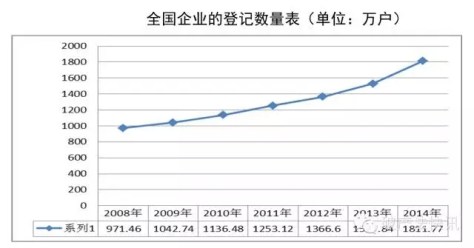
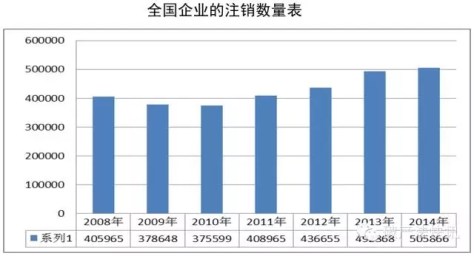
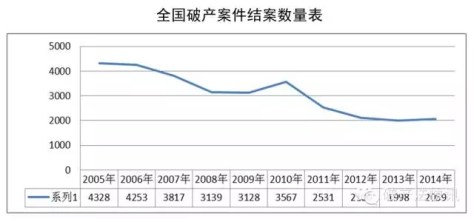

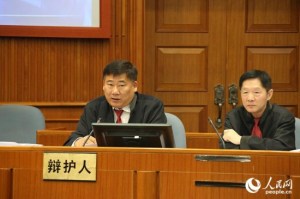



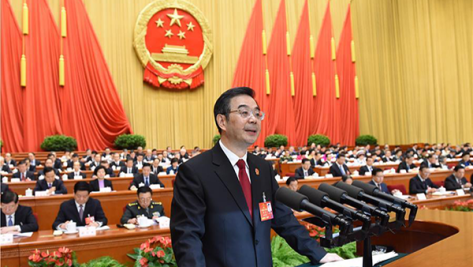
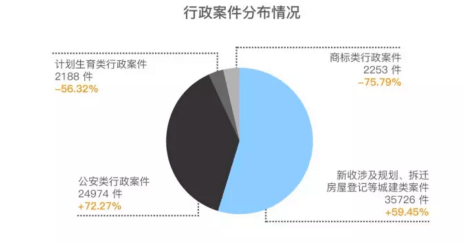
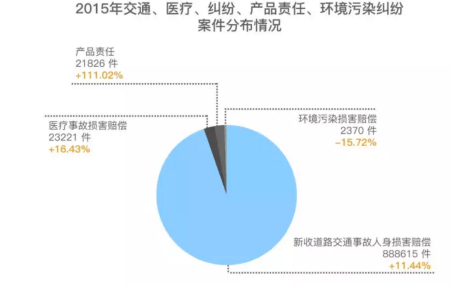
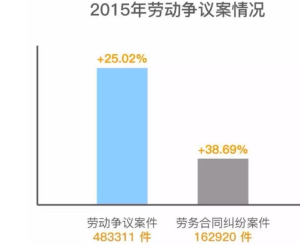
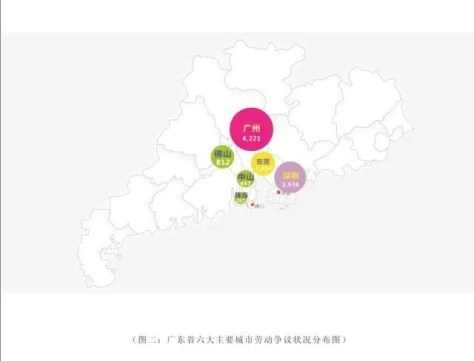
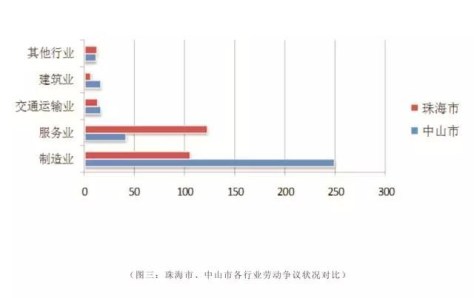
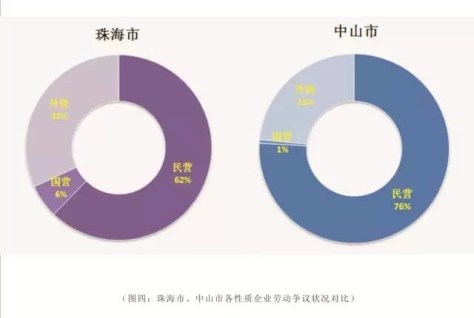
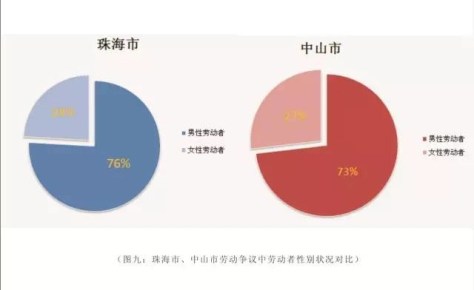
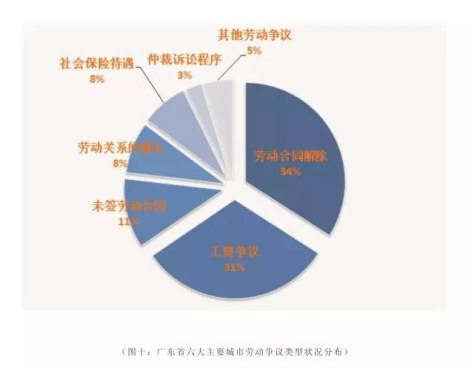
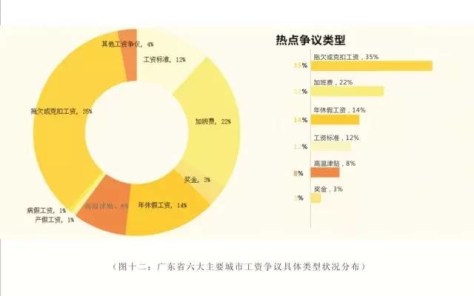

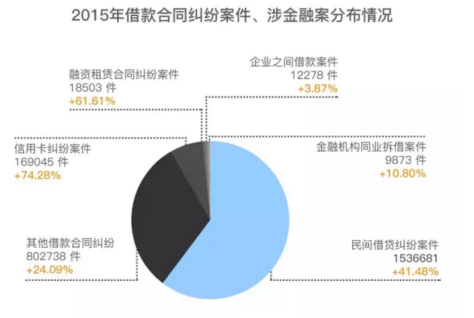 The data on lending disputes is partially useful, because it sets out numbers and percentage increases, but does not set out total amounts in disputes. The pie chart above sets out data on different types of lending and finance sector disputes.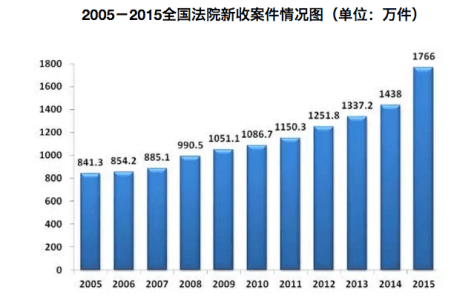
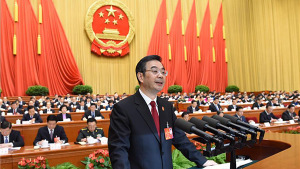 The Supreme People’s Court (SPC)’s
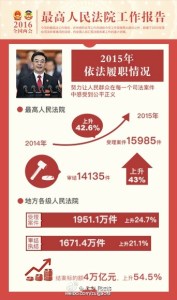
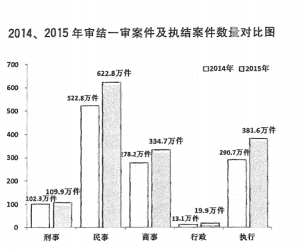
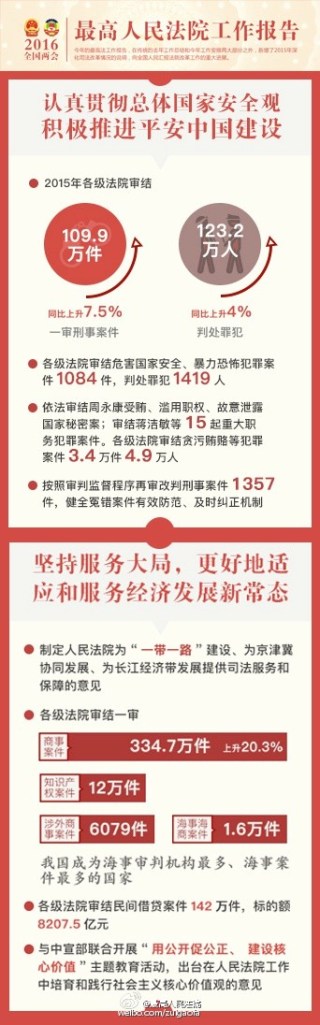 Commercial cases were up 20% (3,347,000, with 120,000 intellectual property cases (up from 110,000 in 2014). This is likely linked to the new intellectual property courts, but I will cede further analysis on this to my fellow blogger Mark Cohen of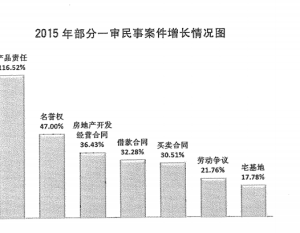
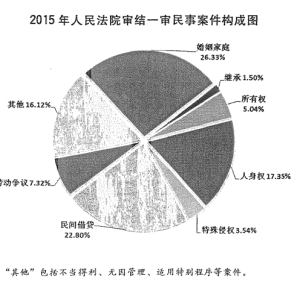
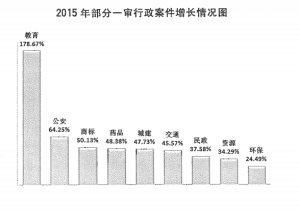
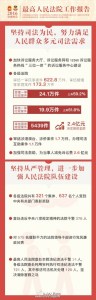


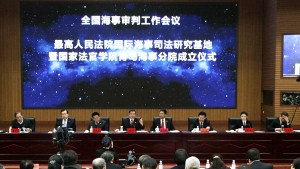
 Supreme People's Court Monitor
You must be logged in to post a comment.