Category Archives: foreign-related cases

Supreme People’s Court Biweekly Developments: September 2025

This post highlights judicial interpretations, policy documents, and guiding or typical cases issued since the middle of September (2025).

  1. Judicial interpretations and policy or other judicial documents

For an explanation of judicial interpretations, see this post; for an explanation of policy documents, see these posts or my 2024 article.


Title Type Analysis
Supreme People’s Court Interpretation on Some Issues Related to the Application of the PRC Company Law《最高人民法院关于适用〈中华人民共和国公司法〉若干问题的解释(征求意见稿)》, issued evening of 30 September, open for comment until 20 October Judicial interpretation (draft) Draft interpretation has 90 articles, not yet aware of translation or analysis in English.  SPC has “already engaged in extensive preliminary research and preliminary consultation with experts, scholars, and relevant departments.”  Provisions include ones related to liquidation and dissolution of companies; disregarding legal personality of related companies; 10 draft provisions related to listed companies, including VAM agreements.  This article comments on the General Provisions, more to come.
Opinions On Promoting the High-Quality Development of the International Commercial Court
and Serving and Ensuring High-Level Opening Up, Issued 25 September (关于推进国际商事法庭高质量发展
服务保障高水平对外开放的意见
) link is to text & press release
Policy document

Also known as a “judicial document” ( 司法文件) or “judicial normative

document” (司法规范性文件), “judicial

policy document” or “judicial regulatory documents” 司法政策性文件).

Not yet aware of analysis in English, see quasi-official analysis on the WeChat public account of the SPC’s #4 Civil Division. My own analysis is forthcoming. Provisions include promoting the use of international commercial courts; standardizing translations; further provisions on parallel proceedings; etc.  China Daily report here
Notice on Issuing Matters Concerning the Jurisdiction of First-Instance Civil and Administrative Intellectual Property Cases by Basic-Level People’s Courts 最高人民法院
关于印发基层人民法院管辖第一审知识产权民事、行政案件有关事项的通知
In effect from 1 October
Judicial normative document Not yet aware of analysis in English; the notice designates courts to hear civil and administrative intellectual property cases in the first instance. Note that many courts have limited jurisdiction in civil cases, depending on the amount in dispute. This could be seen as an assessment of the quality of that court. Shanghai and Beijing courts do not have amount in dispute limitations
 

Title Type Analysis
Supreme People’s Court Interpretation on Some Issues Related to the Application of the PRC Company Law《最高人民法院关于适用〈中华人民共和国公司法〉若干问题的解释(征求意见稿)》, issued evening of 30 September, open for comment until 20 October Judicial interpretation (draft) Draft interpretation has 90 articles, not yet aware of translation or analysis in English.  SPC has “already engaged in extensive preliminary research and preliminary consultation with experts, scholars, and relevant departments.”  Provisions include ones related to liquidation and dissolution of companies; disregarding legal personality of related companies; 10 draft provisions related to listed companies, including VAM agreements
On Promoting the High-Quality Development of the International Commercial Court
Opinions on Serving and Ensuring High-Level Opening UpIssued 25 September (关于推进国际商事法庭高质量发展
服务保障高水平对外开放的意见
) link is to text & press release
Policy document

Also known as a “judicial document” ( 司法文件) or “judicial normative

document” (司法规范性文件), “judicial

policy document” or “judicial regulatory documents” 司法政策性文件).

Not yet aware of analysis in English, see quasi-official analysis on the WeChat public account of the SPC’s #4 Civil Division. My own analysis is forthcoming. Provisions include promoting the use of international commercial courts; standardizing translations; further provisions on parallel proceedings; etc.  China Daily report here
Notice on Issuing Matters Concerning the Jurisdiction of First-Instance Civil and Administrative Intellectual Property Cases by Basic-Level People’s Courts 最高人民法院
关于印发基层人民法院管辖第一审知识产权民事、行政案件有关事项的通知
In effect from 1 October
Judicial normative document Not yet aware of analysis in English; the notice designates courts to hear civil and administrative intellectual property cases in the first instance

2.  Typical (典型 example, exemplary, model) cases

For an explanation of typical (model, exemplary, example) cases, see these posts.

Title Type Analysis
Ninth Batch of Cases on the Construction of People’s Tribunals in the New Era (2)新时代人民法庭建设案例(九) Typical cases Subtitle is “Building Fengqiao-style People’s Courts and Strengthening the Guidance of Professional and Industry-Specific Mediation Functions”—related to resolving enterprise-related and labor-related disputes [providing insights into SPC policies on the role of the local courts]
The Supreme People’s Court and the Ministry of Justice jointly issued typical cases on standardizing enterprise-related law enforcement, judicial administrative reconsideration, and administrative litigation最高人民法院、司法部联合发布规范涉企执法司法行政复议、行政诉讼典型案例 Typical cases Cases have multiple targets: promoting the  “Private Economy Promotion Law”, special actions to standardize administrative law enforcement and judicial work involving enterprises, administrative reconsideration and administrative litigation in serving high quality economic and social development
Fifth batch of typical cases involving the construction of the “Belt and Road”第五批涉“一带一路”建设典型案例 Typical cases See my earlier comments on Belt & Road typical cases; SPC states its hope that the cases not only provide exemplary guidance for the Chinese courts, but also provide regulatory guidance for the joint construction of the Belt and Road Initiative with the wisdom of Chinese judicial practice, injecting new legal momentum into promoting a fairer, more open, and more inclusive new international economic order; my own commentary forthcoming

________________________________

I’m focusing on preparing a long article for publication and several other long writing projects, therefore this abbreviated post.

Benchbooks (Judicial Handbooks) for the New Era

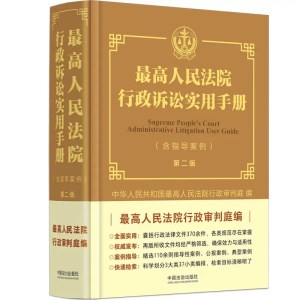
A recent message in the WeChat public account of the Supreme People’s Court (SPC)’s Administrative Division was devoted to promoting its new book,  Supreme People’s Court Administrative Litigation User’s Guide (Administrative Litigation User’s Guide (2nd edition), 最高人民法院行政诉讼实用手册), shown in the photo above.   Had the SPC’s #4 Civil Division had a WeChat public account last year when they published 涉外涉港澳台民商事审判业务手册( Foreign-Related, Hong Kong, Macao and Taiwan Related Commercial Trial Work Guide — “Foreign-Related Judicial Handbook”), I am sure that I would have received a similar message.  I had previously thought that judicial handbooks were a historical artifact of the days before electronic databases.   In my 1993 article, I discussed the phenomenon of judicial handbooks:

..A …problem is presented when the lack of consistency in issuance and authority makes it difficult for the lower courts to know when an interpretation is no longer valid…The [SPC] tries to cure these problems by issuing handbooks for adjudication in various subject areas….The Research Office and other divisions of the Court compile adjudication handbooks such as Sifa Shouce [司法手册] (Judicial Handbook), many of which are internal publications.

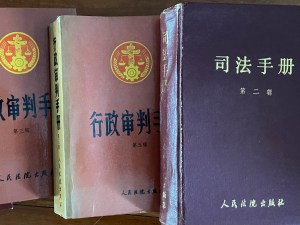
Some of those historical handbooks can be found in my research library of Supreme People’s Court publications–see here and below:

Two Administrative Litigation Judicial Handbooks and the second volume of the Judicial Handbook

Why would specific divisions of the SPC return to the practice of issuing judicial handbooks in printed form?  How does it link with the role of the SPC? What sources have the editors included, and what could students, scholars, and practitioners learn from that?

Official reasons for publishing these print books

The authors of the  Administrative Litigation User’s Guide describe the reasons for publishing the book as follows:

the Supreme People’s Court, on the one hand, provides professional guidance (业务指导) by formulating judicial policies 司法政策), issuing guiding cases, and making judicial replies (司法答复); on the other hand, it strengthens research and collects problems, and formulates judicial interpretations based on the accumulation and maturity of judicial practice. At present, the comprehensive judicial interpretation of the Administrative Litigation Law, the judicial interpretation of administrative agreements, and the judicial interpretation of the appearance of administrative agency heads in court to respond to lawsuits have been formulated and issued…, and there are more and more normative documents and guiding cases related to administrative litigation. In addition, with the increase in the number of administrative cases, more judges have joined the administrative trial team. In the process of gradually becoming familiar with administrative litigation, they urgently need to master the  relevant provisions that have been issued and learn the relevant guiding cases. However, judicial replies are internal in nature, with a large volume and lack of a unified release mechanism. The channels for obtaining them from the outside world are limited, which is time-consuming and laborious.

According to the announcement, the audience for the Administrative Litigation User’s Guide is staff in administrative agencies, judicial practitioners, and researchers of administrative law [students and academics].  The editors note that to provide readers with reference materials and to make the book more practical, they have included guiding cases, SPC Gazette Cases, and typical cases from the last 10 years.

The #4 Civil Division authors/editors say their handbook is urgently needed by front-line judges and as a reference book for judges, arbitrators, lawyers, and other practitioners, and, I would add, to students and scholars seeking to decode the foreign-related and Hong Kong, Macau, and Taiwan-related operations of China’s judiciary.

Legal basis for publishing these books

Publishing these books is linked to Article 10 of the Organic Law of the People’s Courts and related documents, which authorize the SPC to supervise and guide(监督指导) the lower courts.

Comments on the content

Both books contain judicial interpretations and a range of SPC guidance documents such as meeting minutes/conference summaries (会议纪要), notices, and replies to requests for instructions, signaling to the reader that they are important sources of reference for judges and that “soft law” may understate the way that meeting minutes are understood within the Chinese court system.

The authors/editors of the Foreign-Related Handbook included many other types of legal provisions they considered relevant for hearing cross-border cases, such as relevant national legislation, administrative regulations, such as foreign exchange regulations, Chinese versions of international commercial rules (Incoterms, ICC Uniform Rules for Demand Guarantees (URDG 758), ISP 98) ), Hague Conventions to which China has acceeded,  and civil judicial assistance treaties, as well as some of the National People’s Congress Standing Committee decisions related to some of the international conventions.  The #4 Civil Division did not include guiding, typical cases, and other types of cases it issues for reference.  In my view, it was a practical decision that does not imply that those types of cases are irrelevant to judges hearing cross-border commercial cases, but rather that including cases would make the book too long to be published as a single volume.

Comment

The underlying rationale for publishing these judicial handbooks has not changed much in the past 30 years.  Judges responsible for processing cases efficiently and correctly face similar challenges:  sorting out the current legal position on an issue quickly despite the piecemeal way that the SPC develops the law, locating and assessing the validity of historical documents, easily identifying special arrangements, and for cross-border cases, understanding how to correctly implement international conventions, treaties and practices and correspondingly arrangements or related provisions concerning cases involving Hong Kong, Macau and Taiwan parties.

One experienced senior judge in a local court noted that judges are often asked to rotate among divisions (tribunals) periodically.  Senior judges recommend that new joiners read these handbooks to familiarize themselves quickly with a different (and complicated) area of law.

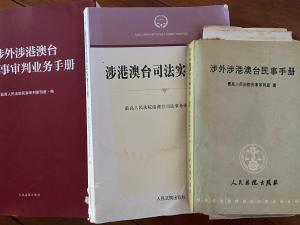
From the left, the 2024 Foreign-Related Handbook, a 2013 Hong Kong, Macau, Taiwan Related Judicial Handbook, and the 1992 Foreign, Hong Kong, Taiwan-Related Civil Matters predecessor volume


What’s New in SPC Support for Foreign-Related Rule of Law?

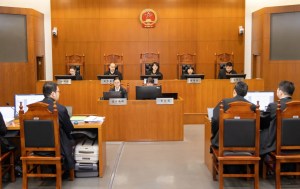
CICC hearing in Shanghai

As most readers of this blog know, developing foreign-related rule of law is a priority for the Chinese government.  President Zhang Jun told Supreme People’s Court (SPC) leaders at the beginning of 2025 that the Party Center places a great deal of importance on the construction (development) of foreign-related rule of law (党中央高度重视涉外法治建设). What does that mean for the SPC?  What has the SPC done lately? This post briefly notes some of those developments.

  1. The SPC’s #4 Civil Division has recently established a WeChat public account entitled 中国涉外商事海事审判,  as a way of better conveying developments to the Chinese professional and academic legal world. The link is to the April 30 report on the China International Commercial Court’s circuit visit to Shanghai on 10-11 April.
  2. The China International Commercial Court (CICC) held a hearing in Shanghai’s #1 Intermediate Court on 10 April in a joint venture shareholder dispute (see the photo above). I could attend because I was scheduled to participate in a workshop at NYU Shanghai on 12 April and several people bound by protocol to remain anonymous helped workshop participants and me with the required formalities.   Many from Shanghai’s “foreign-related” legal community attended the hearing, including several foreign lawyers, senior members from the Shanghai International Arbitration Center, Shanghai Commercial Mediation Center, and academics from Shanghai’s law schools specializing in foreign-related matters.  Official reports on the event included the SPC’s official website, the Shanghai #1 Intermediate People’s Court WeChat account (bilingual), and the #4 Civil Division’s WeChat account. I have my views on the performance of the lawyers, but will withhold them until I know more about the length of time they had for preparation.

Unbeknownst to most, the hearing in Shanghai evidenced that the CICC was implementing part of Article 33 of the sixth judicial reform plan:

Deepen the reform of the circuit trial mechanism. Deepen the reform of the circuit court work mechanism of the Supreme People’s Court, strengthen the functions and roles of the Supreme People’s Court’s trial organs in shifting their focus downward, resolving disputes on the spot, and facilitating litigation for the parties. 强化最高人民法院审判机关重心下移、就地解决纠纷、方便当事人诉讼的功能作用。

Holding a hearing in Shanghai would be considered to be “shifting the focus of the SPC downward,” resolving disputes on the spot, and facilitating litigation for the parties.

  1. The SPC issued 《最高人民法院关于人民法院为西部陆海新通道建设提供司法服务和保障的意见” Opinions of the Supreme People’s Court on the People’s Court Providing Judicial Services and Guarantees for the Construction of the Western Land-Sea New Corridor”  along with related typical cases. An explanation of the Western Land-Sea New Corridor is here.  The document designates the Chongqing High People’s Court to take the lead in establishing a “13+2” judicial cooperation mechanism among thirteen high people’s courts and two intermediate people’s courts along the corridor to cooperate in litigation services, substantive dispute resolution, enforcement linkage, application of law, talent training, etc.
  2. SPC Justice Wang Shumei published an article in China Trial (中国审判)  on foreign related matters in late 2024. Her article is a useful summary of current SPC policy on foreign-related commercial and maritime matters.   One part includes:

improve the rules for jurisdiction over foreign-related cases, and properly handle international conflicts of jurisdiction arising from parallel litigation involving multiple countries in the same dispute in accordance with the law; we must firmly maintain the international order based on international law, actively participate in the formulation of international rules, carry out in-depth international judicial exchanges and cooperation, strengthen confidence in the rule of law, actively explain to the world the concepts, propositions and successful practices of foreign-related rule of law with Chinese characteristics, promote the progress of international rule of law, promote global governance in a more just and reasonable direction, and help build a community with a shared future for mankind.

The above quotation summarizes what has been said in earlier documents: resolving parallel litigation is on the agenda; the Chinese courts should tell China’s story well; the SPC should actively participate in formulating international rules (actively participating in the negotiation of the Hague Judgments Convention as an example), and all is linked to the Chinese government’s vision of global governance and the international legal order.

3.  Typical cases

  1. In late April 2025,  the SPC issued a group of typical cases linked to the Western Land-Sea Corridor and the policy document mentioned above, signaling the importance of mediation, unifying standards, promoting the application of international treaties and conventions, etc.
  2. In March 2025, the SPC issued a second group of typical free trade zone cases第二批服务保障自由贸易试验区建设典型案例
  3. As I mentioned in an earlier post, the SPC issued typical cases protecting the rights and interests of foreign investors.
  4. As mentioned in an earlier post, in March, 2025, the SPC issued procedures to implement the Foreign State Sovereign Immunity Law.

Forthcoming attractions

Among the forthcoming attractions of which I am aware:

  1. The #4 Civil Division is drafting a judicial interpretation of the foreign-related part of the Civil Procedure Law, as reported in official media. Judge Guo Zaiyu, who was one of the judges of the CICC panel hearing the case at the #1 Intermediate People’s Court, chaired a meeting with scholars and experts, hosted by East China University of Political Science and Law, including some (domestic) CICC experts in Shanghai on April 11. I surmise the judicial interpretation will be issued sometime this year and it is unclear whether a draft will be released for public consultation.

2.   As mentioned earlier, the 6th judicial reform five-year plan outline was issued in late December.  Point 12 relates to foreign-related rule of law:

Improve the judicial guarantee mechanism for high-level opening up. Improve the foreign-related trial mechanism, strengthen international commercial trial work, and improve the connection mechanism with international commercial mediation and arbitration. Improve the judicial trial system in which the parties in foreign-related civil legal relations agree on jurisdiction and choose to apply foreign laws in accordance with the law. Improve the mechanism for accurate application of international treaties and international practices, and improve the mechanism for ascertaining foreign laws. Improve the maritime trial mechanism, promote the improvement of the maritime legal system, improve the rules for adjudicating disputes such as ship repair, cross-border logistics, shipping insurance, maritime finance, and compensation for damage to the marine ecological environment, and improve the coordination and linkage mechanism with maritime administrative law enforcement agencies. Improve the mechanism for mutual recognition and enforcement of cross-border arbitration awards and civil and commercial judgments. Improve the judicial protection mechanism for overseas interests and investments. Improve the judicial protection mechanism for overseas Chinese interests. Improve the talent training mechanism for foreign-related trials. Strengthen international exchanges and cooperation in the judicial field, and actively participate in the formulation of international rules.

It appears most of the content here is not new and has been incorporated in the policy documents previously analyzed on this blog. The major exception is the detailed stress on certain maritime case principles.  Why has this paragraph been incorporated in the judicial reform plan outline, when previously this type of content would more likely have appeared in a specialized policy document?  As I will comment in a future article, it is representative of many articles in this judicial reform plan outline, signaling that the Party and SPC leadership attach importance to those matters.

Supreme People’s Court Details Foreign State Immunity Procedures

At the end of March, the Supreme People’s Court (SPC) issued procedures to implement China’s Foreign State Immunity Law (the Law) in the form of a  “Notice on Procedural Matters in Civil Cases Involving Foreign State Immunity” (Notice) 关于涉外国国家豁免民事案件相关程序事项的通知. That law has been in force since the beginning of 2024.  Consistent with its practice, the SPC published a press release along with the text of the notice.  The press release, in the form of the head of the SPC’s #4 Civil Division’s answers to reporters’ questions, provides useful background. I surmise that the press release is an edited version of materials submitted to SPC leadership for approval (as described in my 2024 article). I had anticipated that the SPC would do so, after additional research and soliciting comments from both inside and outside the court system but had guessed that a notice would be issued in 2024.  Although the notice does not so state, I surmise that foreign state immunity cases will be considered “important and difficult” and therefore subject to special internal procedures.  See Professor William Dodge’s article for comparisons to US law and comments on the Law.  Professor Huo Zhengxin provides another perspective. This post summarizes the major points of the notice, with my comments.

  1.  The general rule is that foreign governments and their property have immunity, with exceptions as set out in the Foreign State Immunity Law.  The press release usefully makes clear that Article 1 of the Notice requires that a plaintiff filing a civil lawsuits against a foreign state as a defendant or third party, must list in the complaint the specific provisions of the Law the lawsuit is based on, and explain which exception it falls into for the court to review. The court also has the responsibility to clarify (释明) the complaint in the process of receiving the complaint. “Clarify/clarification” here is a term in Chinese Civil Procedure Law, analogous to a judge’s right in other civil legal systems–the “right to ask, suggest to or require the parties to clarify or supplement their ambiguous, insufficient or improper claims, submissions or evidence.” If the plaintiff still fails to set out the legal basis after the court’s clarifications,  the plaintiff should be deemed to not have met the court’s requirements, and the court should reject the case.
  2. For those first instance civil cases that fall into the exceptions to the Foreign State Immunity Law, certain intermediate courts in provincial capitals (or their equivalent in directly administered cities, etc) have jurisdiction, as well as financial and intellectual property courts.  The notice limits the number of courts that can hear foreign state immunity cases (as I had surmised), through centralizing jurisdiction (集中管辖), but permits financial courts and intellectual courts to hear them and requires other courts to transfer cases that they have accepted to ones with jurisdiction.
  3. Article 3 concerns service of process, which must be according to relevant treaties or conventions, or other means not prohibited by the law of the foreign country, or alternatively by diplomatic note (via the Ministry of Foreign Affairs) (Article 17 of the Law).  Service by announcement is prohibited.
  4. The court must serve the complaint and other documents with a translation accompanying the original Chinese.  The foreign government has three months to file a defense. The court has the discretion to permit an extension of time.
  5.  If the foreign state objects to the jurisdiction of the Chinese court, the court shall engage in a comprehensive review ex officio and may hear the views of the parties.  Participation in an objection procedure is not deemed acceptance of Chinese jurisdiction (also Article 6 of the Law).  If the foreign state does not respond or participate in the Chinese proceedings, the Chinese court must proactively review whether the  foreign state has immunity and can hear the views of the parties.  (Article 18 of the Law). The press release provides guidance to lower courts on the review:  first, the people’s court should examine whether the reasons put forward by the foreign country for enjoying jurisdictional immunity are valid; second, if the reasons put forward by the foreign country are not valid, the people’s court should also conduct a comprehensive review on its own initiative, that is, in addition to the reasons, examine whether the foreign country really enjoys jurisdictional immunity and does not fall into the exception to jurisdictional immunity.
  6.  If a court requires a certificate  on factual issues of state behavior from the Ministry of Foreign Affairs (further to Article 19 of the Law), it shall report to the Supreme People’s Court level by level (逐级报)  to consult and request (商请) the Ministry of Foreign Affairs to issue a certificate.  This one sentence conveys the bureaucratic operation of the Chinese court system and the nuances of inter-bureaucracy relations.

An attachment to the notice lists the authorized courts. The SPC has approved some of these courts to establish international commercial tribunals (courts).  It is likely that those tribunals will hear sovereign immunity cases:

  1. Beijing Fourth Intermediate People’s Court (with an international commercial tribunal)
  2. Tianjin No.3 Intermediate People’s Court
  3. Shijiazhuang Intermediate People’s Court of Hebei Province
  4. Taiyuan Intermediate People’s Court of Shanxi Province
  5. Hohhot Intermediate People’s Court of Inner Mongolia Autonomous Region
  6. Shenyang Intermediate People’s Court, Liaoning Province
  7. Changchun Intermediate People’s Court of Jilin Province
  8. Harbin Intermediate People’s Court of Heilongjiang Province
  9. Shanghai No.1 Intermediate People’s Court (with an international commercial tribunal)
  10. Nanjing Intermediate People’s Court of Jiangsu Province (with an international commercial tribunal)
  11. Hangzhou Intermediate People’s Court, Zhejiang Province (with an international commercial tribunal)
  12. Hefei Intermediate People’s Court, Anhui Province
  13. Fuzhou Intermediate People’s Court of Fujian Province
  14. Nanchang Intermediate People’s Court of Jiangxi Province
  15. Jinan Intermediate People’s Court, Shandong Province
  16. Zhengzhou Intermediate People’s Court of Henan Province
  17. Wuhan Intermediate People’s Court, Hubei Province
  18. Changsha Intermediate People’s Court of Hunan Province
  19. Guangzhou Intermediate People’s Court, Guangdong Province
  20. Guangxi Zhuang Autonomous Region Nanning Intermediate People’s Court
  21. Hainan Provincial First Intermediate People’s Court
  22. Chongqing First Intermediate People’s Court
  23. Chengdu Intermediate People’s Court of Sichuan Province
  24. Guiyang Intermediate People’s Court, Guizhou Province
  25. Kunming Intermediate People’s Court, Yunnan Province
  26. Lhasa Intermediate People’s Court of Tibet Autonomous Region
  27. Xi’an Intermediate People’s Court of Shaanxi Province
  28. Lanzhou Intermediate People’s Court of Gansu Province
  29. Xining Intermediate People’s Court of Qinghai Province
  30. Yinchuan Intermediate People’s Court of Ningxia Hui Autonomous Region
  31. Urumqi Intermediate People’s Court, Xinjiang Uygur Autonomous Region

__________________________________

Guide to Finding Supreme People’s Court Materials: Selected Journals of SPC Divisions (Consolidated Version)

Late last year, some followers asked me to describe some of the principal sources for Supreme People’s Court’s (SPC) research. I’m doing this in several posts, as few (particularly outside of China) seem to be aware of the range of publicly available publications of the SPC and its many affiliated entities–see here and here for earlier posts. This post summarizes the journals (actually periodic publications–each has an ISBN number) edited and written (at least in part) by the trial divisions and other offices of the SPC.   As far as I know, they are only in printed form, although sometimes some parts of the content can be found on WeChat. That means that those outside of China are rarely aware of their existence.  I assume that they are available through Taobao or Jingdong.  

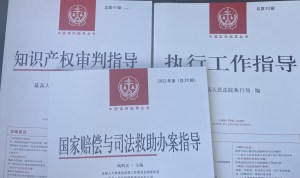
The readers of these publications are judges and practitioners. The publications are specialized, in contrast to the Supreme People’s Court Gazette, and each one contains normative provisions and guidance related to the specific area of law.

A quick guide to the content listed: the judicial interpretations are normative, of course, and the “understanding and application” articles provide further explanation and background about judicial interpretations and sometimes policy documents. “Leaders’ speeches” are a statement of policy, substantive & political; relevant policy documents (such as the SPC/National Intellectual Property Administration policy document of February, 2023 contain policy and related political signals; the research & local documents are all related to current issues in the relevant area of law; and the typical cases/outstanding judgments provide guidance to judges & are useful reference materials for lawyers/in-house counsel because the results in the cases reflect the views of the Supreme People’s Court. The publications flag new issues facing the judiciary in the specialized area involved and sometimes include analysis of foreign laws or regulations or an account of a foreign court visit or symposium.  Each journal has a slightly different format.  It may be possible to find electronic compilations of these journals on WeChat.

These journals are mostly published by the People’s Court Press (人民法院出版社).   Some journals have local correspondents reporting on local developments.  It can be surmised from how frequently a journal is updated how useful the relevant SPC division sees it as a platform for guidance and publicity of their views.  Cases from these journals can often be seen reposted on WeChat. 

TitleSponsoring InstitutionContentPhoto/Other Comments
行政执法与行政审判 Administrative Law Enforcement and Administrative AdjudicationSPC’s Administrative DivisionA section entitled: Authoritative viewpoint” (#96 contained Administrative Division Deputy Head Liang Fengyun on how to implement XJP Legal Thought in the courts’ administrative trial work); Research on Specialized topics; Theory & practice; Case analysis; One of the six-in-one guidance mechanisms mentioned by the head of the SPC Administrative Division, Geng Baojian
执行工作指导 Guidance on Enforcement Work/ Guide to EnforcementSPC’s Enforcement Bureau 最高人民法院执行居The most recent edition is #84, published in July, 2024.  Some issues contain discussion by enforcement bureau chiefs; hot topics; empirical study; report on pilot reform; analysis of SPC case; analysis of local court cases; resolving enforcement cases at source. 
最高人民法院知识产权法庭审判指导与参考 Supreme People’s Court Intellectual Property Tribunal Trial Guidance and ReferenceSPC’s Intellectual Property Tribunal

Volume #3 contains: SPC IP Court Annual Report 2021; judgment digests summary; typical cases; law & judicial interpretations; judicial scholarship; research report; window on the world; SPC IP Court 2021 Major Events

民事审判指导与参考 Reference and Guide to Civil TrialSPC’s #1 Civil Division (w’ local correspondents)Latest volume is from 2023: special section on people’s tribunal work; special section on resolving disputes at source (诉源治理); special section on family disputes trials; frontier theoretical issues; special section on dowry issues; typical cases on food safety punitive damages; special section on wage arrears; typical cases on agriculture; local case analysis; research report; #1 civil division judicial conferences 
涉外商事海事审判指导 Guide on Foreign-Related Commercial and Maritime Trial


SPC’s #4 Civil Division

Last volume apparently published in 2020, but dated 2018; sections included leaders’ speeches; judicial documents; requests & responses (per Prior Approval system); case analysis; research report; new informationPreviously mentioned on this blog here
司法研究与指导 Judicial Research and GuidanceSPC’s Research Office, but appears not to have been updated for some time.  Zhang Jun was listed as the editor in one of the early volumesincludes leaders’ speeches (policy & guidance); judicial exchanges/cooperation; theory & practice; cases; investigation & researchperhaps the office is focusing on other matters and this journal is therefore not a priority
环保资源审判指导 Guide on Environment and Resource TrialSPC’s Environmental & Natural Resources DivisionSeems to have been rarely updated, perhaps using reports or white papers to show their accomplishmentsfirst volume published in 2015
商事审判指导 Guide on Commercial TrialSPC’s #2 Civil Divisionlatest volume is #57, this has the index for #53 (2021)perhaps the division is focusing on other methods to provide guidance
审判监督指导 Guide on Adjudication SupervisionSPC’s Adjudication Supervision Division#71 published in April, 2024; special section on property-related issues (i.e. private business); outstanding judgments; case analysis; judges’ conference related issues; outstanding judgments; outstanding research reports 
知识产权审判指导 Guide on Intellectual Property TrialSPC’s #3 Civil Division (Intellectual Property)

Content of #41, 2023,  published at the end of 2023: Trial Policy and Spirit: three speeches by SPC leaders (Tao Kaiyuan and Lin Guanghai): Judicial policy document: a joint document issued by the SPC and State Intellectual Property Administration, on strengthening coordination in intellectual property protection; Intellectual Property Week Specialized Issues; Local experience, with two local court guidelines on the application of punitive damages, and one on the hearing of intellectual property small claims; Research reports, all by local courts, one on the protection of new plant varieties, and the other two on competition law issues in the digital and network economy; Typical cases: republishing the third batch of intellectual property protection for new plant variety, and 2021-22 typical cases of mediation of intellectual property disputes;


中国少年司法 Chinese Juvenile JusticeSPC’s Office of Juvenile Tribunal Work 最高人民法院少年法庭工作办公室 (under the Research Office)quarterly; #54, labelled #4 2022 published end 2023;leader’s speeches;   judicial normative documents; local documents & work; selection of prize-winning essays from the 7th National Juvenile Justice Work Conference; typical cases; foreign experience 
立案工作指导 Guide on Case FilingSPC’s Case Filing Division (has local correspondents)2014 volume includes leaders’ speeches; work situation; theory & practice (w’ local court experience); investigation & research (local court experience); experience exchange (also w’local court experience); jurisdiction; model case analysis; understanding and application of judicial interpretation; SPC judicial interpretations & normative documents 
刑事审判参考 Reference to Criminal Trialthe SPC’s five criminal divisions, established in 1999guidance cases (指导案例), not to be confused with guiding cases 指导性案例 that have been approved by the SPC’s judicial committee; legislation & judicial norms, including judicial interpretations;multi-institutional policy documents; difficult issues; frontier theoretical issues; experience exchange (local courts); outstanding judgmentssome compilations of typical cases published can be found on Wechat; this journal mentioned on this blog here, here, and here
金融法治前沿 Frontier(s) of Financial LawCollaboration between the courts and the regulators. The principal members of this collaboration are the SPC’s #2 Civil Division (which focuses on domestic commercial law issues), the legal department of the People’s Bank of China (人民银行条法司), the National Financial Regulatory Administration, related departments of the China Securities Regulatory Commission (CSRC), and the Shanghai, Beijing, and Chengdu-Chongqing Financial Courts. One of the related courts takes responsibility for editing each issue.See detailed description here 
TitleSponsoring InstitutionContentPhoto or Comments
Guide on State Compensation & Judicial Assistance国家赔偿与司法求助办案指导collaboration between the following institutions: NPC Legislative Affairs Commission State Law Office, SPC’s Compensation Committee Office; Supreme People’s Procuratorate #10 Procuratorial Office; Ministry of Justice Administrative Enforcement Coordination and Oversight Bureau; Ministry of Justice Legal Division (司法部条法司#26 dated 2022, but published at the end of 2023, contains: judicial interpretations, “understanding and application” of two of the interpretations; a section on theoretical research, with  some outstanding scholars contributing, including  Yang Lixin and Shen Kui; case analysis; outstanding judgmentsProfessor Shen’s article also appeared in the National Judges College journal Application of Law, linked here

What’s New in the 2024 Supreme People’s Court report to the National People’s Congress?

Susan Finder and Zhu Xinyue

I. Overview of the 2023 SPC Work Report

Supreme People’s Court (SPC) Work Reports to the National People’s Congress (NPC) appear to the casual reader as much of a muchness. Like all official work reports, it provides a perfectly positioned overview of the previous year’s accomplishments and a high-level summary of 2024 work priorities.

To the attentive reader,  the March 2024 SPC Work Report to the NPC  (2024 SPC Work Report or Report) signals something new and different compared to its predecessor reports.  This much-delayed blogpost flags only some of what is new.  I have italicized many of my comments. (Please contact me if I have not mentioned your area of interest.)

The 2024 SPC Work Report signals that since President Zhang Jun took office, he has vigorously implemented new policies and set new priorities. Accordingly, the Report highlights Zhang Jun era keywords. Conveniently for the reader, they are contained in this single report.  A single phrase or sentence in this report links to one or more SPC documents, initiatives, and guiding/typical cases.

As in previous years, local court cases or innovations are considered accomplishments and heralded on local court WeChat accounts. Last year’s report, in contrast, was President Zhou Qiang’s last and served as an official summary of his accomplishments over the previous five years.

Several phrases in the first paragraph of  the 2024 Work Report (bolded) signal the new themes in this report:

… by focusing on the working theme of “justice and efficiency”, insisting on active justice, deepening and realizing service for the overall situation and justice for the people, we have made solid progress in promoting the modernization of judicial work聚焦“公正与效率”工作主题,坚持能动司法,做深做实为大局服务、为人民司法,推动审判工作现代化迈出坚实步伐…

As the regular reader of this blog could predict, the word “active ( 能动)” and the watchword or keyword  “active justice (能动司法)  can be found throughout the report.

Some statistics

The initial section of the 2024 SPC  Work Report provides overall statistics from the SPC and the entire court system.  The SPC accepted 21,081 cases and concluded 17,855 cases, representing a year-on-year increase of 54.6% and 29.5%, respectively. These numbers reflect the end of the pilot project to reorient the four levels of the Chinese courts and the corresponding increase in retrial applications made to the SPC. It can be anticipated that those numbers will be even higher in the 2024 calendar year. As I have previously written, most of the civil and administrative retrial applications to the SPC are unsuccessful, but it requires SPC judicial time to review them. For Americans, a useful but not entirely appropriate analogy is the petition for certiorari to the Supreme Court.

The report states that courts at all levels accepted 45.574 million cases and concluded 45.268 million cases, with 15.6% and 13.4% yearly increases, respectively.  Most cases in Chinese courts are civil/commercial (60.05%) or enforcement cases (29.34%).  I would be grateful if a reader could provide comparative statistics (from other jurisdictions) on enforcement.  My reaction is that the proportion of enforcement cases is relatively large. See the chart below:

These numbers likely are linked to the poor economy, which from comments by friends in the court system, means an increase in business disputes and business-related crime.  These increases are evident despite policies to reduce the number of disputes entering the courts and resolve cases filed before they reach the hearing stage. Those policies include: resolving cases at their source, resolving others through mediation, (now promoted under the keyword/title of Fengqiao Experience),  and promoting arbitration.  Some judges have remarked privately that it also has to do with the low cost of litigation.

II.  Serve the overall situation effectively and ensure high-quality development and high-level security with active justice

The title of this section combines several watchwords/keywords 提法/关键词, robustly signaling that President Zhang Jun led the drafting of this report.

The ten subsections in this section must be understood as ones that were priority areas for the Chinese courts in 2023. I have selected only a few of the subsections out of the ten:

Assisting the Strengthening of the Construction of the Financial Rule of Law

This subsection in the 2024 SPC Work Report is positioned immediately after the sections on safeguarding national security and social stability, promoting public security governance, and fighting corruption, reflecting its priorities in the SPC’s work. Although both the 2023 and 2024 SPC Work Reports address judicial support for finance, the 2024 SPC Work Report emphasizes strict regulatory enforcement in the banking and securities sectors, both subsumed under the category“financial trials.”

The Chinese courts concluded 3.032 million financial cases, an 8% year-on-year increase, and heard 861 money-laundering cases, involving 1,019 individuals, with increases of 23.5% and 22.2%, respectively. The money-laundering cases are likely linked to the ongoing multi-institutional anti-money-laundering campaign of which the SPC is a participating institution. The Report stresses the importance of “compliance in financial activities, strict punishment for senior management illegalities (高管违法要严罚), and holding intermediaries accountable for negligence.” The report illustrated the last two policies by mentioning a securities false statement case in which senior managers were found liable and an intermediary bore 20% joint and several liability.  Given those signals, it will not be surprising that the Shanghai, Beijing, and Chengdu-Chongqing Financial Courts have made analogous judgments in 2023 and 2024. The allocation of liability in these cases is a current issue. The Report also mentioned two financial law-related judicial suggestions that the SPC issued, rarely, if ever mentioned in the past, linked to last year’s judicial interpretation on judicial suggestions/advice (司法建议).

 Promoting the Development and Growth of the Private Economy in Accordance with Law

This subsection, new in comparison with last year’s report, links to the July 2023 Central Committee and State Council document on promoting the private economy,  focusing on measures contained in a September 2023  policy document and typical cases.  It includes a paragraph discussing the measures in that policy document and highlighting that the courts heard 42 cases of property rights-related wrongful convictions.  The SPC issued 12 typical retrial  cases (civil, criminal, and administrative) involving the rights of private enterprises and private entrepreneurs. Cases of bribery and embezzlement involving non-state employees amounted to 6,779, involving 8,124 individuals, with a year-on-year increase of 26.6%. Although the SPC intends to enhance legal certainty, boosting business confidence and stabilizing expectations, other sources report on profit-oriented law enforcement at the local level, often leading to the jailing of private entrepreneurs and the confiscation of their assets.

III   Safeguarding and Enhancing People’s Livelihood through  Active Justice

The section title above replaces “The Path of Judicial Services for the People With Chinese Characteristics” in the 2023 report.

New themes introduced include “Supporting Guaranteed Delivery of Commercial Housing and Stable Livelihoods,” to deal with issues related to the ongoing crisis involving real estate developers.

  • Safeguarding Housing Rights: The financial collapse of many real estate developers has meant disputes along the real estate development supply chain. A 2023 SPC judicial interpretation prioritizes homebuyer rights, clarifying the order of claim repayment in disputes over unsuccessful delivery of sold commercial housing.
  • Strengthening Housing Pre-sale Supervision: The SPC issued Judicial Suggestion No. 1 to promote contract online signing and pre-registration, enhance pre-sale funds supervision for commercial housing, strengthen pre-sale information inquiries, and warn about home buying risks.  [These suggestions do not seem to have been made public.]
  • Restructuring the Financial Chain of Homebuying: In response to a financial chain rupture of a private real estate enterprise in Hunan Province, a court-facilitated restructuring revitalized 16.8 billion yuan, resolving housing delivery issues for 16,000 households by facilitating the merger and restructuring of 13 related companies.  This type of case was mentioned in a typical case that the SPC issued last year.

IV. Promoting National and Social Governance through Active Justice Which Practically Grasps the Front End and Treats the Disease Before it’s too Late 

As could be anticipated, this section emphasizes judicial suggestions, among other matters.

Deepening the Effective Use of Judicial Suggestions: The Report emphasized judicial suggestions that fill legal gaps and governance deficiencies, mentioning the regulations on comprehensive governance-oriented judicial suggestions, discussed here. This is yet another initiative emphasized by President Zhang Jun. The SPC led with Judicial Suggestions No. 1 to No. 5, and lower courts issued 9,429 suggestions.

V. Ensuring Judicial Justice through Actively Performing Duties 

This section underscores Party leadership within the judicial system, with the primacy of the Party’s political construction. It promotes “strengthening Party nature, emphasizing practical work, and achieving new accomplishments” (“强党性、重实践、建新功”) through solid “learning of ideology” (扎扎实实“学思想”) and outlines the result of “deepening investigation and research and solidifying thematic education”( 大兴调查研究,让主题教育走深走实) and implementing “investigation promoting case handling, and case handling also being investigation” (“调研促进办案、办案也是调研”).

The Report indirectly addresses public concerns about the China Judgements Online database by emphasizing efforts to improve transparency in judicial proceedings (裁判文书上网) and the “People’s Court Case Database”,  such as posting 2.165 million documents online in 2023, with a year-on-year increase of 111.6%, covering a wider range of trial areas and case types, with the SPC and higher courts posting 35,000 documents, a 370% increase. The 2024 Report details measures for the uniform application of legal standards, including 15 judicial interpretations, 13 guiding cases, and 610 typical cases. As discussed here, the “People’s Court Case Database” contains SPC-approved cases, and judges must search this database.   “Legal Response Network (法答网)” (analysis to come) launched on July 1, 2023, facilitates communication among courts and has received 280,000 legal application inquiries, answering 230,000. Insights from this platform have led to the revision or drafting of 27 judicial interpretations and regulatory documents.

More specific selected statistics

Bankruptcy cases: 29,000 bankruptcy cases were concluded, marking a year-on-year increase of 68.8%. Additionally, 1,485 bankruptcy restructuring and settlement cases were concluded. Local court white papers on bankruptcy (link is to the Shanghai court white paper) are an undervalued source of insights on more specific bankruptcy trends, such as the type of companies going bankrupt and the length the companies have been in business. One law firm report on bankruptcy flagged missingness on the SPC’s bankruptcy platform and the rate at which local courts accepted bankruptcy cases.

Foreign-related civil and commercial cases: 24,000 foreign-related civil and commercial cases and 16,000 maritime cases were concluded, representing annual increases of 3.6% and 5.3%. The average trial time decreases by nearly 10 days. 16,000 cases of judicial review of commercial arbitration were concluded, reflecting a 5% year-on-year increase. During this period, 552 arbitration awards were revoked, remaining stable year-on-year, while 69 foreign arbitration awards were recognized and enforced, representing a 16.9% increase. This section mentions a Shanghai Financial Court case in which the court stopped payment on a demand guarantee, although in fact most of such lawsuits are unsuccessful.

Deepening the diversification of dispute resolution: Since 2013, court cases have increased by an average annual rate of 13%, doubling over 10 years. Judges handled an average of 357 cases annually in 2023, up from 187 in 2017.  The courts successfully mediated 11.998 million disputes through people’s mediation, administrative mediation, and industry-specific mediation organizations/institutions, representing a 32% increase year-on-year and accounting for 40.2% of the total civil and administrative cases filed.

Fully leveraging the role of scientific evaluation as a “command baton”: The annual case closure rate was adjusted to the closure rate within the trial period, which reached 97.7% last year, a 2 percentage point increase. A special case cleanup initiative concluded 1,914 lawsuits pending for over three years and 2,455 pending cases involving 6,909 individuals, accounting for 81.3% and 86.8%, respectively, of the total cases.  The title of this section is significant. Judges at all levels of courts feel that “command baton.”

VI. 2024 Work Targets

As readers of this blog could anticipate, the 2024 work arrangements of the courts are focused on the modernization of judicial work, active justice, and other 2023 top keywords. The work arrangements listed here are more general than the types of work plans mentioned in my article.  They are intended to signal to the NPC and general public the overall direction of the SPC’s work in the current year. For the most part, the arrangements are expressed in phrases or single sentences.

Criminal cases: Implement the holistic national security concept, severely punish crimes threatening national security and public safety, promote the normalization of crackdowns on gangs and evil [sometimes used against local entrepreneurs], and severely crack down on telecommunications network fraud, cross-border gambling, and corruption, with harsher punishment for bribery crimes. All if not most of these crimes were flagged during January’s annual Central Political-Legal Work Conference.

Intellectual property and digital rights: Strictly protect intellectual property rights and promote their transformation and application, and serve the development of new productive forces. Justice Tao Kaiyuan published an article in People’s Daily in late March explicating the link between the development of new productive forces and the improvement of intellectual property rights protection. Strengthen personal information protection and improve digital rights protection rules. The latter two presumably imply inter-institutional cooperation.

Bankruptcy and Economic Development: Increase work on hearing bankruptcy cases and give full play to “active rescue” and “timely liquidation”. We can expect to see the courts accepting more bankruptcy cases this year. Deepen the compliance reform for companies involved in criminal cases and continue to optimize the growth of the private economy. Properly handle real estate development and affordable housing contract disputes, and actively serve the new model of real estate development (recent Party/state initiative). Strengthen hearing and enforcement work in “agriculture, rural areas and farmers” (“三农”) to support rural revitalization. The latter is consistent with previous SPC policy.

Ecological and Social Justice: Serve ecological civilization [the environment]  and green and low-carbon development in accordance with the law. Strengthen the protection of the rights of women, children, the elderly, disabled people, etc. (It is unclear whether that will include a better legal infrastructure for sexual harassment cases.) Strengthen administrative trials, supervise and support administrative agencies to administer according to law and strictly enforce the law. Promote judicial advice/suggestions and national and social governance.

Court administration.  Improve the quality and efficiency of court hearings and accelerate the modernization of trial work. Deepen the comprehensive supporting reform of the judicial system and formulate the “Sixth Five-Year Plan” reform outline for the people’s courts. [It is unclear when it will be issued] Comprehensively and accurately implement the judicial responsibility/accountability system (see related documents here), and further implement  “supervision/”review” system  (阅核制) by senior court leaders. That system is one of President Zhang Jun’s initiatives.  Improve the hierarchical selection system for judges and promote the coordinated use of posts and establishments across administrative regions. This seems to be a reform to share judicial headcount. Deepen the “three-in-one” reform of criminal, civil, and administrative cases in intellectual property, environmental resources, and juvenile matters.

Foreign-related and Grassroots Courts: Enhance the foreign-related judicial hearing system (consistent with my observations about the importance of foreign-related matters) and efficiency. Do a good job of “replying to letters and visits“, and strengthen the management of the source of letters and visits.

Grassroots Courts:  Practice the “Fengqiao Experience” in the new era, promote resolving cases at source (诉源治理), provide practical guidance for mediation, and vigorously create “Fengqiao Style People’s Tribunals.” The SPC has issued six groups of related typical cases and the Chinese court media has begun to report on the creation of such people’s tribunals. The Report mentions strengthening relatively weak grassroots courts (相对薄弱基层法院), another initiative by President Zhang Jun. Under this initiative (full text of measures unavailable), 106 relatively weak local courts are targeted for additional support. The SPC has set quotas for each province, as well as a goal of removal from the list within one to three years.

Supervision, Guidance and Digital Courts: Strengthen supervision and guidance (stressed by President Zhang Jun, as mentioned above), deepen trial management, use the “People’s Courts Case Database” and improve the “Legal Response Network 法答网”. [More on this in a later blogpost, but it appears to be an updated version of letters to the 人民司法 (People’s Justice) mailbox)]. Develop a nationwide court “one network” and digital courts (数字法院) to boost efficiency. Note that the term “smart courts” (智慧法院), the subject of books, articles, and PhD dissertations in Chinese and English,  appears to have been dropped.

Court Supervision and Integrity: The final section for the most part repeats principles seen previously, such as improving political, professional, and professional ethical qualities. It flags improving the training of professional trial talents in foreign-related, intellectual property, and other fields and stresses the use of personnel assessment of all court staff.

Finally, I conclude with this extended quotation from the Report:

 the new development of the work of the people’s courts in the new era and new journey is fundamentally due to the leadership of General Secretary Xi Jinping and the scientific guidance of Xi Jinping Thought on Socialism with Chinese Characteristics for a New Era. It has benefited from the effective supervision of the National People’s Congress and its Standing Committee, the strong support of the State Council, the democratic supervision of the National Committee of the Chinese People’s Political Consultative Conference, the supervision of the National Supervision Commission and the Supreme People’s Procuratorate, the democratic supervision and support of various democratic parties, the Federation of Industry and Commerce, people’s organizations and non-party personages, and the enthusiastic concern, support and help of local party and government organs at all levels, deputies to the National People’s Congress, members of the National Committee of the Chinese People’s Political Consultative Conference, all sectors of society and the general public.

________________________________________________________

Many thanks to an anonymous peer reviewer!

References to “I, me or mine” are to Susan Finder rather than Zhu Xinyue. Finally, I’d like to express my appreciation to followers of this blog for their patience.

How China’s Supreme People’s Court Supports the Development of Foreign-Related Rule of Law

I am honored to have published How China’s Supreme People’s Court Supports the Development of Foreign-Related Rule of Law in China Law & Society Review.   I have also posted it on SSRN.  As an alternative for those unable to download the article from the Brill website or SSRN, I have uploaded it to this website.   Many thanks to the many colleagues and friends who have contributed to this article in any way.  Special thanks to Sida Liu!


New Group of Supreme People’s Court Belt & Road Typical Cases

At the end of September (2023) the Supreme People’s Court (SPC) issued its fourth group of Belt & Road (BRI) Typical /Model /Exemplary ) (this post will use the translation “typical”) Cases (第四批涉“一带一路”建设典型案例) (see an alternative link in case the official website is unavailable).  An English translation is available here.  Along with the cases, the SPC issued a press release in the form of answers by a responsible person of the SPC’s #4 Civil Division to a reporter’s questions (为高质量共建“一带一路”提供有力司法服务和保障——最高人民法院民四庭负责人就发布第四批涉“一带一路”建设典型案例相关问题答记者问).
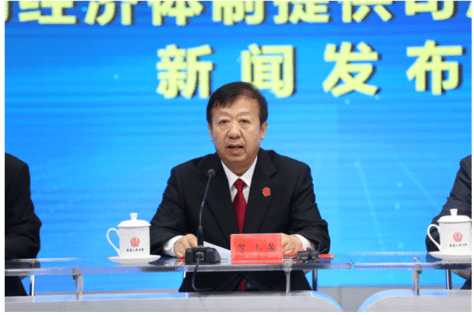
“For the avoidance of doubt,” the points made by these typical cases (please see last year’s blogpost for a refresher on typical cases) apply to all types of foreign-related cases, whether or not they involve the BRI in some way.  Including “BRI” in the title highlights that these cases contribute to supporting the BRI (on the 10th anniversary of the strategy) and developing (“constructing” 建设) “foreign-related rule of law.” I’ll make several quick points about the cases and derive some useful information from the press release.

1.  Typical cases

This group of 12 typical cases includes:

  1. three cases relating to letters of credit and demand guarantees (#3 Jiangsu Puhua Co., Ltd. v. Bank of East Asia (China) Co., Ltd. Shanghai Branch; #4 China Power Construction Group Shandong Electric Power Construction Co., Ltd. v. GMR KAMALANGA Energy Ltd., et al (the SPC case was mentioned in this blogpost; and #5 Union of Arab and French Banks (UBAF) (Hong Kong) Ltd. [UBAF (Hong Kong) Ltd.] and Bank of China Co., Ltd. Henan Branch);
  2. Two cases involving professional services-related issues (#6 Fusheng (Tianjin) Financial Leasing Co., Ltd. v. Grant Thornton AG (a tort case) and #8 Tianwei New Energy Holdings Co., Ltd. v. Davis Polk & Wardwell LLP (contract dispute));
  3. Enforcement of a foreign  (Singapore) court judgment (#12, enforcement application by Shuang Lin Construction Pte. Ltd. ). The SPC and the Singapore Supreme Court have a related memorandum so it is unsurprising that a case involving an application to enforce a Singapore judgment was selected. See this 2023 factsheet with a listing of the other Singapore agreements with the SPC);
  4. Enforcement of foreign and Hong Kong arbitral awards  (#10, China Small and Medium Enterprises Investment Co., Ltd. v.  Russian Sakhalin Seafood Co., Ltd. & Oriental International Economic and Technical Cooperation Company, objection to enforcement case)( #11 Noble Resources International Pte. Ltd.’s application for recognition and enforcement of the Hong Kong International Arbitration Center arbitration award);
  5. One case involving the Convention on the International Sale of Goods (CISG), #1, Exportextil Countertrade SA) and Nantong Meinite Medical Products Co., Ltd;
  6. One case involving financial derivatives (#9, Standard Chartered Bank (China) Co., Ltd. v. Zhangjiakou United Petrochemical Co., Ltd.) ;
  7. One equity transfer-related case (#7, a China International Commercial Court case), Zhang Moumou and Xie Moumou v. Shenzhen Aoxinlong Investment Co., Ltd;
  8. One treaty interpretation case (#2, Nippon Property & Casualty Insurance (China) Co., Ltd. Shanghai Branch and others and Robinson Global Logistics (Dalian) Co., Ltd).

A 2022 blogpost explains the selection process. I’ll leave the discussion of the implications of these cases to the law firms, some scholars, and some other websites and focus on the takeaways from the press release. The press release updates last year’s report on the SPC’s work in foreign-related cases in support of related policies.

2. Political importance

The press release ties the work of the SPC to the January 2018 Party Central Committee and State Council General Office policy document on BRI dispute resolution (summarized here and discussed further in my “neverending article”) and flags that the SPC has conscientiously implemented the decisions and arrangements of the Party Central Committee.  The one-year gap between the third and fourth groups of typical BRI cases signals that the SPC leadership considers this a priority area. The phrase at the beginning of the press release (“providing powerful judicial services and guarantees (safeguards) for high-quality joint construction of the “Belt and Road”)  signals the continuing importance of providing judicial “services and safeguards” for major national strategies, including the BRI, whether in the form of a document or typical cases.

3. Takeaways From the Press Release

a.  CICC and other international commercial courts

The press release mentions the China International Commercial Court (CICC), its expert committee, and the establishment of local international commercial courts.  The CICC has accepted a total of 27 international commercial cases, 17 of which have been concluded. A judgment was posted in July on the Chinese version of the CICC website but has yet to be translated.

Although the CICC is often linked to the BRI, the cases that the CICC has accepted include parties from jurisdictions that are not participating in the BRI, such as the United States. Among the typical cases released this time, one is a CICC case.  The press release notes that the SPC  will revise the CICC-related judicial interpretations to reflect the amendments to the foreign-related section of the Civil Procedure Law.

The BRI-related services and safeguards policy documents, about which I have previously written (and about which I have more to say in the neverending article) served as the policy framework for establishing local international commercial courts. The SPC has approved twelve local courts in Suzhou, Beijing, Chengdu, Xiamen, Changchun, Quanzhou, Wuxi, Nanning, Hangzhou, Ningbo, Nanjing, and Qingdao as “international commercial courts (tribunals).” It requires some detective work to determine the jurisdiction of each international commercial court.

b. Encouraging mediation and an organic connection between litigation, arbitration and mediation

The  SPC reiterates its accomplishments in establishing a “one-stop” diversified resolution mechanism for international commercial disputes to achieve an organic connection between litigation, arbitration, and mediation.  As mentioned in the 2022 report, ten international commercial arbitration institutions and two international commercial mediation institutions are part of the SPC’s “one-stop” mechanism.

c. Improving rules in foreign-related commercial cases

On improving the system of applicable rules for foreign-related commercial laws and unifying judicial standards, the spokesperson flagged that the SPC issued the Conference Summary [Meeting Minutes] on Foreign-Related Commercial and Maritime Trial Work (Foreign-Related Commercial  & Maritime Law Conference Summary (Chinese and bilingual versions) (see my previous blogpost on the document), setting forth the SPC’s views on 111 issues in foreign-related matters.  In my “neverending article,”  I describe conference summaries (会议纪要 ) as intermediate documents, issued after courts confront new issues arising from a major policy document or new situation when the approaches of the lower courts need to be harmonized but it is not yet appropriate to issue a judicial interpretation.  A book recently published by the drafters of the Foreign-Related Commercial  & Maritime Law Conference Summary (《全国法院涉外商事海事审判工作座谈会会议纪要》理解与适用) reveals that after the #4 Civil Division prepared an initial draft, they “broadly sought comments”  from relevant SPC departments, relevant State Council ministries and commissions, and selected experts. That means that the document represents a greater consensus of the relevant institutions on the issues addressed than commentators realized.

Additionally, in the past ten years, the SPC has issued guidance on foreign-related matters to the lower courts in the form of judicial interpretations (32), policy documents (9), guiding cases (18), and almost 150 typical cases. These statistics update those set out in the 2022 report.

d. Actively participating in legislation revision

As mentioned in the 2022 report, the SPC has actively participated in the revision of foreign-related laws such as the Civil Procedure Law (to come into effect next 1 January and the Arbitration Law (amendments ongoing, see this blogpost on the SPC’s contribution).  My neverending article has a more extended discussion of this.

e.  “Forthcoming Attractions”

The press release flags some “forthcoming attractions” related to the SPC’s foreign-related judicial work.

  1. The SPC is  (and has been) working on several relevant judicial interpretations (as mentioned in earlier blogposts).

a.   Coming soon is the Interpretation on Several Issues Concerning the Application of the “Law of the People’s Republic of China on the Law Applicable to Foreign-Related Civil Relationships” (2) (关于适用〈中华人民共和国涉外民事关系法律适用法〉若干问题的解释(二). The spokesperson revealed that the judicial interpretation had already been approved by the SPC’s judicial committee. It incorporates provisions  relating to ascertaining foreign laws.

b. As mentioned above, the SPC  will revise the CICC-related judicial interpretations to reflect the amendments to the foreign-related part of the Civil Procedure Law. The press release does not mention amending the comprehensive judicial interpretation of the Civil Procedure Law to reflect those amendments, but I surmise those are also being contemplated.

c. A third judicial interpretation, the “Interpretation on Several Issues Concerning the Application of International Treaties and International Practices in the Trial of Foreign-Related Civil and Commercial Cases”(关于审理涉外民商事案件适用国际条约和国际惯例若干问题的解释) is still in draft.  Because the original provisions on the application of international treaties in the General Principles of Civil Law were abolished when the Civil Code was promulgated, leaving the rules for the application of international treaties unclear, the SPC is drafting an interpretation to deal with a group of issues.  Those include the application of international treaties, the relationship between party autonomy and the application of international treaties, the choice of application of international treaties that are not in force in China, the application of international practices (two typical cases discuss the application of the Uniform Customs & Practice for Documentary Credits (UCP 600) and public order treaty reservations.

2. Databases on foreign law and expertise on foreign law.

With the support of some CICC expert committee members, one of the SPC’s BRI research databases and foreign law ascertainment service agencies,  a foreign (non-mainland Chinese)legal database with legislation, international law documents and other legal information on ten ASEAN countries, seven South Asian countries and the ASEAN international organization has been created. Separately another service provider has created a BRI expert legal database.  The 2022 report flagged these developments.

3. Judicial materials and training on foreign-related matters

The Supreme People’s Court is compiling a “Compilation of Common Laws and Regulations in Foreign-related Civil and Commercial Matters” to assist new hires and will increase the training and guidance to improve judicial competence on the application of international treaties. Improving judicial training on foreign-related matters has been an ongoing issue.  Post-Covid, a number of training programs for judges and judges assistants on foreign-related matters have been held.

The most recent one was a national program, held at the National Judges College, focused on training senior personnel in foreign-related matters, at which Justice Tao Kaiyuan spoke.  Those speaking at the program (from the relevant departments) included representatives from the Central Foreign Affairs Commission, the Legislative Affairs Commission under the National People’s Congress Standing Committee, Ministry of Foreign Affairs,  Ministry of Commerce, as well (presumably) senior personnel from the SPC’s #4 Civil Division and the International Cooperation Bureau (which deals with treaty negotiation and  judicial assistance matters). Local courts that have run such programs  include  Beijing (with the assistance of the University of International Business and Economics).

4. Judicial Assistance

China has concluded 171 bilateral judicial assistance treaties with 83 countries and has acceded to nearly 30 related international conventions (no change from October, 2022). In contrast to twenty or even ten years ago, the number of judicial assistance matters dealt with by the Chinese courts has increased.  The press release mentions improving the quality and efficiency of international judicial assistance such as better cooperation in the cross-border service of judicial documents,  cross-border investigation and evidence collection, ascertainment of foreign law, and recognition and enforcement of foreign (extra-territorial) judgments and arbitral awards.  This does not yet mean that it is possible for foreign litigators to take depositions in mainland China for foreign court proceedings. Service of process was an issue in this 2022 case in the Southern District of New York.

Supreme People’s Court’s Specialized Reports to the National People’s Congress Standing Committee

Collection of SPC Specialized Work Reports

By Susan Finder, drawing on research by Sun Dongyu (Christopher)

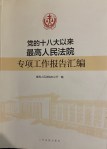
In October 2022, Supreme People’s Court (SPC) President Zhou Qiang delivered a report to the National People’s Congress (NPC) Standing Committee on foreign-related adjudication work since the 18th Party Congress (党的十八大以来人民法院涉外审判工作情况) (Foreign-Related Adjudication Work Report).  Under NPC legislation, this type of report is classified as a specialized report (专项报告).  In the New Era, the SPC delivers such reports to the NPC Standing Committee annually.  Han Xiaowu, the deputy head of the Supervisory and Judicial Affairs Committee of the NPC, in an article reviewing the supervisory powers of the NPC Standing Committee, described listening to and reviewing specialized reports as a significant means by which the NPC Standing Committee exercises its supervision authority over other institutions.  The SPC has published a collection of these reports issued since the 18th Party Congress, pictured above.  

This blogpost provides a dive into the law and practice of these specialized reports, focusing on reports prepared by the SPC. A subsequent post will focus on the content of the Foreign-Related Adjudication Work Report.   

Specialized Reports & the Relationship between the NPC and SPC

Most people with basic knowledge about the operation of the Chinese legal system know that the SPC president delivers a report to the NPC annually,  every spring.  Less known is that the SPC president also gives specialized reports to the NPC Standing Committee, under the Law on Oversight by Standing Committees of People’s Congresses at Various Levels (People’s Congresses Oversight Law). According to the  NPC Observer, that law is scheduled to be updated.  The details of NPC Standing Committee supervision of the SPC through specialized reports provide one discrete example of how Party leadership of legal institutions is implemented in practice and the interrelationship among state legal institutions.

The People’s Congresses Oversight Law authorizes the NPC Standing Committee to supervise the SPC, Supreme People’s Procuratorate (SPP), and the government in several ways, one of which is requiring these institutions to provide specialized reports, as set out in the NPC Standing Committee’s annual plan. Han Xiaowu described them as drawn up according to the work deployment of the Party Center ( 中央的工作部署). Articles 8 and 9 of the People’s Congresses’ Oversight Law provide some basic principles concerning the topics of those specialized reports.   It is understood that early in the year, the NPC’s Supervisory and Judicial Affairs Committee communicates with the SPC (and analogously with the other institutions that the NPC Standing Committee supervises), to set the topic and timing of the specialized report.  It is likely that the SPC’s General Office, which is responsible for inter-institutional liaison, is the entity within the SPC that works out the details with the NPC Standing Committee.

A quick search on Wechat reveals that foreign-related adjudication work was part of the overall supervision plan of the NPC Standing Committee in 2022. It meant that the NPC Standing Committee allocated significant time to investigating how Chinese courts hear foreign-related cases.  Official reports on Wechat flag that senior NPC Standing leaders went to certain provinces to investigate how local courts heard foreign-related cases as well as understand local developments relating to juvenile procuratorial work.  In the summer of 2022. Cao Jianming, vice chair of the NPC Standing Committee (and former senior SPC leader and procurator-general) visited Jiangsu and Guangdong in the summer of 2022, while Hao Mingjin visited Fujian.  In each case, according to bureaucratic protocol, senior leaders of the SPC and SPP accompanied the NPC Standing Committee leaders, who in turn had senior NPC Standing Committee staff in attendance.

These visits (described as research/调研)  were consolidated into a report provided to the SPC (non-public), as revealed by the Foreign-Related Adjudication Work Report.  It also enabled the NPC Standing Committee leaders to monitor how well the SPC and SPP respectively supervise and guide the lower courts and procuratorates in their work, politically and substantively, monitor local developments and the interaction among local institutions.   Cao Jianming told senior leaders in Jiangsu that they must adhere to the guidance of Xi Jinping Thought on Socialism with Chinese Characteristics for a New Era, resolutely implement the decision-making and deployment of the Party Central Committee, the work deployment of the SPC and the requirements of the provincial party committee. Cao reiterated principles for which local court leaders need no reminders–that they must thoroughly study and implement Xi Jinping’s thoughts on the rule of law, deeply understand the significance of foreign-related rule of law work, focus on researching new situations and new problems, improve systems and mechanisms, and continuously improve the level of foreign-related adjudication work.

The  People’s Congresses Oversight Law provides further details concerning specialized reports.  It requires the NPC Standing Committee to gather some questions to send to the SPC (or other institution providing a report), presumably intended to highlight issues that the NPC Standing Committee requires to be incorporated in the report. The procedure requires the SPC to send its draft report to the relevant specialized NPC committee 20 days before the formal report is delivered. Presumably, Han Xiaowu was involved in the review of the Foreign-Related Adjudication Work Report. If the SPC amends the draft report, it must be submitted to the NPC Standing Committee at least 10 days before that date, so the revised report can be distributed to the members. The head of the institution must deliver the report, which is discussed by members.  The results of the discussions of the reports are forwarded to the SPC (or other reporting institutions), which must respond to them.  The issues that the NPC Standing Committee raises with the institution providing the specialized report are made public in summary form. What is occasionally made public is the SPC (or other institution’s) response to the comments of NPC Standing Committee members.  As I  have not seen the SPC’s response to comments on last October’s report, I presume that the SPC has not yet finalized a response to the comments.  Presumably, the #4 Civil Division would take the lead in drafting the response, which would be reviewed by the vice president in charge of that division, and likely by the SPC president. The NPC Observer discusses responses to reports in this blogpost.

Those who have been involved with the specialized report process explain that both institutions see benefits in the NPC Standing Committee requiring specialized reports of the SPC.  The NPC Standing Committee sees it as an effective way of exercising its supervision (oversight) authority over the SPC, while the SPC sees it as an effective way to display its competence while providing a forum to raise issues that require the involvement of the NPC Standing Committee.  It can also be said to be another way in which Party leadership of the courts (and other institutions) is indirectly implemented.

The specialized report procedure is a less understood way in which the NPC and its Standing Committee supervise (监督 oversees) the SPC and implement Party leadership, and provides an example of how the SPC is institutionally both more and less powerful than other apex courts.


Coming Attractions on the Supreme People’s Court’s Foreign-related Commercial & Maritime Law Agenda

Justice Tao Kaiyuan

Because the Supreme People’s Court (SPC) has not released its judicial interpretation agenda for 2021 (as previously mentioned), the observer seeking to determine what is on that drafting priority list and must rely on occasional reports in the professional and academic press. In August, SPC Vice President Tao Kaiyuan, (link to her speech at the Brookings Institution in 2015) who appears to have assumed responsibility for the #4 Civil Division and foreign-related commercial and maritime matters, published a short article in one of the SPC’s media outlets. For those able to read the language of SPC official documents, her article provided insights into future developments, ongoing issues, expanding the Chinese courts’ circle of friends, and the qualities that Chinese judges must possess.

Future Developments

Justice Tao released information on the following developments:

  1. The SPC will issue a Conference Summary on the 2021 National Symposium on Foreign-Related Commercial and Maritime Trial Work (2021年全国涉外商事海事审判工作座谈会会议纪要) to resolve difficult issues in practice and unify judgment standards.  She did not further detail the difficult issues that need unifying in the Conference Summary. As mentioned here, although conference summaries are not judicial interpretations and cannot be cited in a court judgment document as the basis of a judgment, it is generally recognized that provide important guidance to the work of the courts and judges will decide cases according to its provisions.  Generally, they are issued to address issues regarding which the lower courts have inconsistent views, but time or the fluidity of the situation does not permit a judicial interpretation to be issued.
  2. The SPC is in the process of researching and drafting a judicial interpretation on the application of international treaties and international practices (研究制定涉外民商事案件适用国际条约和国际惯例). This topic has been mentioned in previous Belt & Road- related opinions. I surmise that it was finally realized that this topic needed to be addressed if the Chinese courts are to be increasingly engaged with the outside world, as is signaled by the Party’s Five-Year Plan for Constructing the Rule of Law (2020-2025);
  3. The SPC is drafting a judicial interpretation on the ascertainment (determination) of foreign (extraterritorial) law in foreign-related civil and commercial cases. This, too, is a long outstanding issue, mentioned in earlier blogposts including one from 2014;
  4. SPC and the Supreme People’s Procuratorate are researching and drafting a judicial interpretation on compensation for damages to marine natural resources and the environment. I surmise the interpretation will address cases with both criminal and civil aspects, relating to compensation for harm to the environment.
  5. Justice Tao mentions that SPC judges will continue to participate in the UNCITRAL  Working Group VI draft convention on the judicial sale of ships, the Hague Conference on Private International Law Jurisdiction Project, and the other drafting international rules.  As I have previously mentioned, while sometimes the SPC sends one of its judges to participate in the Chinese delegation negotiating an international convention, in other projects other central institutions take the lead in negotiation and consult with the SPC on issues relating to the courts.  She did not mention the hard work needed to harmonize Chinese legislation with international conventions.

Ongoing Issues

Justice Tao also mentioned that the SPC will continue to research parallel proceedings, cross-border bankruptcy, cross-border data transfer, sovereign immunity, and other such issues.  I surmise that cross-border bankruptcy is high on the research priority list, as the National People’s Congress Standing Committee has started work on amending the Bankruptcy Law, but cross-border data transfer is an important one as well. Parallel proceedings, in my view, are likely to become a greater, rather than a lesser point of tension between China and certain other jurisdictions.

Expanding the SPC’s Circle of Friends

Justice Tao has a paragraph on China deepening international judicial cooperation and continuing to expand the Chinese judiciary’s “circle of friends”(朋友圈). She mentions actively creating opportunities for Chinese judges to enter the international judicial stage, participate in important international conferences and international forums, learn about the experience of foreign counterparts in the rule of law, strengthen the external communication of China’s judicial system, judicial culture, and judicial reform.

As seen from my perspective, many opportunities for Chinese judges to speak exist, but overly complicated bureaucratic procedures with which they must comply set formidable obstacles preventing them from directly communicating with the outside world. I’ll eventually have more to say on the SPC and its communication with the outside world, but others could use the SPC’s English language website  (about which I previously commented) as one of many measures of the quality of its foreign discourse.  I have heard a number of SPC judges speak to foreign audiences.  Some, particularly those who have spoken at Hong Kong International Arbitration Centre or other arbitration-related events, have a keen sense of their foreign audience, but others package five or ten minutes of insightful remarks, generally at the end, preceded by twenty minutes if not more of press release type information, by which time they have lost the audience.  Justice Tao does not mention interactions going in the other direction, that is, expanding their circle of friends by welcoming foreigners to the Chinese courts as interns or affiliated scholars. The Chinese courts continue to benefit from the Federal Judicial Center’s hospitality to (the late) Judge Zou Bihua and other Chinese judges.  

Qualities of Foreign-Related Judges

In the concluding section, Justice Tao addresses the need for training (about which I have written recently) and the qualities required of  Chinese judges focusing on foreign-related commercial and maritime matters.  Those qualities mirror current policy on judicial personnel, as previously discussed on this blog–they must be both politically and professionally competent and ethical.

Why I Research China’s Supreme People’s Court

I was honored to be invited by the New York University School of Law’s U.S. Asia Law Institute to contribute a short essay to their Perspectives blog, entitled Why I Research China’s Supreme People’s Court

 Many thanks to those involved in the entire process, including those who commented on earlier drafts!

Training foreign-related legal personnel for the Chinese courts

President Zhou Qiang visiting the University of International Business & Economics

Since the Fourth Plenum of the 19th Party Congress, and especially since President Xi Jinping spoke about the need for China to train foreign-related legal personnel  (涉外法治人才), the Supreme People’s Court (SPC) press, SPC leadership, and others important to the SPC leadership, such as Shen Deyong, former executive vice president of the SPC and current leaders of the CPPCC have reiterated the importance of “foreign-related legal personnel” to China and the people’s courts.  Training “foreign-related legal personnel” is incorporated into the Party’s Plan for Building the Rule of Law (2020-2025), an indication of its importance.  Shen Deyong  criticized the way that “foreign-related legal personnel” is used within government institutions– “team is too small, their numbers are too few, they are scattered and the market is chaotic.””涉外法律服务人才队伍建设还存在一些问题和不足,主要呈现队伍“小”、人才“少”、分布“散”、市场“乱”的特点.  I would add to the issues that he flagged that policies directed towards attracting  “foreign-related legal personnel” to the courts inevitably encounter the special characteristics of the courts’ personnel system as it has evolved since the quota judge reform was implemented, both the training system and especially career advancement from judges assistant to quota judge.

Foreign-related legal personnel policy

The language about increasing “foreign-related legal personnel” in the courts is not new but dates back to at least 2015 and the  Opinion of the Supreme People’s Court on Providing Judicial Services and Safeguards for the Construction of the “Belt and Road” by People’s Courts (BRI Opinion #1). It was reiterated in the 2019  Opinions of the Supreme People’s Court on Further Providing Judicial Services and Guarantees by the People’s Courts for the “Belt and Road” Initiative (BRI Opinion #2) and the 2020 Guiding Opinions of the Supreme People’s Court on the People’s Courts Serving and Guaranteeing the Further Opening Up to the Outside World (Open Economy Guiding Opinion). Article 15 of BRI Opinion #1 calls for improving training for Chinese judges on their professional capacity (业务能力) and improving overall judicial quality. Article 38 of BRI Opinion #2 and Article 16 of the Open Economy Guiding Opinion both have language about cooperating with universities to develop training and teaching plans so as to train and prepare a pool of international legal practitioners….”  A knowledgeable person has reminded me that repetition in consecutive documents is an indication of importance (and I would add the difficulty of resolving the problem).

As readers of this blog know, the Chinese courts need “foreign-related legal personnel” in many areas. Those include working on cross-border cases across a broad range of procedural and substantive areas,  undertaking research related to cross-border judicial policy and cross-border legal issues that have an impact on the judiciary, as well as working on a range of issues related to the SPC’s and lower courts’ interactions with the outside world.

Court cooperation with universities

The SPC has designated a number of China’s leading law schools and legal research institutions as Belt & Road research bases, including: the International Law Institute of the China Academy of Social Sciences; Tsinghua University School of Law; Wuhan University School of Law, Southwest University of Political Science and Law; China University of Political Science and Law, Shanghai University of Political Science and Law; Dalian Maritime University, and East China University of Political Science and Law. The SPC is thus able to draw on the research capacities of China’s law schools and involve law students in the legal issues facing the Chinese courts. Participating in this research can also motivate students to enter the courts after graduation.

Law students apply to become judges assistants after graduation for a variety of reasons. Some become further interested after internships (see this blogpost on SPC interns–a version with more data may appear later).  Other law school graduates are motivated by presentations by outstanding judges at their law school (SPC Judge Gao Xiaoli’s 2015 talk at the Peking University School of Transnational Law earned her many new fans), while still others recognized that a job “in the system” would resolve their hukou problems and enable them to live in Beijing, Shanghai, or other major cities. Yet others are motivated to use their education in the service of the public. I can say with authority that law graduates with knowledge of transnational law, fluency in English (and other foreign languages) are working as legal assistants in courts all over China.  Recruitment of legal assistants is a local matter, so the #4 Civil Division of the SPC (in charge of foreign commercial matters) and likely the Political Department of the SPC (in charge of personnel) lacks statistics on the number of “foreign-related legal personnel” working in the local courts.

Special characteristics of the courts’ personnel system

I write about the judiciary’s personnel system with some trepidation as I am well aware that my knowledge of the regulatory system is incomplete. (Some of the relevant regulations cited in analyses of the personnel reforms are not accessible to those outside the court system.)   On the issue of placement of junior “foreign-related legal personnel,”  I have not heard from either knowledgeable persons, former students, or other junior personnel in the Chinese court system that specific policies have been implemented within the court system (the Political Department of the SPC is responsible at the national level, and locally, political departments of local courts are responsible) to channel judges assistants recruited from China’s law schools with transnational training and experience into roles in which their academic background can be used and their “foreign-related” legal skills can be developed. In the absence of specific policy, too many local court leaders appear to see the young people with a transnational legal background and experience merely as workers that can be put to work in the national judicial machine (司法民工). Judges assistants from higher courts are sometimes sent down to the local level to work for two years, in line with young cadre development policy.

Training

If the three documents cited above have language about training, it seems likely that a training plan is somewhere in the approval pipeline.  My guess is that this is yet another matter that requires coordination among multiple institutions within the SPC, including the #4 Civil Division–the ones asking for the training to be done, with the Political Division and the National Judges College.  As I wrote last year, a new national court training plan (2019—2023年全国法院教育培训规划)) is underway.  As senior leadership has called for cultivating  “foreign-related legal personnel,” it seems likely that the SPC will eventually issue (perhaps not publicly) a training plan for judges handling all sorts of foreign-related issues, both civil-commercial and criminal.

Career advancement

Another issue for foreign-related legal personnel in the courts is career advancement for judges assistants.  As I mentioned in passing in an earlier blogpost, career advancement from judges assistant to quota judge has slowed. Specific promotion criteria are set locally.   Local studies have been done on the role of the judges assistant but have not surmounted the language barrier (see this one from one of the Chongqing Intermediate People’s Courts)  that provide specific data and specific analysis deriving from local conditions.  From my observations, fixed quotas on the number of judges in a court can mean a talented, educated judges assistant in one court may wait significantly longer than a similarly qualified person in another court to become a judge.

Concluding thoughts

Unless the SPC can evolve better national policy directed towards a career for “foreign-related legal personnel,”  some of them will leave, disappointed with the failure of the judicial system to use their talents, despite the official publicity. There will be many companies and law firms, some dealing with the issues I described previously, that will value them.


The Supreme People’s Court & the Development of Chinese International Commercial Law

I am very honored to have been the first keynote speaker of the webinar “Deals and Disputes: China, Hong Kong, and Commercial Law” held on May 18-21 (2021).   The webinar was organized by the University of Pittsburgh, with its School of Law’s Center for International Legal Education working together with its Asian Studies Center. Many thanks to Professors Ronald Brand and James Cook for the kind invitation.   For those who missed it, the recording of my presentation is now available on the Youtube channel of the Center for International Legal Education.

I spoke on the Supreme People’s Court (SPC) and the Development of Chinese International Commercial Law (as I defined it).  My presentation synthesizes many points that I have made separately on this blog and should be useful to students or others seeking to understand several aspects of the work of the SPC.   Many thanks to Professor Pamela Bookman and Mary Buck Young for taking the time to make insightful comments on earlier drafts of my Powerpoint slides. Special thanks to (one of) my research assistants, Yuan Ye, for his work in transforming SPC statistics into a more understandable form and translating them into English.

Supreme People’s Court’s new policy document on opening to the outside world

SPC Press conference announcing the policy document

On the afternoon of 25 September, the Supreme People’s Court (SPC) issued yet another guiding opinion providing services and guarantees, this one on providing services and guarantees in support of expanding opening to the outside world  (Services & Guarantees to the Open Policy Guiding Opinions (Guiding Opinions)) (最高人民法院关于人民法院服务保障进一步扩大对外开放的指导意见). It was approved by the SPC’s Party Group, as was BRI Opinion #2.
Senior legal officials from the Ministry of Commerce (MOFCOM) and the Ministry of Foreign Affairs (MFA) spoke at the SPC press conference, in what this observer views as a cross-institutional show of support for China’s policies of opening to the outside world. At a time that government officials are focused on “dual circulation,”  it is a reminder that the opening to the outside world policy remains in place and that one of the SPC’s many responsibilities is to handle those issues properly.  The photo is also one illustration of the place of the SPC within China’s system (体制). 

SPC Vice President Yang Wanming (杨万明) spoke first at the press conference, with the officials from MOFCOM and MFA adding comments. This signalled to the careful observer that he has assumed the responsibility for overseeing the #4 Civil Division (responsible for foreign-related commercial and maritime matters) from Luo Dongchuan (who has been transferred to Fujian Province to serve as Political Legal Commission Party Secretary).

This brief (17 articles) guiding opinion providing judicial services and guarantees (not a judicial interpretation, see this explanation of what it is) is the latest judicial policy on foreign-related (this blogpost will use the term “cross-border”, to incorporate some Hong Kong-related) legal issues (inbound and outbound) relevant to the Chinese courts, drawing on BRI Opinion #2 (issued end 2019 and BRI Opinion #1) and the June, 2020 guidance on Covid-19 and cross-border commercial issues. 

As readers of this blog could anticipate, this opinion is harmonized with the latest international and domestic developments and the latest guidance from Xi Jinping.  According to the official commentary, it is intended to be guidance for judges engaging in cross-border cases for the foreseeable future, and appears to further develop the principles related to cross-border issues in the Opinions of the Supreme People’s Court on Thoroughly Implementing the Spirit of the Fourth Plenum of the 19th Party Congress to Advance the Modernization of the Judicial System and Judicial Capacity.  

As to what those judicial services and guarantees are, Justice Yang said the following:

Wherever the national strategy is deployed, the judicial services and guarantees of the people’s courts will be there (国家战略部署到哪里,人民法院司法服务和保障就到哪里.)

How does this document relate to other Chinese legislation?

To clarify the relationship between this opinion on the one hand and legislation, judicial interpretations and other types of judicial documents (such as the two BRI Opinions), Justice Yang gave a quick summary in SPC jargon:

While maintaining consistency with existing laws and regulations, judicial interpretations, and judicial policy documents, the Guiding Opinions also strengthen the macro-guidance of the people’s courts’ services and guarantees opening to the outside world from a higher level,  and are organically linked to other SPC judicial policy documents for major opening-up decisions, major strategies, and major initiatives, to further improve the system of judicial services and guarantees of the work relating to opening to the outside world与现有法律法规和司法解释、司法政策文件保持一致的同时,从更高层面加强人民法院服务保障对外开放工作的宏观指导,与最高人民法院出台的其他司法服务保障国家对外开放重大决策、重大战略和重大举措的司法政策文件有机衔接,进一步完善了司法服务保障对外开放工作体系。

What is means is:

  1. The Guiding Opinions are intended to be consistent with current law and regulations, SPC judicial interpretations, and SPC judicial policy documents.
  2. The Guiding Opinions links with previous SPC policy documents (such as BRI Opinions #1 & #2, the FTZ Opinions, the Lingang Opinions, Diversified Dispute Resolution Opinions, etc.)(see more below);
  3. It is intended to provide comprehensive guidance and better support government policies on opening to the outside world.

The Guiding Opinions. like many of the documents analyzed on this blog, are written in SPC jargon. Decoding this language poses challenges to those are concerned or who should be concerned about the impact of how the Chinese courts interact with the rest of the world. 

Decoding the language, however, enables the careful reader to understand outstanding issues and contemplated reforms or other measures, including possible judicial interpretations.

Summary and comments

This blogpost will summarize and make some brief comments on some of the issues mentioned in each of the six sections of the documents and make a few concluding comments.  There are many more issues in this document that should be explored, but I’ve been delayed by a hand injury.

1. Political stance

The first section calls for judges to raise their political stanceThis is standard language in the New Era. The first article frames the documents in current political language, including that frequently used in Chinese foreign policy documents and to relevant political documents. Therefore the first article (and elsewhere) refers to multilateralism, equally situated parties, and creating a legalized, internationalized convenient business environment.

The second article calls for the courts to provide services and guarantees for ten crucial national strategies and policies: promoting the BRI; pilot free trade zone construction [enhancement]; Hainan Free Trade Port construction; construction of the Greater Bay area; Beijing-Tianjin-Hebei area development; Yangtze River basin development; Shenzhen model city for socialist development; China-Shanghai Cooperation Organization local economic cooperation demonstration zone; Great Maritime Power construction. 自由贸易试验区建设、海南自由贸易港建设、粤港澳大湾区建设、京津冀协同发展、长江三角洲区域一体化发展、长江经济带发展、深圳中国特色社会主义先行示范区建设、中国-上海合作组织地方经贸合作示范区建设、海洋强国建设。This second article also calls for new mechanisms for hearing cases, and improving the application of law, to create a transparent stable predictable legalized business environment. The list of ten national strategies and policies is a signal to the leadership and to the lower courts, but for those of us far outside the System,  it signals to us that these are the most important current policies related to foreign-related judicial policy. It also appears that the national strategies linked to the opening policy evolves over time.

2.  Basic principles of foreign-related litigation

The second section focuses on basic principles of foreign-related litigation–of which it sets out three: protecting the equal rights of parties; respecting the intent of the parties; and implementing (judicial) jurisdiction according to law. 

The second principle, described in Article 4, includes the right of parties to choose governing law, a court with jurisdiction and arbitration, litigation, or mediation to resolve their disputes. However, as mentioned previously, Chinese law treats choice of arbitration and litigation differently, requiring litigants choosing a (foreign court) to have an actual connection to the foreign court (see Professor Vivienne Bath’s previous scholarship on this), although there isn’t a counterpart position for arbitration. As mentioned previously, the  application of foreign law by Chinese courts is a work in process.  The SPC has given a great deal of publicity to its platform for the ascertainment of foreign law. which includes determinations of foreign law on a certain issue by certain authorized organizations and opinions given by members of the international expert committee of the China International Commerce Court (CICC). As I wrote close to two years ago, the China International Commercial Court (CICC) rules do not clarify a number of practical questions. Could a court request an advisory opinion from an expert and from a designated ascertainment center, and if so, what relative weight will be attached to each? Presumably, a court would give it greater weight than an opinion from an expert provided by a party. 

The third principle, described more fully in Article 5, is linked to protecting China’s judicial sovereignty and repeats the statement that conflicts in jurisdiction and parallel proceedings will be resolved properly (妥善解决). This has appeared in BRI Opinions #1 and #2, but specific measures to resolve parallel proceedings have not yet been noted. Parallel and conflicting proceedings are an ongoing issue (not only between the Chinese courts and other courts outside mainland China) and will be further mentioned below.  As Professor Bath discussed, several scenarios are common. One involves situations in which parties had agreed to the exclusive jurisdiction of the courts of one country, but a party brings proceedings in the courts another country (China), which accepts the case and may issue a judgment before the original court. Another set of cases involves an alleged arbitration agreement which provides for arbitration overseas, but a party brings a case in a Chinese court nonetheless.  A variation has recently been noticed by two leading practicing lawyers in China.  In that case, an issue that had been pleaded in arbitration proceedings in Hong Kong and reviewed by the relevant Hong Kong court was not given res judicata effect in China.  The ruling by the Shijiazhuang court has been reviewed by the SPC under its Prior Review proceedings.

Although parallel proceedings in courts outside of China and in China have previously been noted primarily in maritime law (and anti-suit and anti-anti-suit orders),the parallel/conflicting proceedings issues seem to be moving to the area of Intellectual property (IP) law, likely related to the multi-jurisdiction litigation between Huawei and Conversant concerning standard essential patents, including in the UK Supreme Court and the German courts. What has been noted is one of the SPC’s research topics includes protecting China’s judicial sovereignty (national interests) through anti-suit or anti-anti-suit injunctions. The SPC Intellectual Property Court has issued an anti-suit injunction order against Conversant and the Wuhan Intermediate Court issued an anti-suit injunction order against Intel Digital (the linked article has a summary of the facts in the Wuhan case, but reserve judgment on the author’s comments on the authority of Chinese courts to issue these order).

3. Modernizing China’s foreign-related and maritime litigation systems

This third section contains four articles: application of law; fully develop the advantages of service and guarantees to cross-border trade and investment; promote the integration with the internet of foreign-related litigation; and develop diversified dispute resolution related to international commercial dispute resolution. Many of the provisions in this section repeat provisions in the BRI Opinions #1 and #2.  What appears to be new is a statement that the SPC will seek to integrate prestigious foreign arbitration and mediation organizations to be part of its one stop mediation/arbitration/litigation mechanism.

4. Increase judicial protections

Article 10 mentions foreign-related administrative litigation issues. They were mentioned briefly in BRI Opinion #2 and once in BRI Opinion #1, here seeing greater stress.  Section 11 focuses on cross-border intellectual property issues.  It has some important new content.  It mentions improving (完善涉外知识产权诉讼制度) foreign-related IP litigation procedures, putting into judicial policy previous statements by former Vice President Luo Dongchuan about the need for special IP litigation rules. It again mentions researching and responding to parallel international litigation relating to intellectual property rights and becoming a preferred place for settling IP disputes. From comments made by several leading experts in a recent webinar the Chinese courts are an important jurisdiction in IP litigation. It is unclear whether the use of anti-suit (or anti-anti-suit )injunctions by the Chinese courts will be the way that litigants are encouraged to turn to the Chinese courts to settle their global IP disputes. According to comments by several persons with expertise in Chinese IP law and related commercial issues, a number of factors are leading to the Chinese IP courts becoming an important forum for the resolution of IP disputes.  Related to this, see the analysis by Doug Clark, partner in the IP law firm Rouse in this article, in which he says that the Chinese courts are looking to take on the role of setting global FRAND rates. Also see related blogposts on Mark Cohen’s blog, Chinaipr.com.  These issues are complex and important.

5.  Prevent and resolve major risks

This section has only two articles.  Article 13 focuses on perfecting risk control mechanisms for major cases and firmly establishing an overall national security concept.  These phrases are not unique to the SPC, but reflect language in Party documents, with the “overall national security concept” attributed to Xi JinpingThis article also calls on courts to coordinate the overall international and domestic situations, adhere to bottom-line thinking and risk awareness, understand the domestic and international situation and risks and challenges facing China’s opening up.  The final phrase in this article calls on courts to resolutely defend our (China’s) judicial sovereignty and national security.  So it seems that the concept of “judicial sovereignty” (used several times in this document) is being used to protect China’s national sovereignty.

The second one (Article 14), on guaranteeing state security and economic and social order gives a different priority to possible cross-border criminal law issues from either BRI Opinion.  Neither BRI Opinion mentioned  infiltration (渗透), espionage (间谍), sabotage, subversion  (渗透颠覆破坏). Infiltration and espionage are mentioned immediately after the article heading. (the sentence is: “thoroughly participate in the struggle against infiltration, espionage, separatism, terrorism, and cults, by strictly combatting crimes of infiltration, subversion, and sabotage, and crimes of espionage, violent terrorism, ethnic separatism, religious extremism, and other crimes that endanger national security” 深入参与反渗透反间谍反分裂反恐怖反邪教斗争,严厉打击各种渗透颠覆破坏、间谍、暴力恐怖、民族分裂、宗教极端等危害国家安全的犯罪. (Many thanks to Chinalawtranslate.com for this translation). Other concerns, such as violent terrorism, ethnic separatism, religious extremism have been seen previously in the other two BRI documents. and article 14 again stresses criminal justice cooperation between China and the rest of the world. The reason for the change in priorities is unclear. What signal does this send to the international commercial and judicial world (international community) that infiltration, espionage, sabotage and subversion are being mentioned?

6. Increasing judicial cooperation, increase the international influence of the Chinese judiciary

These three articles address judicial cooperation, judicial exchanges, and training of judges who can handle foreign-related cases.  

Article 15 concerns judicial assistance treaties, encouraging Chinese judges to participate in the negotiation of bilateral and multilateral judicial assistance treaties.

Article 16, on judicial exchanges, including highlighting exchanges with the principal international legal organizations, also summarizes ongoing SPC practices in developing exchanges with BRI judiciaries, although it is not so specified.  

Article 17 calls for the better training, recruitment and promotion of persons who can deal with specialized legal issues such as cross-border finance, environmental protection, maritime law, intellectual property. Measures include joint programs with universities, exchanges with international organizations and international commercial courts, with the objective of having judges who are able to participate in the drafting or amendment of relevant international rules [a glimpse into a judiciary certain special functions] and the creation of a group of Chinese judges with an international perspective. This appears to be directed to law schools and senior personnel in the lower courts and likely involved concurrence by the SPC’s International Cooperation Bureau.  As has been mentioned in earlier blogposts, the career progression for legal professionals to become judges has slowed because of the personnel reforms in the previous round of judicial reforms, under which young professionals work as judges assistants for a number of years before applying (and passing relevant examinations)to become a judge.  From my observations, fixed quotas on the number of judges in a court can mean a talented, educated judges assistant in one court may wait significantly longer than a similarly qualified person in another court to become a judge.

A few concluding comments

Perhaps it is not realized that multiple documents conveying many of the same messages, with references that need decoding, may not convey the intended message to the international business community that the Chinese courts welcome and will treat fairly foreign commercial litigants, and that Chinese law is stable, transparent and predictable. 

The Guiding Opinions call for increasing publicity about and the international influence of Chinese justice, and international confidence in Chinese law, through translating guiding and typical (exemplary/model) cases into foreign languages.  This echoes language in BRI Opinion #2.  The international community outside of China may or may not consider those sources to be primary ones in forming a view about the Chinese courts.  In my view, it is more likely that the international community will look to decisions and rulings of the Chinese courts in several categories of cases: enforcement or other proceedings involving foreign (and Hong Kong) arbitral awards;  parallel or competing proceedings, whether with other courts or with international arbitration;  difficult commercial ones, particularly involving Chinese state-owned enterprises, or other Chinese national champions and issues related to intellectual property, particularly as it relates to “cutting-edge” technology.  This observer surmises that the international judicial community will also look for a spirit of mutual respect for foreign courts and their jurisdiction.

The Guiding Opinions repeats language about Chinese courts participating in the formulation of international rules, an ongoing theme since the 2014 4th Plenum of the 18th Party Congress decision. One example is the constructive role of the SPC negotiator as a member of the Chinese delegation that participated in the drafting of the Hague Judgments Convention. But what the international community will also look for is China’s capacity to harmonize its legislation to be able to ratify the international conventions whose drafting it participates in.

The introduction to Guiding Opinions notes that comments were sought from many sources. It is unclear whether the views of international users of the Chinese court system were solicited. Other developments in which the international community may display an interest are the creation of additional institutions within the Chinese judiciary to enable the Chinese judiciary to better understand the needs of(domestic and international) users.

__________________________________________

Many thanks to several highly knowledgeable readers who commented on earlier drafts of this blogpost.

Supreme People’s Court’s new guidance on similar case search

Screenshot 2020-07-27 at 8.49.14 PMOn 27 July 2020,  the Supreme People’s Court (SPC)  issued Guiding Opinions Concerning Strengthening Search for Similar Cases to Unify the Application of Law (Guiding Opinions) (关于统一法律适用加强类案检索的指导意见(试行)),  effective on 31 July.  It is not a judicial interpretation, rather it is guidance intended to make judicial decisions more consistent, an ongoing issue in the Chinese court system.  The SPC is approving the practice of judges using principles derived from prior cases to fill in the gaps in legislation and judicial interpretations.  The Guiding Opinions codifies many of the practices of the Chinese courts and imposes some new requirements. It does not mean that China has become a common law legal system.  As explained further below, although the Guiding Opinions do not address this question, comments by an SPC judge suggest that the special status of cases selected by the SPC by its operational divisions remains in place.
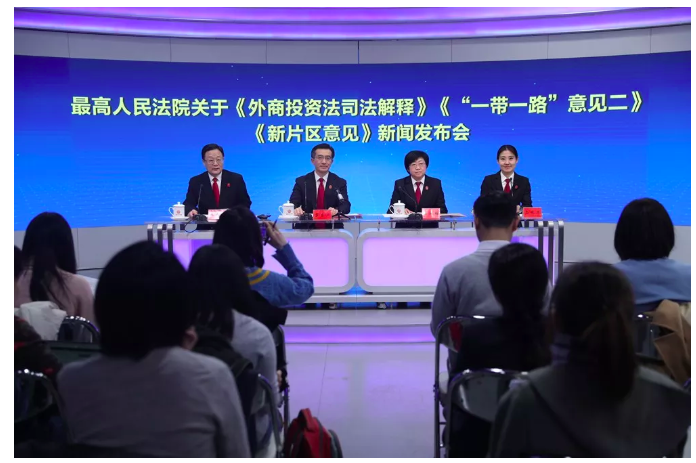
It also illustrates two larger points–that discrete judicial reforms aimed at more consistent judgments continue to be implemented even as the role of Party leadership and oversight continues to be stressed. It is also an illustration of how long it can take judicial reforms to be implemented. in my view, this discrete, technical reform has implications greater than the drafters of the Guiding Opinions realized, including a possible impact on Chinese legal education. It has the potential to make litigation a more predictable process for parties.

Case Search Requirements

What are similar cases?

Article 1 defines that–the cases that are already effective and are similar in their basic facts, disputed points, issues of law, etc. (指与待决案件在基本事实、争议焦点、法律适用问题等方面具有相似性,且已经人民法院裁判生效的案件).

When is similar case search required? (Articles 2 and 7)

  1. When a case is proposed to be submitted to a professional or specialized  (presiding) judges meeting (generally all the judges in a division) or the judicial/adjudication committee for discussion;
  2. Relevant judicial principles are unclear or conflicting;
  3. A court president or division head requires it under his or her supervision authority;
  4. Other relevant situations.

That is, similar case search is not required in all cases, only when the relevant “law” is unclear.

Similar case search should be set out in the trial report for the case or in a separate precedent (similar case) report (类案检索报告) and included in the case file. As noted in my earlier blogpost, trial reports are confidential and not accessible to parties or their lawyers. Article 8 requires that the search report must include details on the platform, means of search, etc. and how the search was used.

Who searches and how?

The judge in charge of the case (承办法官) is in charge of undertaking the search and is responsible for doing it accurately and properly, using either the SPC’s database or other case databases, focusing on cases from the last three years, except for guiding cases.

Judges can use methods such as keyword search, legal provision (article of the relevant law), or related case search.

What must be searched?

These rules (in Article 4) are in line with what I have previously written:

  1.  SPC guiding cases;
  2. SPC typical (model) cases (典型案例) and judgments or rulings of the SPC;
  3.  Reference cases issued by provincial-level higher people’s courts  and decisions by those courts;
  4.  Higher-level courts in the jurisdiction in question and judgments of that court.

Except for the guiding cases, priority is given to the search of cases or cases in the past three years; if a similar case has been searched in the previous order, no search is required. Article 5 provides that judges can use methods such as keyword, legal article-linked, and case-based searches.

My understanding is that these are general principles, but the specific scope of cases that need to be searched will depend on the specifics. As I have previously written, the SPC Circuit Courts have issued cases that guide the lower courts in their circuits.  The special authority of those cases remains in place. Judges reviewing issues related to the enforcement of foreign arbitral awards in China will need to look to a special set of cases (described here), for example.

I had previously written about cases selected by the operational divisions of the SPC providing guidance to the lower courts.  Those retain their special authority, as indicated by comments by Senior Judge Yu Tongzhi, an editor of Reference to Criminal Trial (the joint publication of the SPC’s five criminal divisions). He noted in an article published on 31 July, that as far as criminal justice is concerned, without a doubt, the first choice for searching similar cases is to search the guidance cases contained in their publication, setting indices to the guidance cases for the convenience of readers.

Are precedents binding?

Precedents are not binding, but guiding cases should be 参照 “referred to” (the link is to SPC Research Office Deputy Director  Judge Guo Feng’s authoritative explanation) unless the case conflicts with subsequently issued law or judicial interpretations. Other types of cases are not binding, but for judges to consider(参考).

How judges must respond

Article 10 imposes a new requirement on courts, if procurators, parties, their representatives (their lawyers) submit guiding cases or other cases in support of their legal position (as I had previously written had been the practice).  For guiding cases, courts are required to state in the reasoning section of their judgments whether or not the guiding case was referred to and why.

For all other types of cases, the court can use its power of clarification/explanation and other means (释明等方式) to respond.  It is understood that this is meant to give judges flexibility in responding to (non-guiding) judgments provided by parties–so the court may respond in its court’s judgment or in other ways. Those other ways may include:  responding to the cases submitted pre-hearing, during a hearing, after a hearing, as the court considers most appropriate.  We will need to observe what is done in practice, for example, whether courts respond primarily in their judgments or orally.  This will be the way that a party can monitor whether the search accurately reflects prior cases, as neither a party or its counsel has access to the trial report. Other unknowns are how this system will influence administrative proceedings such as those at the Trademark Review and Adjudication Board.

Link to Inconsistent Decision Mechanism

Article 11 contains a link to the inconsistent decision mechanism discussed here, which I described as a microcosm of themes reflecting how the SPC operates, given its high bureaucratic nature.

Why case law reform?

As this blog has discussed, in the New Era, the role of Party leadership and oversight continues to be stressed (see this blogpost, for example).  This discrete judicial reform is aimed at more consistent judgments. It is a critical tool that judges are already using because Chinese legislation lags behind the needs of the courts, and judicial interpretations are insufficient as well. Party policy would have an indirect impact on those cases, as would foreign law principles (mentioned here).

“Slow-cooking” judicial reform

The issuance of these rules shows the strength of the case law system and how long it can take a single judicial reform to be implemented. As mentioned in the June, 2019 blogpost, when Professor Hu Yunteng(until recently Justice Hu Yunteng, formerly a full-time member of the SPC’s judicial committee, now retired) recollected the history of the case system with Chinese characteristics, he mentioned that Jiang Huiling, then his colleague at the China Institute for Applied Jurisprudence (now Dean of the Tongji University School of Law) had looked to jurisdictions outside of China to advocate that China establish a case law system. Professor Hu Yunteng doesn’t specify whether Dean Jiang Huiling was looking to case law systems in civil or common law jurisdictions in the “West.”).  In his 2016 Harvard Law Review student note, Mark Jia (now clerking on the Supreme Court), cited Li Shichun of the China Law Society to the effect that it was the National People’s Congress that opposed those seeking to establish a Chinese case law precedential system. That opposition has been overcome by widespread professional usage (as described in my 2017 Tsinghua Law Review article). It is unusual in that the practice came first and was not a top-down reform (顶级设计).

Concluding Comments

This discrete, technical reform is an important one for the rules relating to judicial decision-making better harmonized with judicial practice.  There are a number of unknowns.  One is whether it will result in judges feeling more comfortable in setting out their reasoning,  knowing that other judges may look to it.  An important question is how the practice of responding to cases will evolve–will judges tend to respond in their judgments, or as I suspect, do it orally. (As to why I think that–it is related to the desire of Chinese judges to reduce their risk under the judicial responsibility system).

In my view, this reform has the potential to make Chinese litigation a more predictable process. It is a bit of evidence of the gradual harmonization of the operations of the Chinese courts with the rest of the world,  as current circumstances permit.


Judicial services & guarantees to aid China’s economy

Justice He Xiaorong at the press conference

I am going to experiment with a shorter format, starting with this blogpost.

On 22 July, the Supreme People’s Court (SPC) held a news conference with the National Development and Reform Commission (NDRC) to announce their latest policy document providing judicial services and guarantees to accelerate the socialist market system in the New Era (为加快完善社会主义市场经济体制提供司法保障).  Justice He Xiaorong appears to be the SPC senior official in charge of the #1 Civil Division. From his appearance at the press conference, Zheng Xuelin, the head of the #1 Civil Division, must have taken the lead in drafting this document, but the subject matter reflects input from many divisions of the SPC, although none of them are mentioned. Wang Renfei, head of the NDRC’s Division of Economic Reform, also appeared at the press conference.  It is linked to a May, 2020 document of the Central Committee and State Council on improving the market economy in the New Era.

These policy documents that provide judicial services and guarantees are one of the hallmarks of the SPC in the New Era, as General Secretary Xi Jinping has called on the SPC to provide judicial services and guarantees to the important policy initiatives and strategies of the Party and state. Since Xi Jinping became General Secretary, at the annual Central Political-Legal Work Conference, he has given instructions to the political-legal institutions that the judicial organs provide “judicial services and guarantees” for major Party and government policies. For that reason, the SPC has increased the number of policy documents in which it has provided services and guarantees to the work of the Party and state. Consistent with Xi Jinping’s instructions, Party leadership, in the most recent inspection of the SPC, requested that the SPC strengthen its “services and guarantees” to the work of the Party and state.   This latest policy document has 29 articles, covering the topics of:

  • judicial protection of market entities, especially small entities;
  • judicial protection of property rights;
  • establishing a fair, just, and orderly competitive market system;
  • a legalized business environment suitable for high-quality economic development;
  • judicial protection of people’s livelihood;
  • improve foreign-related guarantees; and
  • one-stop diversified dispute resolution with Chinese characteristics.

There are a few new provisions, but most of the provisions are a repackaging of current or previous issues, many of which had been mentioned in a recent SPC New Era policy document and discussed on this blog. Some, while not new, send welcome signals.  The careful reader can pull out of the bureaucratic language of this document ongoing issues facing the Chinese courts and even some initiatives not previously mentioned.  An unscientific selection below follows:

  1. Judicial protection of market entities

This section repeats principles or raises issues such as:

  • parties being treated equally; protecting the individual and property rights of entrepreneurs (an ongoing issue–see this 2016 blogpost);
  • Absorb and transform beneficial international/foreign experience –this document uses the language “beneficial experience from legal systems with mature market entities” (吸收借鉴国际成熟市场主体法律制度的有益经验). This phrase is repeated elsewhere in the document. As I wrote in 2017–“a careful review of official statements, publications, and actions by the SPC and its affiliated institutions, as well as research by individual SPC judges [and teams of SPC judges] shows an intense interest in how the rest of the world deals with some of the challenges facing the Chinese judiciary coupled with a recognition that any possible foreign model or provision will need to fit the political, cultural, economic, and institutional reality of China, and that certain poisonous ideas must not be transplanted.”  This continues to be true (given the gaping holes in Chinese legislation, as seen from the perspective of Chinese judges), including a careful review of relevant US law.
  • Abuses by senior leaders in SOEs, causing loss of state assets (and likely benefiting private pockets), as seen in this phrase: “further clarify the relationship between state-owned property owners and agents, properly handle cases of loss of state-owned assets due to insider control, related transactions, and illegal guarantees by legal representatives, and pursue directors in accordance with the law. Supervisors and senior managers violate their legal responsibilities and obligations of loyalty and diligence. Promote state-owned enterprises to improve their internal supervision systems and internal control mechanisms, standardize  the positioning of powers and responsibilities and exercise methods, and improve the modern corporate system with Chinese characteristics.”
  • Improve the protection for small investors (relates to ongoing initiatives by the Shanghai Financial Court) and is connected with the most recent conference summary on bond disputes (全国法院审理债券纠纷案件座谈会纪要).  It mentions a forthcoming judicial interpretation on group securities litigation, apparently mentioned for the first time (及时出台证券纠纷代表人诉讼司法解释).  The Shanghai Financial Court has issued pilot regulations that will be considered by the SPC.
  • Exiting the market, the goal to be applicable to all sorts of legal and natural persons (signaling further developments relating to individual bankruptcy), establishing a better cooperative mechanism with government on bankruptcy (not new).

2. Judicial protection of property rights

Many of these have been discussed on this blog previously:

Better protection for property rights of private enterprises (discussed two years ago at the beginning of the anti-organized crime campaign).  It again mentions prevent the abuse of public power to infringe private property rights such as illegally sealing up, seizing, and freezing property rights of private enterprises;

Improving the hearing of cases involving land and real property condemnation (as this blogpost discussed, an underlying problem is the failure of related government departments to comply with legal requirements);

One article (#11) is devoted to improving intellectual property rights protection, but it does not flag anything not previously mentioned.

3.  Establishing a competitive market system

Article 12 re-emphasizes a concept basic to a market (oriented) economy–respect for the voluntariness and spirit of contract (尊重合同自愿和契约精神).

One provision in this section has attracted the greatest amount of attention–reducing the allowable interest rate for private lending, signaling a reversal of the provisions in the 2015 interpretation on private lending, which the document states will be amended soon.  The other provision that is repeated here (first mentioned three years ago), is stopping SOEs from using their easy access to bank capital to on-lend funds on the private market, for greater profit than their core businesses 规范、遏制国有企业贷款通道业务,引导其回归实体经济).

This section signals that the SPC will be working on more detailed provisions on taking security as a result of the Civil Code (进一步研究细化让与担保的制度规则和裁判标准).

4. legalized business environment suitable for high-quality economic development

Among the provisions mentioned here is better coordination between the financial regulators and the courts  (and legal oversight by the courts) (主动加强与金融监管机构的沟通协调,支持、促进金融监管机构依法履职,加强金融风险行政处置与司法审判的衔接,协助做好金融风险预警预防和化解工作).

5. judicial protection of people’s livelihood

This section mentions improving judicial protection for the consumer, better personal data protection, and improving protections for workers in new types of enterprises (i.e., working under algorithms).

6. Foreign-related commercial issues

Two new bits of information in this section are: the mention of exploring the establishment of a judicial review system for international investment arbitration (探索建立健全国际投资仲裁领域的司法审查机制 and issuing guidance on the recognition and enforcement of foreign commercial arbitration awards (适时出台涉外国民商事判决承认与执行的规范指引). This may evidence an expected increase in foreign arbitral awards sought to be enforced in China, in light of the (expected) increased number of Belt and Road Initiative related disputes.

7. One-stop diversified dispute resolution

This section repeats many of the current buzzwords (as discussed in my May blogpost), such as “resolving disputes from the source,” the “Fengqiao Experience,” giving mediation priority, and linking litigation with mediation.  However, as mentioned in earlier blogposts, some aspects of better mediation of disputes requires deeper reforms, such as changing incentives or evaluation of SOE executives.

Supreme People’s Court’s New Policy on Cross-border Commercial Issues and Covid-19

Screenshot 2020-06-18 at 7.32.24 AM
From left, Li Guangyu, SPC spokesperson; SPC Vice President Justice Luo Dongchuan; Judge Wang Shumei, head of #4 Civil Division

On 16 June, the Supreme People’s Court (SPC) held a news conference (pictured above), to announce that it had issued “Guiding Opinion on the Proper Handling of Civil Cases Involving the Novel Coronavirus Outbreak in Accordance with the Law (III)” (SPC Guiding Opinion III).” SPC Guiding Opinion focuses on the most important cross-border commercial issues that have arisen in the Chinese courts this spring as a result of the Covid-19 pandemic.  This brief blogpost provides some comments and an overview of the document, leaving the detailed analysis to the law firms that are sure to analyze it.

What is this document?

SPC Guiding Opinion III is a judicial policy document (司法政策性文件). As this blog has often commented, the Supreme People’s Court (SPC) must serve the greater situation and deal with practical legal issues, so that the SPC itself and its senior leadership are correct, politically, and professionally. One of those ways is by providing properly calibrated guidance to the lower courts and other related authorities with the appropriate political signals.  For this document, Justice Luo Dongchuan provided the political background and signals in his introductory remarks at the SPC news conference. The document itself is practically oriented (as those in the system say “problem-oriented”–“问题导向”)(and the practitioners say “干活”).

From the photo above it is clear that the #4 Civil Division, headed by Judge Wang Shumei, which focuses on cross-border commercial and maritime issues, took the lead in drafting. That division is one of the smaller divisions of the SPC and “punches above its weight.”

A judicial policy document is not a judicial interpretation but as the SPC editors of a collection of these documents noted, “it is generally recognized that they have an important guiding impact on the trial and enforcement work of the courts at every level.”  SPC Guiding Opinion III is one example of the many types of SPC “stealth” guidance to the lower courts.  I describe it as “stealth guidance” because it affects how cases are handled, heard, and decided, but cannot be cited in a court judgment or ruling. For that reason, only the highly observant will note the impact of judicial policy documents.

I anticipated that the SPC would issue further Covid-19 pandemic guidance when I spoke [links to video] in April at a virtual event sponsored by Berkeley Law School’s Center for Law & Technology. Some of the guidance reveals frequently used litigation tactics of Chinese parties.

Selected comments on the content

The document is divided into four sections:

  1. Civil procedure mechanics–parties, evidence,  deadlines, and statutes of limitations (Articles 1-5): This section draws on the recently amended and effective civil evidence rules

Article 1 directs Chinese courts to approve applications for extensions for foreign (cross-border) parties who are delayed in being able to provide notarized and authenticated documents to evidence the identity.  Delays in obtaining notarized and authenticated powers of attorney are to be treated similarly. If China had acceded to the 1961  Hague Convention Abolishing the Requirement of Legalisation for Foreign Public Documents, for all of China, this requirement would no longer be necessary. The Convention is applicable to Hong Kong because of UK-PRC handover arrangements, which enabled conventions originally applicable to Hong Kong pre-1997 to continue in effect.

Article 3 reveals one of the frequently used litigation tactics of Chinese parties in cross-border litigation in China–that is disputing the authenticity of a document because it has not been properly notarized and legalized. The SPC Guiding Opinion III advises lower courts to notify parties that they may reserve their arguments concerning these formalities, and focus their arguments on relevance and persuasiveness of the evidence.

      2. Ascertainment (determination) and application of law

These articles remind Chinese courts to use the Law of the People’s Republic of China on the Law Applicable to Foreign-Related Civil Relationships to determine governing law (assuming a contract does not designate a governing law), and to look to the SPC Guiding Opinion I for guidance on force majeure under Chinese law.  The SPC also reminds lower court judges not to substitute Chinese law if foreign law governs.  This is not the first time that this type of reminder has appeared in SPC policy documents, indicating this is an ongoing problem.  This section also includes guidance on the application on the UN Convention on the Sale of Goods.

Articles 8 and 9 relate to letters of credit, standby letters of credit, and demand (independent) guarantees. It reminds lower courts to correctly apply the International Chamber of Commerce (ICC)’s UCP 600 (Uniform Customs and Practice for Documentary Credits), the ICC’s URDG 758(demand guarantee rules), and the related SPC judicial interpretation concerning demand guarantees.

This likely means that Chinese contractors who have provided independent guarantees or standby letters of credit for construction projects overseas are seeking to prevent the owner of the projects from drawing on these guarantees through litigation in the Chinese courts. This case decided by the SPC in April, 2020, reverses the judgment of the Shandong Higher People’s Court in favor of the Chinese contractor.  The dispute relates to a Shandong Electric Power Company (SEPCO) project in India. Previous reporting in the Indian press seen here.

3. Transport contracts

Articles 11-17 relate to various types of transportation contracts as well as shipbuilding contracts.

4. Green channel.

This last section reminds courts to use online procedures and cross-administrative region arrangements if convenient and that Hong Kong, Macau, and Taiwan related commercial cases should be handled with reference to this guidance.

How was the document drafted?

As to how the SPC determined the FAQs of the lower courts, it did what all corporates and institutions around the world do these days–convened a video conference. The participants presumably came from the maritime courts and the foreign-related civil divisions of the provincial courts.

Why did the SPC issue it?

The number of cases directly affected by this guidance is relatively small. According to statistics released with President Zhou Qiang’s report to the NPC in May, there were 17,000 first instance foreign-related commercial cases and 16,000 foreign-related maritime cases in the Chinese courts in 2019, compared with 31.5 million cases in the Chinese courts overall.

However, foreign-related cases tend to be more sensitive because, as Zhou Enlai said “外事无小事” (foreign matters are never small matters” –foreign-related matters, because they involve relations with other countries and the prestige of the Chinese state, are sensitive. That means that judges hearing cross-border cases have a particular pressure to handle these disputes in a way that is consistent with the law (of course), acceptable to the leadership of their court & to the outside world.  One important aspect of SPC Guiding Opinion III  is the impact on Belt & Road projects, In many of these projects Chinese companies are often contractors, or also contractors and equipment suppliers (and Chinese banks provide financing). On the civil/commercial side cross-border cases possibly involve treaty/convention obligations (or treaty-like arrangements, in the case of Hong Kong).

As issues dealt with in SPC Guiding Opinion III relate to the most important Chinese cross-border commercial issues that have arisen during the pandemic, it has an impact on the Chinese (and foreign) business community, far beyond the number of foreign-related cases in the Chinese courts, and is likely to have an impact on related arbitrations governed by Chinese law.

Lawsuits against foreign countries in the Chinese courts

In March 2020, three Chinese lawyers filed civil lawsuits against (variously) the United States (US) government, President Trump, and other US government departments, attracting a great deal of attention on Chinese social media. The case that has attracted the most attention is the one in Wuhan, but according to Wechat articles, two different Beijing lawyers have also filed cases. Reports of these lawsuits are now making their way into English language media.

These lawsuits involve the issue of sovereign or state immunity of foreign governments, foreign embassies/consulates in China and their diplomatic staff, international institutions, and certain other persons and entities.  China’s position is absolute sovereign or state immunity– which means that states, diplomatic institutions and staff, as well as international institutions) are immune from suit and enforcement (unless they waive immunity). These issues have been discussed by practitioners and academics for quite a few years. (There have been academic discussions about China changing its position on state immunity and China has signed, but not ratified the United Nations Convention on Jurisdictional Immunities of States and Their Property, which adopts qualified immunity (not yet in force). I will not further discuss this issue as the law is quite clear.

What this blogpost will discuss is what others have not: the procedure (and the document in which the procedure is set out) by which a Chinese court decides whether to accept these cases.   This bureaucratic procedure gives greater insights into how the Chinese courts operate.

The procedure is set out in the 2007 Notice of the Supreme People’s Court on the Relevant Issues concerning the People’s Courts Acceptance of Civil Cases Involving Privileges and Immunities (the Notice) (最高人民法院关于人民法院受理涉及特权与豁免的民事案件有关问题的通知). The SPC issued the notice to the lower courts, including the military courts.

The Notice is intended to provide a clear standard to the lower courts when they encounter a case involving issues of state immunity. The system described below is one of the exceptions to the registration case filing system.

The notice itself (as I have written before about other types of judicial guidance documents) has an uncertain formal status under Chinese law, although as a practical matter it is binding on the lower courts. The core part of the notice follows:

To strictly enforce the provisions of the Civil Procedure Law of the People’s Republic of China and the relevant international conventions that China has acceded to and ensure the correct acceptance of civil cases involving privileges and immunities, this court has decided to establish a reporting system for cases involving privilege and immunity accepted by the people’s courts, and a notice is hereby issued as follows:

For a civil case filed with the people’s court where the defendant or third party is any of the following subjects that enjoys privilege or immunity in China, before deciding to accept it, the people’s court shall submit it to the higher people’s court with jurisdiction for examination; the higher people’s court agreeing on the acceptance shall submit its examination opinions to the Supreme People’s Court. Before the Supreme People’s Court makes a reply, no acceptance shall be made.) 保障正确受理涉及特权与豁免的民事案件,我院决定对人民法院受理的涉及特权与豁免的案件建立报告制度,特做如下通知:人民法院应在决定受理之前,报请本辖区高级人民法院审查;高级人民法院同意受理的,应当将其审查意见报最高人民法院。在最高人民法院答复前,一律暂不受理。

The entities listed include:

  • foreign countries;
  • foreign embassies and consulates in China and their staffs;
  • offices of the United Nations (constituent organizations) in China and their staff;
  • analogous organizations.

Judging by the number of page views (12,500) of the Notice in a recent Wechat article, many legal professionals (likely including judges) were unaware that the Notice existed.

The number of cases filed in China against foreign countries, diplomatic entities or persons is unknown.  One database I checked contained a case (with an English translation, that will be discussed below), and a case database has a case involving the International Red Cross, but a more litigious Chinese public means that cases likely have been filed, but I am unable to determine how many.

Explanation:

  1.  Under the Notice, the Supreme People’s Court (SPC) (most certainly with the concurrence of the Ministry of Foreign Affairs (MFA), although it is not so stated), has established an approval system for accepting civil cases involving the privileges and immunities of foreign governments, international organizations, etc.  This is one of several types of cases (of which I am aware) for which the SPC has an approval system.  Other types include cases involving the refusal to enforce foreign (foreign-related, and Hong Kong, Taiwan, Macau) arbitration awards (and related issues) and death penalty cases (the 死刑复核 system, although the nature of the review and approval are different in those cases).
  2. The court having jurisdiction over the case (generally an intermediate court), reports the case under consideration to its superior higher people’s court for review (request for instructions 请示).  If the higher people’s court concurs with the lower court’s decision to accept the case, it must report the matter to the SPC for review, and the lower court must not accept the case before the SPC has replied. According to other SPC guidance, the judicial committee of the higher court must discuss the issue before it is reported to the SPC.  This is illustrated in a reply by the SPC’s reply in a 2009 case, the Reply of the Supreme People’s Court to the Request for Instructions on Issues concerning Immunities in the Case of Disputes over a House Lease Contract between Li Xiaobo and the Regional Delegation for East Asia of the International Committee of the Red Cross.
  3.  The matter would be processed by the SPC’s Case Filing Division and then forwarded to the #4 Civil Division (the one considering cross-border civil and commercial cases). From the 2009 case, it is clear that the #4 Civil Division is the SPC division that replies to these requests for instructions. I would further surmise that in certain difficult cases, the SPC would consult with the MFA.
  4. I would surmise that in practice, the courts that may see these cases (Beijing’s Chaoyang District and one or more of the Shanghai courts) are familiar with these issues and reject them without seeking instructions.

What does this show about the Chinese courts?

First, the Chinese courts understand there to be a single correct view on certain issues.  This is seen more widely, with references in many documents to unifying judicial approaches to issues.

More importantly, it is one small illustration of the bureaucratic, hierarchical nature and operation (官本位) of the Chinese court system.  For important issues, such as those involving the death penalty, compliance with the Convention on the Recognition and Enforcement of Foreign Arbitral Awards (New York Convention), and issues involving state immunity and the immunity of international organizations, the SPC’s view is that a high degree of control is needed. It is clear that the SPC’s understanding is that lower court judges are unlikely to be familiar with this technical but important issue.

Why is this issue important? As I wrote last year (about the China International Commercial Court), there are no small matters in foreign affairs (外事无小事)( Zhou Enlai’s saying). Both domestically and internationally, foreign-related matters, because they involve relations with other countries and the prestige of the Chinese state, are sensitive and important.


Supreme People’s Court updates its Belt & Road policies

Screen Shot 2019-12-29 at 9.15.50 PMAt a press conference on 27 December (2019) the Supreme People’s Court’s (SPC) #4 Civil Division (the division focusing on cross-border commercial issues) announced it had issued three documents: a judicial interpretation and two judicial policy documents. The documents are connected directly or indirectly to the Belt & Road Initiative (BRI) and improving China’s foreign investment environment.

  1. Interpretation on Several Issues Regarding the Application of the “People’s Republic of China Foreign Investment Law” (FIL Interpretation) (最高人民法院关于适用〈中华人民共和国外商投资法〉若干问题的解释);
  2. Opinion on providing services and guarantees for the Belt & Road (BRI Opinion #2) (关于人民法院进一步为“一带一路”建设提供司法服务和保障的意见); and
  3. Opinion on providing services and guarantees for Construction of the Lingang area of the Shanghai Pilot Free Trade Zone (Lingang FTZ Opinion) (关于人民法院为中国(上海)自由贸易试验区临港新片区建设提供司法服务和保障的意见).

The two Opinions update two of the SPC’s two major policy documents on cross-border issues: the 2015 Opinion on Providing Services and Guarantees for the Belt & Road (BRI Opinion, and Opinion on Providing Guarantees for the Building of Pilot Free Trade Zones (FTZ Opinion). Policy documents do not have the force of law. They are examples of how the SPC supports the Party and government by issuing documents to support important strategies or initiatives (serving the greater situation (服务大局). In the New Era, the SPC has issued over dozen policy documents that provide “judicial services and guarantees” for major government strategies or initiatives, many more than before.  These Opinions are intended to harmonize the two earlier policy documents with post 19th Party Congress developments and priorities, including those mentioned in the Fourth Plenum Decision. I had previously reviewed the two earlier documents in detail.  My analysis of the Pilot FTZ Opinion can be found here and I have previously written and spoken about the BRI Opinion.  This blogpost draws on correspondence I had recently with Professor Vivienne Bathof the University of Sydney, but I am solely responsible for the views expressed here.  This blogpost discusses BRI Opinion #2.

2.  Belt & Road Opinion #2

This document is longer than the other two put together and has much more substantive and political content. Comments on the first section will focus on the political issues, while comments on the rest of the document will discuss the other content in the document:

  • political signaling on discrete issues;
  • judicial policy changes;
  • signaling to various audiences;
  • instructions and guidance to the lower courts;
  • highlighting future possible changes to SPC positions on legal issues;
  • promoting or supporting certain government initiatives within the courts;
  • reiterating basic policies.

New requirements and tasks (Section 1)

In keeping with post 19th Party Congress trends and the spirit of the 2019 Political-Legal  Work conference, BRI Opinion #2 has more politically oriented content and references than the 2015 BRI Opinion. As it must be harmonized with the latest Party and government policy, it includes the latest judicial policy jargon, such as “improving the business environment” and “creating an international, law-based and convenient business environment with stability, fairness, transparency, and predictability.”

The first section includes a long paragraph on working principles. For the casual reader, the principles are an odd hotpot of political, substantive, procedural, and administrative matters but in keeping with its role in the document. It is all about political signaling. To the person unfamiliar with these documents, it gives the reader the impression that if she put her chopsticks in one place in the hotpot, she would pull up support for international arbitration and if in another, support for constructing litigation service centers.

Policy changes and signaling (section 2)

This section contains seven apparently unconnected provisions. They are linked by their political and practical importance: judicial cooperation in criminal law; protecting the right of domestic and cross-border parties; supporting multilateralism; supporting the development of international logistics; supporting opening up in the financial sector; supporting the development of information technology, intellectual property, and green development. This section is a combination of signaling to the political authorities and the lower courts.

One notable provision is on judicial cooperation in the area of criminal law. Article 4 mentions the Beijing Initiative for the Clean Silk Road, and zero tolerance for corruption.  Doing something about cross-border corruption offenses is not a matter primarily of the SPC, as this analysis notes and has greater implications for state-owned enterprises (SOEs). This provision calls for the people’s courts to work with the judicial organs of other countries and regions along the “Belt and Road” to build jointly a judicial anti-terrorism mechanism, and curb the spreading of terrorism.  The link to the SPC is that we can anticipate that some staff from the SPC would be involved in negotiating regional or bilateral arrangements relevant to anti-terrorism (along with the Ministry of Foreign Affairs and Public Security Ministry). In an indirect way, it illustrates how the SPC works with other Party and government departments on legal issues, one of the distinctive functions of the SPC that rarely receives much attention.

On signaling to the lower courts, in addition to the section on financial cases, discussed in the previous blogpost, Article 6 is a reminder to the lower courts to apply the relevant rules of determining contract validity and liabilities in civil and commercial cases involving free trade agreements or cooperation documents signed between China and other countries. In any case, it is their obligation in applying relevant law.  Perhaps the SPC has issued the reminder because lower courts have failed to do too often.

Although Article 11 (on environmental protection) has received attention from a prominent environmental lawyer who saw the inclusion of cross-border environmental public interest litigation in the Opinion as ground-breaking, knowledgeable persons suggested it is a merely a reminder to local courts that they can take such cases provided current legal requirements are met, such as jurisdiction over the defendant, location of the pollution, and the social organization meeting specified requirements.

Specific policy (Section 3)

Section 3 contains signals on changes to specific judicial policies, reminders to the lower courts and also political signals, including highlighting SPC accomplishments. Article 13 signals to the lower courts some new policy on contract interpretation. It addresses situations that commonly arise when one party alleges fraud or collusion to avoid contract liability. The SPC reminds lower courts that evidence should be reviewed carefully, and the evidentiary standard should be beyond a reasonable doubt(根据排除合理怀疑的证据规则严格认定欺诈、恶意串通).  Article 13 directs courts to apply foreign law if the choice of foreign law would uphold contract validity.

This section has quite a few reminders to the lower courts to do what they should already be doing, such as: actively applying international conventions applicable to China; respecting international practices and international commercial rules; fully respecting parties’ governing law choice and explaining how they determined it; taking a restrictive approach towards declaring contracts invalid. Governing law is a sore spot in certain maritime matters, where the Chinese courts in a number of cases have set aside parties’ choice of law for a failure to have an actual connection.

Extending the influence of Chinese law abroad is a policy that received new impetus in the November, 2019 Decision of the 4th Plenum of the 19th Party Central Committee, and therefore it is found in Article 20 and again in Article 21 (in the following section).  Linked to this is language on increasing the prestige of the Chinese courts and the China International Commercial Court in particular. The language echoes and extends the 4th Plenum of the 18th Party Central Committee and BRI #1 Opinion, by calling on the people’s courts to extend the influence of Chinese law, publish typical cases tried by Chinese courts in multiple languages, lay a solid foundation for courts and arbitration institutions to correctly understand and apply Chinese laws, and strengthen the understanding and trust of international businesses of Chinese law. From the fact that the SPC envisions Chinese courts as having a role in assisting foreign courts and arbitration institutions to “correctly understand and apply Chinese law” shows that the SPC has a distinctive understanding of the role of a court.

On related accomplishments, one relates to typical cases in foreign languages and the other to the creation of the foreign law ascertainment platform. In 2019, the SPC published typical cases on cross-border issues in English, by publishing a pair of books on China Foreign-Related Commercial Cases and Maritime Cases (in China). It has also published a book of Chinese cases translated into English through Springer. On foreign law ascertainment, the accomplishment is the SPC having established a bilingual foreign law ascertainment platform, that assembles in one platform the available resources for ascertaining foreign law and a number of cases that involve ascertaining foreign law. There has been discussion in China as to whether courts should take such an active role in ascertaining foreign law, but the SPC has made a policy decision that it should.

International Commercial Court and One-Stop Dispute Resolution (Sections 4 and 5)

The BRI Opinion #2 contains several provisions related to the China International Commercial Court (CICC), with some mention of its expert committee.  Article 23 mentions working with international commercial courts outside of China to establish various types of exchanges and cooperation, including training judges. It is unclear whether this a reference to increasing cooperation under the Standing International Forum of Commercial Courts or other future initiatives.

These two sections also signals to the lower courts policy changes and policies to be stressed. One policy to be noted is implementing the policy of mediating first (贯彻调解优先原则), which is already incorporated into the CICC rules.  Some of the difficulties in mediating cross-border disputes involving state-owned enterprises were discussed in this earlier blogpost and at the workshop on implementing the Singapore Mediation Convention that I attended in December (2019).

Some new developments underway are mentioned in this section, linking to the central government’s policy of supporting Hong Kong’s role as an international dispute resolution center. Article 34 calls for support for increased cooperation with the Hong Kong International Arbitration Centre and other Hong Kong-based arbitration institutions, and appropriately involving Hong Kong-based institutions in CICC’s one-stop model. Article 35 mentions supporting offshore arbitration institutions being able to hear cases in China. (a development underway in recent months).

An important practical issue is raised in Article 31, which mentions improving the mechanism of coordinating cross-border bankruptcy (insolvency), and exploring (探索) applying the systems of the principal bankruptcy procedures and the center of the debtor’s main interests. This is likely linked to domestic development of bankruptcy law and the recognition that with BRI and thousands of Chinese companies investing abroad, some number will (or have) gone into bankruptcy (insolvency) proceedings. “Improving” and “exploring” mean that they are on the agenda of the SPC. It appears that the first related development occurred in Hong Kong in January 2020, when Judge Jonathan Harris granted recognition and assistance to mainland liquidators of CEFC (description of the case and link to judgment found here).  He concluded his judgment by stating” the extent to which greater assistance should be provided to Mainland administrators in the future will have to be decided on a case by case basis and the development of recognition is likely to be influenced by the extent to which the court is satisfied that the Mainland, like Hong Kong, promotes a unitary approach to transnational insolvencies.”

As I discussed in a recent blogpost and earlier, the SPC is seeking to use the CICC and its decisions (judgments/rulings) to guide the lower courts and to pilot reforms that are replicable (a Chinese judicial reform concept), as stated in Article 22 and 25: “the role of cases in determining rules and guiding behavior…and the role of the CICC in providing models and guidance shall be developed.  (发挥国际商事法庭示范引领作用…发挥好案例的规则确定 和行为指引作用).

Article 24 concerns presumptive reciprocity and mentions gradually promote reciprocity between commercial courts. This may signal that the judicial interpretation on enforcement of foreign court judgments is further delayed and that the SPC is taking a gradual approach by working towards mutual recognition and enforcement of international commercial court judgments, which would involve a smaller group of foreign judgments.

Themes that are not new in this section include supporting parties’ right to choose an appropriate dispute resolution forum.  It can be imagined that the #4 Civil Division judges considered that this basic principle needed repeating. Another ongoing theme, with more political coloration, is encouraging BRI dispute resolution, including investor-state dispute resolution to be heard in China. This is mentioned explicitly in Article 28, which lists measures “so that more international commercial disputes can be efficiently resolved in China.”  This is not new, but is part of a push that this blog noted as early as 2016, to move the locus of China-related dispute resolution from London and other centers in Europe (or elsewhere) to China, where Chinese parties will encounter a more familiar dispute resolution system.

Article 32 mentions investment dispute resolution, and supporting “relevant departments in improving international investment dispute resolution mechanisms and organizations, respecting the dispute resolution clauses in bilateral and multilateral investment agreements, and resolving international investment disputes in a fair and efficient manner.”  This appears to be an acknowledgment that the SPC is in discussions with the Ministry of Foreign Affairs and other institutions on dealing with difficult issues related to enforcing international investment dispute arbitration awards in China (discussed here).

Personnel & Institutional Matters

The concluding section includes a notice in Article 37 to the lower courts that they shall “strengthen and improve the mechanism of coordination and guidance, and step up communication and cooperation with the relevant entities and departments.” This is a theme seen in many of the opinions issued by the SPC and reflects one of the many functions of the Chinese courts.

As discussed in the preceding blogpost, references in Article 38 and 39 to exchanges and training send signals within the SPC and its institutions, as well as lower courts about the types of programs that may be promoted, permitted or explored. It is likely that the National Judges College, its provincial branches, and its partners will continue to train foreign judges, as has expanded greatly in recent years. It appears that there could be greater possibilities for Chinese judges to go on exchange with other countries than has been possible in recent years. From my own contacts and experience with It may also provide the basis for a local court or division of the SPC to apply for funding to hold a legal roundtable or host an international exchange.

Concluding remarks

This Opinion is typical of New Era SPC policy documents providing guarantees and support for specific Party and government strategies and initiatives.  For a reader from outside the Chinese government system (体制), it takes knowledge of a constellation of related policies and practices to decode. This blogpost has been able to identify some of them.

BRI Opinion #2 has a great deal of content, not all discussed in this blogpost. Some have practical importance for practitioners in China and elsewhere.  But a larger question to consider, that likely was not in minds of the drafters, is whether this type of policy-oriented document is useful in reassuring foreign governments, foreign state-owned companies, and commercial entities that their dispute is best heard in China?  From my discussions with practitioners in various parts of the world, they may not be aware that BRI Opinion #2 even exists.


How are Supreme People’s Court Opinions structured?

Screen Shot 2019-12-29 at 9.15.50 PM
27 December SPC Press conference:from left, Li Guangyu (spokesperson); Justice Luo Dongchuan (vice president); Judge Wang Shumei (head of #4 Civil Division); Gao Xiaoli (deputy head, #4 Civil Division)

When the Supreme People’s Court (SPC) issues an “opinion” (意见), it is not issuing a judgment or ruling.  It is issuing a policy document, without the force of law.  In the New Era, the SPC has issued over dozen policy documents that provide “judicial services and guarantees” for major government strategies or initiatives, many more than before. They are examples of how the SPC supports the Party and government by issuing policy documents to support important strategies or initiatives (serving the greater situation (服务大局). What few, if any have written about is the structure of these opinions that support important strategies or initiatives as they relate to civil and commercial law issues. Understanding the structure is key to understanding the documents. Understanding opinions is important for understanding current issues in the courts and the future direction of judicial policy.

This blogpost uses the two opinions announced at the 27 December 2019 press conference pictured above, at which Justice Luo Dongchuan and Judges Wang Shumei and Gao Xiaoli (head and deputy head of the #4 Civil Division) introduced the two opinions (and a judicial interpretation). A subsequent blogpost will highlight what is new in these three documents. All three are connected directly or indirectly to the Belt & Road Initiative (BRI) and improving China’s foreign investment environment. The two opinions are:

  1. Opinion on providing services and guarantees for the Belt & Road (2) (BRI Opinion #2) (关于人民法院进一步为“一带一路”建设提供司法服务和保障的意见); and
  2. Opinion on Providing Services and Guarantees for Construction of the Lingang area of the Shanghai Pilot Free Trade Zone (Lingang FTZ Opinion) (关于人民法院为中国(上海)自由贸易试验区临港新片区建设提供司法服务和保障的意见).

The Opinions update two of the SPC’s two major recent policy documents on cross-border issues: the 2015 Opinion on Providing Services and Guarantees for the Belt & Road (BRI Opinion, and Opinion on Providing Guarantees for the Building of Pilot Free Trade Zones (FTZ Opinion).

The BRI Opinion #2 and Lingang FTZ Opinion are intended to harmonize the two earlier policy documents with post 19th Party Congress developments and priorities, including those mentioned in the  2019 19th Party Central Committee Fourth Plenum Decision. I had previously reviewed the BRI Opinion and FTZ Opinions in detail.  My analysis of the Pilot FTZ Opinion can be found here and I have previously written and spoken about the BRI Opinion.

Lower courts may issue documents that supplement the SPC’s policy documents, as is true with these Opinions.  This is a subject that I have written about on this blog and elsewhere before. The Shanghai Higher People’s Court has already issued a guidance document that provides related services and guarantees, with important content.

The two Opinions also link to three different events or matters–the promulgation of the Foreign Investment Law; the Second Belt & Road Forum for International Cooperation; and Xi Jinping’s visit to Shanghai and establishment of the Lingang Special Area of the Shanghai FTZ.

Structure of these Opinions

The structure of the two opinions is typical for SPC civil and commercial opinions “providing judicial services and guarantees” for major government strategies and initiatives.  Opinions often (but not always) start out with a first section with titles analogous to the section titles of these two Opinions:

I. Comprehensively grasping the new requirements and new tasks in serving the “Belt and Road” Initiative

I. Enhance understanding and get aligned with the mission of offering judicial services and guarantees to the New Area

A sample of the language of the first section is quoted below, from the second paragraph of the BRI Opinion #2:

Keeping committed to the concept of further providing judicial services and
guarantees by the people’s courts for the “Belt and Road” Initiative: The people’s courts shall firmly take the Xi Jinping Thought on Socialism with Chinese Characteristics for a New Era as the guideline; study and fulfill the spirit of the 19th CPC National Congress and the Second, Third, and Fourth Plenary Sessions of the 19th CPC Central Committee, as well as the essence of the key speech of General Secretary Xi Jinping on the Second Belt and Road Forum for International Cooperation; strengthen consciousness of the need to maintain political integrity, think in big-picture terms, follow the leadership core, and keep in alignment…

The purpose of this initial section is two-fold. The first is to notify the lower courts of the political goals, background, and principles of the Opinion. The second to signal to the political-legal hierarchy that the policies that the SPC sets out in the body of the opinion are harmonized with the latest Party/government policies.

There are no hard and fast rules concerning the body of opinions, as analogous sections may occur in different order.  It may depend on the drafters and the topic involved.

The second section of the BRI Opinion has its counterpart in the third section of the Lingang FTZ Opinion:

II. Further performing the role of judicial trials, and serving and guaranteeing the joint construction of the “Belt and Road” with high quality in all aspects

III. Strengthen judicial trial function and maintain an institutional regime in the New Area focusing on investments/trade liberalization

These sections are meant to notify the lower courts about current relevant judicial policy, and implicitly inform them of any changes from previous policy and what the lower courts must do in support of that policy goal. The policies are likely to be linked to current Party/government policy.  From the BRI Opinion #2:

The people’s courts shall support the opening-up policy in the financial sector; the exemplary role (示范作用) of financial courts shall be maximized; eligible courts shall be encouraged to build special trial teams for financial cases; the application of law in foreign-related financial cases shall be further regulated and standardized;…valuable experiences of foreign countries in efficiently hearing financial cases shall be drawn upon…

Article 10, in Section III of the Lingang FTZ Opinion calls for

closer ties and communication mechanisms with the financial regulatory authorities shall be built to facilitate the construction of an integrated and efficient financial management system, in a bid for a better environment for doing business, for prevention of financial risks and for better national financial security.

In support of the opening-up policy in the financial sector, the SPC is promoting the role of financial courts (currently Shanghai, others to follow) in providing new mechanisms or methods in hearing cases or in their operations.  That is visible from the Shanghai Financial Court’s innovations in class actions in the sphere of securities law claims (claims against issuers, underwriters, directors and management, control parties, etc. for false and misleading disclosure upon initial issuance or in periodic reporting).  The Shenzhen intermediate court has established a special trial team for financial cases but not a separate court. From Article 10 of the Lingang FTZ Opinion, it can be anticipated that the Shanghai Financial Court has or will establish special communication channels with the financial regulators.

The titles of the third section of the BRI Opinion #2 is:

III . Further improving the application of law in cases involving the Belt and Road Initiative, and building a stronger rule-based business environment that is governed by law

From BRI Opinion #2:

13. The people’s courts shall vigorously carry forward the contract spirit and the good faith principle, and determine the acts of fraud and malicious collusion based on the rules of evidence beyond a reasonable doubt. If, in a civil or commercial case involving the construction, operation, purchasing, or bidding process of a project, there is a discrepancy on contract validity between the laws of the relevant countries, the people’s courts shall apply the law that holds the contract valid without damaging the honest party or benefiting the dishonest one, and promote mutual trust and benefits between the participants in the Belt and Road Initiative.

Each article in the third section of the BRI Opinion #2 focuses on a specific policy that the SPC wants the lower courts to promote.  In article 13, the SPC is seeking to control the tendency of lower courts to find a contract invalid because of allegations of fraud or malicious collusion, likely made by a Chinese litigant seeking to avoid contractual liability.  The Lingang FTZ Opinion does not have an exact counterpart to section III of the BRI Opinion #2, but has articles that focus on specific policies to be promoted, such as “properly handling cross-border bankruptcy cases….”

The title of the final section of BRI Opinion # 2 is:

VI. Further strengthening the organizational structure and team building to coordinate efforts to serve and guarantee the Belt and Road Initiative.

The last section relates to institutional and personnel matters. Take the following paragraph in the BRI Opinion #2 as an example:

39. The role of international exchange and research platforms such as international forums, legal roundtables..shall be further strengthened, and the exchanges and cooperation with the judicial systems of other countries shall be conducted. Training and studying programs for foreign judges shall be supported, and foreign legal service providers and think-tanks for the Initiative shall be invited to China to exchange views with Chinese counterparts so as to promote the formation of a diverse and interactive platform for legal exchanges….

Content in the last paragraph of the Lingang FTZ Opinion has some analogous provisions:

Establish a study training program and talent cultivation mechanism in line with international standards…Efforts shall be made to…(2) further expand international judicial communication channels, organize international judicial forums….

These provisions send signals within the SPC and its institutions, as well as lower courts about the types of programs that may be promoted, permitted or explored.  It is likely that the National Judges College, its provincial branches, and its partners will continue to train foreign judges, as has expanded greatly in recent years.  It appears that there could be greater possibilities for Chinese judges to go on exchange with other countries than has been possible in recent years.   It may also provide the basis for a local court or division of the SPC to apply for funding to hold a legal roundtable or host an international exchange. For the Lingang FTZ Opinion, it gives the Shanghai courts priority in organizing international programs and establishing programs to send outstanding young judges focusing on cross-border commercial issues on educational programs either in China or abroad.

The official report states that the SPC Party Group approved the two Opinions.  It appears from my previous research that pre-19th Party Congress, SPC policy documents did not necessarily require SPC Party Group approval. I surmise since the Party Political-Legal Work Regulations were promulgated in January 2019, it has now become a requirement, because Article 15 requires Party Groups/Committees to be responsible for setting major policies and directions.

______________________________

My thanks to a knowledgeable person for triggering my thinking about this and for insightful comments on an earlier draft.