
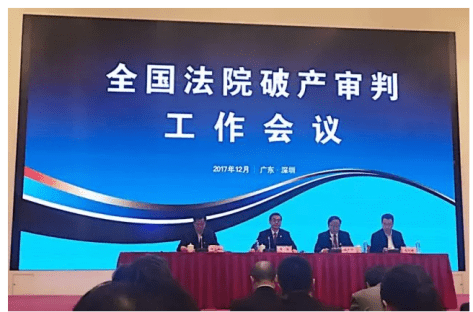
The warm sun and shopping mall Christmas decorations were not what drew Supreme People’s Court (SPC) President Zhou Qiang and a large group of senior court and other government leaders to Shenzhen on Christmas Day–it was a rare national bankruptcy trial work conference. It sends signals about the importance of bankruptcy post 19th Party Congress.
This appears to have been one of the last official activities of Grand Justice Du Wanhua, who has taken the lead in promoting bankruptcy work in the courts (see earlier blogposts) and is a classmate of President Zhou Qiang. Du, who turns 64 in January, is retiring. Takeaways from the conference include:
- some statistics;
- the latest political/professional policy on bankruptcy;
- some informed comments on where the challenges are (with some of my further comments in italics).
Statistics
The Chinese courts accepted 8984 bankruptcy & compulsory liquidation cases in 2017 (through 21 December), heard by 97 bankruptcy divisions (up from 6 in 2016, a consequence of a 2016 SPC notice, described here). The courts concluded 4404 bankruptcy cases through November.
Reforms aimed at speeding up cases moving from enforcement to bankruptcy proceedings are showing some initial success, with the Guangdong courts handling over 43,000 in the second half of 2017, of which 10,000 were handled by the Shenzhen courts.
Latest bankruptcy policy statements
President Zhou Qiang conveyed the macro policy on bankruptcy.
- adhere to problem orientation (必须坚持问题导向) (one of the current political slogans);
- if at all possible, merge or reorganize, less bankruptcy liquidation 尽可能多兼并重组,少破产清算 (the current policy);
- Explore establishing a simplified procedure and a pre-reorganization system (简易破产程序、预重整制度) (this idea, a borrowing of pre-packaged administration from US/English law has been discussed by academics and others for some years, but this prominence seems to be new. Pre-packaged administration is a bankruptcy/insolvency procedure under in which a company arranges to sell all or some of its assets to a buyer before appointing an administrator to facilitate the sale. It involves a company’s institutional creditors agreeing to it, so it is understandable that would be an attractive idea in China);
- intermediate courts in larger cities and economically developed areas should establish bankruptcy divisions or collegial panels (this follows from an announcement in 2016, discussed here);
- use informatization to improve the hearing of bankruptcy cases (信息化建设提高破产审判质效).
Du Wanhua had more specific signals to the lower courts.
- improve professionalism;
- improve the bankruptcy administrator system, promote establishing a bankruptcy administrator society, bring in a competitive system;
- improve the enforcement to bankruptcy system, accelerate cases that can’t be enforced transferred to bankruptcy proceedings;
- use reorganization as much as possible through the market and legal methods to save companies in trouble;
- establish a normalized government/courts unified coordinated system (要建立常态化的“府院破产统一协调机制”), protect the rights of each party on an equal basis;
- use informatization.
- handle carefully bankruptcy cases involving debts that are mutual/joint guarantees, guide financial creditors to convert the debt into equity or other methods that simplify the debtor relationship and enable the company to survive;
- handle carefully the consolidated bankruptcy of affiliated companies, balance the conflicts between the rights and interests of each party.
- improve cross-border bankruptcy trial work.
On problems facing bankruptcy courts
Professor Li Shuguang of the China University of Political Science & Law, one of the preeminent Chinese bankruptcy law scholars, who attended the conference, had informed comments, citing the following challenges for the bankruptcy courts:
- The relationship between the courts and government when hearing bankruptcy cases needs to be resolved. (Despite the official talk of a united approach by courts & government, discussed above, it remains a challenge. For some local color, see this excerpt from an article by a team of Zhejiang bankruptcy judges on real estate developer bankruptcy:
If a real estate developer is having a crisis, government will involve itself first, and only if administrative measures don’t work, will they think of judicial measures. This creates problems in transitioning from administrative to judicial procedures. For example, how should a court treat the legal authority of the creditor settlement arrangement of the special work team formed by government to deal the crisis? Once the company goes into bankruptcy procedures, government hasn’t withdrawn completely, and on the one hand, all sorts of bankruptcy matters require coordination and cooperation by many government departments, and on the other hand government will give instructions and suggestions about bankruptcy work, considering the needs of the local economy, stability, and other interests.
3. Many local courts are afraid to accept bankruptcy cases and even establish unreasonable barriers to for local protection–new systems need to be put in place.
4. On bankruptcy administrators, there need to be more detailed rules on selection, oversight, administration, operation. [I can testify to this, based on the questions raised on one of my Wechat chat groups about bankruptcy administrators and the many articles published on bankruptcy law-related Wechat public accounts.]
5. Professor Li asks how Chinese bankruptcy law can be reformed to effectively rescue companies, to enable courts to identify salvageable companies, properly protect the rights of creditors and shareholders. More detailed rules are needed on preferences in bankruptcy. These are ongoing issues for Chinese bankruptcy courts, as the current system protects local government interests.
6. There exist a group of specific issues related to bankruptcy liquidation, such as how to expand the pool of assets available to the creditors, balance the interests of various creditors, deal with the relationship between creditor committees (under the bankruptcy law) and financial institution creditors committee (these committees were put in place from 2016, see more details here). This also relates to issues of transparency and procedure, particularly what information will be available to members of the creditor committee, and at what point. An important area where legal infrastructure is lacking, as discussed in this Wechat article.
Among those issues is how to protect the interests of consumers who have purchased property from a bankrupt real estate developer. This is an important practical issue for all involved (including local governments) because an increasing number of real estate developers are going into bankruptcy. A recent Wechat article analyzes a 2015 SPC ruling that requires the bankruptcy administrator to perform the purchase and sale contract where payment has been made in full. In practice, courts take different approaches to variations on this scenario.
7. He echoes Du Wanhua on issues related to consolidation of bankruptcy cases involving corporate affiliates and the transfer of cases from enforcement to bankruptcy, raising the problem of the courts performance indicators.
8. Professor Li opens up the issue of “informatization,” so that it becomes a platform collecting and analyzing bankruptcy data, and information sharing mechanism for all involved. This comment echoes my own experience that the electronic platform is not helpful for a researcher seeking access to bankruptcy documents, as few are accessible, not even those that are otherwise publicly available. Some bankruptcy judges have responded to my discrete inquiries that little information is available because it is possible to set access restrictions on information.)
9. He raises the increasingly prominent issue of cross-border bankruptcy, in which judges lack legislation and experience to deal with these issues, and suggests that at an appropriate time harmonization of Chinese cross-border bankruptcy standards with international ones. By this, he is likely referring to the UNCITRAL model law on cross-border insolvency. These issues are ongoing ones for the professional community in Hong Kong and increasingly in the rest of the world, see this law firm alert. This has been a frequent topic of academic analysis.
Finally, Professor Li states (what is clear from the comments above) that bankruptcy legislation is inadequate–the judicial interpretations the SPC has issued. deal with only a small portion of the outstanding issues and there isn’t time to draft a long judicial interpretation. As judges are hearing bankruptcy cases, large numbers of technical issues have arisen [I can testify to this, based on the questions raised on one of my Wechat chat groups.] SPC academic journals and academic studies address specific issues, see these articles. Professor Li suggests that a “conference summary” be issued based on this conference and input from bankruptcy court professionals. (A conference summary is explained in this blogpost.)
Quick comment
Finally, this area of law is a microcosm of issues facing the Chinese courts, whether it is the requirement for the SPC and lower courts to reflect current Party/government policy in what they do, relationship between the courts and government, issues with judicial professionalism, large number of technical issues but a lack of legislation, related issues that affect the ordinary person, consideration of foreign law models, and the disconnect between international and Chinese practice.





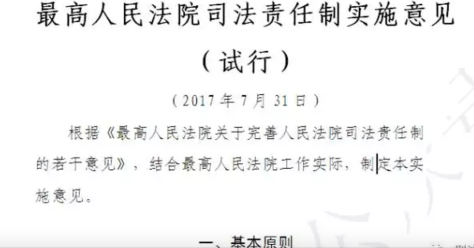 In April of this year (2017), the Supreme People’s Court (SPC) issued its
  I’ve posted several times about law-related Wechat (微信) public accounts. They are an important resource for those trying to understand Chinese legal developments (or their absence) and their implications or impact. For the observer, it enables us to learn about new issues (or aspects of issues) that we didn’t know existed, and (depending on the topic), hear viewpoints other than the official one, or at least read hints of dissenting views. Those with the Wechat app on their smartphone can subscribe to these public accounts but it is also possible to find some these articles through an internet search. Note that the “Mr. Yong” about
 Most readers of this blog are unlikely to know that the Supreme People’s Court (SPC) publishes on its website responses to selected letters to President Zhou Qiang that make suggestions and give opinions. In a July 11
 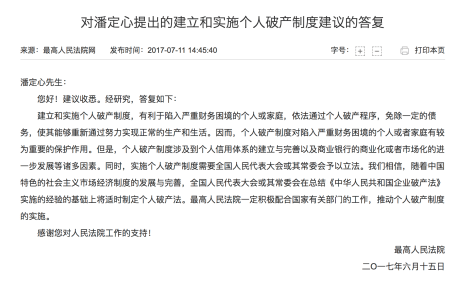 Few are aware that Shenzhen has been working on draft individual bankruptcy legislation for several years now, looking to Hong Kong’s experience and legislation, described in a
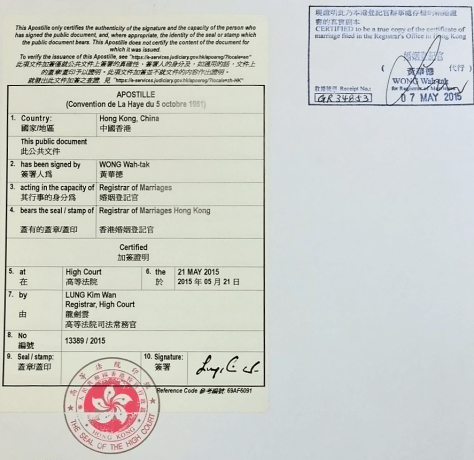
 I recently published an







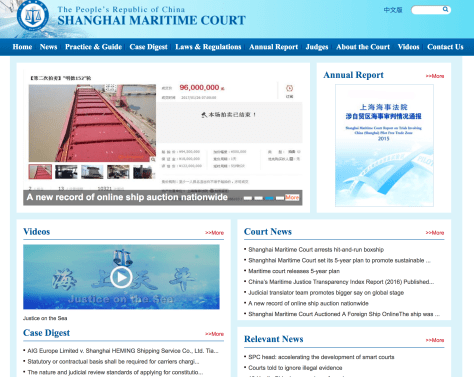 The Shanghai maritime court’s bilingual white paper for 2014 and 2015 is downloadable in PDF (under the Annual Report tab), the Court News is relatively timely, The case digests are useful and calendar lists upcoming court hearings (however without information concerning how an interested person could attend them). Unusually for a Chinese court website, the Judges tab has photos of judges other than the senior leadership. The Contact Us tab (unusual for a Chinese court) has only telephone numbers for the court and affiliated tribunals, rather than an email (or Wechat account). Of course the information on the Chinese side of the website is more detailed (under the white paper tab, for example, a detailed analysis of annual judicial statistics can be found), and the laws & regulations tab might usefully set out maritime-related judicial interpretations, but most of the information is well organized and relevant. Similar comments can be made about the Guangzhou maritime court’s website (


You must be logged in to post a comment.