

See below a brief summary of recent developments (or at least the principal recent developments) at the Supreme People’s Court (SPC) in January 2025 (as of January 19, the date of publication of this post) and December 2024.
January 2025
- On January 8th, the Party leadership heard the SPC Party Group’s report on the SPC’s work, along with those of other institutions. I mention the requirement for this report in my 2024 article;
certain phrases (such as “report to a superior on their work” [shuzhi 述职] imply a hierarchical relationship between the SPC and the Central Political-Legal Committee and the Party Center. The fact that the SPC reports to the Party leadership can be seen in public reports on the leadership of the political-legal institutions meeting with Xi Jinping and other senior leaders before the annual sessions of the National People’s Congress and Chinese People’s Political Consultative Congress, although the materials actually submitted to the Party leadership are not publicly accessible.)
2. January is when many important conferences are held that have an impact on the work of the courts: the Central Political-Legal Work Conference (中央政法工作会议) and the National Conference of Higher Court Presidents (Higher Court Presidents Conference 全国高级法院院长会议), at which the spirit of the Political-Legal Work Conference is transmitted and the goals for judicial work in 2025 are announced. The SPC has held this conference annually for many years. In the recent historical past (the early 1990’s, for example), the Higher Court Presidents Conference was called the National Court Work Conference.
3. Policy documents:
a. In early January, the SPC and the All-China Federation of Overseas Chinese (Overseas Chinese Federation 中国侨联权益保障部) issued a joint policy document on the strengthening the judicial protection work of the interests of overseas Chinese and returned overseas Chinese and their families in the New Era (关于加强新时代侨益司法保护工作的意见), and related reference cases. The document seeks to ease litigation formalities for these groups and promote resolving disputes through mediation, among other matters, such as improving research on Overseas Chinese-related issues, such as through establishing a research base, as has been done with other issues. The title of this document differs from Zhou Qiang era policy documents, but the goal of providing judicial support for an important national policy goal is the same.
The SPC’s Research Office led the drafting of this document, in cooperation with the Overseas Chinese Federation. This responsibility is consistent with the role of the Research Office, which deals with many legal policy and cross-internal institutional matters, such as Hong Kong, Macau, and Taiwan-related issues and the transition to the Civil Code. It does not hear cases.
This is the first joint policy document between the SPC and Overseas Chinese Federation. Closer cooperation between the two institutions began in 2018, with 30 courts piloting closer cooperation with local Overseas Chinese Federations, and with the 2020 establishment of a “general-to-general” online mediation mechanism (the SPC has established this type of mechanism with the China Securities Regulatory Commission and other institutions). The policy document is linked to language in recent Party Plenums on protecting the rights of returned Overseas Chinese and Overseas Chinese and their families.
b. Opinions of the Supreme People’s Court on Serving Technological Innovation with High-quality Trial Services 最高人民法院关于以高质量审判服务保障科技创新的意见. The press conference report is here. China IP Law Update’s summary in English is here. If time had permitted, I would discuss the links in this document with the recent Party Plenum and other Party initiatives.
4. Judicial interpretations:
a. The SPC issued its second interpretation of the Marriage and Family Part of the Civil Code, aimed at addressing common troublesome issues facing the courts, such as property division when a cohabiting couple split, many issues relating to divorcing couples, including property division and ownership of a company established by a couple. To provide further guidance on applying the interpretation, the SPC issued typical cases. This interpretation provides important insights into family law issues in current Chinese society.
b. The SPC joined with the Supreme People’s Procuratorate to issue the Interpretation of Several Issues Concerning the Application of Law in Handling Criminal Cases of Attacks on Police Officers (关于办理袭警刑事案件适用法律若干问题的解释). From the provisions of this interpretation, the confusion lower-level procuratorates and courts had about the application of Article 277 of the Criminal Law is apparent.
5. Other typical cases issued in January included: one on protecting natural reserves and national parks; another on punishing rural saohei (underworld forces) crimes; protecting the rights and interests of foreign investors; and refusing to pay wages (6200+ cases in the past four years)
6. The SPC established its Judges’ Disciplinary Committee, with President Zhang Jun as the chair. At the first meeting, he noted that the establishment of a judges’ disciplinary committee and the implementation of a judges’ disciplinary system are political requirements for implementing the decisions and arrangements of the CPC Central Committee. In 2021, I published a book chapter on Chinese judicial disciplinary developments, available here.
December 2024
December is the end of the year, so the SPC always issues many documents–judicial interpretations, policy documents, guiding and typical cases etc. at year’s end. 2024 was no exception. Among the documents worth noting:
- Judicial interpretations and meeting minutes
a. The SPC and the China Securities Regulatory Commission (CSRC) issued meeting minutes (conference summary) on bankruptcy (insolvency) and reorganization of listed companies. From the document number, it appears that the SPC took the lead in drafting it and it provides an update to a 2012 conference summary that the SPC issued itself. A DeHeng law firm partner comments here on the meeting minutes. The CSRC is soliciting public comments on Regulatory Guidelines for Listed Companies No. 11 – Matters Related to Bankruptcy and Reorganization of Listed Companies (this link contains the text and an explanation).
b. On December 25, the SPC issued a Decision on Amending the Supreme People’s Court’s Regulations on Acknowledgement and Execution of Civil Judgments from Taiwan Area Courts, Chinese original 最高人民法院关于修改《最高人民法院关于认可和执行台湾地区法院民事判决的规定》的决定. An English language summary is available here. From a quick look, most amendments are procedural or unsurprising. Some reflect amendments to the Civil Procedure Law or codifying court practice. The provision “the people’s court shall make a ruling not to acknowledge a civil judgment if acknowledging it would violate fundamental principles of state laws, such as the one-China principle, or undermine state sovereignty, security, or social public interests” is consistent with analogous provisions and codifies what has been court practice.
2. Guiding cases: on December 25, the SPC issued six guiding cases on state compensation issues, some of which provide glimpses of problems with prison management; On December 24, the SPC issued the first group of guiding cases on labor issues.
3. Typical cases: The SPC issued many typical cases in December 2024. As I mentioned previously, President Zhang Jun favors using typical cases to guide the lower courts in correctly applying the law.
The SPC issued typical cases on: the protection of the rights and interests of the elderly; administrative public interest litigation (second group), issued jointly by the SPC and SPP; “one letter and two books” labor law supervision, issued jointly by the SPC, the SPP and the All-China Federation of Trade Unions; wage arrears, issued in cooperation with the All-China Federation of Trade Unions and the Ministry of Human Resources and Social Security; two groups of financial loan dispute mediation cases, issued by the State Financial Supervision and Administration Bureau and the SPC, with one case providing a model for dealing with non-performing microloan cases; rights and interests of Taiwan compatriots, linked to the Party’s policy on promoting cross-straits integration and development; crimes involving counterfeit safety production qualification certificates (linked to a policy document issued in July, 2024 that does not appear to be publicly available (关于进一步加强安全生产资格证书涉假案件刑事审判工作的通知)); petty corruption (each case provides insights into the world of official corruption); punishing illegal production, sales, and use of eavesdropping and stealing equipment, with several cases involving the hidden filming (and marketing of those films) of people having sex in hotel rooms; inheritance disputes (first and second group); criminal punishment of illegal fishing; and traffic accident liability.
3. Policy documents: Guiding Opinions on Improving the Quality and Efficiency of Trial Work and Promoting the Substantial Resolution of Contradictions and Disputes (关于在审判工作中促进提质增效 推动实质性化解矛盾纠纷的指导意见). This document focuses on civil and administrative disputes, promoting mediation (Fengqiao Experience) and the resolution of the substance of disputes (as discussed here). I will draw on this document in a forthcoming article.
4. Plans:
a. the SPC issued the Sixth Five-Year Judicial Reform Outline. This article links to the text of the Outline and the related press release. I will publish an article later this year providing a summary and analysis of this document.
b. the SPC issued the National Court Education and Training Plan (2024-2028). I analyzed the previous two plans here and here. Training of judges handling foreign-related matters receives special attention (see my earlier analysis).
5. National People’s Committee (NPC) Standing Committee’s Recording & Review: SPC judicial interpretations and other judicial documents must be filed with the NPC Standing Committee. At the end of 2023, the NPC SC adopted a decision strengthening the recording and review mechanism (see the NPC Observer’s analysis). On 22 December 2024, the Legislative Affairs Commission of the NPC Standing Committee gave its view in its annual report on Recording and Review that a July 2024 Supreme People’s Court interpretation that directed lower courts to retroactively apply a new provision in the recently revised Company Law concerning equity transfers, controversial in the business community, was inconsistent with the Legislation Law. The Legislative Affairs Commission stated that the “[they] will urge the relevant judicial interpretation-making authorities to take appropriate measures to properly handle the matter.” The SPC issued a follow-up interpretation two days after the annual report was made public, signaling that the SPC had been previously been informed. Although the problematic July 2024 interpretation must have been reviewed by the Legislative Affairs Commission in draft form before it was approved by the SPC judicial committee, as required by Article 18 of the SPC’s Judicial Interpretation Work Provisions, it appears that that whichever office of the Legislative Affairs Commission initially reviewed the SPC’s draft and the office responsible for recording and review took different views.
____________________________________________________
Thank you, subscribers, for your patience. The blog will transition from being completely researched and written by me (including discussions with knowledgeable persons and experienced judges, for the avoidance of doubt) sometime after Chinese New Year. I plan to involve my research assistants more in analysis and writing, although I have at least one long analytical blogpost that I will complete soon. I want to focus on consolidating and developing my research in longer pieces.



 Most readers of this blog are unlikely to know that the Supreme People’s Court (SPC) publishes on its website responses to selected letters to President Zhou Qiang that make suggestions and give opinions. In a July 11
 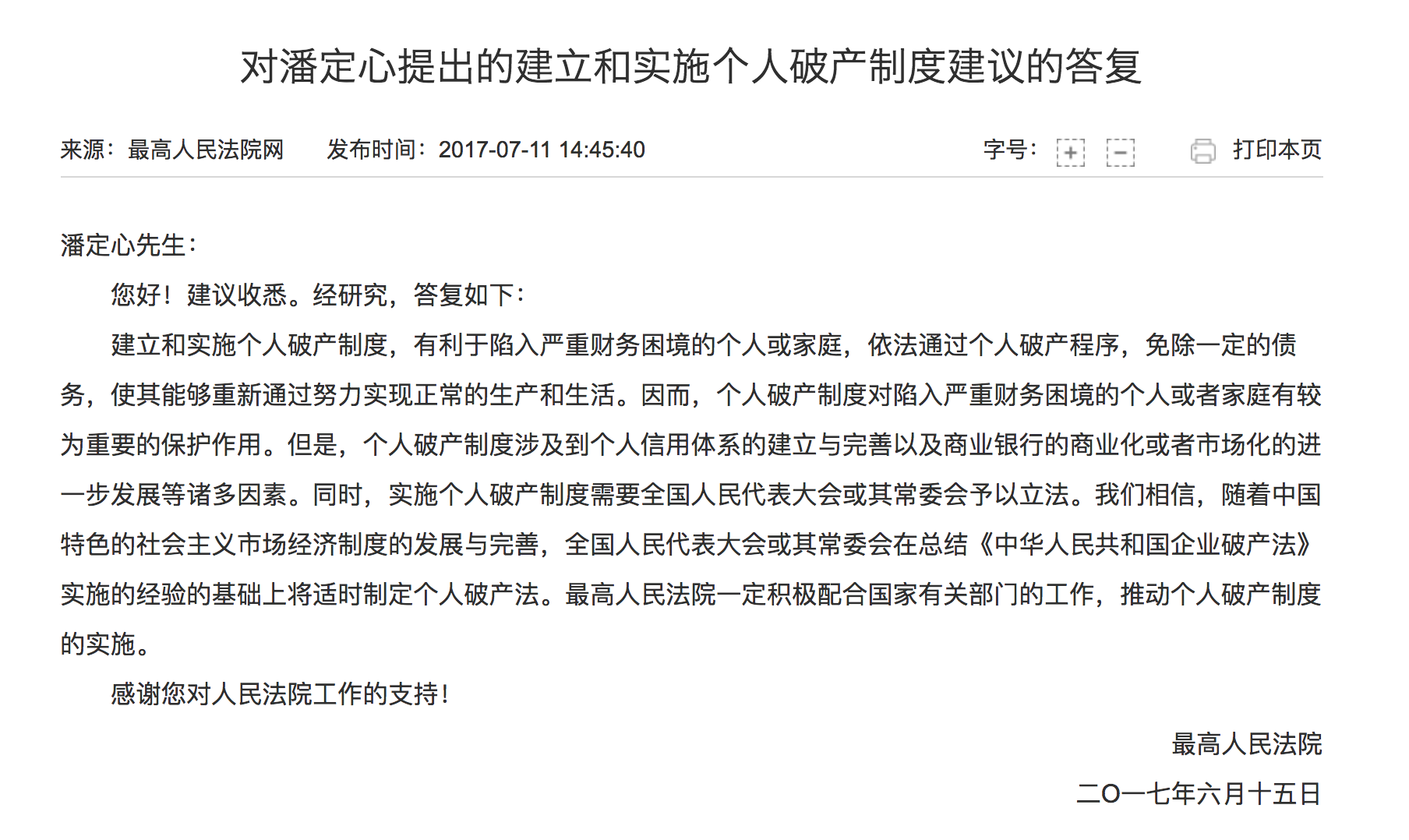 Few are aware that Shenzhen has been working on draft individual bankruptcy legislation for several years now, looking to Hong Kong’s experience and legislation, described in a

 The Supreme People’s Court (SPC) issued 2016 data on bankruptcy cases on 24 February: 5665 cases were accepted by the Chinese courts while 3602 were closed. This is up substantially from
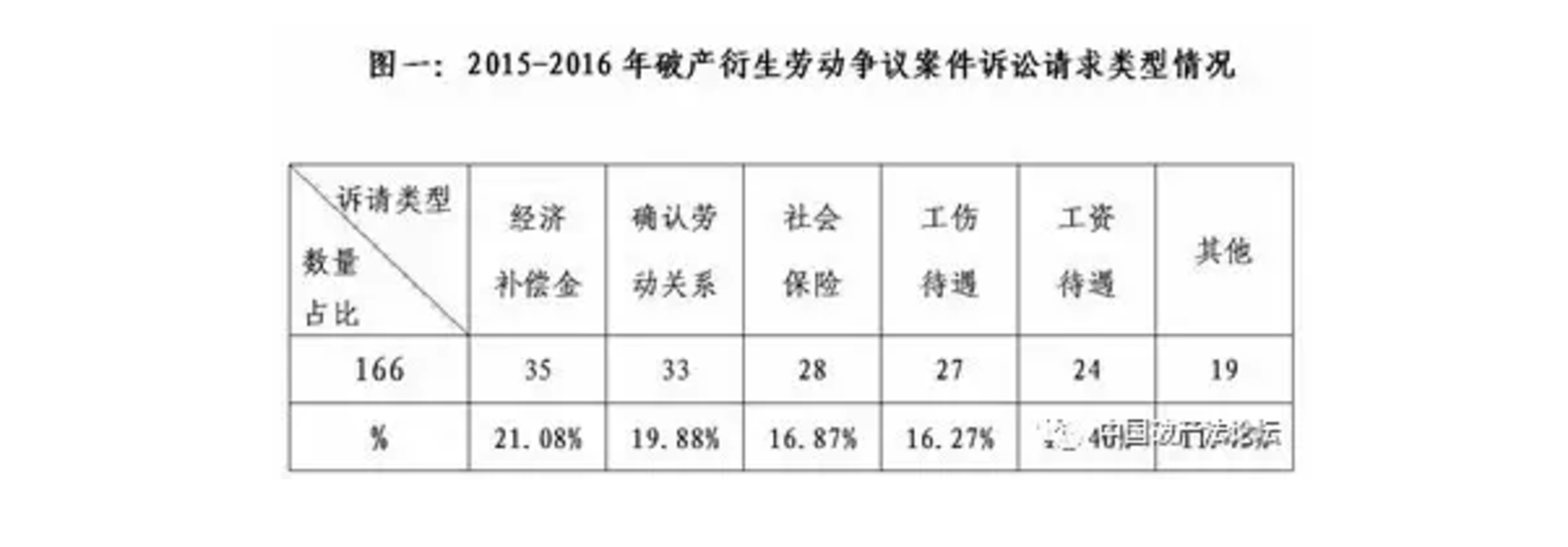 Unlike ordinary labor cases, most cases were decided by court judgment, not mediated. In 66% of the cases, the plaintiff’s claim was upheld in whole or part, with a dismissal of the plaintiff’s claims in 28% of cases.
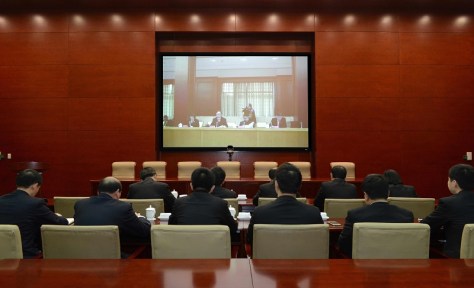
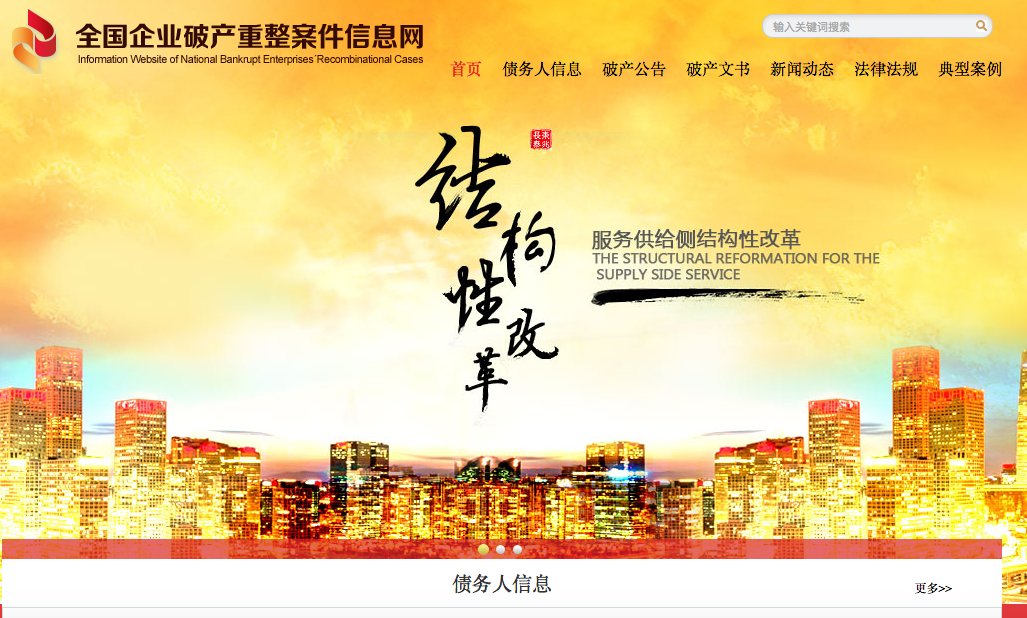 On 1 August, President Zhou Qiang of the Supreme People’s Court (SPC) inaugurated the SPC’s new enterprise bankruptcy and reorganization electronic information platform, linked
  no further information is available. This section is intended to provide the most recent annual report, related litigation, and information on assets of the company from the industrial and commercial authorities’ database and enable “one-stop shopping” for distressed assets.
 Supreme People's Court Monitor
You must be logged in to post a comment.